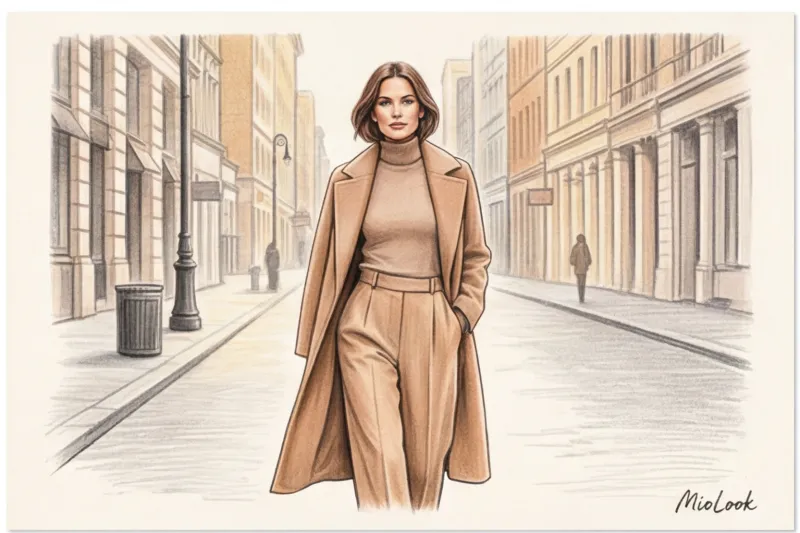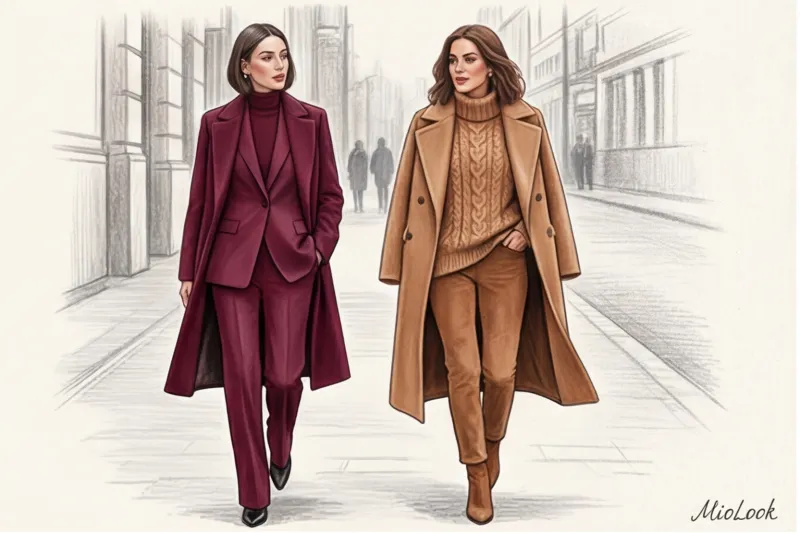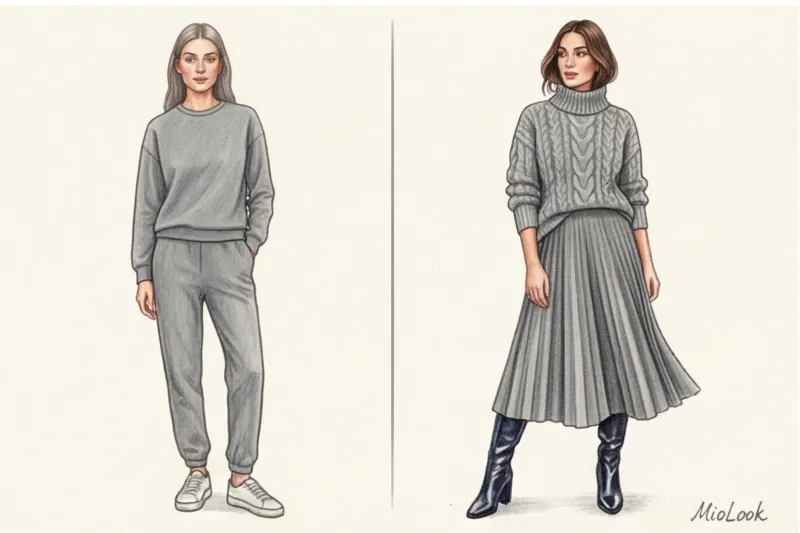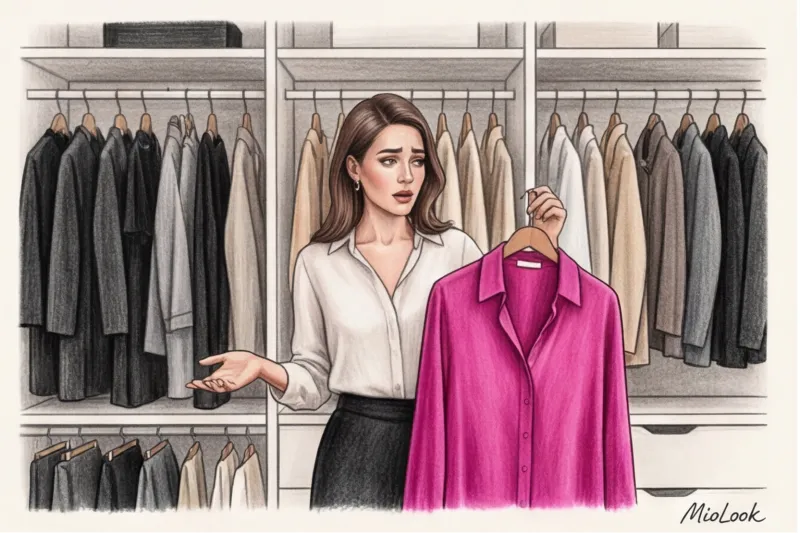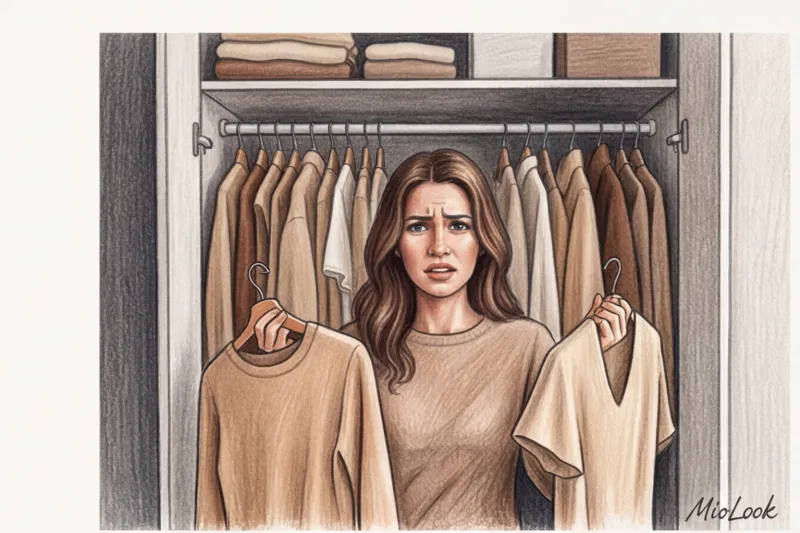
Over 12 years of working as a personal stylist in Europe, I've learned one paradoxical rule: the most "expensive" and complex monochrome look is likely already hanging in your closet. The only problem is, you don't see it. Your brain refuses to connect trousers bought three years ago with a jumper from the new collection, simply because they're on different shelves. Today, we'll take a closer look. How to create a monochrome look online without a single new purchase, using objective machine vision. We've already discussed in more detail why this stylistic technique works flawlessly and always looks prestigious in our The complete guide to creating a monochrome capsule collection.
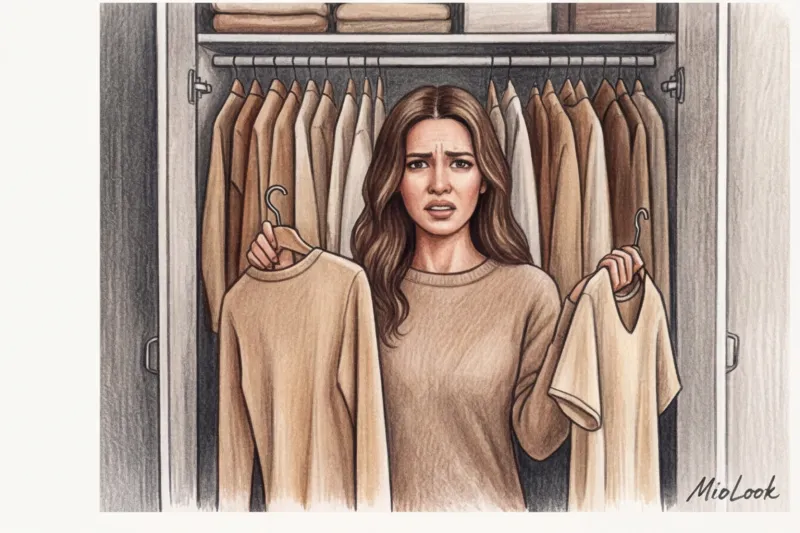
Wardrobe Blindness: Why We Don't See Finished Looks in Our Closets
Sound familiar? You open your overflowing closet, deciding to put together an elegant beige overall look for an important meeting, but you can't find the perfect match. The pants seem too yellow, the sweater is too gray, and the top just doesn't feel quite right. So, you close the door and head to the store to buy a ready-to-wear suit, spending between €200 and €500 at the boutique.
In the psychology of space organization, there's a term called "wardrobe blindness." We hang sweaters next to sweaters and pants next to pants. Our brains read categories of items, but they completely fail to notice the color overlaps between them. According to statistics from my personal wardrobe analyses (and I've done over 500), 80% of women already have at least two or three potential monochrome capsule wardrobes in basic colors that they're unaware of.
The most boring monochrome look comes from buying a ready-made suit from a single store. The most "expensive" look is assembled haphazardly, from items from different brands and price ranges, combined based on mathematically similar shades.
Last year, a client from Milan contacted me. She was sure she urgently needed a basic camel-toned wardrobe and had a shopping budget ready. Instead, I asked her to digitize her entire closet in an app. MioLook Within 10 minutes, the algorithm returned four flawless looks. One of them was based on wool trousers from Zara (purchased in 2021), a silk top from Massimo Dutti (2023), and a vintage COS cardigan she hadn't worn in five years. Disparate items, purchased years apart, came together to form a perfect image.
Access to MioLook for €0.99 — one-time payment
A smart AI stylist will digitize your clothes and create the perfect monochrome look without any new purchases.
Get access — €0.99 onceHow to Create a Monochrome Look Online: MioLook Machine Vision
What actually happens when you upload photos of your clothes to a virtual wardrobe? You shift from subjective, "emotional" perception to cold, objective data. The main barrier to creating a monochrome look yourself is the fear of choosing the wrong undertone (warm or cool). Women are so afraid of combining incompatible colors that they avoid experimenting altogether.
The neural network is free of these fears. AI doesn't know that the photo "is that sweater my mother-in-law gave me, and it makes me look fat." Machine vision sees something else: garment, category: knitwear, texture: chunky knit, base color: HEX #C2B280 (taupe), undertone: cool.
The color wheel algorithms integrated into MioLook are based on the Munsell Color System. This model evaluates color using three strict coordinates: hue, value, and saturation. This allows the AI to detect subtle mathematical relationships between heavy summer cotton and fine winter wool, creating that harmonious "temperature stretch."
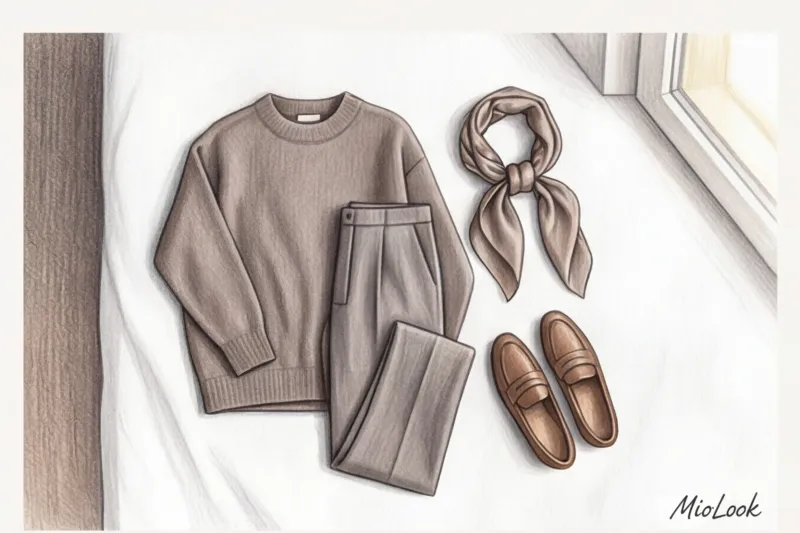
Digitization Rules: How Light Affects Pair Searches
I've made mistakes myself more than once when trying to judge the temperature of a beige cardigan by eye under artificial lighting in my dressing room. Incandescent bulbs mercilessly yellow the fabric, while LEDs can turn a warm sand color into a deathly gray.
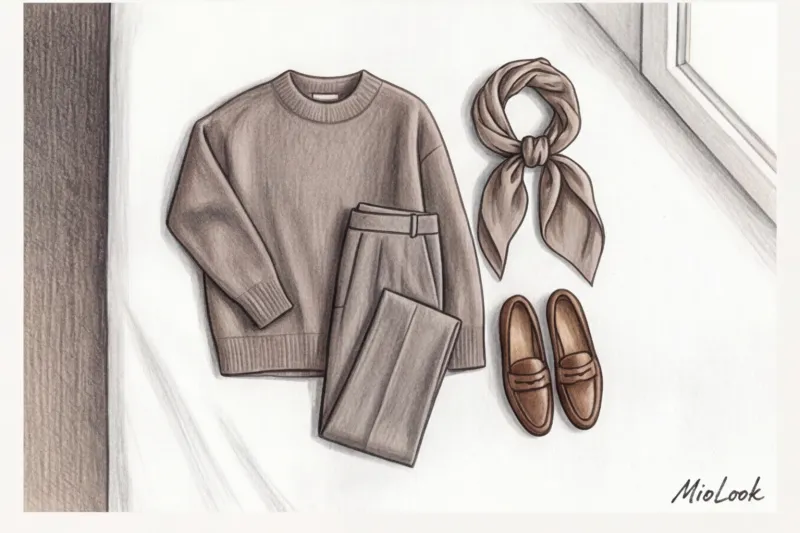
The difference in color perception between the human eye and a camera sensor is colossal. To ensure 100% performance of the neural network, follow one simple rule: Always take pictures of things near a window on cloudy days. Diffused daylight is the ideal condition for AI to correctly calculate not only the color but also the texture. And texture is what saves monochrome from failure.
Texture contrast: salvation from the "courier uniform"
Let's return to the main mistake I often tell my clients about. Trying to put together an outfit using exactly the same smooth fabric in the same color always leads to the same result: you look like you're wearing a work uniform. The clothes blur into a shapeless blob, depriving your figure of definition.
An unspoken rule of European street style is: if you use one color, use at least three different textures. The MioLook app is trained to follow this principle. Ask the smart wardrobe for a total look, and you'll be amazed at the combinations it offers.
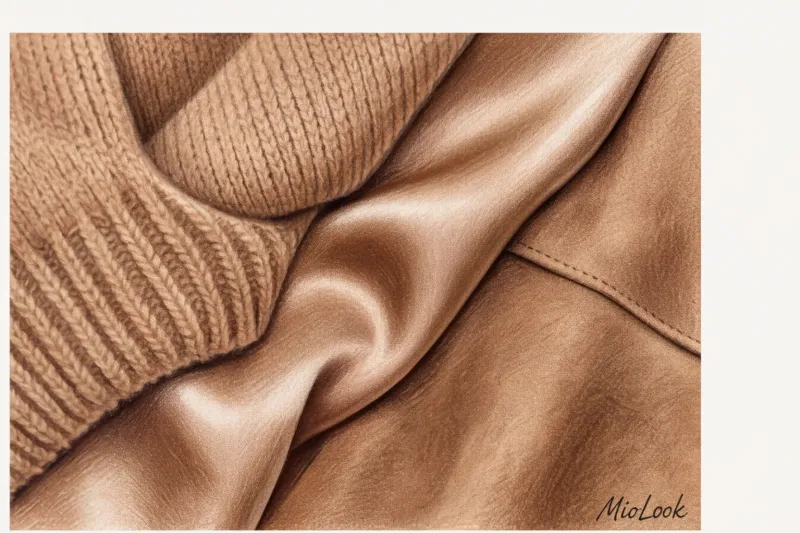
Let's look at a specific example from the mass market. You have a matte wool jumper from COS (say, €89), a basic silk midi skirt from Zara (around €40), and suede ankle boots from Mango (€70). Individually, these are simple items. But if an algorithm combines them in the same caramel shade, the difference in light refraction (matte wool absorbs light, silk reflects it, and suede adds depth) creates a "quiet luxury" effect. It will look like it costs €1,000, although the actual cost of the set is no more than €200.
Your perfect look starts here
Join thousands of users who look flawless every day with Smart Match.
Get access — €0.99 onceFrom Shortbread to Dark Chocolate: A Gradient Creation Algorithm
Abandon the idea of finding tone-on-tone items. As confirmed by the PANTONE Institute's extensive color perception study (2024), the human eye perceives a perfect match of artificially dyed fabrics as unnatural. Furthermore, due to the physics of light refraction on silk and wool, the same dye will always appear different. Trying to achieve a 100% match is doomed to failure.
What does the neural network offer? It builds vertical color or gradient The main rule: AI will never mix a cool gray-beige shade with a warm yellow-camel. Temperature balance is the foundation of the algorithm.
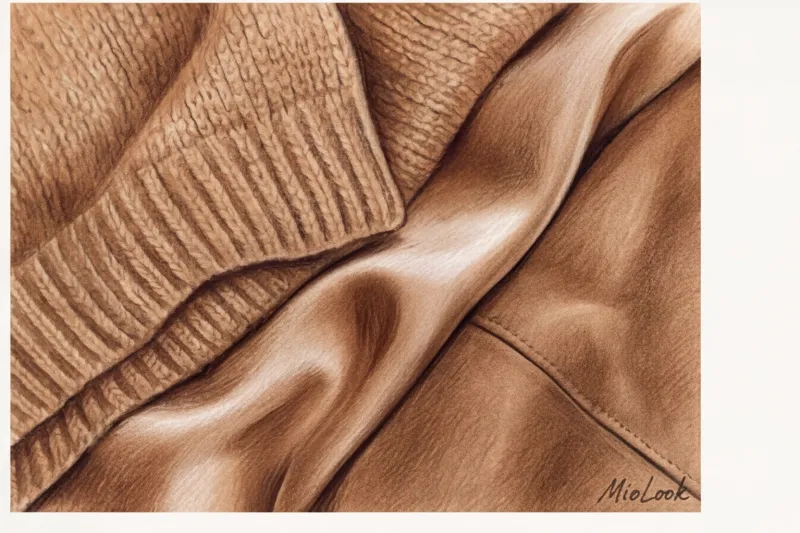
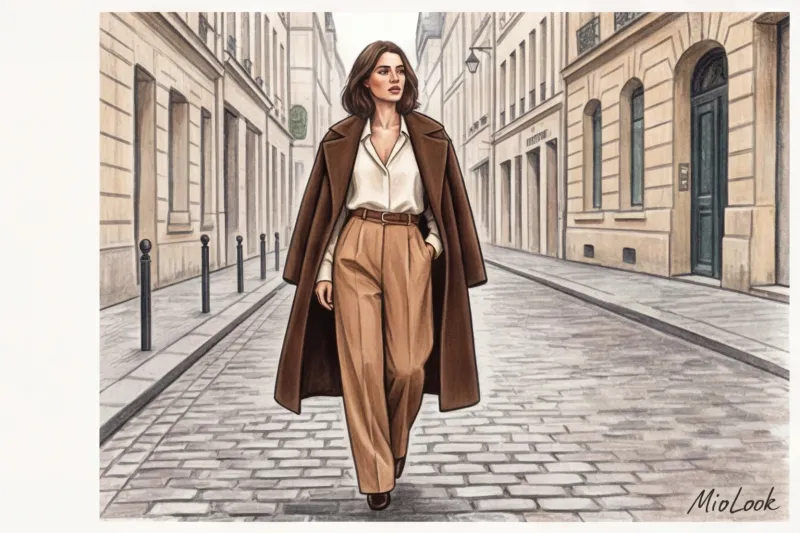
- First layer (closer to the face): The lightest shade available in your wardrobe, such as oatmeal or ecru. This will refresh your complexion and erase signs of fatigue.
- Second layer (figure area): Medium tone. Classic caramel, camel, or warm taupe.
- Accents (shoes, bags, belts): The darkest color in the palette. Dark chocolate or rich espresso.
Checklist: Create your first total look in the app in 5 minutes
I love a practical approach: every piece of advice should be translated into action. Here's how you can test the theory right now, with minimal time investment:
- Digitize the database. Add at least 10 items in the same color scheme to the app. Don't forget shoes, bags, and outerwear (yes, wool coats are included).
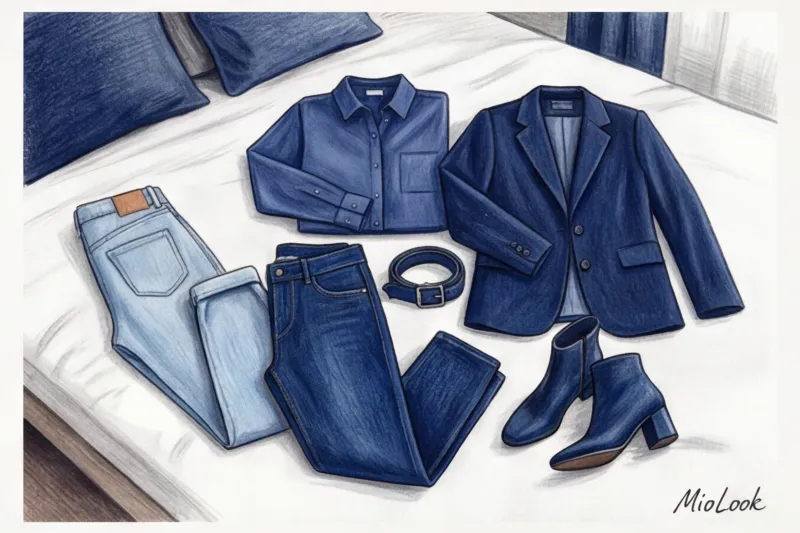
- Set the filter. Open the planner feature in MioLook and select a base color—for example, gray, beige, or navy blue.
- Trust Smart Match. Let the algorithm analyze the HEX codes and suggest ready-made capsule options.
- Choose a contrast of textures. From the suggested looks, click on the one with the widest range of materials: cotton + leather + knitwear.
- Add the finishing touch. Add an element to your look that will break up the monolith (contrasting horn-rimmed glasses, a metal bracelet, a textured belt).
What AI can't do yet (and where your insight is needed)
It would be unfair to say that technology solves absolutely all problems. As a practicing stylist, I must warn you of its limitations. A neural network is a brilliant mathematician of coloristics, but it lacks empathy and physical sensations.
The algorithm doesn't know that gorgeous H&M Studio wool trousers are incredibly itchy when worn without tights. AI doesn't know that a thin silk blouse will instantly become staticky when layered with a polyester jacket. Only you can appreciate physical comfort.
Moreover, the machine is still poor at understanding social context and dress codes. It can assemble for you a fantastic beige monochrome outfit consisting of cotton joggers, a crop top, and a tailored trench coat. Is it color-coordinated? Yes. Is it appropriate for a conservative office? Hardly.
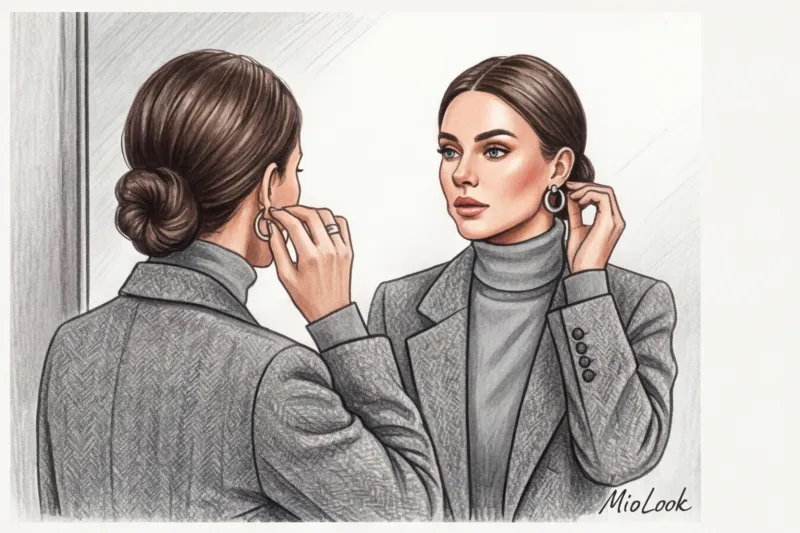
So remember: Your personal taste is always the final filter. A virtual wardrobe saves you hours of standing in front of the mirror and eliminates impulse purchases by providing you with a mathematically perfect base. But you are the one who adds context, mood, and life to this look. Open your closet right now, and I guarantee your perfect monochrome look is already waiting for you on the hangers.
Ready to get started?
Try the MioLook plan for free—no commitments required. Digitize your wardrobe and start saving on shopping today.
Get access — €0.99 once