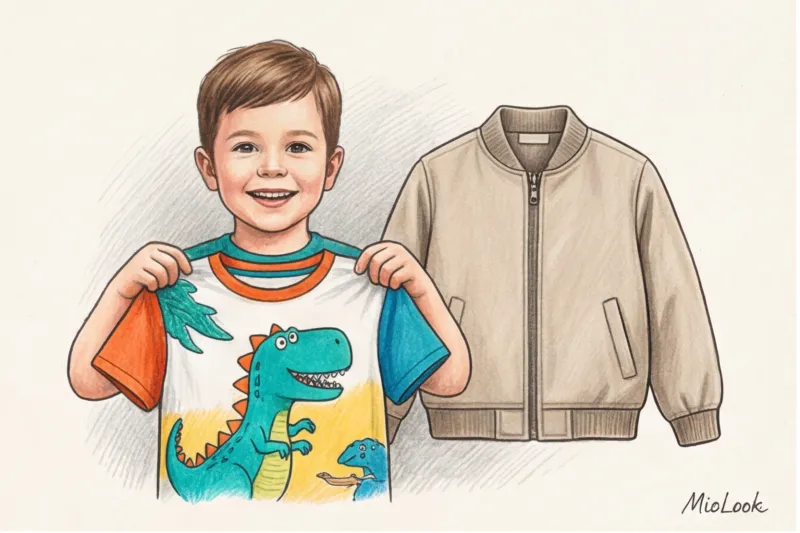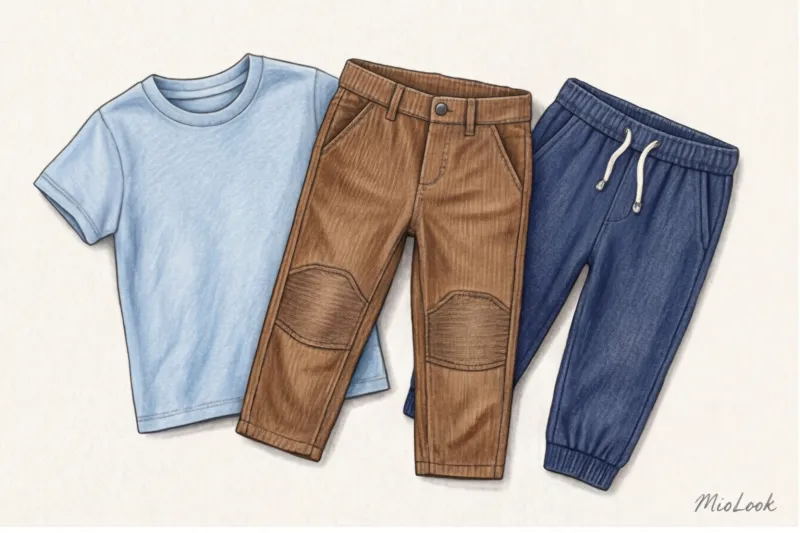
One day, a client came to me whose morning began in tears. Her five-year-old son flatly refused to wear the stiff three-piece suit he'd bought the day before for €120 to a party. "It's itchy, it's choking me!" the child screamed, tugging at his bow tie. He ended up wearing his favorite, but washed-out, dinosaur sweatshirt to the party. Sound familiar?
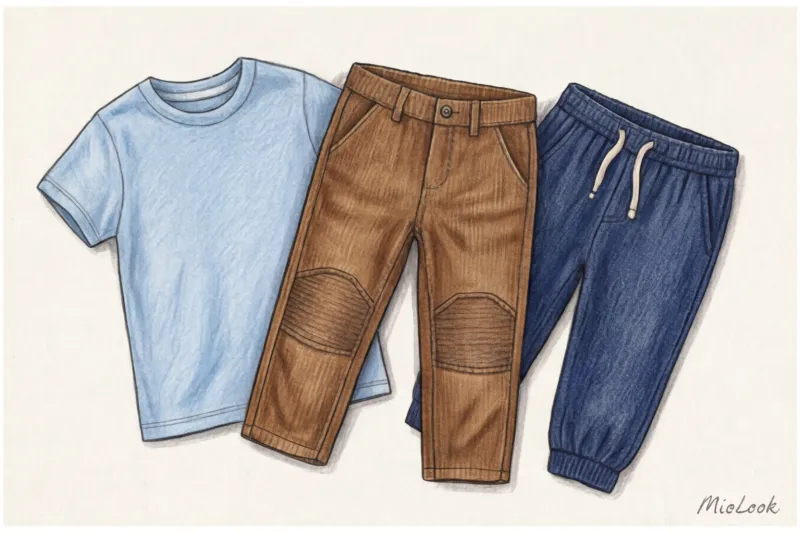
In 14 years of working as a personal stylist, I've learned the most important rule of children's styling: a boy doesn't care about the Itten color wheel if his neck itches from the tag or his belt pinches. capsule wardrobe for a boy We prioritize physics, durability, and psychology, and only secondarily, aesthetics. We've covered the basic principles of creating smart children's wardrobes in more detail in our The complete guide to a children's capsule wardrobe , and today we'll talk about the specifics of boys' clothes.
In this article, I won't be giving you boring "buy two pairs of black pants" lists. We'll be giving your wardrobe a real crash test: putting together a capsule wardrobe that can withstand a knee-high slide, save your morning nerves, and allow your child to look appropriate in the sandbox as well as at grandma's birthday party.
The secret to the right capsule: durability and sensory comfort
Most style articles begin with choosing a color palette. Forget that. A capsule wardrobe for an active child begins with the density of the fabric and the softness of the seams.
Child psychologists note that many children (especially those aged 3 to 7) have heightened sensory sensitivities. A scratchy sweater or tight elastic on pants can trigger a full-blown tantrum. So, my personal ritual at stores like Zara, H&M, or Uniqlo begins with stretching the neckline of a T-shirt and feeling the seams.
"80% of the things that boys refuse to wear are clothes with a tight collar (which gets their head stuck in), synthetics that make the child sweat instantly, or jeans with a hard button that is difficult to get out in the toilet."
What I always look for before buying basic items:
- Fabric density (GSM): A high-quality cotton T-shirt shouldn't be see-through. Look for a weight of 180–200 g/m². These items will last through 5, not 5, washes without seams warping.
- Certification: I always look for the OEKO-TEX Standard 100 mark. This guarantees that the fabric was dyed without toxic substances that could cause allergies on sweaty children's skin.
- Knee Crash Test: Pants for kindergarten or outdoor play should have either reinforced knees or a small polyester blend (up to 15-20%) with cotton. Pure, thin cotton will wear out after two weeks of active play on the carpet.
Access to MioLook for €0.99 — one-time payment
A smart AI stylist will select the perfect look and help organize your child's wardrobe.
Get access — €0.99 onceBasic formula: a capsule wardrobe for a boy from A to Z
The biggest mistake I see in clients' wardrobes is an equal number of tops and bottoms. But let's be honest: boys stain T-shirts and sweatshirts much faster than jeans. The ideal mathematical formula for a capsule wardrobe that prevents overconsumption is as follows: For every 1 bottom there should be at least 2.5, or better yet, 3 tops.
This ensures the magic of layering. A child should be able to easily "undress" in layers when moving from the cold outdoors to the warmth of a kindergarten or shopping center.
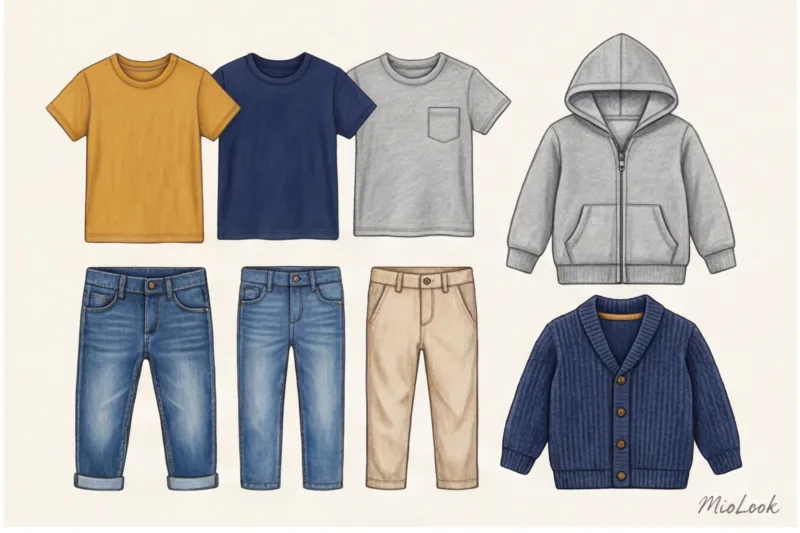
Bottom layer: T-shirts, long sleeves and turtlenecks
For a basic seasonal outfit, you'll need 5-7 pieces. The key cut requirements are a loose fit (oversized or straight) and elastane in the collar. If you're buying a turtleneck, make sure the neckline doesn't constrict the neck—many children find high, closed collars physically uncomfortable, so it's best to opt for a long-sleeved top and a snood scarf.
Bottoms with a margin of safety: joggers, jeans, chinos
3-4 pairs per season are enough. Avoid classic jeans made of thick denim with stiff zippers and buttons. Choose styles pull-on (stretchable) with an elastic waistband and drawstring. Jogger jeans are the perfect compromise: they look like stylish denim but feel like soft lounge pants.
Warming layer: cardigans, hoodies and sweatshirts
2-3 pieces are enough. There's an important detail here that's often overlooked: a hoodie with a voluminous hood is great as a stand-alone outerwear piece in cool summers or warm autumns. However, if a child needs to wear a winter jacket over it, the hood will get in the way and create a bulge on the back. Therefore, for winter, it's better to choose sweatshirts with a crew neck or thick, chunky knit cardigans.
From the sandbox to the matinee: how to integrate a holiday into your everyday life
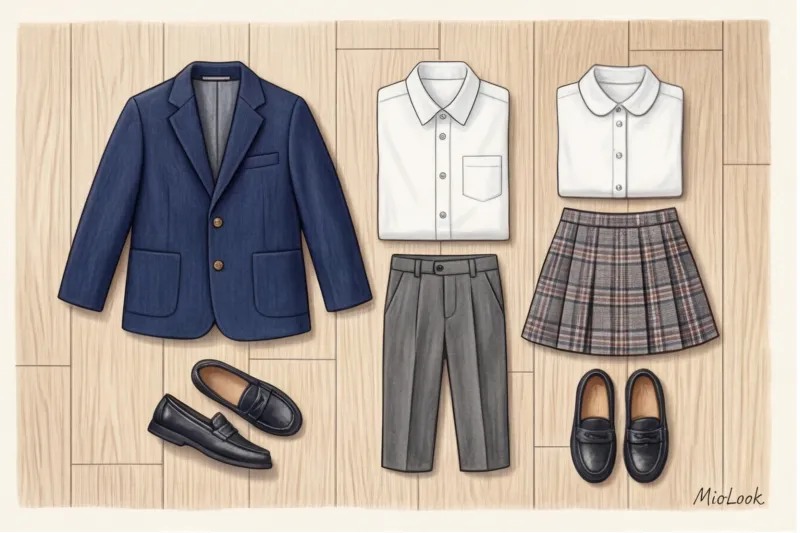
Now let's debunk the biggest myth of children's fashion. Many mothers believe that formal attire for a boy means a formal mini-suit, a starched white shirt, and a tie. As a stylist, I'm categorically against such purchases.
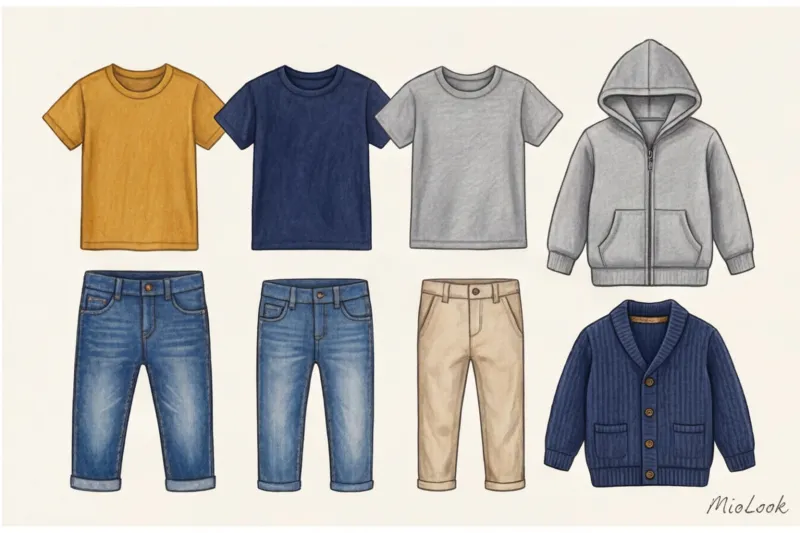
Buying a "disposable" mini-tuxedo is a waste of money (€80 to €150 for a one-time wear). Furthermore, it's uncomfortable for a child. A smart capsule collection allows you to create an elegant look from everyday pieces in a smart casual style.
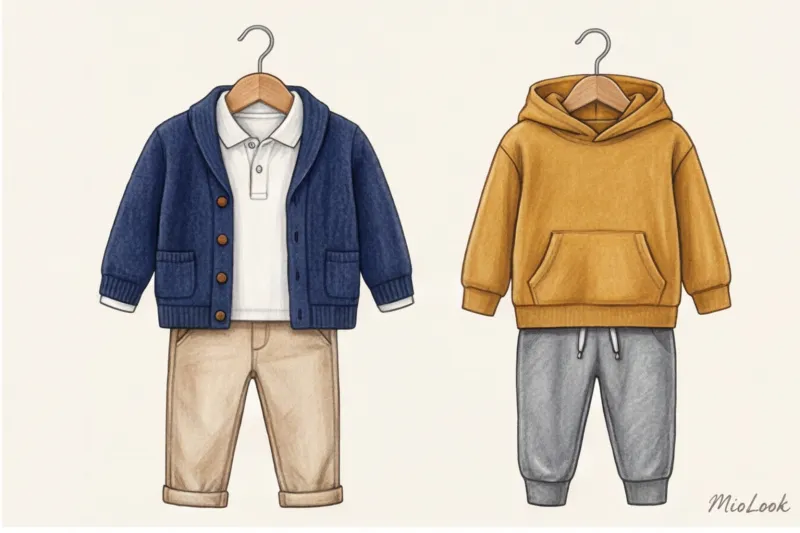
The formula for the perfect holiday look that you can then wear every day:
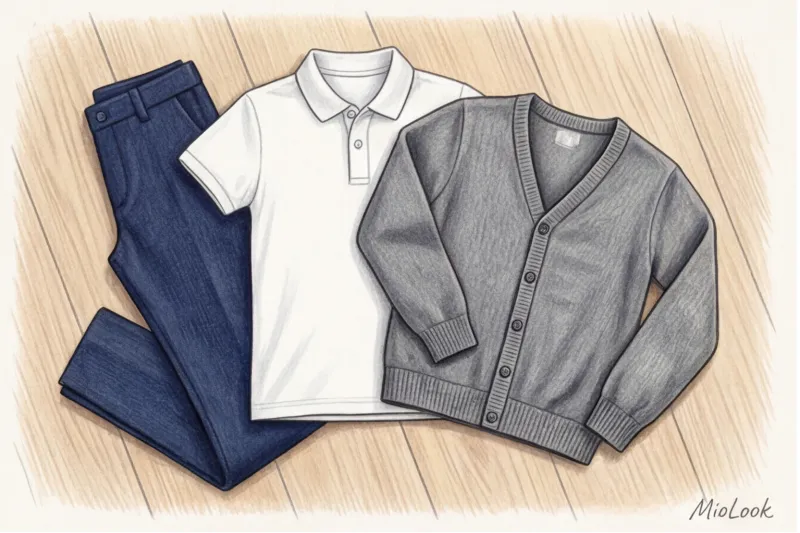
- Beige or dark blue cotton chinos (with soft elastic inside).
- A white or light blue polo shirt made from soft pique (looks like a collared shirt but stretches like a t-shirt).
- A textured chunky knit cardigan with buttons (replaces a jacket that restricts movement).
Case study: We bought one of my clients a thick beige cardigan from Zara Kids for €30. First, the boy wore it with a white polo shirt to a friend's birthday party, and three days later, he was running around in it on a cool evening playground, throwing it over a gray T-shirt. One item—100% worth the cost.
Neat leather sneakers or suede loafers in basic shades are ideal footwear for these looks. They pair perfectly with both jeans and trousers.
Your perfect look starts here
Join thousands of users who are creating stylish capsules with the help of AI.
Get access — €0.99 onceColor and print: a balance between style and childlike joy
How can a mother's desire to see her child in a stylish, minimalist palette be reconciled with the boy's own desire to wear an acid-green Paw Patrol logo on his chest? A compromise is needed.
A T-shirt with a giant, tough (like oilcloth) superhero print ruins any capsule. Moreover, the skin can't breathe under such a print. But completely depriving a child of their favorite heroes is cruel. My rule for parents: We're having fun with pajamas, underwear, and socks. Let it be all sorts of Transformers and dinosaurs. And for the "street" capsule, we choose stylish alternatives.
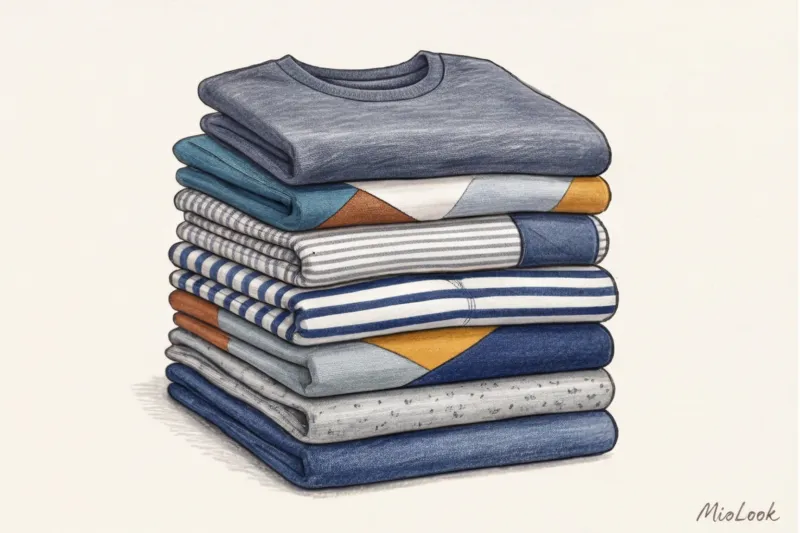
I use the three-color rule: take two basic neutral shades (for example, navy blue and gray melange) and add one bright accent that the child loves (mustard, emerald, terracotta, or brick red). You can read more about how to choose the right shades in the article about color types of appearance and choice of palette.
Instead of huge drawings, choose:
- Color blocking (contrasting sleeves or large geometric inserts).
- Classic Breton stripe.
- Small, minimalist patches on the chest.
- A textured fabric (such as corduroy or ribbed) that acts as a print in itself.
A checklist for parents: what to save on and what to invest in
When putting together a children's wardrobe, it's important to budget wisely. I always guide my clients by the following indicator: Cost Per Wear (CPW) - the price per wear If you bought a high-tech membrane jacket for €120 and your child wore it to kindergarten 120 days in a row, its real cost is €1 per outing. But if you bought terribly uncomfortable patent leather shoes for a school party for €40 and your child wore them once, they cost you €40 per outing.

What to invest in (premium and high-quality middle segment):
- Shoes: This is about foot health. Look for anatomical insoles, flexible soles, and natural materials. Good sneakers or boots will cost €60–€100.
- Outerwear: High-tech membrane fabrics (which are waterproof but breathable) and high-quality insulation.
- Hoodies and sweatshirts: Dense fleece with a brushed finish does not pill and retains its shape.
What you can and should save on:
- Basic long sleeves and t-shirts: This is a consumable item. Stains from berries, paint, and grass are inevitable. Excellent sets of 3-5 cotton T-shirts for €15-€20 can always be found at mass-market stores.
- Socks and underwear.
Digital Closet: How to Manage Your Capsule in the MioLook App
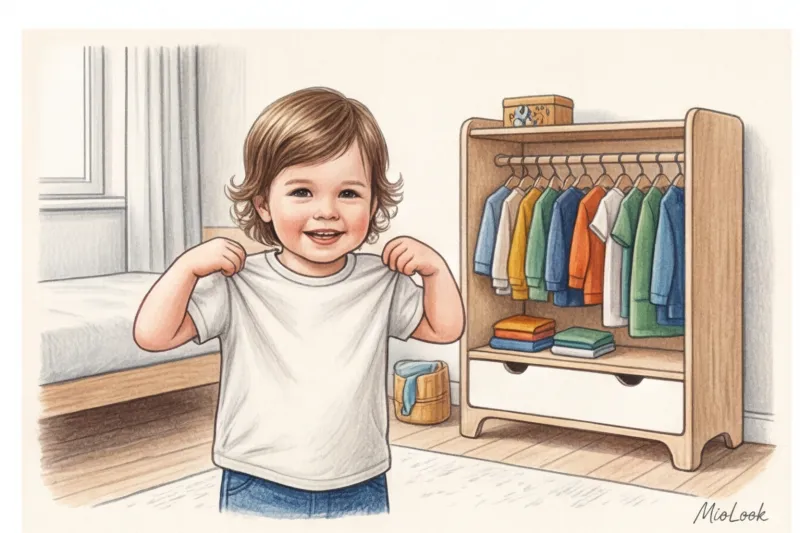
Child psychology research shows that limiting a child's choices to three or four compatible options significantly reduces morning stress (for both the child and the mother). Introducing the capsule saves families up to three hours of morning time per month!
But how do you visualize this capsule? This is where technology comes in. I often recommend to my mother-clients that they digitize their baby items.
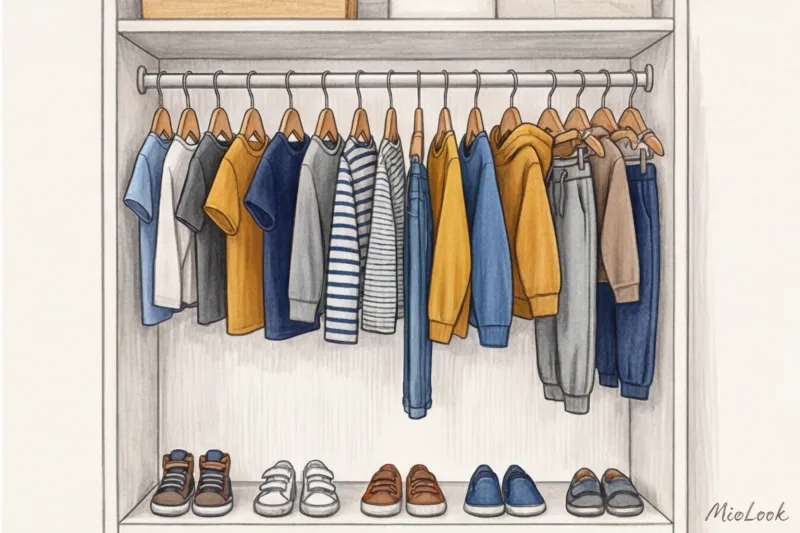
Take photos of all your child's bottoms, tops, and shoes in good daylight and upload them to MioLook wardrobe This provides two huge benefits:
Firstly, gamification of the morning routine The night before, you sit down on the couch with your child, open the app, and say, "Choose what you'll wear tomorrow." Your child swipes through pre-made outfits on the phone screen. They have the illusion of complete control ("I chose it myself!"), and you feel at ease because the app only contains items that go well with the weather.
Secondly, smart shopping Standing in front of your fifth gray sweatshirt in the store, you open the app's AI analytics and see that your child actually needs a pair of navy blue pants to complete three new looks.
Top 3 Mistakes Moms Make When Creating a Boy's Wardrobe
Even the most well-thought-out capsule can be ruined by a few bad decisions. Let's reinforce this material and discuss what you absolutely should not do:
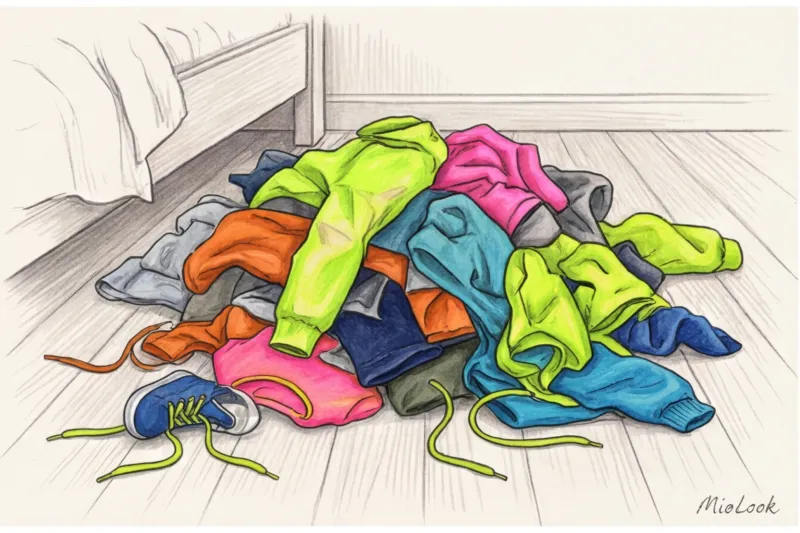
- Buying clothes that are too big for growth (2 sizes bigger).
A false economy. It's awkward for a child to move around right now—they trip over long pant legs and get tangled in long sleeves. And by the time they reach the right size, the garment will be hopelessly worn and frayed at the folds. Buy a maximum of half a size extra. - The fasteners are too complicated.
Narrow buttons on jeans, tight zippers on jackets, long laces. All of this deprives a child of independence in kindergarten and causes frustration. Shoes with Velcro fasteners, jackets with large pull-on zippers, and pants with elastic waistbands are your best friends until age 6 or 7. - Ignoring the child's opinion.
Yes, we have rules. But a capsule the boy hates simply won't work. Respect his tactile sensations: if he says the sweater "bites," believe him and give it back.
To be fair, I will point out one limitation: This basic capsule approach may not work fully if a child has been diagnosed with sensory integration disorders. In such cases, you may have to buy five identical ultra-soft T-shirts in the same color, and that's perfectly normal—health is more important than style.
The perfect boy's clothing capsule isn't about fashion magazine covers. It's about functionality. A well-designed wardrobe gives your son freedom of movement and independence, and gives you precious moments of morning peace.