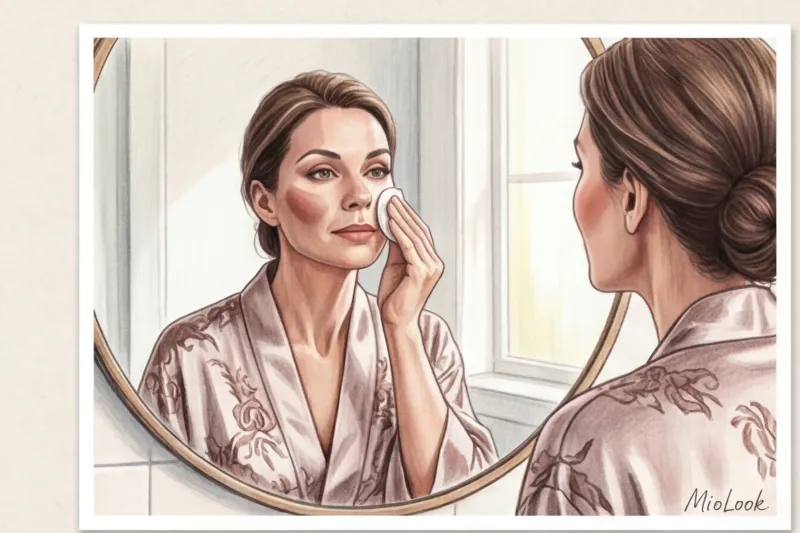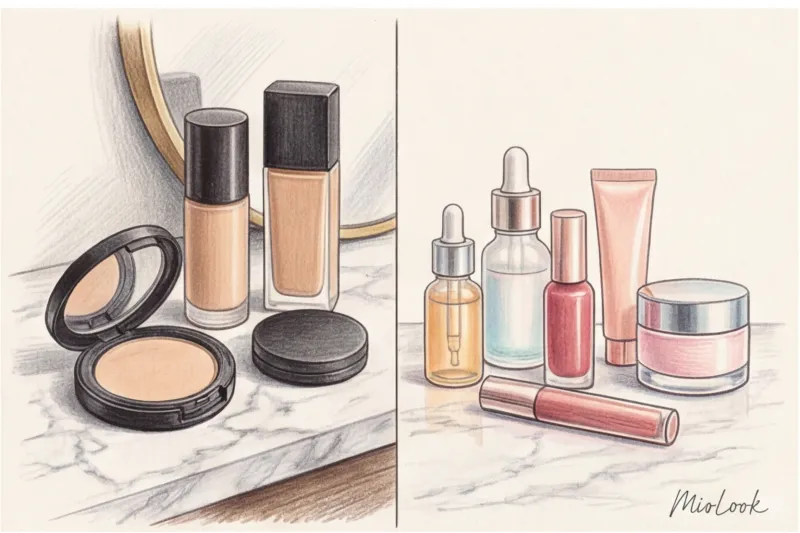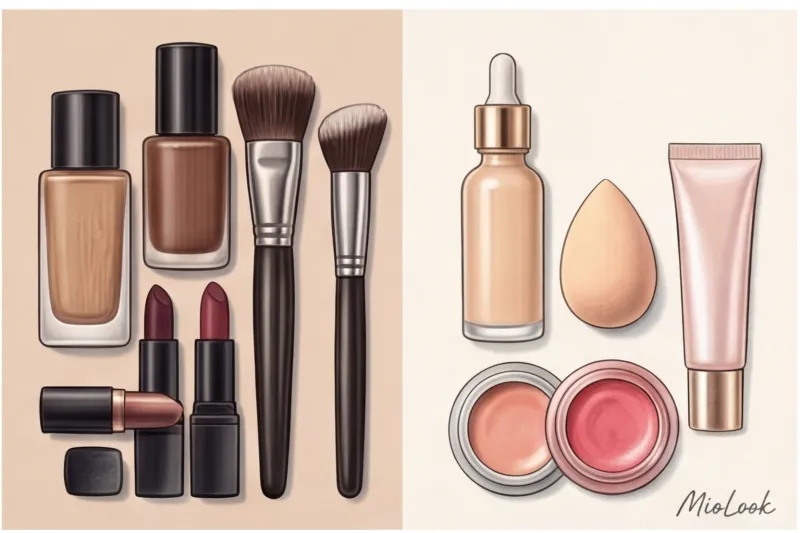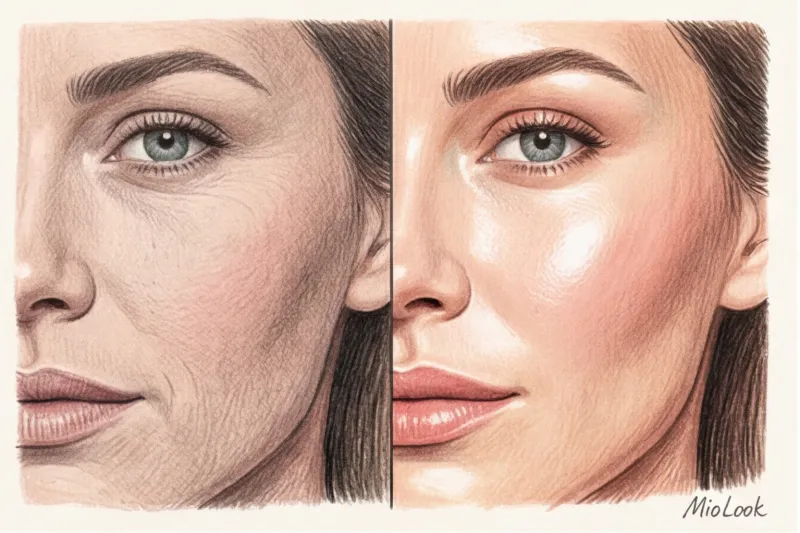
Backstage at Paris Fashion Week, watching 40-year-old models like Amber Valletta get ready, I noticed something striking. Top makeup artists didn't even bother with powder. Their workstations were devoid of thick kabuki brushes or heavy matte palettes—only lightweight fluids, melt-in tints, and their fingertips, which they used to literally press color onto the models' faces. This approach is a complete game-changer for mature skin.
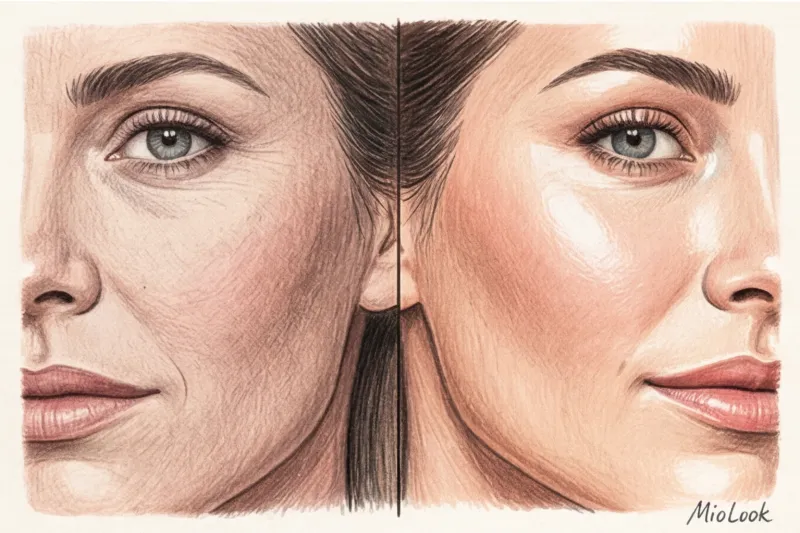
This isn't about fleeting TikTok trends, but the harsh biophysics of aging. This isn't just a visual trick, but a functional approach that transforms makeup from a heavy "mask" into an extension of your skincare routine. We've already discussed creating facial architecture without overload in our A complete guide to lifting makeup after 35 , but today I want to look at the physics of textures.
The Anatomy of Aging Skin: Why Dry Textures Are Your Enemy
To understand why your favorite dry product suddenly stopped working, you need to look at your skin through the lens of dermatology. After age 35–40, we face an inevitable fact: our skin loses about 1–1.5% of its collagen annually. But even more important is the change in the lipid barrier—that protective layer that makes a youthful face appear plump.
Classic dry cosmetics are based on talc and mica. According to the laws of microphysics, talc particles act like microscopic sponges. They can absorb their own weight in fat and moisture. When you apply a powder product to mature skin, a process called transepidermal water loss (TEWL) is triggered. The powder literally sucks out the remaining moisturizer and natural sebum from the upper layers of the epidermis.
By midday, this process causes dry pigment to settle into the microrelief, settling in every expression line. What looked like a subtle flush in the morning looks like cracked clay by evening.
The Desert Effect: The Hidden Danger of a Matte Finish
Our perception of age is largely subconscious. A matte, completely glare-free surface is associated with dryness, aging, and loss of energy. Historically, the fashion for heavily powdered faces was driven by the need to conceal skin imperfections in an era without antibiotics and quality skincare. Today, according to a report by the analytical agency WGSN (2024), "hyper-hydrated skin" has become the global beauty standard—skin that radiates health and is hyper-hydrated.
Your perfect look starts here
Join thousands of users who look flawless every day with MioLook. The smart algorithm takes into account your unique features.
Get access — €0.99 onceCreamy Textures as a Second Skin: The Physics of Light Reflection
Cream formulas work fundamentally differently—they mimic that same lost lipid layer. The dewy finish creates the perfect light pattern on the face. Light reflects off prominent areas (cheekbones, bridge of the nose), visually smoothing the contours and creating an instant lifting effect. You're not filling in wrinkles; you're eliminating their shadows.

I had a particularly revealing case in my practice. A client, a top manager, came to me complaining that expensive clothes "didn't look right" on her. At our meeting, she was wearing a luxurious blouse made of thick silk (costing around €400). The silk has a luxurious shimmer, while her face was covered in a matte powder. A stark dissonance arose: the radiant, vibrant fabric emphasized the lifelessness of her dry makeup. As soon as we replaced her thick blush with a translucent, creamy, peach-hued tint, her face "came alive," and her clothes instantly took on a completely different look. This is what I call the synergy of style and beauty routine.
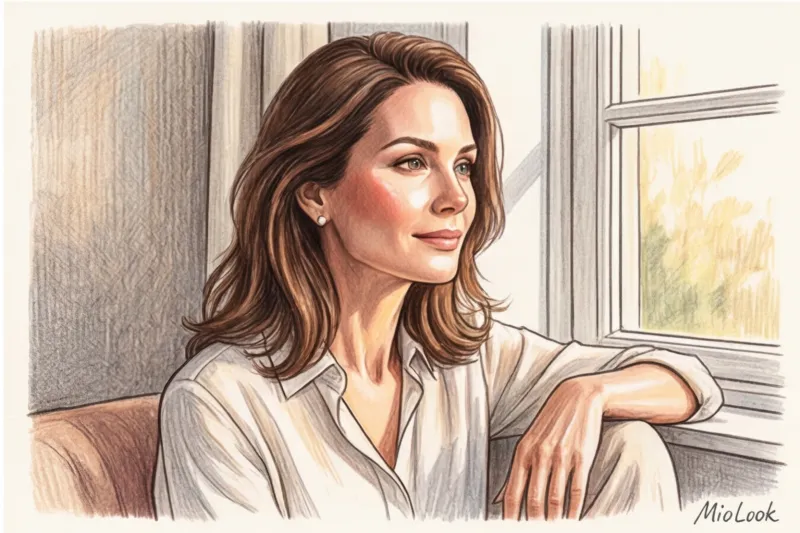
How to choose the right cream blush for mature skin
Many women are afraid of cream products, remembering the heavy, Vaseline-based sticks of the 2000s that lay on their faces like a greasy pancake and dissolved the foundation underneath. Forget that experience. The cosmetics industry has come a long way.
Modern cream blushes for mature skin are formulated with volatile silicones (such as cyclopentasiloxane). How does it work? You apply the product, it glides on easily and blends, and then the silicone evaporates with body heat, leaving behind a fine, fixed stain (pigment) unburdened by heavy waxes. Furthermore, new-generation formulas (priced between €30 and €70) are generously enriched with squalane, low-molecular-weight hyaluronic acid, and peptides.
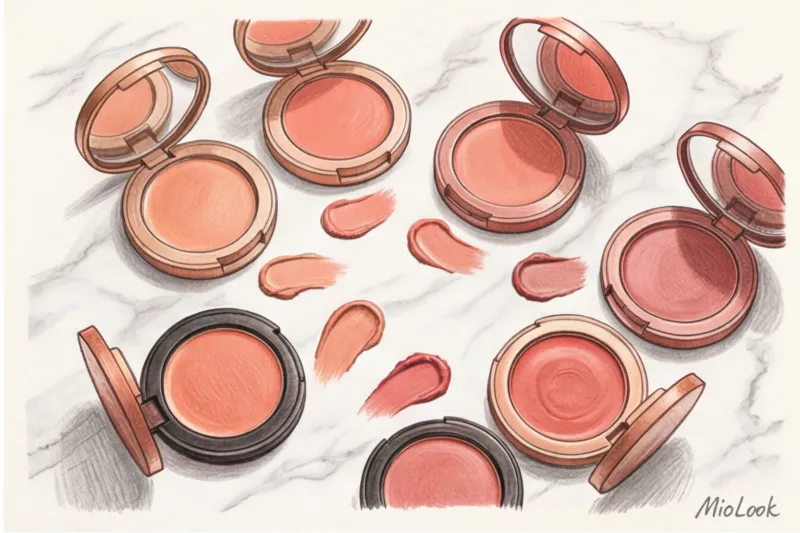
The main rule when choosing: look for sheer coverage. Dense pigment is difficult to blend without staining. A translucent texture can be layered, controlling the color intensity down to the millimeter.
Pigment Matters: Which Shades Provide a Lifting Effect?
Color is half the battle. As we age, blood circulation changes, and skin often takes on a sallow or grayish undertone. Your best ally here are warm peach, soft coral, and salmon shades. They act as color correctors, neutralizing the grayness.
But there's an important exception here (and this is the very situation where universal advice doesn't work). If you have thin skin prone to rosacea or couperose (pronounced spider veins), absolutely avoid cool pinks, fuchsias, and plums. They will clash with your redness and visually intensify the inflamed look. Warm beige-peach tones are your choice in this case.
Access to MioLook for €0.99 — one-time payment
A smart AI stylist will select the perfect look based on your skin tone and facial geometry.
Get access — €0.99 onceDebunking the myth: "Creamy products roll off and don't last."
This is the most common objection I hear from clients. And here we come to a counterintuitive fact that shatters the mold of many beauty bloggers: trying to set cream blush with powder is a crime against mature skin.
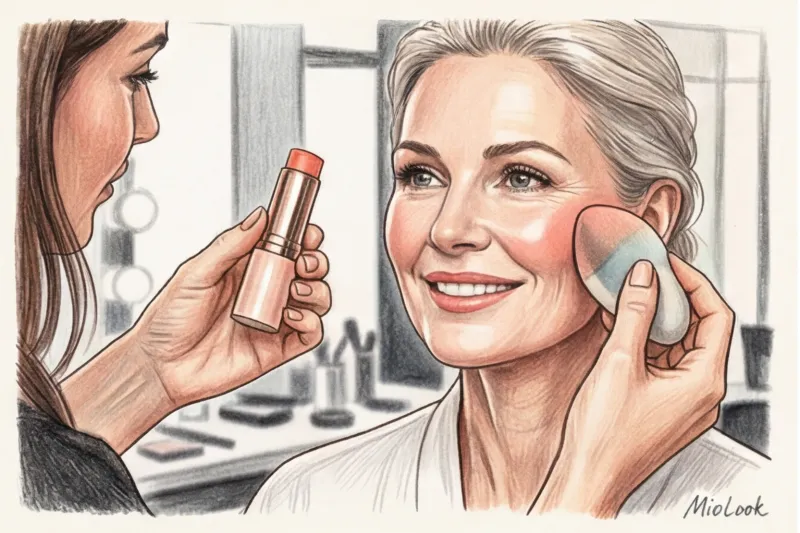
The technique of "baking," or liberal dusting of powder, originated from stage makeup and drag culture in the 2010s. It works well on skin in its 20s with abundant sebum production. On skin over 40, powder applied over cream blush creates a layered-cake effect that will crack by lunchtime. Modern formulas are self-setting. If you want your makeup to last 12 hours, use a high-quality water- or lightly alcohol-based setting spray instead of powder. It will create an invisible polymer film without weighing it down.
Lifting Makeup Application Technique: Fingers vs. Brushes
Forget complicated formulas with five different brushes. Your best tool is always with you. Body temperature (36.6°C) is the perfect catalyst for melt-in textures. By picking up the product and gently rubbing it between your fingertips, you warm up the formula.
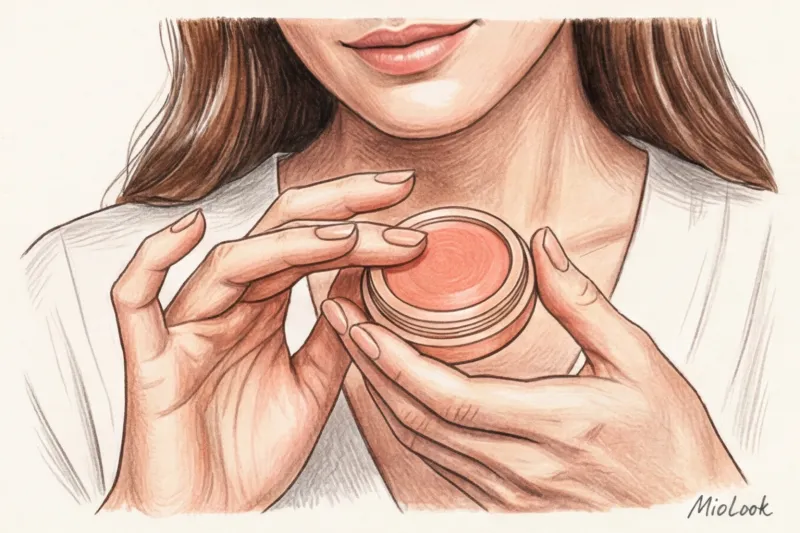
- Application vector: The biggest mistake 8 out of 10 women make is smiling and applying blush to the prominent apples of their cheeks. The problem is that when you stop smiling, the apples (and the blush along with them) sink downward, visually weighing down the nasolabial folds. Shift the application area: start at the top of your cheekbone and gently blend the pigment diagonally upward toward your temples. This creates the optical illusion of taut tissue.
- Shading technique: Don't smudge the product! Side-to-side movements will simply pull the foundation away, revealing your skin. Use light, patting motions. You want to literally "melt" the color into your skin.
Checklist: Step-by-step integration of creamy textures into your makeup bag
To make sure your knowledge doesn't just remain theory, here's a concrete action plan for your vanity.
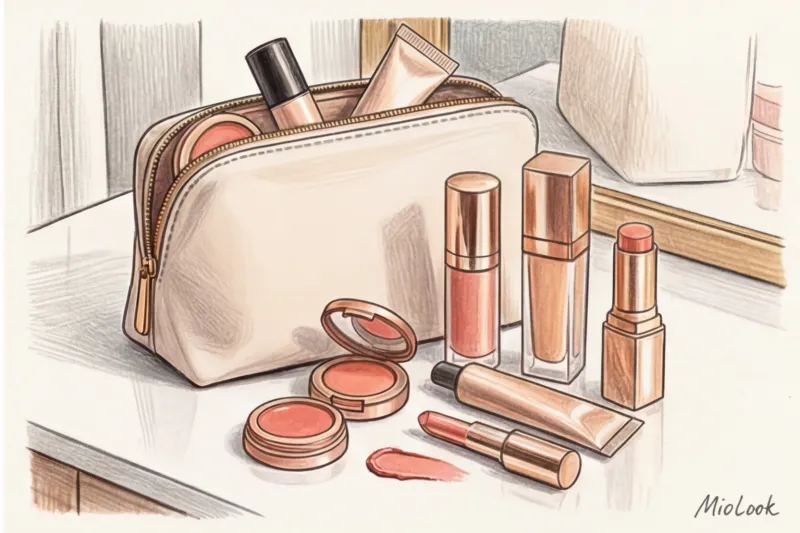
- Revision: Open your makeup bag and, without regret, put aside all the matte blushes, dense powders, and (especially!) dry highlighters with large glitter particles—they mercilessly emphasize even the wrinkles you don't have.
- Basic set: To get started, you'll need just two products. First, a high-quality cream blush (budget €15-20, premium €40-60). Second, a liquid illuminator without shimmer, which creates a "wet highlight" effect rather than a disco ball.
- Multifunctionality: A sophisticated look is always built on harmony. Use the same product to create a monochromatic makeup look: tap a drop of cream blush onto your cheekbones, lightly transfer any remaining powder onto your fingertips to the crease of your upper eyelid, and then add a touch to the center of your lips. This technique takes 30 seconds, but it brings your face together, creating the impression that a professional makeup artist has been working on your look.
Stylist's Summary: Makeup That Works For You, Not Against You
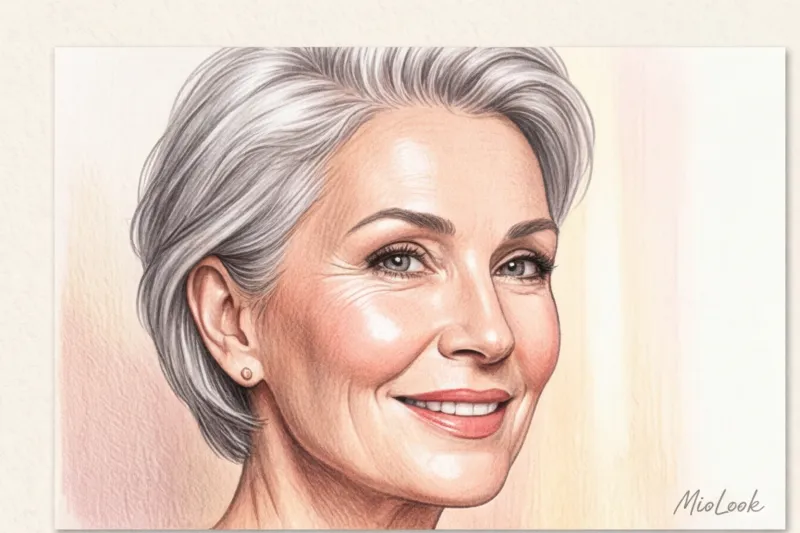
Surrendering dry textures in favor of creamy ones isn't a capitulation to age; it's an elegant adaptation. It's an understanding of how light works, the physics of materials, and your own anatomy. Dewy, radiant skin always looks luxurious and well-groomed. It's the perfect canvas for the complex textures of your wardrobe—be it a cashmere coat, thick silk, or a structured jacket.
Style is always a holistic approach. Your makeup shouldn't clash with your clothes, but rather complement them. It's this philosophy of a holistic look that we've incorporated into MioLook app When you delegate the task of choosing the perfect everyday outfit combinations to a smart wardrobe, you have the time and inspiration to pay attention to details—for example, mastering that flawless dewy finish that will take off a decade without a single injection.