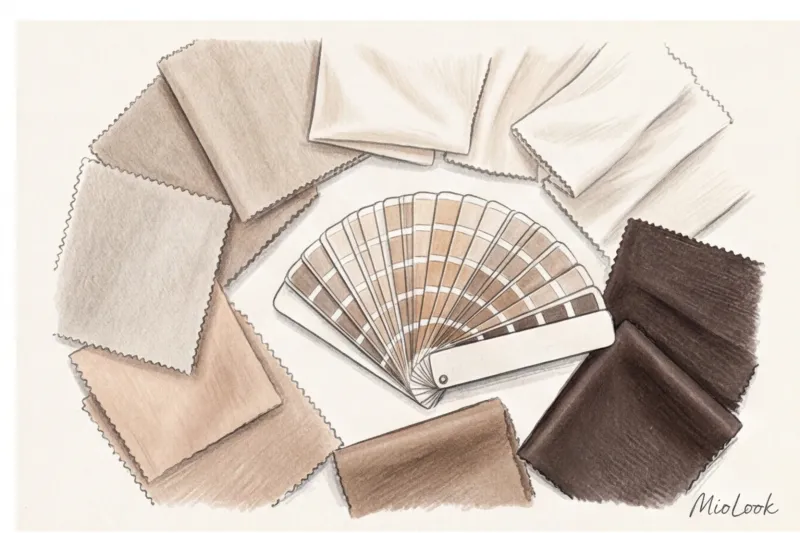
Have you ever bought a luxurious, at first glance, beige sweater, put it on, and suddenly noticed that your face looks tired, as if you haven't slept for a week? In 12 years of working as a stylist, I see this picture all the time. Many people are convinced that Clean girl style colors — it's simply total beige from head to toe. But this is a dangerous and very expensive misconception.
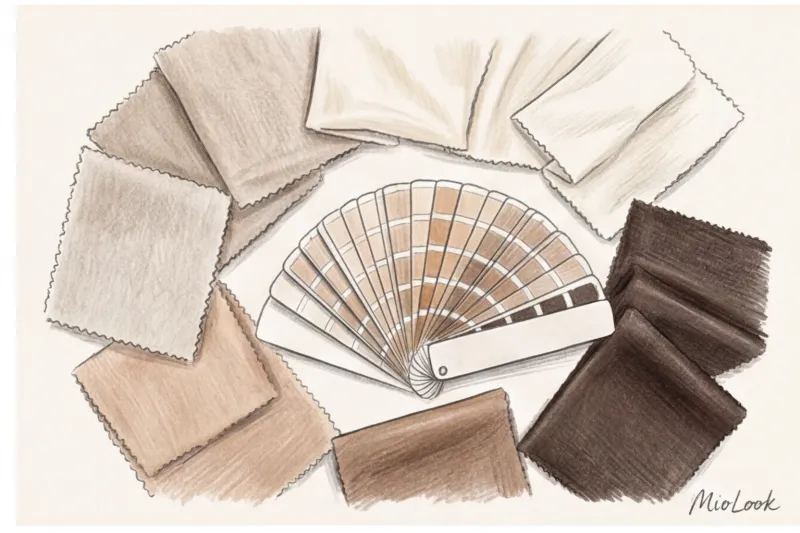
Unlike basic articles that simply list light shades, we'll look at this aesthetic through the lens of textile physics. We'll explore how the reflective properties of different fabrics (silk, cashmere, cotton) and skin tone undertones can make one neutral look truly classy, while another looks dull and flat. We've already explored the philosophy behind this trend in detail in our The Complete Guide to Clean Girl Aesthetics , and today we will focus exclusively on color.
Anatomy of a palette: which colors form the foundation of the clean girl style
The minimalism of the '90s, which inspired modern grooming trends, demands a specific color palette. According to the Pantone Color Institute's 2024 report, we are witnessing a global shift in core collections (Core Classics): brands are abandoning aggressive, pure colors in favor of complex, natural undertones.
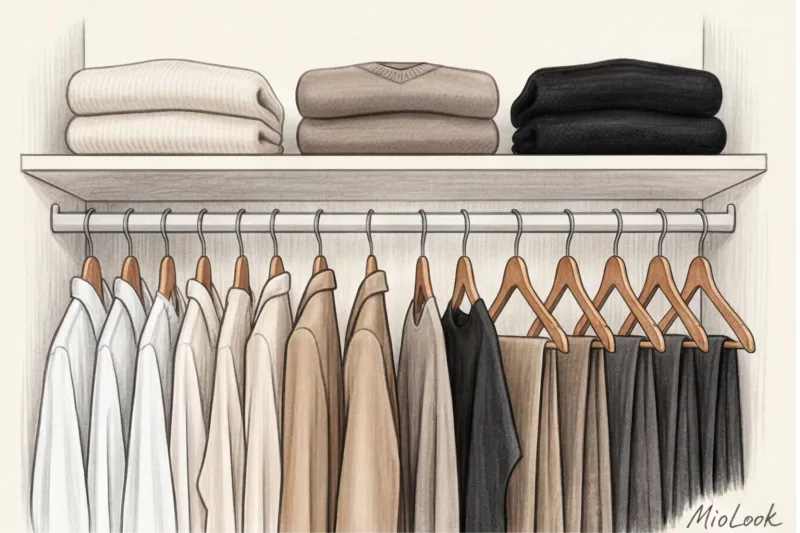
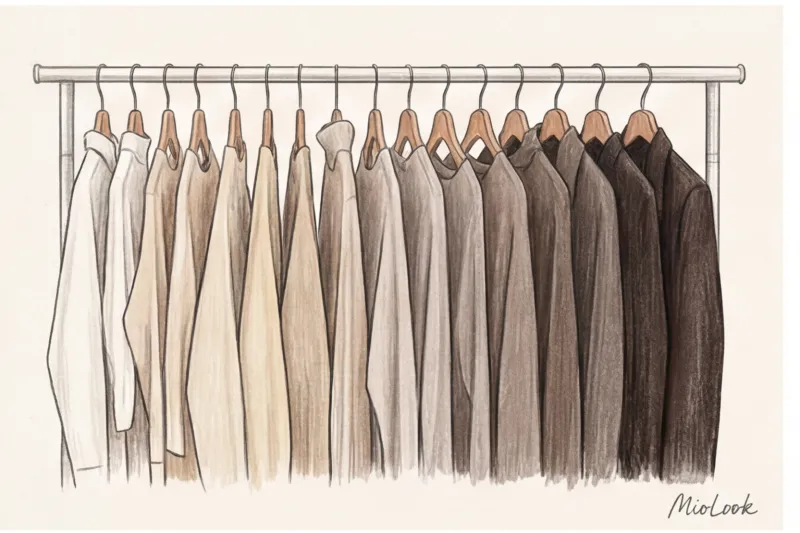
The foundation of a proper wardrobe is built on four pillars:
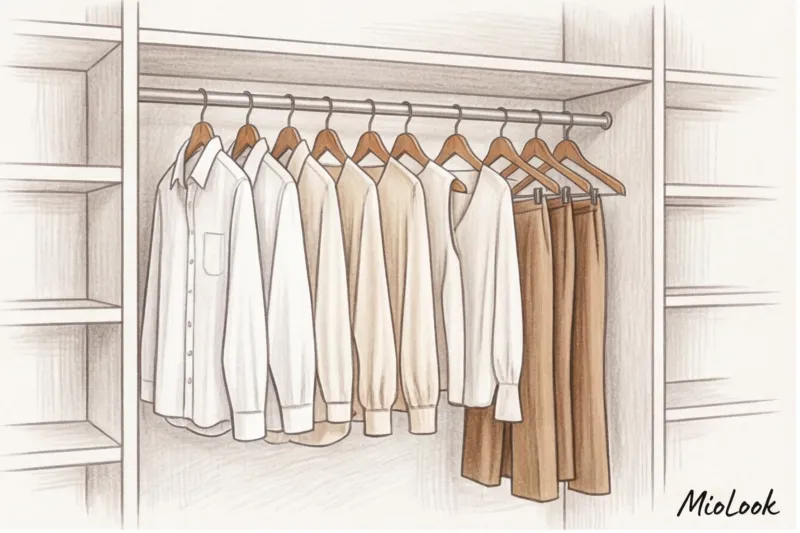
- Ivory: A soft alternative to white that contains a hint of yellow.
- Oatmeal: a complex melange shade combining beige and light grey fibres.
- Taupe (Taupe / Gray-beige): cool, noble color with a slight lilac or gray undertone.
- Espresso (Deep coffee): a thick, rich brown replacing the harsh black.
Pure white is the main enemy of the Clean Girl aesthetic. It's almost never found in nature. In daylight, pure white creates a "medical gown" effect and draws too much attention, depriving the look of softness. Replace it with milky or ecru.
The Illusion of Simplicity: Why Some Neutral Looks Expensive While Others Look Flat
Now, a little textile science. Have you ever wondered why a monochrome look from The Row or Loro Piana looks like a work of art, while trying to assemble the same look from a mass-market store often resembles a tech uniform?
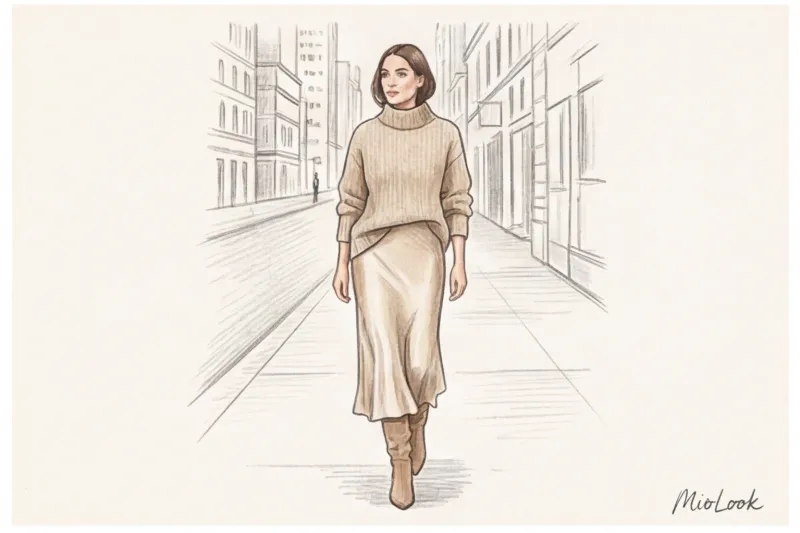
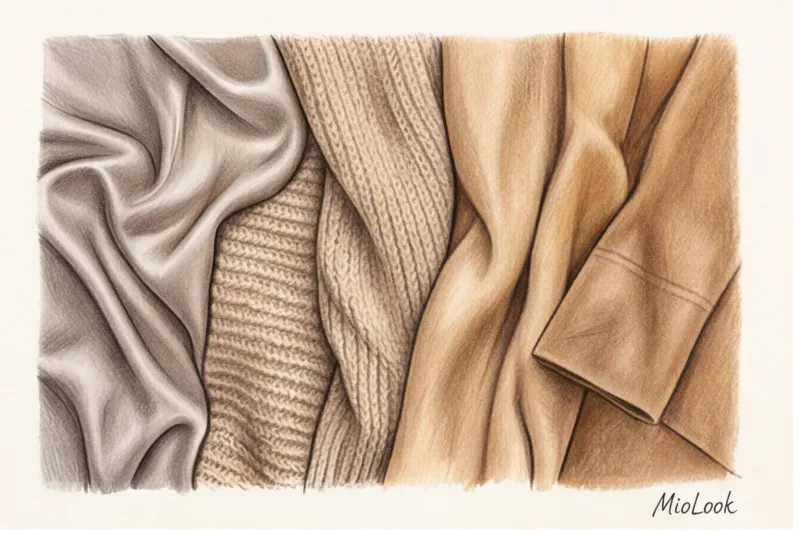
The secret lies not so much in the pigment itself, but in how the fabric absorbs and reflects light. Natural fibers absorb the dye deep into their structure. When light falls on 100% cashmere or merino wool, it diffuses slightly, creating a soft, luminous glow. Synthetics (especially budget polyester for €30–€40) reflect light superficially and harshly, making any nude shade appear plasticky and flat.
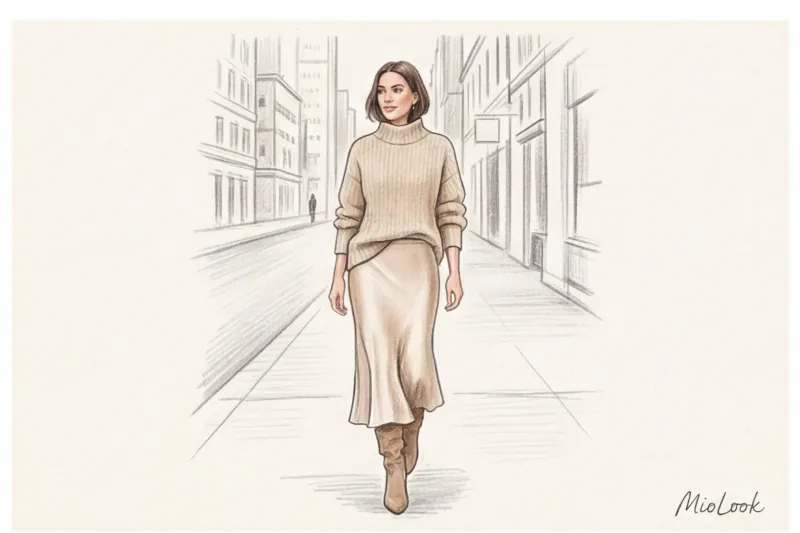
For a monochrome look to work, you absolutely need contrast of textures If you're wearing matte oatmeal wool trousers, pair them with a flowing silk blouse in the same shade (sheen) and drape a loose cashmere sweater (pile). The varying degrees of light reflectivity will make the same color appear multifaceted.
Your perfect look starts here
Join thousands of users who look flawless every day with MioLook. Its smart algorithm will help you create a minimalist capsule wardrobe.
Get access — €0.99 onceTemperature Conflict: The Biggest Mistake When Mixing Nude
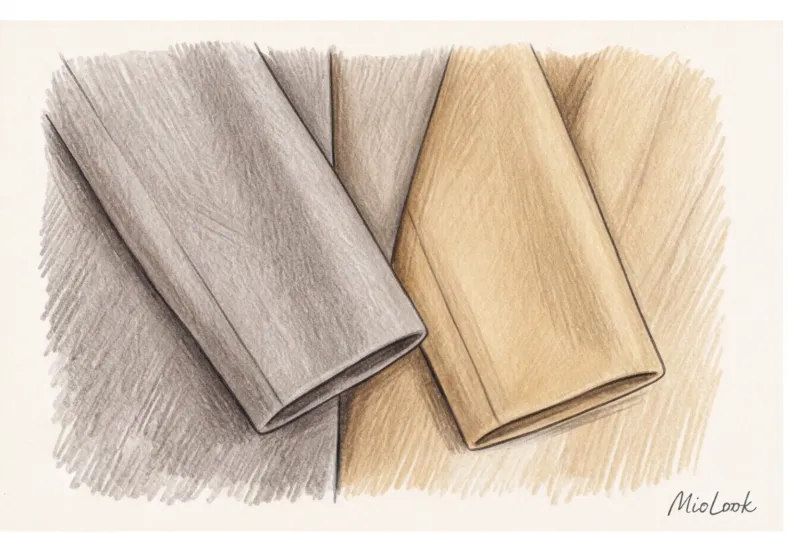
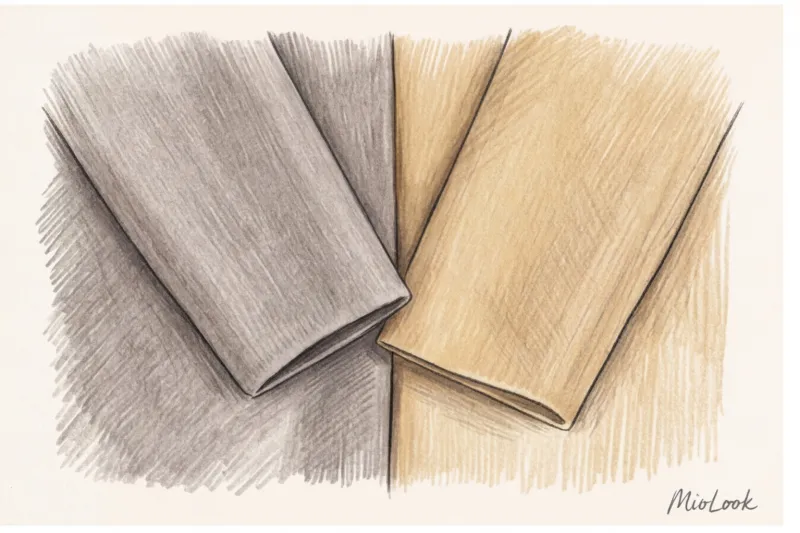
There's a dangerous myth in the styling community: "All beige shades go well together." This is categorically untrue. Mixing a cool taupe with a warm camel without a buffering color is a recipe for visual disaster.
When you place a garment with a distinct pink-gray (cool) undertone next to a garment with a peachy-yellow (warm) undertone, the cool shade begins to appear muddy, while the warm shade appears sickly yellow. This creates visual noise. If you need to combine them in the same outfit, be sure to use a "buffer"—separate them with a milky-white shirt or a dark chocolate-colored belt.
Combination formulas: how to mix clean girl colors in practice
To avoid spending hours in front of your closet, use proven stylistic formulas. According to WGSN's macrotrend reports on sustainable minimalism (2023), the most harmonious looks follow the 60/30/10 ratio (60% base color, 30% supporting color, 10% accent color).
- Formula 1: Monochrome 2.0. We take one color (for example, ecru) and assemble it from three different fabric densities. Cotton + silk + rough leather. It's a classic.
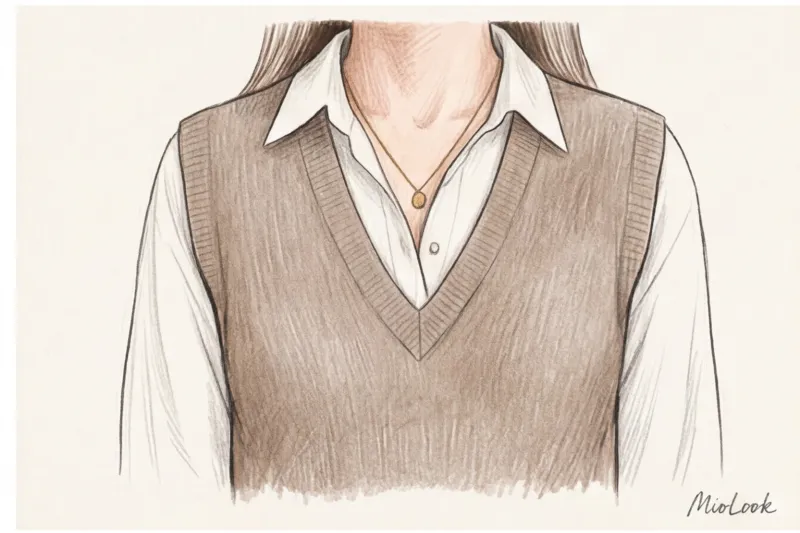
- Formula 2: Light center, dark frame. Wear a light vertical piece (an off-white top and off-white trousers) and layer a trench coat or taupe jacket over it. This technique visually elongates the silhouette and trims excess volume at the sides.
- Formula 3: "The Espresso Rule". Black in nude aesthetics often acts as a visual black hole—it's too harsh. My favorite stylistic trick: using belts, bags, and shoes in a dark chocolate (espresso) shade to "ground" an overly light or flowy look. This creates the right contrast while maintaining a soft feel.
Adapting the palette to your color type
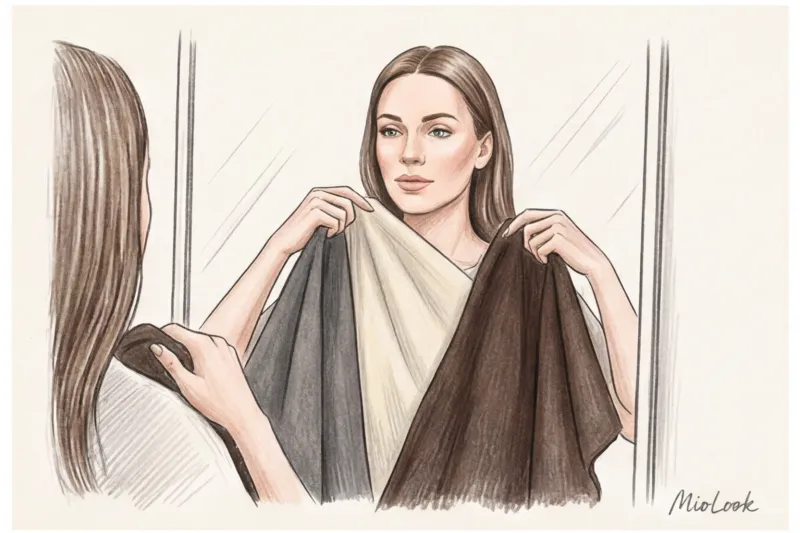
Clean girl colors aren't a one-size-fits-all formula. Last month, I had a client with a "Cool Summer" color type. She'd bought a gorgeous Massimo Dutti coat in the classic, warm shade Camel, but it made her complexion look sallow and unhealthy. When we swapped it for a Taupe coat, her skin instantly brightened, her redness disappeared, and her eyes became more vibrant.
According to the Munsell Contrast Scale, the optimal contrast level in the portrait area should mimic your natural contrast. Here's how to adapt a nude base (we write more about this in the article about 12 color types of appearance ):
- Winter color type: Your version of a "clean girl" is icy gray, graphite, deep navy, and crisp white (the only skin tone that suits it). Classic beige will make you look tired.
- Summer color type: Dusty rose, cool taupe, muted dove, undyed linen.
- Autumn color type: Caramel, terracotta, olive, mustard beige, rich camel.
- Spring color type: Creamy, warm peach, light camel, butter color.
Fair Limit: This aesthetic, in its classic (light beige) interpretation, absolutely DOESN'T work on women with very bright, high-contrast complexions unless you enhance the contrast with makeup or dark accessories near the face. You'll simply "get lost" in the oatmeal shades.
Ready to get started?
Try the free plan—no commitment. Digitize your wardrobe and find your perfect neutrals.
Get access — €0.99 oncePractical checklist: putting together a Clean Girl capsule with MioLook
The transition to a conscious style begins with an audit. First, get rid of any dirty, washed-out, or pilled neutrals. Nude doesn't forgive sloppiness.
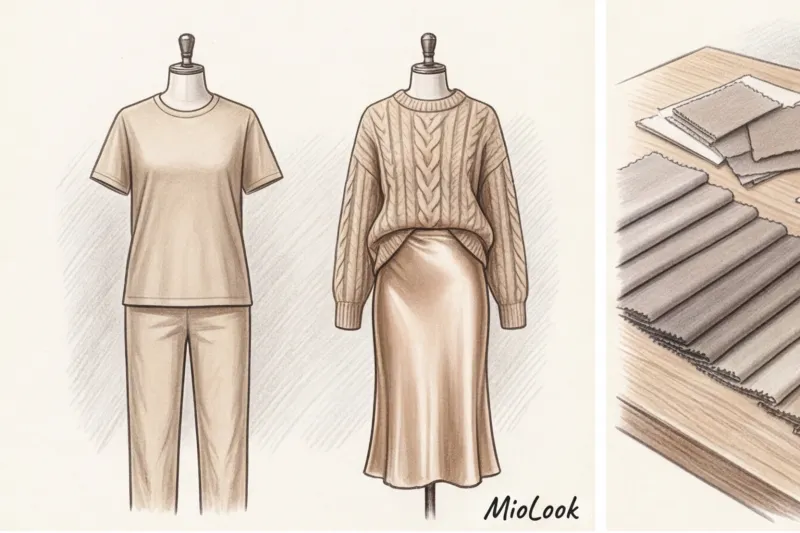
To create a status base, you don't need a huge budget; you just need precision. I recommend investing in just three high-quality items:
- Champagne silk midi skirt (In the €90 to €150 range, you can find excellent, dense silk.) It will create that perfect play of light.
- Oversized cashmere sweater in oatmeal shade. Following the principles of sustainable fashion, it is better to buy one sweater made of recycled cashmere in the desired undertone (around €150–200) than five mediocre acrylic sweaters that will lose their appearance within a month.
- The perfect ecru t-shirt. Look for cotton with a density of at least 180 g/m² - it holds its shape and is not see-through.
As for accessories and embellishments, if your base color leans toward warm (creamy, caramel), choose gold. If your base color leans toward cool (taupe, graphite), choose matte silver or white gold.
To avoid having to keep all these temperature formulas in your head and to make it easier to pack your capsule, I recommend digitizing your basic items through MioLook The app's AI stylist automatically identifies the color scheme of your uploaded items and suggests which textures and shades in your closet work best together.
Ultimately, luxurious neutrals aren't about blindly copying social media trends. They're about deeply understanding how fabric interacts with light, and how clothing color interacts with your skin tone. Find your perfect undertone, invest in quality textures, and your minimalism will always look great.