Do you know what wardrobe item most often brings tears of disappointment to my consultations? No, it's not jeans, which are always tricky. It's the iconic beige coat from a famous brand.
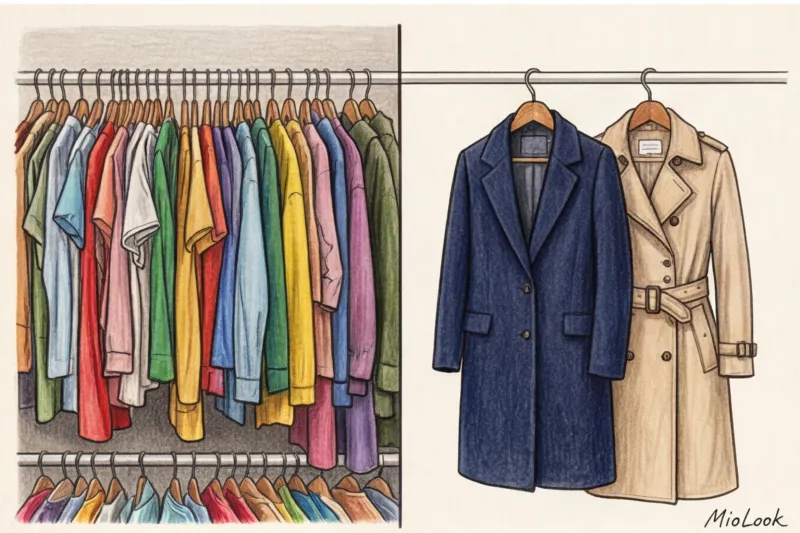
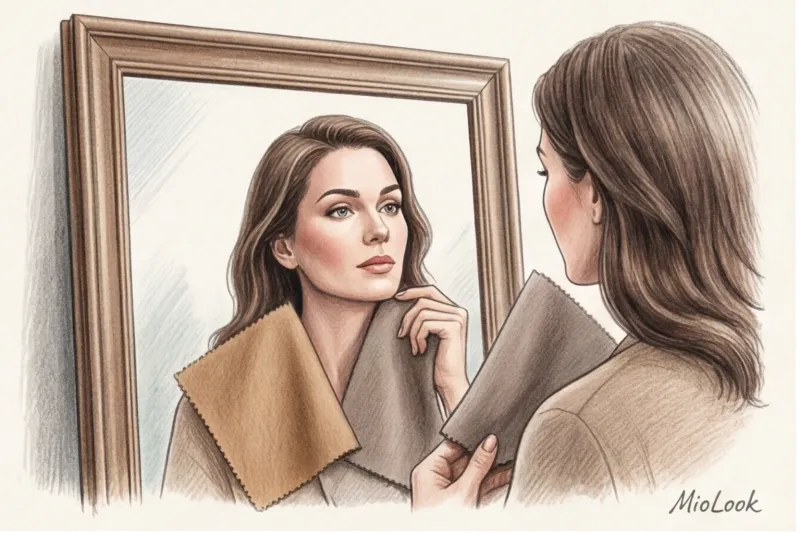
One of my clients saved up around €2,000 for a cult Max Mara Camel dress. She was sure she was buying it for life. But every time she wore it, her coworkers would say, "Didn't get enough sleep? Are you sick?" The problem wasn't the quality of the tailoring—it was impeccable. The problem was that the warm camel undertone clashed with her cool, contrasting complexion, casting a yellowish shadow on her face and highlighting the dark circles under her eyes.
We have provided more details about the rules for creating the database in our the complete guide to timeless style. And today we'll talk about how to choose the ideal one. classic women's outerwear — not through the prism of fleeting trends, but through rigorous mathematics, coloristics, and knowledge of materials science.
An investment, not a waste: how classic women's outerwear differs from "just basics"
According to a large-scale McKinsey study (2024), the life cycle of clothing has been halved since the early 2000s. We buy more, wear less, and throw it away faster. But outerwear doesn't tolerate this approach.
After 12 years of wardrobe review, I've come up with a simple rule: a white T-shirt is a consumable, but a good coat is an investment. Classic women's outerwear sets the tone for your entire look. You can be wearing simple jeans from Zara and a basic sweater, but if you throw on an impeccably tailored wool coat with the perfect shoulder geometry, the whole ensemble looks classy.
"Outerwear is the packaging of your first impression. People on the street don't see your silk top; they see the silhouette of your coat."
The biggest myth of stylists: why a beige coat (Camel Coat) doesn't suit everyone
The internet is full of lists of "10 things every woman should own," and a beige coat always tops the list. As a certified colorist, I can officially say this is a dangerous myth.
Camel is a warm, muted shade with a yellow-orange base. If your natural coloring is Autumn or warm Spring, you'll look regal in it. However, if your skin has a cool undertone (Winter or Summer), a large area of beige near the face will act as a poor filter: your skin will take on a sallow tone, and your eyes will lose their brightness.
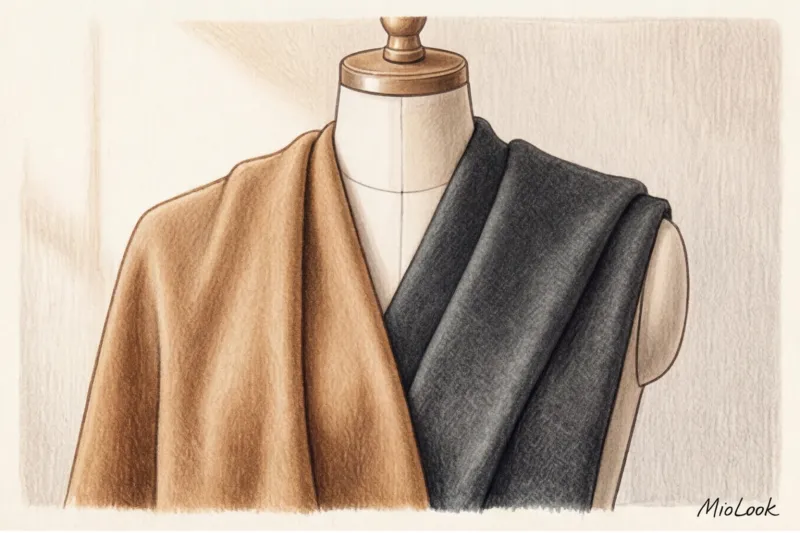
Which alternatives are truly universal?
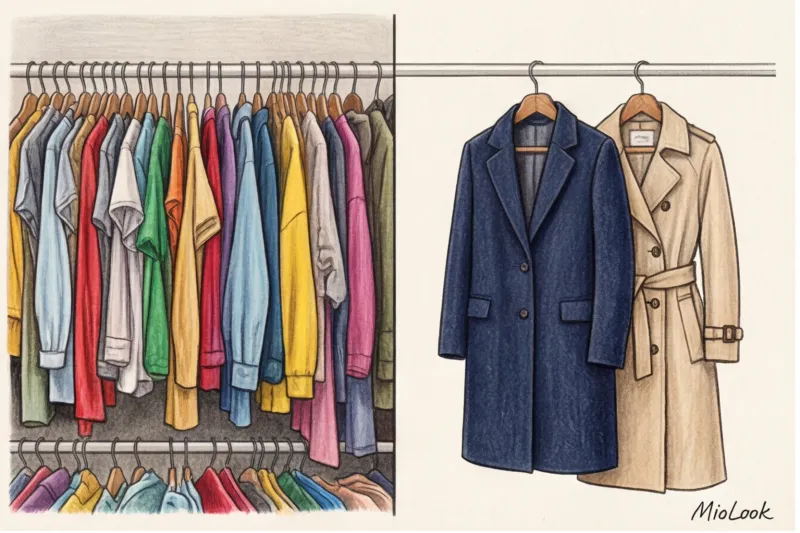
- Navy (deep dark blue): Unlike deep black, it doesn't create harsh shadows on the face and looks great with any shade of denim.
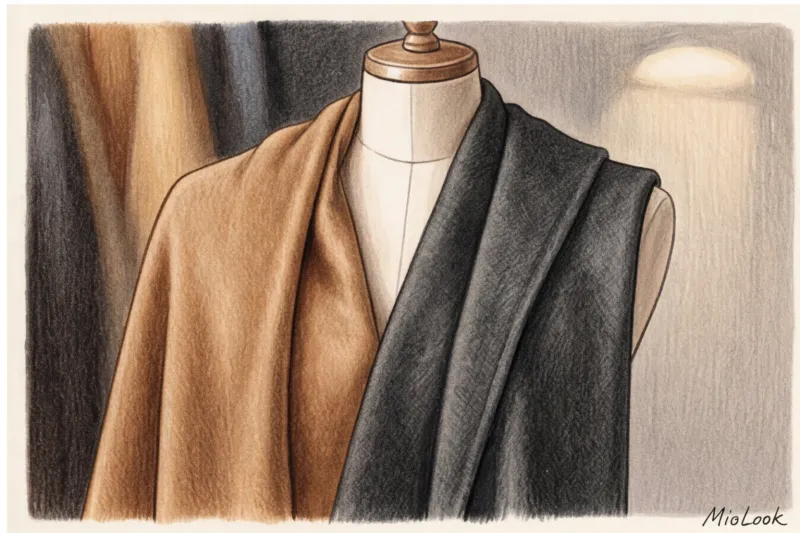
- Charcoal (charcoal gray, graphite): Ideal for cool color types, it looks more refined than light gray melange.
- Taupe (gray-brown): A great compromise if you still want a light coat, but without the obvious reddish tint.
If you are unsure about the choice of shades, try MioLook — a smart AI stylist will help analyze your looks and choose a palette that truly refreshes you.
Top 4 Timeless Silhouettes That Will Outlast Any Microtrend
The exaggerated oversize styles you could drown in are slowly but surely leaving the runways. Cuts are returning to clean, semi-fitted, and straight lines. Here are four silhouettes that will still be relevant in a year, or even five years.
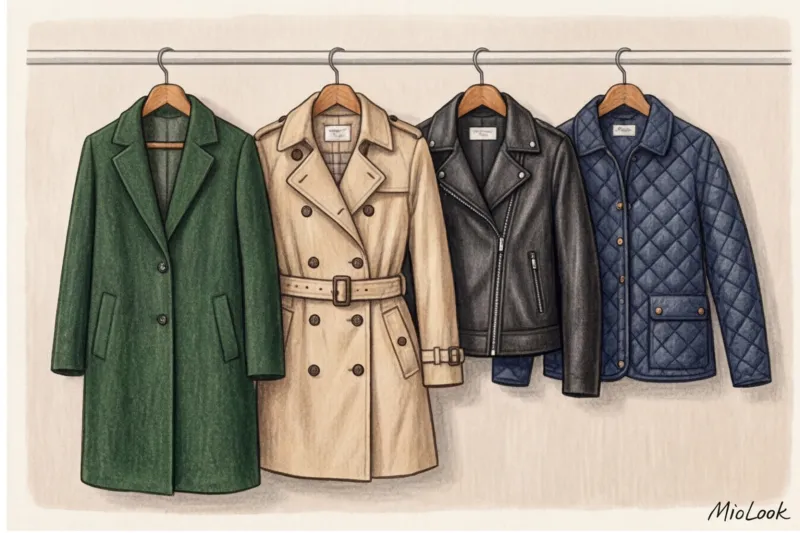
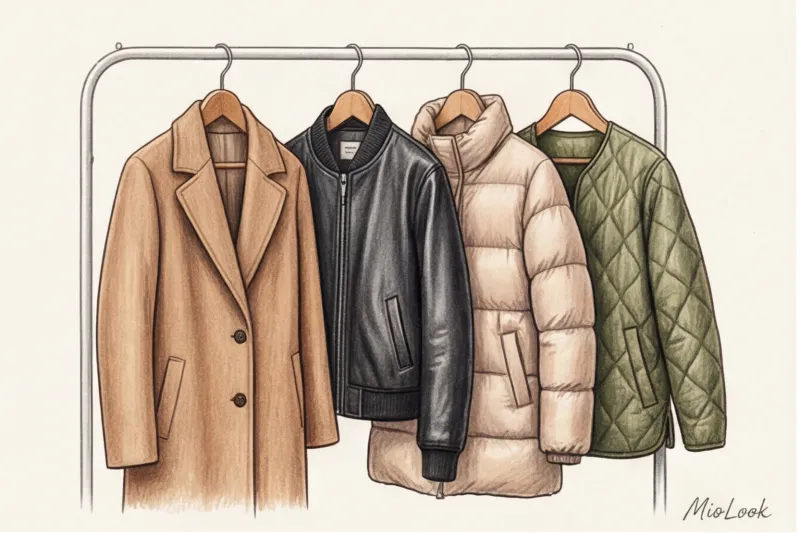
Structured wool coat with a straight cut
The status markers here are the English collar and the tailored set-in sleeves (not raglan or dropped shoulder). The ideal length for a modern style is midi (to mid-calf). It allows you to wear dresses of any length under the coat without creating a sloppy "visible hem" effect, and it provides excellent wind protection.
The Classic Trench Coat: The Anatomy of the Original
A true trench coat isn't just a beige raincoat. It's a functional garment with a military history. Look for models with epaulets (they visually straighten your posture), a back yoke (which wicks away water), and straps on the cuffs. Pay attention to the composition: pure 100% cotton is beautiful, but it wrinkles easily. Ideally, it should contain 10-15% polyester or elastane—this will prevent unsightly creasing of the elbows.
Leather Jacket: Minimalism Instead of Biker Grunge
Excessive hardware, dozens of zippers, and a heavy belt at the hem make this jacket feel too formal. For a timeless wardrobe, choose a simple biker jacket in smooth matte leather or an aviator style. The clean lines make it easy to wear over a silk slip dress or tailored office trousers.
Quilted Jacket for smart casual
This is the perfect option for the transitional season. The classic British diamond quilting and corduroy collar make it more elegant than a puffer jacket, yet more practical than a coat. It's perfect for layering: layer it over an oversized hoodie or even a thin jacket (if the office dress code allows).
Ready to overhaul your wardrobe?
Try MioLook's free plan—no commitments required. Upload your items and let the AI assemble them into a capsule.
Get access — €0.99 onceFabric Guide: What to Look for on the Label Before Buying
The most common mistake I see from clients on a budget is buying a 100% cashmere coat for everyday wear to work. Cashmere is incredibly warm, lightweight, and soft to the touch. But it's a fragile fiber. Regular friction from a bag strap, car seat, or public transportation will cause it to pill in just a month.
According to the Fabric Institute, the ideal fabric formula for everyday outerwear is the 70/20/10 rule:
- 70-80% natural wool (warms and keeps shape);
- 10-20% polyamide or nylon (gives the fabric wear resistance and protects against abrasion);
- 5-10% cashmere (adds softness and noble shine).
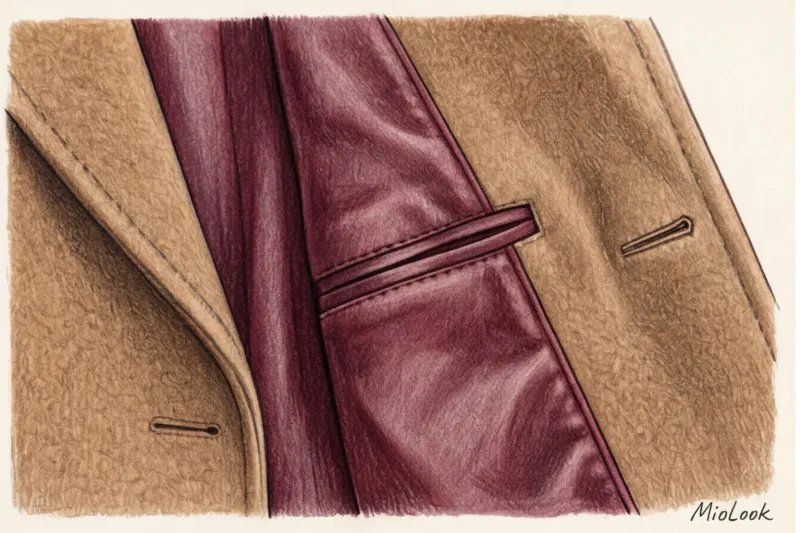
It's equally important to look under the hem. The lining is the weak point of mass-market clothing. Expensive wool blended with 100% polyester is pointless. You'll sweat indoors, freeze outdoors, and your hair and skirts will become magnetized with static electricity. Look for the words "Illegible" on the label. Viscose or Cupro (cupro) - they breathe, glide and serve for years.
Cost Per Wear Formula: How Math Can Help You Build an Expensive Wardrobe
The concept of Cost Per Wear (CPE) is a key tool for conscious consumption. Let's do the math together.

Let's say you buy a trendy jacket from a mass-market retailer for €80. It lasts exactly one season, and you wear it five times (before it gets cold or a cheap button breaks). Cost Per Wear = €16 per wear.
Now let's take a classic wool coat from a brand like Massimo Dutti or COS for €500. You wear it in spring and fall, about 40 times per season. Over five years, that's 200 times. Cost Per Wear = €2.50 per wear.
The math is inexorable: an expensive but well-fitting item saves you money in the long run. Moreover, the emotional attachment to a perfectly fitting coat boosts self-confidence, and these are dividends that are difficult to translate into numbers. You can easily track statistics on how often you wear items in the app. MioLook - This is a great sobering factor before spontaneous purchases.
Stylist's Checklist: 5 Subtle Signs Your Coat Will Last 10 Years
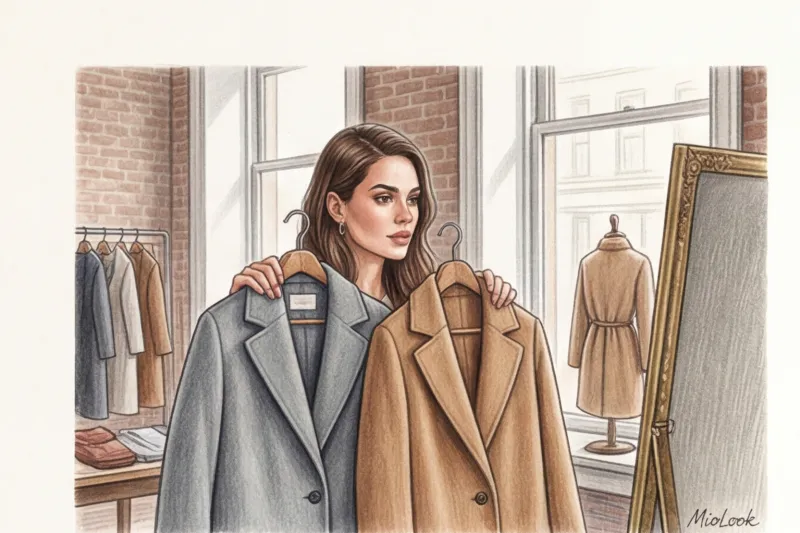
When you're in the fitting room, ignore the brand and price. Assess the item like a tailor. Here are five details I always pay attention to:
- Shoulder seam fit: For a coat with set-in sleeves, the seam should end exactly where your shoulder physically ends. If it hangs a centimeter, the coat will look "off-kilter."
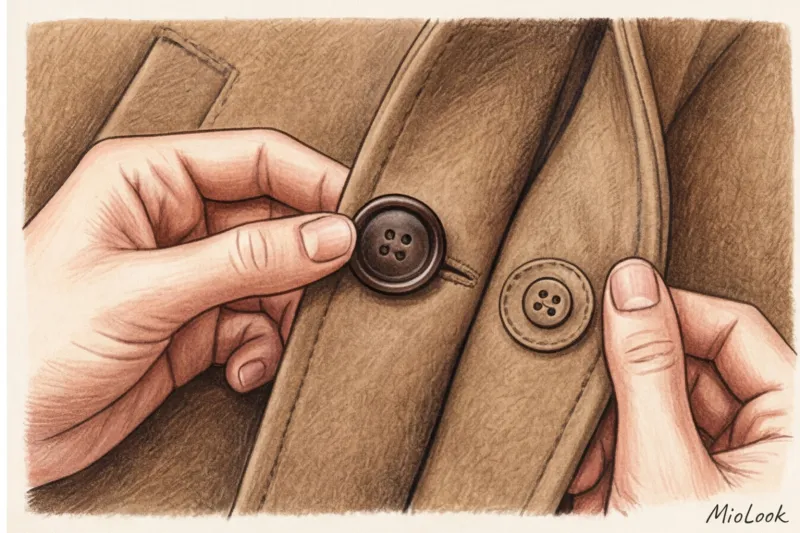
- Availability of a sub-button: Look at the inside of the coat where the main buttons are sewn on. A quality coat will definitely have a small flat button (called a backer button) there. This absorbs the tension in the thread and prevents the fabric from tearing.
- Fittings material: Plastic buttons imitating horn cheapen the product. Real horn, bone, or metal is a sign of a premium approach.
- Pocket depth: Put on your coat and put your smartphone and keys in the pockets. If the fabric at the hips is deformed and the pocket is bulging, the pattern is incorrect.
- Test drive in motion: Try raising your arms as if you were holding onto a handrail on the subway. The slit in your back (the split) shouldn't fan out when you're standing up straight.
Your perfect look starts here
Join thousands of users who look flawless every day with MioLook. Our AI stylist will help you integrate a new coat into your current wardrobe.
Get access — €0.99 onceSmart care: how to keep classic pieces looking their best
Even the most expensive coat can be ruined in a single season if stored improperly. And the worst thing in our closets is those thin wire hangers from the dry cleaners.
The coat is heavy. Hanging on a thin metal frame stretches the wool, and the shoulders become permanently deformed. Wide wooden hangers with flared ends (anatomical hangers) are an absolute must-have. Only these can maintain proper shoulder alignment.
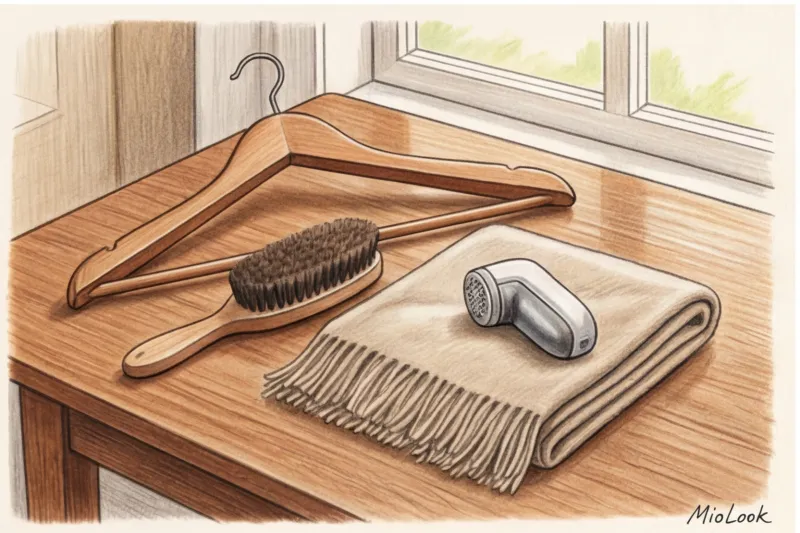
Second rule: throw away lint rollers. They leave a microscopic layer of glue on the fabric, which will attract twice as much dust the next day. Use only a professional brush with natural bristles. Three minutes of brushing in the direction of the nap after you come in from outside will restore the wool's pristine shine.
Finally, don't dry clean your coat every month. Harsh chemicals strip wool of its natural lanolin, leaving it dry and dull. Dry cleaning once at the end of the season is more than enough (except for heavy localized stains).
Creating a timeless wardrobe doesn't mean giving up on fashion. It's about letting go of fuss. Buy outerwear like you're choosing a house: don't be fooled by the flashy exterior, but carefully examine the foundation (fabric) and the quality of the fittings (lining and hardware). The right classic coat won't just keep you warm on a chilly autumn day—it'll remind you every morning that you deserve the best.