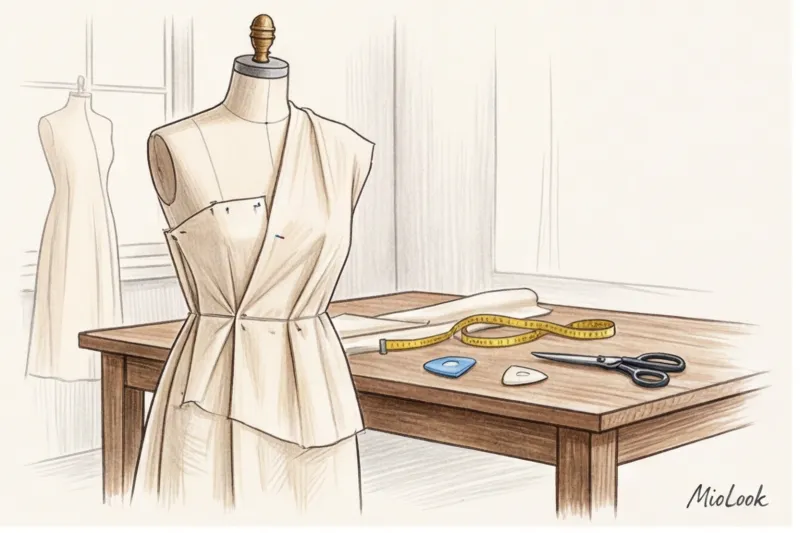
How many times have fashion magazines convinced you that every woman simply must have a pencil skirt and a sheath dress in her closet? I'll be honest: after over 10 years of working as a stylist and traveling to European fashion weeks, I've realized one thing. For 80% of my clients, this "universal basic" regularly turns into an instrument of torture, highlighting even the slightest nuances of their figure.
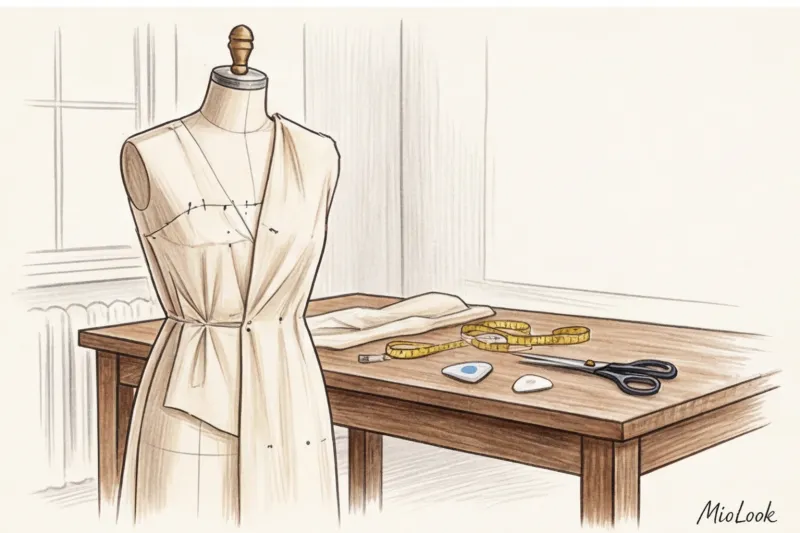
My name is Camille Durand, and I believe that if a garment doesn't fit you well, it's not your figure. It's the pattern. Real classic silhouettes in clothing It's not a rigid shell into which the body must be squeezed. It's the ingenious geometry and biomechanics of fabric, historically designed to flatter any body type.
Instead of a banal list of "must-haves," today we'll explore the architecture of the cut. We covered this in more detail in our the complete guide to timeless style , but here we'll focus on the physics of things. You'll learn why some styles always fit "expensively," while others deform at the first step.
The Anatomy of Cut: Why Classic Clothing Silhouettes Work So Well
According to McKinsey's State of the Fashion Industry (2024) report, over 60% of discarded clothing ends up in landfills simply because it no longer fits the wearer. In the age of fast fashion, we've become accustomed to flat-cut garments. Mass-market clothing cuts fabric in hundreds of layers on a flat table to save time and money. But our bodies aren't flat—they're three-dimensional.
Behind the scenes at Parisian haute couture ateliers, garments are constructed using a pinning technique: fabric is pinned directly onto a mannequin, creating an architectural 3D cut. It's this voluminous approach that distinguishes a classic garment from a throwaway piece. Furthermore, a perfect fit always adheres to the "golden ratio"—the proportion of 1/3 to 2/3. This means that your top or jacket should visually occupy one-third of your height, and your trousers or skirt two-thirds. This division instantly lengthens your legs and elongates your silhouette.
Access to MioLook for €0.99 — one-time payment
A smart AI stylist will analyze your proportions and select the perfect look for every day.
Get access — €0.99 onceShoulder Architecture: How a Structured Jacket Changes Posture
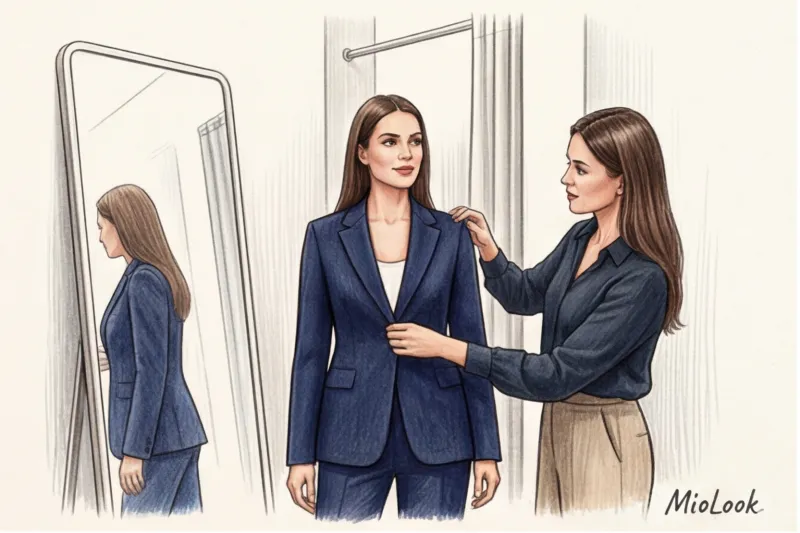
The shoulder line is the foundation of the entire look. If it's sloppy, the entire silhouette becomes sloppy. The tailors at London's Savile Row, home to the world's finest bespoke suits, use the shoulder girdle as an optical illusion. A crisp, slightly flared shoulder visually balances wide hips and creates the illusion of a slim waist.
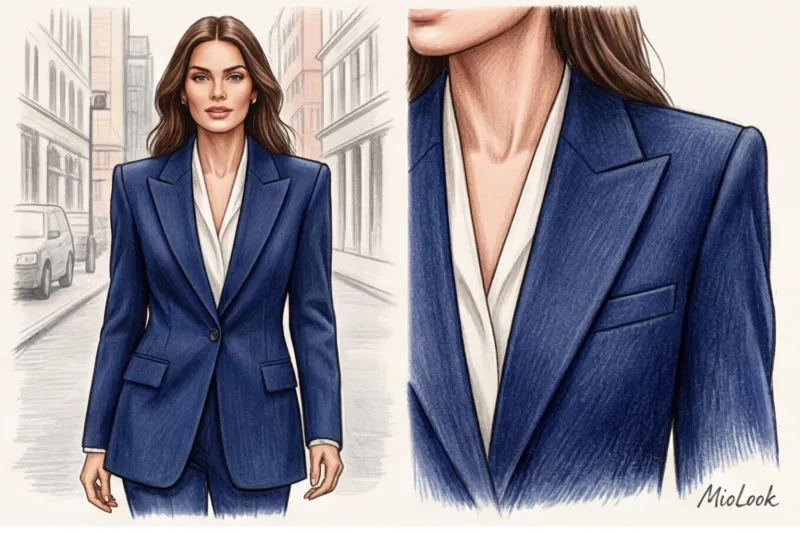
In my experience, I've seen hundreds of times how just a 1-centimeter difference in the shoulder seam can change the status of a garment. If the set-in sleeve seam slips even half a centimeter off the shoulder bone (and this isn't the intended oversize), the jacket looks like you're wearing someone else's jacket.
- Set-in sleeve: The most formal and strict. Ideal for business trips and office, as it creates a clear rectangle in the upper body.
- Raglan: Softens broad shoulders by drawing a diagonal line towards the neck.
- Dropped shoulder: A relaxed option for knitwear, but absolutely not suitable for girls with sloping shoulders - it will only increase the slouch.
"Correctly fitted shoulder pads, just 0.5–1 cm thick, can even out the natural shoulder asymmetry that 90% of people have. This is a secret tailors have been using for decades."
The Genius of the Bias Cut: From Madeleine Vionnet to the Present Day
Do you know why silk midi skirts, so popular these past few seasons, fit so differently on everyone? The secret lies in the direction of the thread. In the 1920s, French fashion designer Madeleine Vionnet revolutionized women by freeing them from corsets. She simply turned the fabric 45 degrees and cut it on the bias.
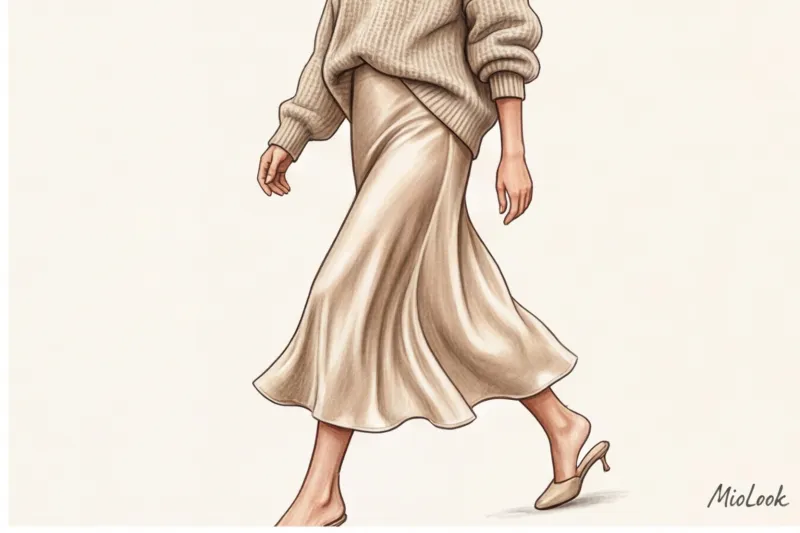
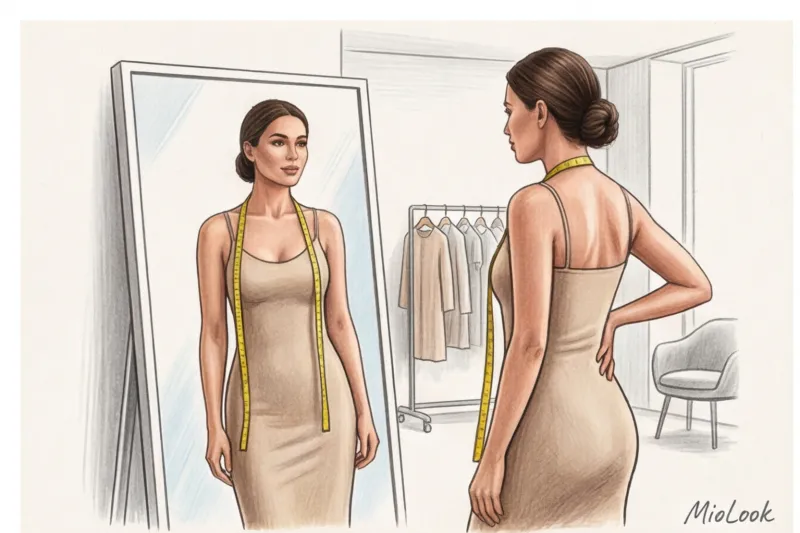
The biomechanics of a bias cut are unique. Unlike fabric cut with a straight grain, it acquires natural elasticity even without the addition of elastane. Under the influence of gravity, such a skirt or slip dress flows, hugging the hips without digging in.
When it does NOT work: One of the most common mistakes my clients make is buying lingerie skirts made of cheap, thin polyester. The bias cut requires thick silk (19 momme count and above) or heavy viscose. If the fabric is too thin, it will highlight every fold and seam of the lingerie, creating a "nightgown" effect instead of Hollywood chic.
Your perfect wardrobe starts here.
Join thousands of users who look flawless every day with MioLook's smart wardrobe feature.
Get access — €0.99 onceWrap Silhouette: The Math of the Perfect Waist
In 1974, Diane von Furstenberg patented the iconic wrap dress. This silhouette became the uniform of free and working women for one simple reason: its pure geometry creates curves where there aren't any and delicately drapes volume where there is excess.
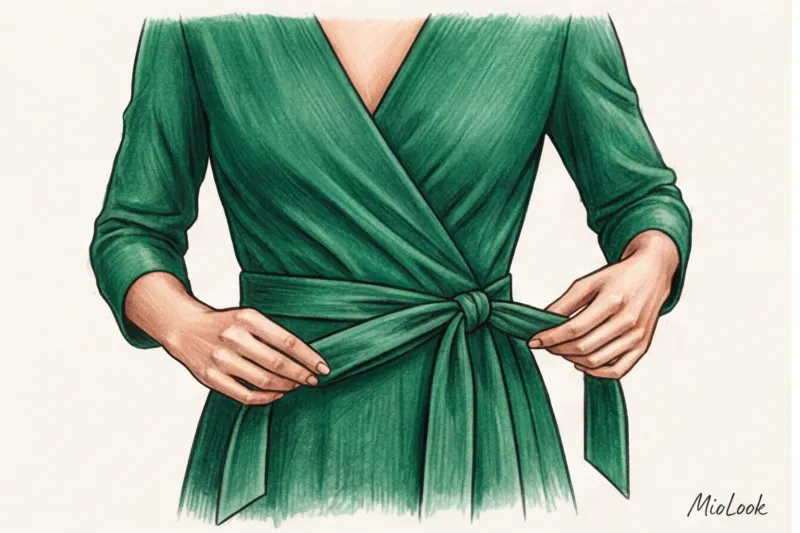
How does this optical illusion work? The V-neckline reveals the neck and collarbone, elongating the face. And the diagonal line crossing the torso visually breaks the silhouette into narrower blocks. This is a boon for the rectangle body shape (it creates the illusion of a waist) and the apple body shape (the fabric doesn't stretch across the stomach, but instead creates soft diagonal folds).
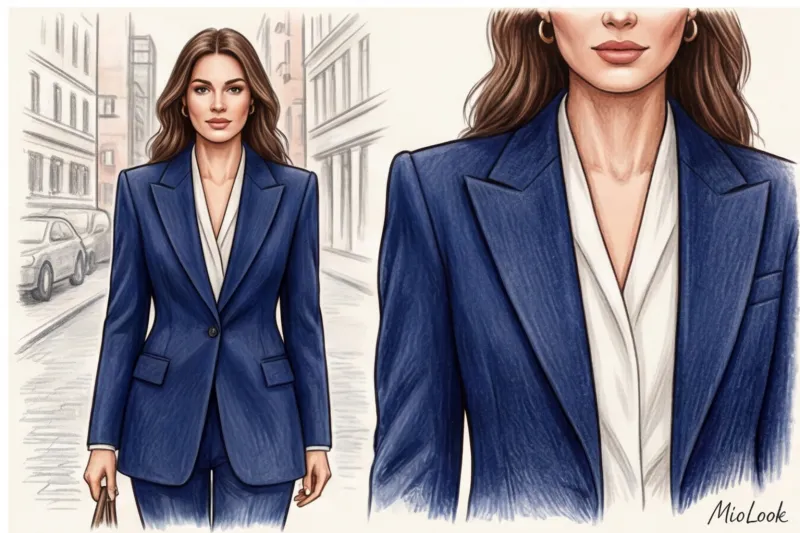
How to avoid the robe effect
To avoid a classic wrap dress looking like you just stepped out of the shower, pay attention to the fabric and trim. Avoid flimsy floral knits. Opt for sturdy textures (like cream crepe or thick viscose) and a midi length. For a business dinner The ideal solution would be a wrap dress in a deep emerald or sapphire shade - it always looks prestigious.
A-line and trapeze: Dior's legacy that saves any look
I always say: if you're unsure what skirt to wear, go for an A-line. Invented by Christian Dior as part of his New Look collection in 1947, this style has evolved from rigid crinolines to modern, streamlined shapes. Unlike a pencil skirt, which requires your measurements to fit perfectly with the factory template, an A-line skirt is forgiving of almost anything.
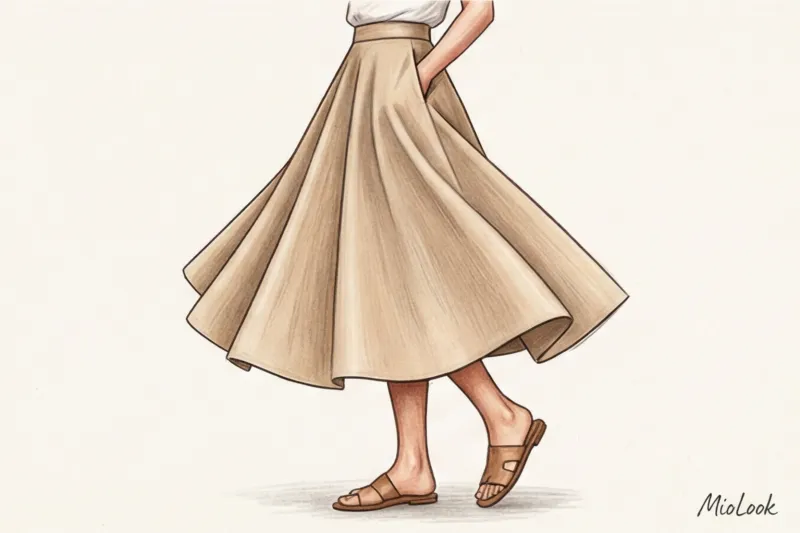
The versatility of the A-line skirt is paradoxical: for women with narrow hips, it adds feminine volume, while for those with wider hips, it conceals them, shifting the emphasis to the waist and ankles. The main rule I instill in my clients is the "bottleneck rule." The hem of your A-line skirt should end at the thinnest part of your leg (usually just below the knee or a hand's breadth above the ankle in a midi skirt). If the hem cuts off the wide part of your calf, you'll visually add 5 kilograms.
The biggest myth of mass-market fashion: why "universal" clothes don't fit you
Let's debunk the biggest myth of the industry. Pencil skirts and sheath dresses from your local high-street store aren't universally flattering. Their rigid construction requires your curves to precisely match the brand's standard pattern. And fast fashion patterns are created for flat 2D mannequins.
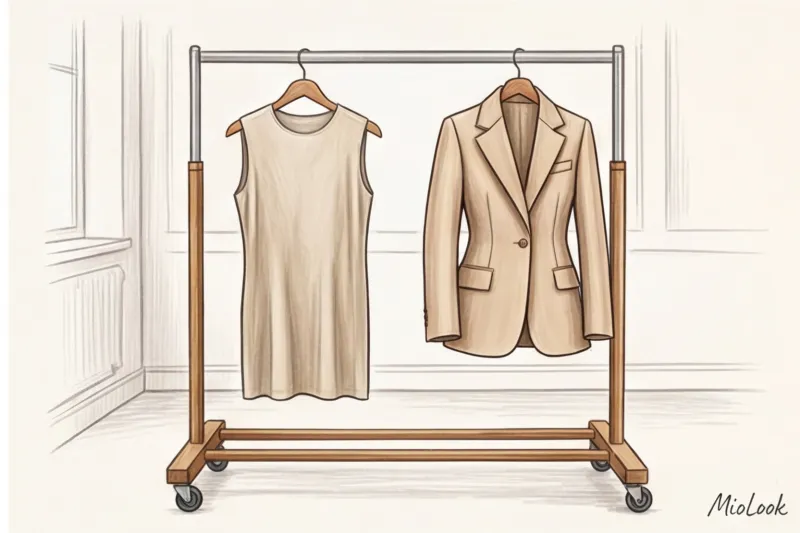
Brands like Zara, H&M, and Mango often skimp on fabric (every extra centimeter costs millions of euros across a batch). They remove complex back darts, ignore the curve of the waist, and neglect armhole depth. As a result, a sheath dress that looks great on a hanger bunches up at the back or rises up when you walk.
That's why a perfect classic wardrobe is impossible without a tailor. In Europe, it's perfectly normal to buy trousers at a mass market for €50, then take them to a tailor and spend another €20 to have the waist taken in or the hem properly shaped. Custom tailoring makes the garment yours.
Ready to get started?
Upload your favorite classic pieces to the MioLook virtual wardrobe, and AI will suggest dozens of new combinations.
Get access — €0.99 onceChecklist: How to check the fit of a classic silhouette in the fitting room
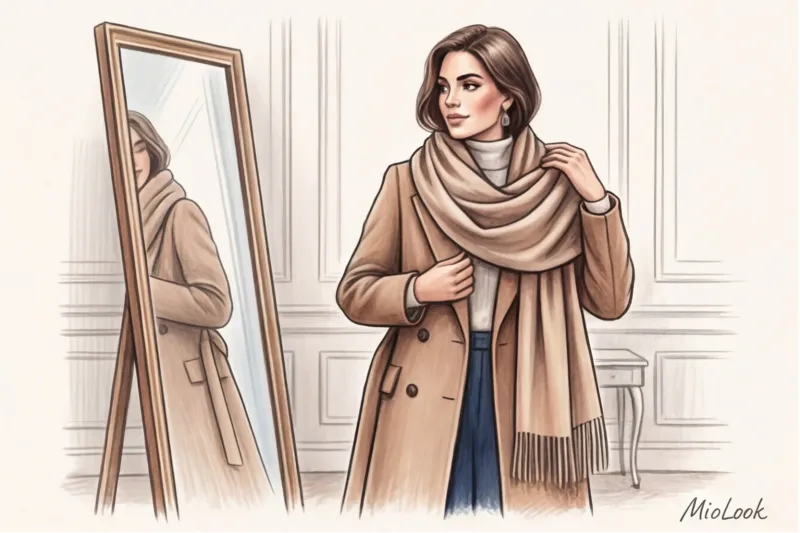
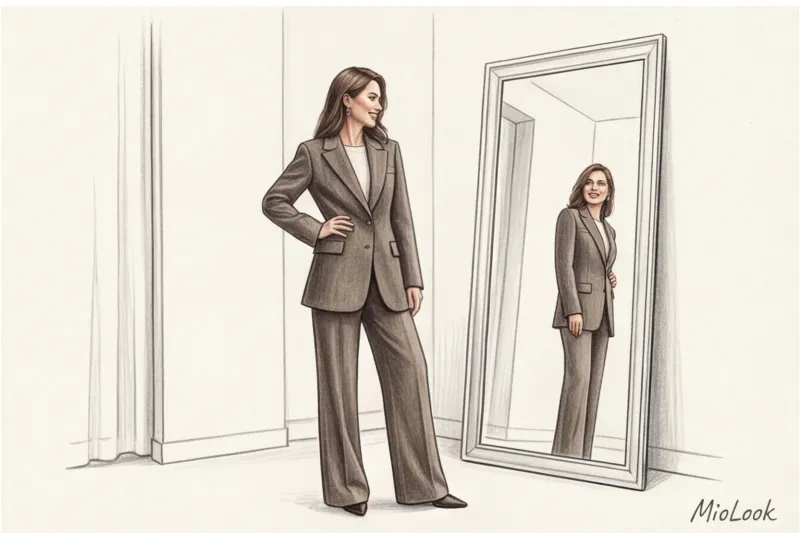
How can you choose that perfect classic piece on your own? Forget about simply standing at attention in front of the mirror. Clothes are made for life, and life is movement.
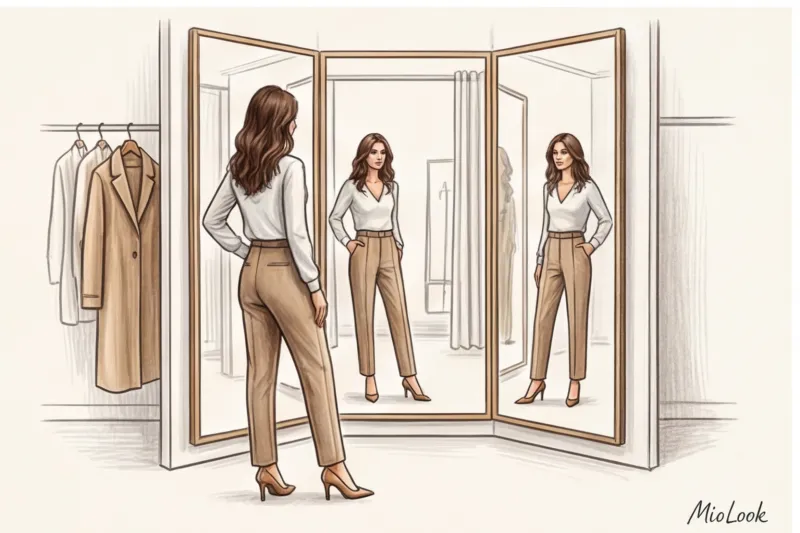
Here's my personal fitting room checklist:
- Movement test. Be sure to sit down on the ottoman in the fitting room. Raise your arms as if you're reaching for a book on the top shelf. Take a long step. If your pants are digging into your knees and the hem of your skirt is treacherously riding up, revealing unwanted skin, it's not the right fit for you.
- Tension test (search for horizontal creases). Look in the mirror at the groin area of your pants or the hips of your skirt. If you see horizontal folds radiating outward, the garment is too small. If the folds are vertical, it's too big. A properly cut garment falls evenly under the influence of gravity.
- The two-finger rule. This is the golden rule of fit: there should always be two fingers' space between a classic piece (jacket, trousers, shirt) and your body. If there's no space, it's skinny, not classic. The air between your body and the fabric is what creates a sense of status and comfort.
Classic silhouettes aren't a boring dress code imposed by corporate rules. They're time-tested formulas that work with your figure, not against it. By understanding the structure of bias cuts, shoulder architecture, and wrap geometry, you'll stop blaming your body for the way factory clothes fit. Invest in the right cut, leave some air between the fabric and your skin, and remember: truly luxurious style always starts with a flawless fit.