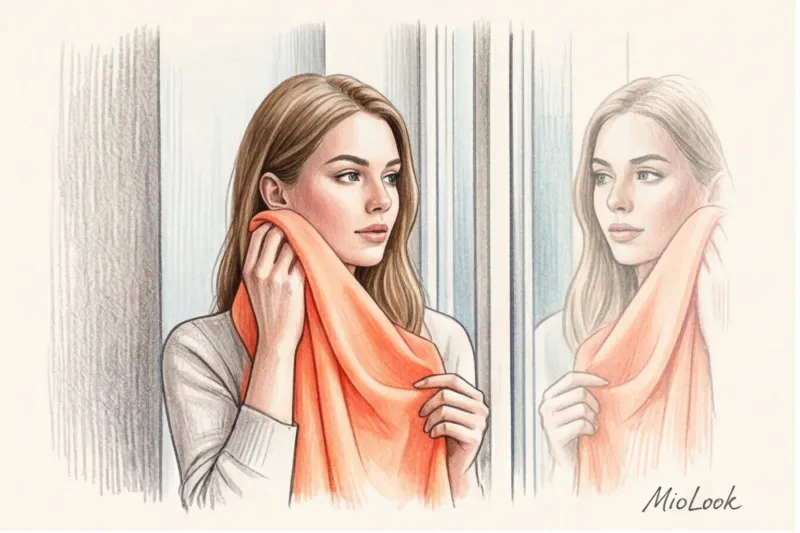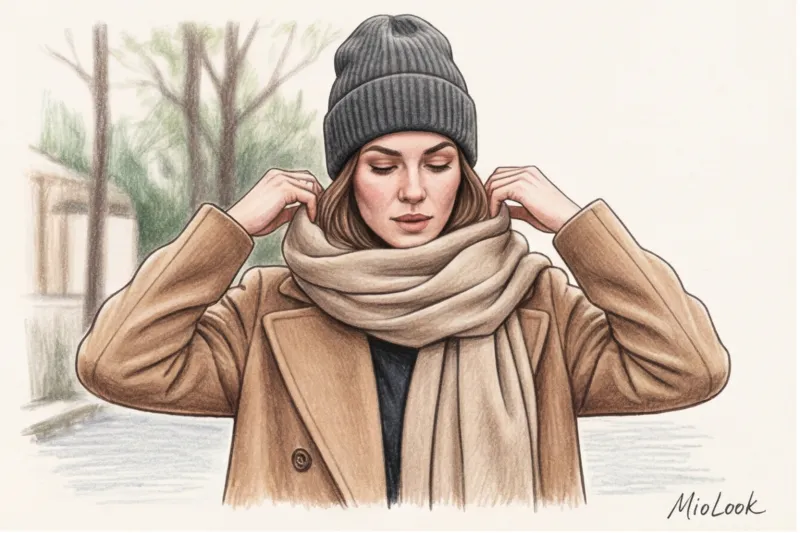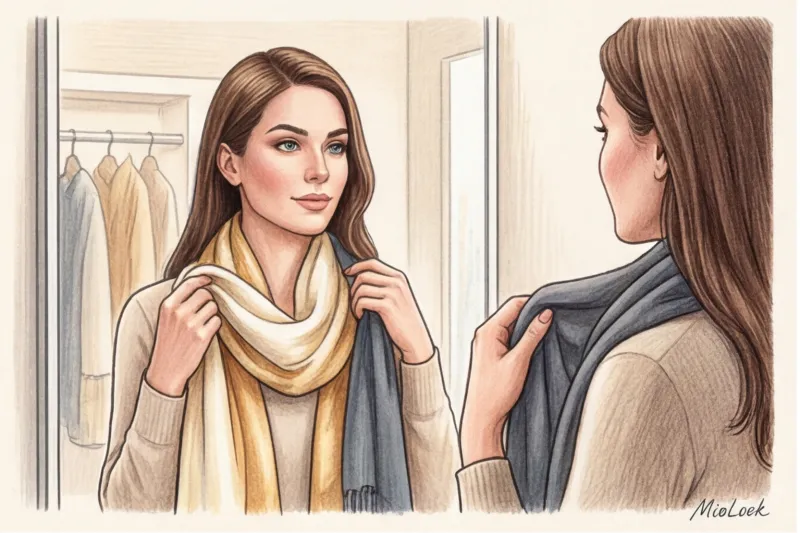
Have you ever looked in the mirror on a frosty winter morning and thought, "Oh my god, why do I look so tired?" You've slept your required eight hours, drank coffee, applied concealer, but your face still looks gray in the reflection, and the shadows under your eyes look deep. I'll let you in on a colorist's secret: it's probably not a lack of sleep. It's that all-purpose black mass-market hat you put on before heading out.
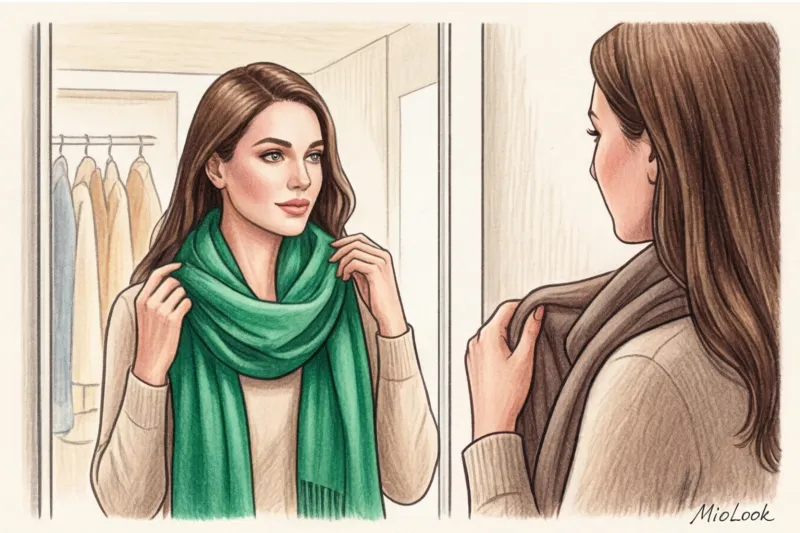
I'm Darina Marchenko, a stylist and colorist, and after 12 years of experience, I've learned that winter accessories around your face make all the difference. Choosing the right hat color for your color type isn't just a fashion fad; it's the fastest and most legal way to visually erase the look of fatigue and a couple of sleepless nights. We've shared more about how accessories shape the foundation of our image in our A complete guide to creating a stylish capsule collection of basic hats and scarves And today we'll talk about the pure physics of color.
Why the color of your hat and scarf is critical: the "photo-reflector" effect
According to a 2023 study by the WGSN Institute, in the first three seconds of eye contact, up to 80% of the other person's attention is focused on the facial area—the face, neck, and shoulders. The brain processes what you're wearing below the chest as an afterthought.
In winter, the fabric of your scarf and hat acts as a physical reflector of light (in optics, this is called "albedo"). Smooth, high-quality materials—cashmere, silk, and merino wool blends—have high reflectivity. They literally capture the meager winter light and softly illuminate your face from below.
Cheap 100% acrylic, on the other hand, absorbs light. You can choose the perfect shade, but the loose synthetic texture will make it look flat and won't give you that "inner glow" effect.
"Color doesn't exist without texture. Cheap fabric will ruin the most refined shade, turning emerald green into a drab green, and camel into a dirty yellow."
Let's do the wardrobe math (cost-per-wear). A €250 cashmere scarf in the right shade, which you'll wear 150 times per season, will cost you €1.60 per outing. A €20 acrylic scarf that will pill within a week and will no longer look great will cost you €4 per outing. Investing in accessories close to your face is the foundation of the "quiet luxury" concept.
The biggest wardrobe myth: "A black hat is universal and suits everyone."
This is probably my least favorite styling myth. In my practice, hundreds of clients were convinced that black is a base color that always saves. But let's be honest: black in the face is complimentary only to girls with a very high contrast in appearance (for example, Snow White with porcelain skin and blue-black hair).
For 90% of women, a black hat acts as a light absorber in dim winter light. It creates harsh shadows on the face, highlighting nasolabial folds, dark circles under the eyes, and even the slightest redness.
I recall a case from my own practice: Elena, a 42-year-old top manager, came to me. Her main concern was, "I look exhausted during morning meetings, even though I sleep well." We simply replaced her black acrylic hat with a voluminous cashmere beanie in a deep pine forest green (a dark green with a cool undertone). The effect was stunning—she looked five years younger, her face became fresher, and her eyes appeared brighter.
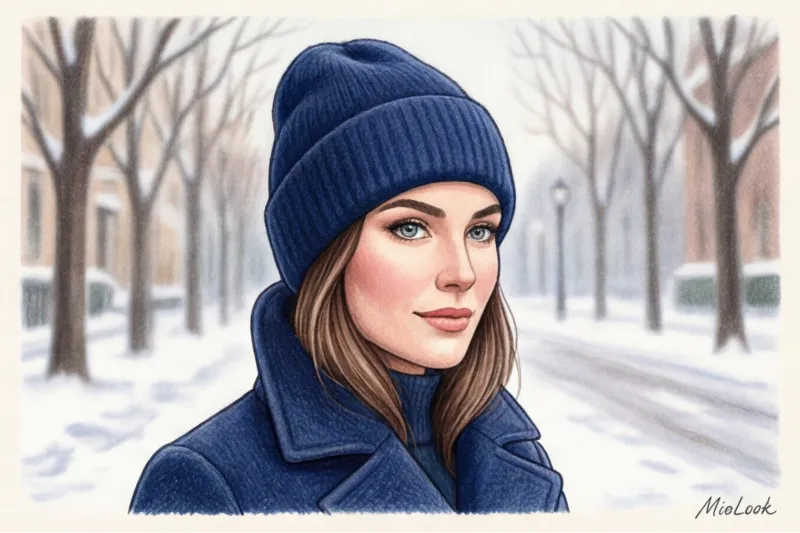
Noble alternatives to black:
- Deep navy (sea blue)
- Graphite gray (ideal for light brown hair)
- Dark chocolate (for warm colors)
- Rich emerald or coniferous
Your perfect look starts here
Join thousands of users who look flawless every day by choosing the right shades with the help of an AI stylist.
Get access — €0.99 onceHow to choose a hat color based on your color type: moving away from rigid boundaries
If you're still trying to squeeze yourself into the "I'm Summer, so I can't wear warm clothes" mold, forget it. The rigid division into four seasons is hopelessly outdated. Modern color theory is based on Johannes Itten's color theory, which centers on two factors: temperature and contrast. We wrote about this system in more detail in the article about 12 color types of appearance.
Appearance temperature: warm and cool shades
To determine your temperature, look at the veins on your wrist in daylight. If they appear greenish, you have a warm undertone. If they appear blue or purple, you have a cool undertone. Fair Limit: This method doesn't work for women with a deep olive undertone (their veins always appear greenish, even though they may have a cool appearance). In this case, it's better to focus on which metal makes your skin glow—gold (warm) or silver (cool).
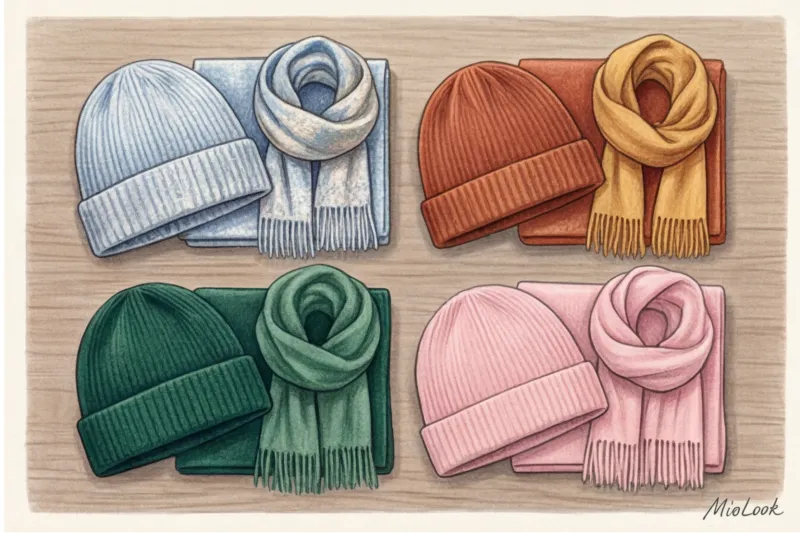
- For warm undertones: Caramel, terracotta, olive, warm beige, mustard. These colors will create harmony with your natural pigmentation.
- For cool undertones: Dusty rose, emerald, cobalt, steel gray, and berry. They will illuminate the skin and make the whites of the eyes appear brighter.
Contrast Level: Why It Matters More Than Season
Contrast is the difference between the lightest and darkest areas of your face (usually your skin and hair/eyebrows).
High contrast appearance (very fair skin and dark hair) requires pure, deep, or vibrant accessory colors. A pale pastel hat will make such a girl look like a moth, dulling her face. Ruby, sapphire, and pure white are recommended.
Low contrast appearance (Soft transitions, light brown hair, low-contrast eyes) benefit from complex, dusty, and pastel tones. Bright fuchsia will simply "eat up" your face—people will see the hat, not you. Choose powdery, gray-blue, and lavender shades.
Matching the shade of your hat and scarf to your hair color
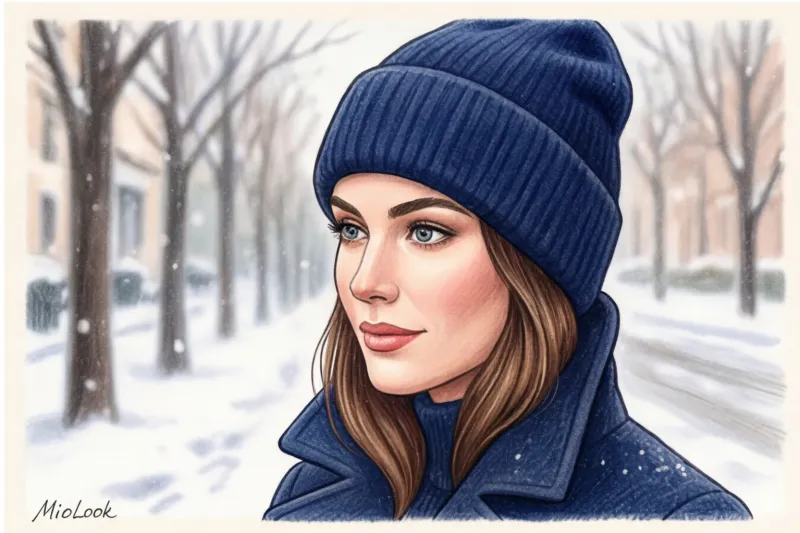
Hair and headwear create a unified frame around your face. My job as a colorist is to ensure they don't clash, but rather enhance each other. We use either complementary (contrasting) color wheel combinations or analogous (related) ones.
For blondes: avoid the blending effect
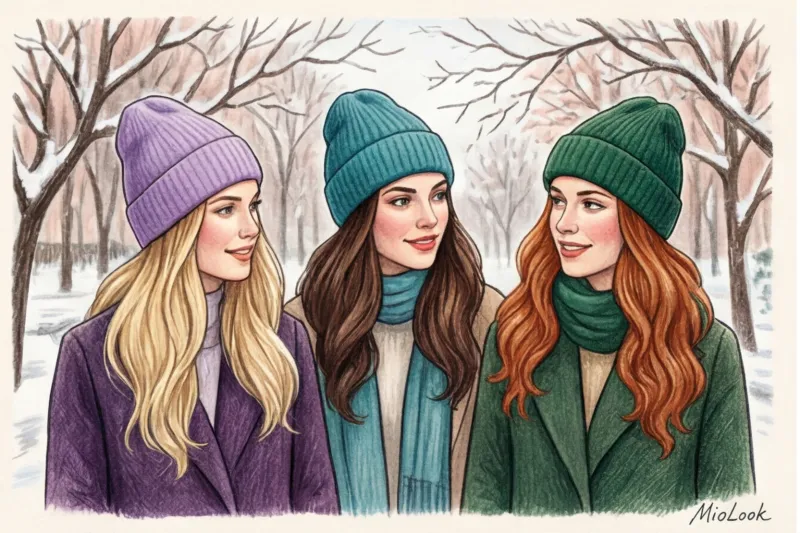
The most common mistake blondes make is choosing a beige hat that matches their hair exactly. From a distance, it creates a disconcerting "bald head" effect. The hat should be either lighter, darker, or a contrasting color to your hair.
Best solutions: Pastel blues, soft mint, lavender (they neutralize the yellowness of blonde amazingly), and rich burgundy for bold contrasts.
For brunettes and brown-haired women: playing with saturation
Dark hair serves as a great backdrop to wear the boldest colors in the palette. basic colors in clothing If you want to attract attention - electric blue, fuchsia, ruby.
If you're looking for an elegant, understated look, consider creamy and off-white. They'll contrast beautifully with dark hair, dramatically refreshing the face and adding a touch of class.
For red and gray hair: a frame for rare pigment
Natural red and noble gray hair are a rarity that needs to be skillfully framed.
Redheads: Use contrast. All shades of green (from khaki to deep emerald), cobalt blue, eggplant. They will make the red pigment literally glow.
Gray/ash: Pearl, soft pink, sapphire. Absolutely avoid swampy, yellowish, and mustard tones—they make gray hair look unkempt and dirty.
Access to MioLook for €0.99 — one-time payment
A smart AI stylist will find the perfect look to match your hair color and help you organize your wardrobe.
Get access — €0.99 onceTaming the Winter Blush: How Color Affects Skin Redness
Now here's a counterintuitive tip that's rarely mentioned in fashion magazines. If you tend to blush in the cold or have severe rosacea (spider veins on your cheeks and nose), you red, bright pink and burgundy scarves are contraindicated.
Why? Because the color of the scarf creates a reflection on your chin and cheeks. A red scarf plus a frosty blush—and you look like Santa Claus after a sauna. Psychology red color such that it intensifies any redness near it.
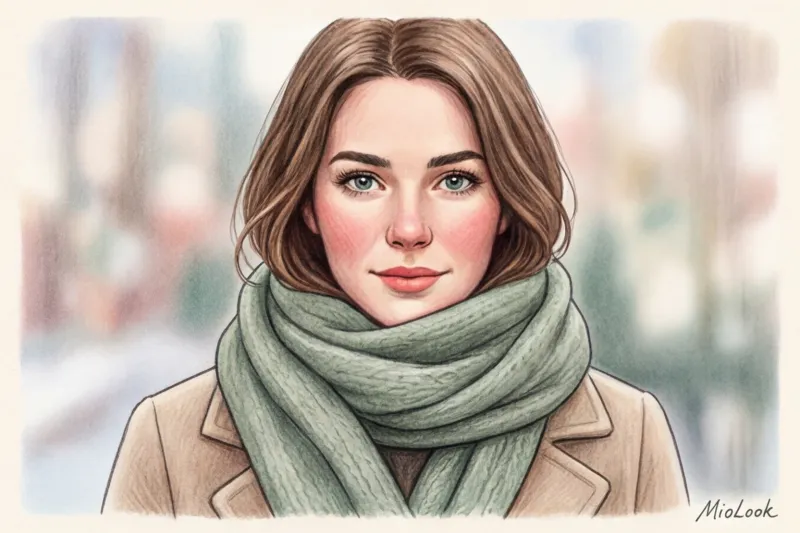
I'm applying the logic of makeup color correction here. How do we hide a pimple? With green concealer. The same applies to clothing. If your face turns red in the cold, use a green scarf (sage, mint, pine), cool blues, or neutral grays. They will visually neutralize excess blush, and your skin will appear more even.
Checklist: How to Test the Color of Accessories Before Buying
Lighting in stores can often be unforgiving. Fluorescent bulbs with a greenish tint can ruin even the most perfect item. Here's my personal algorithm I use when accompanying clients on shopping trips:
- No-makeup test. Your true color complements you even when you're barefoot. If a hat requires you to wear makeup to "fit in," it's not your color.
- Lighting test. Never make a final decision in the back of a sales floor. Wear a hat and scarf and go to a display case or window with natural daylight (ideally, overcast, as that's the most honest).
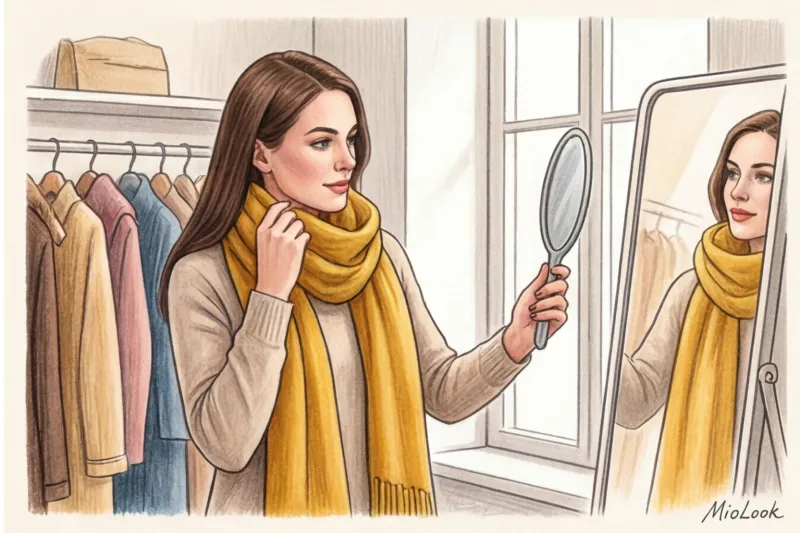
- Drapery rule. Place the scarf as close to your chin as possible. Look at the border between the fabric and your neck. Does the fabric cast a yellow, gray, or sickly green glow on your skin? If your chin appears darker, discard the scarf.
Summary: Putting together your perfect portrait capsule
Don't buy hats and scarves spontaneously, grabbing the first thing you see at the checkout. These are your most important investments in your winter look, as they are what present you to the world during the cold season.
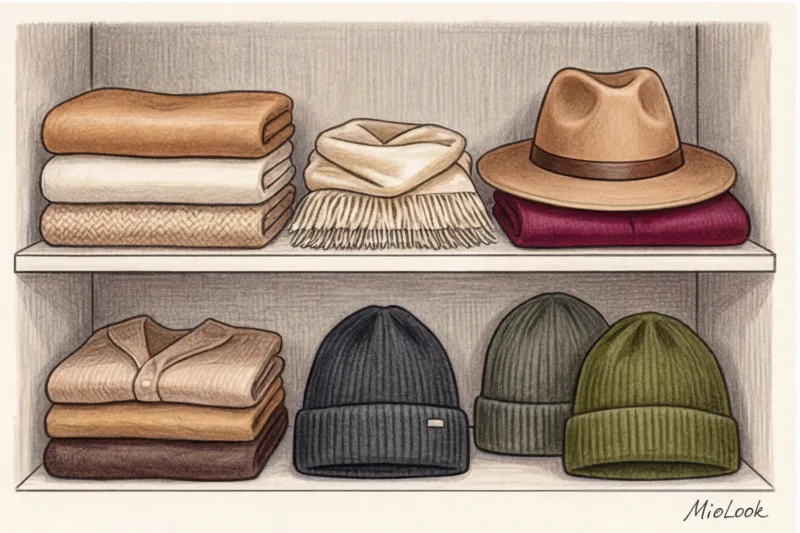
The optimal capsule formula will cover 100% of your winter needs:
- One neutral set (hat + scarf) that matches your outerwear (coat or down jacket) tone-on-tone. This will create a vertical color line that elongates your height and ties together a monochromatic, sophisticated look.
- One accent set In your most flattering color, according to your color type. For days when you want to lift your spirits and garner compliments.
Remember: investing in texture is just as important as investing in color. It might be a merino wool scarf for €80, not three acrylic ones for €25. Choose colors that make your skin glow, and winter will no longer be an excuse for stylistic compromises.