Over 14 years of working as a personal stylist, I've come up with a frightening statistic: about 80% of Slavic women come to the salon requesting a "cool ash blonde." And the paradox is that this shade objectively ages 90% of them, highlighting even the slightest signs of fatigue and uneven skin. We spend hundreds of hours choosing the perfect face cream, but we forget that our hair is a huge reflector that illuminates our face 24/7. That's why choosing the right one hair color by color type - this is not just a whim, but the foundation of your image.
Instead of the banal advice from glossy magazines of the 2000s, like "spring needs blonde, winter needs black," we'll break down the mechanics. Changing the shade of your hair strands technically shifts your natural contrast and requires a complete overhaul of your wardrobe and makeup bag. We've already covered the basic principles of coloristics in more detail in our a complete guide to the 12 color types of appearance Today, we'll combine hairdressing with fashion styling, so you'll never leave the salon with tears in your eyes again.
Access to MioLook for €0.99 — one-time payment
A smart AI stylist will select the perfect look based on your new hair color.
Get access — €0.99 onceWhy choosing a hair color based on your color type doesn't start with the dye
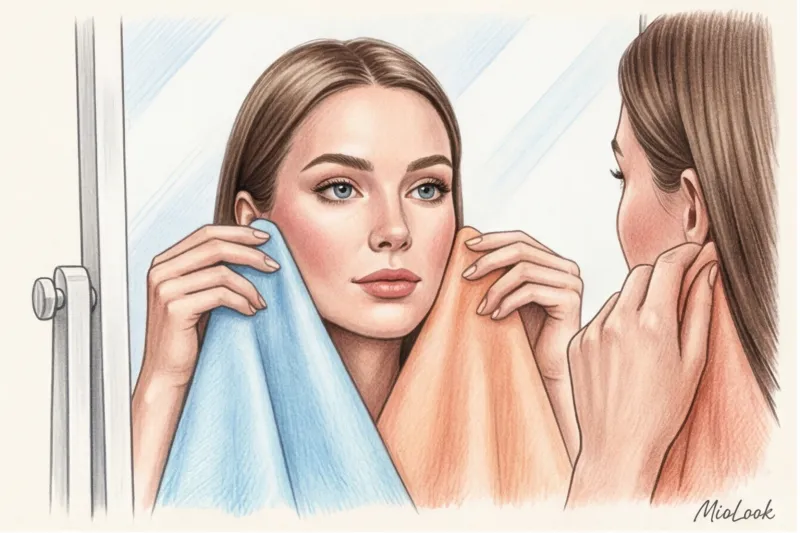
One of my clients, let's call her Anna, spent five years stubbornly trying to achieve the perfect ash blonde. She was literally "killing" her hair with monthly bleaching because the classic Four Seasons system had mistakenly labeled her as "Summer." When we did a drape test (trying different shades of fabric on her bare face), it became clear that her natural contrast and skin tone called for a soft, warm beige. As soon as we switched from ash to caramel beige, Anna's face seemed to be illuminated from within, and the need for heavy foundation disappeared.
Professional selection is based on the Albert Munsell system (created back in 1905, but still the gold standard). This system evaluates color based on three parameters: hue (temperature), value (depth), and saturation (purity). Your hair acts as a "permanent collar." Light falling on strands of hair reflects onto your face. If your hair temperature conflicts with your skin temperature, this reflected light will highlight under-eye circles, nasolabial folds, and rosacea.
That's why you can't just walk into a salon and say, "I want a color like Margot Robbie." The 12-color guided method, which modern stylists have long since adopted, takes into account the dominant characteristics of your appearance. If your dominant characteristic is "Softness," a pure platinum blonde will turn you into a moth, no matter how masterfully the coloring is done.
The Main Secret of Colorists: The Rule of Contrast That Everyone Forgets
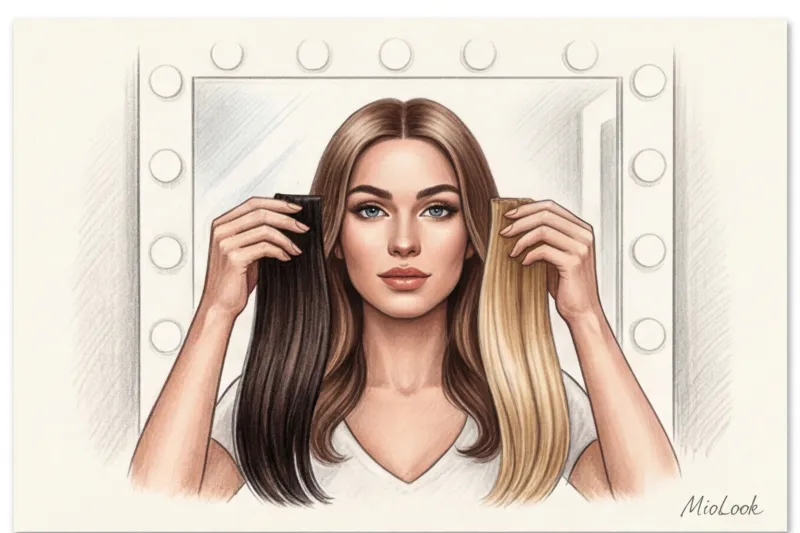
Natural contrast is the difference in lightness between your skin, the whites of your eyes, your irises, and, of course, your hair. According to a 2024 WGSN report, 68% of women dissatisfied with their appearance in the morning are actually wearing clothes or hair colors that clash with their natural contrast.
Totally lightening a brunette's complexion often erases the face. When the contrast is artificially reduced, facial features lose their expressiveness. As a result, a woman is forced to paint a new face every morning: bold brows, bright lips, and harsh contouring. Without this makeup, she looks unhealthy.
"Dark color makes you look older" is perhaps the most persistent myth in the beauty industry. It's not the dark color that makes you look older. It's the disharmonies with your skin's undertone and the disruption of natural contrast.
A stylist's insight: contrast directly impacts your wardrobe. If you've heavily lightened your hair (reduced contrast), you'll need to remove all harsh geometric prints (such as black and white houndstooth or sharp stripes) from your portrait area. They'll start to overpower your face. If you're wondering how to adapt your business look to the new requirements, I recommend checking out this article. Office Hairstyles: 10 Smart Everyday Styles , where we explore the harmony between hair styling and office dress code.
Ready to get started?
Try MioLook's free plan and digitize your wardrobe without commitment.
Get access — €0.99 onceHow to determine your tone depth level (TDL)
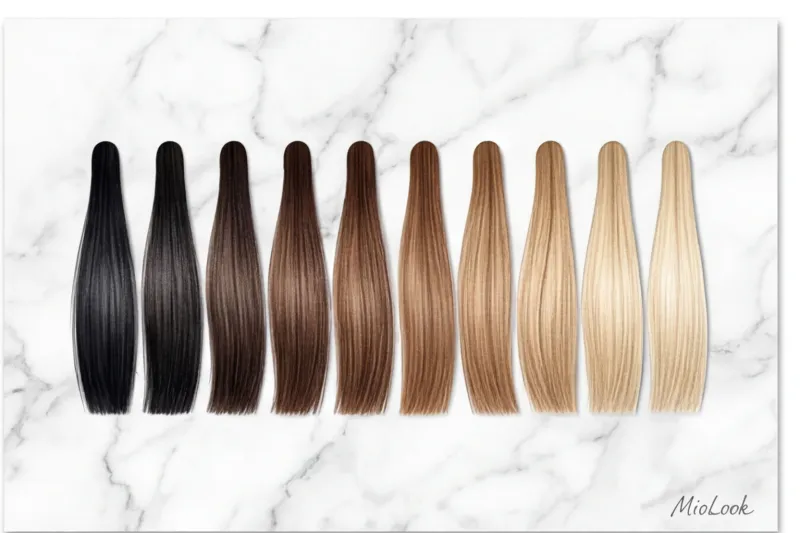
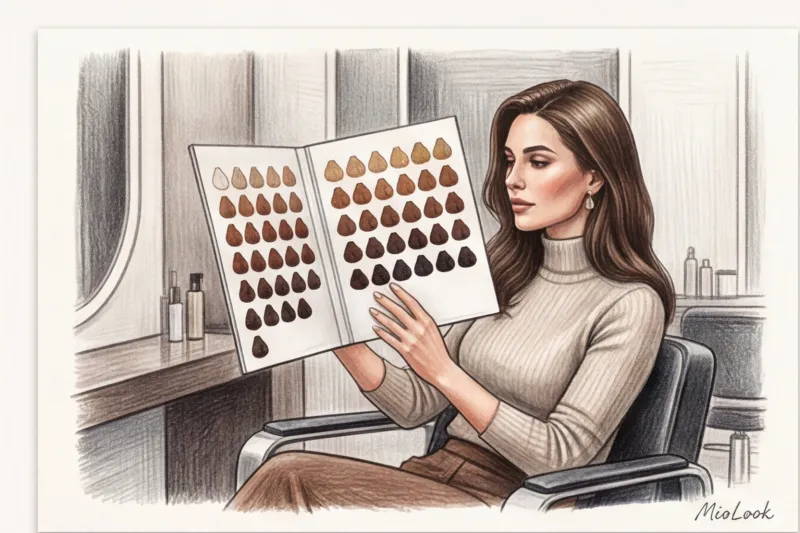
Any competent conversation with a colorist begins with numbers. In international hairdressing practice, there's a depth-of-tone scale (DTS) from 1 to 10. One is jet-black, and ten is a very light, translucent blonde. The Slavic hair type most often falls at levels 6 (dark blond) or 7 (light blond).
Why is this so important to know? Because buying a hair dye at the supermarket with a pretty number "8.1" (light ash blonde) and applying it to your natural "5" (light brown) will never result in a cool ash. Bleaching will reveal the so-called highlights (red-orange pigment), and you'll end up with a rusty copper color. Knowing your UGT is the key to preventing the "leopard print" effect.
The golden rule of two tones: The ideal hair color rarely deviates from your natural color by more than 2-3 shades. The exception is the deliberate creation of an avant-garde, creative image, where artificiality and sharp contrast are the hallmark (but this technique does NOT work in a corporate environment). Furthermore, with age and gray hair, our natural contrast decreases. Therefore, after 45, stylists recommend gradually shifting your color 1-2 shades lighter than your natural base—this visually refreshes and conceals gray hair.
The ideal hair color for cool tones: Winter and Summer
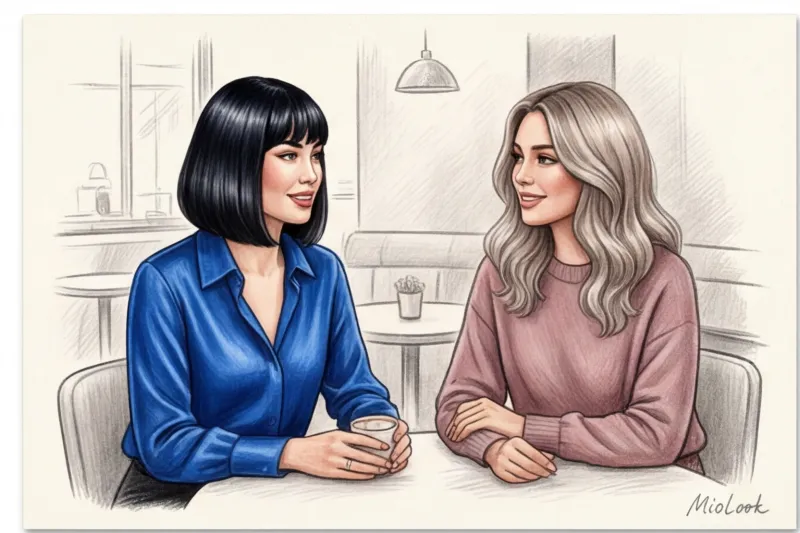
The cool group is characterized by olive, pinkish, or translucent porcelain undertones. The key here is to avoid overt redness or yellowish undertones, which would make the skin appear sallow.
And now for a counterintuitive insight that colorists rarely talk about. Women with warm (yellowish) skin tones and a tendency toward rosacea often think they only need warm, golden shades. In fact, a subtle cool undertone in the hair often works as a neutralizer: it visually calms redness and gives warm, sensitive skin a refined, porcelain-like appearance. The key is to avoid going completely gray.
Winter Palette: From Dark Chocolate to Icy Platinum
Winter (Dark, Cold, Bright) is the only color scheme that perfectly suits extreme colors. These include jet black, frosty chestnut, dark plum, and, for contrasting Winters, pure white platinum blonde.
What Winter should absolutely avoid is compromised "light brown" or sun-bleached strands with warm undertones. Any "sun-kissed" effect or careless warm balayage makes Winter's appearance look unkempt. If you're a Winter and work in a formal office, your choice is a solid color, level 3-4 (dark chocolate), with a mirror-like, glossy shine. This conveys status and confidence.
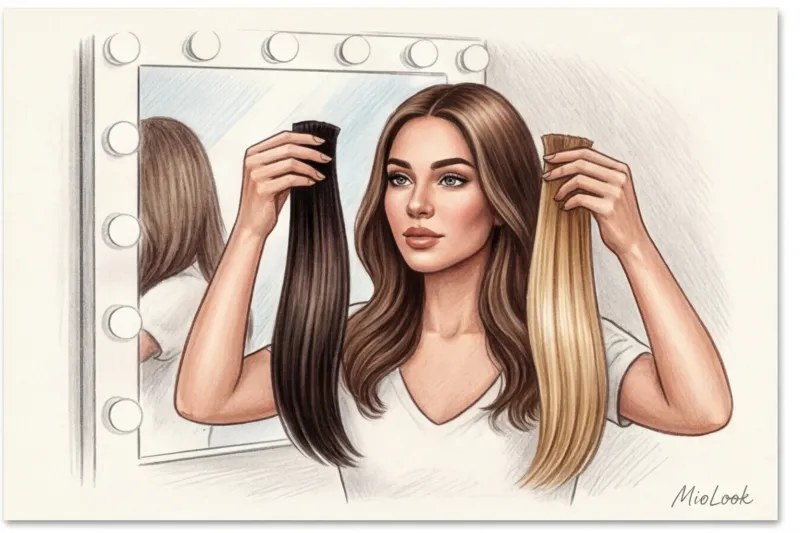
Summer Palette: How to Get Rid of the "Mousey" Color Without Damage
Girls with summer tones (Light, Cool, Soft) most often complain about their natural color, calling it "mousy" or "dusty asphalt." And they make the biggest mistake: trying to cover it up with a thick ash blonde.
The notorious all-out ash blonde ages most women of the summer type, as it highlights even the slightest shadows on the face. The best alternative today is mushroom blonde or complex cool beige. These shades blend gray, brown, and subtle pinkish nuances. Complex techniques (Airtouch, shatush) that preserve the natural, darker roots are also ideal for Summer—this maintains the natural contrast while adding volume and definition to the hair.
Your perfect look starts here
Join thousands of users who look flawless every day with MioLook.
Get access — €0.99 onceIdeal hair color for warm coloring: Spring and Autumn
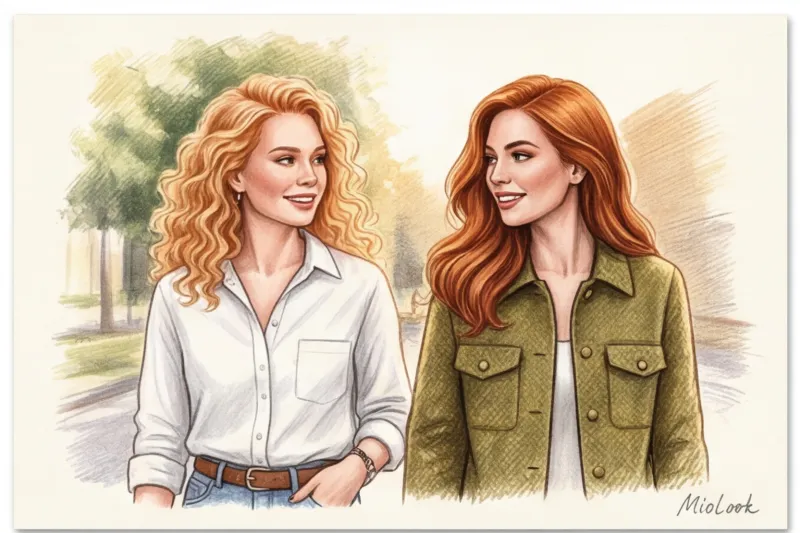
For warm skin tones (peachy, golden undertones, often with freckles), silvery, graphite, and overtly blue shades are strictly contraindicated. They act like poison: healthy, luminous skin instantly becomes gray and unhealthy, and freckles look like age spots.
Spring Palette: Radiance Without the Cheap Yellow
Spring (Bright, Warm, Light) is designed for light, sparkling shades. But there's a fine line between a beautiful golden blonde and a "cheap hydrogen peroxide" effect. The difference lies in the transparency of the color.
Ideal shades for Spring include honey, strawberry blonde (with a slight pink tint), transparent light caramel, and golden blonde. It's important that the color looks as if sunbeams are tangled in the hair. Dense, matte, single-tone coloring will ruin the watercolor-like softness of a spring look.
Autumn Palette: A Richness of Copper and Chocolate Shades
Autumn (Soft, Warm, Dark) favors the most luxurious, rich hues. Dark copper, terracotta, golden chestnut, mahogany—these are all your tools. But how to wear red so it looks expensive and classy in a business setting?
If you hold a leadership position, avoid flashy orange in favor of a refined cognac or a dark copper shade with a GGT level of 5-6. This color looks luxurious when paired with emerald, mustard, and deep blue suits. The main rule: the brighter the copper in your hair, the more minimalist the cut of your clothes should be.
How a new hair color changes your wardrobe based on your color type
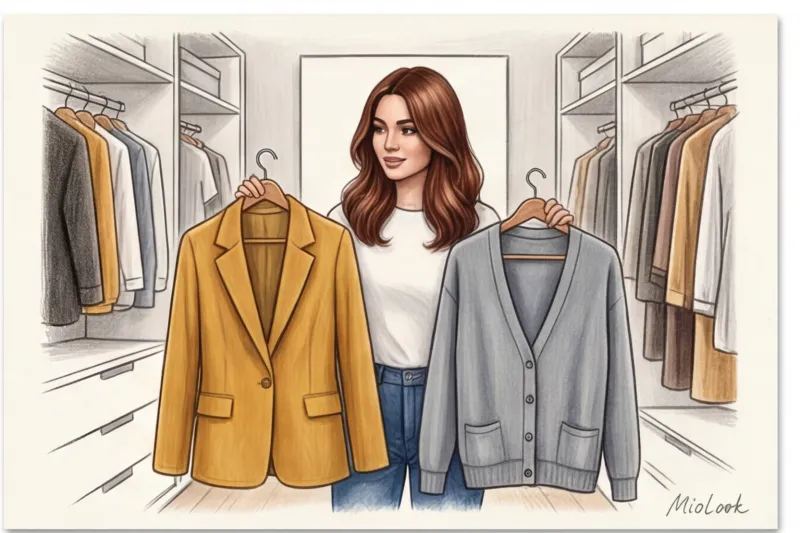
There's a strict "shift rule" in styling. If you've gone from a striking brunette to a light blonde, you'll need to change 70% of your portrait wardrobe (everything from the chest up). I always warn my clients: budget for at least three or four new tops (blouses, sweaters, jackets) when making a dramatic hair color change.
Colors that once accentuated your vibrancy (like fuchsia or electric blue) can now mercilessly overwhelm you, forcing people to see your dress first and your face second. You'll need to switch to softer, dustier shades. Your makeup will also change: your old favorite plum lipstick or overly heavy foundation may suddenly look vulgar.
This is where modern technology comes in. To avoid panic buying half the mall, I recommend my clients use an app. MioLook By uploading your items to a digital wardrobe, you can clearly see which tops no longer work with your new portrait background and create a list of targeted, smart purchases. This prevents impulsive spending and helps you smoothly adapt your wardrobe to your new style.
Checklist before visiting a colorist: how to get what you want
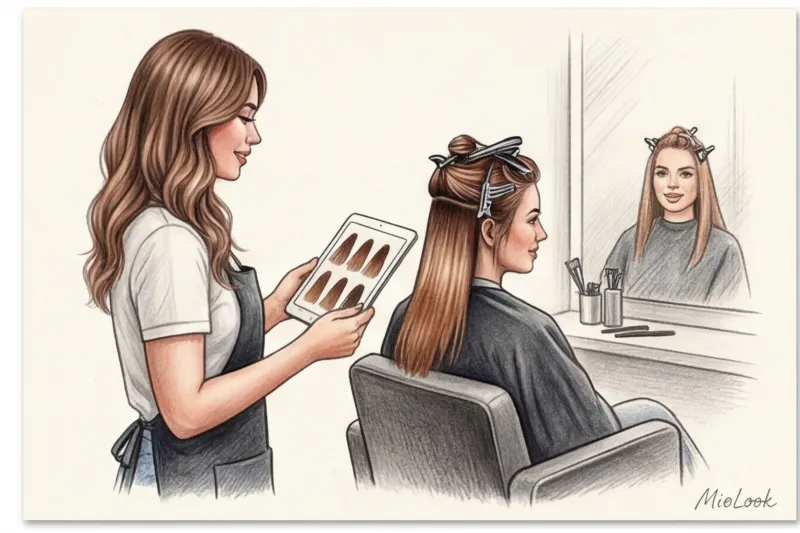
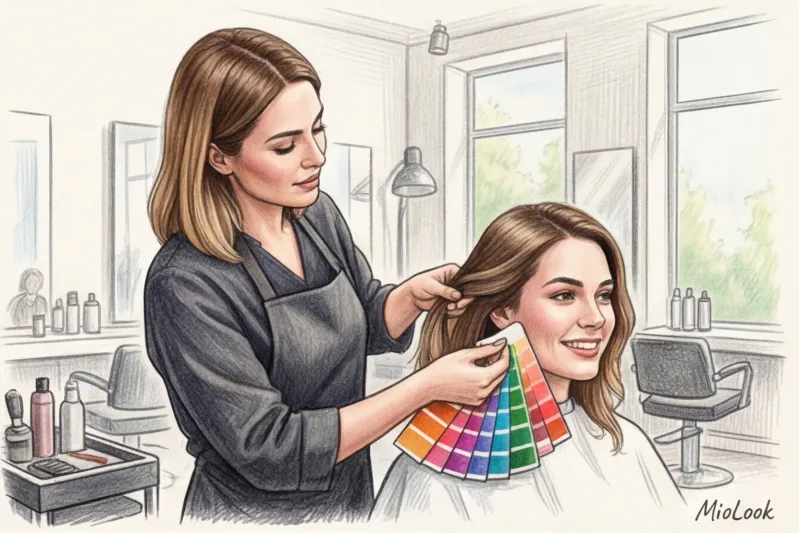
Quite often, expectations are dashed in the hairdresser's chair simply because of differences in terminology. For you, "a little warmer" means a subtle golden highlight, while for a stylist, it's a rich copper base. To ensure your investment in your personal brand pays off, follow this checklist.
- No photos with filters. Look for references on Pinterest that were shot in natural daylight, without ring lights or color correction.
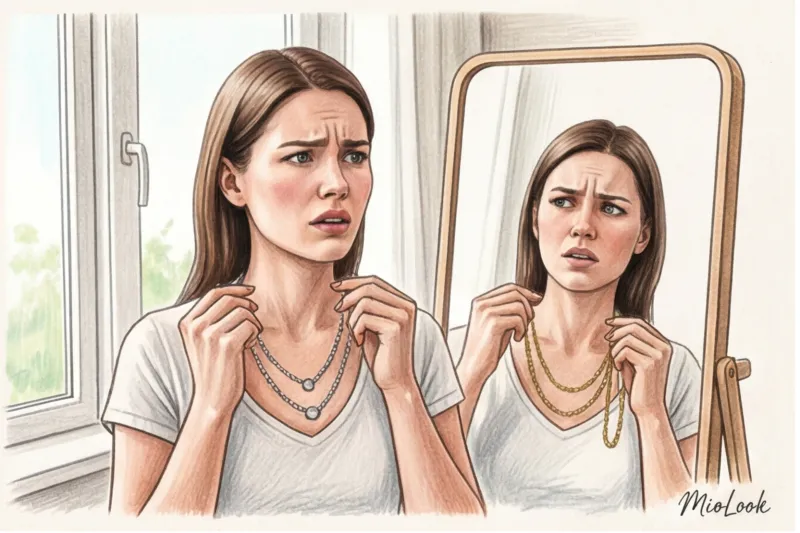
- Do a home drape test. Before making a drastic decision, apply foil (cold) and a gold cloth (warm) to your face (without makeup, in daylight from a window). Observe how the dark circles under your eyes and nasolabial folds react.
- Ask the master 3 main questions: What's my current UGT level, and what are we aiming for? What will be the lightening rate (how will the color fade in 3 weeks)? What tint treatment should I buy to maintain the pigment at home?
Remember: a well-chosen hair color for your skin tone doesn't require complicated daily makeup to pull your face together. It works for you, highlighting your skin, concealing signs of fatigue, and making even the simplest basic outfit look more expensive. Stop relying on smiling models in mass-market hair dye boxes. Explore your contrast, determine your temperature, and your new look will become your greatest competitive advantage.