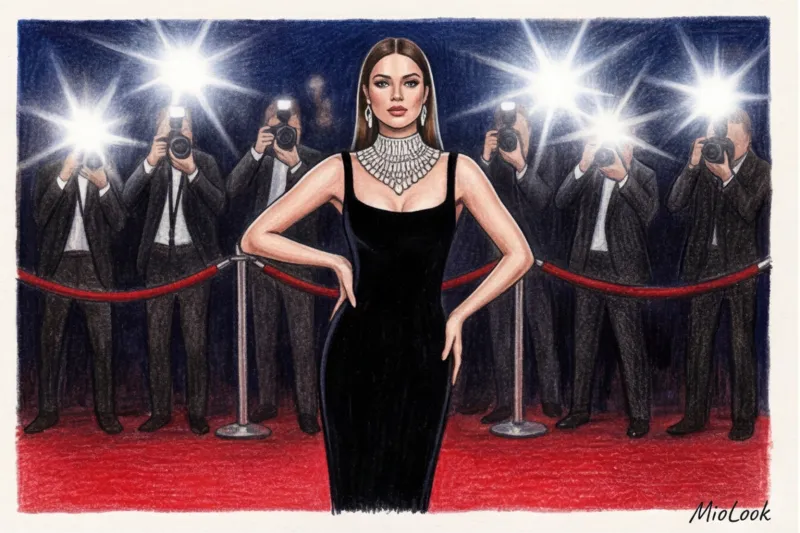
Have you ever wondered why celebrities look like gods on the red carpet, but trying to replicate their look in real life often ends up looking like a provincial prom? As a practicing image consultant and colorist, I see this mistake all the time. It's not about budgets. You can buy a €5,000 dress and ruin it with a poorly chosen necklace, or look like a million bucks in a simple €150 outfit if you choose the right accents.
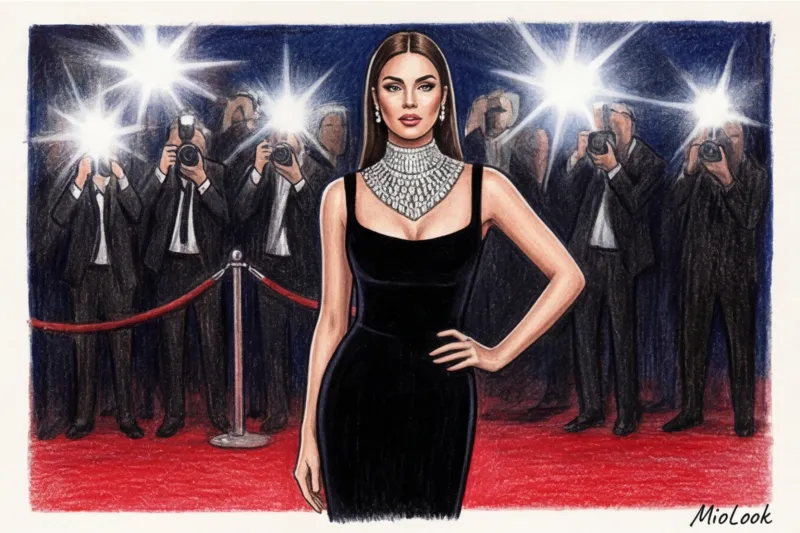
Perfectly chosen accessories for an evening gown like the stars aren't a coincidence or the magic of huge purses. It's a strict mathematics of visual weight, the laws of optics, and attention management. Today, I'll share with you the professional tricks Hollywood stylists use to create flawless silhouettes, and how you can apply them to your next outing.
Focal Point Strategy: Why Celebrity Evening Dress Accessories Never Clash With the Outfit
There's a strict rule on the red carpet: there can only be one commander-in-chief for a look. When choosing an outfit, you must immediately decide who is playing the lead: a statement dress with a complex cut or embroidery OR statement accessories against a simpler design.
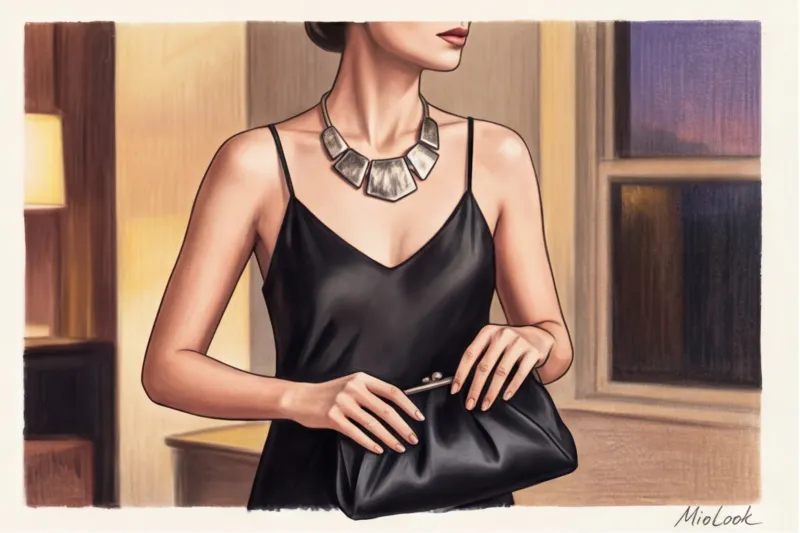
If you're wearing a sequined dress with a plunging neckline and a thigh-high slit, your jewelry should fade into the background, serving merely as an elegant frame for the picture. If you're opting for a minimalist black slip dress, this is where massive diamond chokers or architectural bracelets shine. We've covered the anatomy of such outfits in more detail in our The complete guide to celebrity evening looks: style secrets for your events.
Stylist Law Roach, who creates Zendaya's iconic looks, often uses 20-meter rule This is the ideal distance from which a silhouette on the red carpet should be easily "readable." From 20 meters away, small, fussy details and delicate chains become visual noise. In eveningwear, only large, architectural shapes and clean lines work. If you're unsure about a piece of jewelry, squint in the mirror. If the accessory disappears, it's no longer needed.
Jewelry Image Architecture: How to Manage Attention
Jewelry is like arrows that direct the gaze of others. The main purpose of evening accessories is to create a "triangle of attention" around your face. If a dress has a complex bodice, voluminous puff sleeves, or extensive embellishment around the chest, the neck must be left free. Adding a necklace to this area will create a "suffocating" effect and visually shorten the neck.
In my practice, revelations often happen during fittings. As a colorist and stylist, I always ask my clients to photograph their finished look with flash in a dark room before the actual event. Why? Spotlights or photographers' flashes dramatically alter perception. Small stones can blur into a single white spot, while an awkwardly placed brooch can create an awkward glare that throws off the proportions of the bust. This simple test will save you from dozens of unfortunate event photos.
Neckline Geometry: The Mathematics of Choosing Necklaces and Earrings
There is a clear geometry to the combination of cuts and embellishments that cannot be ignored:
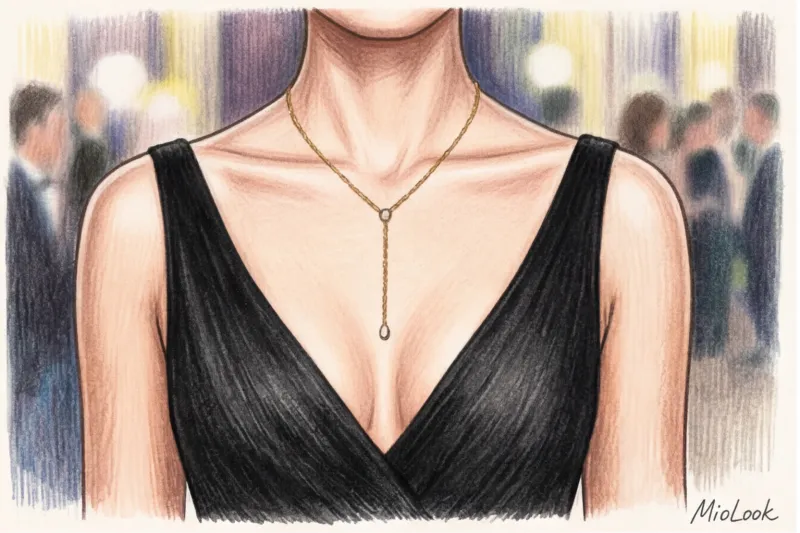
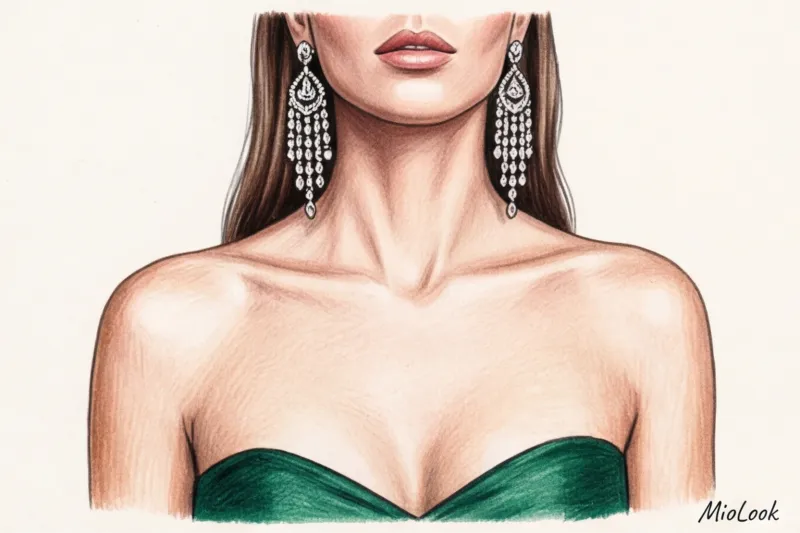
- V-neck: calls for a pendant that duplicates its shape, forming the letter Y. An alternative star move is to completely bare the décolletage and shift the focus to massive chandelier earrings.
- Deaf closed throat (stand): Necklaces are strictly prohibited here. Choose long strand earrings (they will visually elongate a neck covered by fabric) or wear chunky metal cuffs directly over the dress sleeves.
- Off the shoulder (bustier): The perfect canvas for architectural chokers. Or leave the décolletage pristine, adding statement earrings and bold lip color.
The Headset Myth: Why "Kits" Are a Thing of the Past
If you want to instantly add 10-15 years to your age and look provincial, wear a full jewelry set: matching necklaces, earrings, bracelets, and rings from the same box. This stereotype is long dead.
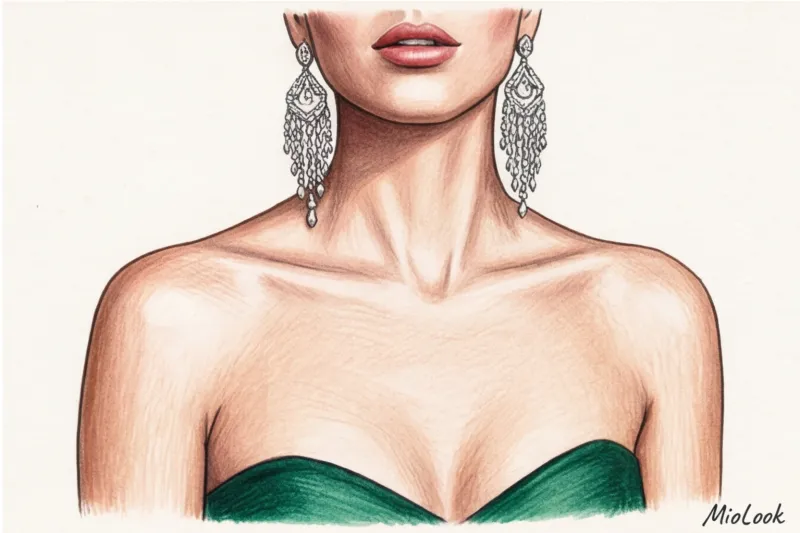
Hollywood stylist Kate Young (who works with Margot Robbie) always removes one piece of jewelry from her clients before they walk the red carpet. Contemporary luxury is built on a touch of casualness and asymmetry. Stars mix textures: for example, a sleek, chunky ring on the right hand, no necklace at all, and a statement earring on the left ear. This creates dynamism, drawing the audience's gaze to move, taking in your look.
Access to MioLook for €0.99 — one-time payment
A smart AI stylist will analyze your proportions and select the perfect accessories for your evening look.
Get access — €0.99 onceShoes as a Foundation: Secrets of Hollywood Stylists
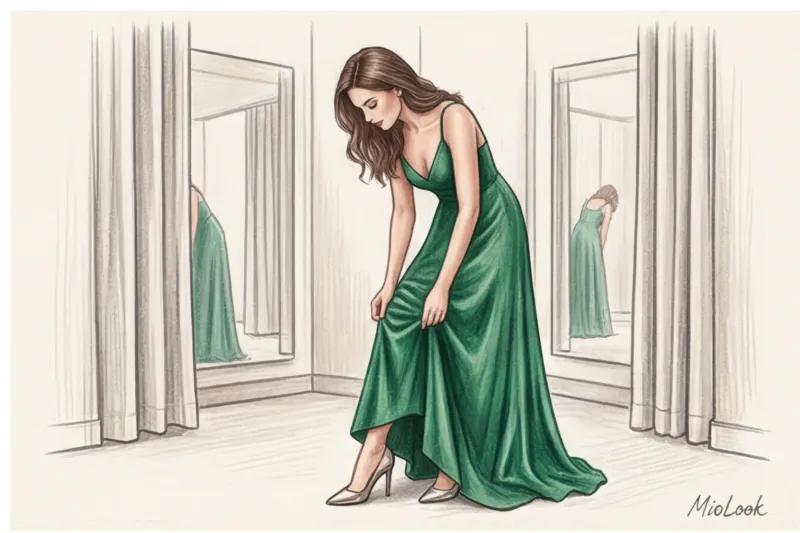
Shoes aren't just something you wear. They're the foundation, setting your posture and bringing together the silhouette of an evening gown. The shape of your toe directly influences the length of your legs in the eyes of others. Pumps with a deep neckline (maximizing the instep) and a pointed toe are a timeless red carpet classic because they visually add at least 5 centimeters of length to your legs.
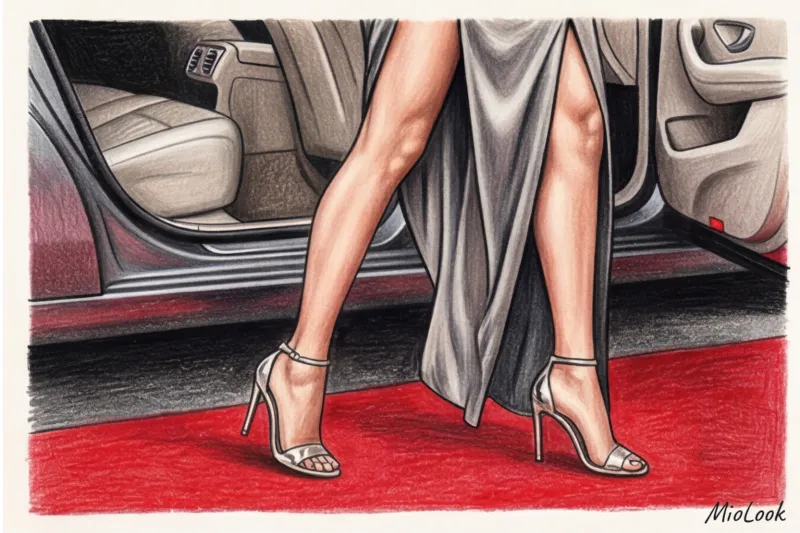
And now for the key insight. Have you ever noticed in close-up photos that many celebrities have a noticeable gap between the heel and the back of their shoes? Almost 80% of celebrities wear shoes that are half a size or even a size larger on the red carpet. Galas require hours of standing, and feet inevitably swell. Larger shoes prevent painful blisters and straps from digging into the skin.
"Ankle straps are the most insidious element of evening footwear. They act like a visual knife, horizontally 'cutting' your leg and shortening it. The only time they're safe is with maxi-length dresses that completely conceal the ankle."
I once had to rescue a client's look before a major corporate gala dinner. She'd chosen a luxurious velvet midi dress, but paired it with nude tights with a subtle sheen (a style crime in itself) and tight-fitting strappy pumps. The entire look instantly veered toward 2010s mass-market style, and her slender legs appeared short. We removed the tights, applied a lightly shimmering toner to her legs, and swapped the pumps for classic suede pumps with a deep cut, one size larger. Her silhouette instantly lengthened, and the evening passed without a hitch.
Metal, stones, and light: the color palette of evening accessories
One of the most important aspects that's often overlooked is temperature balance. The interaction of metallic color with your skin tone and dress shade can either brighten your complexion or make it look sickly yellow.
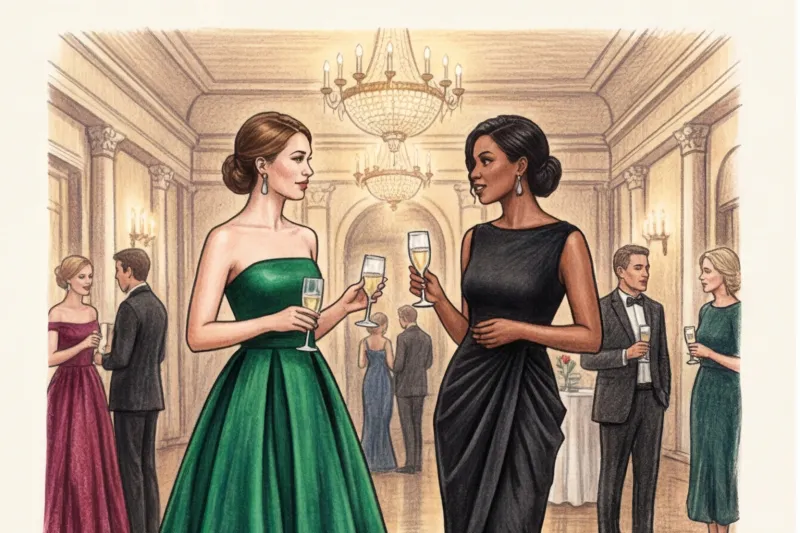
As a colorist, I often see a mistake: wearing cool, shiny silver against a warm olive or brick-colored dress. This creates visual dissonance. According to the rules of color theory, cool metals (platinum, silver, white gold) require a cool or neutral base (emerald, sapphire, classic black). Warm metals (yellow gold, brass) look perfect against wine, chocolate, and warm red tones.
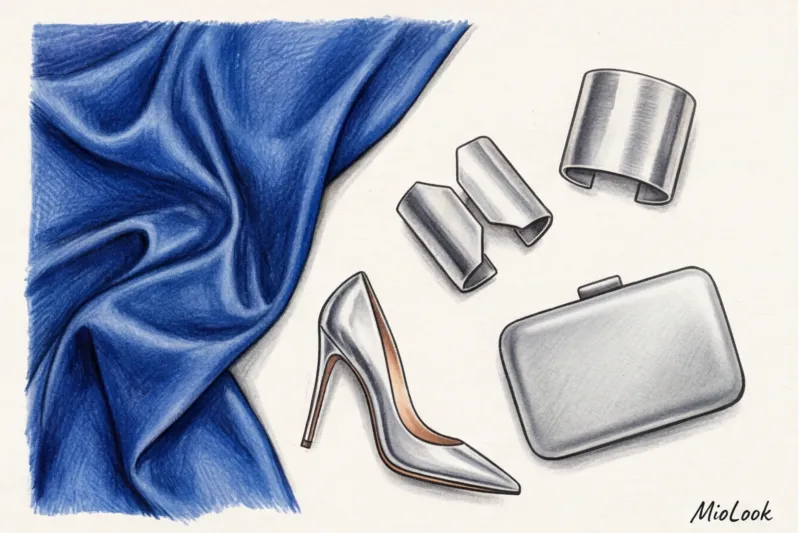
But color isn't everything. Contrast of textures works just as well. If you've chosen a dress covered in sequins, don't pair it with a rhinestone-covered clutch. You'll look like a disco ball. A sparkly dress calls for a matte metallic accessory or smooth silk. Conversely, matte crepe or thick, minimalist silk calls for diamonds or high-quality rhinestones to add textured depth.
According to a 2024 report from analytics platform Lyst, searches for "matte metallic accessories" increased by 47% ahead of the holiday season—proof that the trend for complex textures has firmly established itself in fashion.
Clutches and handbags: invisible helpers or accent details?
The size of your handbag should be strictly proportional to the proportions of your figure and the volume of your dress. A petite woman with a huge, soft clutch will look like she's about to hit the gym, while a tall, statuesque plus-size woman with a micro-sized handbag will only emphasize her size due to the stark contrast in size.
If you want a classy and expensive look (even on a budget), always choose rigid shapes. Minaudières—clutches with a rigid frame that resemble jewelry boxes—look far more elegant than soft, draped pouches, which often resemble cosmetic bags.
Your perfect look starts here
Join thousands of users who look flawless every day by managing their capsules in MioLook.
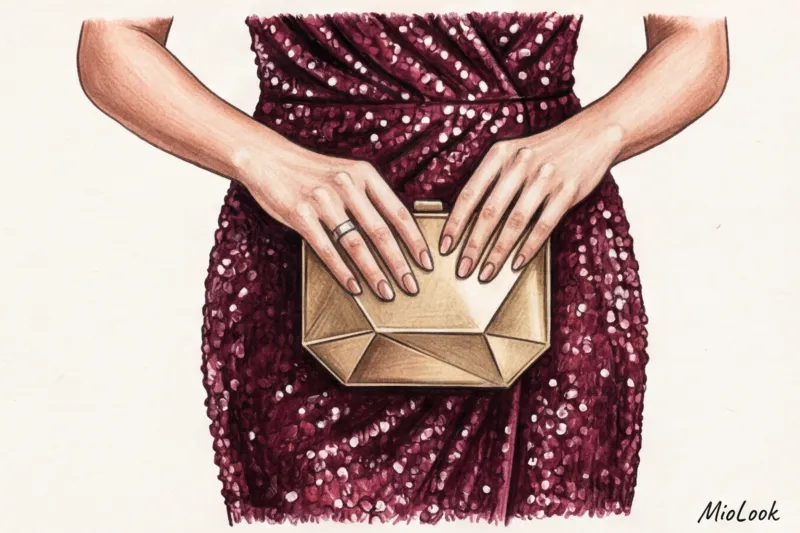
Get access — €0.99 onceOver the years of accompanying clients to events, I have developed a strict posing formula How do you hold your clutch in photos? Many people instinctively clutch it to their stomach or waist with both hands. This is a fatal mistake! This visually widens your waist by the width of the clutch. Hold it in one hand, hanging loosely along your hip, or hold it with both hands, but place them below your groin. This will preserve your curves.
Checklist: Accessorizing Your Evening Dress Like the Stars
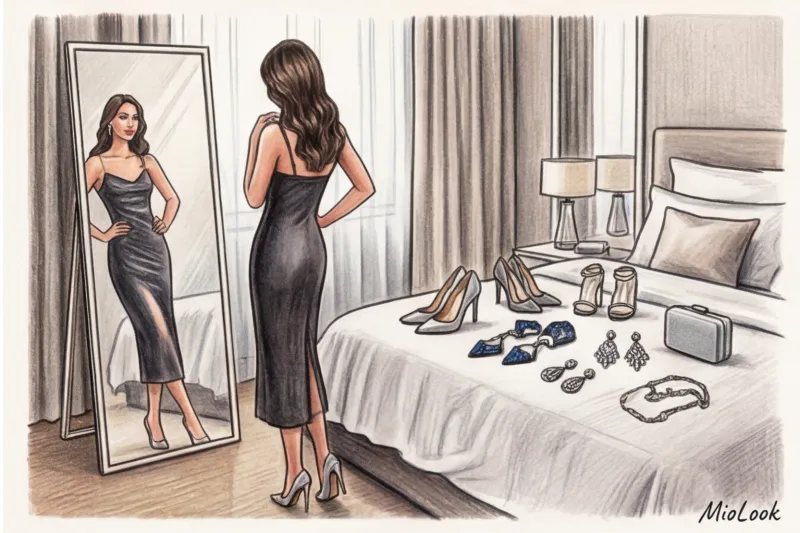
To avoid chaos before a big event, I recommend my clients run every look through this short filter. You can add your best dresses and jewelry to the "smart wardrobe" feature in MioLook , to make up these combinations in advance and save time before going out.
- Step 1: Determine the focal point. Ask yourself honestly: is the dress or the jewelry the star today? If the dress is complex, the jewelry should be minimalist.
- Step 2: Evaluate the cutout geometry. Leave your neck free if your shoulders or collarbones are covered by a complex cut. Focus on your ears or wrists.
- Step 3: Choose your shoes wisely. Pointed toes and plunging pumps are your best friends for elongating your legs. And no ankle straps with midi lengths!
- Step 4: Check the contrast of textures. A shimmery dress calls for matte accessories. Smooth, matte fabric comes alive with the sparkle of the stones. Make sure the temperature of the metal matches the dress's hue.
- Step 5: Perform a flash crash test. Take a full-length photo with flash in low light. You'll immediately see where the fabric catches the light, whether the accessories are "crowding" you, and whether the silhouette is flattering.
Conclusion: Your finest hour
The true magic of the red carpet lies not in six-figure price tags, but in an impeccable understanding of your proportions and the laws of visual optics. When you understand how light catches the texture of fabric, how the shape of a shoe's toe alters the length of a leg, and how a focal point directs the crowd's gaze, you become the director of your own look.
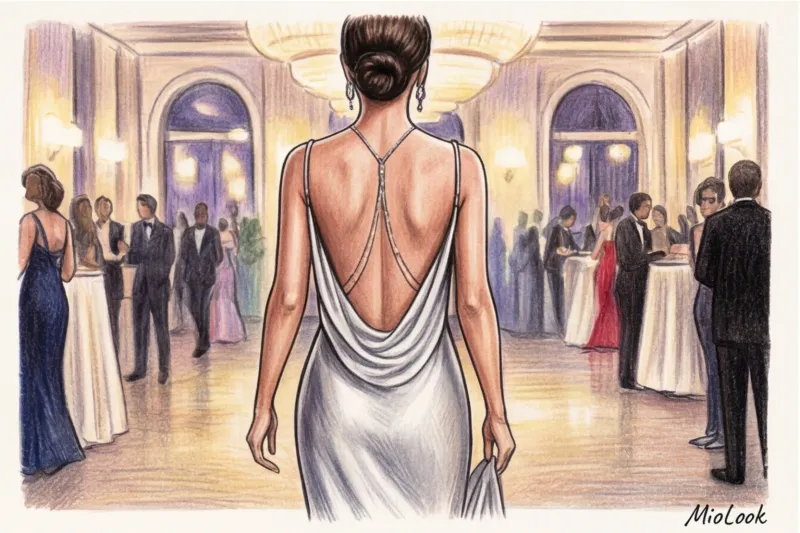
Abandon outdated rules like mandatory matching sets or shoes that match your handbag. Choose accessories based on the design of your dress and common sense. Experiment with contrasts, don't be afraid of asymmetry, and remember: the perfect accessory never outshines the woman wearing it. It only makes others believe that you're naturally beautiful.