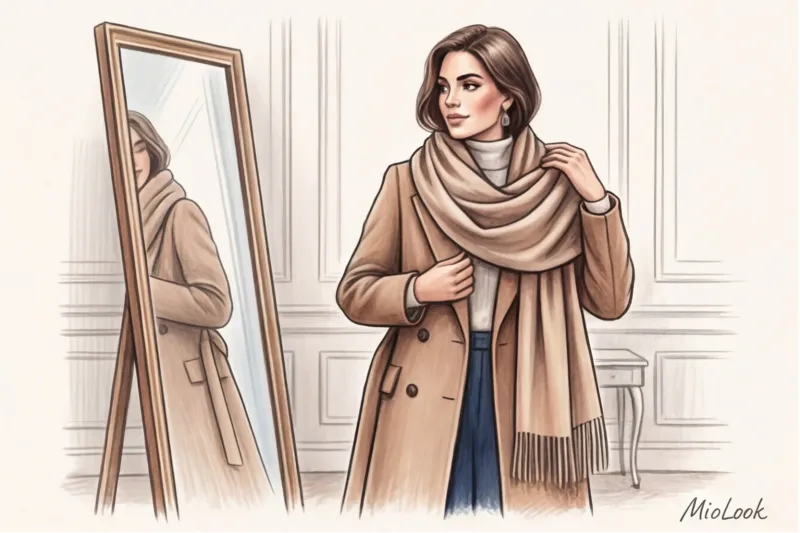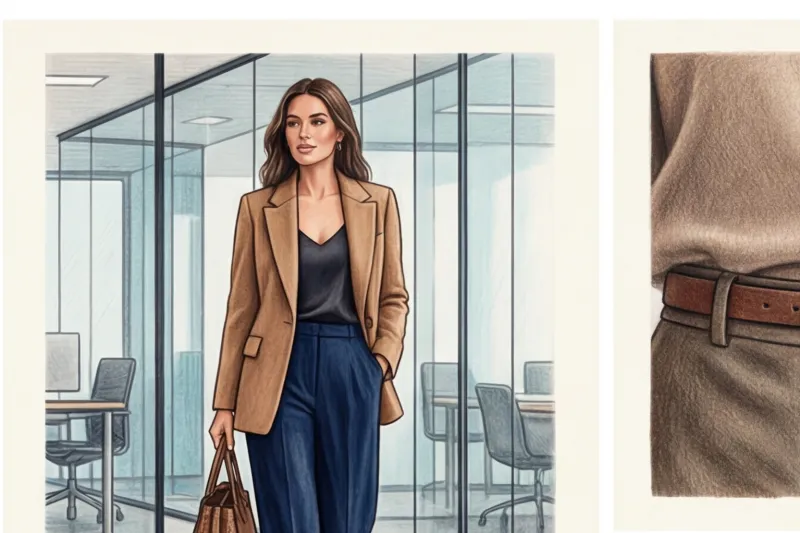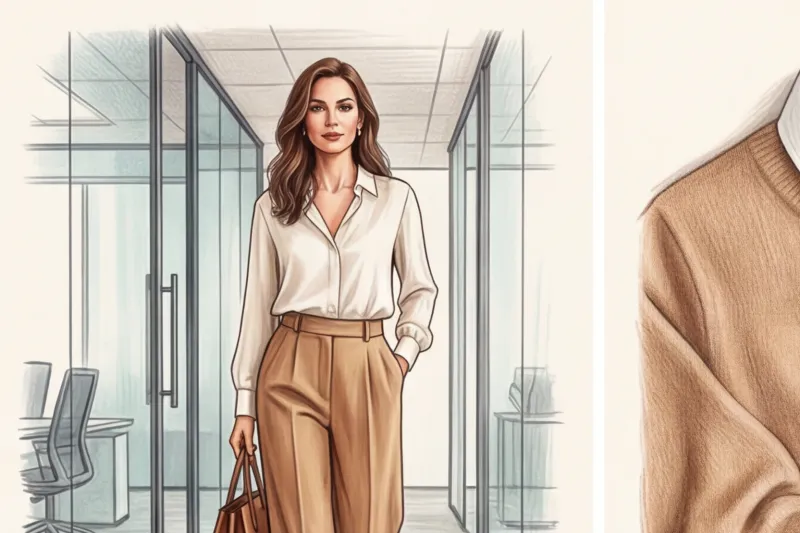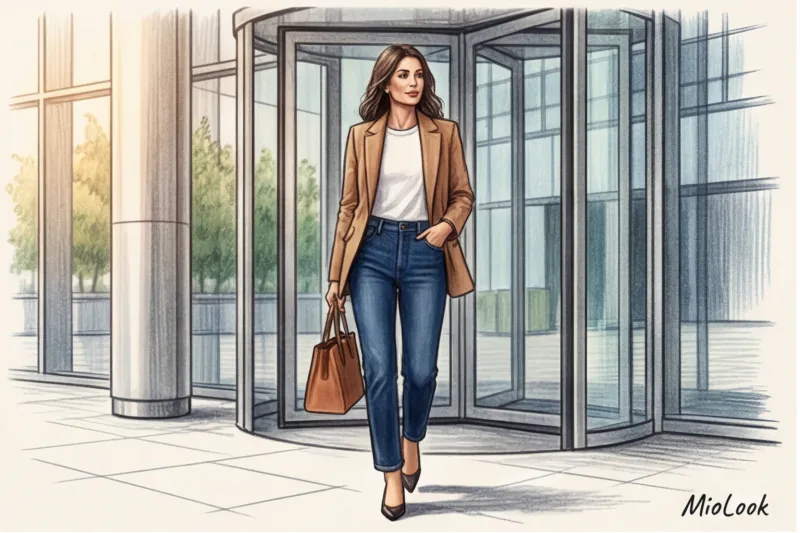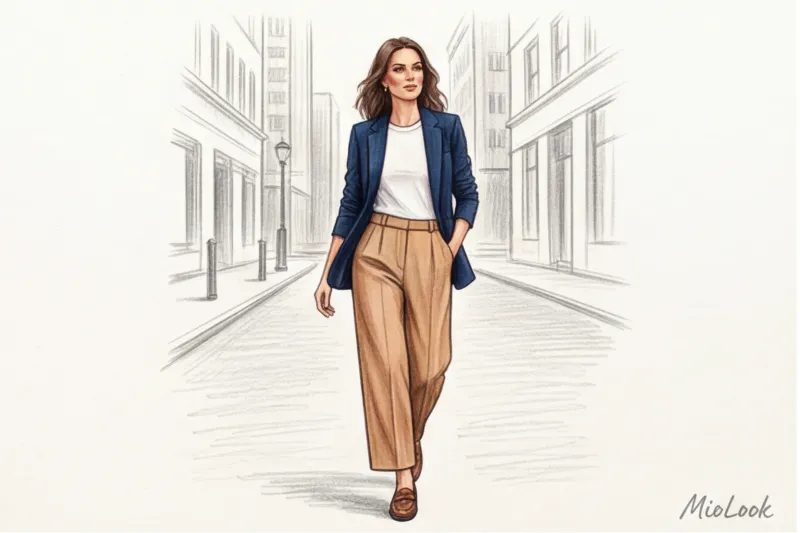
I once nearly derailed a promotion for a top manager at a major IT company. Or rather, her favorite cashmere cardigan did. At board meetings, her brilliant strategic ideas were subconsciously perceived as the advice of a "caring mother" rather than a strict leader. We replaced the shapeless knit with a structured, unlined jacket, keeping the same jeans and T-shirt. The result? A month later, she was promoted to vice president.
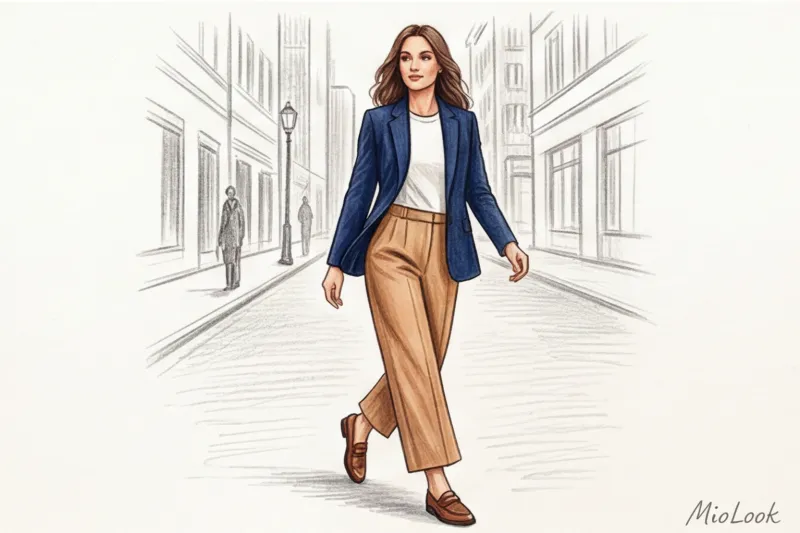
This case perfectly illustrates how it works business casual for women Today. It's not just "jeans and a jacket on Fridays." It's a subtle math process, where every detail influences how you're perceived by colleagues and management. We've already covered the corporate style hierarchy in more detail in our complete guide: Business Dress Code for Women: From Formal to Casual And today we'll look at its most popular, but most insidious, stage.
What is business casual for women in today's world?
If you open articles from ten years ago, you'll read depressing rules: "no open toes," "tights are required even at +30°C," "pencil skirts only." Forget it. The pandemic has forever rewritten corporate dress codes, shifting the focus from rigid boundaries to appropriateness and comfort.
But why don't we just wear a hoodie to the office? The answer lies in psychology. A famous study by Northwestern University (2012) demonstrated the effect Enclothed Cognition (reified knowledge).
We don't dress for HR. We dress to switch our brains into work mode. Clothing with the symbolic meaning of "competence" literally improves our cognitive abilities and concentration.
International HR agency reports for 2023–2024 reveal an interesting trend: a formal three-piece suit today intimidates clients with its rigidity, while an overly relaxed look raises doubts about your expertise. Business casual is that golden mean, conveying the message: "I'm a professional, but I'm also a modern, vibrant person."
The main difference from Smart Casual and Business Formal
The boundaries between styles are often blurred, but in practice the differences are quite clear.
- Business Formal: Suit fabric, identical top and bottom, rigid structure, closed shoes.
- Smart Casual: Allows for active trends, bright prints, unusual cuts and even statement sneakers.
- Business Casual: Mix. The base remains professional, but the materials become softer, and formal elements are combined with casual ones.
The "one-swap rule" applies here: if you're wearing jeans (a casual element), the top should be formal (a jacket or a heavy shirt). Jeans + T-shirt + sneakers are a weekend outfit, not an office one.
Access to MioLook for €0.99 — one-time payment
A smart AI stylist will select the perfect office look from your items.
Get access — €0.99 onceAnatomy of Style: The Equalizer Rule and the Formula for the Perfect Look
Over 12 years of working as a stylist, I've developed the concept of a "stylistic equalizer." Imagine a sound engineer's control panel, with sliders that control two parameters: Structure (hard fabrics, clear lines, angles) and Relaxation (soft fabrics, drapery, loose fit).
The ideal mathematics of the business casual image: 70% professionalism (structure) + 30% comfort (relaxation).
Have you noticed how your posture changes when you wear clothes with a defined shoulder line? According to statistics from my corporate training sessions, adding just one structured element increases a speaker's perceived authority by 40%. Audiences subconsciously interpret a composed silhouette as a focused mind.
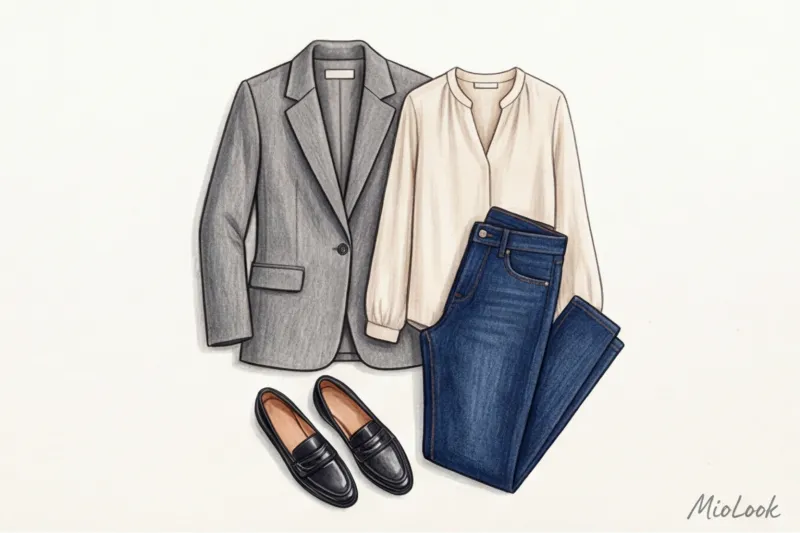
To ensure this equalizer works smoothly, use the rule of "third thing" Pants and a top are just clothes. Throw on a structured jacket, a thick vest, or a crisp leather belt, and the outfit becomes a complete look.
A Basic Business Casual Wardrobe: Putting Together a Work Capsule
An optimal business capsule collection consists of just 12–15 pieces, easily offering over 30 combinations. The key here isn't quantity, but color palette. Instead of boring black-and-white monochrome, which often looks like a waiter's uniform, choose deep, basic shades: navy (deep blue), burgundy, emerald, dark chocolate, and camel.
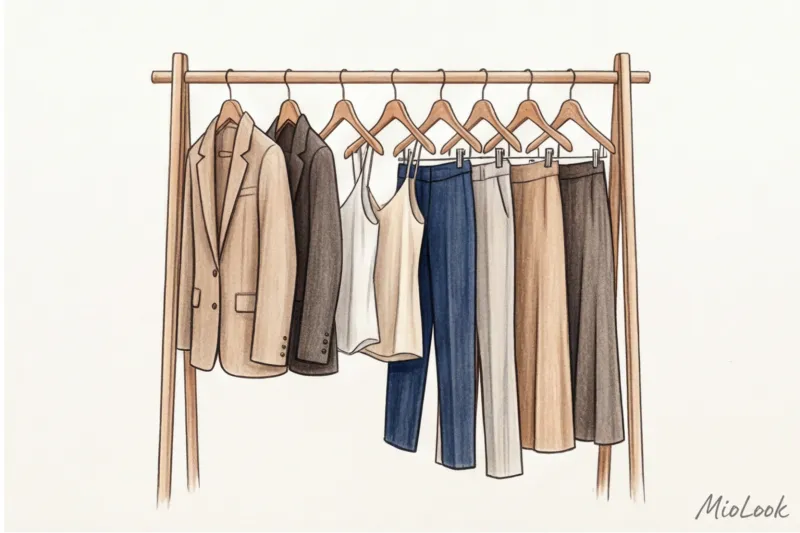
If you want to dive deeper into the process of creating the perfect base, I recommend reading the material How to Find Your Clothing Style: A Guide for Women In the meantime, let's go through specific categories.
Tops: Saying Goodbye to Stiff Shirts
The classic cotton shirt that wrinkles just by looking at your office chair is a thing of the past. What can replace it?
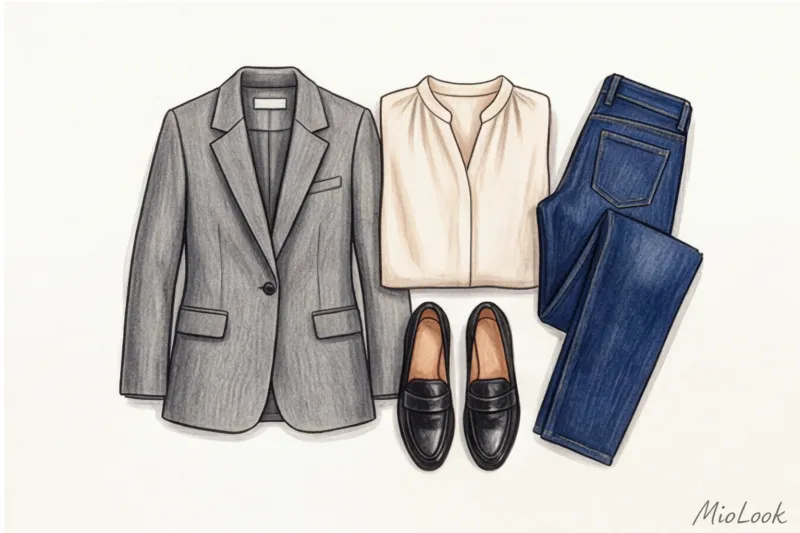
- Blouses made of flowing fabrics: Choose thick silk (19 momme count and above) or high-quality viscose with 5% elastane. They look expensive and don't require hourly ironing.
- Thick basic t-shirts: Forget thin, translucent cotton. You need a dense cotton (at least 180 g/m²) with a slight satin sheen.
- Turtlenecks: Made from fine merino or cashmere, it's the perfect base layer under a jacket during the colder months.
Bottoms: Trousers, Skirts, and the Legalization of Jeans
Business casual allows you to breathe freely. Form-fitting pencil skirts give way to comfortable silhouettes.
- Trousers: Palazzo pants in suit fabric with pleats or sturdy chinos. They allow for unrestricted movement, but the creases maintain a business-like look.
- Skirts: A-line or pleated midi length.
- Jeans: Yes, they are legal! But there is a strict filter. Only dark blue (indigo) or black jeans, straight or slightly flared, are allowed. No frayed edges, ripped edges, or rhinestones.
Shoes and Accessories: Comfort Without Losing Status
Stilettos in the office today look more out of place than professional. Loafers, Oxfords, brogues, or ankle boots with a sturdy heel are your go-to. Minimalist white sneakers made of smooth leather are perfectly acceptable, but absolutely no logos or colored accents.
The main status marker is the bag. It must be structured. Save soft shoppers or hobo bags for the weekend. A rigid bag instantly pulls together even a relaxed look.
Your perfect look starts here
Join thousands of users who look flawless every day with MioLook.
Get access — €0.99 onceThe biggest mistake beginners make: why a cozy cardigan is a trap
Here we come to the most counterintuitive rule of business attire. A cozy, soft knit cardigan is the main enemy of your authority.
Contrary to the stereotype that business casual is primarily about comfort, shapeless knitwear instantly cheapens the look and makes it seem "homey." When a garment lacks defined shoulders and a tight frame, it visually makes the figure appear more sluggish and your professional presentation less convincing.
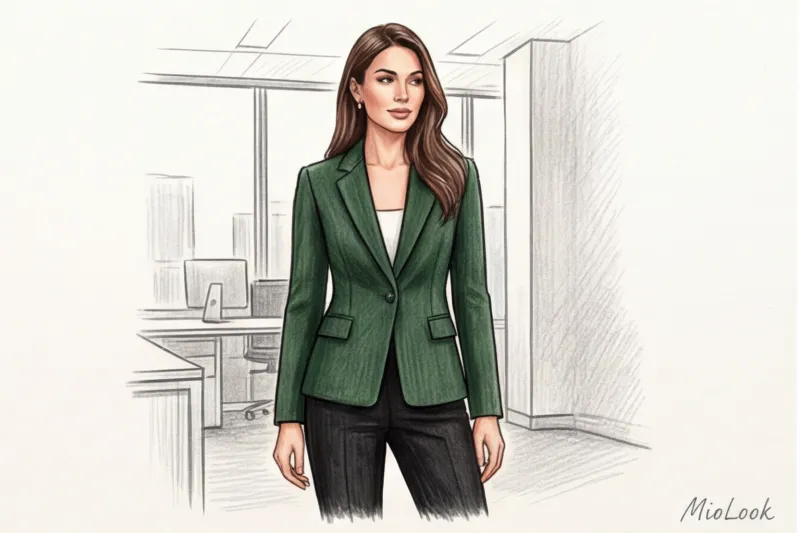
What is the alternative? Meet the term "jardigan" (knit blazer)—a hybrid of a jacket and a cardigan. This garment is made of a very dense knit (often Milano or double knit) that stretches and provides comfort while still maintaining the shape of the shoulders and lapels. This is the very life hack that saves my executive clients on long flights and hours-long Zoom calls.
How to adapt business casual to different work situations
It's important to understand: this style isn't static. You can (and should) adjust the sliders of our "equalizer" based on your schedule.
For important negotiations and meetings with clients: Let's shift the equalizer toward business. A monochrome look (for example, navy blue trousers and a navy blue top) paired with a contrasting jacket is the ideal choice. Monochrome always looks expensive and visually elongates the silhouette.
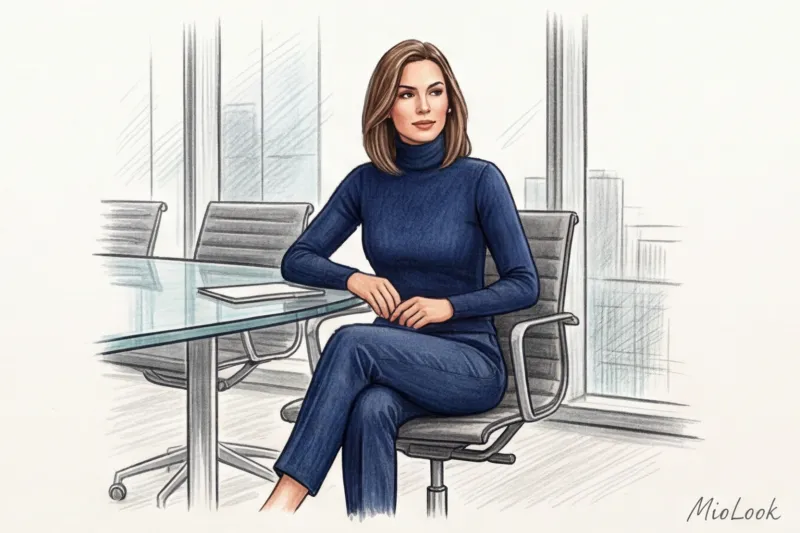
For routine office work: A 50/50 balance. Thick jeans, a silk blouse, and loafers. Comfortable sitting at the computer, but not embarrassing if suddenly called into the boss's office.
For Casual Friday: How do you avoid going overboard and looking like you're heading to the dacha to dig potatoes? Limit yourself to one relaxed piece. If you're wearing white sneakers and jeans, be sure to layer them with a structured jacket.
Fair Limit: This strictly structured approach doesn't work if you work at an ultra-creative agency where outrageous behavior is prized, or at a first-wave tech startup where the founder goes barefoot. In such environments, excessive "cookedness" can create distance. But for 90% of the classic corporate world, this is the gold standard.
Checklist: How to check your look before leaving home
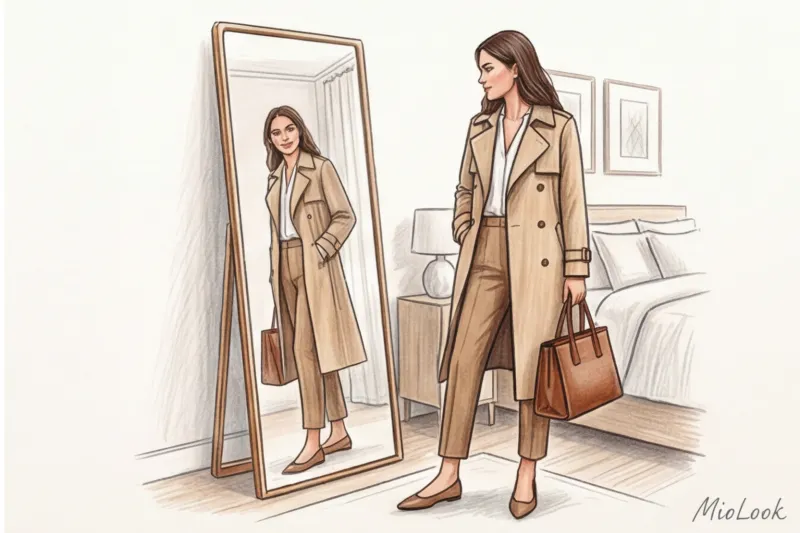
One of my clients had a hard time immediately determining whether her outfit was appropriate for the office. I created a one-minute mirror checklist for her, which I now share with everyone:
- Neatness test: Business casual doesn't forgive sloppiness. Is there pilling on the knitwear? Are the knees of your trousers stretched out? Are your shoes in perfect condition?
- Relevance test: Are your shoulders covered (even in hot weather, wide straps are better than thin ones)? Is your skirt a comfortable length when you sit on a chair? Is your underwear see-through under a basic T-shirt in the bright office light?
- Structure test: Is there at least one piece in your outfit that holds its shape? If you're wearing soft pants and a soft sweater, immediately add a stiff belt, a watch with a metal bracelet, or a structured bag.
Smart Wardrobe: Optimizing Your Style with Technology
The most common complaint among busy professionals is morning decision fatigue. You stand in front of a full closet, but have nothing to wear because your brain hasn't yet awakened to compose complex combinations.
When I first digitized my wardrobe in MioLook The data confirmed the classic Pareto principle: I wore only 20% of my clothes 80% of the time. The rest just hung there, dead weight, because I forgot about them or didn't know what to wear them with.
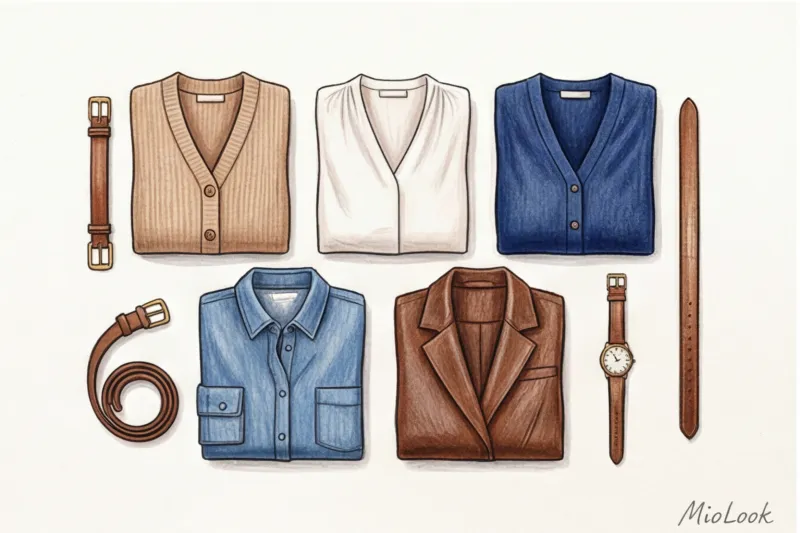
Technology is forever changing the way we approach style. Using the app's "smart wardrobe" feature, you can upload your items once and let the AI stylist create ready-made formulas. What's more, virtual fittings allow you to plan your entire workweek's looks on Sunday evening. Simply open your phone in the morning and know exactly what to wear.
Ready to get started?
Try a free plan—no commitments. Digitize your wardrobe now.
Get access — €0.99 onceBusiness casual isn't a set of strict restrictions designed to make you boring. It's a powerful impression management tool. Find your perfect balance on the "style equalizer," eschew shapeless pieces in favor of structure, and you'll see how the right outfit will benefit your career even before you utter your first word in a meeting.