One day, a client came to me for a consultation, sincerely convinced that something was catastrophically wrong with her figure. Wearing a 75D, her left breast constantly sagged out of her cleavage, creating an unsightly roll, while her right breast sank into the empty space of the cup. For ten years, she suffered in tight push-up bras, trying to "balance" her proportions, until we changed the design of her bras. The secret, it turned out, wasn't surgery or the thickness of the foam, but textile engineering.

If you've ever wondered how to find the right bra for asymmetrical breasts without the hassle of trying them on, you're not alone. We've covered the basic principles of virtual fitting in more detail in our A complete guide to choosing lingerie online using AI And today, as a textile expert and stylist, I propose to analyze the mechanics of materials and patterns so that you can forget about discomfort once and for all.
Normal Anatomy: Why Breast Asymmetry Is the Rule, Not the Exception
Let's start with facts that the mass-market industry has preferred to ignore for decades. According to the London-based Bra Fitting Institute, 85 to 90% of women have natural breast asymmetry. This isn't a defect to be desperately concealed with clothing, but an absolutely physiological and biomechanical norm.
The difference in circumference up to one full cup size (approximately 2-3 cm in circumference) is genetically determined. So why is finding the right bra so difficult? The answer lies in the patterns. Most mass-market factories produce millions of batches on rigid plastic 3D mannequins with perfect, mirror-like symmetry. Brands optimize costs by ignoring the actual anatomy of the living body.
The result is a paradox: women try to squeeze their unique, asymmetrical shapes into a symmetrical, average standard, while blaming their own bodies rather than the manufacturer.
The biggest mistake when choosing: why a molded cup is your worst enemy
The most damaging myth I constantly encounter in my practice is: "To hide a size difference, you need a rigid, self-supporting foam bra." Sounds logical? In reality, it's a disaster for the fit.
A molded bra is baked under pressure on a special die. It's a rigid fabric "shell." It's completely inflexible. When you wear a molded bra with asymmetry, it fits tightly on the larger breast, but inevitably falls away on the smaller breast. A gaping hole is created. Under any tight turtleneck or thin silk top, this hard, protruding edge of the cup will be treacherously visible.
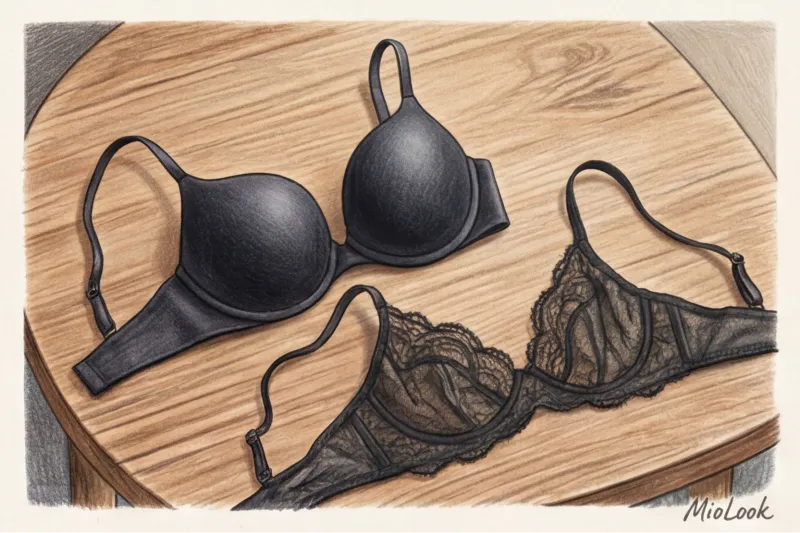
Moreover, when the cup is empty, the rigid frame (underwire) loses its proper tension. It begins to slide along the ribs, chafe the skin, and disrupt microcirculation. You pay €60–€100 for a quality bra, but what you get is daily torture.
Access to MioLook for €0.99 — one-time payment
A smart AI stylist will analyze your measurements and select the perfect fit based on your body type.
Get access — €0.99 onceBras for Asymmetrical Breasts: How to Choose the Right Style Online
When you buy lingerie online, you can't check the fabric tension with your fingers. But you can visually inspect the bra's design directly from the catalog photos. Good lingerie is constructed according to the laws of strength of materials.
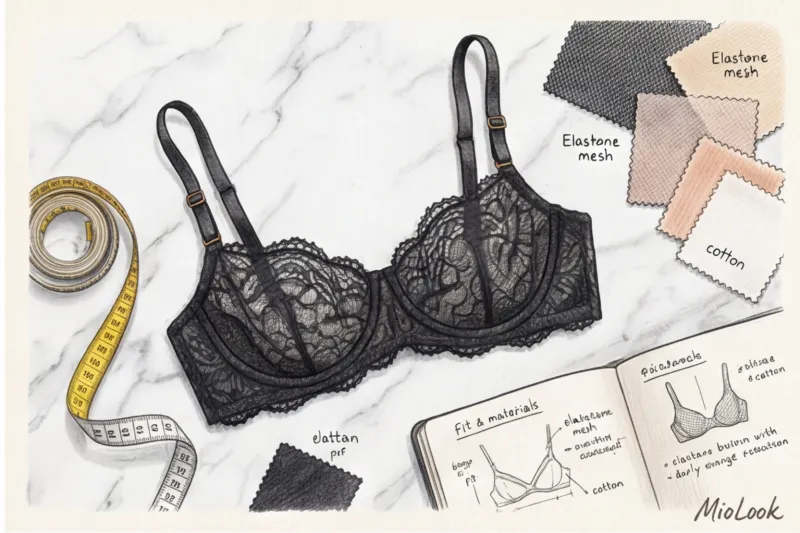
First of all, look for styles with elastic at the top edge of the cup. If there's a thin, hidden elastic band (stretch binding) running along the edge, you're in luck. It'll work like a smart bandage: it'll stretch where there's more volume and gently press the fabric against the body where there's less.
Spacer 3D: a breathable alternative to foam rubber
If you're absolutely not ready to wear soft lace and need a smooth fit under a T-shirt (or bra), spacer technology is your choice. As the analytical agency WGSN notes in its lingerie trends report (2024), the transition to adaptive 3D materials is the main vector of industry development.
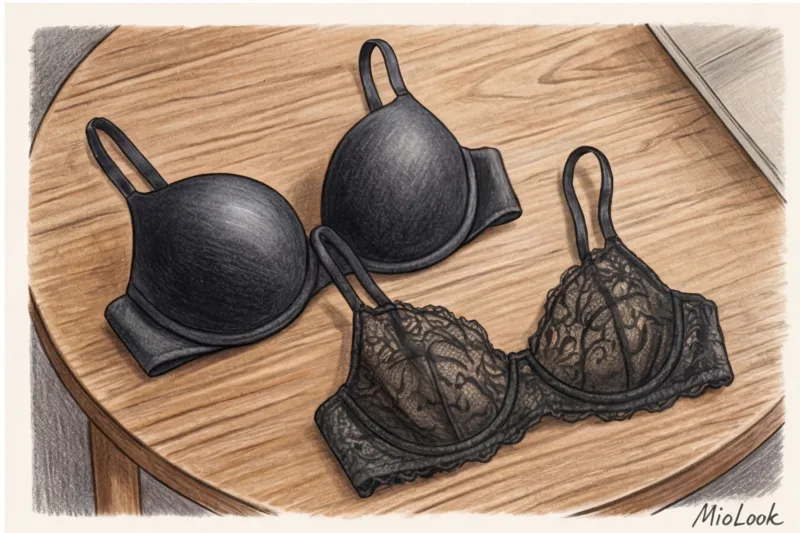
Spacer is a three-dimensional knitted fabric with a microscopic air layer of elastic threads sandwiched between two layers of fabric. It's lightweight, incredibly breathable, and, unlike foam, can be molded by body heat, adapting to its unique shape.
The spacer conceals the nipples and creates a smooth silhouette, but at the same time falls softly on smaller breasts, without creating a hard "bubble".
Stretch Lace
For more sophisticated looks, stretch lace is unrivaled. It accommodates up to one and a half sizes. Its intricate weave hugs smaller breasts without creasing or wrinkling, while stretching on larger breasts without squeezing the soft tissue.
The golden rule of bra fitting: focus on larger breasts
Even the perfect fabric won't work if you choose the wrong size. Remember the most important rule of professional bra fitting: We always select a cup according to the larger breast size..
If you buy a bra that's the right size for your smaller breast, the larger breast will be squeezed. This will create a "quad-boob" effect, where the fabric cuts the breast in half. This not only ruins your silhouette but also poses a risk to your lymphatic system.
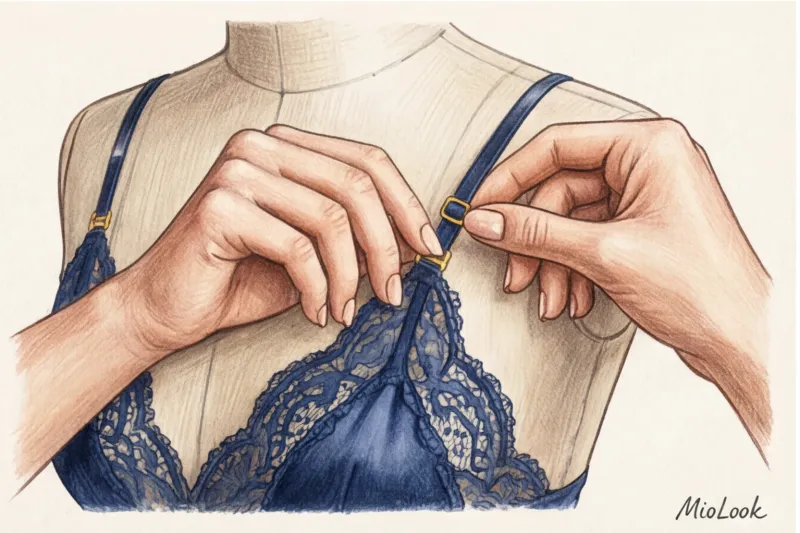
How to compensate for the void on the smaller side? This is where proper tuning comes into play.
First, use asymmetrical strap adjustments. On the smaller side of your bust, pull the slider up 1–2 centimeters. This will tighten the cup slightly and remove any slack in the fabric.
Secondly, use cookie inserts. Almost all high-quality premium brands (from €80) have cotton pockets inside the bra. Insert a thin gel or fabric push-up insert. only on one side — for smaller breasts. The problem is solved discreetly and anatomically.
Your perfect look starts here
Join thousands of users who look flawless every day with MioLook, forgetting about size issues.
Get access — €0.99 onceRead the ingredients online: fabrics that will forgive a half-size mistake
As a textile expert, I implore my clients: don't just look at the color and lace. Scroll down to the "Composition" section. That's where the truth about how a garment will fit is hidden.
For asymmetrical breasts, the presence of elastane (also known as spandex or lycra) is critical. If the lace in the cups contains less than 10-15% elastane, it will not adjust to your size.
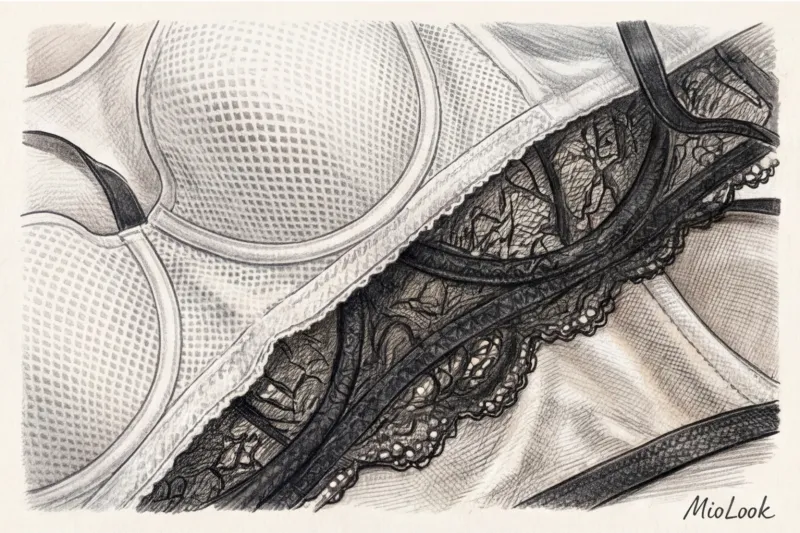
Pay special attention to the bra band (stoma)—it's the foundation that supports 80% of the breast's weight. Powernet mesh is the ideal material for a band. Unlike cheap, smooth microfiber, which stretches after a month of wear, corset mesh has a high modulus of elasticity. It holds the bra firmly in place, preventing it from sagging toward the heavier side.
When this approach does NOT work: If you're a firm believer in 100% natural silk or stiff, non-stretchy cotton (like vintage 1950s patterns). These fabrics have no stretch whatsoever. If you have pronounced asymmetry, a 100% silk bra without elastane inserts will have to be custom-made (which will cost €250 and up).
Checklist: 5 Steps to Buying Asymmetrical Lingerie Online
To save you time and money on returns, I've created an algorithm for evaluating products on the website:
- Check the brand and cutting school. British brands (such as Panache and Freya) traditionally feature deeper, more closed cups, which better conceal asymmetry. The French school (Chantelle) favors open balconette cups, where the difference in volume can be more noticeable.
- Study the photo on the model in zoom. Look at the top edge of the cup. If it's digging into the model's chest, even in a professional studio photo, close the tab. This is a hard edge that won't forgive you for asymmetry.
- Look for marker phrases in the description: "stretch lace", "adaptive cup", "presence of pockets for inserts".
- Check the straps. They should be adjustable throughout their entire length, not just halfway. Asymmetry often results in different breast positions, and deep adjustment is essential.
- Check the return policy. High-quality lingerie costs an average of €50–€120. Never order a bra with a complex design from a store that prohibits trying on before buying or requires a paid return.
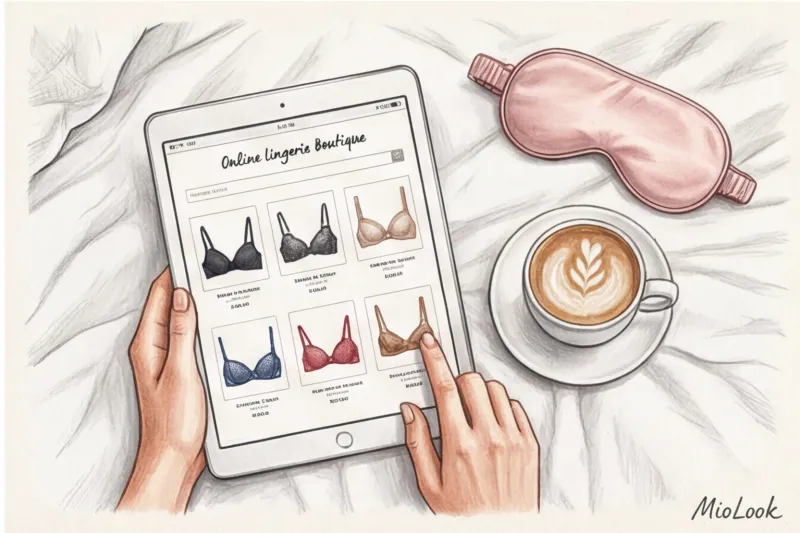
The End of the Tape Measure: How AI is Solving the Problem of Complex Fit
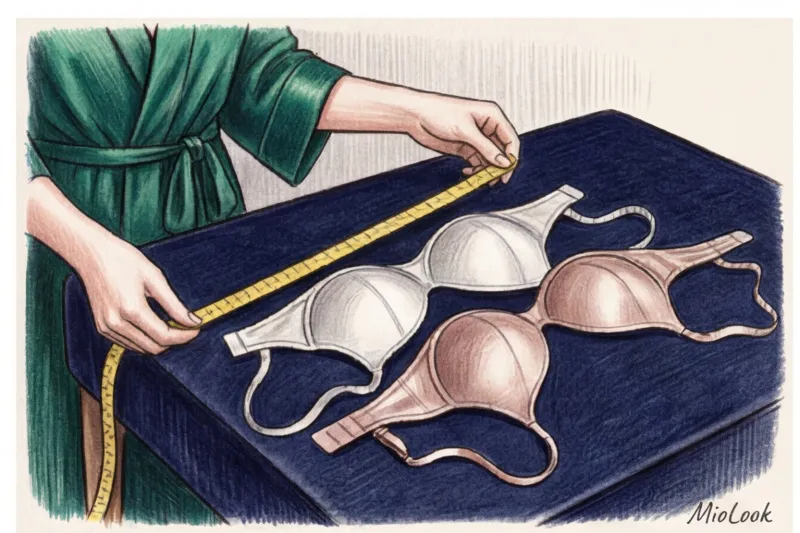
Let's be honest: traditional size charts with "underbust" and "full bust" measurements are hopelessly outdated. With asymmetry, the tape measure measures the average temperature in the hospital. You're taking a measurement that takes into account the volume of the larger breast plus the space between the smaller breasts, and the result is a size that doesn't exist.
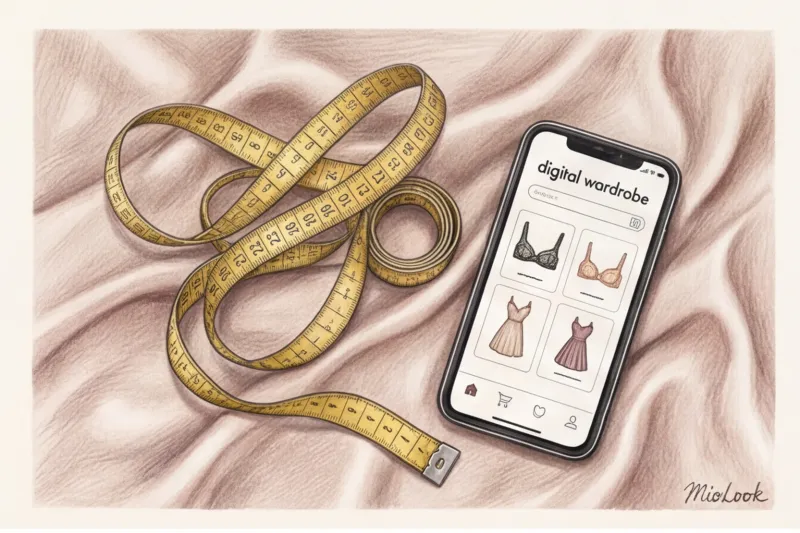
This is where modern technology comes in. A smart wardrobe isn't just about what to wear with what, but also about the perfect fit of your essentials.
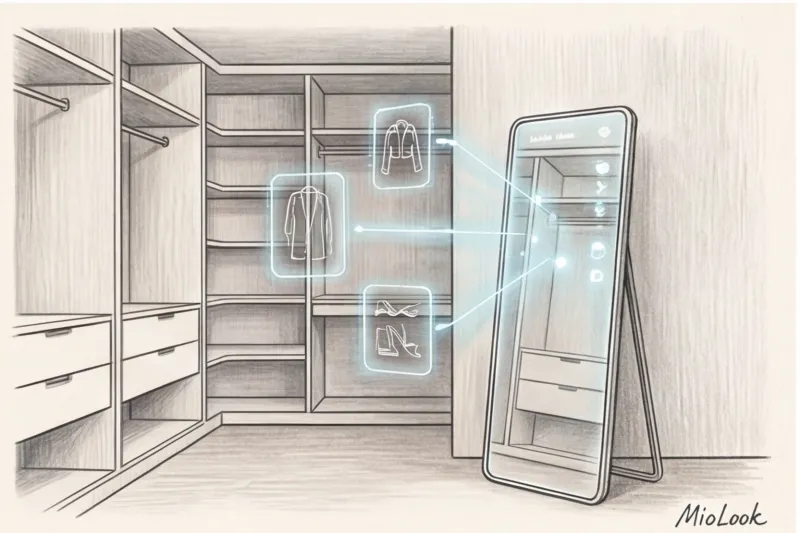
Algorithms MioLook applications use a completely different approach. By analyzing your visual data, brand preferences, and the parameters of the things you already AI can predict the perfect pattern to ensure they fit you well. The system takes into account what a tape measure can't: bust shape (teardrop, cone, or round), waist height, and that natural asymmetry.
Instead of ordering five identical rigid bras in the hopes that one will fit, you begin to understand your body's geometry. And the main takeaway I want you to take from this article is that your body shouldn't conform to a piece of fabric and foam. It's the clothes that should adapt to your unique anatomy. Choose smart, flexible materials—and you'll feel the difference from the very first moment you try them on.