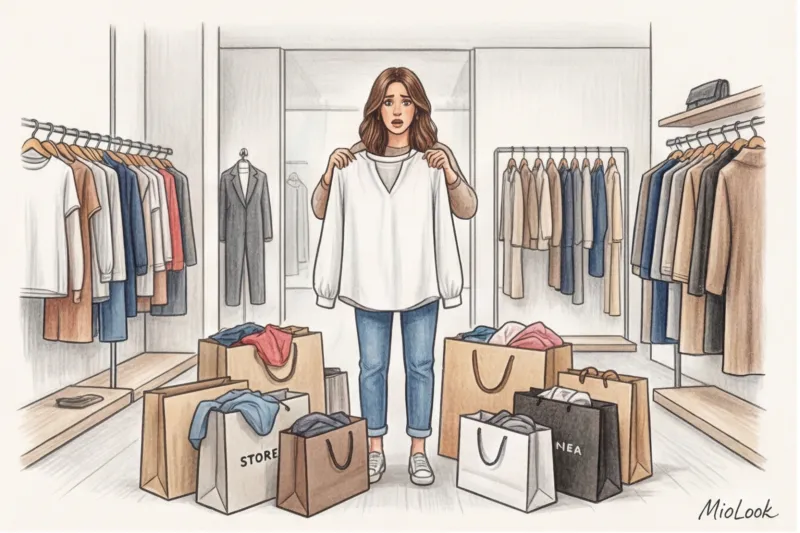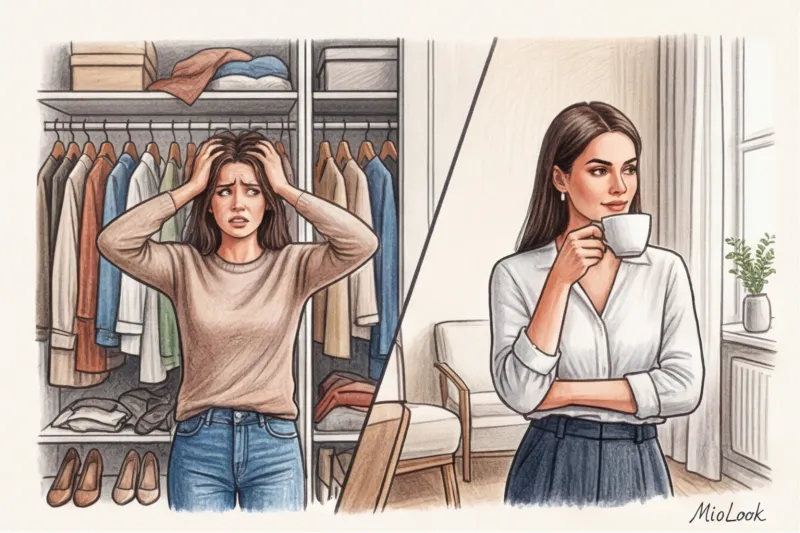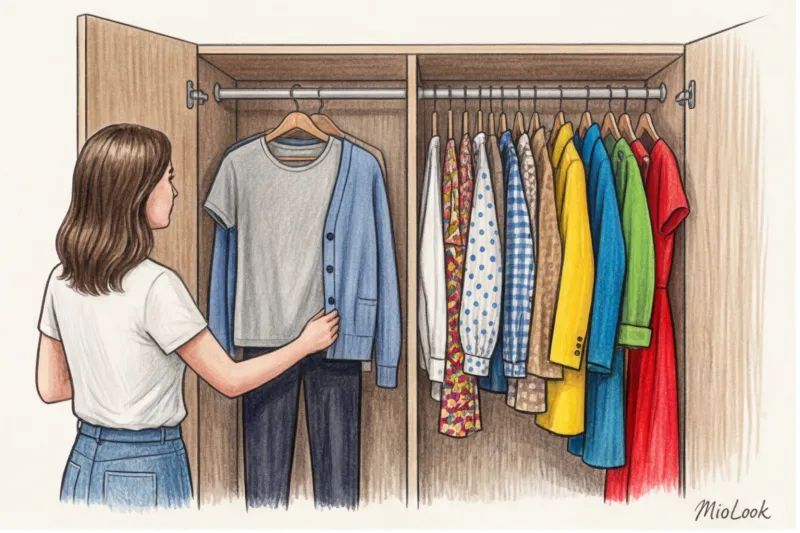

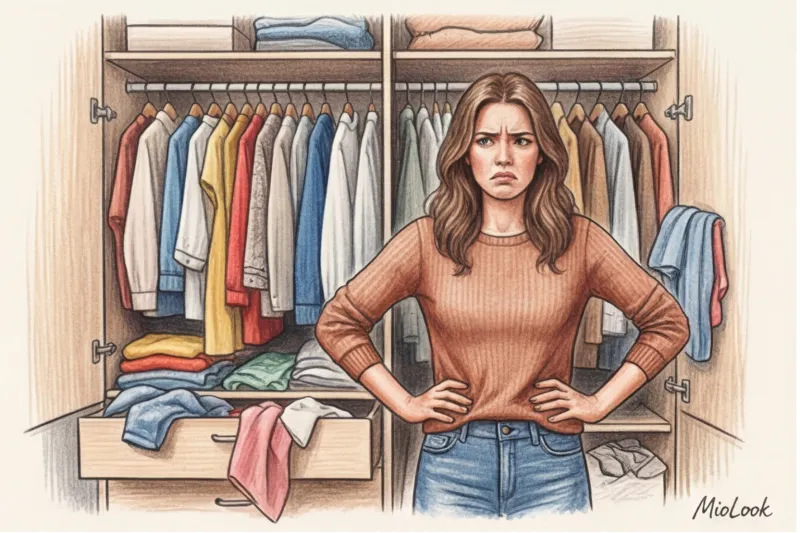
Two years ago, I conducted a ruthless style experiment on myself. I meticulously documented every look I wore for six months. And do you know what the data showed? Out of an overflowing closet whose doors barely closed, I regularly wore exactly 20% of the items. The remaining 80% turned out to be dead weight—they simply took up hangers and drained my energy every morning.
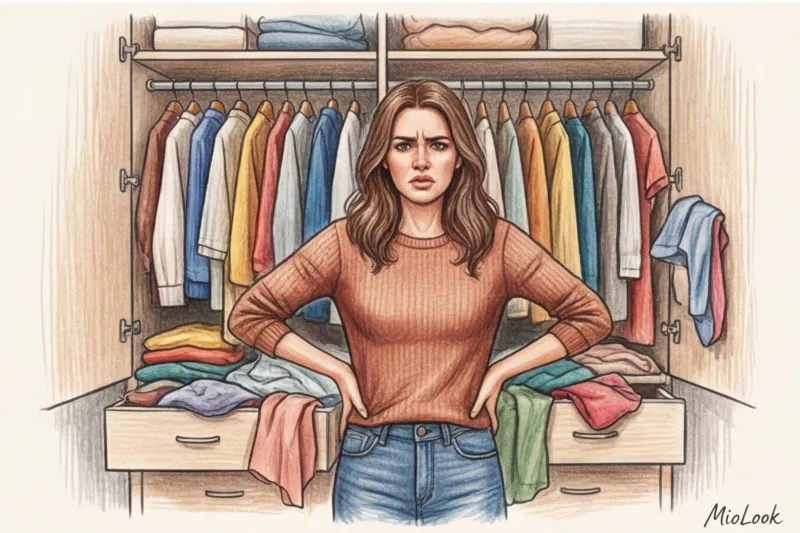
That's when I realized: we don't need bigger cabinets. We need data on how we use them. And that's where digital wardrobe app — a tool that will forever change the rules of the personal style game. We discussed the global impact of our consumer habits on the environment in more detail in our the complete guide to conscious fashion and eco-wardrobe , but today let's talk about your personal benefit.
The Psychology of Impulse Buying: Why Do We Keep Buying Unnecessary Items?
The paradox of modern consumption is this: the more clothes we have, the more acutely we feel the proverbial "I have nothing to wear." The brain simply can't cope with the abundance of visual noise.
According to the study Ellen MacArthur Foundation Over the past 15 years, the frequency of wearing a single item has decreased by a whopping 36%. We buy clothes as a stress reliever, succumbing to the gimmicks of fast fashion. But the main problem lies in the phenomenon of "blind spots."
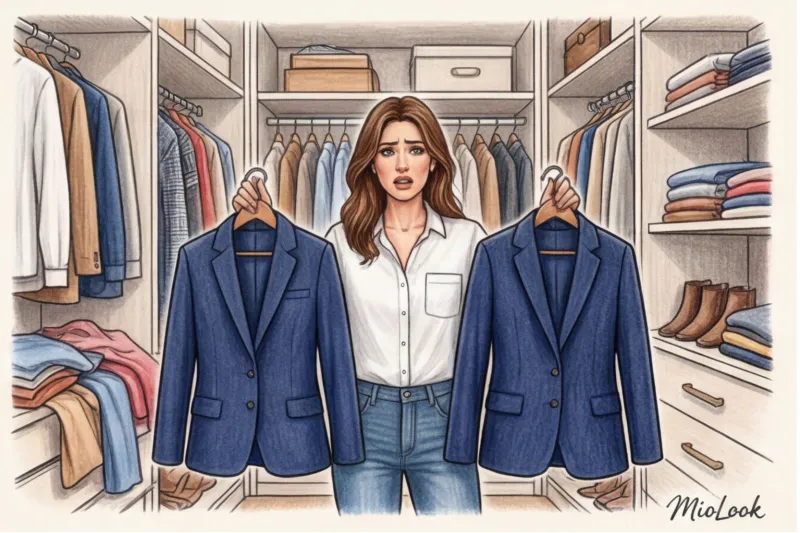
Have you ever noticed that things folded in the bottom drawers of a dresser or hung in a tight row literally cease to exist for you? One of my clients, a top manager at an IT company, approached me with a request. put together a business capsule wardrobe While sorting through her closet, we found five identical black jackets. She bought a new one every time she felt like she needed a "sleek basic," simply forgetting about the previous ones.
What a Digital Wardrobe App Actually Is (Spoiler: It's Not Just a Catalog)
Many people think that digitalization is a boring inventory, akin to counting goods in a warehouse. This is fundamentally wrong.
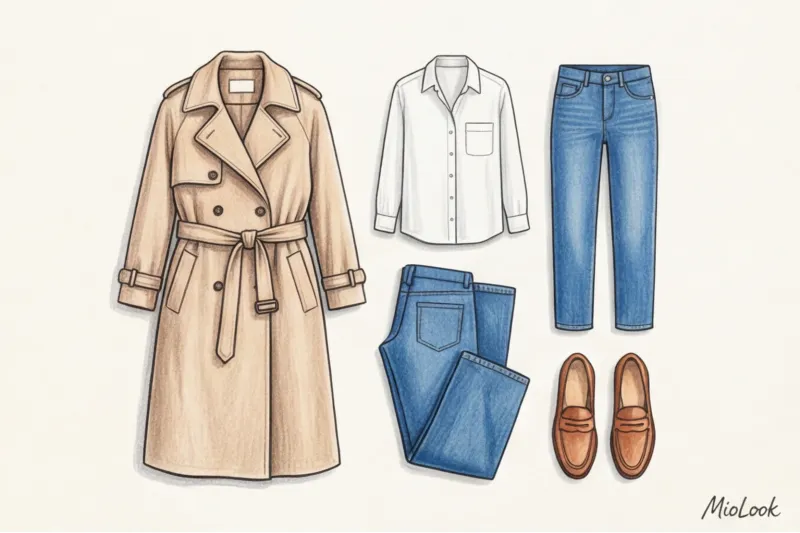
A good digital wardrobe app is your personal data analyst. As a stylist, I don't look at pretty pictures on hangers, but at the "efficiency" of a wardrobe. When you see all your items on one screen in a neat grid, your brain starts to work differently. You instantly notice imbalances: for example, you have 12 dressy blouses but only one basic pair of straight-leg jeans.
Access to MioLook for €0.99 — one-time payment
A smart AI stylist will select the perfect look based on your digital database.
Get access — €0.99 onceThe Mathematics of Style: How Digitalization Saves Your Budget
This is where the fun begins. In professional styling, there is a key metric— Cost Per Wear (CPW) , or cost per wear. The formula is simple: the price of an item divided by the number of times you wear it.
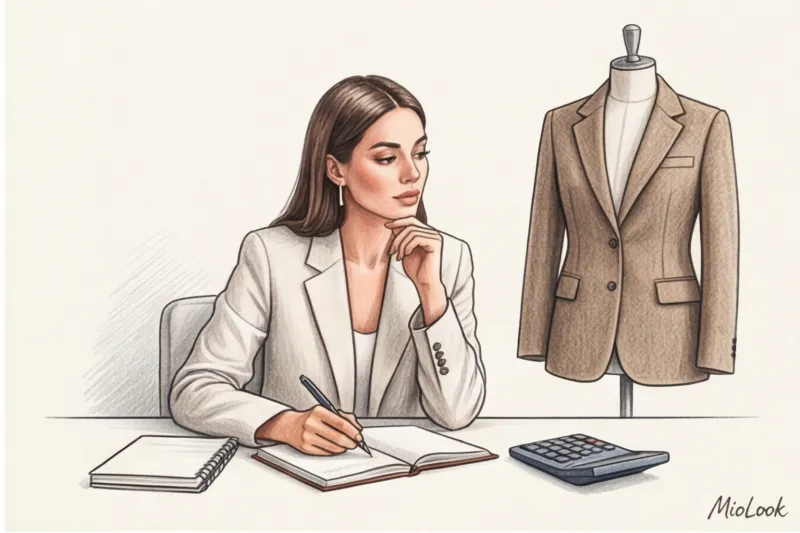
Let's do the math. Let's say you bought a high-quality wool blazer from Massimo Dutti for $300. You wear it to the office twice a week for eight months (approximately 64 times). Your CPW is $4.60.
Now, let's take a trendy rhinestone top from a mass-market retailer for $25. You wore it to a party, washed it, it lost its shape, and now it's sitting in your closet. Its CPW is $25. The paradox is that this "cheap" item cost you five times more than a high-quality basic! The app calculates these figures automatically, showing you the true return on your investment.
Compatibility Index: The Rule of Three Images
I have a golden rule for my clients: never print a receipt unless an item can be paired with at least three items already in your closet. The outfit builder feature saves you from buying expensive "single items" that then require you to buy special shoes, a bag, and pants.
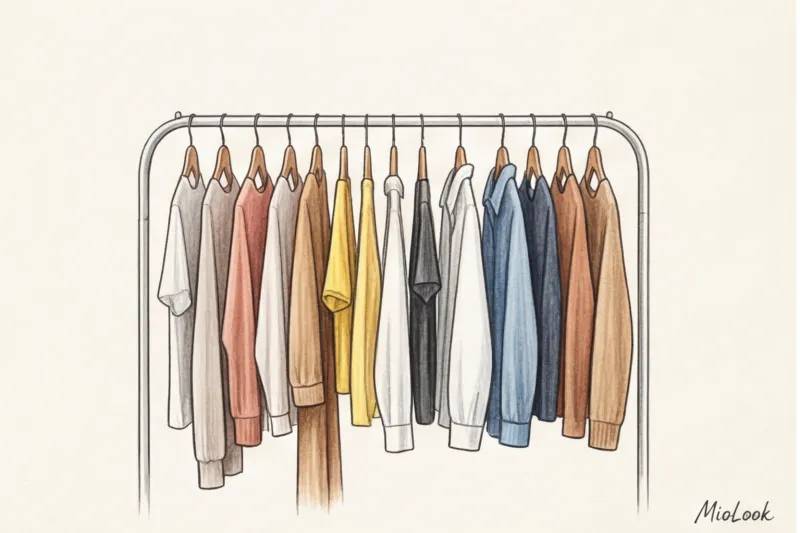
The Digitization Myth: Why You're Quitting (and How to Avoid It)
You do NOT need to photograph 100% of your items on the first day.
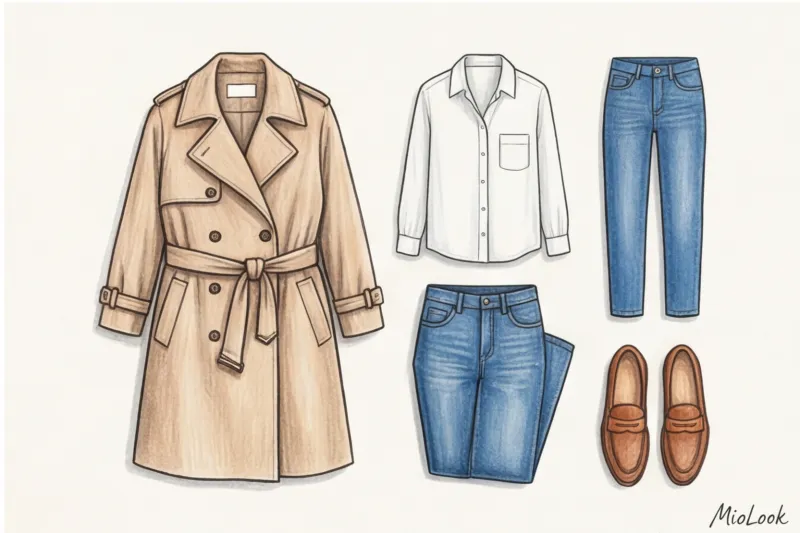
I often hear, "Emily, I downloaded the app, pulled all 150 of my things out onto my bed, spent Saturday taking photos, got so tired I cried, and deleted everything." Trying to digitize your entire closet in one weekend is the number one cause of failure. It's a surefire way to burnout.
I preach strategy "lazy digitization" Remember the Pareto principle: you only wear 20% of your clothes anyway. Focus only on those. Add to the system only those items you take off in the evening, or those new clothes you just brought home from the store. Within a month, your real, "live" capsule will digitize itself, without stress or wasted weekends.
Your perfect look starts here
Join thousands of users who look flawless every day with MioLook.
Get access — €0.99 onceShopping Barrier: How a Digital Wardrobe App Works in-Store
Imagine a real-life scenario. You're standing in Zara, clutching an incredibly eye-catching neon sweater. Your mind is already picturing how stylish you'll look in it. Your hand reaches for your card.
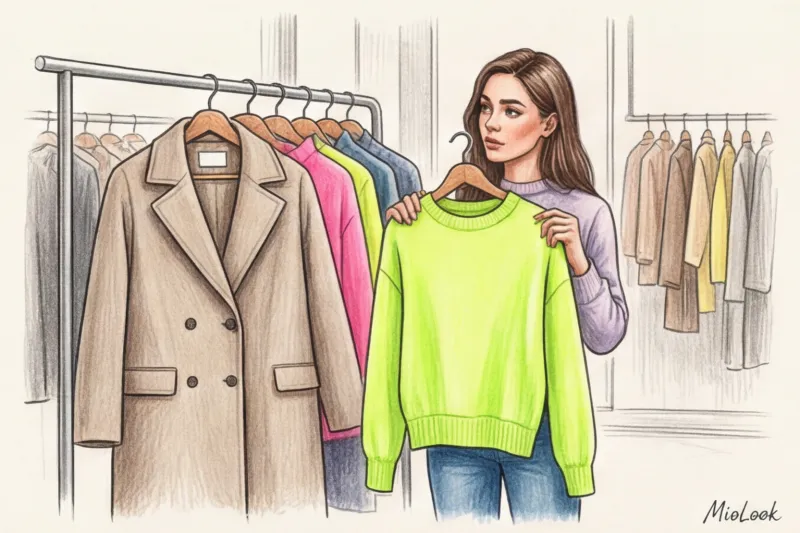
Stop. You open the app. You turn on the "virtual fitting room" mode and try to mentally fit this sweater to your digital status capsule for the office It turns out neither beige trousers nor formal skirts go with it. It demands light-colored jeans, which you don't have. The purchase is cancelled. You just saved $80 and saved the planet from unnecessary rags.
If the thing still won't leave your head, use it The 24-Hour Rule Put an item aside in the store, take a screenshot of it from the brand's website, upload it to the app, and try to create five outfits. Spoiler: 90% of the time, you won't even remember it the next morning.
A Step-by-Step Checklist: How to Start Digitizing Today (Stress-Free)
To create a working capsule wardrobe In digital form, it will take you exactly 15 minutes. No deep cleaning required.
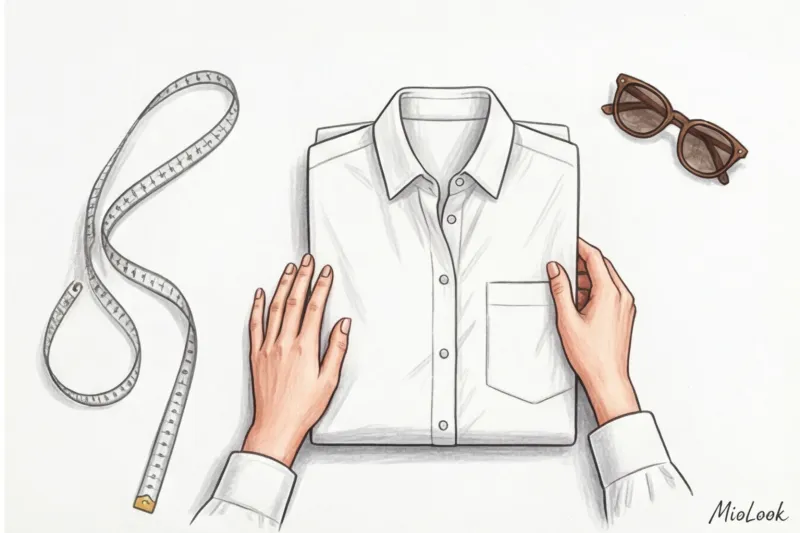
- Step 1: Select your core capsule. Pull out 10-15 of your favorite basic items that you wore last week. Jeans, a favorite jacket, a couple of t-shirts, comfortable shoes.
- Step 2: Prepare the sources. Steam your clothes (wrinkled items are harder for AI algorithms to crop). Find a solid background—a sheet on the floor in good daylight works perfectly.
- Step 3: Assemble the constructor. Immediately create 5 ready-made looks for the upcoming work week.
- Step 4: Seasonality. Add seasonal items (coats, scarves) only when you transition to a new season.
Let me make it clear right away: this method has its limitations. It doesn't work well with complex evening wear or specific outfits. Don't try to digitize a ski suit or a bridesmaid dress—they'll only ruin your basics statistics. Leave them out of the digital system.
From Chaos to System: Results You'll See in a Month
When you transfer your wardrobe to your smartphone, morning stress disappears. You no longer stand in front of your open closet in a state of panic. Choosing an outfit takes just two minutes over a cup of coffee: you simply open the "ready looks" tab.

But most importantly, you regain control. You're no longer a victim of sales and aggressive marketing because you know your assets precisely. Digitization isn't an end in itself, but a powerful tool for transitioning to conscious fashion.
Ultimately, the most sustainable and cost-effective wardrobe isn't one made from recycled plastic, but one that's already hanging in your closet and working for you every day. Start with ten items today, and you'll be surprised how quickly your attitude toward your style changes.