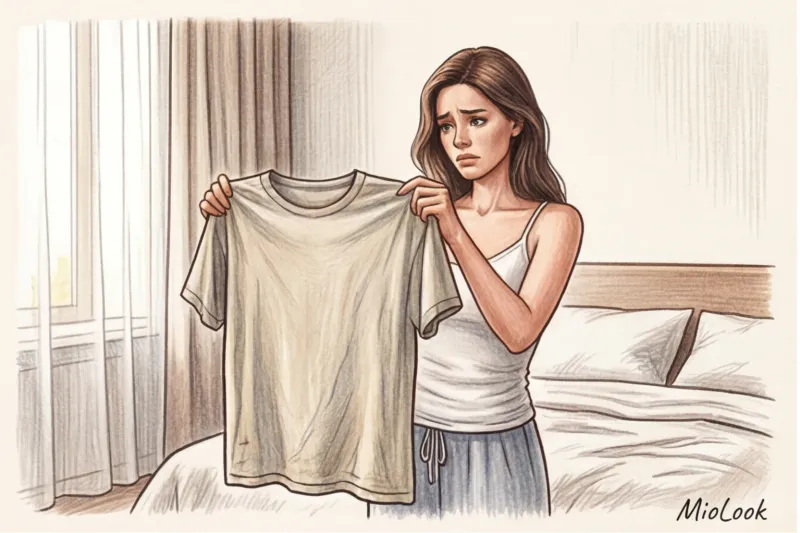
Did you know that, on average, we spend about 60% of our time at home? Yet, when I review my clients' wardrobes, I regularly see the same pattern: 95% of the budget is spent on clothes "for people" (office, restaurants, vacations), while for home, the clothes they keep are those they're embarrassed to wear outside. Stretched T-shirts, faded leggings, and, of course, the shapeless terrycloth robe. As a stylist, I categorically disagree with this distribution of self-love.
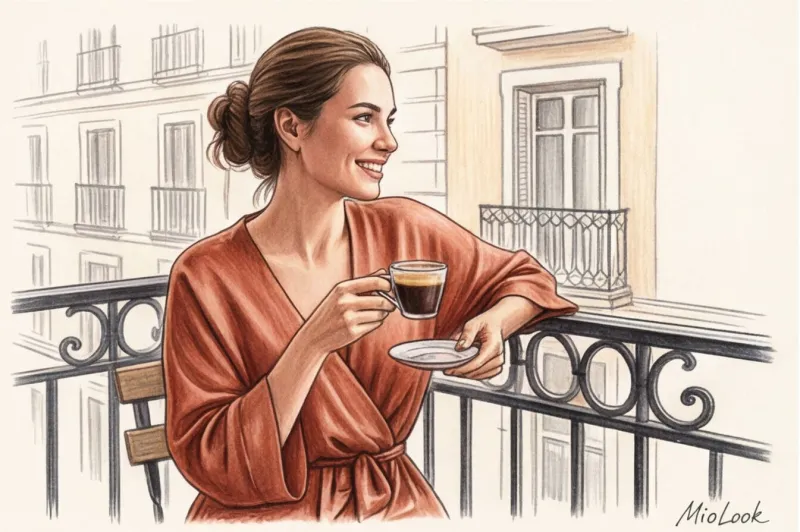
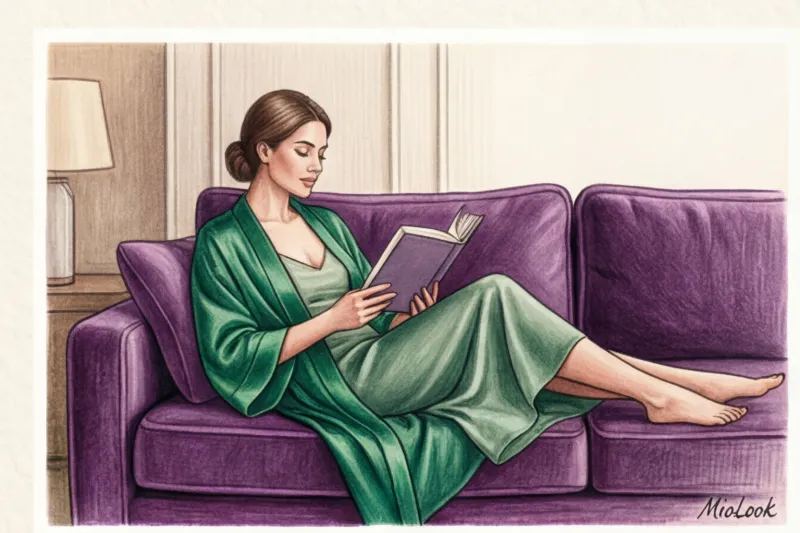
Your home isn't just a place to sleep and clean. It's a space where you recharge. And how you look during these hours directly impacts how you feel. Replace those utilitarian sweatpants with beautiful house dress — this is the fastest way to regain a sense of everyday elegance. We've already discussed the architecture of a home wardrobe in more detail in our The complete guide to women's loungewear , and today I want to take a closer look at dresses.
The Psychology of Home Wardrobe: Why Robes Belong Only in the Bathroom
Let's be honest. A terry robe isn't clothing. It's just a large towel with sleeves. Its only function is to absorb moisture after a shower and keep you warm for 15 minutes while you apply body lotion. Wearing it all day means mentally getting stuck in the "I just woke up" or "I'm sick" mode.
Back in 2012, Northwestern University (USA) researchers Hajo Adam and Adam Galinsky introduced a stunning term - Enclothed Cognition (embodied cognition). Their experiments proved that our brain literally reads the properties we associate with clothing and adjusts our cognitive functions and even posture to them. Put on old, pilling pajamas, and the brain signals apathy. Put on a beautiful housedress, and your body involuntarily elongates, and your movements become more fluid.
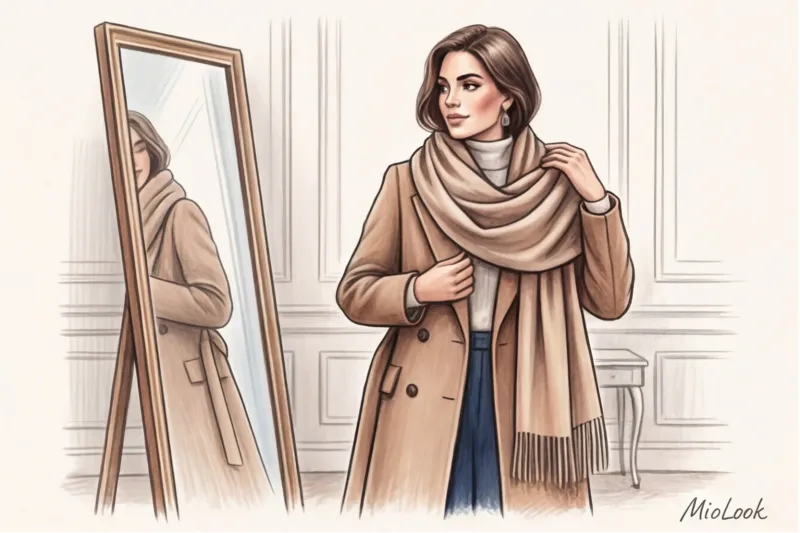
My favorite reference here is Mediterranean women. Italian and Spanish women have an innate talent for looking relaxed at home, yet ready to open the door at any moment to unexpected guests and offer them an espresso. The secret to this domestic elegance It lies in the right cut and respect for your reflection in the mirror.
Your perfect look starts here
Join thousands of users who look flawless every day with a smart AI stylist.
Get access — €0.99 onceIn Search of the Ideal: What a Beautiful House Dress Should Be Like
"But the most important thing at home is comfort!" I often hear from new clients. Absolutely. But comfort and aesthetics have long ceased to be mutually exclusive concepts. The only problem is that we're not used to investing in our home essentials.
Let's count according to the rule Cost-per-Wear (cost per exit) Let's say you bought a luxurious evening dress for €300 and wore it three times a year. The cost per wear is €100. Now let's take a high-quality housedress for €80. You wear it (alternating with another dress) approximately 150 days a year. Its cost per wear is only €0.53! Skimping on something that hugs your body for hundreds of hours is simply irrational.
Fabrics that hug: from modal to tencel
When I'm shopping, the first thing I do is check the label. And here's a non-obvious fact: 100% cotton isn't the best choice for a housedress. Without a gram of synthetic fiber, it instantly stretches out at the elbows and knees, losing all shape by the second day of wear. You need to look for cotton with at least 5% elastane.
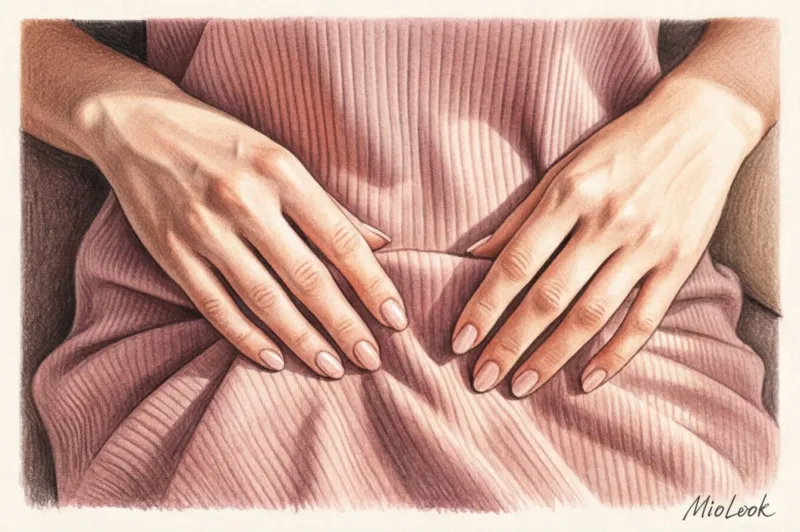
But the true magic lies in modern artificial (not synthetic!) fibers. Modal, lyocell (Tencel), and bamboo viscose are the absolute favorites. According to textile experts, Tencel absorbs moisture 50% more effectively than cotton and has a natural thermoregulatory effect. It's cool to cook in the kitchen and cool to sit by the window. Furthermore, the smooth texture of these fabrics reduces microstress—a pure form of tactile therapy.
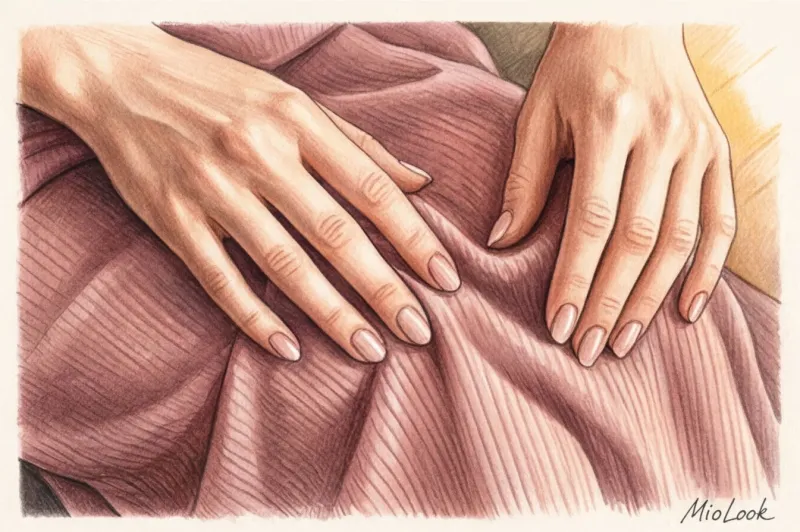
Cut and freedom of movement
A house dress should offer complete freedom. We categorically reject rigid, sewn-in belts, complicated back zippers (you shouldn't have to ask for help changing), and tight armholes that dig into your armpits when you try to reach a book from the top shelf.
Look for an A-line silhouette, a delicate bias cut that flows along your curves without clinging to your midsection, and a well-defined oversize fit. Consider brands like COS or Massimo Dutti—they excel at creating voluminous pieces that accentuate the fragility of your figure, rather than creating a "wrapped in a curtain" effect.
Top 5 House Dress Styles for Impeccable Style (with Formulas)
There's no one-size-fits-all style, but there are tried-and-true staples. I've put together a mini capsule collection of essential silhouettes that adapt street styles to the comfort of home.

Shirt dress: for a relaxed weekend
It's a classic that forgives everything. A longline shirt in soft linen or crisp cotton looks like you borrowed it from your boyfriend, but still retains your feminine side. Perfect for slow Sunday brunches.
Isabella's Formula: Linen shirt dress (open three buttons) + casually rolled-up elbow-length sleeves + leather mules = effortless chic.
Knitted midi dress: elegance and warmth
I had a striking case in my practice. My client, Elena, a remote IT specialist, complained about a lack of motivation at work. We replaced her fleece pants with a thick ribbed knit midi dress. The vertical texture elongated her silhouette, and the gathered look forced her to keep her back straight. A month later, she reported feeling more confident in Zoom meetings, and her income had increased.
Why midi? It's the safest length. A mini is uncomfortable for sitting tucked into the sofa, and a maxi will collect dust from the floor. Midi leaves your graceful ankles exposed and allows for complete freedom.
Slip Dress: Mediterranean Chic
Silk or high-quality viscose slip dresses have long since transcended the bedroom. They are the quintessence of femininity. However, there is fair limitation: This style doesn't work well for new moms with very active toddlers—the thin silk won't survive constant crawling on the carpet with cars.

I highly recommend this investment to everyone else.
Isabella's Formula: A flowing slip dress paired with a voluminous chunky-knit cashmere cardigan draped off one shoulder. The contrast of textures (smooth silk and fluffy wool) looks incredibly expensive.
Try MioLook
A smart AI stylist will select the perfect look for you and help you create flawless combinations.
Get access — €0.99 onceRelaxation, guests, or Zoom: styling a house dress
Loungewear should have a superpower—transform in seconds. If you work from home (WFH), your main focus should be on the portrait area. Choose knit dresses with a V-neck. On webcam, they look just as good as an office blouse, creating geometric shapes and elongating the neck.

Spotted friends approaching through the window? Transform a house dress into a formal attire in just 30 seconds. Add medium-sized hoop earrings (they instantly tie your face together) and tie the dress with a soft leather or fabric belt to define your waist.
A special cry from the stylist's heart is footwear. Please get rid of those worn-out plush slippers. They can ruin even a €200 silk dress. For home, invest in elegant leather babouches (Moroccan pointy-toe slippers with no back), suede Birkenstock mules, or, if you're a barefoot person, invest in textured, thick merino wool-blend socks.
A stylist's guide to choosing your first beautiful house dress.
Before I take an item to the checkout (or pay for my cart online), I always do a few technical checks.
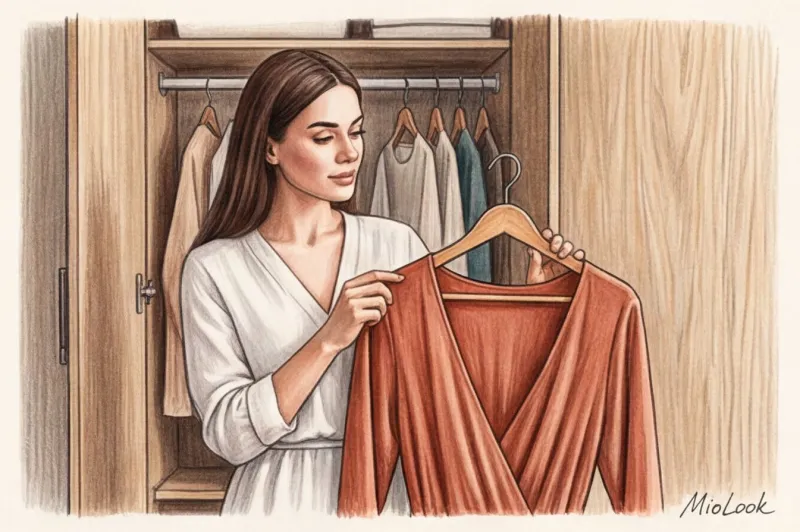
- Seam test: Gently tug the side seam. If the threads are fraying and the fabric doesn't stretch, hang it up. At home, you'll be stretching, bending, and curling up. Seams should be flexible.
- Size rule: Home clothes Always Take one size larger than your usual. If you wear a medium, choose a large. There should be some air between your body and the fabric—that's the secret to a luxuriously casual look.
- Color selection: Avoid black (it attracts dust, pet hair, and makes the home look gloomy) and loud neon shades. A deep and complex palette works best: emerald, terracotta, rich cappuccino, dusty rose, sage. If in doubt about shades, MioLook's appearance analysis feature will help you determine your ideal palette.
Caring for your house dresses so they last for years (instead of a conclusion)
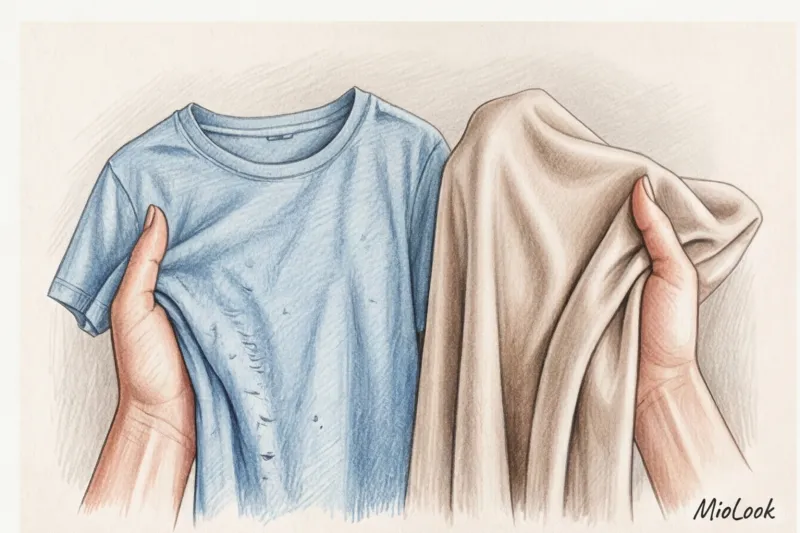
Loungewear wears out three times faster than streetwear simply because we spend more time in it and move around more. To prevent a modal or tencel dress from pilling after a month, avoid using laundry detergent.
Use only liquid detergents for delicate fabrics and set the spin cycle to a maximum of 600 rpm. Acrylic and hard polyester will survive a 1000 rpm cycle, but fine fibers will not.
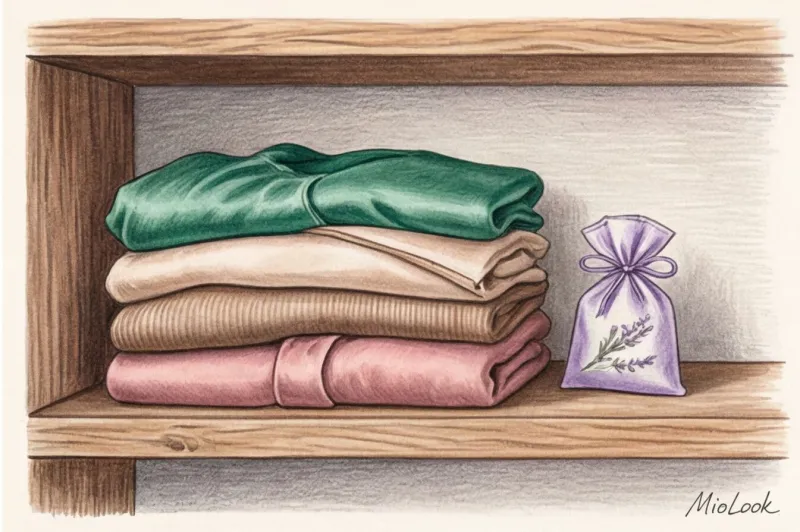
And the most important storage rule: never hang heavy knit or viscose dresses on hangers. Their own weight will stretch them, causing unsightly "hanger loops" on the shoulders. Stack them in neat piles on shelves.
Your home is your castle. Stop wearing old clothes within its walls. Invest in a beautiful housedress, not to impress the delivery guy, but so you can catch your reflection in the mirror every morning and think, "How beautiful I look."