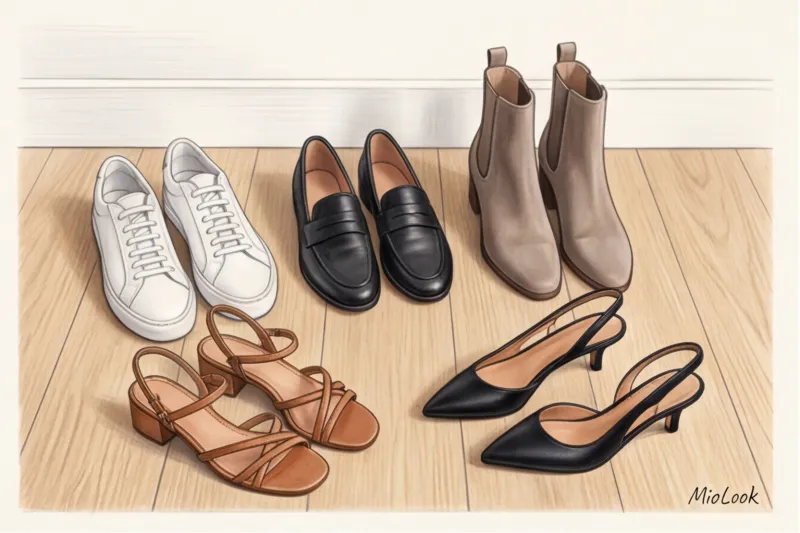
Over 12 years of working as a style coach, I've conducted hundreds of wardrobe audits. And you know what I found most often on the back shelves? Brand new, never-worn black classic shoes. My clients bought them "just in case," because glossy magazines said so, and then spent years putting them away.
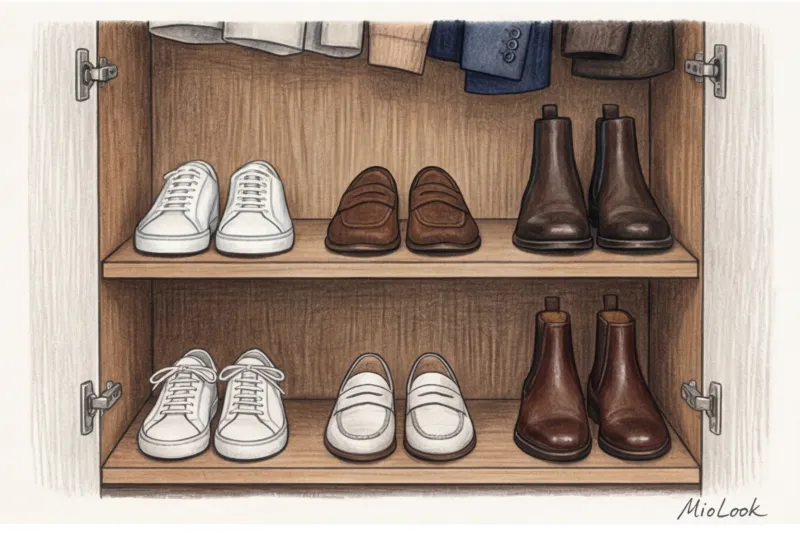
Let's be clear: black formal Oxfords are NOT a basic men's shoe. For 95% of modern men with hybrid or flexible work schedules, buying such a pair is a waste of money. They only work with a formal business suit, which most people wear once a year to a friend's wedding.
We have provided more details about what a current and working capsule actually consists of in our A complete guide to creating a mistake-free men's wardrobe And today we will look specifically at the shoe foundation.
Why 90% of "essential men's shoe" lists are hopelessly outdated
According to a global report Business of Fashion (2024), demand for formal men's shoes fell by 40% compared to 2020. Dress codes have changed forever. Today, the biggest mistake when buying men's shoes is ignoring anatomical comfort in favor of an illusory "status" appearance.
I love relying on data. I recently conducted a personal experiment: I spent six months tracking my clients' wardrobe statistics in the MioLook app. The results were astounding. Men subconsciously ignore shoes that take more than 15 seconds to lace or that require painful "break-in."
The strict 80/20 rule applies to your wardrobe: 80% of the time, you wear the 2-3 most comfortable pairs. These are the ones you should spend most of your money on.
This is where the formula comes into play Cost Per Wear (CPW) — the price per outing. White sneakers for €200, worn 150 times per season (CPW = €1.33), are a much better investment than patent leather shoes for €100, worn twice (CPW = €50). Basic men's shoes should be hybrid: they work equally well with chinos, jeans, and a casual blazer.
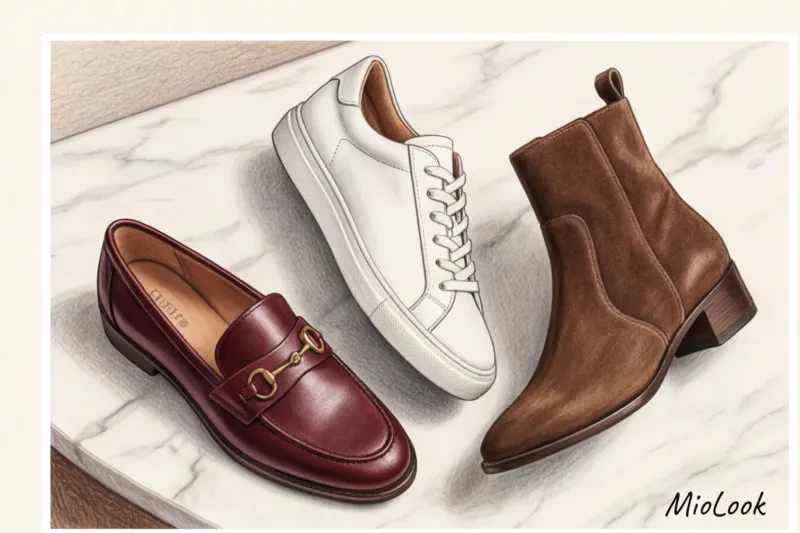
Pair #1: Minimalist white sneakers are a modern wardrobe staple.
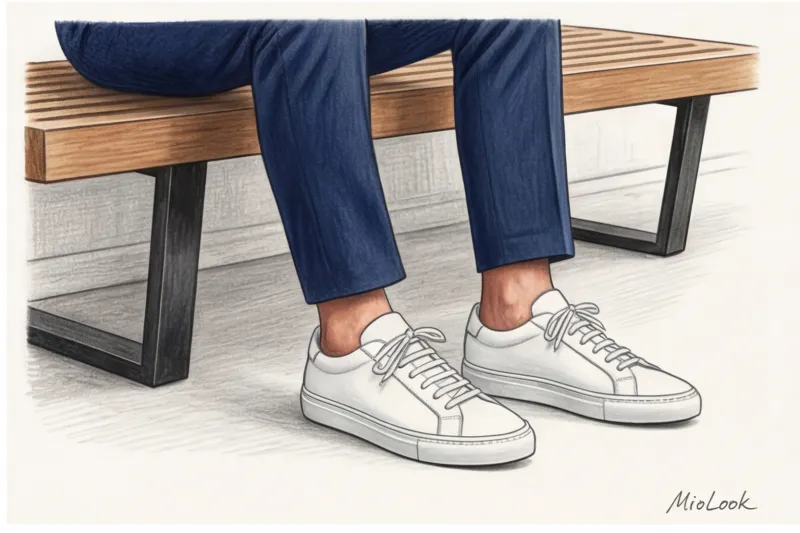
Sneakers are no longer just a gym staple. Today, they're everywhere: from the offices of Silicon Valley tech giants to the boardrooms of European banks. But there's a catch: a basic pair should be made of smooth, matte leather, not fabric.
A story from my experience: one of my clients, an IT director, complained that his outfits looked too teenage. The problem lay in his footwear—he wore mesh running shoes with casual trousers. As soon as we replaced them with premium leather sneakers with a minimalist cut (in the €150–€200 price range), the style instantly soared. The look became put-together and classy without sacrificing comfort.
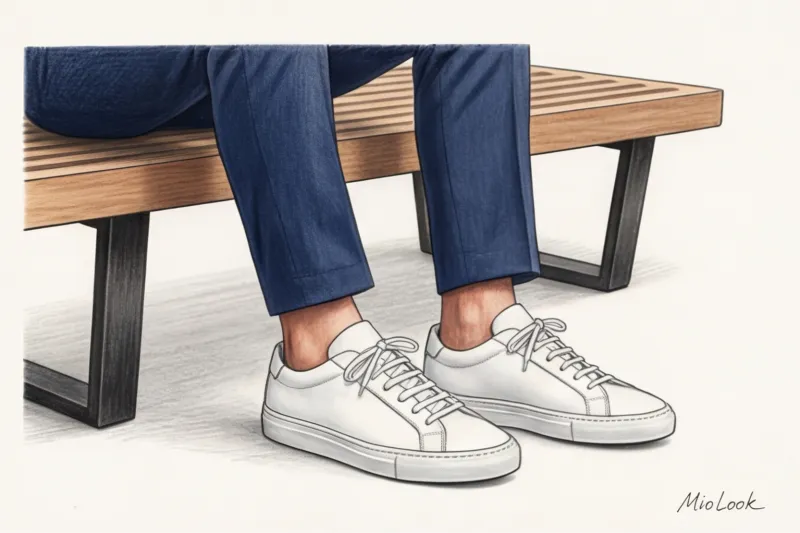
Checklist: How to distinguish basic sneakers from sports ones
- No logos or contrasting inserts. Pure white or milky color.
- Solid color flat sole. It should not protrude beyond the edges of the shoe or have an aggressive tread.
- Smooth leather and waxed laces. Avoid mesh, suede details and bulky, puffy laces.
Access to MioLook for €0.99 — one-time payment
A smart AI stylist will select the perfect look for every day and help calculate the Cost Per Wear of your items.
Get access — €0.99 oncePair #2: Suede Loafers – Smart Casual Without Compromise
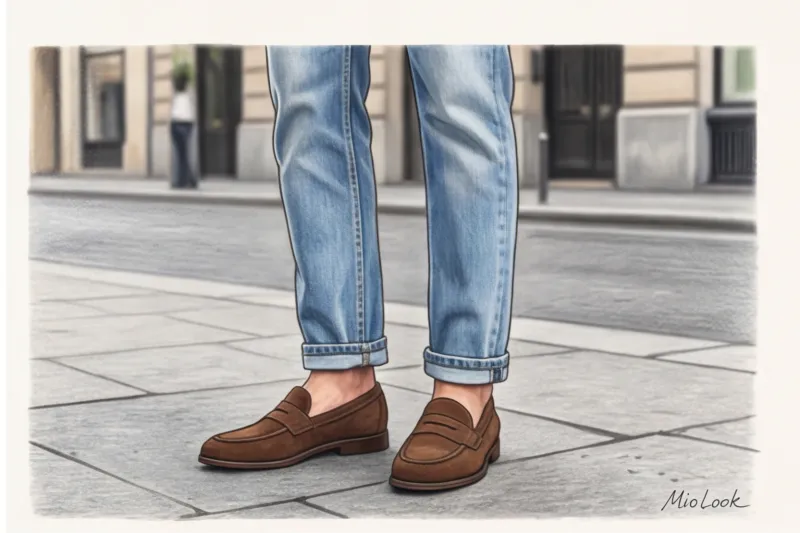
If white sneakers seem too casual for a specific meeting, loafers are the perfect choice. For maximum versatility, I always recommend penny loafers (with the distinctive slit in the strap) or tassel loafers.
Many customers are afraid of suede, believing it to be impractical. It's time to dispel this myth. High-quality suede fits the foot faster than stiff, smooth leather and looks much more textured when paired with corduroy, denim, or flannel.
Yes, this is the advice doesn't work If you live in a region with constant torrential rain and muddy puddles, this might be a problem. However, for 90% of urban situations, a single treatment with a good nano-impregnation (such as Saphir or Tarrago) is sufficient, and the water will simply roll off the surface.
How to wear them in 2024? Modern etiquette allows for two extremes: either completely "invisible" low-cut socks that reveal the ankle, or high textured ribbed socks if you prefer a preppy style. Thin nylon or shiny suit socks with loafers are an absolute no-no.
Pair #3. Chelsea boots – a versatile mid-season pair without unnecessary details.
Fall and early spring call for footwear that will protect you from the elements without making you look like you're heading out for a hike. Chelsea boots are perfect for this. Their secret ingredient is a one-piece leather upper and elastic side panels.
The lack of laces saves you minutes in the morning, and the simple silhouette visually elongates the leg. However, there's a pitfall: an overly wide shaft. A common mistake beginners make is buying Chelsea boots with skinny trousers stuffed underneath. The right basic Chelsea boots should fit snugly around the ankle, allowing the hem of the trousers to fall freely over the boots.
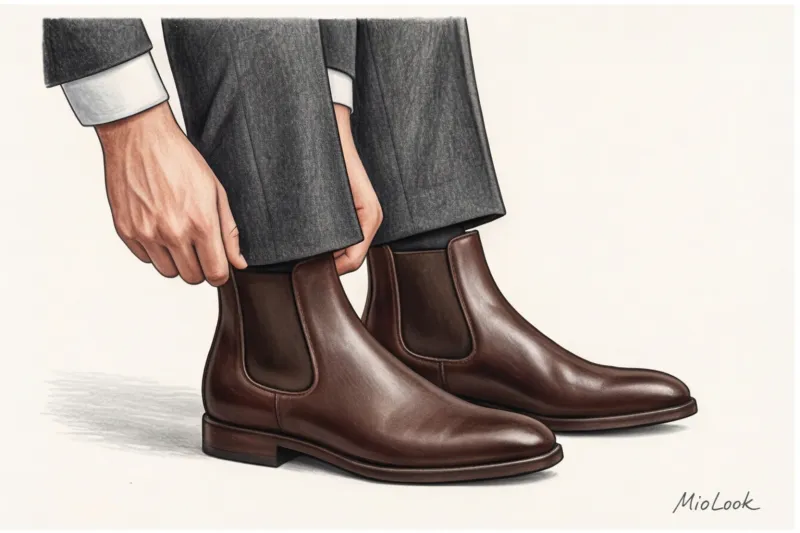
Forget boring black. For your basic capsule wardrobe, choose shades of dark chocolate, dark brown, or deep burgundy. They pair perfectly with dark blue jeans, gray trousers, and beige chinos, creating a 100% more harmonious look than black.
Your perfect look starts here
Join thousands of users who look flawless every day and save time with MioLook.
Get access — €0.99 oncePair No. 4. Derby shoes with a chunky sole – a new alternative to the strict classics
Let's get back to physiology. According to podiatry studies, over 60% of men have high arches. This is why Oxfords, with their closed lacing, often cause excruciating pain—they literally dig into the foot. Derby shoes have open lacing: the side panels are sewn over the toe, allowing for easy adjustment of the fit.
If you still need formal shoes for the office, choose derbies. But to avoid looking like a 2000s clerk, consider the trend chunky sole (chunky sole). This is a global shift in men's fashion that has toned down the formality of classic shoes.
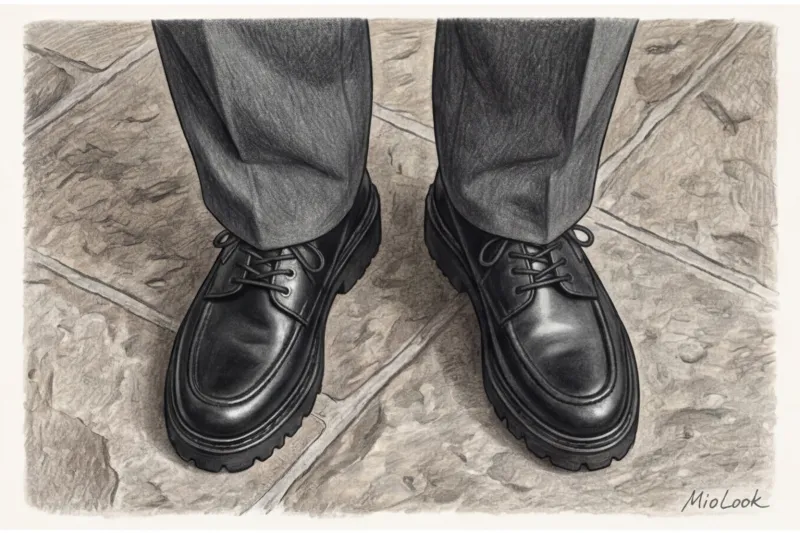
The thick sole not only makes the shoes resistant to puddles and chemicals, but also allows them to be worn with straight-leg selvedge jeans, heavy corduroy trousers, and an oversized coat. This is hybridity in action.
Pair #5. Tech sneakers or urban hikers – for weekends and trips
Let's face it: no matter how much we love classics, on the weekends, most men will wear their most comfortable pair of athletic shoes. And that's okay. I always include one pair of technical shoes in a client's capsule wardrobe, because a basic wardrobe should support real life, not a pretty picture on social media.
Aesthetics Gorpcore The urban trend for technical, outdoor clothing has made hiking sneakers legitimate urban footwear. Brands like Salomon and Hoka are now worn with casual cargo pants and jeans.
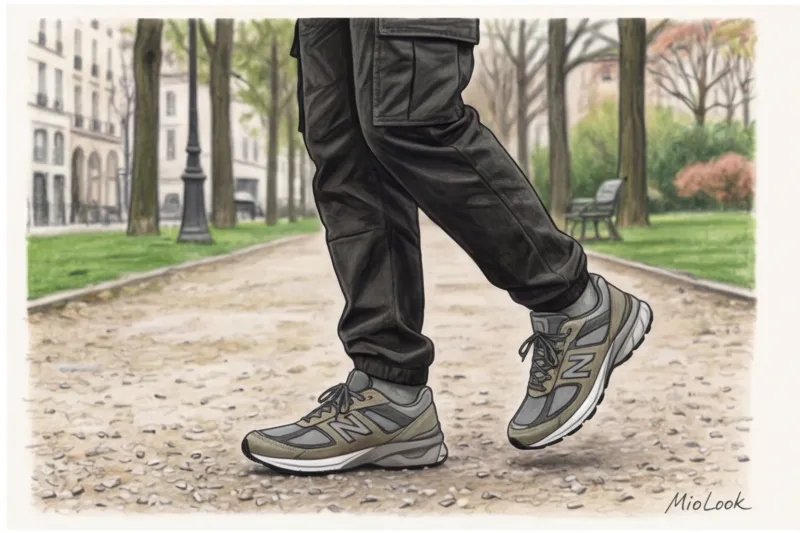
The key here is color. To avoid your shoes looking like you just stepped off the treadmill, avoid loud neon shades. Opt for sophisticated, grown-up colors like olive, graphite, navy, or wet asphalt.
The 24-Hour Rule: How to Extend the Life of Basic Shoes by 3 Times
Even the most expensive basic men's shoes will become shapeless within a single season if worn every day. This isn't a question of leather quality, it's a question of physics.
Orthopedists and podiatrists are adamant: leather shoes require exactly 24 hours of rest. During the day, your feet release moisture, which is absorbed into the leather lining and insole. If you wear the same pair the next morning, the damp leather will stretch, lose its shape, and the seams will rot from the inside.
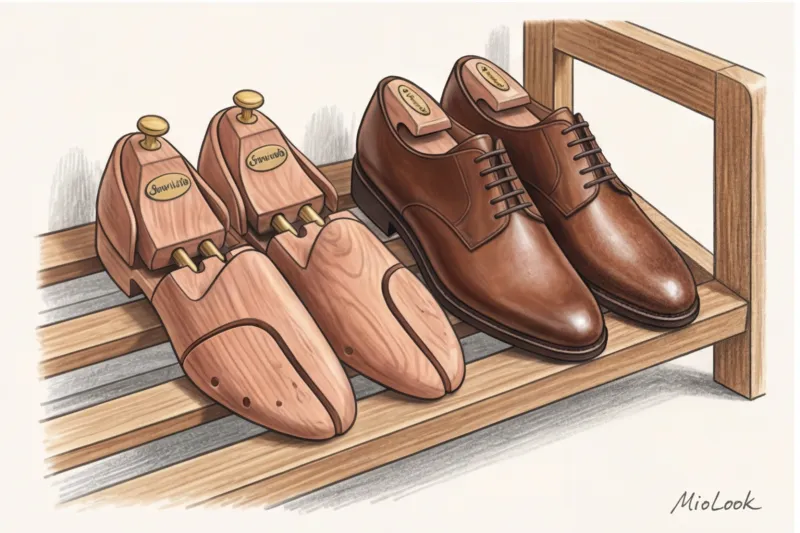
That's why you need cedar shoe trees (blocks) This is the most cost-effective investment (around €25–40 per pair) you can make. Untreated cedar wood draws out moisture, neutralizes odors, and smooths out creases in the leather while the shoes rest. In my clients' experience, using shoe trees increases the lifespan of a pair of shoes from 2 to 6–8 years.
Base care should be automated. A horsehair brush and a good cream will take exactly two minutes of your time in the evening, but will save you hundreds of euros per year.
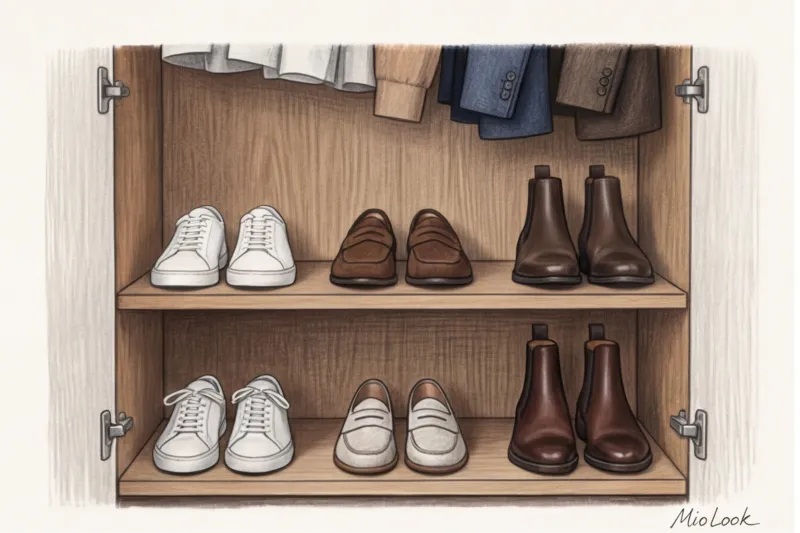
To avoid racking your brain in the morning about which pair to wear today, taking into account the "24-hour rule," start digitalizing your wardrobe. In the app MioLook The smart wardrobe feature lets you pre-create capsule wardrobes for the week. You simply open your phone and see a finished look with a pair of shoes that you've already worn.
Style isn't about suffering in beautiful but stiff shoes. Style is a systematic approach, where every piece works for you, provides comfort, and looks trendy. Save the oxfords for the red carpet, invest in a hybrid base, and let technology take over your routine.