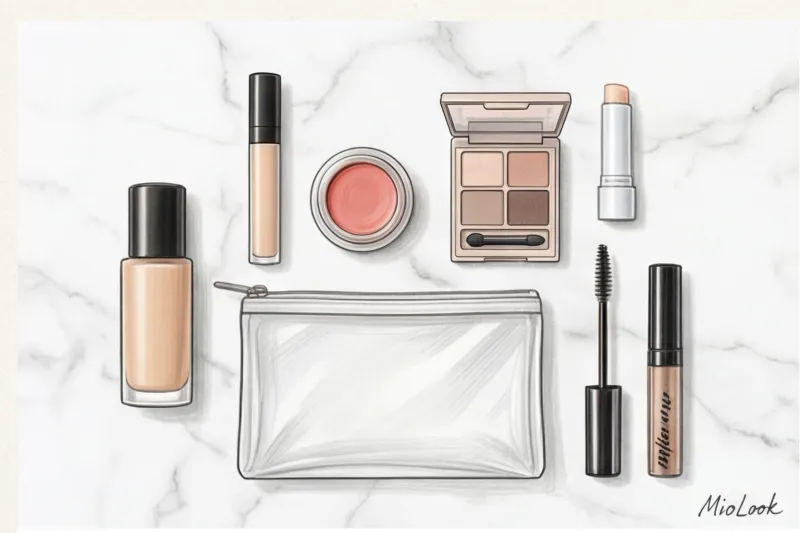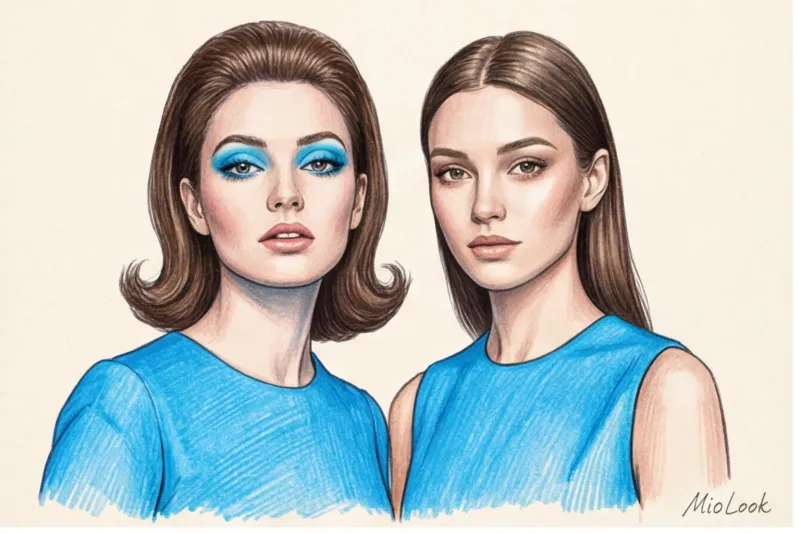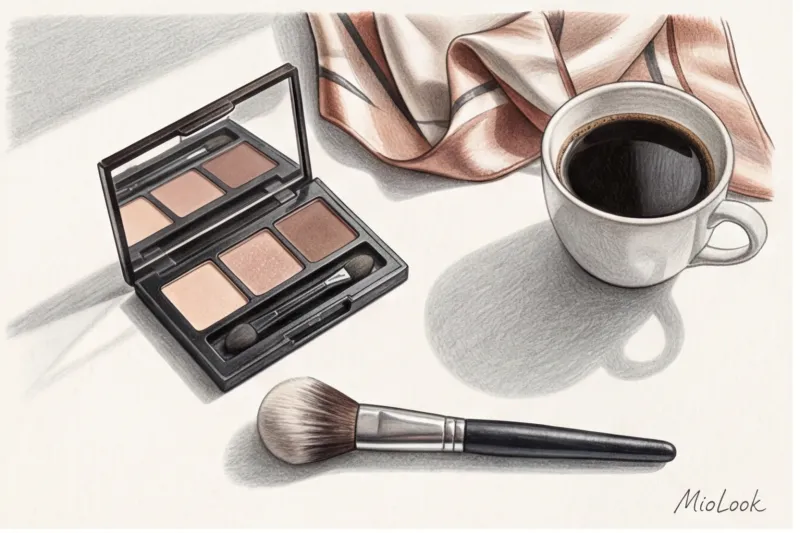
Over 12 years of sorting through my clients' wardrobes and beauty arsenals, I've seen this scene hundreds of times. A luxurious, heavy 18-shade palette, purchased in a fit of inspiration, opens. But only two compartments are worn down to the aluminum base: a neutral matte beige and a delicate shimmering highlight. The remaining 16 shades are pristine, save for a couple of tentative experiments with metallic blue before a New Year's party.
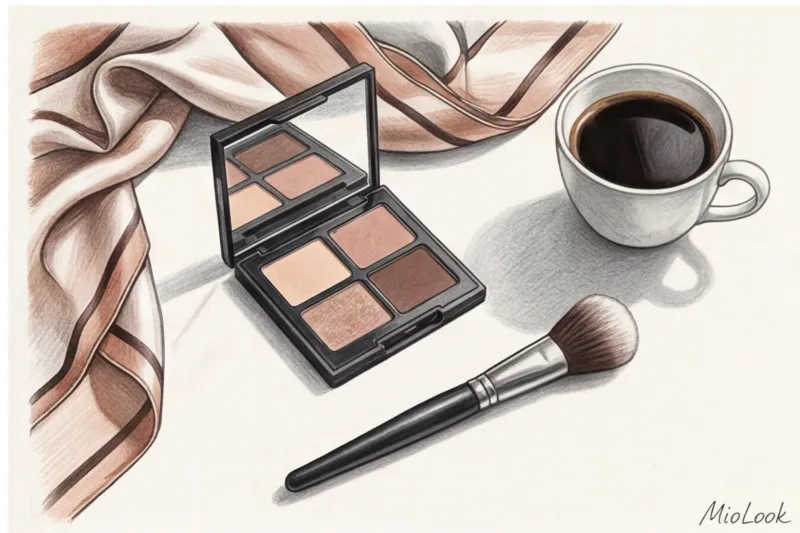
We have already discussed the philosophy of minimalism and the rejection of unnecessary things in more detail in our the complete guide to the perfect everyday kit But today I want to look at a specific tool. Correctly selected basic eyeshadow palette It's not just cosmetics. It's your confidence before an important meeting and an extra 15 minutes of sleep in the morning.
Why a Basic Eyeshadow Palette Is an Investment, Not a Consumable
Treat your makeup as an extension of a smart wardrobe. You wouldn't buy a neon pink sequin dress for your daily office wear, would you? So why should your everyday makeup bag be filled with glitter and complex pigments?
According to the statistics we collected in the application MioLook Optimizing your morning routine and creating a "beauty uniform" saves women up to four hours a week. The paradox of choice is relentless: the more refills you have, the greater your morning stress and the risk of being late for work.
Let's calculate the Cost Per Use (CPU). Let's say you bought a high-quality, luxury 4-color palette for €60. You use it 300 days a year. The cost of one makeup look is €0.20. Now let's take a budget, "giant" 20-color palette for €25 that gets dusty, doesn't last until lunch, and you use it maybe 10 times a year (because you don't have time to deal with blending). The cost per use is €2.50. The math clearly shows that cheap, multi-color palettes cost you more.
Access to MioLook for €0.99 — one-time payment
A smart AI stylist will select the perfect look for you, taking into account your appearance and wardrobe.
Get access — €0.99 onceThe Anatomy of the Perfect Basic Palette: The 4-6 Shade Rule
Buying huge palettes of 15-20 colors “for all occasions” is a waste of money. Ideal basic eyeshadow palette It should consist of 4, maximum 6 shades. No "ballast" colors. Each cell performs a strict architectural function, covering 95% of life's scenarios.
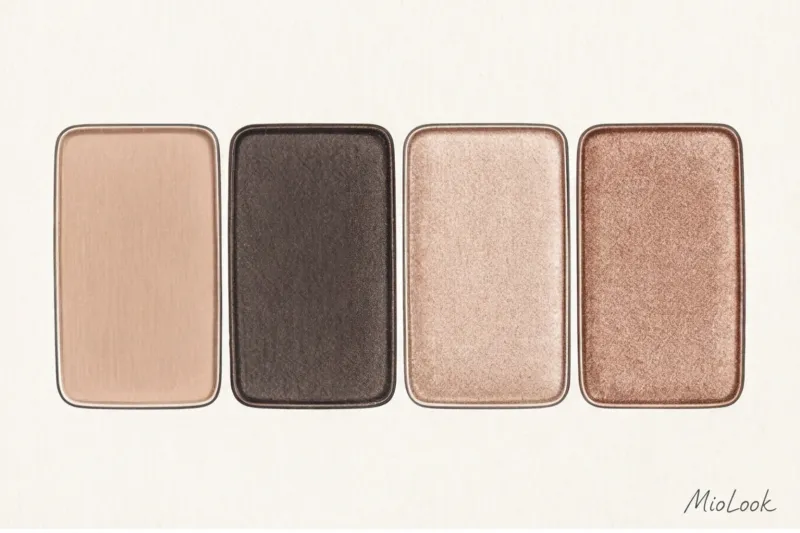
Eye Sculpting: Matte Transition Shade
This is your beige trench coat in the makeup world. A matte color 1-2 shades darker than your skin tone is essential for defining the crease. It restores volume to the face after applying a flat foundation. Without it, the eyes will look puffy. Look for a silky texture that literally melts into the skin without creating harsh edges.
Depth and contour: the darkest shade
Dark brown, graphite, dark chocolate, or deep taupe. This color can be used as eyeliner if applied with a damp, angled brush along the lash line. It's also useful for darkening the outer corners when transforming a daytime look into an evening one. The key here is high pigment density and no flaking. No one wants dark, panda-like circles under their eyes by mid-workday.
Light and volume: satin or shimmer accents
A light shade (pearl, champagne, or soft gold) is applied to the center of the lid and the inner corner of the eye. It creates that same wide-open, rested look. The difference between inexpensive and premium eyeshadows is clear here: cheap ones create the effect of a scattering of large, festive glitter, while high-quality ones create an expensive, even, "wet" glow, appropriate even for a formal office.
Appearance Temperature: How to Choose a Palette to Match Your Color Type
Have you ever noticed how the same nude beige can make one woman look fresh, while another looks sick and tired? It's all about the temperature of the shade.

The craze for warm, reddish-terracotta palettes that has dominated in recent years has played a cruel joke on those with cool complexions. Terracotta instantly creates a tear-stained look on cool-toned olive skin. Conversely, cool gray taupe looks like dirt on warm, peach-toned skin.
"When choosing eyeshadow, I always refer to Johannes Itten's classic color theory (1961). To make your eye color glow, use the complementary (opposite) shade from the color wheel."
Blue eyes need a warm peach or bronze undertone. Green eyes need a light dusty lilac or burgundy undertone in the crease. Brown eyes are the luckiest—they're neutral, but a deep blue or emerald kohl paired with a neutral beige will make them honey-toned. For more information on how to determine your temperature, read our article about 12 color types of appearance.
Texture and Fabric Quality: How to Test Eyeshadow in the Store
My favorite approach, as a textile expert, is to think of cosmetics like fabric. When you run your finger across a refill of cheap eyeshadow, it feels like scratchy, stiff polyester. It goes on in clumps and doesn't stretch well. Good eyeshadow is like thick silk or expensive cashmere. It glides on smoothly.
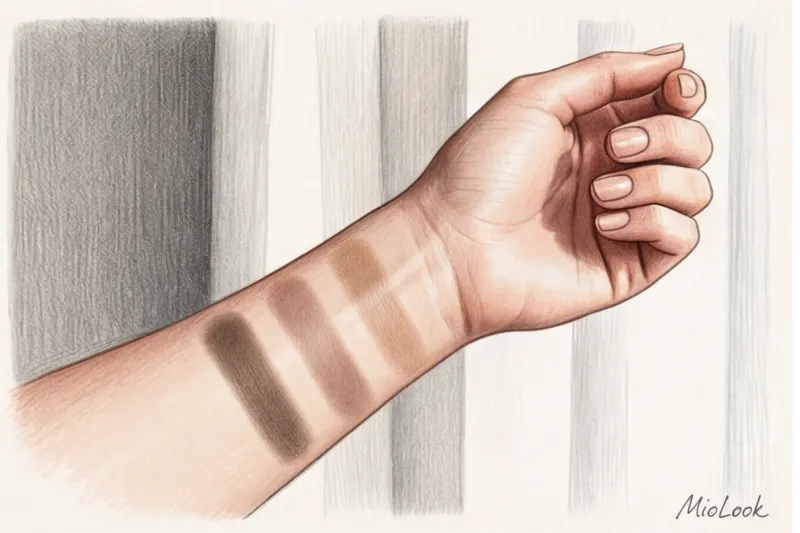
Here are two rules for proper testing in a store:
- Do not test on fingertips. The skin has a unique texture. Apply the pigment and blend it onto the back of your hand or the crease of your wrist—where the skin is thinner and drier, closer to the texture of your eyelids.
- Check for blurring. Look at the tester on display. If the surface of the refill is covered with a hard, glossy crust, the eyeshadow will be very difficult to pick up with your brush.
When is high pigmentation a minus? Important caveat: don't go for super-pigmented eyeshadows (like those from professional brands like Pat McGrath) for your daily routine. Professional pigments are ideal for photo shoots, but they require time and skill to achieve perfect blending. At 7 a.m. on Monday, you need eyeshadows with medium, buildable pigmentation. If you make a mistake, it's easy to brush away with a fluffy brush.
Your perfect look starts here
Join thousands of users who look flawless every day with the smart wardrobe from MioLook.
Get access — €0.99 onceThe biggest mistake: the "giant palette" trap and fast beauty
Buying a giant palette of 18-20 colors with the thought of "experimenting" is the cosmetic equivalent of buying cheap synthetics at a fast fashion sale. We think we're getting more for less. In reality, we're getting informational noise in our makeup bag.
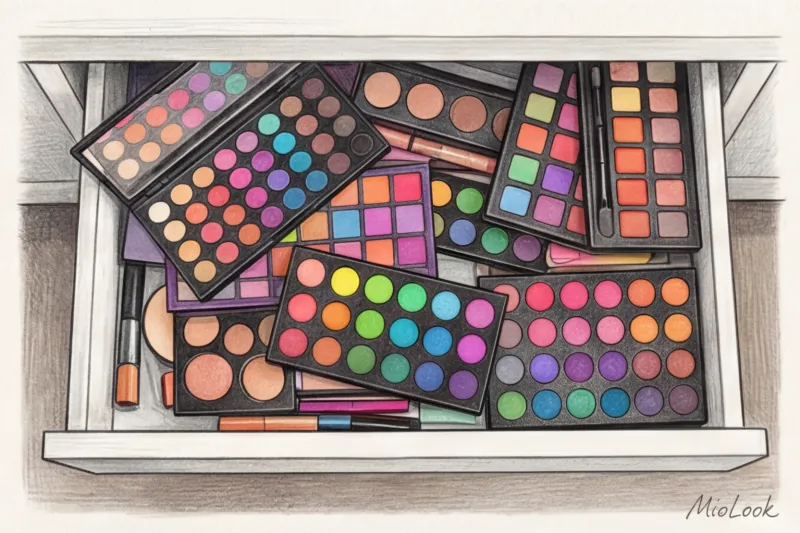
According to Zero Waste Europe's 2023 Beauty Industry Sustainability Report, eyeshadow palettes are among the most difficult products to recycle. They consist of multi-component plastic, adhesives, aluminum refills, and mirrors. Eighty percent of these massive palettes end up in landfills half-full simply because they've expired and the owner only used three colors.
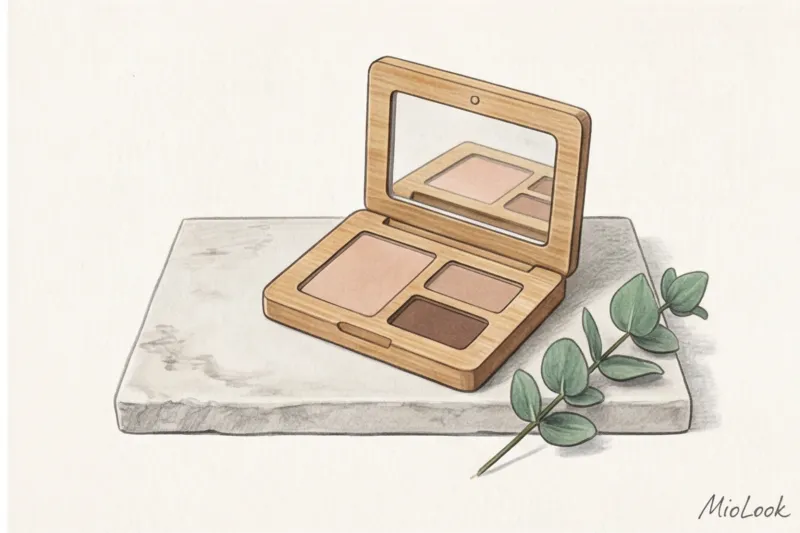
By investing in a compact 4-color palette in cardboard or bamboo packaging (or a magnetic system with interchangeable refills), you're not only making your life easier, but also reducing your environmental footprint.
Expiration Date and Hygiene: When It's Time to Say Goodbye
Dry textures last longer than creamy ones, but they don't last forever. Each package has a PAO (Period After Opening) symbol—an open jar with a number, such as "12M" or "24M" (12-24 months). Many people ignore this, using their favorite eyeshadows for five years.
Dermatologists warn: every time you touch your eyeshadow with a brush, you transfer microparticles of sebum, sweat, and bacteria into the refill. Over time, the dry product forms an ideal breeding ground. Using old eyeshadow is a surefire way to develop seborrheic dermatitis, irritation, and conjunctivitis.
You can extend the life of your palette by washing your brushes at least once a week and periodically removing the top layer of eyeshadow with a clean disposable brush, then spraying with cosmetic sanitizer.
One tool for different tasks: from the office to a performance
A quality basic palette is a multi-tool. You don't need 10 different products.
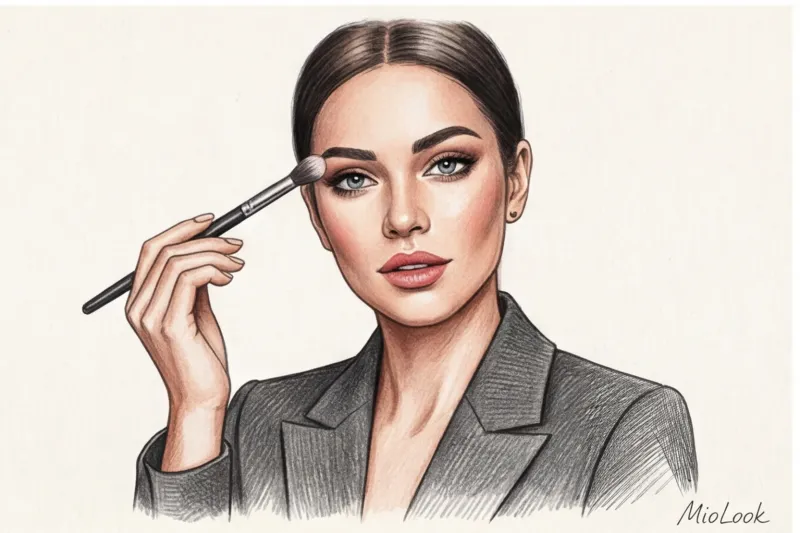
- For a business meeting: A matte crease, a subtle highlight on the lid with a matte milky shade, and a soft, blended wing with the darkest shade in the palette. It takes exactly 3 minutes. Read on for more details on the strict dress code. Business Makeup: Rules, Instructions, and Common Mistakes.
- For an evening out or stage: Deepen the crease with a dark shade, and apply shimmer to the center damply (spraying the brush with makeup setting spray). The pigment will develop more densely and vibrantly, creating a foil effect. This is the perfect base for a social event (see below). Makeup for stage performance ).
- Off-label use: The cool taupe shade from the palette is perfect for filling in brows or even lightly contouring the nose. And the light satin shade works great as a subtle highlighter on cheekbones.
Ready to get started?
Try the MioLook free plan—no commitments required. Your digital wardrobe and beauty profile are just a click away.
Get access — €0.99 onceChecklist: Audit Your Beauty Capsule
My main advice: before buying a new palette, do a thorough audit of your current makeup bag.
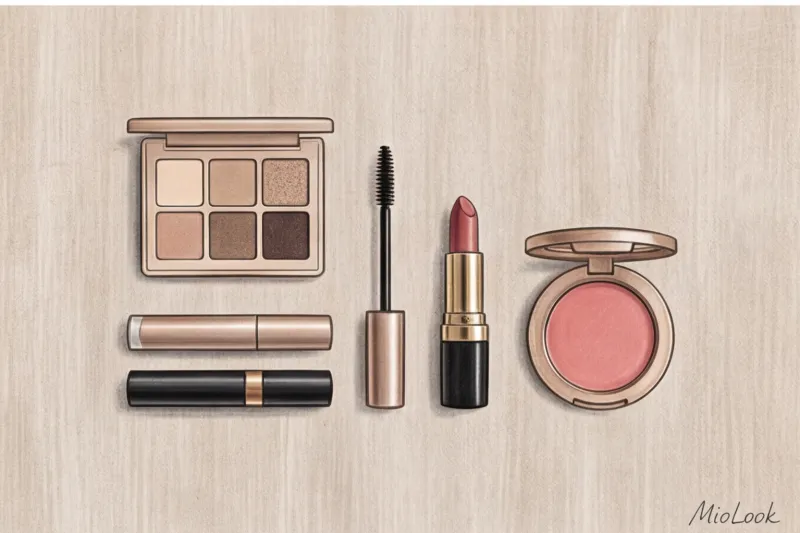
- Take out absolutely every eyeshadow you have. Open them.
- Write down the colors in which noticeable depressions (hits) have already been rubbed out.
- Write down the colors that you haven’t touched for six months (ballast).
- If you realize you're truly missing a high-quality foundation, set your purchasing filters. Your goal: a palette in the €40–€80 range (this is where the best balance of silky texture and longevity lies), a compact size, a mirror, and a 100% match for your temperature undertone.
A basic eyeshadow palette shouldn't overwhelm you with a riot of colors in the store. Its main purpose is to subtly and effectively enhance your appearance every day, without taking up any extra time or stress.