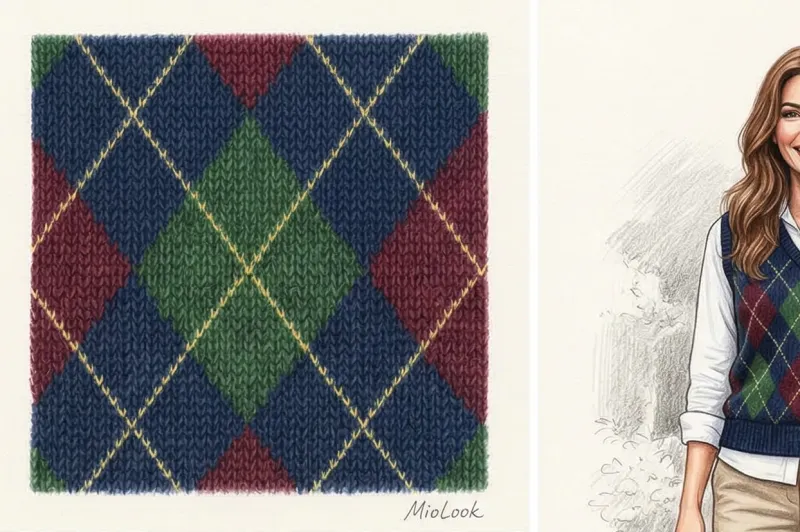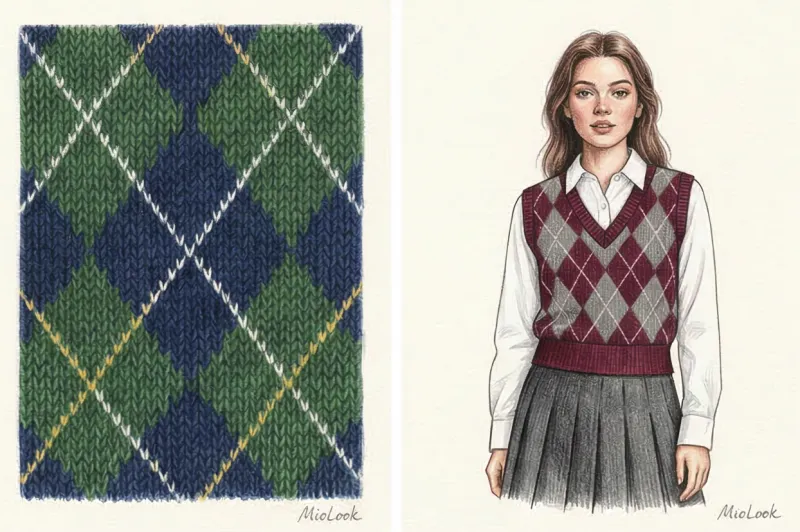
Argyle print is a geometric textile pattern consisting of diamond-shaped blocks arranged in a checkerboard layout. The design features solid colored lozenges intersected by a grid of fine diagonal lines. It frequently appears on traditional knitwear like sweaters, vests, and hosiery.
What Is the History Behind the Argyle Pattern?
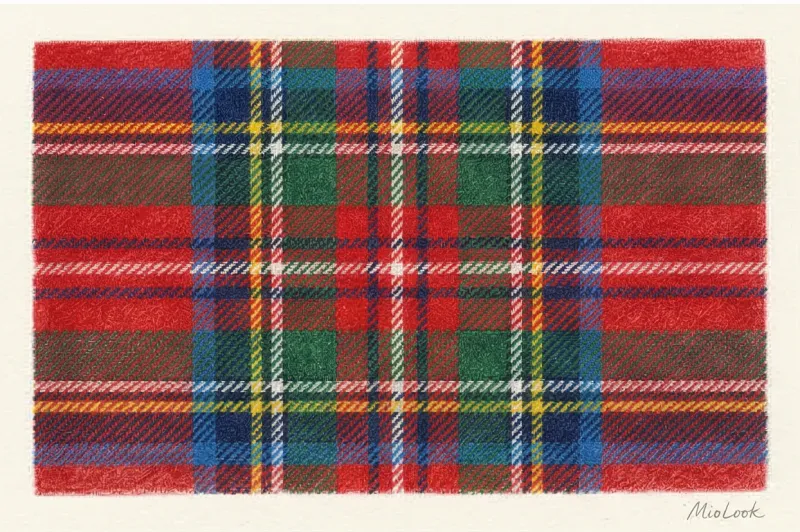
The argyle pattern traces its roots back to the seventeenth century in the Argyll region of western Scotland. It evolved directly from the traditional tartan worn by the Campbell clan. Originally, Highlanders wore these geometric designs on kilts and heavy socks to display their regional and familial affiliations. The transition from a local Scottish clan motif to a global fashion phenomenon happened much later.
In the 1920s, the renowned knitwear manufacturer Pringle of Scotland adapted this historic design for mass production. They utilized the intarsia knitting technique to create the signature diamond blocks without leaving loose threads on the inside of the garment. The true turning point for the argyle print occurred when Edward, the Duke of Windsor, began wearing argyle golf clothing. His royal endorsement instantly transformed the pattern into a symbol of upper-class leisure. Soon after, it crossed the Atlantic and became a foundational element of the American preppy aesthetic, heavily favored by Ivy League students.
Distinctive Features and Manufacturing Techniques
The visual appeal of an argyle pattern lies in its structured yet dynamic geometry. The core foundation consists of interconnected, solid-colored diamond blocks. What sets this print apart from a standard checkerboard is the overcheck—a secondary grid of contrasting, fine diagonal lines stitched or knitted over the diamonds. This overlapping creates a subtle three-dimensional effect, giving the fabric a sense of depth and texture.
Traditionally, manufacturers produce argyle garments using intarsia knitting. Unlike Fair Isle or jacquard techniques, intarsia involves knitting separate blocks of color without carrying the yarn across the back of the work. This method results in a single-layer fabric that is smooth on both sides, making it ideal for comfortable sweaters and cardigans. Today, while printed argyle exists on woven fabrics, the authentic and most durable versions remain knitted.
| Garment Type | Typical Material | Standard Fit | Best Season |
|---|---|---|---|
| V-neck Vest | Merino wool, cotton blend | Tailored | Spring, Autumn |
| Cardigan | Cashmere, heavy wool | Oversized or regular | Winter |
| Crewneck Sweater | Lambswool, synthetic blends | Relaxed | Autumn, Winter |
| Dress Socks | Mercerized cotton, nylon | Snug | All Year |
How to Style an Argyle Print Sweater or Vest
Integrating an argyle print into your wardrobe offers endless possibilities, ranging from strict traditionalism to bold contemporary fashion. The key to mastering this geometric pattern is balancing its visual weight with complementary solid pieces.
Classic Preppy and Smart-Casual Looks
For a quintessential collegiate aesthetic, layer a knit argyle vest over a crisp, basic white button-down shirt. You can complete this timeless outfit with a pleated skirt, tailored chinos, or straight-leg trousers. This combination pays homage to the pattern's Ivy League heritage while remaining highly wearable for everyday settings.
If you are dressing for a smart-casual office environment, a V-neck argyle jumper serves as an excellent mid-layer. Wear it under a solid-colored blazer in navy or charcoal. Pair this top half with dark, unworn denim or classic wool trousers. The geometric diamonds add visual interest to an otherwise conservative outfit without violating office dress codes.
Modern and Edgy Combinations
Fashion continually reinvents historic motifs, and the argyle pattern is no exception. To strip away the inherent formality of the print, experiment with unexpected textures and proportions. A traditional argyle sweater takes on a completely different mood when paired with sleek leather pants or distressed denim. Ground the outfit with chunky combat boots or platform loafers to create a striking play of contrasts.
Another contemporary approach involves playing with scale and color. An oversized argyle cardigan in muted pastel shades offers a relaxed, streetwear-inspired take on the classic design. By treating the print as a bold graphic rather than a heritage piece, you can easily incorporate it into a modern, trend-focused wardrobe.
Choosing the Right Colors for Your Argyle Pattern
The traditional color palette for this Scottish print relies heavily on deep, rich shades that reflect its highland origins. Classic combinations often feature navy blue, burgundy, forest green, mustard yellow, and charcoal gray. The accent diagonal lines are typically rendered in white, cream, or a bright contrasting color like red or yellow to ensure they stand out against the darker background.
However, contemporary designers frequently push the boundaries of this standard palette. You can now find argyle prints in neon hues, monochromatic grayscale, and soft pastel tones like lavender and mint green. When selecting a colorway, consider the rest of your wardrobe. If you prefer minimalist dressing, a monochromatic gray and black argyle sweater provides texture without overwhelming your look. If you enjoy dopamine dressing, opt for vibrant, contrasting diamonds that serve as the focal point of your outfit.
Why Argyle Socks Remain a Menswear Staple
Even for those who shy away from bold patterns on their upper half, argyle socks offer an accessible entry point into this historic print. They add a touch of class and personality to a classic men's look. Worn under tailored suit trousers, these socks remain hidden while standing but reveal a dynamic pop of color and geometry when walking or sitting.
Argyle socks serve as a bold statement piece for both strict business attire and casual weekend wear. Coordinating the colors of the diamonds or the intersecting lines with a subtle detail in your outfit—such as a tie, pocket square, or watch strap—demonstrates a high level of sartorial attention to detail.