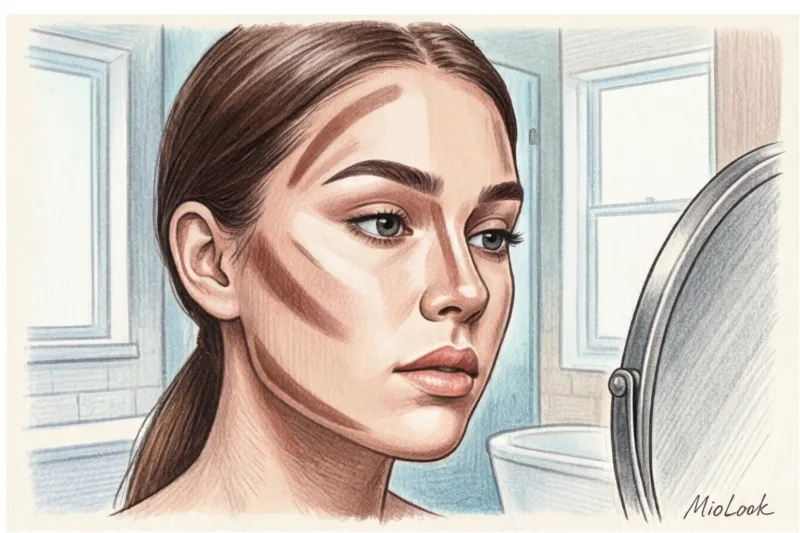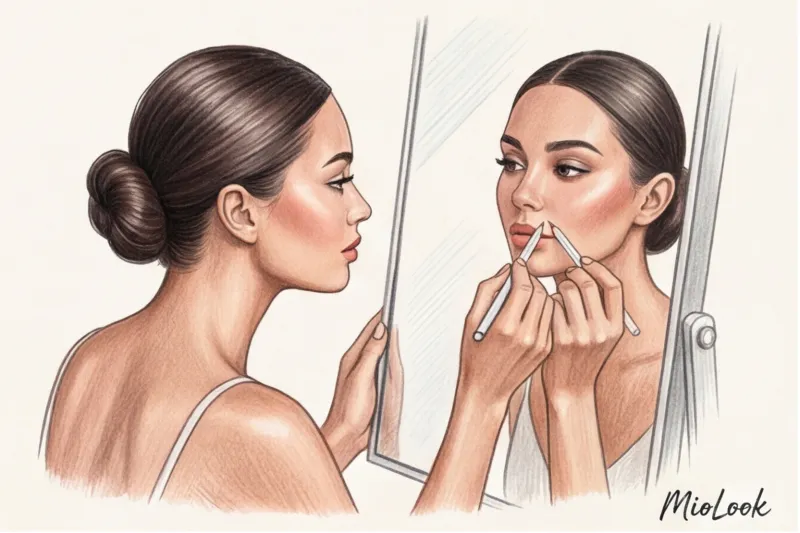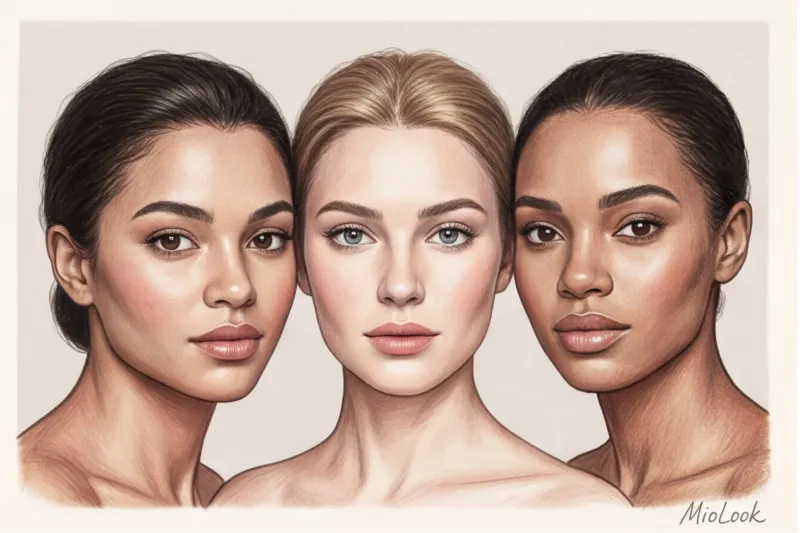
Forget everything you read in glossy magazines in the 2000s. Pure "ovals," "squares," or "hearts" don't exist in nature. I remember watching a girl in a cafe a few years ago: she painstakingly drew harsh brown lines on her cheeks, trying to trim away the excess and conform her face to some gold standard. Instead of Kim Kardashian's chiseled cheekbones, she ended up with a tired, haggard look, visually adding ten years to her age.
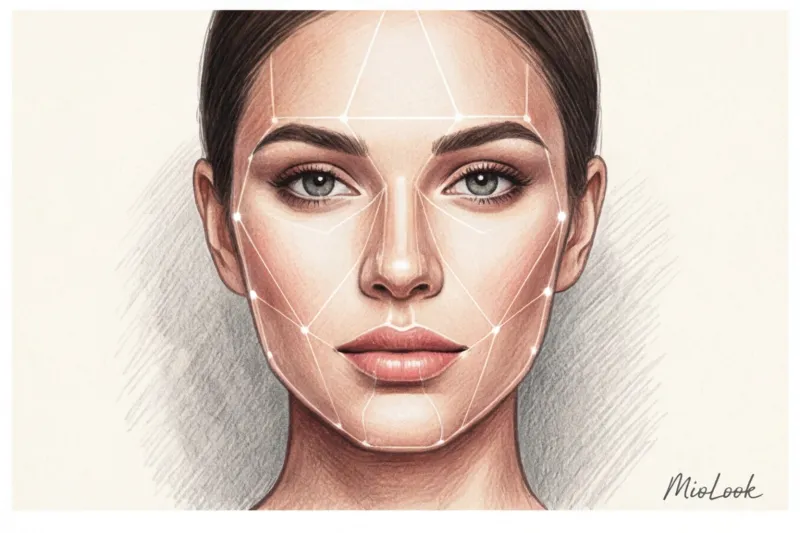
Select Makeup based on face shape using a neural network can do things completely differently. We discussed in more detail how these algorithms developed in our complete guide to virtual makeup try-ons and cosmetic selection with AI Artificial intelligence doesn't try to force you into the confines of six basic geometric shapes. It works with your unique asymmetry to create a personalized light and shadow map.
The End of the "Ovals and Squares" Era: Why the Classical Theory of Face Shapes is Hopelessly Outdated
The theory of six face shapes was invented by marketers and beauty editors in the 1990s out of sheer desperation. They needed to somehow systematize advice for millions of readers in order to sell them blush and contouring products. This led to the industry's biggest myth: supposedly, any face should be visually shaped to resemble the ideal oval. Round faces should be narrowed, square faces should be smoothed, and elongated faces should be shortened.
Backstage at the 2019 Dior show, I closely watched the top makeup artists at work. Do you know how many times they used the infamous "rule of three" (where bronzer is applied along the contour of the forehead to the cheekbone and jawline in a three-point shape)? Not once. A professional reads anatomy: they physically probe the model's bone structure with their fingers, finding natural depressions.
"The harsh, graphic contouring of 2015 is dead. It's been replaced by soft sculpting—a soft contouring that emphasizes the hybridity and micro-asymmetry of the face, bringing it to life," is how leading Vogue experts describe this trend.
How a Digital Makeup Artist Works: A Look Under the Hood of Algorithms
According to a recent McKinsey & Company report (2024) on the adoption of AR technology in the beauty industry, 73% of consumers are abandoning flat 2D filters in favor of 3D modeling. Old social media filters simply overlaid a pre-drawn mask over your video. If you had an unusual eye shape, the mask would shift.
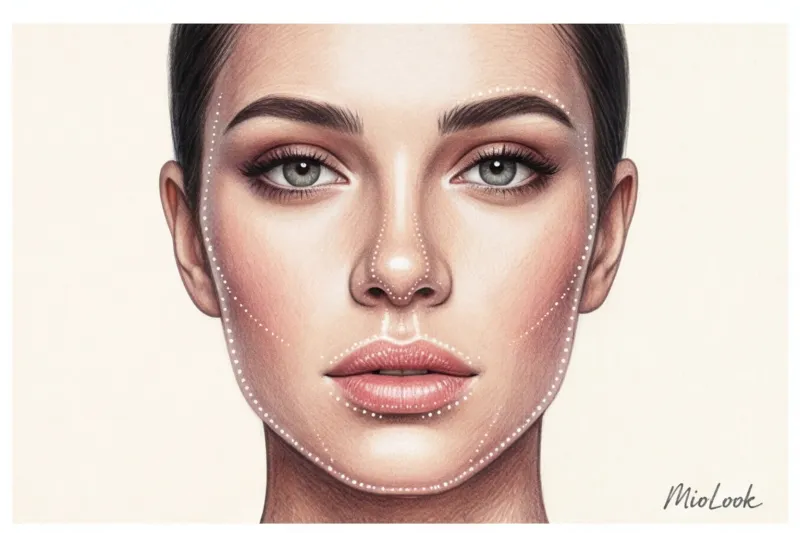
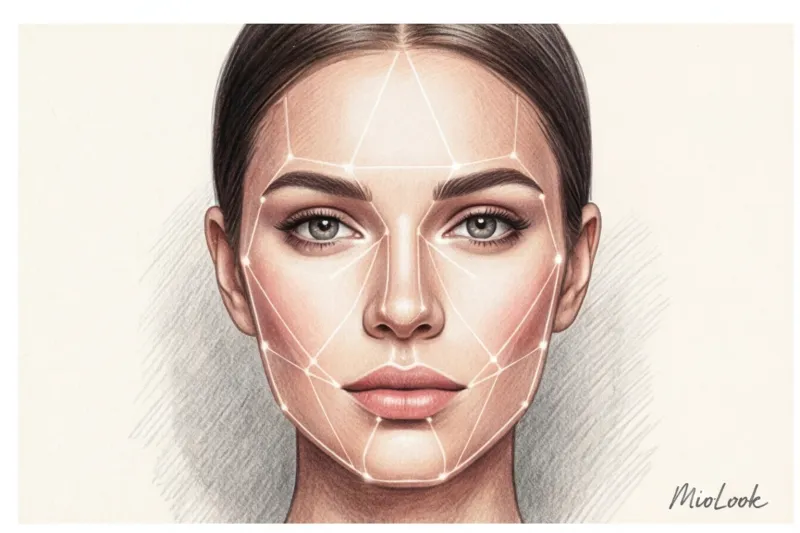
468 Points of Truth: A Map of Your Face
Modern apps like MioLook are based on the architecture of Facial Landmark Detection algorithms (based on MediaPipe Face Mesh technology). How does it work in practice? Your smartphone's camera literally casts an invisible 3D grid of 468 micro-dots onto your face. The algorithm captures not just an image, but also the topography: the depth of the eyes, the millimeter-level curve of the brow ridges, and the angle of the cheekbone.
Adaptation to facial expressions and light
Your geometry changes every second. When you smile, the apples of your cheeks lift. The smart mesh moves with your facial expressions. However, there's a genuine limitation to the technology: no algorithm can save you if you're standing under the harsh fluorescent light of an office restroom. AI can misread your skin temperature, so the basic laws of physics still apply.
Makeup by Face Shape: Neural Network vs. Traditional Models
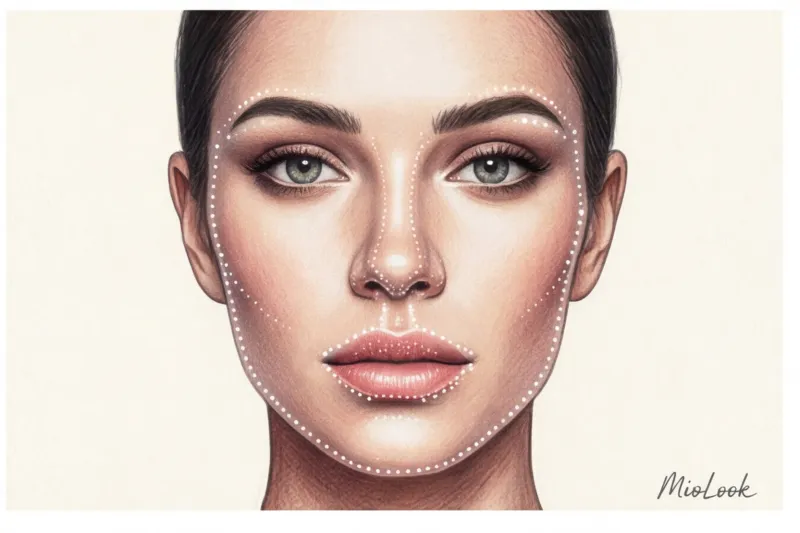
How exactly does the MioLook neural network select makeup based on your face shape? The algorithm doesn't ask, "Is your face round or square?" Instead, it calculates ratios. What is the width of your jaw relative to the width of your forehead? How prominent is your chin?
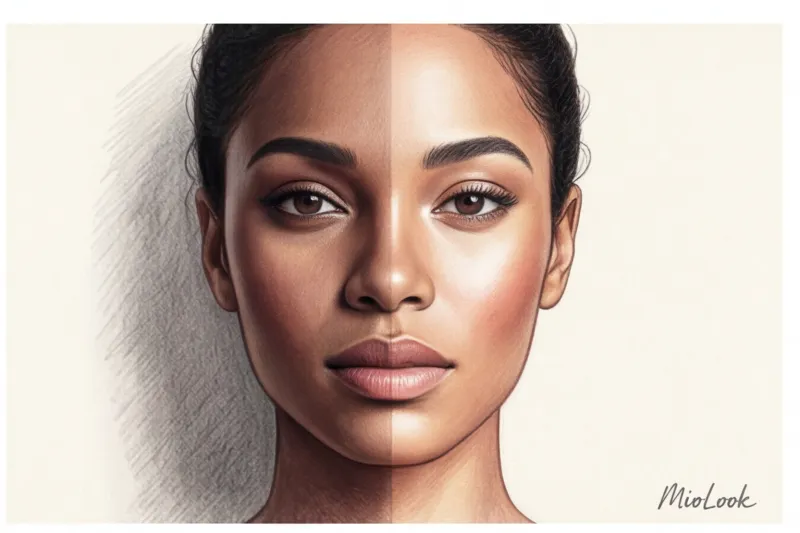
Based on this mathematical data, a custom Soft Sculpting map is created. The program not only displays darkened areas but also dictates texture selection:
- Matte finish: where you need to visually “drown” the volume (for example, an overhanging eyelid or a voluminous tip of the nose).
- Wet highlighter: on the most prominent bone structures to add breathability and lifting.
Take your makeup to the next level
Try MioLook for free: A smart AI stylist will analyze your facial contours and create the perfect contouring scheme in seconds.
Get access — €0.99 oncePrecise Correction: How AI Works with Individual Characteristics
Perhaps the most common mistake I see on the street is two straight brown lines along the bridge of the nose. In theory, this should make the nose appear narrower. In practice, it looks like dirty streaks. AI offers targeted shading: sometimes a tiny shadow just on the sides of the nose or a subtle highlight on the bridge is enough, without creating harsh lines.
One of my clients, 28-year-old Anna, complained of a constant "tired" look. She was using an expensive €45 contouring pen, but applied it using the classic Instagram technique—deep under the cheekbone. I advised her to move the blush and contouring pen line exactly 1 centimeter higher. The effect was stunning: her face was visually lifted, achieving that signature lifting effect. Artificial intelligence makes these calculations instantly, finding the perfect angle for blending.
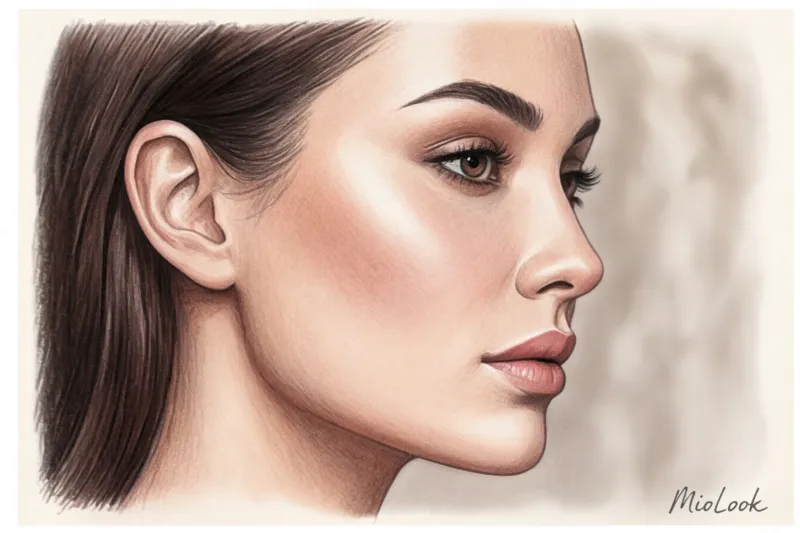
5 Fatal Contouring Mistakes That Can Be Avoided with a Virtual Try-On
Even premium cosmetics won't work if the application logic isn't correct. Here are the 5 main mistakes a neural network can help avoid:
- Dirty spots instead of natural shadow. There's no such thing as a red shadow! If you use a warm bronzer instead of a cool or neutral highlighter on fair skin, you'll get a dirty effect. The MioLook algorithm takes your skin undertone into account when virtually trying out shades.
- Glowing tip of the nose. A popular TikTok trick that makes your nose look bigger and creates the illusion of a shiny face in real life. Save this trick for videos with studio lighting.
- Ignoring skin texture. If you have large pores on your cheekbones, any powder highlighter will accentuate them three times more. The neural network will suggest shifting the highlight higher or using a cream product without large glitter particles.
- The cheekbone shadow is too low. This is the same mistake I mentioned above. If the shadow falls below the line parallel to the tip of the nose, you get "sunken cheeks" instead of high cheekbones.
- Incorrect light during application. Applying sculpting in a bathroom with warm yellow lighting is a guaranteed recipe for disaster when you go outside.
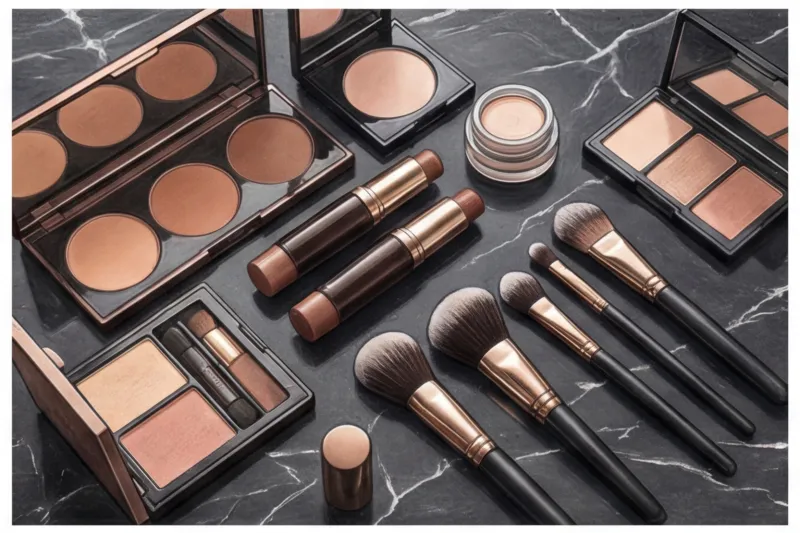
Your perfect look starts here
Join thousands of users who look flawless every day with MioLook. Try on makeup without the risk of wasting money on unnecessary products.
Get access — €0.99 onceChecklist: How to Prepare Your Face for the Perfect AR Scan
To ensure the app produces a precise, professional-quality makeup artist-like design, you need to correctly feed the algorithm the source data. Follow this checklist:
- Remove your makeup. The algorithm needs your anatomy to be clear. Foundation, especially thick ones, blurs natural shadows, confusing the neural network.
- Find the window. Stand facing natural daylight. Avoid shadows from chandeliers or side lamps—the lighting should be even.
- Remove your hair. Gather them into a sleek ponytail. The hairline, temples, and ears are critical markers (those same anchor points) for constructing the 3D mesh.
- Keep the angle. The smartphone camera should be positioned exactly at eye level. Raising your chin or tilting the phone downwards will distort the proportions.
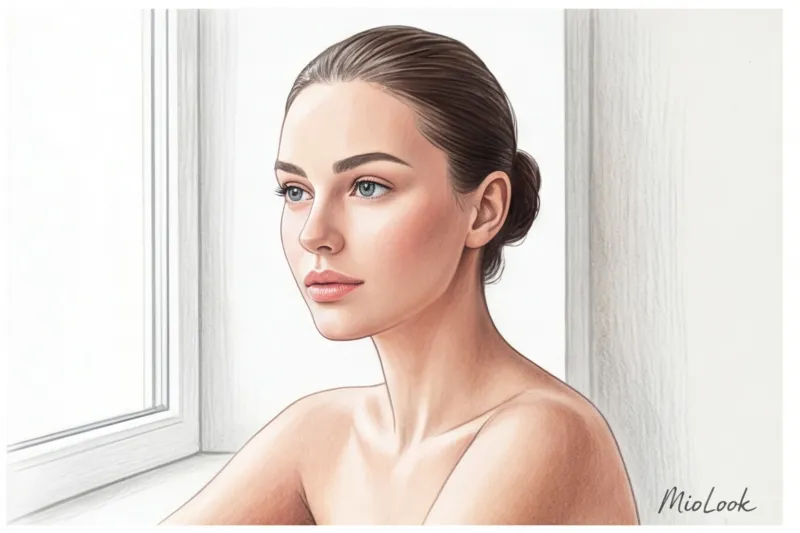
The Future of Beauty Routines: From Virtual Tests to Real Confidence
We're experiencing a stunning transformation in the beauty industry. AI contouring isn't just another way to transform yourself beyond recognition or hide behind a digital mask. It's a tool that teaches you to understand the architecture of your own face.
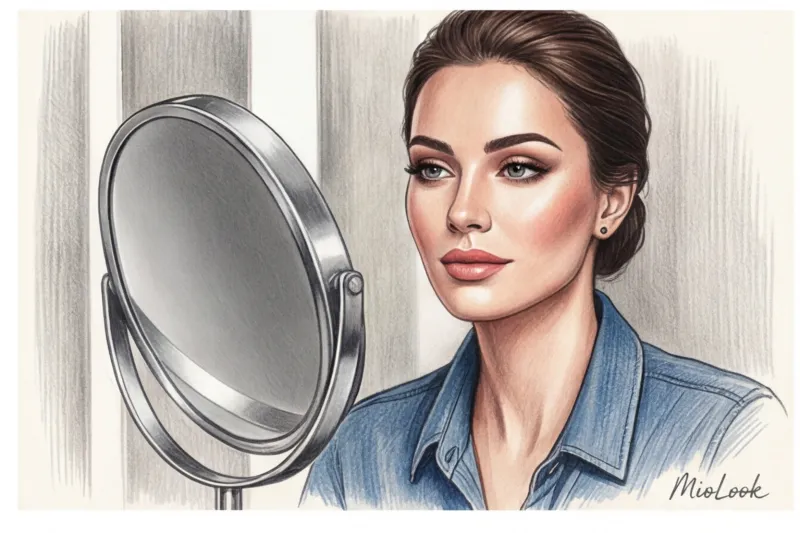
Instead of buying dozens of palettes ranging from €30 to €80 through trial and error, you can test your application pattern beforehand. By integrating virtual try-ons with MioLook into your routine, you'll have a personal makeup artist in your pocket. The secret to perfect contouring isn't painting a new face, but masterfully highlighting your own.