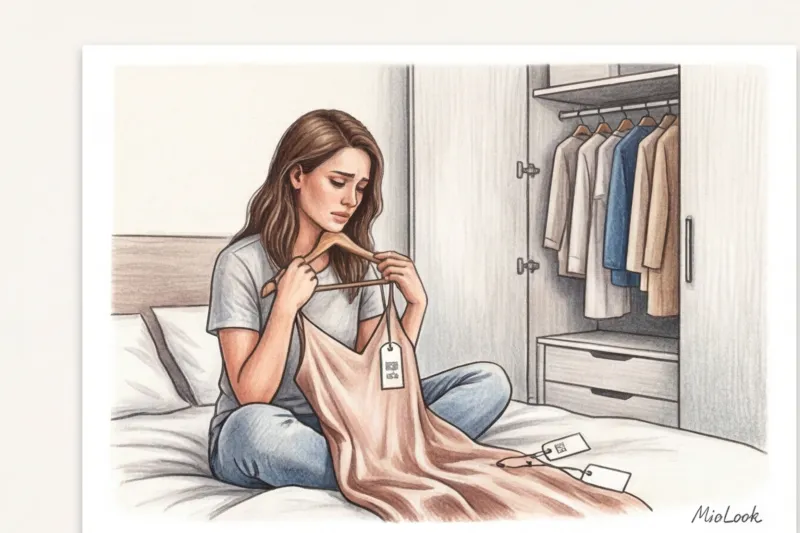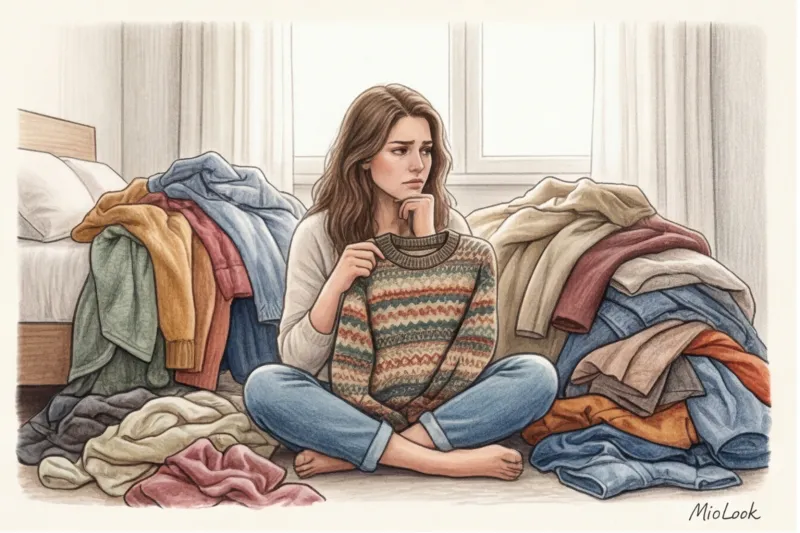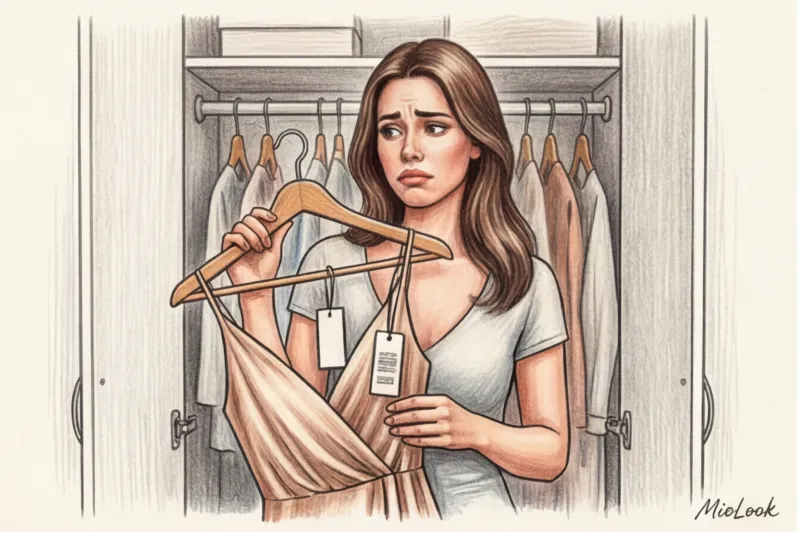
You open the closet. Your gaze inevitably falls on him — an impeccably tailored, expensive jacket or a luxurious silk dress with the paper tag still hanging off it. You've been hanging it from one place to another for two years now. Every time you reach for that hanger, a pang of guilt over the money spent rises inside you, and you put on your trusty jeans and cashmere sweater again. It's at that moment that we realize: we're about to cry. It's a shame to throw away an expensive thing , even if it spoils our morning preparations.
Over 12 years of working as a personal stylist in Europe, I've seen hundreds of such "closet skeletons." According to a McKinsey study (2022), the average woman wears only 20-30% of her active wardrobe. The remaining 70% is visual noise. I wrote more about how this noise ruins our style in our the complete guide to wardrobe psychology and decluttering.
Today we'll talk about the most difficult type of dead weight to deal with. Not stretched-out T-shirts—those are easy to get rid of. We'll explore why "dead capital" in the form of premium brands is robbing you of real style, and how to perform a painless amputation.
The psychology of the closet: why are we so reluctant to throw away expensive items?
Our inability to part with expensive clothes isn't sentimentality. It's pure behavioral economics. Nobel laureate Daniel Kahneman, in his famous 2011 paper, described the so-called Sunk Cost Fallacy Our brain categorically refuses to acknowledge financial losses. We believe that as long as an item hangs in the closet, the money isn't completely lost. We believe that one day we'll lose weight, find the right shoes or the right occasion, and the investment will "pay off."
Added to this is the "endowment effect." We tend to overvalue things simply because we own them. Objectively, your Massimo Dutti suit, bought three years ago for €300 and never worn, is now worth €60 at most on the resale market. But in your mind, it's still worth €300.
The "dressing for another me" syndrome
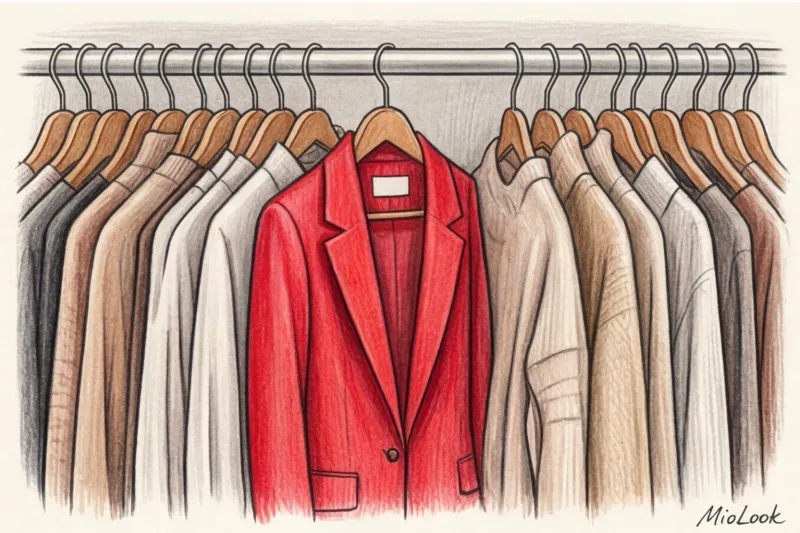
The most expensive mistakes happen when we buy things not for our real lives, but for our "fantasy self." This is the ideal woman in our head who goes to the opera every night, drinks champagne on yachts, and weighs five kilograms less. The real you works remotely, walks the dog, and values the comfort of thick cotton and loose silhouettes.
Buying clothes for a fantasy lifestyle is a major contributor to guilt. To avoid such traps, I always advise my clients to digitize their real wardrobe. Use inventory function in MioLook To put it into perspective, if 80% of your time is spent working and hanging out, investing €500 in an evening dress you'll only wear once is a mathematical crime.
The Hidden Cost of Downtime: Why Storage Costs More
Every hanger in your closet has a value. The concept of Wardrobe Real Estate means that space is limited, and every item must pay "rent" by being worn.
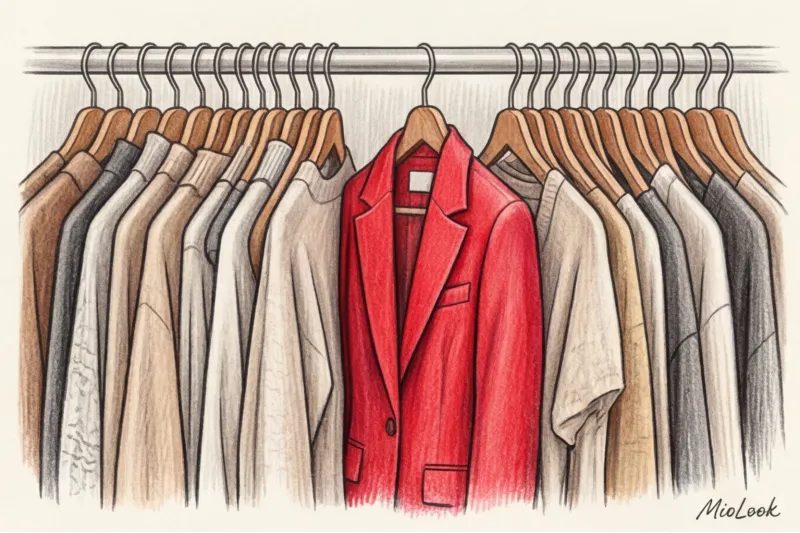
But the real cost isn't physical space, but cognitive load. Psychologist Barry Schwartz demonstrated in his book "The Paradox of Choice" (2004): the more options we have, the higher our anxiety and decision paralysis. When your gaze stumbles upon an expensive but unworn trench coat every day, you experience micro-stress. Your brain expends energy thinking for the hundredth time: "Should I wear it? No, it's too tight. I need to do something about it. I wasted my money." And so it goes, every morning.
How to forgive yourself for a mistake when you feel bad about throwing away an expensive item: a stylist's method
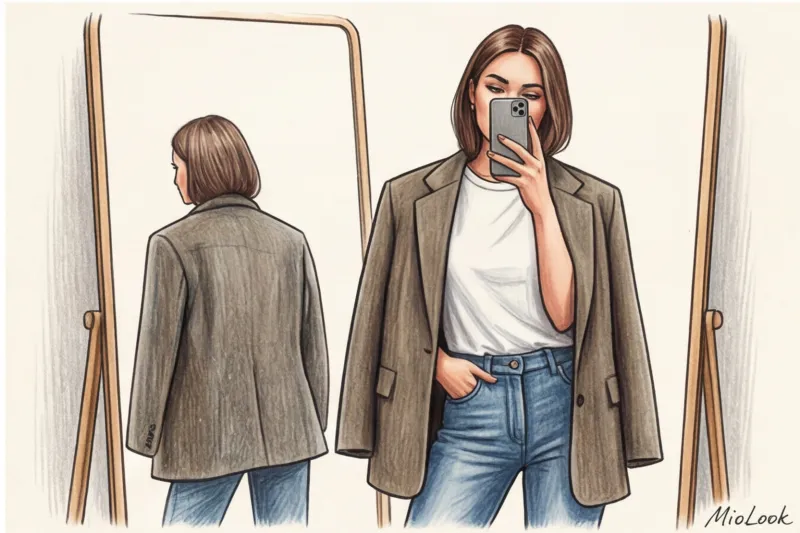
One of my clients, Anna, kept her classic €800 Burberry trench coat for six years. The problem? It was perfect in theory, but catastrophically tight in the shoulders. Every time she put it on, she couldn't lift her arms and felt constrained. For six years, this trench coat ruined her mood because, "It's a classic, it's an investment."
I always tell my clients a paradoxical thing: forcing yourself to wear an expensive but ill-fitting mistake damages your style more than simply giving it away. A poorly tailored €300 suit that bulges at the chest cheapens your look far more than a perfectly tailored €50 Zara jacket. It's the fit, not the price, that gives a look its status.

To forgive yourself for these expenses, you need to perform a "Pardon Protocol." Acknowledge the fact: the money is already gone from your bank account. Letting the item rot in the closet for another ten years won't bring you back those euros. Thank it for the important lesson (for example, "Now I know that stiff taffeta isn't my material") and let it go.
Rule 5 fittings
If you're still unsure, try a final test. Set aside 15 minutes on a weekend and try creating five completely different looks from your current wardrobe with this problematic item. If you can't create even three comfortable outfits that you'd want to wear right now, the item is officially declared "dead money." Its time is up.
Ready to get started?
Try the free plan—no commitments. Upload your items, and a smart algorithm will show you if they work together.
Get access — €0.99 onceWhat to do with a "mistake": sell it, remake it, or give it away?
Getting rid of expensive items requires pragmatism. Many people think they can get almost the entire purchase price back on resale platforms. This is an illusion that needs to be discarded immediately.
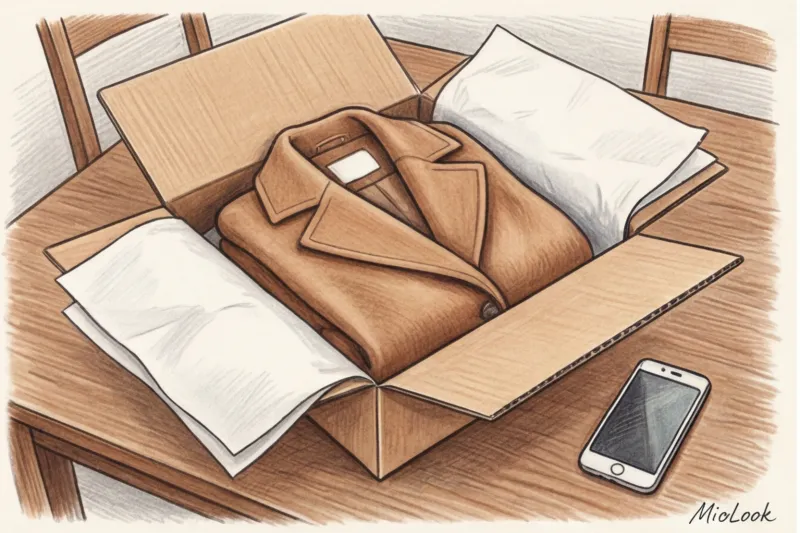
Here's the harsh reality of reselling on European platforms like Vinted or Vestiaire Collective: once you've cut off the tag and worn an item outside even once, it loses at least 60% of its retail value. If it's a recognizable, basic item from a reputable brand (like a silk dress from COS or a cashmere sweater from &OtherStories), you'll sell it for 30-40% of its original price. If it's a complexly cut item from a little-known boutique brand, the chances of selling it are close to zero. Consider that 30% a victory and a liberation.
Should I go to a tailor? It depends on the problem. When it works: You need to shorten the hem, remove excess volume at the waist, and replace the cheap plastic fittings with horn ones. When it does NOT work: If the shoulder line of a jacket or coat is misaligned, this is a design defect that requires a tailor to completely disassemble the armhole. This work will cost you €50–€100 with no guarantee of a perfect result. In this case, your only options are to donate or sell it.
Don't underestimate the therapeutic effect of charity. Giving a quality item to someone who will truly wear it and enjoy it is a powerful psychological release.
How to Avoid a Repeat: A Smart Buying Checklist
Having overcome the mistakes of the past, it's important to develop a system of filters for future shopping. Over the years, I've developed strict rules that save my clients' wallets.

- The 24-hour rule. For any item over €150, take a 24-hour break. Ask the boutique to put it on hold or close the browser tab. If you wake up the next morning thinking about the item, go for it. The emotional intensity will subside, leaving you with a sober mind.
- Mathematics CPW (Cost Per Wear). Cost per appearance. A basic thick wool jacket for €200, which you'll wear 100 times a season, costs you €2 per appearance. A sparkly New Year's Eve dress for €100, worn exactly once, costs €100 per appearance. Invest in the part of your wardrobe you spend 80% of your time in.
- The rule of three. Before you ring up the check, name three specific items from your current closet that would pair perfectly with the new item. Can't? The item will just sit there like dead weight.
It helps a lot here AI stylist MioLook — right in the fitting room, you can virtually combine a potential purchase with items already digitized in your app. This is an instant compatibility test.
Access to MioLook for €0.99 — one-time payment
A smart AI stylist will choose the perfect look for you and protect you from spontaneous purchases that you don't know how to wear.
Get access — €0.99 onceSummary: Your wardrobe is a tool, not a museum.
Your closet shouldn't be a memorial to missed opportunities, past sizes, or wasted euros. A functioning wardrobe is a breathing system, where there's air between the hangers and each item inside reflects the real you, right now.
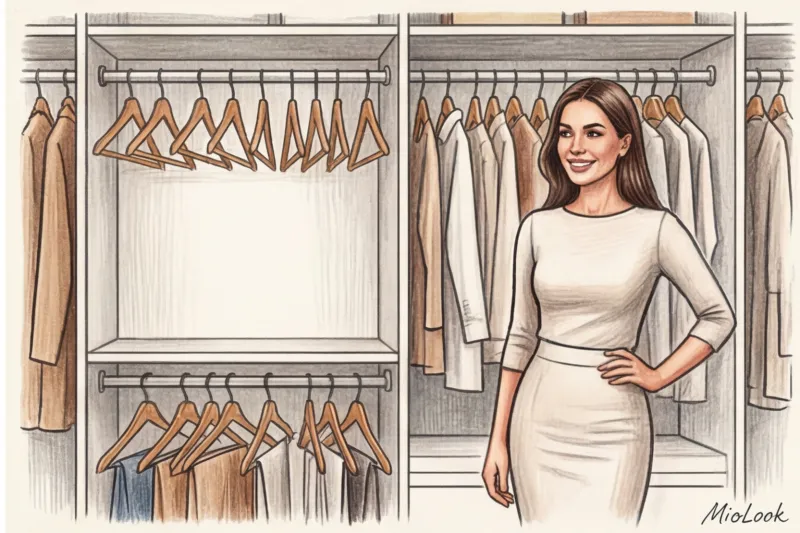
Forgiving yourself for an expensive but unworn item is an act of caring for your mental health and style. Your homework for tonight: open your closet and take out your most expensive and least-loved item. Thank it for the lesson, take a couple of high-quality photos in daylight, and put it up for sale for 30% of its value. Feel the guilt disappear as you remove this item from your closet.