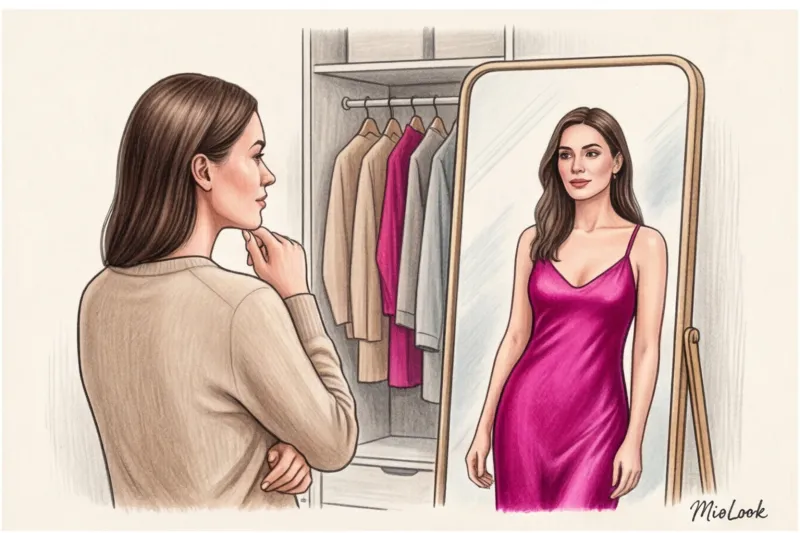
I tracked my looks every day for six months and made a terrifying discovery. Of the 34 pairs of shoes in my closet, I wore only three 80% of the time. The other 31 pairs were simply collecting dust, waiting for a "special occasion" or the day I suddenly forgot how much they rubbed my heels. Sound familiar?
According to our app's user statistics, women regularly wear only about 20% of the shoes they buy. And the main reason for this shoe cemetery is simple discomfort. I've already discussed how to build the right wardrobe foundation in our A complete guide to a basic shoe wardrobe and creating the perfect capsule wardrobe But today we'll go further and talk about physiology.
Well chosen comfortable basic shoes for every day for women — this isn't a compromise between style and orthotics. It's pure mathematics, knowledge of gait biomechanics, and a rejection of outdated stereotypes.
The Anatomy of Comfort: Why "Soft" Doesn't Mean "Comfortable"
Let's debunk the biggest shoe myth right off the bat: the most comfortable shoes aren't the softest and flattest. Ballet flats with paper-thin soles, fabric ballet shoes, and cozy, shapeless Ugg boots are the hidden enemies of your feet.
The American Podiatric Medical Association (APMA) has been warning for years that completely flat soles with no cushioning put stress on the plantar fascia. When you take 10,000 steps on hard urban pavement, your feet experience a cumulative impact force equivalent to several hundred tons per day. Soft suede and flat rubber are unable to absorb this shock—it travels directly to the knees and lower back.
"Your joints need cushioning. The ideal heel height or heel-toe drop for everyday wear, according to orthopedists, is 2-3 centimeters. This ensures proper foot roll and relieves tension on the Achilles tendon."
Hidden insoles and a rigid heel counter
As a stylist, I always perform a "twist test" before recommending a pair to a client. When you walk into the store, grab the shoe by the toe and heel and try to twist it like a wet towel. If it easily twists in half, put it back. A proper base should bend in only one place: where your toes naturally bend when you walk.
Furthermore, the heel should be firmly secured with a rigid heel counter. Even if they're everyday loafers, the counter shouldn't flex under the toe. If the heel "wobbles," the foot reflexively tenses with each step, trying to hold the shoe in place, leading to extreme calf muscle fatigue by the end of the day.
Try MioLook for free
A smart AI stylist will find the perfect look to go with your new shoes.
Start for freeLifestyle Index: How to Calculate Your Shoe Base
One of my clients, Anna (32, an IT executive), came to me with a typical problem: "I have nothing to wear to work." Her closet contained 15 pairs of luxurious stilettos and pumps. Yet, she always showed up to our meetings wearing the same worn-out running shoes. Why?
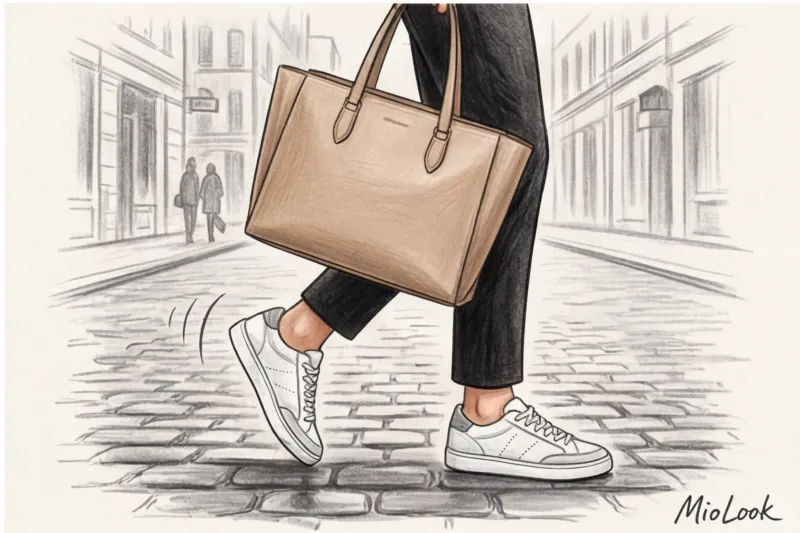
We calculated it lifestyle index Anna had a hybrid schedule: she walked about 6,000 steps on cobblestones from the metro to the office, and at work, the dress code was smart casual. Her 15 pairs of stilettos simply didn't fit into this equation. Your base should correspond to your actual route, not your fantasy route.
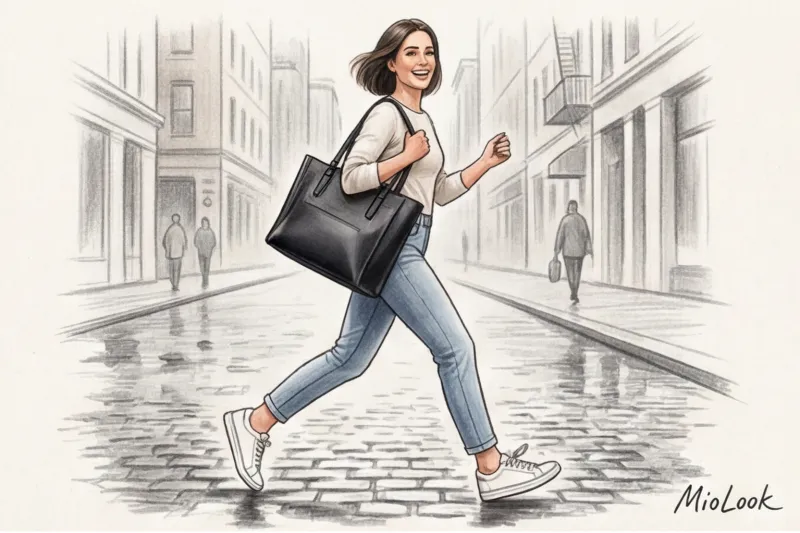
- Scenario 1: “Metro and paving stones.” Your priority is cushioning. Look for shoes with thick soles (2 to 4 cm) made of polyurethane foam, microporous foam, or dense rubber. Thin leather soles will wear down on reagents and asphalt within a single season, and your feet will feel every pebble.
- Scenario 2: "Car and Office" Impact loads are minimal, but temperature regulation is paramount. Choose breathable materials (suede, woven leather, smooth, finely tanned calfskin) and a flexible sole. Heavy boots with tractor soles will be uncomfortable behind the wheel and too hot in the office.
Comfortable Basic Shoes for Everyday Wear for Women: 4 Essential Must-Haves
If I had to keep only four pairs in my wardrobe for the spring/fall season, these would be the ones I'd choose. They cover 90% of urban scenarios and pair easily with both jeans and pantsuits.
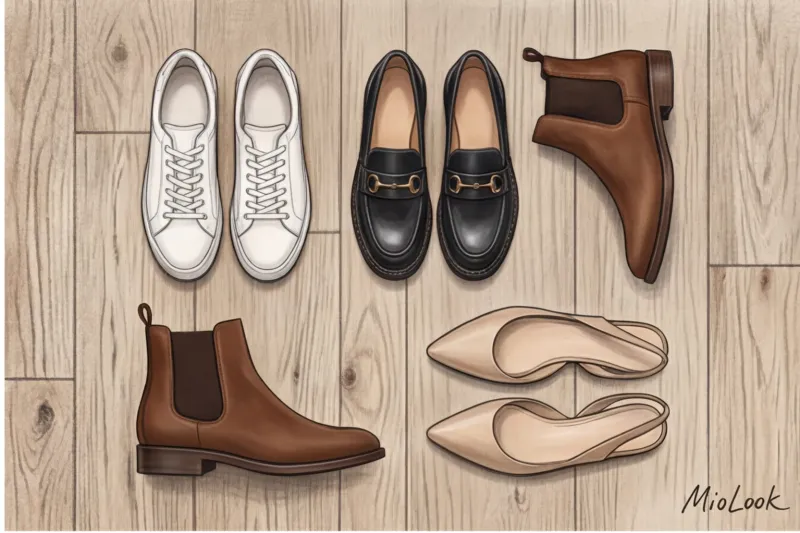
- Urban sneakers (Leather Sneakers). Forget mesh running shoes—save them for the gym. Basic urban sneakers should be made of smooth matte leather (white, beige, or black) without bold logos. They hold their shape and create a put-together look.
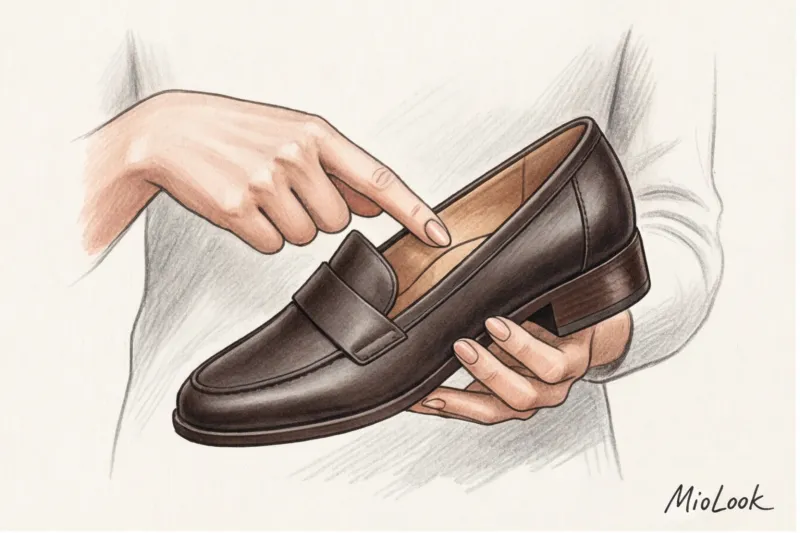
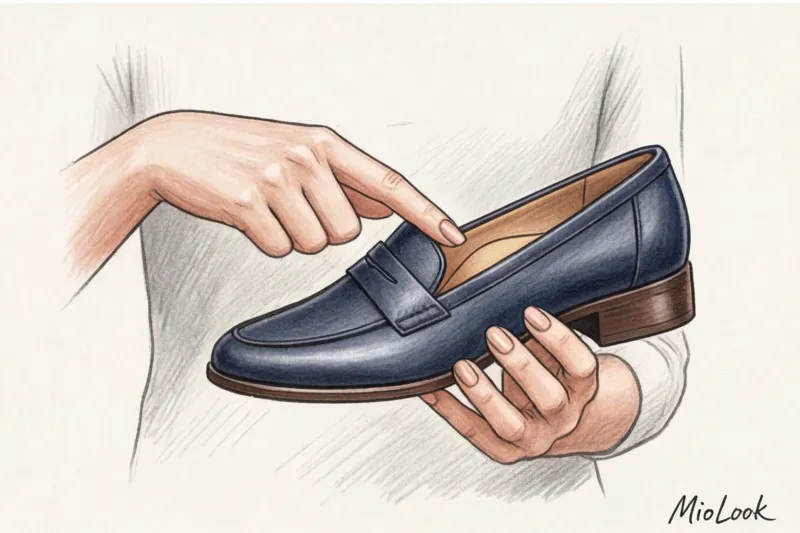
- Structured loafers. The perfect replacement for ballet flats. Choose penny loafers or those with a metal buckle (horsebit). An important rule: the sole should extend beyond the edge of the leather upper by at least a couple of millimeters (called the welt) to protect the leather from scratches on curbs.
- Chelsea boots with the correct last. A versatile mid-season staple. Look for an almond-shaped toe (not too round, not too pointed) and a shaft that fits snugly around the ankle. This will allow you to pair them with cropped straight-leg jeans without an unsightly gap.
- Slingbacks with micro heels (Kitten heel 3-4 cm). When you need an elegant look without sacrificing comfort, the closed toe and open heel with a strap create a sophisticated look. But there is a fair limitation here: This option does NOT work if you have hyperhidrosis or are prone to severe swelling in the evenings—the thin strap will begin to painfully dig into your skin.
Your perfect look starts here
Join thousands of users who look flawless every day with MioLook.
Start for freeWardrobe Integration: How One Pair Replaces Three
Basic shoes work on the principle of synergy: they shouldn't steal the show; their job is to pull the look together. That's why I always encourage my clients to consider the Cost Per Wear (CPP) rather than just the price tag.
Investing $200 in quality leather loafers that you'll wear 100 times a season ($2 per outing) is mathematically more cost-effective than buying five pairs of ultra-trendy $40 shoes, each of which you'll wear twice ($20 per outing).
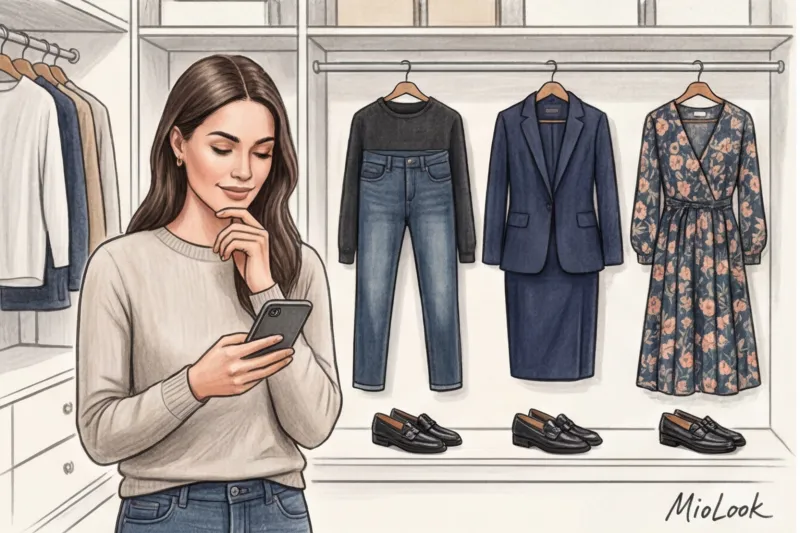
To avoid impulse purchases, use technology. Take a photo of your shoes right in the fitting room and upload it to MioLook If the smart wardrobe feature can't generate at least 3-4 complete looks from your current items with this new pair, put the box back on the shelf. It's not your base.
Checklist: Professional shoe test drive before purchase
In 12 years of working with wardrobes, I've seen hundreds of "beautiful torture pads" bought in a hurry. Here are three fitting rules that will save you money and your health:
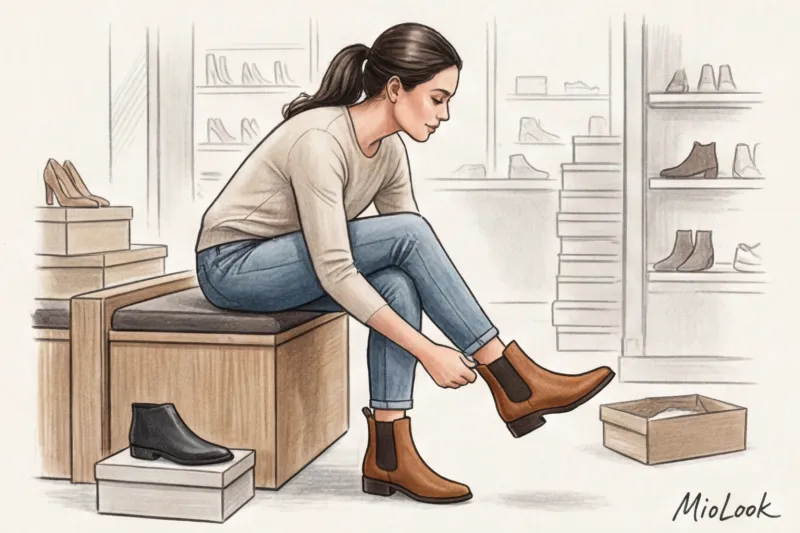
- Evening fitting rule. Never buy rigid, basic shoes in the morning. By 5:00 PM, an adult's foot size increases by an average of 0.5–1 shoe size due to the natural flow of blood and lymph. Morning shopping is guaranteed to result in blisters in the evening.
- Toe wiggle test. Shoes should fit securely around your heel and instep, but there should be enough room in the toe box. If you can't move all your toes freely inside the shoe, it's too small. Leather will stretch widthwise, but it will never stretch lengthwise.
- Walking on a hard floor. Expensive boutiques often feature thick, soft carpets. They create the illusion of softness, even on the most wooden shoe last. Be sure to step off the carpet onto the tile or parquet floor and take 15-20 quick steps.
Caring for Basic Shoes: Extending the Life of Your Investment
Even the most expensive and comfortable shoes will quickly lose their appearance and shape if the physics of materials is ignored. Base layers are worn frequently, requiring a systematic approach to restoration.
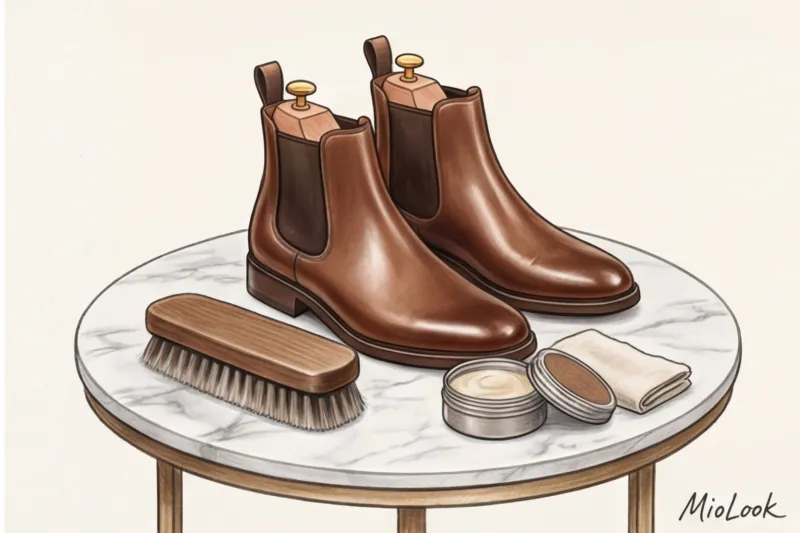
The main rule that I instill in all my clients: 24-hour rule Leather shoes need exactly 24 hours to completely evaporate the moisture they've absorbed from your feet during a day of wear. If you wear the same pair every day without a break, the leather doesn't have time to dry, and begins to sweat, become misshapen, and tear more quickly at the flex points. This is why you should have at least two pairs in your rotation for the current season.
The second secret to longevity is unvarnished cedar shoe trees, not plastic ones. Insert them into your shoes immediately after taking them off, while the leather is still warm. Cedar instantly absorbs excess moisture, neutralizes odors, and smooths out any creases in the vamp.
Summary: From shoe chaos to system
Comfort doesn't mean compromising on style. It means properly calculating the sole height, ensuring proper heel support, and understanding your actual, not imaginary, route.

Take the first step today: conduct an honest audit of your shoe rack. Remove from sight those 80% of pairs you haven't worn this season due to an uncomfortable last or too-flat sole. Keep only the shoes you could walk 10,000 steps in right now. And choose the missing essentials wisely, based on biomechanics and an analysis of your wardrobe.