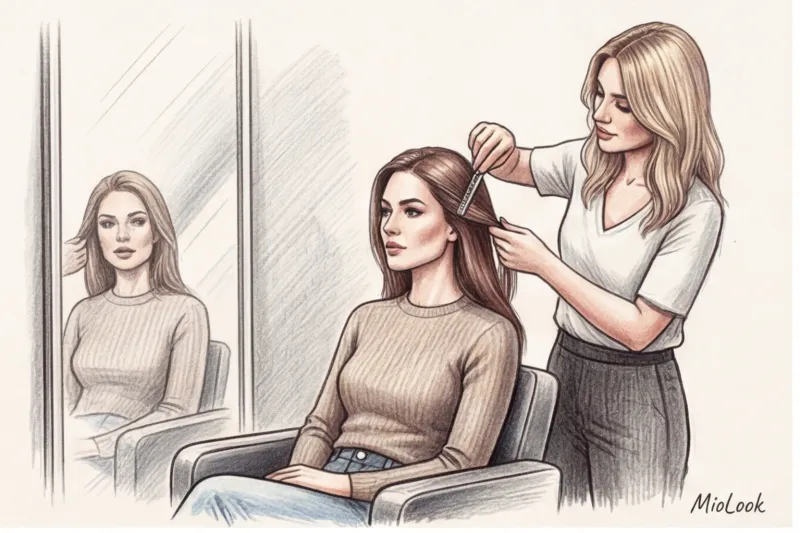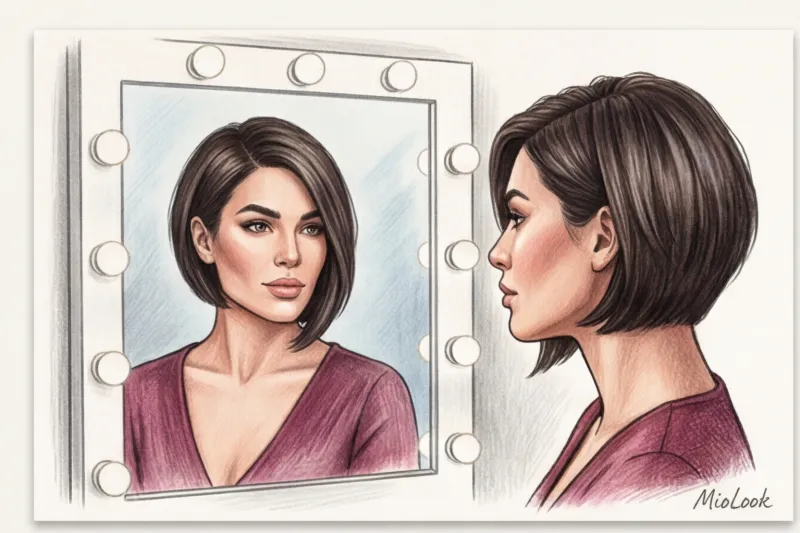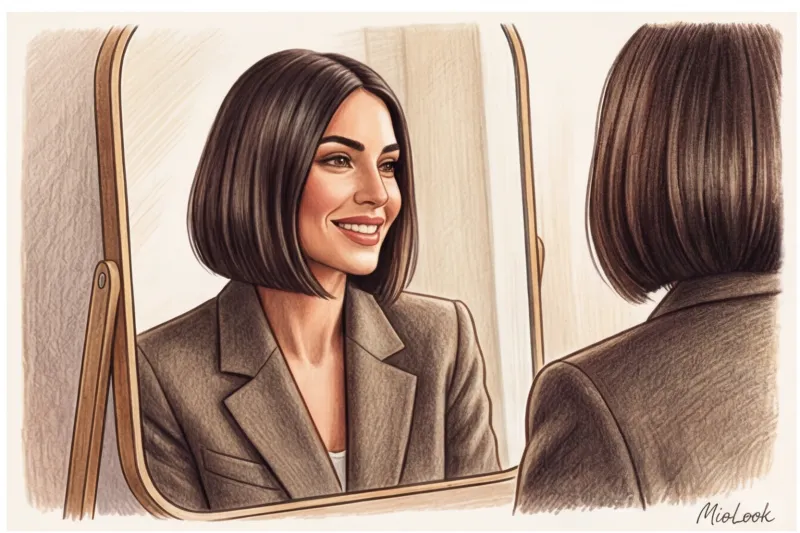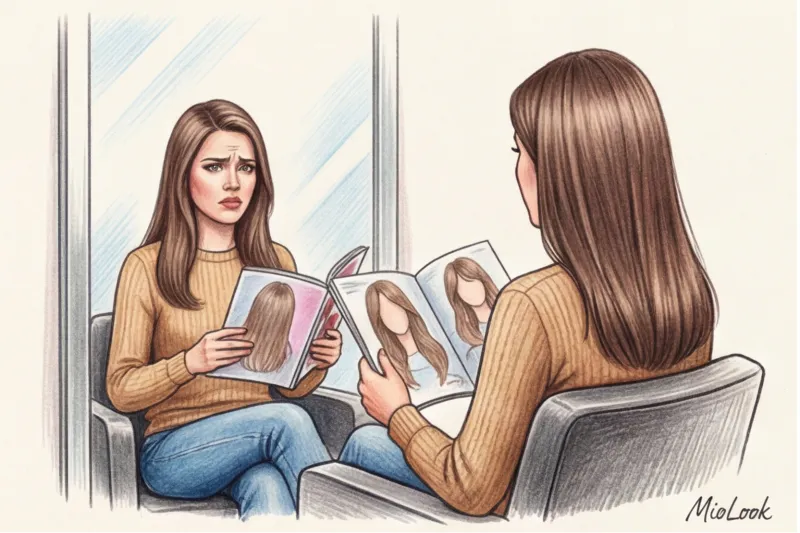

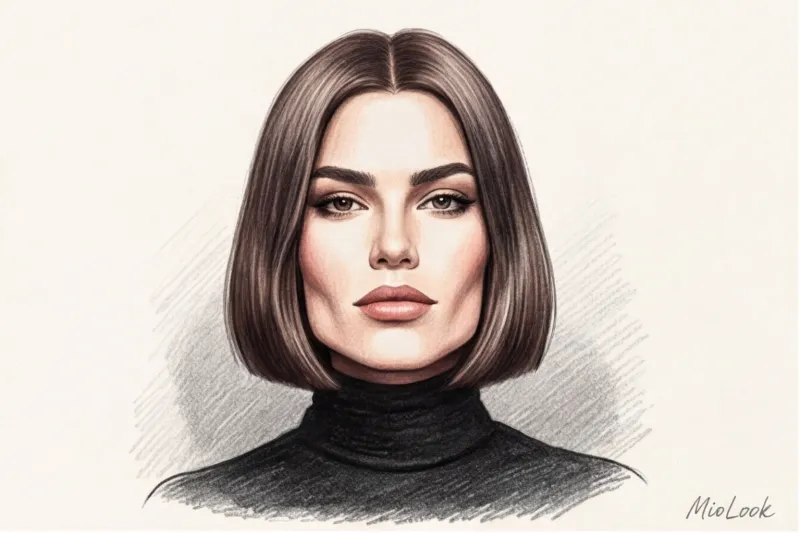
The Biggest Myth: Why Choosing a Haircut Based on Face Shape No Longer Works
"You need to visually elongate your face so it appears oval" - if your stylist begins a consultation with this phrase, I strongly recommend getting up from the chair and walking away. Seriously. For years, we've been taught that there's some kind of gold standard, and we're simply obligated to conform to it. Have you noticed how many articles there are online about... How to choose a haircut for your face shape , come down to one banal piece of advice: hide everything that doesn't look like an oval?
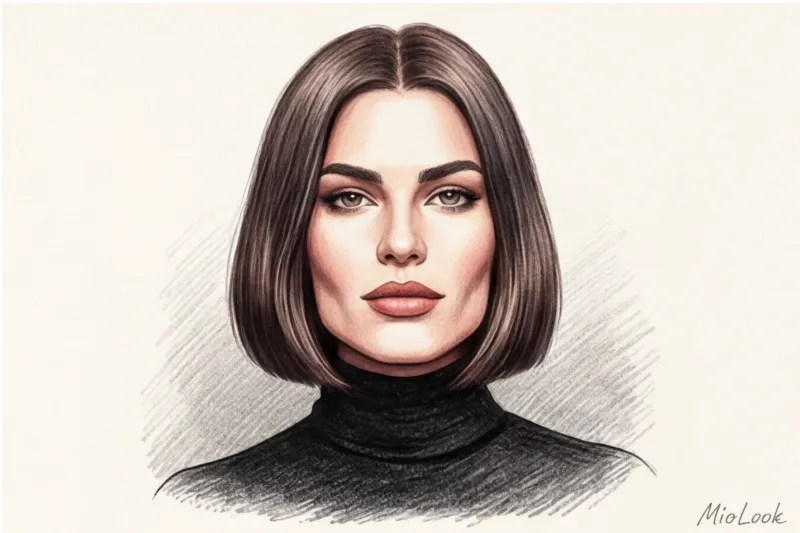
As a practicing stylist, I want to make a personal manifesto: the "oval ideal" rule is hopelessly outdated. It's a toxic relic of the 90s—an era when glossy magazines and modeling agencies dictated completely uniform beauty standards. The desire to artificially "correct" a square jawline, disguise a high forehead with thick bangs, or hide chubby cheeks behind a boring, layered face is a crime against your individuality.
Today, the industry is driven by a completely different trend—one of honesty and uniqueness. Look at today's celebrities and influencers: they deliberately highlight their so-called "imperfections." Zoë Kravitz doesn't hide her sharp, angular jawline, but reveals it with an ultra-short pixie cut, making her features even more predatory and expressive. Selena Gomez has made her round cheeks her signature, choosing hairstyles that don't try to visually "slim" her down.
"The face isn't a canvas with flaws to be covered up with hair. It's an architectural framework that the right haircut transforms into a work of art."
Analyzing our application's internal data MioLook Over the past year, I've discovered a startling statistic: 82% of new users, when trying out their first virtual haircut, are looking for haircuts that specifically "hide their face." But once they try on an open, geometric cut in AR mode that doesn't mask but skillfully frames their natural features, 9 out of 10 women radically change their minds and abandon the idea of hiding behind their hair.
So what should you rely on when the old rules no longer work? Over 12 years of styling, I've developed a completely different formula for the perfect hairstyle that never fails. It looks like this: Face shape (30%) + Hair texture (40%) + Lifestyle (30%).
- Face shape (30%) It only gives us the basic geometry: an understanding of where the shadows will fall, where the point of natural volume is, and how to distribute the mass of the hair.
- Hair texture (40%) It's a fact of physics that's futile to argue with. No matter how perfect your oval shape, if you have fine, straight hair, a voluminous shag won't work for you without an hour of daily styling. Coarse, porous, or curly hair dictates its own laws of shape.
- Lifestyle (30%) — your personal time management and career image. Your haircut should work for you. For example, if you choose Business hairstyles for every day for the creative industry , you have access to a completely different level of carelessness than the head of a corporate department who requires strict and prestigious hairstyles for business ladies.
Stop viewing your facial features as a problem to be concealed. In the following sections, we'll explore how to objectively assess your facial geometry and use this information as a superpower, not a source of insecurity.
How to Determine Your Face Shape: Forget Lipstick and the Mirror
Remember that popular advice from glossy magazines in the 2000s: "Go to the mirror, close one eye, and outline your face with your favorite lipstick"? Forget it like a bad dream. As someone who works closely with digital visualization and styling technologies, I can tell you straight: this method is guaranteed to give you a distorted result.
The reason lies in basic physics and optics. The human eye works like a camera lens. When you stand at arm's length from a mirror, an inevitable lens distortion occurs: the center of the face (nose, forehead) appears larger, while the periphery (jaw and cheekbones) optically "tilts" back. Add to this binocular vision, microscopic head movements during tracing, and subtle changes in perspective—and the resulting image appears to be an abstract shape that bears no resemblance to your actual bone structure. This is why many women believe for years that they have a round face (due to the focus on their cheeks in the mirror), even though they actually have a distinctly square shape.
To accurately determine how to choose a haircut for your face shape, we need not lipstick and a subjective eye, but a simple, flexible tailor's tape measure. Subjective judgment will always cling to insecurities, but mathematics is impartial. We need to measure four key axes. Pull your hair back into a tight ponytail, stand up straight, look straight ahead (without lifting your chin), and do the following:
- Forehead width: Measure the distance from the peak of one eyebrow to the peak of the other (or between the most prominent points of the forehead in a straight line).
- Cheekbone width: Place the tape at the highest points under the outer corners of your eyes, extending it across the bridge of your nose.
- Jaw width: Find the angle of your lower jaw (just below your earlobe), measure the distance from it to the middle of your chin, and then multiply the resulting figure by two.
- Face length: strictly along the vertical axis from the center of the hairline to the lowest protruding point of the chin.
Now let's get down to the bare bones. The basic step-by-step algorithm for proportions is as follows: if the length of the face is exactly 1.5 times its maximum width (± 0.5 cm), you have a classic oval shape. If the length and width are almost equal, you have a circle or square, and the sharpness of the jaw angles will play a decisive role here. If the length exceeds the width by more than 1.6 times, you have a rectangle or an elongated oval.
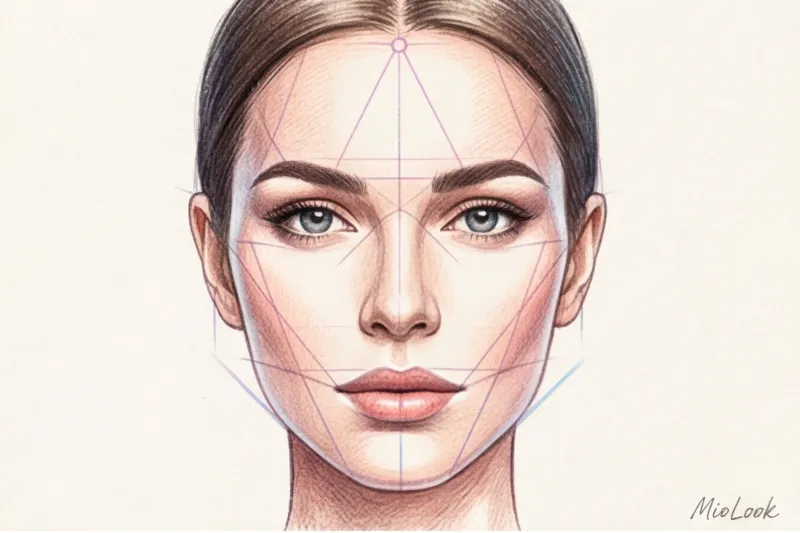
But let's be honest: in 2024, fiddling with a measuring tape in front of a mirror is a compromise. Technology has advanced greatly, and digital scanning is now many times more accurate than the human eye. How does modern AI facial analysis work? A neural network using computer vision technology doesn't look at your chubby cheeks or double chin. It builds a precise 3D map by reading over 120 biometric markers—bone angles, eye depth, and the proportions of the third face based on the golden ratio. Artificial intelligence completely ignores shadows, poorly applied makeup contouring, or slight morning puffiness.
This is exactly the biometric engine we integrated into MioLook You simply upload a makeup-free selfie in good daylight, and the algorithm produces precise geometry, completely eliminating the "I see it this way" factor. This saves hours of hesitation before going to the salon.
Access to MioLook for €0.99 — one-time payment
A smart AI stylist will analyze your facial proportions and select the perfect haircut without lengthy measurements.
Get access — €0.99 once6 Basic Face Shapes: A Checklist to Check
So, you've received your numbers or AI scan results. Let's break down the basic architectural types. Without unnecessary abstractions, just clear criteria that will help you classify your appearance:
- Oval: The length is approximately 1.5 times greater than the width of the cheekbones. The forehead is slightly wider than the jawline, and the chin is gently rounded. All contours are smooth, without sharp angles.
- Circle: The length of the face and the width of the cheekbones are equal (with a tolerance of up to 1-1.5 cm). The angles of the jaw are as smooth as possible, the chin is round, and the widest part of the face is the cheekbones.
- Square: The length and width are equal, but unlike a circle, the widths of the forehead, cheekbones, and jawline are virtually identical. The hairline is often straight, and the angles of the lower jaw are sharp and defined.
- Rectangle: The same graphic quality and equal width of the forehead, cheekbones and jaw as the square is preserved, but the length of the face is noticeably (more than 1.5 times) greater than the width.
- Triangle (heart): The widest part is the forehead and cheekbones, from which the face tapers sharply downward. The chin is pointed. The classic heart-shaped face also features an angled hairline (the so-called "widow's peak").
- Rhombus (diamond): The widest part is the high, clearly defined cheekbones. Both the forehead and jawline are noticeably narrower than the cheekbones. The hairline is often narrow, and the chin is pointed.
An important insight that's often overlooked: pure, textbook facial shapes are extremely rare. According to physiognomic research (2022), approximately 65% of people have a combination of shapes. Therefore, it's perfectly normal to be "square oval"—meaning the overall proportions are elongated, like an oval, but the jaw has a distinct, heavy angle. Or a "round heart"—a broad forehead, a narrow chin, but with pronounced, plump cheeks that soften the cheekbones.
"Don't try to squeeze your anatomy into the rigid confines of a single term. Your goal is to identify the dominant geometry (what's widest, where the angles are, what the overall length is) so you can use this data as a balancing tool rather than a strict diagnosis."
Understanding these in-between shapes gives you stylistic freedom: the same "square oval" face can benefit from soft layers to soften the angles, or a graphic bob to accentuate a strong jawline—depending on the impression you want to make.
Hair Shape Guide: How to Choose a Haircut for Your Face Shape (and Hair Texture)
According to the 2024 WGSN analytical report, the focus in hairdressing has finally shifted from "concealing imperfections" to working with natural structure. Your face shape is just a basic blueprint. But hair texture is the building block. The biggest mistake most online articles make is offering generic advice like "a long bob will suit round faces," completely ignoring how heavy Asian locks or fine Slavic hair will perform at this length.
Let's explore how to choose a haircut for your face shape, combining the geometry and physics of your hair. This insider knowledge is what differentiates a top stylist's work from a haircut at the corner barbershop.
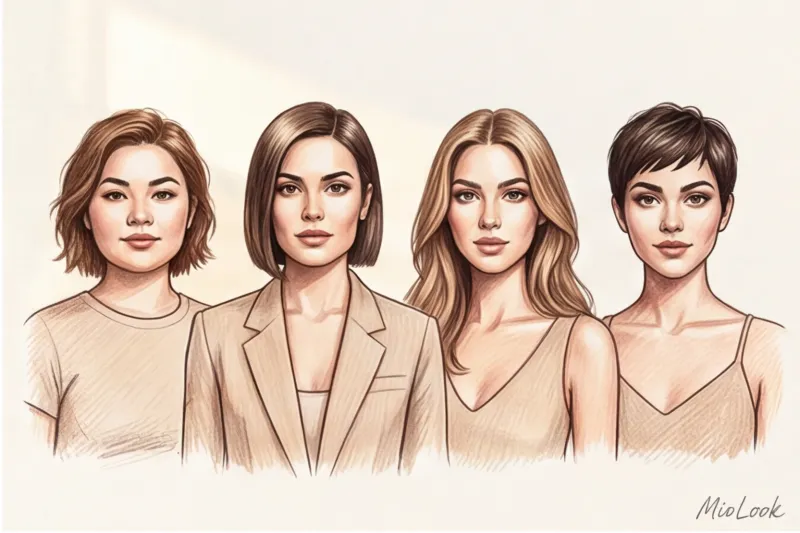
Oval: The "Everything Suits Me" Trap and the Fear of Experimentation
It's believed that the oval face shape is a genetic jackpot. Its mathematically balanced proportions allow it to wear virtually any shape. But in my practice, this versatility often plays a cruel joke on my clients: they fall into the trap of "everything suits me" and end up wearing the most boring, characterless hairstyle for decades—simply long, straight hair with no distinct cut.
Don't lose your face with a boring haircut. The oval shape is the perfect canvas for trendy, complex shapes that would look bulky on others. However, texture is crucial here:
- Oval + thin straight hair: A thick, even cut at the waist visually pulls facial features down, creating a tired look. The "Ghost Layers" technique is your choice. It adds movement and volume without thinning the ends.
- Oval + curly hair: Leaving the length unshaped will create a "spaniel" effect. Ask your stylist to create a rounded silhouette that frames the face rather than hanging in heavy triangles.
Circle: architecture of vertical lines and elongation of the neck
The main challenge when working with a round face is to create the correct vertical vectors. This optically shifts the center of gravity. The absolute hit here is a bold pixie with active volume on the crown and elongated temples. It instantly elongates the profile.
Absolutely no: tight, straight bangs. They bisect the face horizontally, visually widening it evenly across the cheekbones. If bangs are essential, choose choppy, asymmetrical, or longer bangs.
"To elongate the neck of a round face, the hairline should never end at the widest part of the neck. Choose either an extremely short nape that reveals the hairline or a length that falls confidently below the collarbone."
Textural nuance: A round face and straight hair can easily pull off a classic long lob with a center parting. But if you have a round face and curly This same strategy will lead to disaster—the hair will gain volume at the ends, making your head look like a triangular tent. For curly hair, a modern shag is the ideal solution, removing volume from the sides and bringing it to the top.
Square and rectangle: soften, don't accentuate
You put the comma in this sentence. Women with pronounced jaw angles often feel self-conscious, but in the world of high fashion, this is the most sought-after bone structure. You have two polar paths:
- The way to soften: If you want to add romance and softness to your look, try jagged edges, layers, and the famous Jane Birkin-style curtain fringe. The curtain fringe should fall just above the cheekbones, breaking up the harsh angles of the rectangle.
- The way to emphasize: My favorite style is a blunt bob cut right at the jawline. Think of Hailey Bieber's iconic looks or the models at Prada shows. It looks incredibly classy and exudes a confident, almost imposing presence.
Fair warning: a blunt jawline cut only works amazingly if you have perfect posture. Slouching will instantly ruin the chic of this geometric cut. Also, if you have coarse and thick hair , a short bob will stand up like a helmet. In this case, the stylist must perform a deep internal slice (thinning) to remove bulk while maintaining the density of the cut line.
Heart and diamond: the magic of midi length and balanced proportions
For heart-shaped faces (wide forehead, narrow chin) and diamond-shaped faces (wide cheekbones, narrow forehead and chin), one basic rule applies: balance the lower third of the face. Adding volume at the crown will further enhance the inverted triangle appearance.
The magic of the midi length—from the jawline to the collarbone—is the key. This is where maximum volume should be concentrated. A voluminous, brushed hairstyle with ends curled inward or outward is a great solution.
Textural nuance: If you have a heart shape but your hair very thin and lacking volume Creating volume at the ends will be extremely difficult. Don't try to force curls that will fall out within an hour. Create a tight, even cut at collarbone level and use a salt spray for texture. A tight edge will visually add much-needed weight to a narrow chin.
Afraid to cut off too much?
Before deciding on a drastic length change to balance your face shape, test the results virtually. Our AI takes into account not only your face shape but also your natural hair texture.
Try a haircut at MioLookHidden Factors: What's More Important Than Your Face Shape?
We're used to evaluating our appearance in 2D—by looking at a full-face selfie. But the human head is three-dimensional. In the 1960s, legendary British stylist Vidal Sassoon revolutionized the industry by introducing the concept of cutting according to bone structure. His philosophy was based on the laws of physics: it's the geometry of your bones that determines how your hair will fall under gravity, not the abstract contours of your face.
Working with digital hairstyle selection algorithms, I constantly see how perfectly-shaped haircuts for a face shape fall apart in real life. Why? Because three hidden factors come into play, each dictating its own strict rules, and ignoring them is simply dangerous for your style.
Factor One: Your Profile Architecture
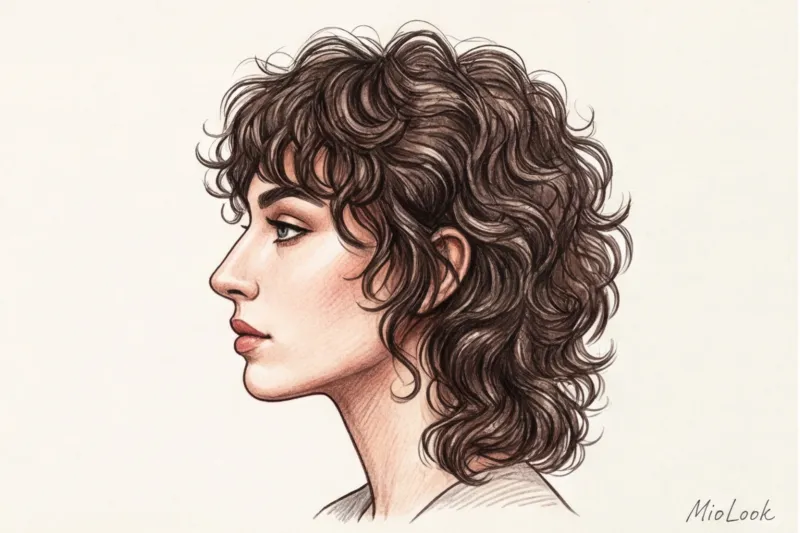
Many clients ask their hairdresser for a perfectly smooth, straight bob, completely ignoring how they look from the side. Your profile decides everything. If you have a prominent nose or a slightly receding chin, a flat nape will visually exacerbate these features. The face will appear disproportionately elongated, as a straight, ungraded cut deprives the profile of the necessary balance.
The secret to harmony lies in creating the right counterbalance. A graduated bob with a voluminous nape or a medium-length cascade instantly balances prominent features. We create an optical diagonal from the tip of the nose to the highest point of volume at the nape, creating a softer and more proportional profile.
Factor Two: Hairline
This is the detail most often overlooked during a quick five-minute consultation at the salon. You've saved a beautiful photo of a French bob or a daring bob with an open neck. But the harsh truth is this: if your hair at the back grows low or forms strong, stubborn cowlicks, a short cut will be a daily torture.
Every morning, you'll have to spend 15-20 minutes trying to tame flyaways with a flat iron. The same rule applies to the fringe of your face: if you have a so-called "widow's peak" (the V-shaped ridge of hair growth on your forehead), straight, short bangs will stubbornly fall apart in the center. It's possible to go against your natural instincts, but it's incredibly time-consuming.
Factor Three: The Illusion of Thickness from Pinterest
The biggest killer of women's hopes is the difference between a glossy reference image and your actual texture. Thickness and porosity can't be corrected with scissors. Photos of trendy shag haircuts or careless curtain bangs from social media 99% of the time show the result of hours of brushing, hot tools, and an arsenal of texturizing styling products costing $40–$60.
"When choosing a haircut, you're choosing not a look, but a daily routine. Fine, glassy hair requires dense, architectural cuts without intense thinning. Torn textures will hang like sad 'icicles' on them within an hour of leaving the house."
Porous and curly hair, on the other hand, needs its inner layers to properly distribute weight; otherwise, even the slightest humidity will cause it to turn into an unruly triangle. So, before making a drastic length change, ask yourself honestly: are you ready to blow-dry your strands and apply heat protectant every morning? If the answer is "no," then feel free to close your Pinterest board and look for solutions that work with your natural hair.
Access to MioLook for €0.99 — one-time payment
Start creating perfect images with the help of artificial intelligence
Get access — €0.99 onceLifestyle and Career: Haircuts as Part of Personal Branding
A Yale University study led by Professor Marianne LaFrance scientifically proved the "bad hair day" phenomenon: dissatisfaction with your hairstyle instantly lowers your self-confidence and makes you appear less competent to others. As a capsule wardrobe enthusiast, I always repeat one harsh but honest truth to my clients: your haircut is your most important, permanent accessory. You may change your clothes three times a day, swap your loafers for smart pumps, but your hair stays with you 24/7. You can't leave it at home, change it mid-day based on your mood, or take it to the dry cleaner.
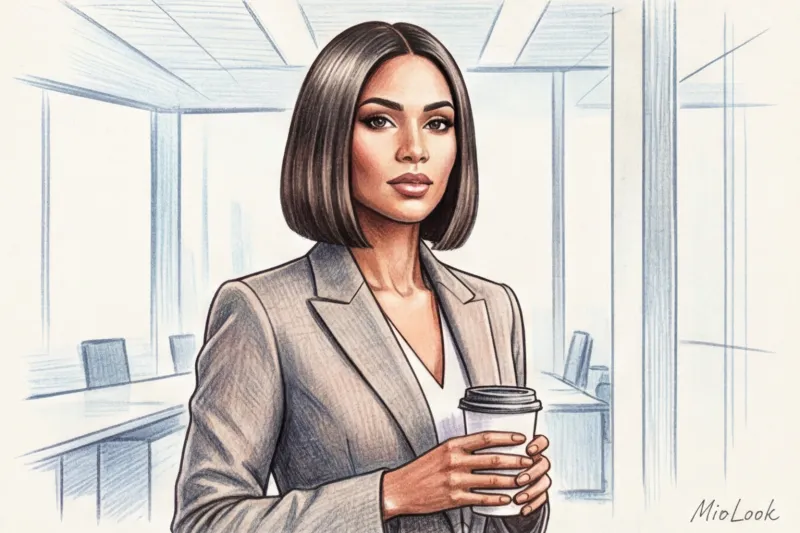
Face shape is just a starting point. How your hairstyle conveys professionalism depends on its geometry and texture. In style psychology, we often rely on archetype theory. Smooth textures, precise symmetry, and clear, graphic lines are subconsciously interpreted as control, stability, and high intelligence. This is a clear expression of the Ruler or Sage archetypes, which works in your favor even before you utter your first word in a negotiation.
Let's take a classic example from my practice. One of my clients, a financial analyst, couldn't seem to break the glass ceiling and charge a higher fee for her services. She showed up to meetings with long, slightly frizzy hair, which she hastily pinned back with a plastic clip. We gave her a strict, architectural bob with a blunt cut right at jaw level. The straight lines instantly added visual weight and status to the look. Clients began to perceive her as a premium expert, and within six months, she raised her prices by 40% without resistance.
Conversely, if you're an art director, UX designer, or work in a creative agency, a perfectly polished, sleek hairstyle can work against you, making you appear too conservative and boring. In this environment, a textured, deliberately casual shag, a modern mullet, or a choppy fringe act as a social marker: "I think outside the box, I'm part of the team, I'm not afraid to break the rules."
But even the most prestigious look will lose its luster if you're not prepared to maintain it. When wondering how to choose a haircut for your face shape, we often forget the most important factor: time. I always ask people to take a short "Maintenance Level" test. Be completely honest with yourself:
- Level 1: Low Maintenance (0–5 minutes per day). Wash your hair, apply a drop of leave-in cream, and let it air dry. Your choice: a pixie that grows out beautifully, a long bob with a tight edge, or long, straight hair without complicated layers. No short bangs.
- Level 2: Medium Maintenance (10–15 minutes per day). You're ready to use a blow dryer, a texturizing sea salt spray, or a few curls with a flat iron near your face. Soft layers, French curtain bangs, and a classic textured bob are all perfect for you.
- Level 3: High Maintenance (from 30 minutes per day). You're a master of styling with a Dyson Airwrap, using heat protectants, primers, mousses, and hairsprays. Only with this routine can you opt for complex, layered butterfly haircuts, which look sloppy without careful styling.
If you want to organize your looks and understand which hairstyles make you feel most confident, start keeping a visual diary. I recommend using the wardrobe planning feature in MioLook — You can take photos of your best looks (including your hairstyle) and analyze how much time you actually spent getting ready on the days when you looked and felt 100%.
Business Dress Code and Hairstyle: How to Find the Balance
In corporate environments with strict dress codes (banks, law firms, the public sector), hair becomes an integral part of your work uniform. And this is where the most common physical conflict arises: a complex hairstyle against a jacket collar.
Have you ever noticed how stunning a trendy long bob or medium-length cascade looks in a studio photo? Now imagine the same haircut in real life, with the ends unattractively curling and fluffing against the thick English collar of a classic blazer, a stiff wool coat, or a heavy turtleneck. This effect instantly cheapens the look, creating a feeling of unkemptness.
To avoid this conflict, I recommend two approaches for those who prefer a strict office style. The first is to choose a length that's guaranteed to not touch the collar (a lip-length French bob, a sleek mid-neck bob, or an elegant pixie). The second is to keep the length below the collarbone, allowing for easy updos.
Haircuts that are ideal for a sleek low bun or ponytail require careful facial structure. Ask your stylist to cut longer strands at the cheekbones—the so-called "money piece." Once you've gathered the bulk of your hair, these strands will create a soft, geometric shape, offsetting the excessive severity of a tight bun and visually elongating your face.
When investing in a good basic haircut (averaging between $80 and $200 from a top stylist), remember: you're not paying for a moment of rapture in front of the salon mirror. You're paying for the precious 20 minutes of sleep it will save you in the morning and the confidence it will give you at every important meeting.
Technology at the Service of Style: Virtual Haircut Try-Ons
Remember that chilling moment: the hairdresser turns you away from the mirror, makes the first cut, and you mentally say goodbye to your familiar reflection. For a long time, finding a new look was a real lottery, where your nerves and months of painful growing out were at stake. Today, when people ask me how to choose a haircut for my face shape without risking my psyche, I always answer: first, digitalize yourself.
Neural networks have radically changed the rules of the beauty industry. Modern AI no longer "glues" flat pixelated wigs to your selfies, as primitive programs did ten years ago. Algorithms analyze jaw geometry and eye positioning, and realistically adjust the volume and length of hair, taking into account shadows. A virtual try-on allows you to clearly see how a close-cut bob will add weight to your chin or how an extended curtain fringe will visually elongate your proportions. MioLook , you can test dozens of options in just a few minutes—from an ultra-short pixie to a textured cascade—and avoid the bitter tears after an impulsive trip to the salon.
But as an experienced user of style apps, I must warn you: the results of AI generation directly depend on the quality of the source material. To ensure the algorithm produces the most accurate and realistic prediction, you need to prepare the right "blank canvas":
- Get your hair out of the way: Gather your hair into a tight, sleek ponytail at the nape of your neck. No volume at the roots or loose strands near your face—the AI should see your true bone structure.
- Light decides everything: Stand facing a window during daylight hours. Even, diffused light without harsh shadows under your nose or cheekbones will prevent distortion of facial proportions.
- A precise angle: Hold the camera strictly at eye level, at arm's length. Relax your face, and don't smile too broadly to avoid artificially puffing out your cheeks.
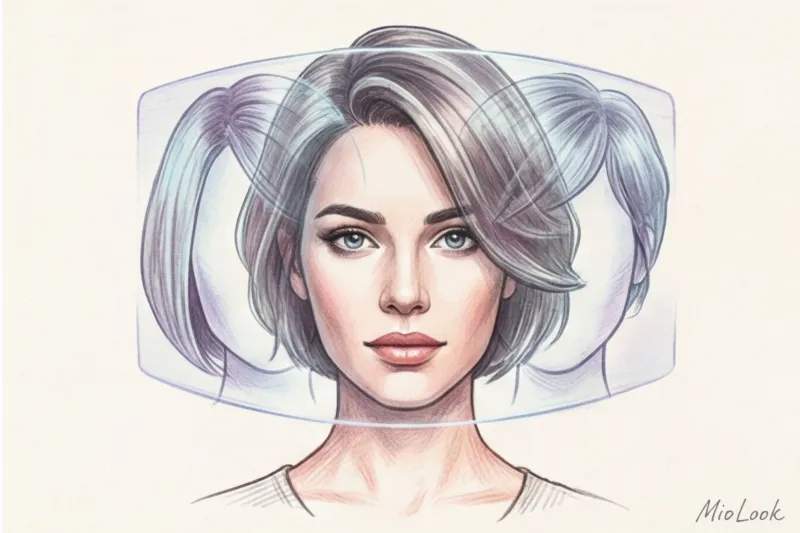
Despite the technological breakthrough, we must remember the limitations of virtual try-ons. Machine learning works with digital images, not live keratin. On the screen, the generated short bangs will form a perfect, thick semicircle, but the program doesn't realize you have a stubborn cowlick on your right crown, and your hairline on your neck slopes upward. The on-screen simulation also doesn't take into account your natural porosity or how frizzy your hair is in the slightest humidity.
Your ideal image begins Here
Join thousands of users who look flawless every day with MioLook.
Get access — €0.99 onceThat's why a generated photo isn't a strict order for the stylist, but your ideal visual reference. When you bring a photo of Hailey Bieber to the salon, the stylist has to mentally translate the top model's measurements onto your face. When you bring your own AI-generated photo, you immediately show the desired geometry, weight distribution, and volume on your unique facial structure. Your job in the hairdresser's chair is to show this image and ask the only right question: "How can we technically adapt this shape to my hair growth direction and thickness so that it lays just as harmoniously in real life?"
Checklist before visiting a stylist: how to avoid disappointment with the result
I often repeat one non-obvious thought to my clients: even if you have thoroughly studied, How to choose a haircut according to your face shape 80% of the final result depends on the simple problem of translating from "client" to "hairdresser." The difference between your "just give me a beautiful bob" and how the hairdresser visualizes this phrase in their head could cost you six months of painful hair growth.
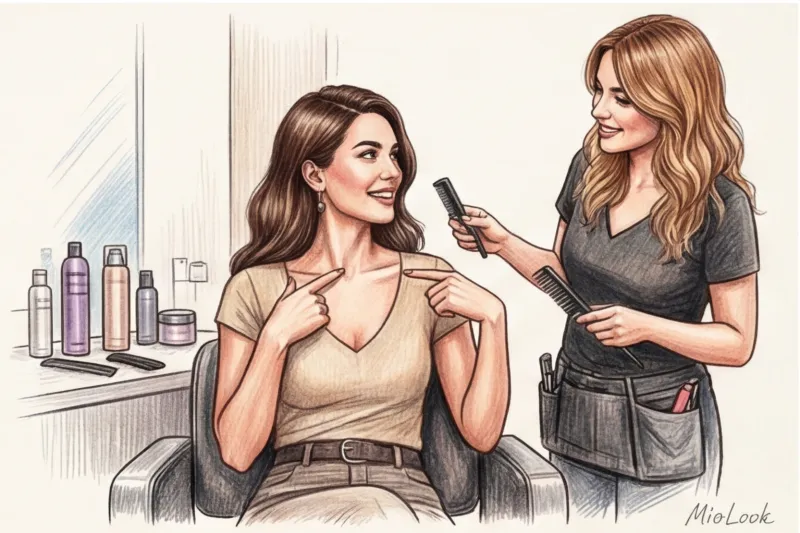
To ensure your expectations finally match the reality in the mirror, I've developed a strict protocol for preparing for a salon visit.
Moodboard Rule: The 3+1 Method
Forget about bringing a single photo from Pinterest, hastily saved on the way to the studio. My formula works without fail: you must show the artist three photos "the way I want it" and, critically, one photo "how I definitely DON'T want" It's the anti-reference that defines the boundaries of what's permissible. What looks like a "terrible 2000s cap" to you might look like "creative textural gradation" to a professional. The presence of an anti-reference eliminates any misinterpretations.
Glossary of terms: speaking concretely
Never use abstract adjectives when sitting in a chair. Let's translate popular queries into the language of facts and geometry:
- "Just a little bit of trimming" — the most dangerous phrase. Everyone has their own eye. Speak exclusively in centimeters: "remove exactly 2 centimeters, no more." Ideally, demonstrate this length with your fingers or a ruler.
- Add volume — another common pitfall. For a stylist, creating volume often means adding short layers on top. If you have fine hair, this will result in limp, lifeless ends. Clarify the mechanics: "I need a tight cut to create visual thickness at the bottom" or "keep the overall volume, but add movement only at the face."
- "Make it easier for me" — a request that often results in aggressive thinning. For porous and curly hair, thinning shears are the worst enemy; they'll instantly create a dandelion effect. Ask for strands to be textured with straight scissors (the point-cut technique).
Mandatory consultation and dry cut
Communication is a two-way process. Before the stylist puts on a robe and starts spraying, a diagnosis must be made. A professional will definitely ask you these three questions:
- "How do you dry your hair every day and how many minutes are you realistically willing to spend styling it in the morning?"
- Do you wear your hair in a ponytail when you exercise, clean, or work on your laptop? (the length of the control strands near the face depends on this - they should not fall out of the elastic band if this irritates you).
- "What styling products do you have on your shelf right now?" (If you only have a basic shampoo, you absolutely cannot get a haircut that requires daily application of salt spray and texturizing paste).
By the way, if you have wavy or curly hair, there is a product for you dry cut rule Curly strands bounce unevenly after drying, losing up to 30-40% of their length. Proper curl architecture can only be achieved on dry hair, when the stylist can see the natural curl pattern. If your curly hair is immediately sprayed with water, it's a good reason to question the stylist's technique.
To avoid confusion among saved images and screenshots, I recommend digitizing your references in advance. In the app MioLook It's convenient to create mood boards of future haircuts and immediately compare them with your current wardrobe. After all, your new haircut should seamlessly integrate with your everyday style, not clash with the collars of your favorite jackets.
Conclusion: Your ideal haircut is one that is easy to style.
Let's do some simple morning math. If you spend 30 minutes straightening your hair with a flat iron or performing complicated dances with a styler every day, that adds up to 2.5 hours over a five-day workweek. Add in Sunday brunch or a walk, and we get a daunting figure. The final productivity tip I want to impart to every client is this: a good haircut saves you up to 3 hours a week. This is a valuable resource that can be invested in a good night's sleep, reading your analytics over breakfast, or a morning workout, rather than gruelingly battling your physiology in front of the mirror.
Throughout this guide, we've covered in detail how to choose a haircut for your face shape, but now it's time to prioritize. The architecture of your cheekbones, the width of your forehead, and your jawline are a great navigational map. They tell your stylist where to add volume and where to subtract bulk. However, face shape is by no means a dictator. If a perfectly geometric classic bob requires you to layer texturizing sprays and heat protectants daily, you've chosen the wrong path. A haircut should adapt to your life, not you, adjusting your schedule to your hair's whims.
In professional stylist circles, there's a term called the "London weather test." The key to a successful hairstylist's work isn't how you look when you leave the salon after an hour with a round brush. The real result is revealed in how your hair lies after being caught in a light rain or when you just get up from the pillow. Remember the hairdressing revolution of the 1960s: the brilliant Vidal Sassoon introduced the "wash and wear" concept. He mathematically calculated the angle of each strand with such precision that after drying naturally, the hair naturally takes the desired shape. A well-developed base using internal layering or point-cut techniques maintains volume without the need for kilos of styling product.
When you try to force coarse, porous hair to lie flat like glass (simply because you read online that a round face needs strict vertical lines), you're fighting a losing battle with physics. Conversely, forcing fine, straight hair to hold a voluminous '90s-style cascade is a recipe for thinning and burnt ends.
I encourage you to put theory into practice and analyze your current hairstyle using real-time styling parameters. Conduct a quick audit tomorrow morning by honestly answering three questions:
- Thermal tool dependence index: Can you leave the house with just a blow-dry on medium heat? If your haircut requires a flat iron at 200 degrees or a curling iron, it's not flattering your natural texture.
- The 15-Minute Rule: Do you manage to achieve the final result within the fifteen-minute timeframe from the moment you take the towel off your head? Anything beyond this timeframe in your daily routine indicates an imbalance between your haircut and your hair type.
- Evening crash test: What does your hairstyle look like by 6:00 PM? If the volume is completely gone and the strands are falling apart, it means the stylist didn't take the weight distribution into account when cutting.
We live in an era of maximum process optimization. Stop fitting yourself into outdated glossy templates. Digitalize your approach to style: use MioLook virtual instruments To find shapes that not only complement your anatomical proportions but also fit perfectly with your activity level. Embrace freedom, where a flawless look can be created with a simple wave of the hand.
Guide Chapters
How to Choose a Haircut If You Wear Glasses: A Stylist's Guide
Find out why you shouldn't get a haircut without glasses and how to properly match your frames to your hairstyle. Secrets of visual balance and facial architecture from a stylist and image consultant.
Haircuts for a Diamond-Shaped Face: How to Highlight Your Cheekbones
A diamond-shaped face is a rare supermodel shape. Learn how to stop hiding your cheekbones and choose a haircut that will make your features stand out.
Haircuts to hide a high forehead: stylist tips
Learn how to choose the right hairstyle to visually correct a high forehead. Stylists' tips on working with texture, parting, and hair color.
Haircuts for women with a triangular face: the best ideas
Stop hiding your aristocratic features behind thick locks! Learn how to choose a haircut for a heart-shaped face to flatter your cheekbones and chin.
Short haircuts for face shapes: who suits pixie and garcon cuts?
Forget outdated beauty standards. Learn from a practicing stylist how to choose a pixie or garcon cut to highlight your individuality.
What haircuts suit an oval face: tips and dos and don'ts
Those with a perfect oval face are often offered boring hairstyles. Let's debunk these myths and choose truly stylish and modern cuts.
Haircuts for Rectangular Faces: Trends and Tips
High fashion has long abandoned standards that call for concealing angular features. Let's learn how to choose a fashionable haircut that will highlight your individuality.
Ideal haircuts for women with a full face
It's time to stop hiding chubby cheeks with your hair! Learn the stylists' secrets on how the right haircut can transform a full face.
Trendy haircuts for square faces: breaking stereotypes
Forget about hiding your strong jawline behind layers of hair. Let's explore which haircuts truly accentuate the natural geometry of a square face.
How to choose bangs for your face shape: stylist tips
Bangs aren't a way to hide imperfections, but a stylish, architectural accessory. Learn a new approach to choosing the perfect bangs from a stylist with 14 years of experience.
How to choose a haircut from a photo online: the best services
Artificial intelligence has changed the rules of the beauty industry. We'll explain how to safely experiment with your look and try out a new hairstyle with AI.
How to Determine Your Face Shape: A Homemade Haircut Test
Your face isn't a collection of flaws, but a unique architectural design. Take this simple test to discover your face shape and find the perfect haircut.