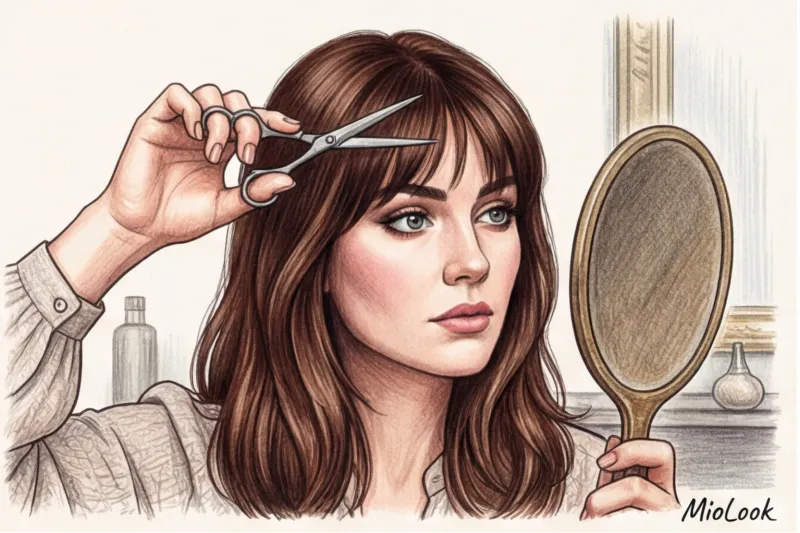

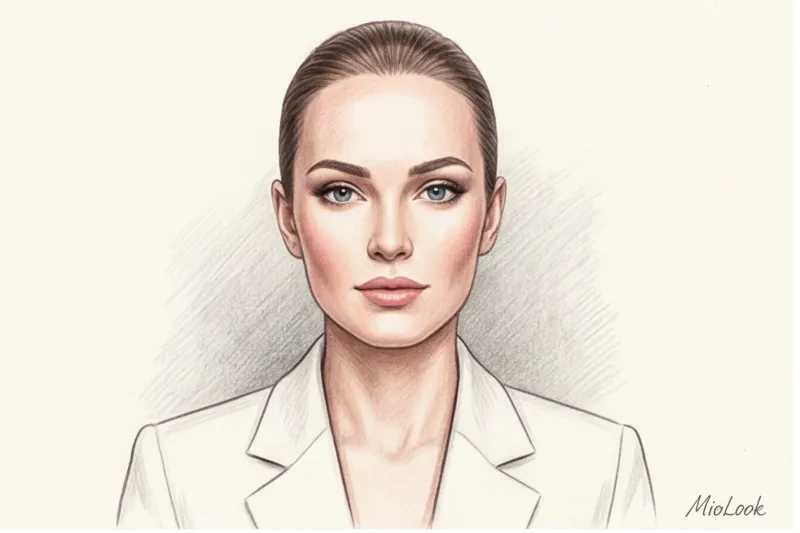
Do you know what phrase I hear most often from new clients? "Katarzyna, my forehead is too high—let's cut my bangs straight to hide it." Over 12 years of working as a stylist in Europe, I've observed the same scenario: a woman sits down in the chair, asks for a blunt fringe as a lifeline, and a month later complains that her face has become heavy and puffy.
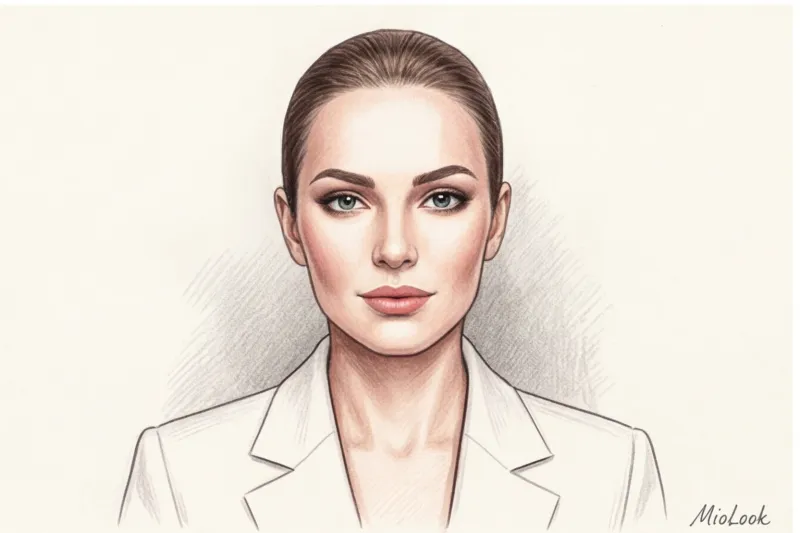
We are used to treating our peculiarities as shortcomings that require urgent camouflage. But the right ones haircuts that hide a high forehead — it's not about creating a screen of hair. It's about the intelligent redistribution of volumes. I've already discussed the basic architecture of facial proportions in more detail in our A complete guide to choosing a haircut based on your face shape Today, we'll explore a specific feature: how to stop hiding behind the "helmet" effect and learn to command attention with texture, parting, and color.
High forehead: a 90s stigma or an aristocratic feature?
The idea that the forehead should occupy a strictly defined third of the face has its roots in the rigid standards of past decades. In the '90s and 2000s, glossy magazines foisted upon us the myth of the "perfect oval," forcing women to mercilessly tailor their unique features to fit a single template.
But let's turn to the philosophy of the legendary Vidal Sassoon hairdressing academy (the foundations of which have remained unchanged since the 1960s): a hairstylist shouldn't disguise the face; their job is to create geometric balance. Look at Angelina Jolie, Rihanna, or Tyra Banks. They don't hide their foreheads. On the contrary, they make them a sign of class and aristocracy, revealing their faces so that the emphasis shifts to the eyes and cheekbones.
The numbers speak for themselves. According to internal analytics of virtual try-ons in the MioLook app for 2024, 68% of women abandon the idea of a classic straight fringe after trying it on in AR mode. The reason is simple: on the screen, they clearly see how the dense mass of hair above the eyebrows visually weighs down the lower jaw and adds age.
Access to MioLook for €0.99 — one-time payment
A smart AI stylist will select the perfect look and show you how a haircut will change your proportions before you even go to the salon.
Get access — €0.99 onceThe Biggest Myth: Why Thick, Straight Bangs Are Your Worst Enemy
The most paradoxical and counterintuitive discovery my clients make is this: thick, straight bangs does not hide high forehead. It works like a neon sign, screaming: "Look, I'm hiding something!"
The mechanics of this optical illusion are simple. A sharp horizontal line forces the viewer's eye to involuntarily estimate the distance from this line to the top of the head. This creates the so-called "helmet effect"—an overload of the frontal area. The face loses definition, becomes flat, and all the visual weight falls on the cheeks and chin.
Last month, Anna, a top manager at an IT company, contacted me. She had been wearing thick bangs for years, considering them her uniform. "I feel like I'm wearing a heavy curtain on my forehead." " she admitted. "We removed the tight cut, replacing it with a jagged texture around the face. The result? An open gaze, five years off your visual age, and suddenly prominent cheekbones that had previously been lost against a heavy jawline."
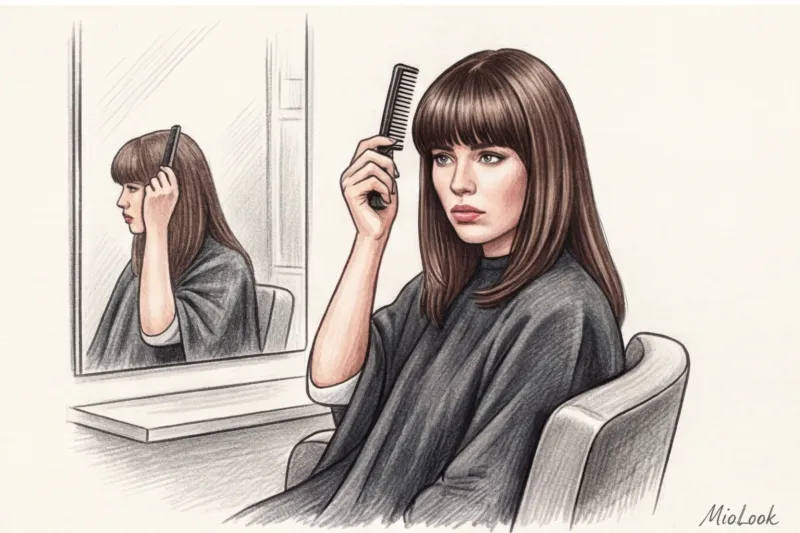
Don't forget about maintenance. Perfectly straight bangs take 3-4 weeks to grow out. This means you'll need to visit the salon about 15 times a year just to cover one area. Is this time and money worth the questionable camouflage effect?
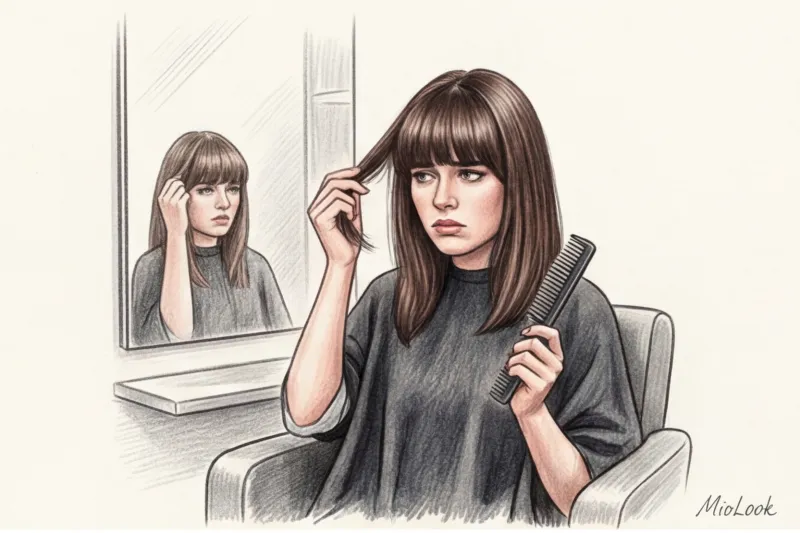
Haircuts that hide a high forehead: 5 elegant solutions
If we abandon the "blank wall" effect, what's left? The main rule of French hairdressers is to let air into the hair. Any haircut that conceals a high forehead should rely on a flexible texture. Below, I'll break down three of the most powerful techniques from the top five salon cuts (the other two are an extended arched fringe and a layered cascade with shortened strands near the face, which work on a similar principle).
1. Curtain bangs: a Parisian secret
Curtain bangs are the perfect compromise. They create an A-line silhouette that delicately covers the corners of the forehead (the receding hairline) while leaving the triangle in the center exposed. This makes the face appear narrower and more graceful, and the forehead appears proportional.
It's perfect for medium to long hair. A big plus of the "curtain" style is its incredible practicality. If you decide to grow it out, it will simply blend seamlessly into the main length of the cascade. Touch-ups are required no more than once every 2-2.5 months.

2. Asymmetry and a deep side parting
Nothing distracts from imperfect proportions like broken symmetry. A deep side parting causes hair to fall diagonally. The human eye perceives diagonal lines as dynamic, obscuring true volume and height.
One of my favorite styles is an asymmetrical bob with a side part. To keep the parting from sticking to my head and maintain volume, I always recommend drying my hair upside down, flipping it to the side opposite the parting, and only then returning it to its original position at the end.
3. Textured haircuts (Shaggy and Mullet)
Vintage vibes are back in fashion, and for girls with high foreheads, they're a real lifesaver. The choppy, airy strands of a shaggy haircut create a natural shadow on the forehead.
A casual look creates volume, drawing attention away from the hairline. The key here is styling. Forget strong-hold hairsprays! Use salt sprays and texturizing powders on the roots. Your hair should look as if it was tousled by a sea breeze, not styled by a perfectionist.
Your perfect look starts here
Not sure if curtain bangs or a shag will suit you? Upload your photo to MioLook and try out dozens of textured haircuts in just a few clicks.
Try it on at MioLookHow to beautifully open a high forehead: the choice of the bold
What if we go the other way? Sometimes the best defense is a good offense. Turning a high forehead into a statement piece (the High Fashion look) is the choice of confident women.

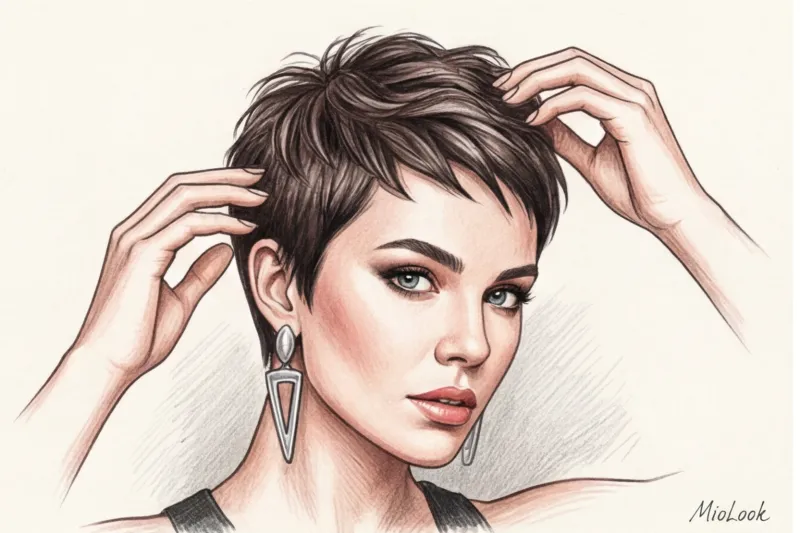
The first option is an ultra-short pixie with minimal, almost micro-bangs (2-3 cm from the hairline) or combed upwards. This makes the facial features as expressive as possible.
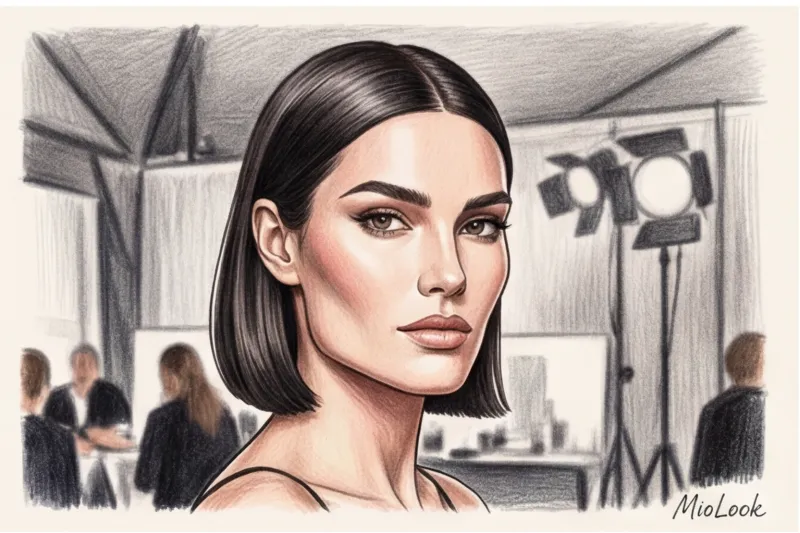
The second option is slicked-back hairstyles with a wet hair effect or strict low buns. These are ideal hairstyles for the office or for an evening event. It looks prestigious and expensive. It's a common choice for businesswomen broadcasting success.
But here I must state a fair limitation. Slicked-back hair does NOT work if you have a flat nape or hair that thins significantly at the temples (diffuse thinning). In this case, a sleek style will visually reduce the volume of your skull, making a high forehead appear unnaturally large. To avoid this, always create a light backcombing or root lift at the crown before slicking your hair back.
Color as a Tool: Optical Illusions of Coloristics
The shape of a haircut is only 50% of success. The other 50% depends on how the color reflects and absorbs light. According to the WGSN Beauty report (2024), conscious hair contouring has finally replaced monochromatic coloring.
How does this work with a high forehead? If you have dark hair and wear it up, the contrast between the light skin of your forehead and the dark hairline is extreme. It makes your forehead appear even larger.
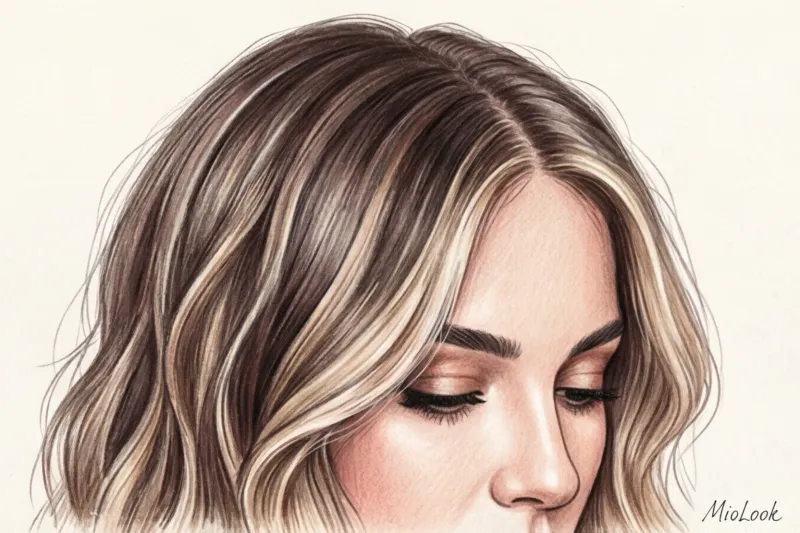
Solution 1: Contouring (Money piece). Lightening a couple of strands near the face softens this contrast. The light highlights diffuse the attention, and the hard line of the forehead is blurred.
Solution 2: Root Shadow technique (darkening the roots). If you're blonde, your stylist may darken your roots by 1-2 shades (color stretching). The dark color absorbs light, creating a visual shadow that lowers your hairline by a couple of centimeters.
Checklist: How to explain to the technician what you want
Half the tears I see after leaving the salon aren't due to the stylist's lack of talent, but to differences in terminology. You and your hairdresser interpret the words "cut my hair shorter" completely differently.
Here's your personal checklist for your next salon visit:
- Stop phrases: Never say, "Just cut my bangs to cover my forehead" or "Make it thicker." You'll get that helmet.
- Dictionary for the master: Use professional terms. Ask for "soft graduation at the face," "airy texture at the ends," "extended curtain bangs starting at the cheekbone."
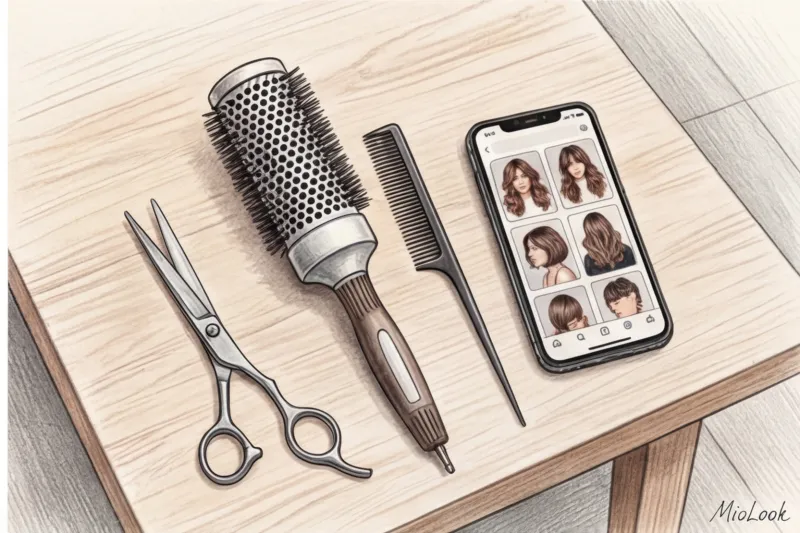
- Working with references: Always show photos! A picture is worth a thousand words. But make sure the girl in the photo has similar hair thickness and texture.
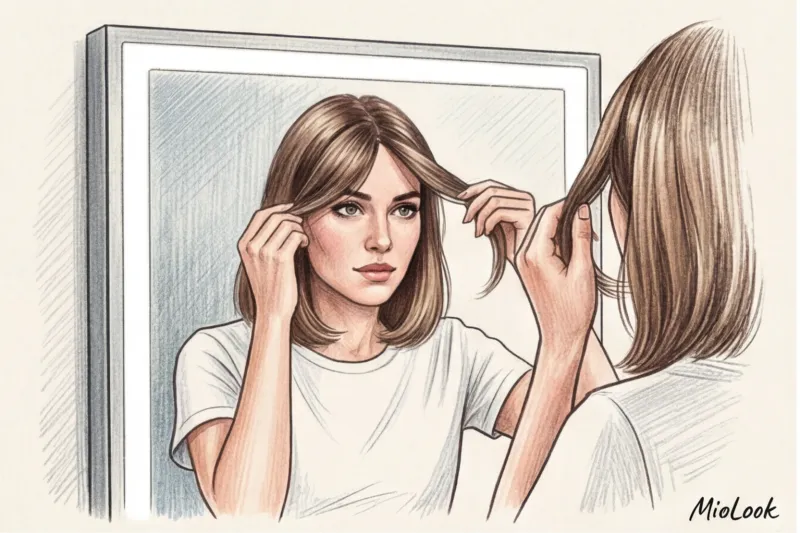
To be 100% sure of the result, I always advise my clients to use the AR try-on feature before visiting the salon. MioLook app Allows you to upload a photo of yourself and have your bangs styled to your liking. Simply show your phone screen to the stylist and say, "I want this exact angle."
Your high forehead isn't a camouflage, but an architectural feature that sets the tone for your entire face. Stop hiding behind thick curtains of hair. Add airiness, a touch of asymmetry, or the right color highlights to your haircut, and you'll see how this flaw transforms into your most stylish and aristocratic feature.