How many times have you been told that the perfect everyday underwear should be made exclusively from 100% cotton? I bet you've heard this rule dozens of times. But as a textile expert and practicing stylist, I have to say: today, this stereotype is hopelessly outdated. In fact, pure cotton can become your worst enemy during a busy workday or an important presentation.
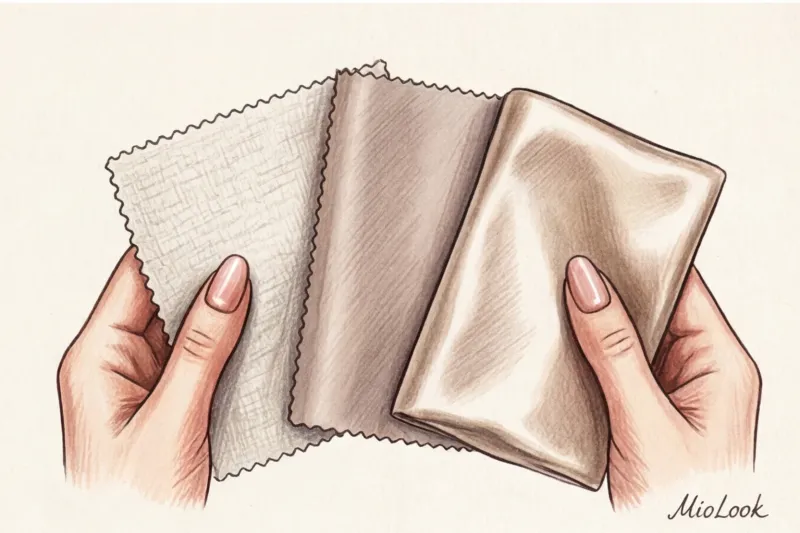
In this article, we will analyze what it is from the point of view of textile physics and the anatomy of style - the best material for underwear for every day. You'll learn why high-tech synthetics are better for your skin in the office, and how the wrong texture of panties can ruin the fit of designer pants. We've already covered more about how to build an invisible foundation for your looks in our The Complete Guide to Essential Lingerie: The Foundation of a Perfect Wardrobe , and today we will focus exclusively on underwear materials science.
Myths and Physics: How to Choose the Best Underwear Material
Underwear isn't just a piece of fabric. It's the first layer of your clothing, responsible for the skin's microclimate and what I call "silhouette architecture." The main stereotype I've been fighting for years is that "synthetics don't breathe, while cotton is good for you." To understand why this isn't true, we need to look at textile physics, specifically the difference between hygroscopicity and capillarity.
Hygroscopicity is a fabric's ability to absorb moisture. Capillarity is its ability to transport this moisture away from the body and onto the outer layer for evaporation. According to the Hohenstein Institute, which evaluates the physiological comfort of clothing, the ideal material for active wear should not only absorb sweat but also instantly wick it away from the skin. And this is where classic natural fabrics fall far short of modern, high-tech fibers.
Underwear determines the fit of the rest of your outfit. You can buy luxurious trousers from The Row or Jil Sander, but the thick, textured cotton underneath will create unnecessary folds, catch the lining, and ruin the designer's intended geometric shape.
Try MioLook for free
A smart AI stylist will select the perfect look based on your base.
Start for freeCotton: The subtle downsides of a beloved classic
Cotton fiber has excellent breathability. It's a soft, comfortable, and pleasant-to-the-touch material. However, it has two serious physical drawbacks: low elasticity and high surface friction.
One of my clients, a senior executive, complained that her silk midi skirts constantly "slipped" up as she walked, gathering in unsightly folds on her hips. The problem wasn't the cut of the skirt, but the cotton underwear. Cotton acts like micro-sandpaper: it clings to delicate lining fabrics (viscose, silk, and cupra), preventing outerwear from sliding freely over the body.
When is cotton truly indispensable? During sleep, relaxing on the couch at home on weekends, or on days with minimal physical activity. Where there are no tight-fitting clothes and no risk of sweating.
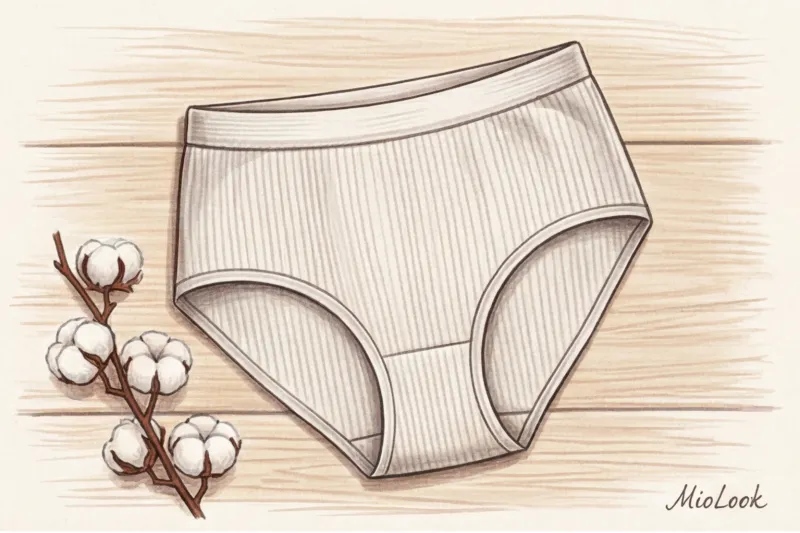
Why 100% Cotton Underwear Is a Waste of Money
Never buy panties that say "100% cotton" on the label. Pure cotton has a zero-recovery rate. This means that by 3 p.m., such underwear will stretch out, lose its anatomical fit, and begin to bunch up under your clothes in unsightly lumps.
The second problem is the "cold compress" effect. If you're nervous at a meeting or just walked briskly to the subway, cotton will eagerly absorb all the moisture but won't release it. As a result, you'll be sitting in damp underwear that slowly cools, creating the perfect breeding ground for bacteria.
Golden rule: Look for a composition of 90–95% cotton and 5–10% elastane (spandex/Lycra) on the label. It's this tiny fraction of synthetic fiber that gives the fabric its spring and ability to return to its original shape.
Microfiber (Polyamide): Why Stylists Choose Synthetics
The word "synthetics" still scares many women, conjuring up images of cheap, glassy blouses from the '90s. Forget it. Modern microfiber lingerie is a high-tech polyamide, the thickness of which is 100 times finer than a human hair. A 2024 study by the WGSN agency showed that technologies originally developed for professional sports have now completely taken over the everyday lingerie segment.
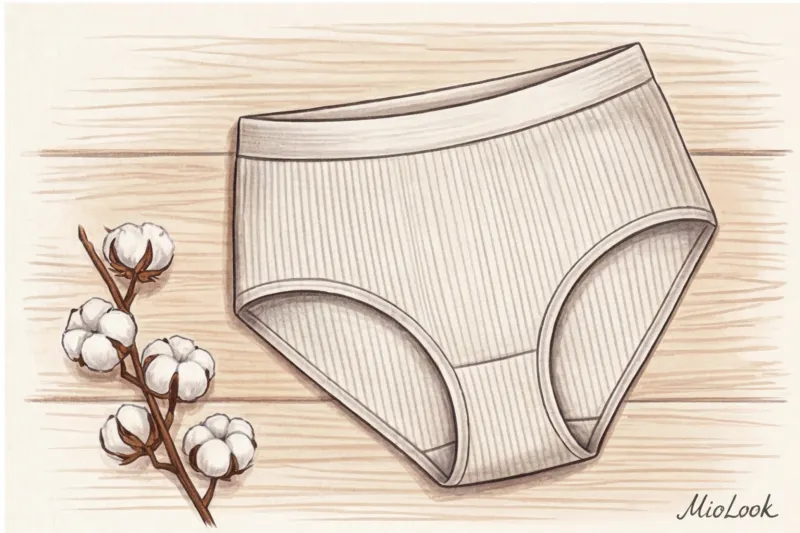
Smooth microfiber feels like a second skin. Thermally bonded edges or seamless laser cutting technology create panties and bralettes that are physically incapable of constricting lymph flow or leaving red marks on the body.
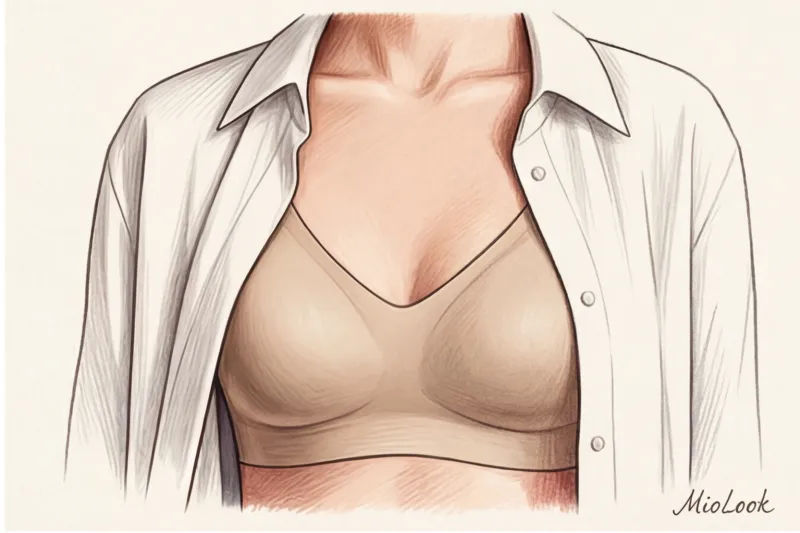
The main advantage of polyamide is its pronounced capillary effect. Microfiber dries three times faster than cotton. It instantly wicks moisture away from the body, keeping the skin completely dry even during the most intense stress of a public speaking session.
Your perfect look starts here
Join thousands of users who look flawless every day with MioLook. Digitize your wardrobe in just a few clicks.
Start for freeThe perfect base for an office capsule wardrobe
Polyamide is friction-free. A tailored wool jacket or flowing palazzo pants will glide seamlessly across the smooth microfiber surface, maintaining the impeccable lines of your silhouette.
I'd like to touch on color separately. Smooth beige microfiber, matched to your skin tone, is the only appropriate, classy choice for a white shirt or T-shirt. White underwear under white clothes is see-through due to the contrast with your skin, creating sharp geometric contours, which is considered unflattering in a business dress code.
An important limitation: despite all the advantages of polyamide, the gusset in these panties must be made strictly of 100% cotton. This is non-negotiable—it's a requirement of gynecologists to maintain healthy microflora.
Silk: An Investment in Thermoregulation and Aesthetics
Natural silk is the pinnacle of linen making. Its threads are made of fibroin, a protein whose chemical structure is extremely similar to human skin. This is why silk is recognized as the most hypoallergenic material in the world: it doesn't harbor dust mites and doesn't irritate even those with atopic dermatitis.
Silk has exceptional thermoregulation properties: it cools the body in the summer heat and retains heat in the winter. However, this luxurious material has a significant drawback: it's completely unsuitable for the hectic pace of life of a city dweller.

You can't throw a silk bra in the washing machine with jeans. Silk requires hand washing in cool water with special pH-neutral detergents. Any enzyme detergent will simply "eat away" the fabric's protein structure in just a couple of washes.
If you do decide to buy, pay attention to the fabric density. Professionals measure it in momme. For durable underwear that won't unravel at the seams after a month, look for a momme between 16 and 19 momme. Avoid thin silk crepe—it's too fragile for garments that are subject to constant tension.
Modal and Tencel (Lyocell): An Eco-Friendly Alternative for the Future
What if you're adamant about avoiding synthetics but are tired of cotton quickly fading? Consider natural, synthetic fibers like modal and tencel. According to the McKinsey Sustainable Fashion Report (2024), the use of cellulose fibers in lingerie has grown by 35% over the past two years.
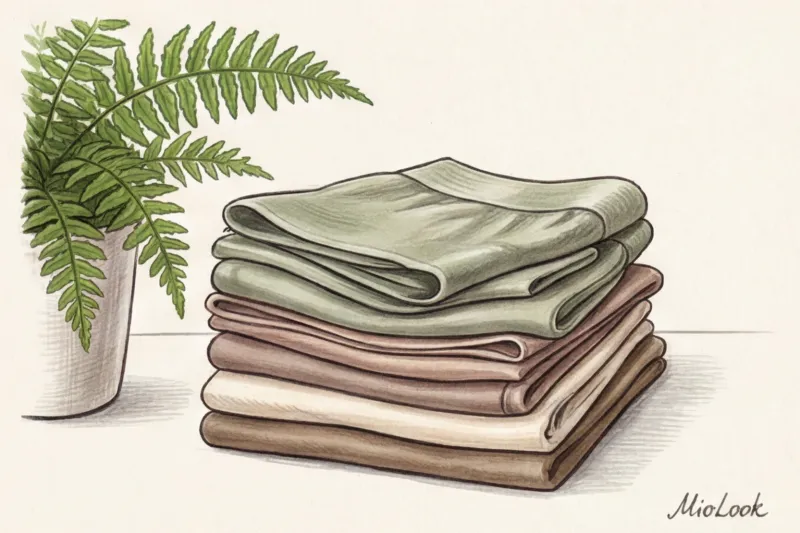
Modal is made from beech wood. It feels much softer than cotton and resembles delicate knitwear with a subtle silky sheen. Modal's greatest asset is dye fastness. Black modal panties will remain jet black even after 50 machine washes, while cotton will turn gray and pill after just ten.
Tencel (or lyocell) is made from eucalyptus wood. It inherits the tree's natural antibacterial properties, preventing the growth of odor-causing bacteria. For those with sensitive, breakout-prone skin, basic Tencel tank tops and bras are a true lifesaver.
Ready to get started?
Try the MioLook free plan—no commitments required. Upload your basic items and discover dozens of new combinations.
Start for freeA stylist's checklist: how to evaluate the quality of lingerie before buying
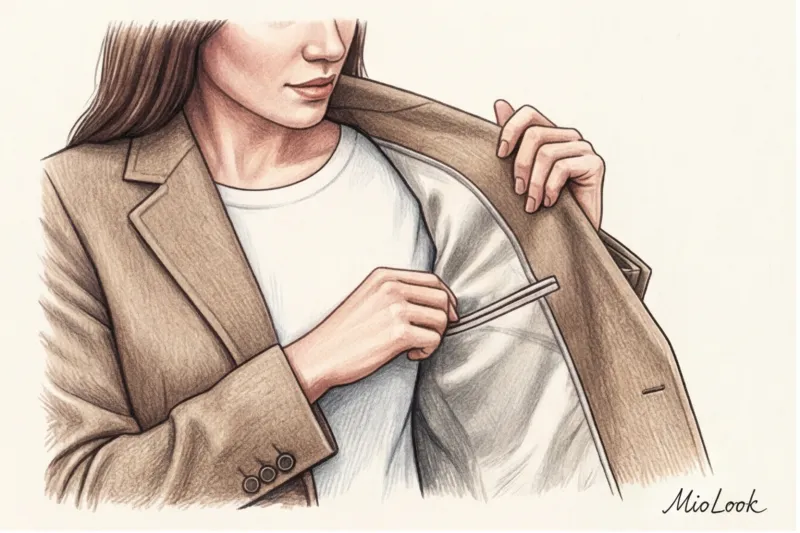
I always teach my clients to test items right in the fitting room. The quality of lingerie isn't determined by the brand on the tag, but by how the material performs under mechanical stress. Here's my professional checklist:
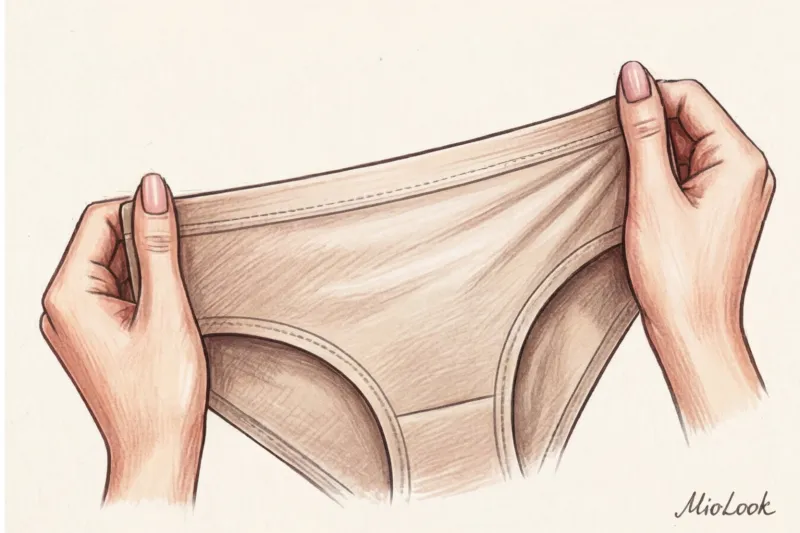
- Stretch test (elasticity test): Take the elastic of your panties or bra band, stretch the fabric 3-5 cm with both hands, and release quickly. High-quality elastane will instantly return to its original shape. If the edge is slightly wavy or slow to return, return the item to the hanger.
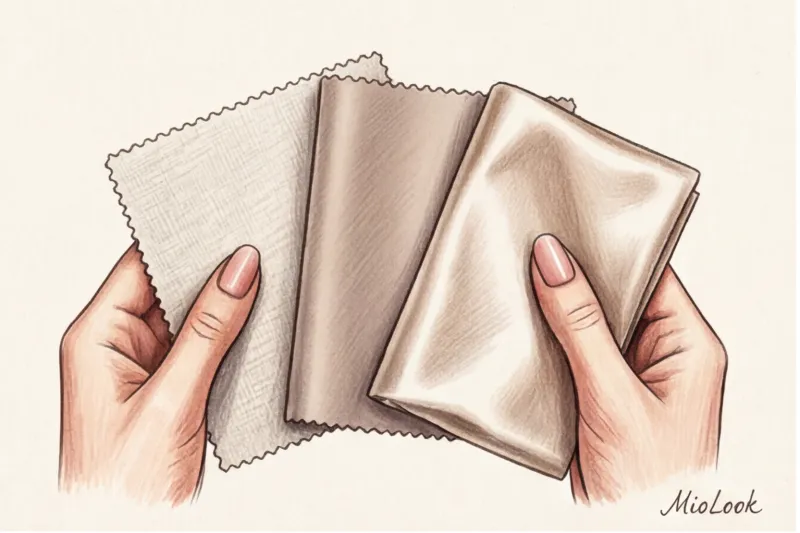
- Light test: Hold the fabric up to a lamp in the fitting room. Look not for thickness, but for the uniformity of the weave. If you see alternating dense clumps and "bald" gaps, you're looking at cheap fabric that will tear at the gaps.
- Inspection of seams: Basic everyday lingerie shouldn't have hard overlock seams. Look for flatlock seams that blend into the fabric, or fully taped edges.
- Safety Certification: The presence of the OEKO-TEX Standard 100 label on the cardboard tag is your guarantee that the fabric was dyed without formaldehyde or heavy metals, which can be absorbed through the pores of the skin.
Conclusion: The formula for the perfect lingerie wardrobe
Underwear is the backbone of your confidence. If it's too tight, too digging in, or too chafing, your posture changes. You start slouching, unconsciously trying to adjust your clothes, and your luxurious look vanishes completely.
Over 12 years of practice, I've developed the optimal lingerie wardrobe ratio for the modern woman. It's the 50/30/20 formula:
- 50% - smooth seamless microfiber: Your workhorse for the office, business meetings and formal wear.
- 30% - modal or cotton with elastane: A base for casual looks with jeans, oversized sweaters, and weekend getaways at home.
- 20% - natural silk and lace: For the evening, romance and those days when you want to feel special from the very morning.
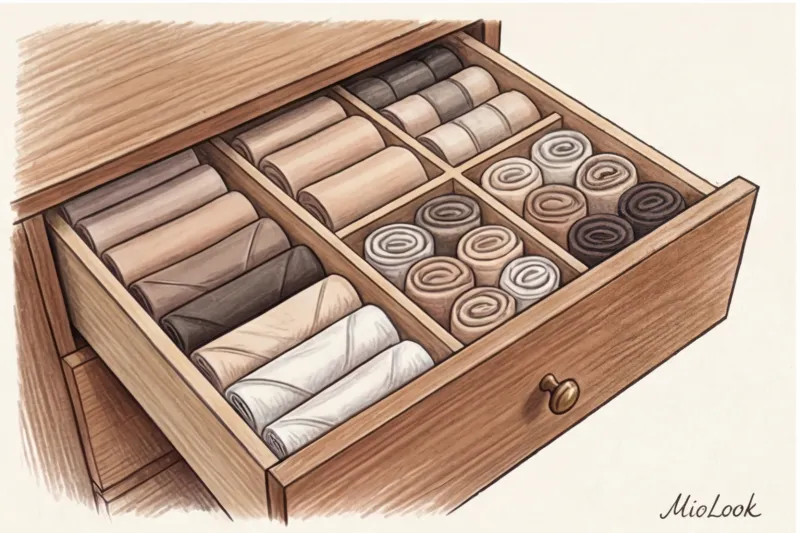
I urge you to open your lingerie drawer this evening and conduct a ruthless audit. Get rid of the misshapen 100% cotton, stretched elastic, and faded lace. Keep only the lingerie that makes you feel flawless. And to easily manage your updated essentials, use smart wardrobe feature in the MioLook app.