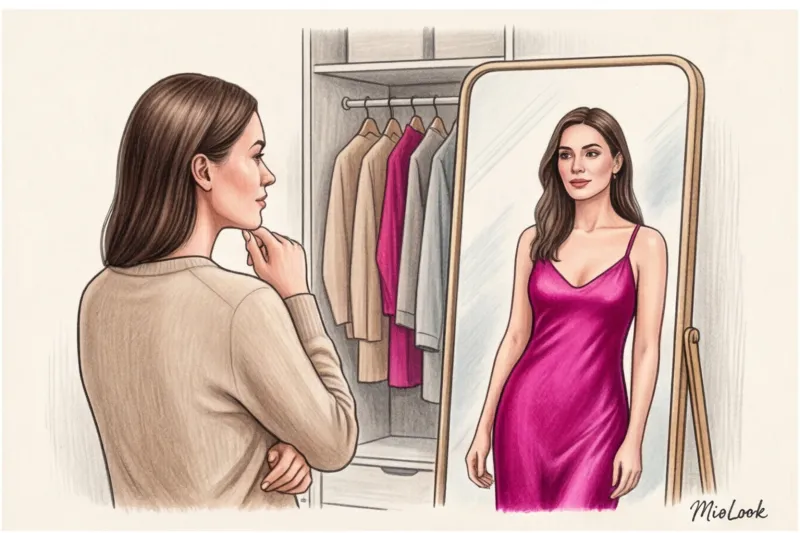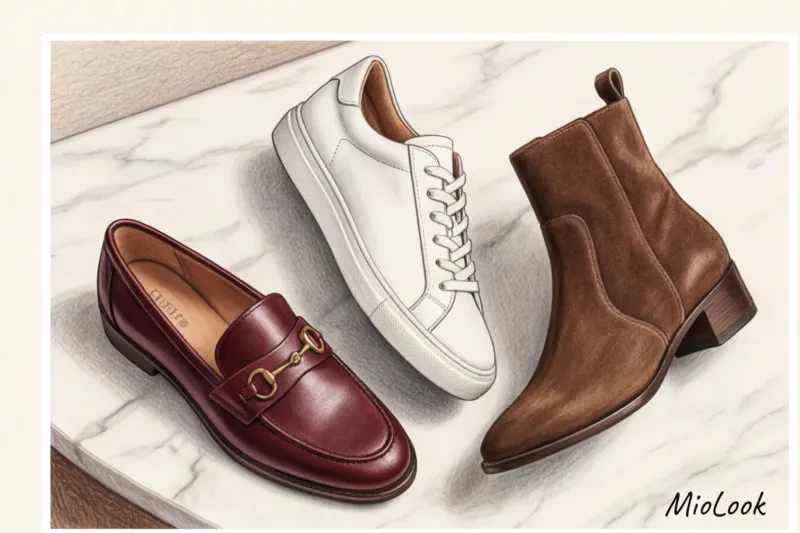
Take a look at your shoe closet. How many pairs of shoes are there that you've worn exactly once because they're "pretty, but more comfortable to sit in than to walk in"? Over 12 years of working as a personal stylist, I've regularly seen the same picture: closets overflowing with flashy shoes for the imaginary life, and a complete lack of comfortable, stylish pairs for the real life.
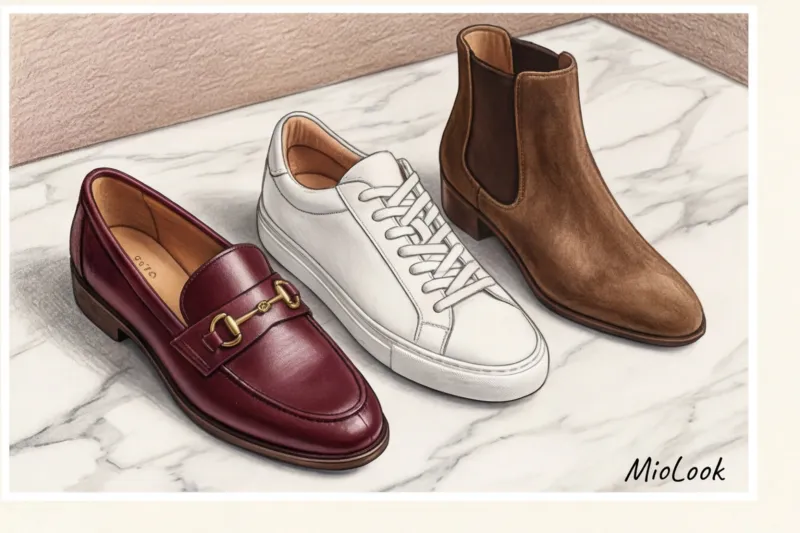
The right basic women's footwear isn't a boring compromise between beauty and comfort. It's an engineered structure that supports your spine, sets the rhythm of your gait, and brings any look together. We discussed the architecture of a smart closet and smart budgeting in more detail in our The Complete Guide to Wardrobe Investments Today we'll talk about the foundation.
Basic women's footwear: why the foundation of your wardrobe begins with the shoe last
About a year ago, a client named Elena, a top manager, came to me and bought a stunning wool suit for a hefty price. "Isabella, it looks cheap on me; the trousers are bunching up in weird creases," she complained. We started investigating. The problem wasn't the cut of the suit. It was the cheap, mass-market pumps she was wearing, with the wrong angle of the last. They were causing Elena to reflexively curl her toes and shift the angle of her pelvis. As soon as we switched her to shoes with a more balanced fit, her posture straightened out and the trousers fit perfectly.
According to research by the American Podiatric Medical Association (APMA, 2023), during normal walking, your foot experiences a force equal to 1.5 times your body weight. This shock wave should be absorbed by the right sole and arch support. If your shoes are poorly designed, the impact is absorbed by your knees and lower back.
"We often confuse the price of an item with its actual value. The concept of Cost Per Wear (CPPW) puts everything in perspective. $300 boots that you'll wear 150 times over three seasons will cost you $2 per wear. But "bargain" $50 pressed leather ankle boots that will fall apart after five wears and leave you with blisters will cost you $10 per wear. Cheap shoes are too expensive."
Try MioLook for free
A smart AI stylist will select the perfect look based on your base and calculate the usefulness of each item.
Start for freePair #1: Everyday Workhorse (Loafers, Oxfords, or Brogues)
Structured flats are the alpha and omega of the modern wardrobe. When I consult with female executives, the first thing we do is remove the obligatory stilettos from their daily rotation. High-quality leather loafers convey status just as well, while still allowing you to stay energetic at 7:00 PM.
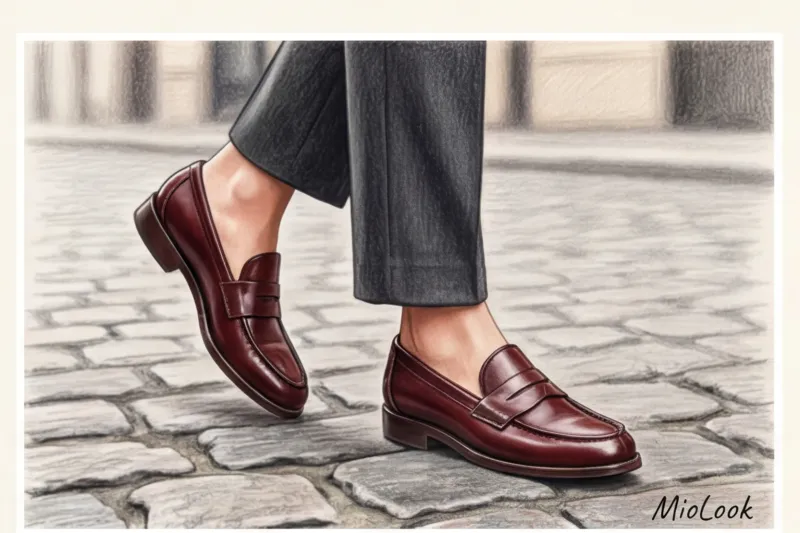
The quality of the material is critical here. Invest in leather shoes. full-grain (grain skin with a natural pattern). Unlike corrected leather (split leather coated with polyurethane, a favorite of mass-market brands)—grain leather breathes, conforms to the anatomical shape of your foot, and develops a refined patina over time. Polyurethane coating, on the other hand, simply cracks at the folds.
My favorite style formula: A relaxed, menswear-inspired trouser suit + high-quality leather loafers with a thick sole + a statement structured bag = instant polish without the effort.
Pair #2: The Perfect Pair for the Urban Jungle (The Right Leather Sneakers)
Let's be clear: running shoes with neon accents and mesh are meant for the gym. For everyday life, you need minimalist, smooth leather urban sneakers. A common mistake my clients make is buying canvas sneakers with completely flat rubber soles. Orthopedists are sounding the alarm: wearing shoes for long periods without arch support and proper foot roll can lead to plantar fasciitis.
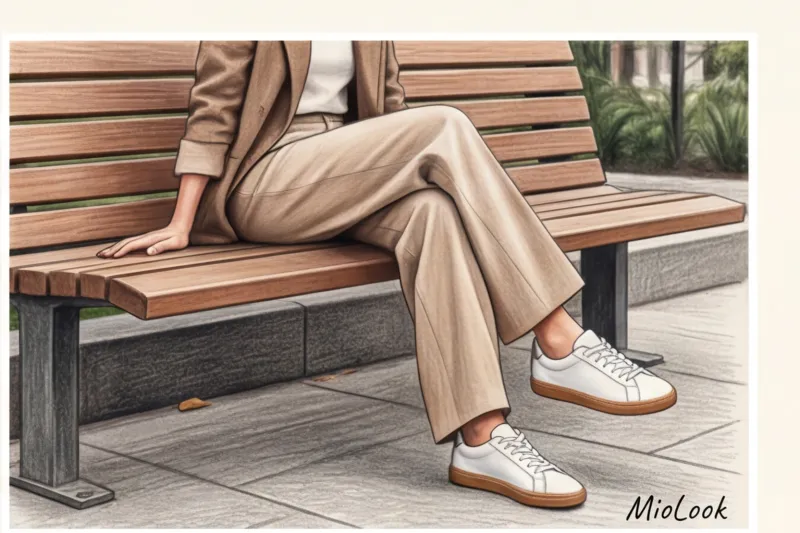
These premium urban sneakers feature a hidden cushioning sockliner and a reinforced heel counter. They not only protect your joints but also fit perfectly. smart casual wardrobe , reducing the formality of formal suits.
If you're unsure how to integrate white sneakers into your current wardrobe, you can always upload photos of your items to MioLook — our AI assistant will instantly suggest 5-7 non-trivial combinations.
Pair #3: Status demi-season shoes (Chelsea boots, Cossack boots, or ankle boots)
This is the anchor of the fall-spring wardrobe. And it's precisely in this category that manufacturers love to cut corners with cheap hardware. Thin, snagging zippers, quickly stretching elastic bands on Chelsea boots, and shiny plastic heels will instantly reveal the shoes' budget origins.
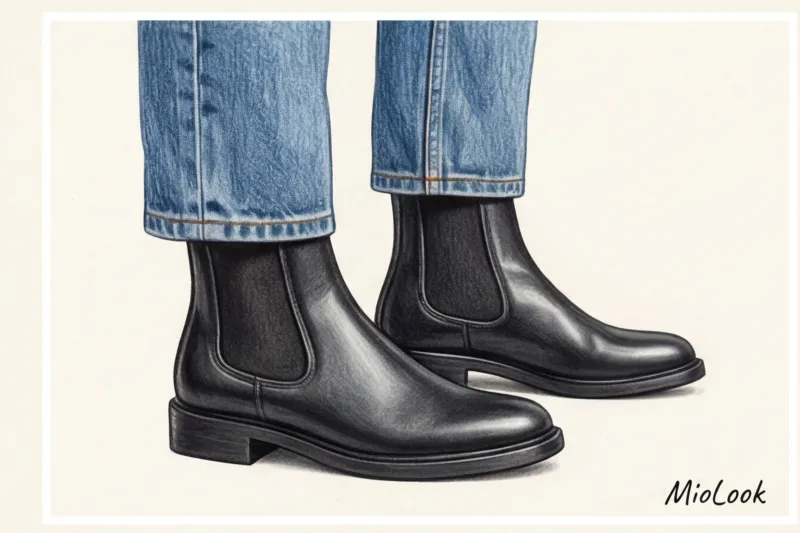
When you invest in a pair of thick calfskin or premium suede, you're buying a versatile soldier. Smooth Chelsea boots will calm a complex dress, and suede Cossack boots will add texture to basic jeans.
Isabella's formula: A silk midi skirt (a play on contrasting textures) + a voluminous cashmere sweater + suede Cossack boots = bohemian chic with character.
Your perfect look starts here
Join thousands of users who look flawless every day with MioLook. Organize your wardrobe smartly.
Start for freePair #4: Confident Step into the Cold (Winter Investment)
Winter footwear is objectively the most expensive item on the list. Why? Because here we pay for hidden technologies: membranes, quality insulation (natural sheepskin or high-tech Thinsulate), and the composition of the sole, which should not become stiff or slippery at -15 degrees.
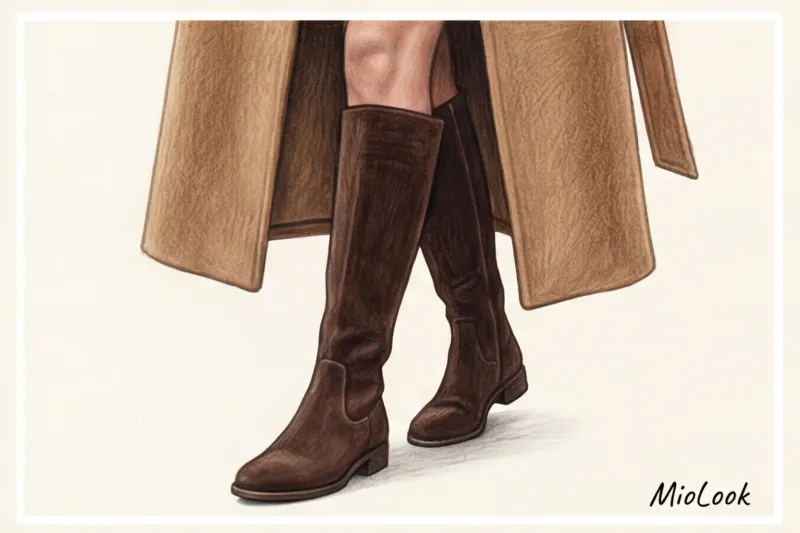
One of the biggest complaints about mass-market boots is the straight, wide shaft, which sits stiffly on the foot and visually weighs it down. Expensive boots always have an anatomical curve at the ankle. Furthermore, high-quality, factory-treated leather is much more resistant to urban chemicals and salts than its substitutes.
Professional stylist secret: Keep an eye on the gap. If you're wearing boots with a skirt, the hem should either overlap the shaft (creating a continuous vertical line), or there should be a gap between them, covered with thick tights that match the color of the boots. For information on how to create the right vertical lines in cold weather, read our article about winter office style.
Pair #5: Architectural Heel for Special Purposes
Let's debunk the biggest fashion myth: you don't need 10-centimeter beige stilettos to look feminine. For 95% of women, that height is unnatural. Your basic women's formal shoes should work for you, not against you.
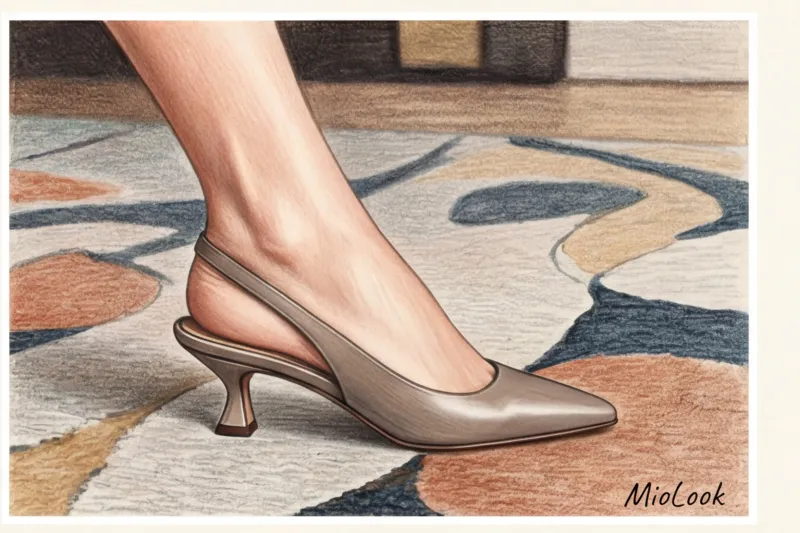
Invest in shoes with a stable block heel or a sleek kitten heel, 4-6 cm high. This height is essential for maintaining proper posture without causing pain in the balls of your feet.
My personal "blind test" method right in the store:
Put on your shoes, stand up straight, close your eyes, and try lifting one foot off the floor for 5 seconds. If you start swaying, balancing on your arms, or tensing your toes, take off the pair. The last is not centered. In the right shoes, the heel is directly under the center of your heel, providing solid support.
The stylist's paradox: what shoes can and should you save on?
Here I will say something that many glossy magazines will argue with. Save on what you rarely wear.
Women often do the exact opposite: they spend half their salary on luxurious Jimmy Choo pumps for a New Year's office party (which then sit in a box 364 days a year), and then buy stiff synthetic ballet flats for every day, wearing their feet until they bleed.
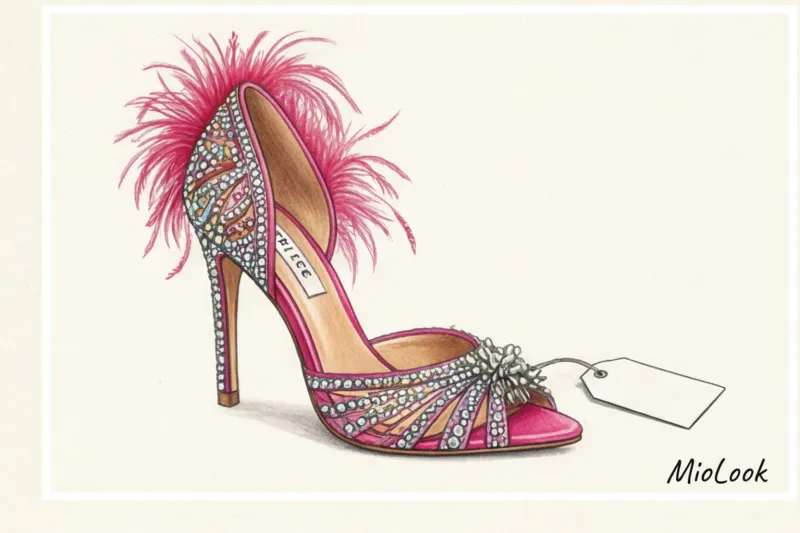
If you have been invited to a celebration (for example, you are looking for, What shoes should a guest wear to a wedding? ) and you need silver sandals with rhinestones or pumps with neon feathers, head to Zara or Mango. Single-use shoes and ultra-fashionable seasonal micro-trends are where synthetics and budget brands are absolutely worth it. Invest in boring, basic shoes that you spend 80% of your time in.
Isabella's Checklist: 4 Steps to Check Quality Before Buying
Even in the high-end price segment, there are mistakes. To ensure your investment is justified, run a quick audit using my checklist before purchasing:
- Flexibility test (rule of thirds). Take the shoe in your hands and gently bend it. A quality sole should bend evenly in the first third (where your toes bend when you step). If the sole doesn't bend at all or bends exactly in half, foot pain is guaranteed.
- Inspection of the lining. The inside of your shoes is more important than the outside. Make sure they're made of soft leather or cotton, not slippery polyester. Your feet will thank you on a hot day.
- Seams and joints. Run your finger along the inner seams of your heel. The slightest roughness or protruding knot will turn into a bloody blister after an hour of walking.
- Heel architecture. The heel counter should be rigid to provide ankle support, but the top edge should have a soft cushion or taper to prevent it from digging into the Achilles tendon.
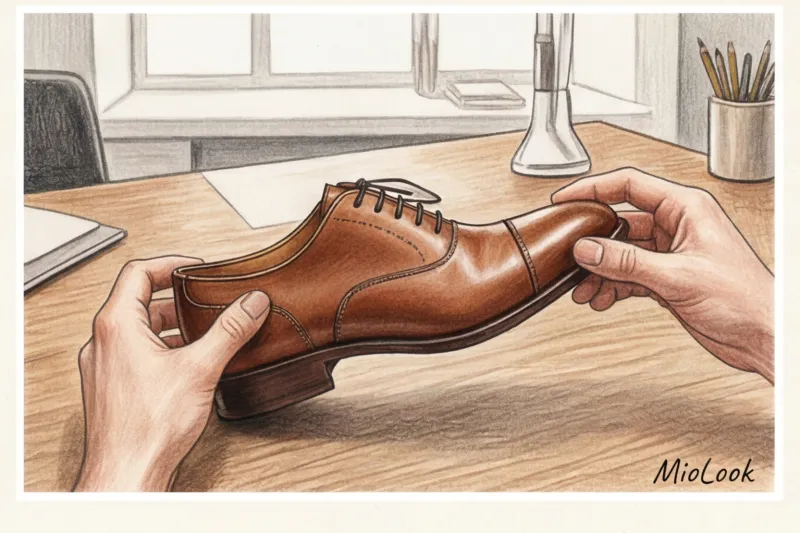
Remember this simple rule I constantly repeat to all my clients: it's better to have three perfect, perfectly fitting pairs of shoes in your wardrobe than fifteen mediocre pairs bought on an emotional sale. Your body, your posture, and your self-confidence begin the moment you take your first step out the door. Do it in the right shoes.