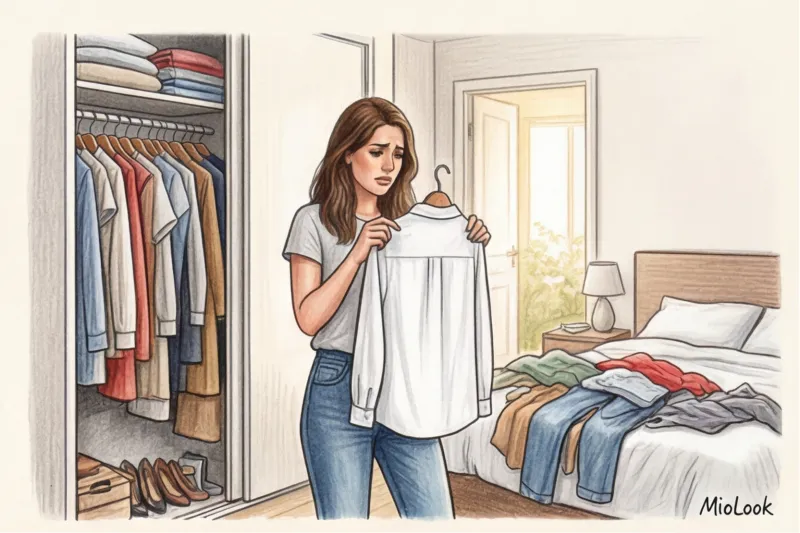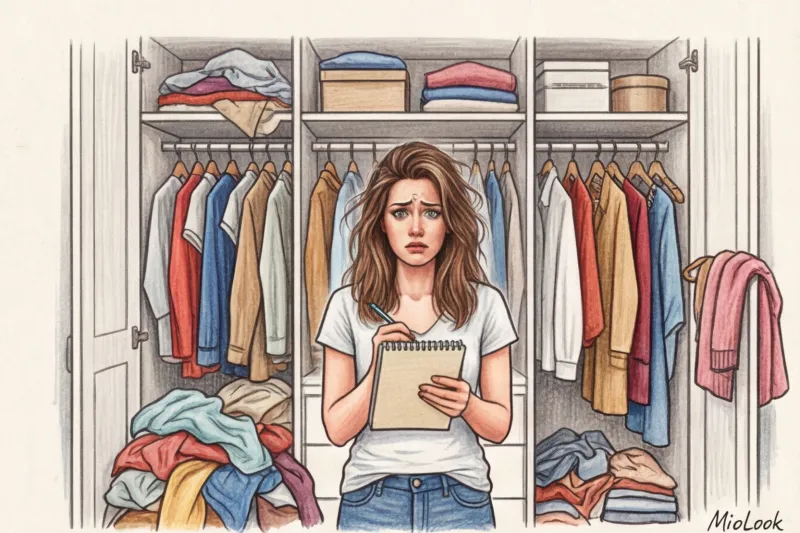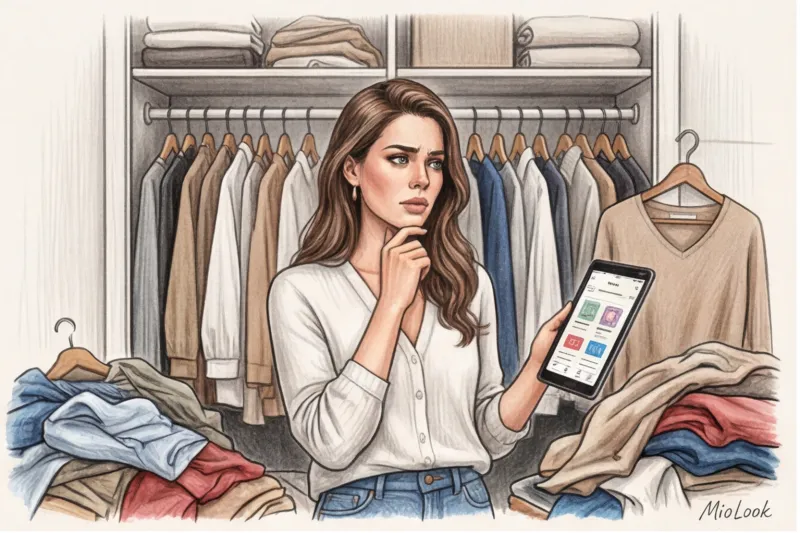
I was recently sorting through the wardrobe of a client from Berlin. In the darkest corner of her closet, under the weight of bulky sweaters, we found seven pairs of black office pants from Zara. They were absolutely identical in style and composition. "I'd simply forget I already had them when I went shopping," she sighed. And this is by no means an isolated incident. According to statistics from WRAP (Waste and Resources Action Programme, 2023), about 30% of the clothes in the average European woman's closet are never worn in a year. We buy duplicates simply because we don't remember our base.
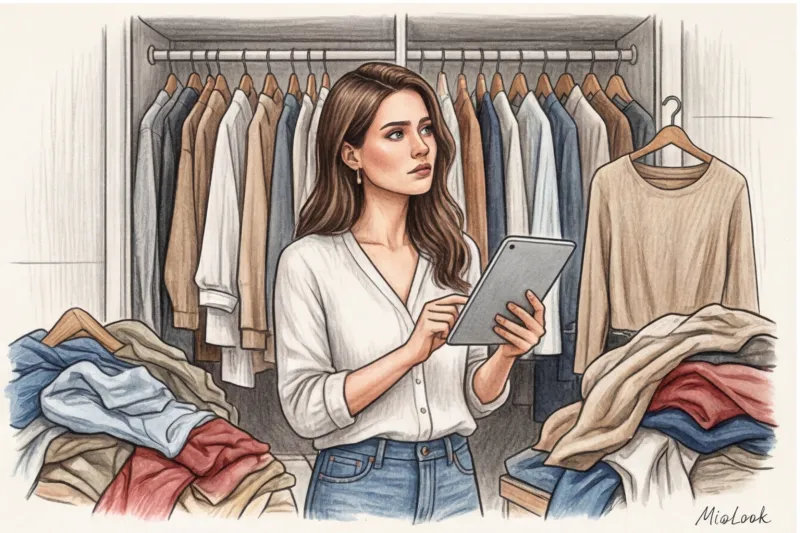
That's why today wardrobe analysis via app has become my main working tool. Instead of relying on illusory memory, we begin to rely on hard numbers. We've already discussed the basic principles of creating a smart closet in more detail in our The Complete Guide to Investment Wardrobes: What's Worth Investing In? And today I want to show you the mathematics of style and a counterintuitive approach to digitization that really works.
Why You Need a Digital Wardrobe Analysis: An App to Combat Visual Chaos
The illusion of a full closet is a particularly tricky trap. When we open the doors in the morning, we think the selection is overwhelming. But in reality, our eyes habitually glide over three or four familiar shelves, completely ignoring what's hanging further than arm's length. A classic physical review with a stylist gives a great boost, but there's a problem: as soon as I leave, the client is left alone with her emotions at the sale.
At this point, a data-driven approach is the best cure for emotional shopping addiction. When you analyze your wardrobe through an app, the numbers are merciless. You open the screen and see: you already have 12 light-colored T-shirts and 5 gray sweaters. Your hand physically doesn't reach for another similar item at the checkout. The app shifts the focus from "I like this top" to "how will this top work with my current system?"
Access to MioLook for €0.99 — one-time payment
A smart AI stylist will select the perfect look.
Get access — €0.99 onceCounterintuitive approach: don't digitize everything
The biggest digital wardrobe myth I constantly hear from new clients is: "I need to spend the entire weekend photographing every single item, down to my socks." This is a colossal rookie mistake and a surefire way to burnout. Furthermore, digitizing 80% of the stuff you don't wear will only confuse the algorithms.
I suggest the "Core" method. Upload to the app only the 20% of items you've worn in the last two weeks. The classic Pareto principle works flawlessly in the wardrobe: we spend 80% of our time in this small capsule. Let artificial intelligence analyze your real style, not that fantasy look gathering dust on the back of a rack.
My ironclad rule during reviews: if an item has been hanging with its tag for more than six months, it absolutely doesn't belong in the app. It belongs on the resale platform. Don't transfer physical chaos to a digital format.
Smart Audit: How to Find Gaps in Your Investment Base
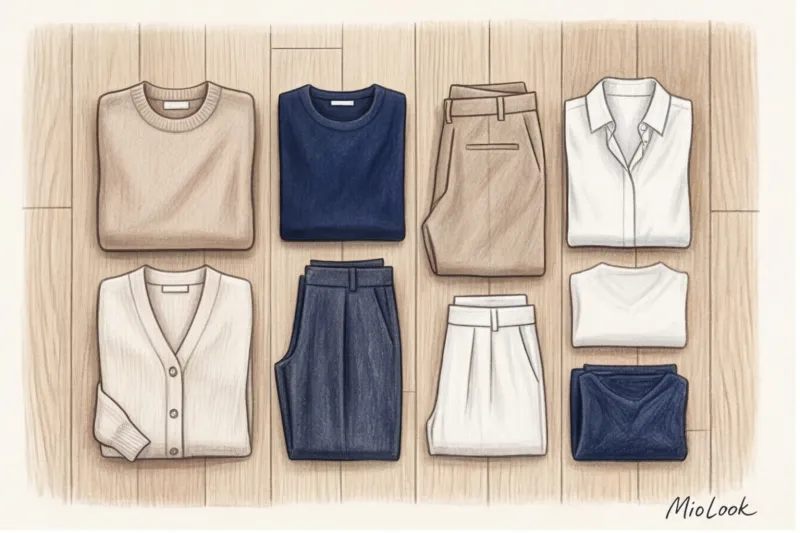
It's important to understand the difference. A basic wardrobe is a utilitarian foundation (jeans, T-shirts). An investment wardrobe, on the other hand, is comprised of pieces with impeccable architecture, complex cuts, or premium compositions that elevate the overall style. Using smart closet feature in MioLook , it's very easy to spot the "loners" - those expensive, spontaneous purchases that don't go with any neutral background.
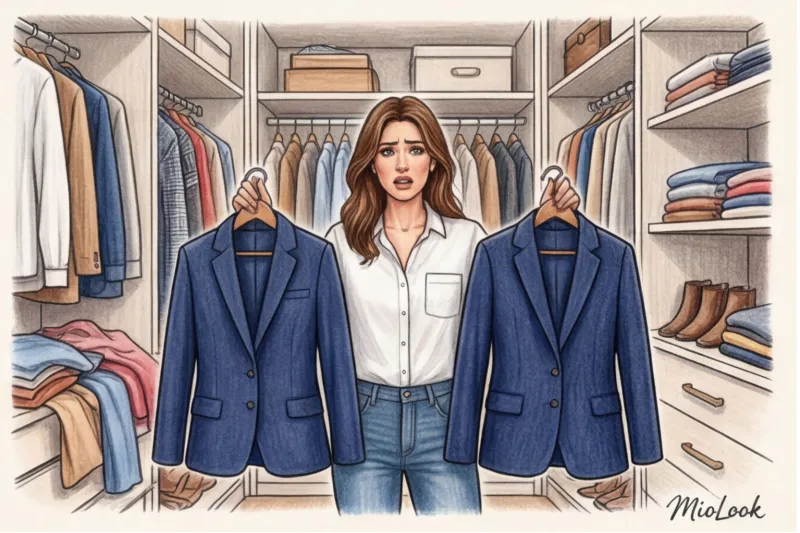
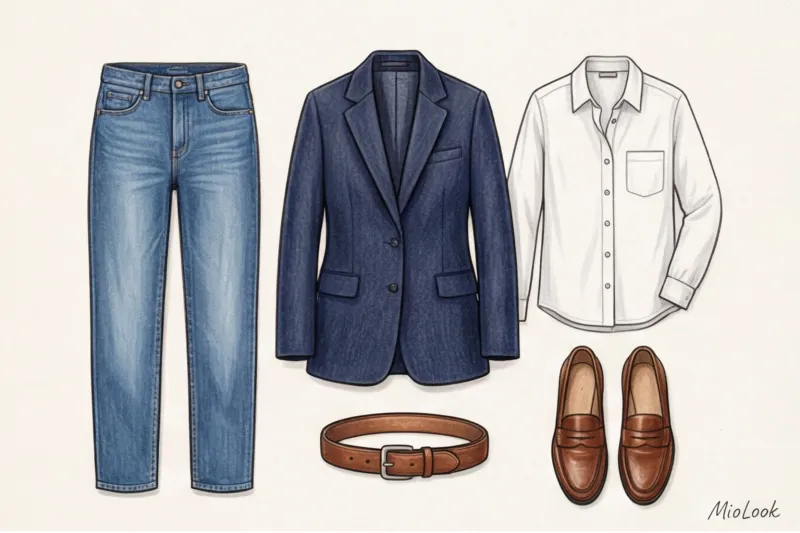
We recently reviewed a client's virtual capsule wardrobe. She had a plethora of vibrant blouses, but the app stubbornly showed a low percentage of combinations. We added just one investment piece to the digital database—a structured navy blazer by Massimo Dutti. The app instantly generated 15 new elegant looks featuring her current straight-leg jeans, palazzo pants, and midi skirts. One smart purchase filled a huge gap in her wardrobe.
Connectivity Formula: Finding "Bridges" Between Capsules
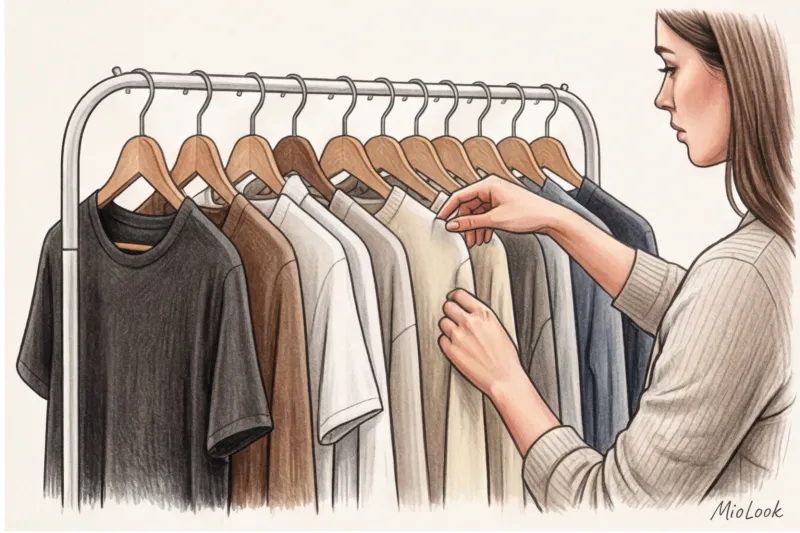
The most common gap revealed by a smart audit is the absence of so-called bridge items. You're standing in front of a mirror, your top and bottoms are great, but together they look a bit skimpy. What's missing? Connecting elements.
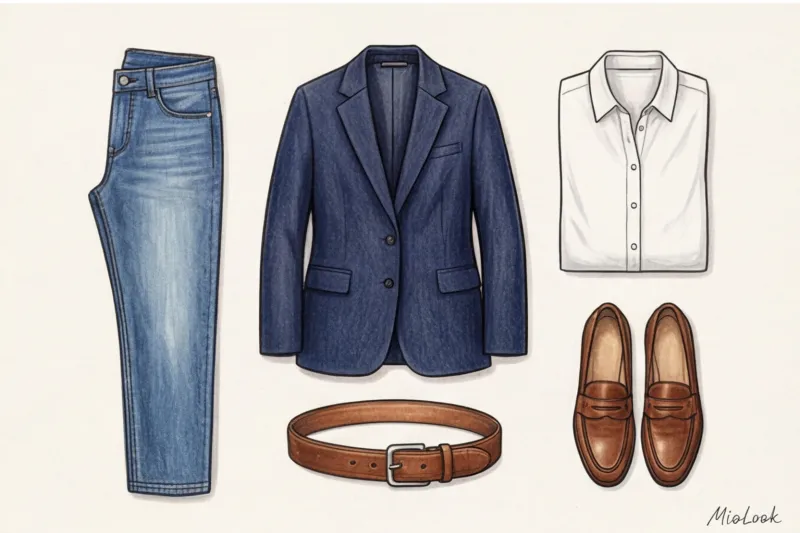
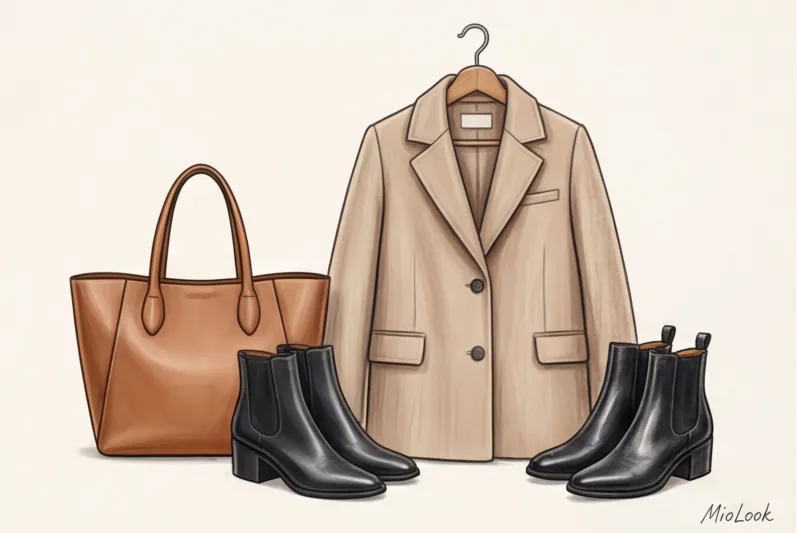
Most often, it's a basic leather belt in the right taupe shade, sleek loafers without unnecessary hardware, or a crisp, structured bag that pulls a relaxed look together. When the algorithm can't complete the look, it's directly pointing out the lack of these "bridges."
Style Math: Calculate Cost-Per-Wear in the App
There's a golden rule in fashion economics: Cost-Per-Wear (CPW). It's basically saying that the real price of a garment is the price tag divided by the number of days you wear it. The problem is, calculating this in your head is impossible.
When you regularly plan outfits using a digital database, the algorithm calculates your CPW automatically. Let's look at some specific numbers from my experience. You have a classic cashmere coat for €300 that you've worn 100 times over two seasons. Its CPW is €3. Next to it hangs a trendy, mass-market skirt for €40, bought on impulse for a single party (CPW = €40).
Analysis clearly shows that cheap synthetics cost your wallet 10 times more over the course of one year than high-quality investment grades.
Your perfect look starts here
Join thousands of users who look flawless every day with MioLook.
Get access — €0.99 once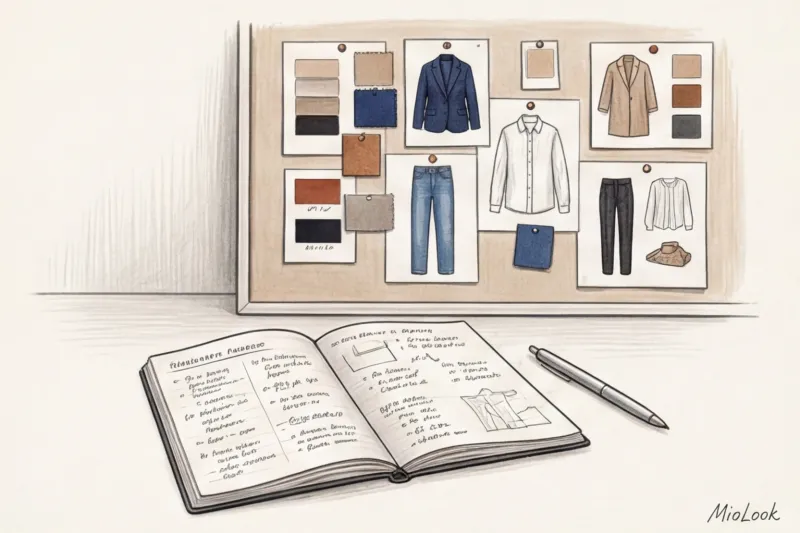
Checklist: 5 Steps to Creating a Smart Shopping List
I'm not a fan of abstract "buy the best" advice. As a practical stylist, I give my clients a concrete protocol before the start of any season. Here's how to use these apps to create a flawless shopping list:
- Analyze the statistics of the outsiders: Open the section with items you haven't worn in the last three months. Find a pattern (for example, you stopped wearing tight items or a certain shade of green). We don't buy those anymore.
- Find your uniform: Look at the top 5 most frequently worn looks. What's their color palette? What's the silhouette? This is your true style DNA.
- Find the 3 missing elements: Look at the stand-alone items. Write down three specific items (e.g., "cream trousers with a crease, 200 g/m² or heavier") that will introduce these items into circulation.
- Reallocate the budget: If you were planning to spend €200, use €150 to buy one perfect item from point 3, and leave €50 for a seasonal micro-trend to set your mood.
- Set a strict wishlist: With this list, you go to the sales. Anything not on the list is ignored.

Common Mistakes in AI-Powered Wardrobe Audits
It would be unfair to claim that the app will do all the work for you at the snap of a finger. There's a key limitation: the algorithm is only as smart as the quality of the data you feed it. Over five years of working with digital wardrobes, I've identified three major mistakes users make.
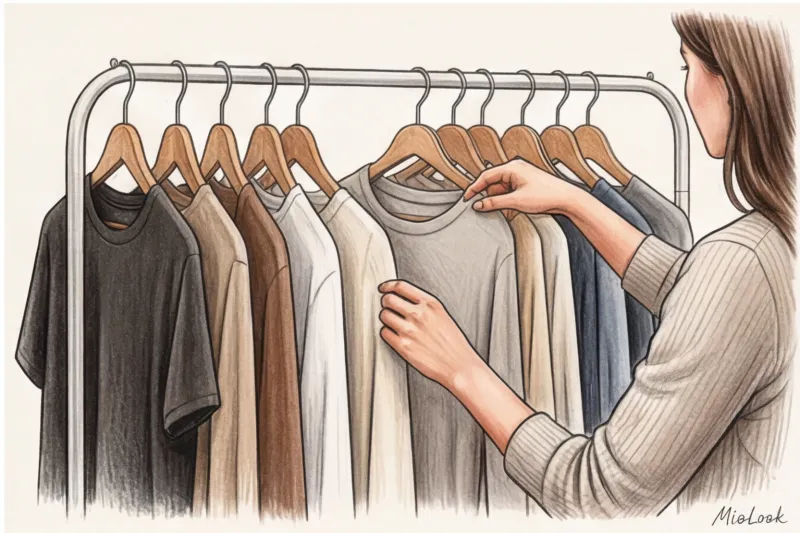
First, low-quality photos. If you take a photo of a dark blue sweater in the yellow evening light of a bedroom lightbulb, the AI will recognize it as a muddy brown. The color combinations it suggests will be ridiculous. Shoot only in daylight.
Secondly, completely ignoring shoes and bags. Many people upload only dresses and trousers. But the look is built from the bottom up. Without basic ankle boots or loafers, the app won't be able to put together a complete look for you.
And finally, avoid cleaning your database. Deleting items from the app when they've lost their shape, become pilled, or been sold is just as important as adding new ones. Otherwise, you'll end up with perfect virtual capsule collections that are impossible to wear in real life.
Digitizing your wardrobe isn't about creating a pretty catalog of images for aesthetic purposes. It's a tool for translating your style from the language of emotion to the language of mathematics and functionality. Start auditing your favorite 20% of items, and you'll be surprised: your ideal, functional wardrobe already exists. You just need to remove visual noise and add a few smart investment bridges.