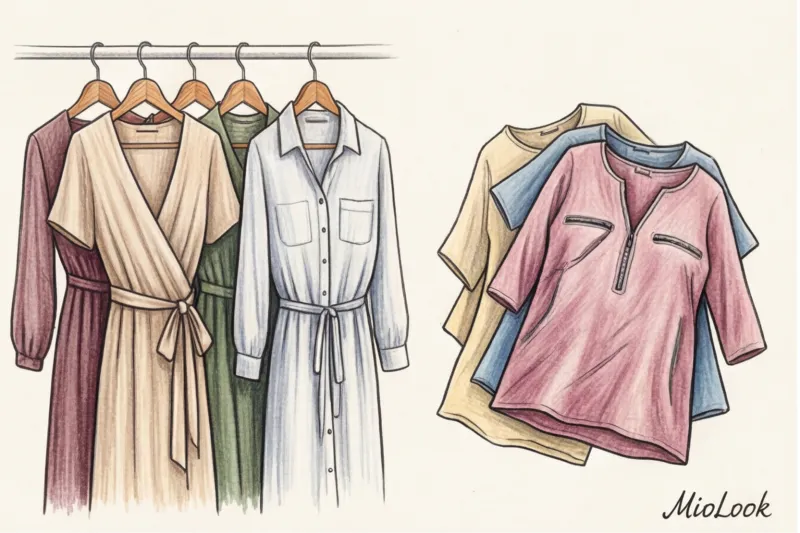
Last month, a woman came to me for a wardrobe review, literally crying over two bags of clothes. A couple of weeks before giving birth, she spent about $500 on specialized "nursing" capsules: tunics with hidden zippers, weird layered tops, and dresses with hidden details. The result? Two months later, 80% of these items were covered in pills, stretched out at the elbows, and hopelessly out of shape. But the worst part was, they made her feel like anyone but herself.
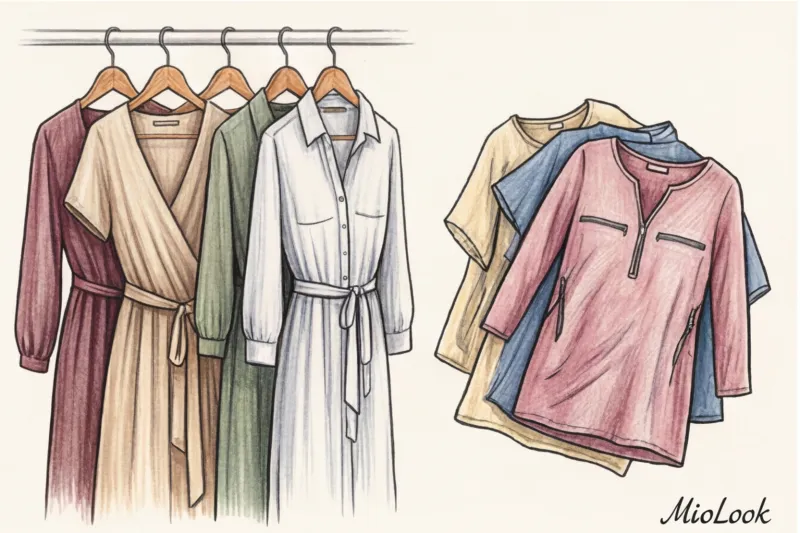
As an image consultant and stylist, I constantly see this marketing trap. The maternity industry convinces us that comfortable breastfeeding requires a completely separate, specific wardrobe. I'm here to debunk this. Ideal dresses for nursing mothers — these are most often regular, high-quality basic dresses with the right cut. We discussed in more detail how to systematically create a capsule waist for this period in our The Complete Guide: Nursing Clothes: How to Build a Stylish Wardrobe.
Today, we'll explore how to invest in items that will last for years, stay relevant after you stop breastfeeding, and allow you to remain a stylish woman, not just a function.
The "Special" Clothes Myth: Why Regular Nursing Dresses Are the Best Choice
Have you ever wondered why specialized maternity and nursing clothes often look... so-so? The answer lies in the business model. Brands understand that you're buying clothes for 6-12 months. They have no incentive to use high-quality fabrics.
According to the Sustainable Fashion Forum's 2023 report, more than 75% of clothing in the segment maternity It's made from cheap polyester and low-grade viscose. This fabric doesn't breathe (hello, sweating, which is already exacerbated by hormones), quickly loses color, and becomes pilly after the third wash.
"Specialized dresses with horizontal, hidden zippers across the chest aren't just anti-trend; they're a design nightmare. The stiff zipper tape distorts the soft fabric, creates ripples across the silhouette, and mercilessly scratches baby's delicate skin during feeding."
Let's count Cost Per Wear (cost per wear). You buy a special knit dress with zippers for $40. It loses its shape after 10 washes. Cost per wear is $4.
Now you buy a great basic shirt dress made of thick linen from Massimo Dutti or COS for $120. You wear it for a year while breastfeeding (50 times) and continue wearing it for the next three summers (another 100 times). The cost per garment is $0.80. The math of style always favors quality.
Top 5 Stylish Everyday Styles (Without Hidden Zippers)
The key principle of a new mother's wardrobe is that clothes should provide easy access to the breasts, but still allow air between the body and the fabric. Forget shapeless robes. We need the right fit.
Shirt dress: a classic for business and casual style
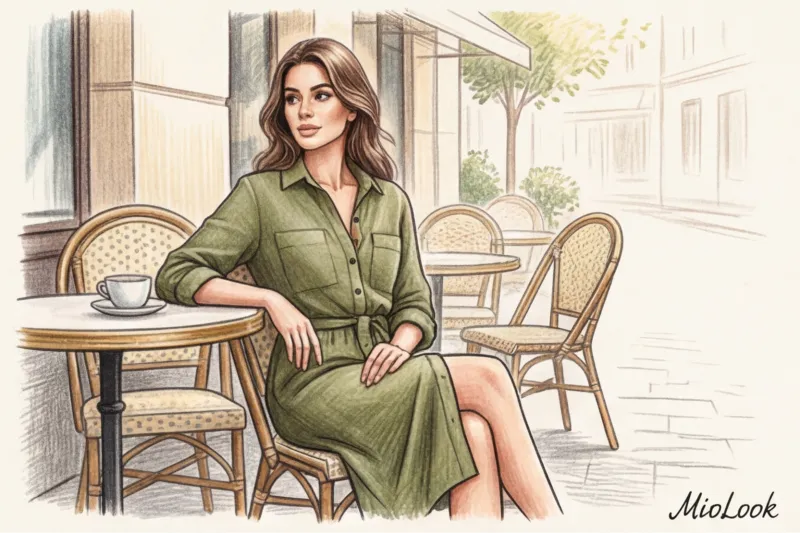
This is an absolute must-have. The vertical row of buttons works as an optical illusion—it visually elongates the silhouette and makes you look slimmer, which is especially important while your figure is recovering from childbirth. To feed your baby, simply unbutton the top three buttons—it's done in seconds.
How to wear:
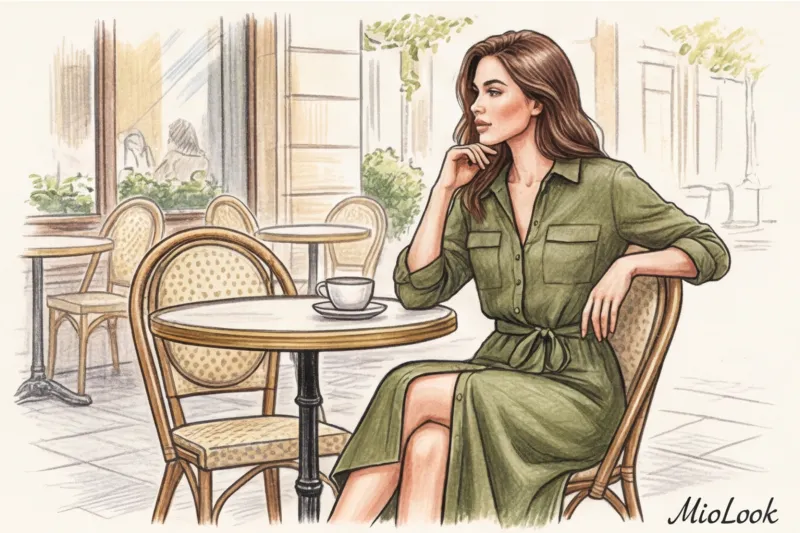
- For a morning stroller walk: with relaxed sneakers (like New Balance 574) and a voluminous shopper.
- For a meeting with friends or running errands: with loafers, a structured bag and a light hairstyle.
Stylist's advice: Choose a midi length (below the knee). Firstly, it's elegant. Secondly, you'll be bending and squatting frequently to care for your baby, and a mini length is your worst enemy in terms of comfort during this period.
Wrap dress: the perfect fit for a changing figure
When Diane von Furstenberg created the wrap dress in the 1970s, she didn't have nursing mothers in mind, but she gave them the best style in history. The secret of the wrap dress is that it adapts to your size. Has your breasts increased with milk supply? Wrap it a little looser. Is your waist starting to shrink? Tighten the belt. The silhouette always remains feminine (hourglass).
For feeding, you can simply pull the V-neck with one hand. However, there is important limitation: If you lean over the stroller, the neckline may treacherously open too deeply. My life hack: Wear a basic stretchy microfiber bandeau top under this dress. It will cover your cleavage when you bend over, but will easily slide down when feeding.
Knitted dresses with a V-neck or buttons
Knitwear is not all the same. Thin, smooth, cheap cotton without any additives will cling to the figure so tightly that it reveals even what isn't there, creating a "caterpillar" effect. If you're still bulging, such a garment will only ruin your mood.
You need dense ribbed knitwear (Composition: cotton or viscose with 5-10% elastane added to maintain shape). It acts as a lightweight bodice, smoothing out lines, and thanks to its high elasticity, the neckline can be easily pulled to reveal the bust and instantly returns to its original position without stretching.
Try MioLook for free
Unsure which dress style will suit your figure? Our smart AI stylist will analyze your measurements and find the perfect silhouette.
Start for freeFabrics and Prints: How to Hide Milk and Drool Stains
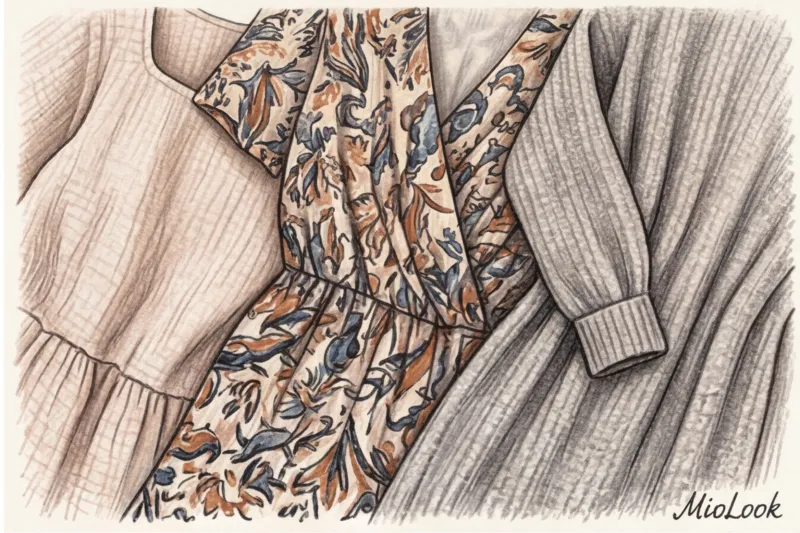
As a certified colorist, I often explain the physics of color and texture to my clients. If you wear a smooth, solid-color dress made of silk, satin, or fine viscose, you're doomed. A smooth texture acts like a mirror, reflecting light. Any drop of milk, saliva, or water alters the way light is refracted on the fabric, turning a tiny droplet into a gaping, dark spot visible from a mile away.
How to save yourself if you don’t want to change clothes three times a day? The magic of texture and print:
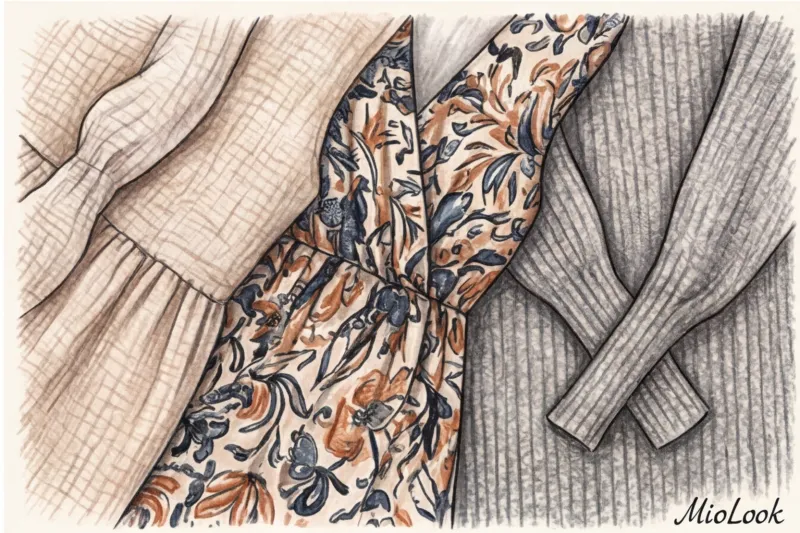
- Small flower (millefleur) or leopard: The active, fragmented print forces the observer's eye to constantly glide over the design. It's physically impossible to focus on it, so the small spots simply disappear into the pattern.
- Textured fabrics: Pressed cotton (muslin), natural linen with its knots, and waffle fabric. They inherently absorb rather than reflect light.
- Melange knitwear: A relief for the nervous system. Mélange consists of a weave of threads of different shades (for example, gray-beige). On such a mottled surface, traces of regurgitation are practically invisible.
What you should definitely avoid is pure black. It's a myth that black hides everything. Against a black background, white milk or powder stains glow like neon signs. Choose sophisticated shades: taupe, olive, denim, camel.
Stylist Secrets: Layered Looks for Comfortable Nursing
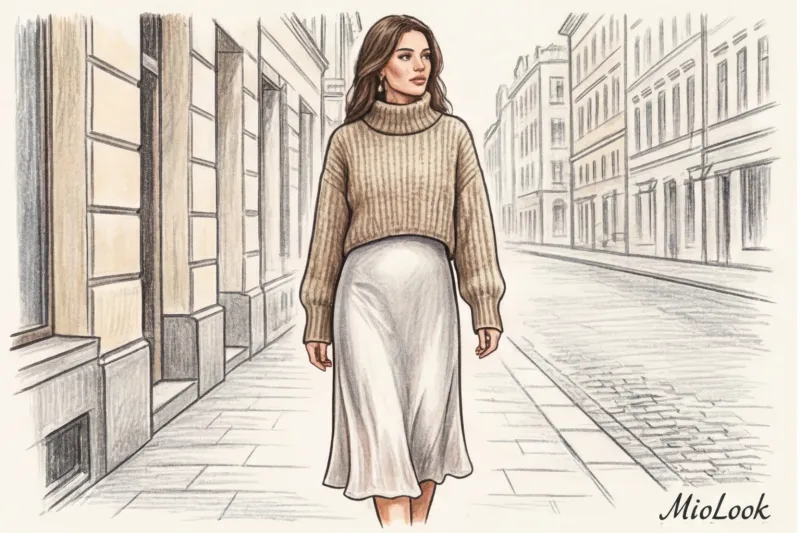
In my practice, this technique truly delights my clients. You don't need to buy clothes with buttons to make breastfeeding comfortable. You can make them nursing-friendly. any slip dress with thin straps.
Sweater + Slip Trick:
Wear a silk slip dress (or top) and layer a voluminous crop sweater or sweatshirt over it. When it's time to feed, simply lift the sweater up and pull the neckline of the slip down (or slide the straps down). The sweater creates a natural "curtain," providing you with 100% privacy in any cafe or park. And it looks incredibly stylish.
Another cool trick is to use an unbuttoned shirtdress made of thick cotton as a top layer (a cape or kimono). Wear a stretchy ribbed top and jeans underneath. The two vertical flaps of the unbuttoned dress will create a powerful, slimming vertical line, visually trimming 5 centimeters from the sides and hiding a postpartum bump. And the stretchy top will allow you to feed your baby without any fuss.
Pre-purchase checklist: how to test a dress in the fitting room
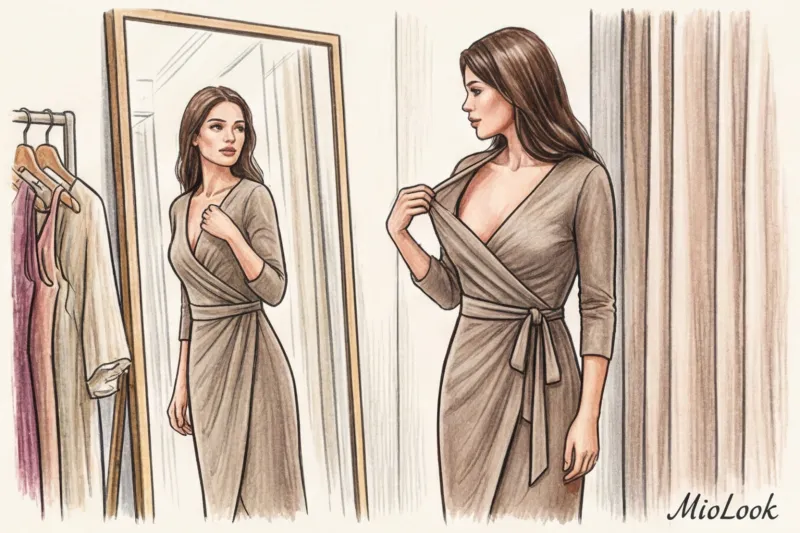
Maternity clothes are like special forces uniforms. They must pass rigorous field testing. Before you take your dress to the checkout, conduct a crash test in the fitting room:
- One hand test. Imagine you're carrying a 5-kilogram baby on your left arm. Can you unbutton the buttons on the chest with your right hand? If the buttons are tight or the buttonholes are too small, the item will be left in the store.
- Tilt test. Lean forward 90 degrees (simulating putting your baby into a crib or stroller). Are your breasts falling out? Is your dress pulling at the shoulders so tight that the seams are bursting?
- Fabric wrinkle test. Squeeze the hem of your dress in your fist and hold it for 10-15 seconds. Release. If the fabric is wrinkled like a sheet of cheap paper and won't straighten out, don't buy it. Holding a baby, you'll look wrinkled within five minutes of leaving the house.
- Checking the seams. Run your palm over your décolleté and chest. Are there any prickly sequins, stiff embroidery, or rough locks? Your baby's face will constantly rub against this area.
Ready to overhaul your wardrobe?
Digitize your wardrobe with MioLook and create layered looks for a comfortable motherhood right on your phone.
Start for freeHow to adapt your pre-pregnancy wardrobe to the new reality
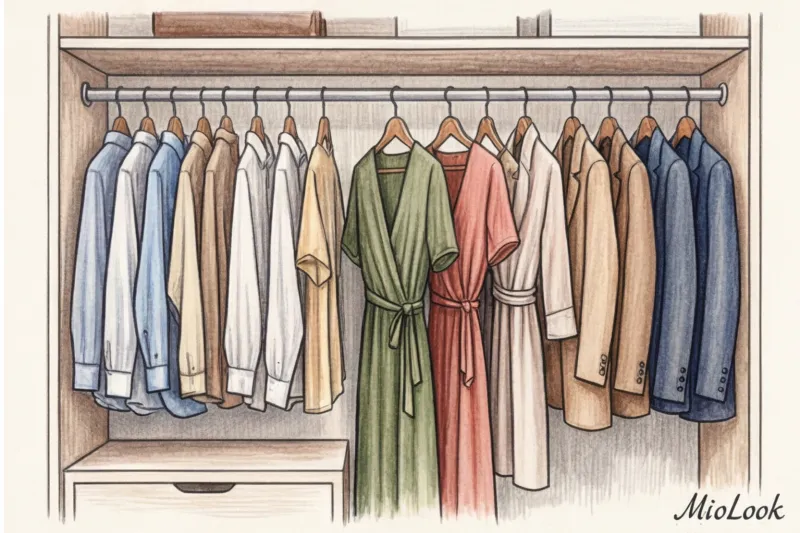
I truly believe motherhood is an amazing experience, but it's no excuse to abandon your aesthetic and settle into a bland uniform of gray hoodies. Your self-identity through style is crucial for your mental health during this vulnerable period.
You don't have to redesign your entire closet. A great step is to take stock of your existing items. Take out all your dresses and filter them. nursing-friendly (deep V-neck, buttons to the waist, wrap style, stretch knit). To make things easier, upload a photo of your outfit to the virtual wardrobe. MioLook — you'll be able to clearly see which old items can be easily combined into new, convenient capsules with the addition of the right top layer.
You'll be surprised, but about 40% of your regular, pre-pregnancy wardrobe can still serve you well now. Invest only in high-quality, well-cut basics. They'll support you during the first months of motherhood and will remain proudly in your closet once breastfeeding becomes just a warm memory.
", "tags": [ "dresses for nursing mothers", "clothes for breastfeeding", "basic wardrobe", "motherhood", "style for mothers", "conscious consumption" ] }