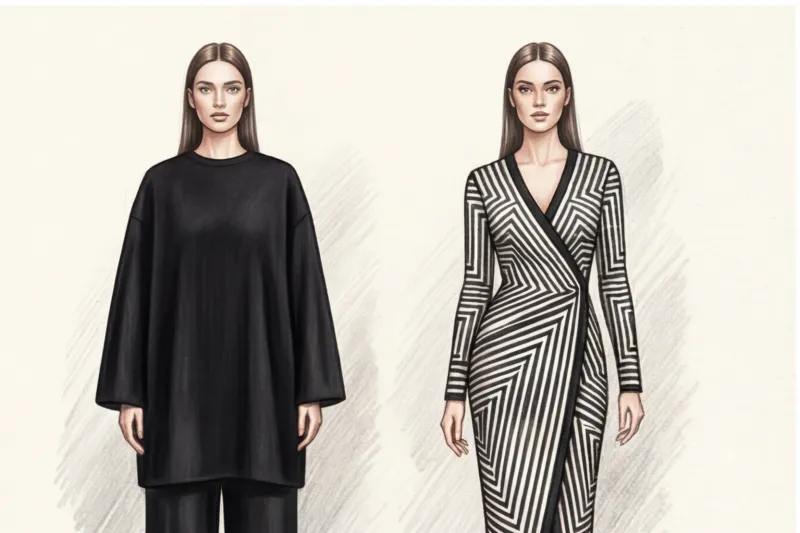
In my 12 years as a colorist and stylist, I've heard the phrase "I only wear black because it makes me look slimmer" at least a thousand times. And every time, I have to debunk this myth. We're used to thinking that the best way to hide extra curves is to hide in a dark, solid-colored slipcover or wear a vertically striped shirt. But the laws of physics and human perception work differently.
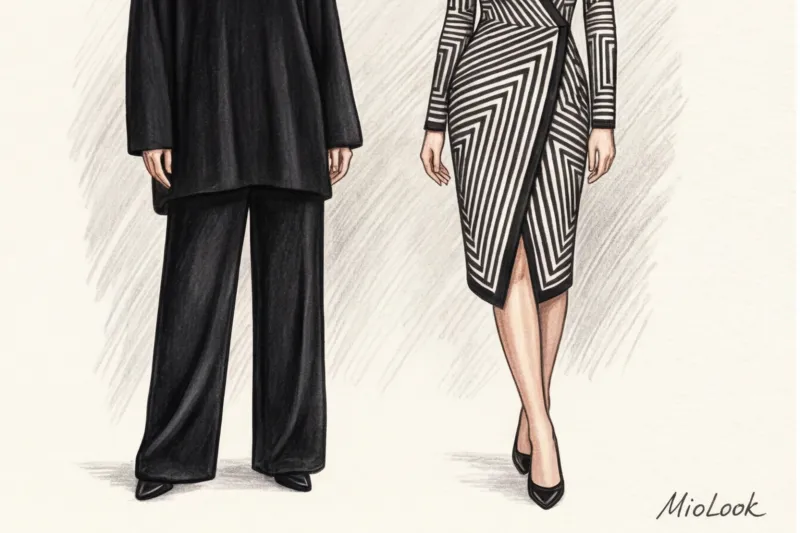
When we talk about which prints are slimming, we're not talking about the magical properties of a particular flower or check. We're talking about optical illusions that trick the brain into interpreting proportions differently. I've covered the basic principles of how patterns interact with each other in detail in our a complete guide to combining prints in your wardrobe Today, we'll go further and explore the physics of light reflection from different fabric textures and optical art that can be applied to everyday styling.
The Illusion of Slimness: Why Sleek Black Isn't a Panacea
One of my plus-size clients, let's call her Elena, came to me with a wardrobe consisting of 90% sleek black pieces. She sincerely believed it made her look more elegant. In practice, however, we encountered a phenomenon stylists call the "monolithic block effect."
How does it work? A completely smooth black garment (especially a form-fitting one) transforms the figure into a flat, dark silhouette. The eye has nothing to catch within this blur, so it automatically reads it. outer contour If the outline has volumes, it's impossible to hide them this way—you simply outline them with a black marker.
Sleek black doesn't make you look slimmer—it only emphasizes the real boundaries of your body, depriving your figure of its saving dynamism.
The solution to this problem lies in the principles of optical art (Op-art), which emerged in the 1960s. Designers realized that by establishing the right rhythm in a design (for example, alternating contrasting lines or geometric blocks), the viewer's gaze will glide over them without lingering on problem areas. A dynamic print acts as camouflage, breaking up a monolithic area into fragments. We also discussed how to apply this in practice in the article about How to choose clothes for your body type without stereotypes.
Try MioLook for free
A smart AI stylist will select the perfect look based on your proportions and favorite prints.
Start for freeWhich prints are slimming: debunking the main myths
To understand how clothing transforms the figure, remember the "emptiness and fullness" principle. The more empty space (especially light) between the print elements, the more voluminous the garment appears. Conversely, a dense, full pattern without obvious gaps brings the figure together. But the most astonishing transformations occur with stripes.
The vertical stripe trap and the Helmholtz illusion
A widespread myth from the glossy magazines of the 2000s: vertical stripes are always slimming, while horizontal stripes are always fattening. In practice, this is one of the most dangerous misconceptions.
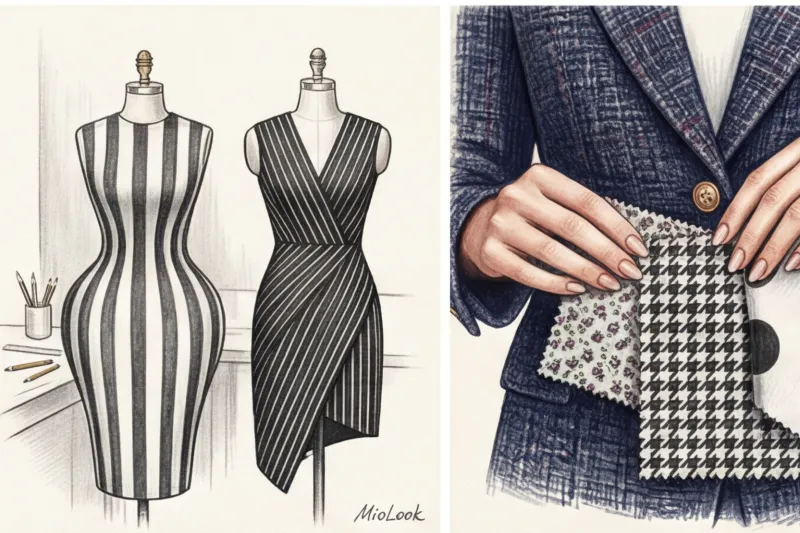
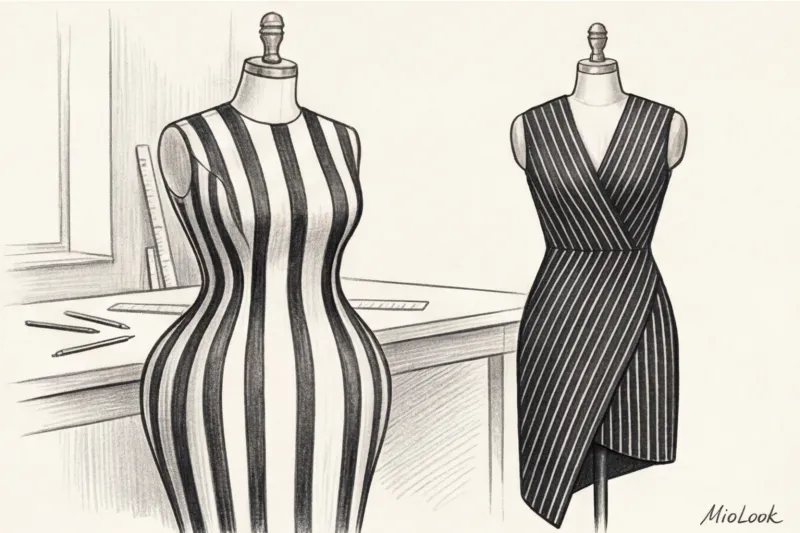
Imagine a plump woman wearing a dress with wide vertical stripes. The fabric will inevitably stretch across the bust and hips, causing the straight lines to curve. This "barrel effect" will visually double your width.
As early as 1867, the German physicist Hermann von Helmholtz proved the opposite in his work on optical illusions. Helmholtz illusion It states: a square filled with horizontal stripes appears taller and narrower than a square with vertical lines of the same size. A horizontal striped shirt (provided the stripes are narrow, rhythmic, and contrasting) can elongate a person's height better than a ribbed shirt.
When it does NOT work: The horizontal line will let you down if the stripes are too wide (more than 3-4 cm) or if the item ends right at the widest part of your hips.
Diagonal and asymmetrical cuts are the stylists' secret weapons.
If you're unsure about stripes, opt for diagonal ones. Bias cuts, asymmetrical hemlines, or abstract diagonal lines are the most flattering elements for any figure.
Diagonal lines (like those in iconic wrap dresses) break symmetry. Our brains are lazy: when faced with asymmetry, they stop calculating the body's actual proportions, focusing instead on the direction of the lines. This is why V-necklines and wrap skirts always outperform button-downs and straight hemlines.
Your perfect look starts here
Join thousands of users who look flawless every day with the MioLook AI stylist.
Start for freeScale Matters: How to Match Print Size to Bone Structure
Choosing the right design isn't enough—you also need to get the size right. A scale error can ruin all your efforts.
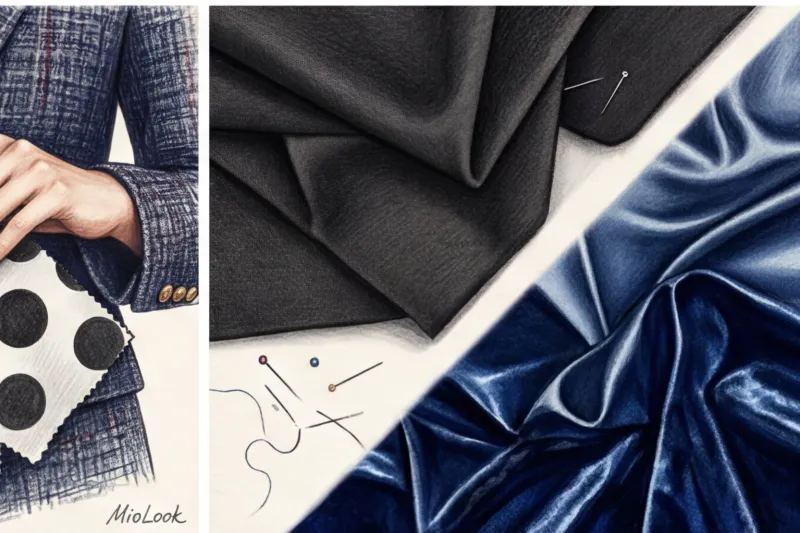
There's an ironclad rule in style: the scale of a print should be proportionate to your bone structure and height. I often see large, statuesque women trying to "hide" themselves in dresses with tiny flowers (millefleurs). The result? Their figures appear even more massive against the backdrop of the tiny buds due to the contrast. Conversely, petite women, 155 cm tall, are literally drowned out by huge geometric shapes or giant polka dots.
To quickly check the scale right in the fitting room of H&M, Zara or any other brand, use "rule of the fist" Squeeze your hand. The largest element of the print on the item you choose should be no larger than your fist. If you're petite, use the size of your two fingers as a guide. This is a simple physical guide that never lies.
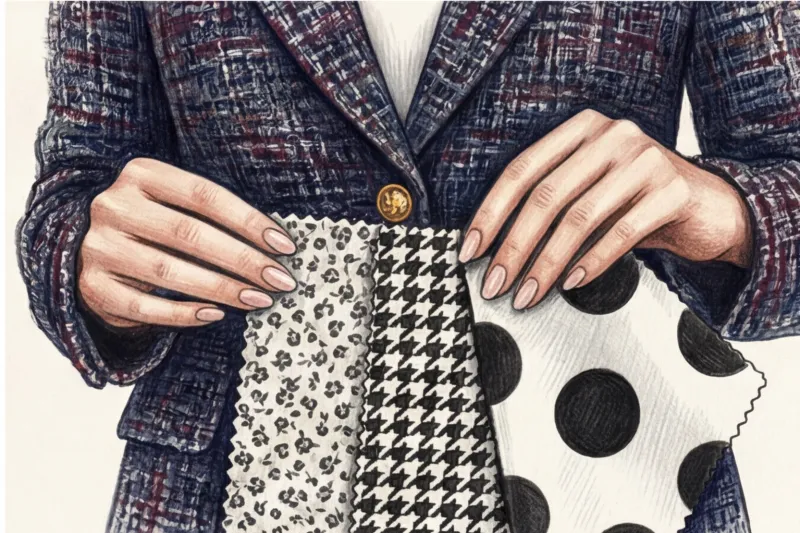
Texture over pattern: fabrics that visually reduce bulk
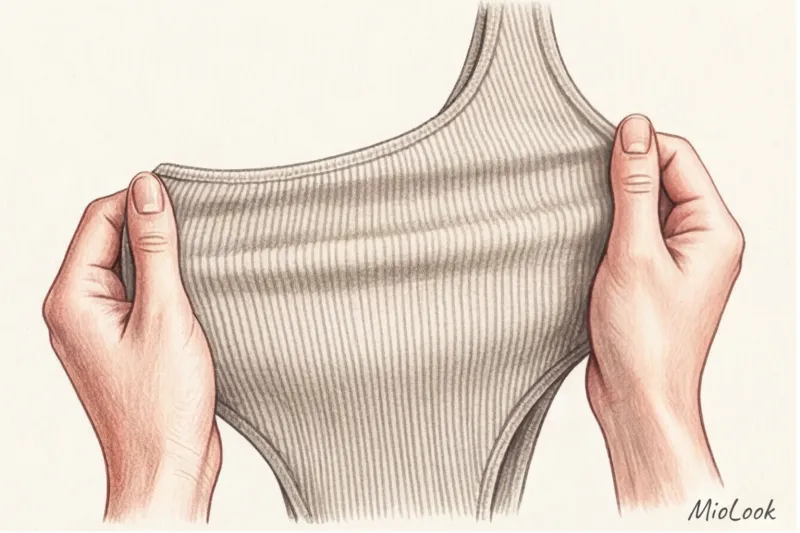
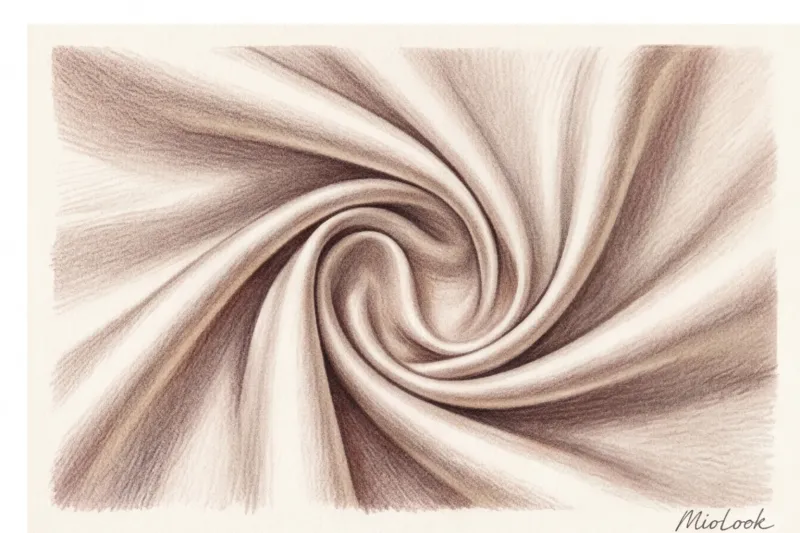
In the world of style, prints often steal the show, but the real magic lies in texture. The physics of light reflection works flawlessly: shiny fabrics (satin, silk, velvet, lurex) act like a magnifying glass.
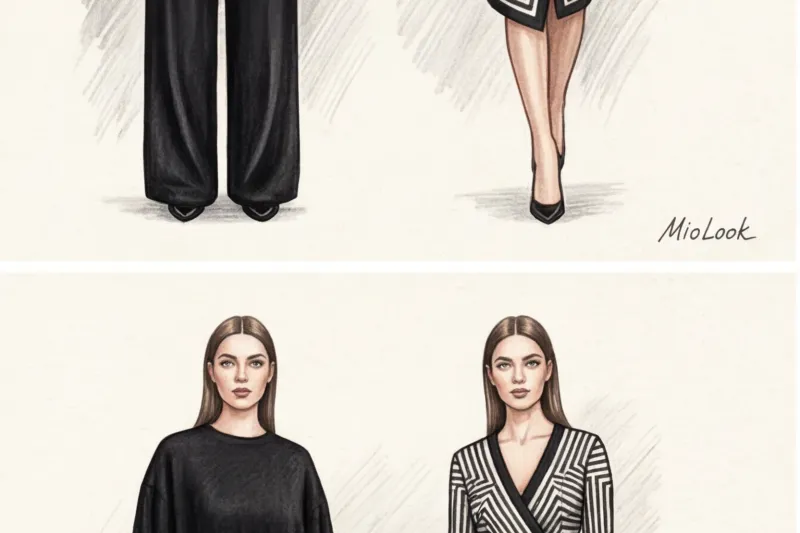
Remember the numbers: satin and velvet add up to 1-2 sizes due to the reflections on prominent areas (stomach, hips, chest). The glossy surface reflects light, creating a highlighter effect. Matte fabrics (crepe viscose, heavy cotton from 180 g/m², wool, gabardine) absorb up to 80% of light. They reduce actual volume and create a more defined silhouette.
Let me return to a story from my practice. Client Anna (I mentioned her in the article How to Look Expensive: Secrets of a Status Wardrobe ) I adored fine, smooth knitwear. Thin, mass-market pullovers for €30-€40 hugged every fold and accentuated the nuances of my figure. We swapped the smooth knit for a textured tweed jacket from Massimo Dutti's premium line (around €150). The textured fabric—bouclé, ribbed, tweed—creates micro-shadows. It takes on all the visual weight, concealing skin imperfections (cellulite, back rolls) and elevating the look.
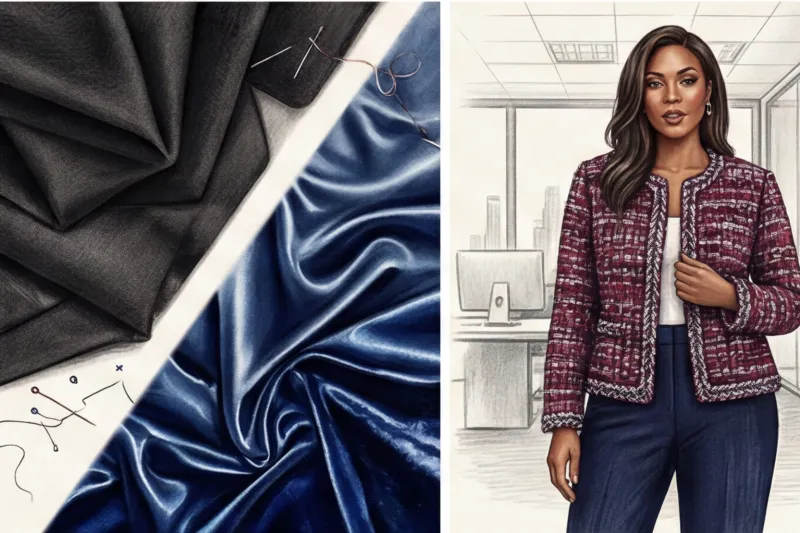
Texture can completely replace print if you prefer minimalism but don't want to look flat.
Ready to get started?
Try the MioLook free plan—no commitments, no strings attached, and access to smart wardrobe tools.
Start for freeStrategic placement: where to place active print and texture
Even the perfect print can be detrimental if placed in the wrong place. In styling, we use the focal point rule: print or texture. Always attracts attention, and the smooth dark matte color takes the area into shadow.
Let's look at some specific scenarios:
- For the Pear body type (voluminous hips): Your goal is to balance out your bottoms. Wear a bold geometric print or a textured chunky knit sweater on top, and for trousers and skirts, choose matte, heavy, flowing fabrics in dark tones without shine.
- For the Inverted Triangle body type (broad shoulders, narrow hips): You'll need a sleek, minimalist top (like a matte V-neck blouse) and statement pants. Checkered pants, corduroys, or printed skirts in the €50-€100 range are great options, as they'll visually balance out a narrow hipline.
The dress code requires special attention. If you have corporate restrictions, you can read more about this in our article about Office wear for plus-size women: style secrets.
Checklist: 5 Steps to a Slim Silhouette Through Prints and Textures
Stop hiding in black, shapeless robes. Use this checklist the next time you're shopping to create a polished look.
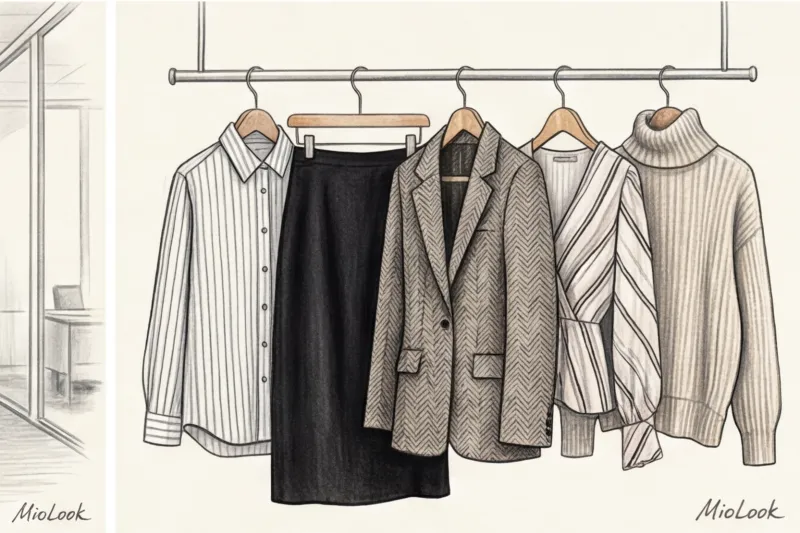
- Barrel check: Put on a vertically striped item and look at yourself in profile. If the lines curve at the chest or hips, the item is too small or the cut isn't flattering. Opt for thin, sparse pinstripes on a semi-fitted cut.
- Light test: Shine a light on the fabric in the fitting room. Is it shiny? Be prepared for this piece to add volume.
- Scale calibration (fist rule): Place your fist over the pattern on the dress. If the flowers, circles, or checkered patterns are much larger than your fist, and you're petite, avoid the purchase.
- Set balance: In one look, combine no more than 1 item with a vibrant print or complex texture with 1-2 smooth, calm basic wardrobe items.
- Avoiding glossy tights: This rule is often forgotten. Shiny tights with lycra make legs look thicker and throw off proportions. Only matte, thick tights are recommended. I discussed the selection rules in more detail in the article about Tights: Business Etiquette and Density.
Visual figure correction isn't magic, but applied physics. By choosing the right line rhythm, diagonal lines, and matte fabrics, you can shape your silhouette the way you want without losing your individuality and style. Experiment with optics, and you'll see how your wardrobe will begin to work for you.