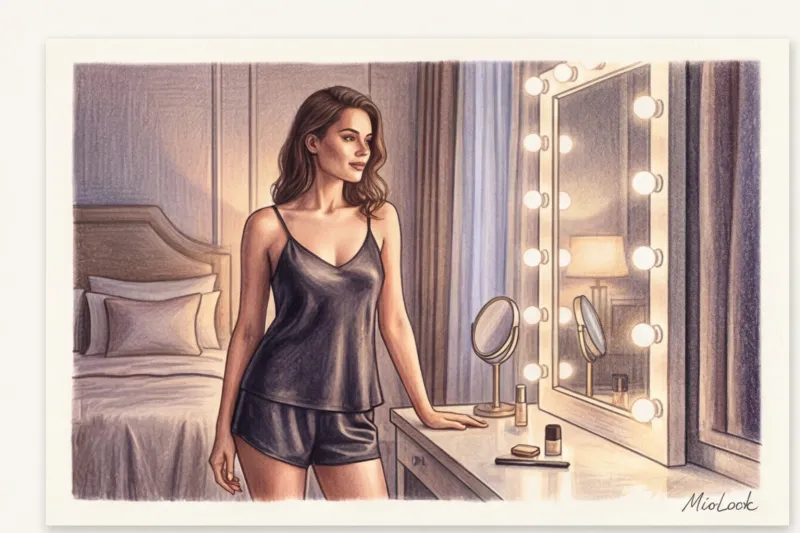
Over 12 years of working as an image consultant, I've noticed a paradoxical yet recurring pattern. We're willing to spend €500 on a smart office suit that makes us feel like we're wearing armor, but when we get home, we change into a faded T-shirt with a delivery service logo and stretched-out sweatpants. And yet, it's at home, alone with ourselves or our loved ones, that we spend almost half our lives.
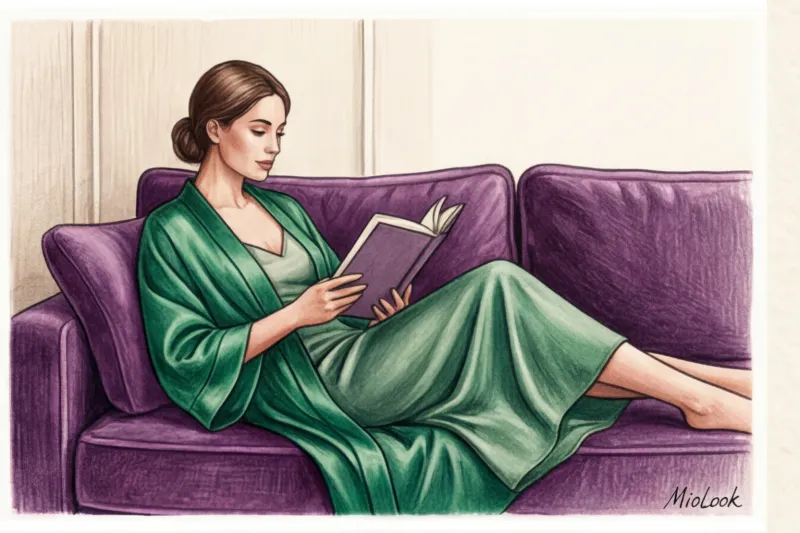
Correctly selected silk loungewear It's more than just a pretty photo for social media. It's a powerful therapeutic tool. Today, I want to talk to you about how fabric texture changes our flexibility, why, as a colorist, I'm categorically against black in a home wardrobe, and how to put together the perfect home capsule wardrobe.
The Psychology of Texture: How Silk Loungewear Changes Your Shape
Are you familiar with the "life on hold" syndrome? It's that shelf in your closet where you keep your beautiful lingerie and dressy dresses "for a special occasion" while you're choosing a fleece robe every night. We're used to saving our beauty for strangers on the subway or coworkers, while we keep for ourselves what we "don't mind getting dirty."
In 2012, researchers from Northwestern University in the United States (Adam and Galinsky) introduced a startling term - Enclothed Cognition (embodied cognition). Their research proved that the brain literally reads the symbolism and physical properties of clothing, changing our behavior. When the fabric is smooth, cool, and flowing, the nervous system receives a direct command: "There is no danger, you can relax."
"Silk acts as a kinesthetic anchor. You physically can't slouch or make sudden, jerky movements when the cool, weightless material glides over your skin. Your body's movements automatically become smoother."
I had a very revealing case in my practice. My client, Anna, who had switched to remote work, complained of severe burnout. Her work uniform had become oversized hoodies. The line between "I'm working" and "I'm relaxing" had completely blurred. We implemented one simple rule: we introduced a rule of changing into a long silk kimono after 6:00 PM. This ritual became the physical boundary of the workday. Shedding the heavy cotton and slipping into silk meant returning to herself.
The Anatomy of the Perfect Wardrobe: From Pajamas to Kimonos
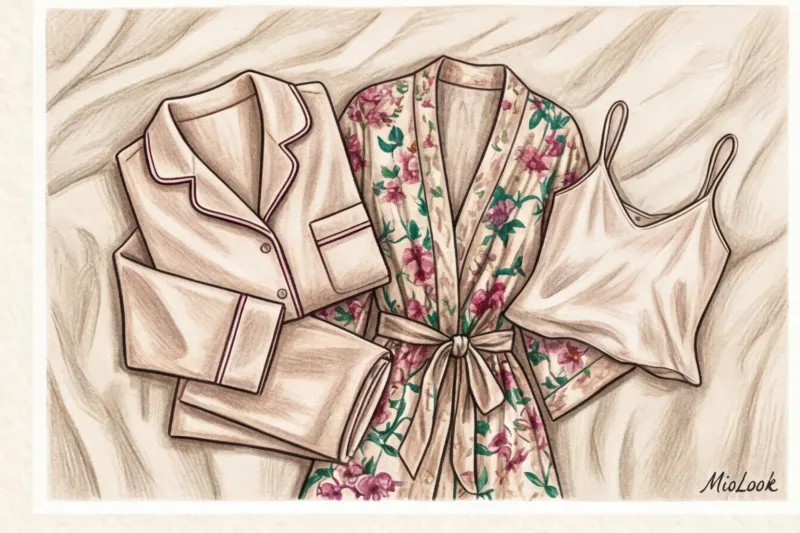
If you've decided to invest in home aesthetics, it's important to choose pieces that complement your body type and lifestyle. Let's look at three key elements. elegant home wardrobe.
- Men's style pajamas (with piping). This is an absolute classic. The secret is in the contrast: the clean lines of the collar and geometric piping structure the silhouette, while the soft fabric adds a feminine touch. It's the perfect choice for morning rituals—sipping coffee, checking email. It makes you look put-together, yet relaxed.
- Kimono. My favorite layering tool at home. A kimono brilliantly conceals morning puffiness or an imperfect belly, allows complete freedom of movement, and looks regal.
- Silk slips. There's one fair caveat here. A spaghetti strap nightgown on its own can sometimes look like you simply forgot to put anything on, especially if it's chilly at home. To avoid a vulgar or "bare-skin" look, pair it with a long, chunky knit cardigan or a kimono.
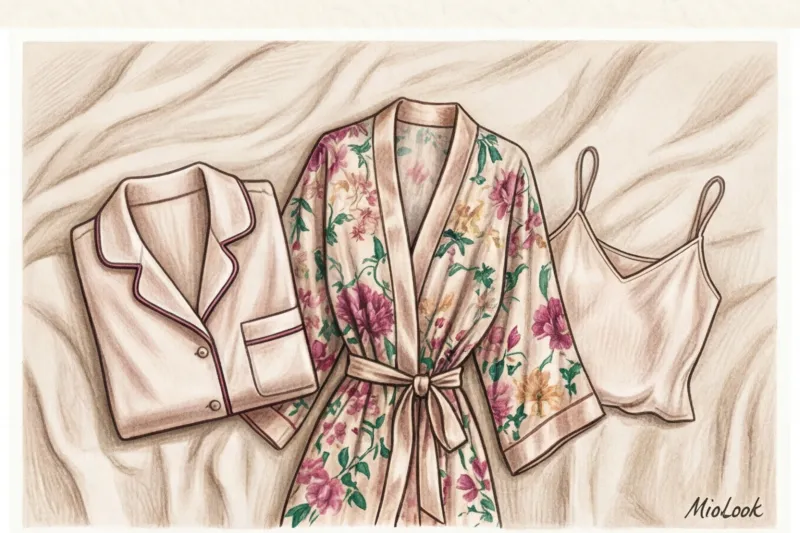
Home capsule: how much silk do you really need?
You don't need a separate closet for loungewear. Simply implement the three-piece rule: a silk shirt, loose palazzo pants, and a kimono. All of them should coordinate.
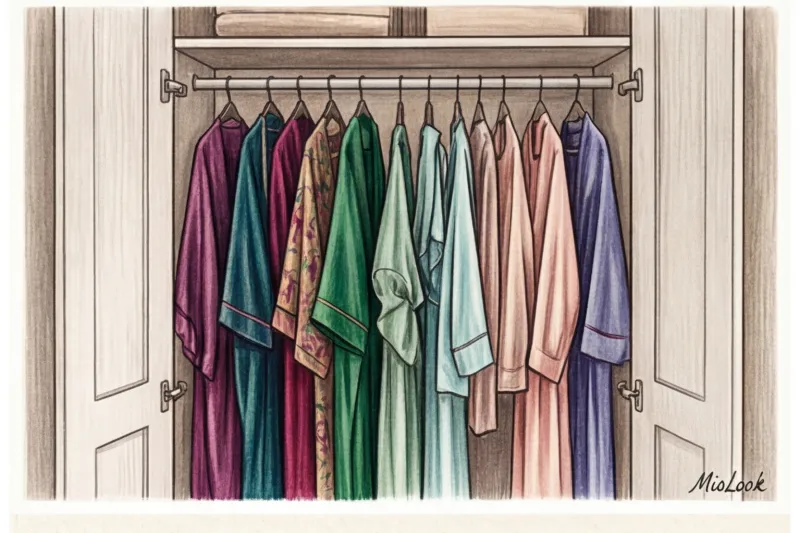
Moreover, silk works amazingly with its contrasting textures in the cold season. Take a basic cashmere sweater (even a simple model from COS or Massimo Dutti for €100-€150 will do just fine) and wear it with flowing silk trousers. It looks a hundred times more sophisticated and expensive than a typical velour suit.
Your perfect look starts here
Join thousands of users who look flawless every day with MioLook. Create your perfect home makeup look in our app.
Get access — €0.99 onceDebunking the Myths: Why Black Silk Is the Worst Choice for Your Home
As a certified colorist, I constantly battle the same stereotype. Nine out of ten clients reach for black pajamas when they first buy them, arguing, "Black is classic, it's slimming, and it's sexy."
Now let's apply the laws of physics. How do we look at home? Most often, without makeup, after a long day, under artificial lighting. Household lamps (especially those in the warm spectrum) combined with black fabric create a black hole effect. Black doesn't reflect light; it absorbs it. As a result, the fabric casts micro-shadows on your face: nasolabial folds appear deeper, under-eye circles appear darker, and your complexion takes on a sallow tone. Your energy is visually "dimmed."
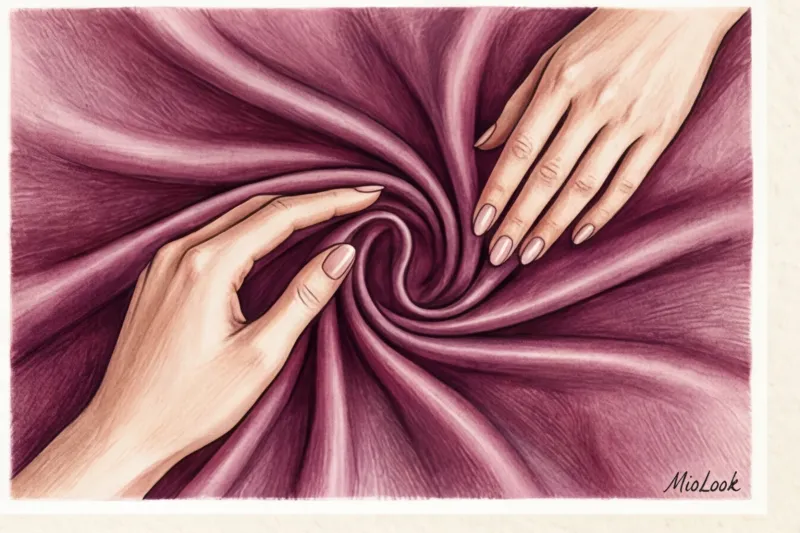
Light silk fabrics (pearl, ecru, dusty rose, delicate peach) work like a professional ring light. The glossy surface reflects light directly onto your face, illuminating your skin and erasing signs of fatigue.
What to do if you don’t like light colors?
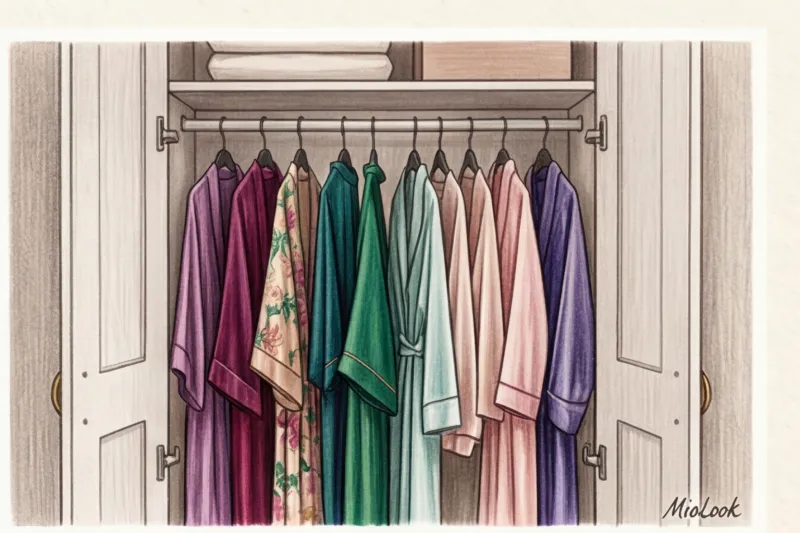
Replace stark black with sophisticated, jewel-toned shades. Deep emerald, rich sapphire, burgundy, or dark chocolate. They create the same graphic silhouette, but look much more refined and don't detract from the freshness of your complexion.
The Illusion of Luxury: How to Distinguish Real Silk from Polyester
"What's the difference if it looks the same?" I'm often asked. The difference is colossal, and it's not just snobbery. Artificial silk (polyester) is essentially plastic. It doesn't breathe.
According to the International Silk Institute, the protein fibroin, which makes up natural silk thread, contains 18 amino acids and has unique thermoregulatory properties. Natural silk is warm in winter and cool in hot summers. Polyester, on the other hand, creates a greenhouse effect, raising body temperature by 1-2 degrees. This is critical for sleep quality and nervous system recovery.
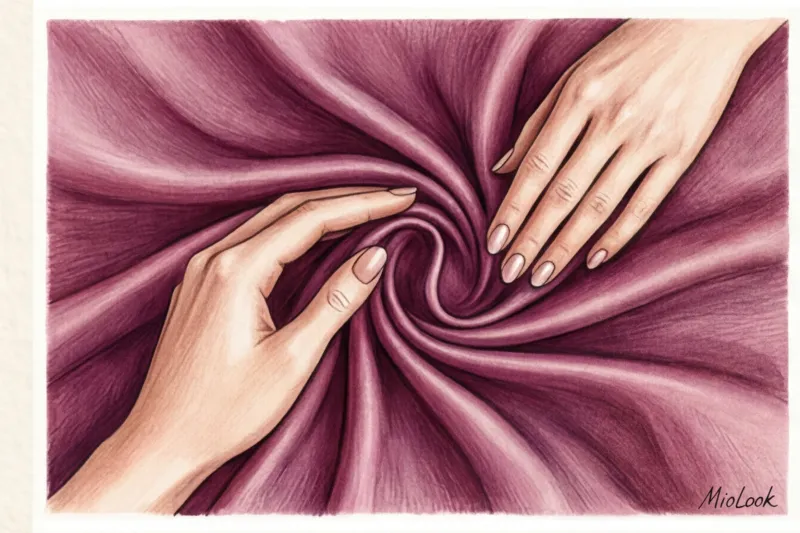
"How do stylists test fabric in stores? You don't need to set fire to the threads, as suggested online. Look at the reflection. Natural silk diffuses light, creating a deep, pearly sheen. Polyester produces a sharp, flat, glassy sheen."
Moreover, natural silk produces a barely audible, noble crunch when compressed, and when draped it falls into heavy, flowing folds, while synthetics stand upright or stick to your legs due to static electricity.
What to do if your budget is limited?
A good brand of natural silk pajamas costs €200 and up. If that's not your current plan, avoid polyester. Look for compromise fabrics in the €50-€100 range: high-quality viscose, cupra (a cotton cellulose fabric that looks and feels very similar to silk), or tencel. They flow beautifully and, most importantly, allow the skin to breathe.
Access to MioLook for €0.99 — one-time payment
Not sure which shade of kimono or pajamas will suit your look? Our smart AI stylist will analyze your color type and select the perfect combination.
Get access — €0.99 onceAction Plan: Incorporating Aesthetics into Your Home Routine
Implementing a new aesthetic requires a systematic approach. Let's do it in four simple steps, without stress or unnecessary expense.
- Step 1: Revision. Open your loungewear drawer and ruthlessly get rid of the "old T-shirt graveyard." Anything that's pilled, stretched out at the knees, or makes you think of harvesting potatoes is for recycling. Keep two or three neat cotton sets for active household chores.
- Step 2: First investment. I recommend starting with a kimono. Why? It doesn't require a perfect fit (unlike pants), and you can even throw it on over a simple white tank top for an instant bohemian look.
- Step 3: Selecting a palette based on color type. If you have a warm complexion (golden skin, freckles, reddish or chestnut hair), look for shades of peach, terracotta, and warm gold. If you have a cool complexion (ash hair, porcelain or pinkish skin), choose pearl, dusty blue, and lavender.
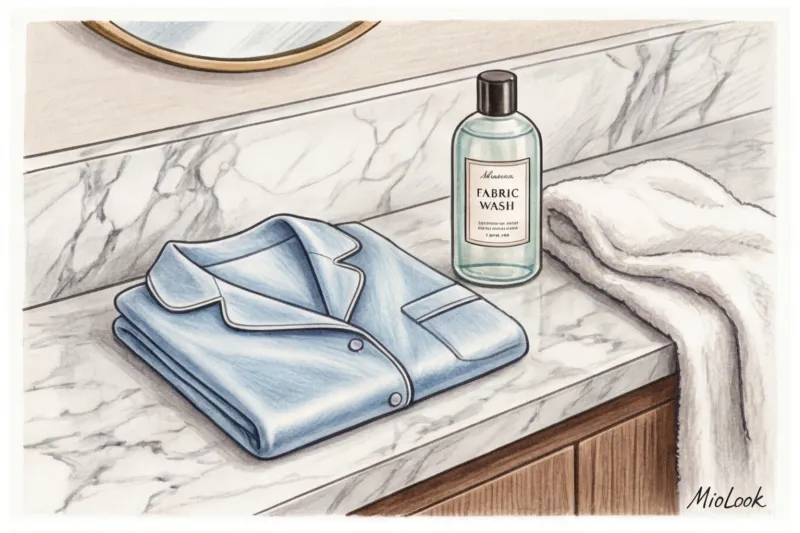
- Step 4: Care as a ritual. Silk doesn't tolerate fuss. Forget about powders—use only liquid detergents for delicate fabrics (with a neutral pH). Never wring the item; simply pat it dry with a terry towel and hang it to dry in the shade. It's best to steam or iron it from the inside out while the fabric is still slightly damp.
Your loungewear is the most honest indicator of how you feel about yourself. By choosing flowing silk instead of faded knitwear, you send a powerful signal to your subconscious: "I deserve beauty just because. I don't need an audience to be elegant." Start with one beautiful item, and you'll be surprised how your reflection in the mirror changes in the morning.