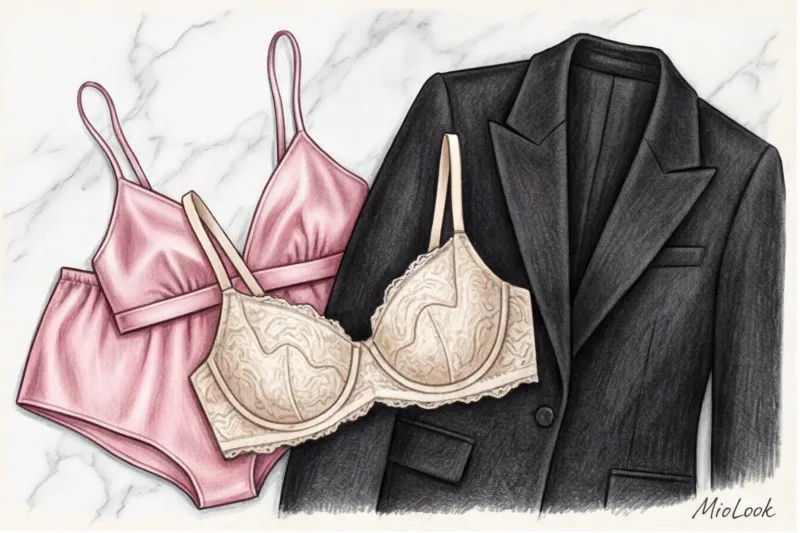
One day, a client of mine brought in a stunning €800 Jil Sander jacket for a wardrobe review. She complained that it "felt somehow wrong" around the bust. The jacket was in perfect condition, but the problem lay deeper, underneath. She was wearing a luxurious lace Agent Provocateur bra, which she regularly washed in the washing machine "just because," without a protector. The elastane had stretched, the underwire had become deformed, the breasts had lost support, and the architecture of the expensive jacket instantly collapsed.
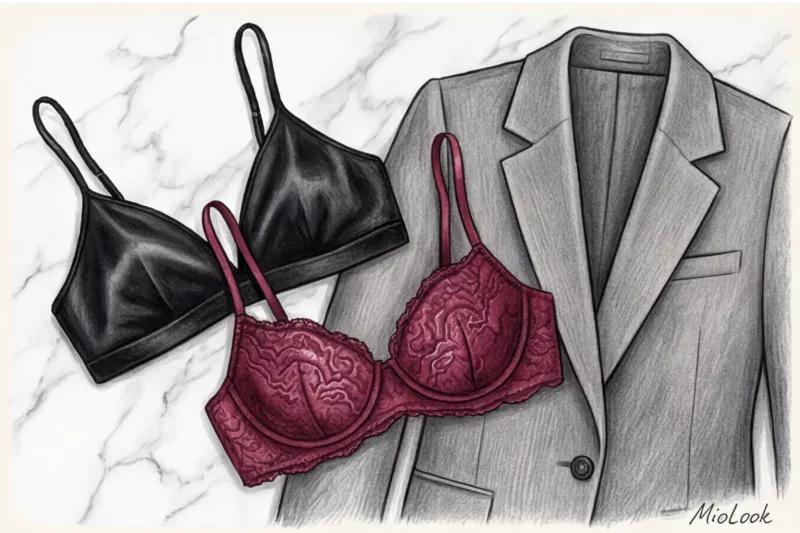
As a stylist and colorist, I often repeat: your look doesn't start with your handbag or shoes. It starts with the base layer that shapes your silhouette. And if you invest in quality underwear, you need the tools to protect it. We covered the basic principles in more detail in our a complete guide to caring for delicate fabrics , but today I want to look at a specific technique: How to use a laundry bag It is right for them that things serve for years, and not until the first wash.
Why a laundry bag is a great way to protect your wardrobe investment
Most women view a laundry bag as an unnecessary accessory to escape boredom. "I have a modern washing machine with a delicate cycle, why do I need these bags?" I often hear during consultations. Let's look at the physics of the process.
The washing machine drum rotates at speeds ranging from 400 to 1,200 rpm. This centrifugal force literally presses wet, heavy fabric into the drum's metal honeycomb. If you wash underwear without protection, the elastane (the core of any modern bra or panty) stretches in multiple directions. According to lingerie brand technologists, after just 10 such wash cycles, elastane loses up to 30% of its elasticity.
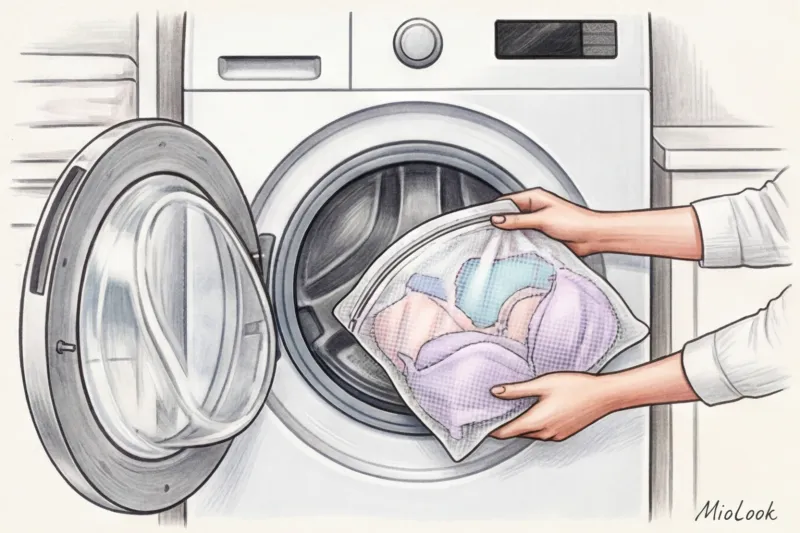
The bag acts like a bulletproof vest. It absorbs friction from metal and other items in the drum. Have you ever pulled lace panties out of the washing machine with them stuck tightly to the zipper of your hoodie? The bag prevents such scenarios, preserving the micro-relief of the fine French Chantilly lace in its pristine state.
Your perfect look starts here
Join thousands of users who look flawless every day with MioLook. A smart AI stylist will help you sort through your wardrobe.
Start for freeThe Anatomy of the Perfect Cover: How to Choose a Bag That Won't Ruin Your Laundry
Over the course of 12 years of managing wardrobes, I've gone through dozens of accessories. And I can confidently say: a €2 bag from the supermarket and a high-quality case for €10–15 are worlds apart.
The main rule is that the material must be 100% high-strength polyester. Cotton bags (yes, eco-friendly brands sometimes make them) absorb water, become heavy, and can damage delicate items. But my personal obsession when choosing a zipper is the zipper pull. If the zipper doesn't have a wide elastic band at the end to hide the pull tab, I don't even bother with it. The exposed metal pull tab acts like a micro-saw during washing, potentially leaving snags in your favorite silk COS blouse if they accidentally end up in the same cycle.
Shape Matters: Wireframe Spheres vs. Flat Envelopes
The most common mistake my clients make is buying one large, flat bag "for everything." This is fundamentally the wrong approach.
- Frame cylinders and spheres: An absolute must-have for molded cup bras (push-up, balconette). Flexible plastic ribs are sewn into the walls to prevent the drum from flattening the cups and deforming the underwire.
- Flat rectangular bags: Ideal for seamless underwear, basic tank tops, silk panties, and slips. There are no rigid elements; items are simply protected from external friction.
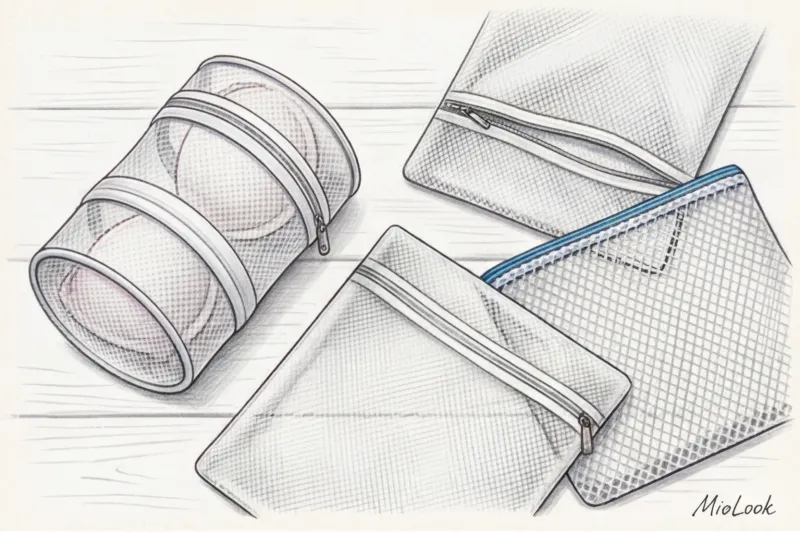
Mesh size: when you need a fine mesh and when you need a coarse mesh
Choosing a mesh is a tradeoff between protection and cleaning quality. If you're washing lace with sequins, rhinestones, or hooks, you only need microcell (a fine mesh similar to tulle). It will prevent hooks from coming loose and snagging other items, and will prevent microfibers from sweaters from settling on the lace.
For basic cotton sets (such as those from Calvin Klein or Uniqlo), it's best to choose a large mesh (2-3 mm mesh). This ensures maximum circulation of water and detergent, removing sebum and sweat particles.
Laundry bag: how to use it according to stylists' rules
Buying the right accessory is half the battle. Now let's look at how to load the laundry. While researching "how to use a laundry bag," many people forget about preparing the clothes themselves.
Before you put your bra in the bag, Be sure to fasten all the hooks on the back If left dangling, they'll scratch the inside of the bra itself (especially delicate satin or microfiber). And another tip from a stylist: never use fabric softener when washing elastane. It coats the fibers with a film, preventing them from shrinking back. Symbols on clothes for washing This is usually kept silent.
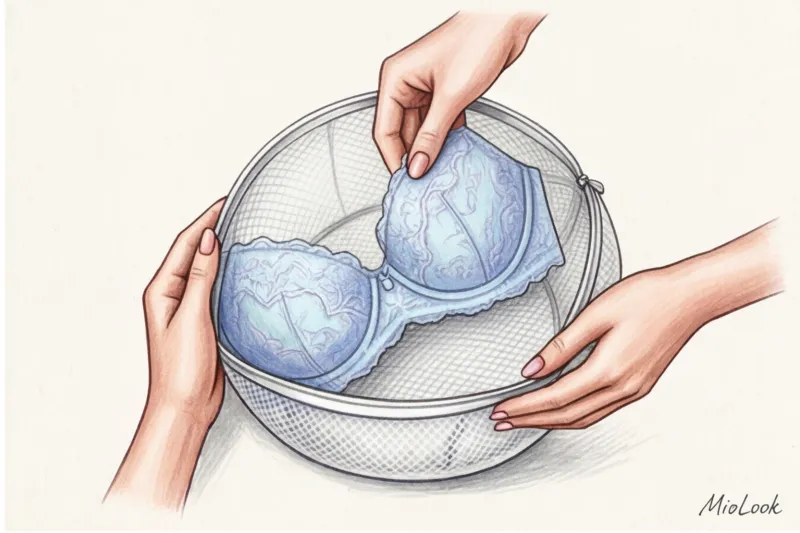
The Golden 50% Rule: How Much to Put Inside
Have you ever seen people packing their suitcase on the last day of their vacation, shoving their belongings in with their knees? Many do the same with laundry bags. Cramming five bras into a single sphere is a surefire way to get them out dirty and covered in laundry detergent.
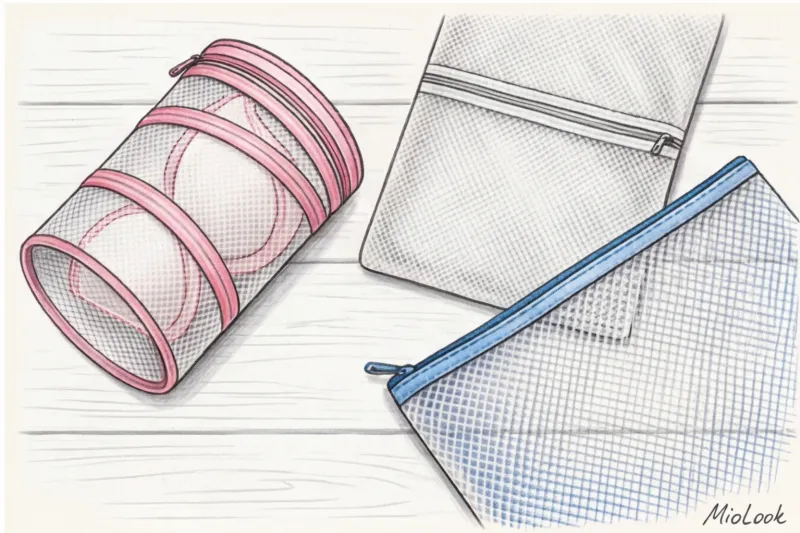
In my practice, the ironclad "50% Rule" works: the bag should be no more than half full. The laundry inside should be able to move freely. Only then will the water and enzymes in the gel be able to penetrate the fibers of the fabric and wash out the stains.
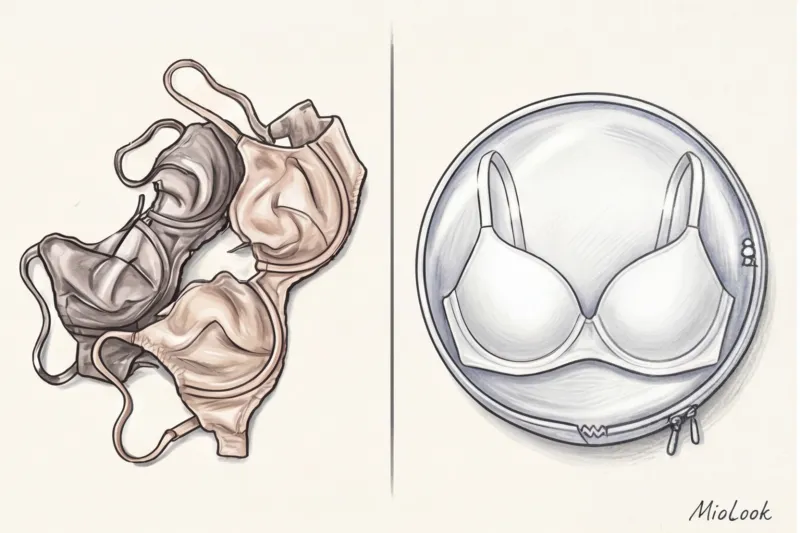
Sorting: What should never be washed in the same bag
The division into dark and light is a basic concept I won't even discuss. But there are nuances to texture. Never put silk culottes in the same bag as a cotton bra. Cotton becomes a harsh abrasive when wet and will literally "scratch" the smooth surface of the silk.
There's also a strict rule against placing items in the same drum: even if your laundry is safely tucked away in a bag, don't run the cycle with jeans, terry towels, or sneakers. Heavy, wet items weighing several kilograms will simply crush the sphere's plastic frame during the spin cycle.
The main myths about machine washing delicate fabrics
As a color and fabric expert, I regularly encounter harmful advice on forums. Let's debunk three of the most dangerous myths.
"Technologists from premium brands Chantelle and La Perla confirm that the main enemy of modern lingerie is not the washing machine, but harsh chemicals and hand-wringing."
Myth 1: You can wash in a bag at any temperature.
Truth: The bag only protects against mechanical stress (friction), not thermal stress. Elastane begins to irreversibly degrade at temperatures above 30°C. Hot water literally "cooks" the rubber fibers, causing them to become wavy. Want look expensive Wash your laundry at 20-30 degrees.
Myth 2: Netting prevents shedding.
Truth: I often see red silk panties put in a bag and thrown in with white T-shirts in the hopes that the mesh will save them. It won't. The dye dissolves in water, and the bag is completely transparent. Color separation is still a thing.
Myth 3: Hand washing is always better than machine washing.
This is my favorite myth. I conducted a personal test: I took two identical basic sets. I washed one by hand, the other in the machine on a delicate cycle (400 rpm, 30°C) in a framed laundry bag. After 20 washes, the "hand-washed" set looked worse. Why? Because when we wring out the water by hand, we twist the clothes into ropes, breaking the fibers. A washing machine, on the other hand, spins the laundry using centrifugal force, pressing it evenly against the walls of the drum. With the right bag, this process is completely safe.
Fair Exception: This rule does NOT apply to molded cups with heavy gel push-up pads. Centrifugal force can dislodge the gel inside the cup, so it's best to gently rinse these cups (which should be a minimum in a modern wardrobe) in the sink without spinning.
Ready to get started?
Try the MioLook plan for free—no commitments required. Create your first virtual capsule today.
Start for freeAlternative uses for laundry bags in closet organization
If you think bags are only for the bathroom, you're underestimating them. As a smart wardrobe expert, I've found at least three brilliant uses for them outside the washing machine.
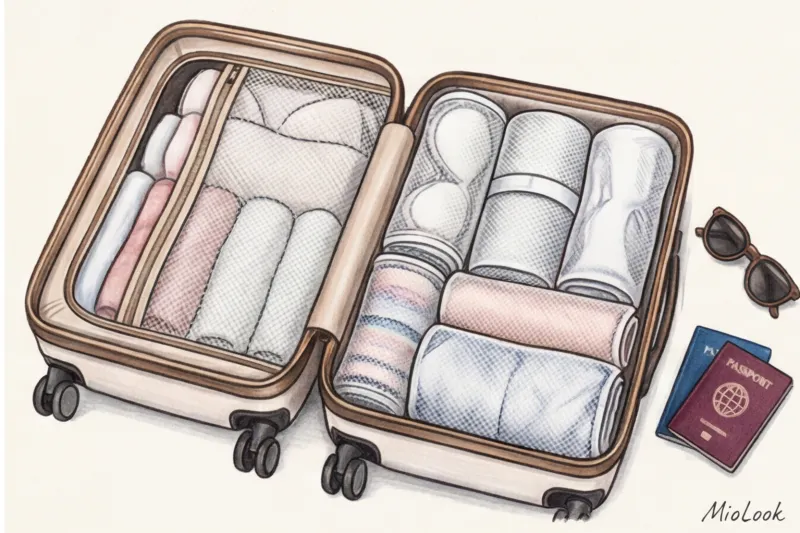
- Ideal travel organizers. Why buy expensive packing cubes when flat laundry bags do a just as good job of organizing your suitcase? The laundry breathes, and you can see what's inside. And upon arrival at the hotel, the same bag immediately becomes a container for dirty laundry.
- Storing out-of-season accessories. Cashmere tights, fine silk bodices, garter belts—all of these can be conveniently folded into small mesh envelopes before being stored on the top shelf of the closet until next season.
- Sorting station. Hang a couple of bags right over the edge of your laundry basket. When you take off your lace bra in the evening, throw it straight into the net. When it's time to wash, you won't have to fish delicates out of a pile of t-shirts and socks.
By the way, it’s incredibly convenient to visualize all these accessories and plan looks with them through the "smart wardrobe" feature in MioLook When you know exactly what you have, you stop buying duplicates.
Checklist: When to Throw Out Your Laundry Bag
Many women use the same bag for years until it literally crumbles to dust. This is dangerous frugality. If a €5 accessory ruins a €150 blouse, the math isn't in your favor. Check your bags now.
It's time to buy a new one if:
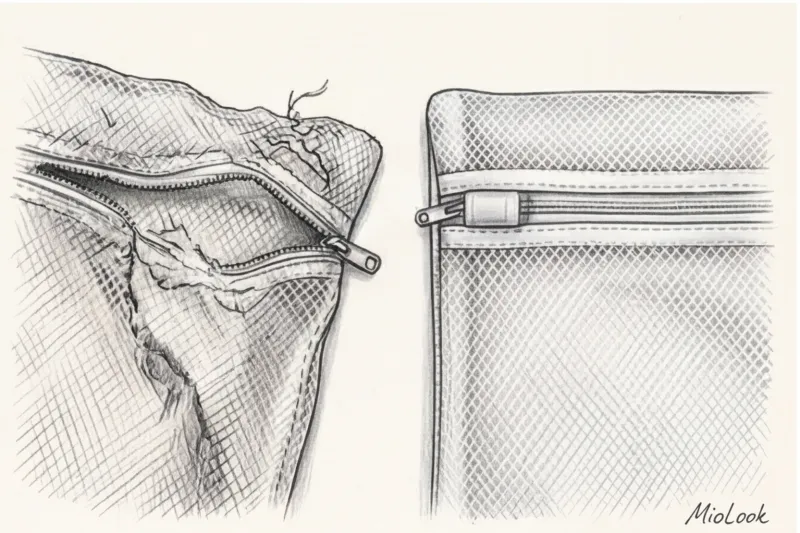
- The net stretched and sagged. The bag has stopped holding its shape, large holes have appeared, or the fibers have come apart—it no longer protects the lace from snagging.
- The zipper pull is broken or torn off. If the elastic band that closes the slider has stretched, or the "dog" itself has fallen off, leaving a sharp edge, the bag has become a cold weapon for your drum and other things.
- The plastic frame is deformed. If the plastic rings inside the sconce sphere are bent or broken, they can tear through the fabric and become lodged in the holes of the washing machine drum (repairs will cost hundreds of euros).
Conclusion: proper care is the basis of impeccable style
Building your dream wardrobe isn't just about buying the right styles. It's also about preserving them. A laundry bag is a small investment that saves thousands of euros annually on replacing worn-out items.
Let's reinforce the ideal care protocol: buy a sturdy bag with a secure zipper, choose a framed sphere for molded bras, and a flat panty bag. Close all the hooks, fill the bag exactly 50% full, and wash at no higher than 30°C without fabric softener.
Tonight, when you're clearing out your laundry basket, check your laundry accessories. It might be time to ditch that old, stretched-out laundry net and invest in one that will truly protect your clothes. Respect your clothes, and they'll respond with a flawless fit.