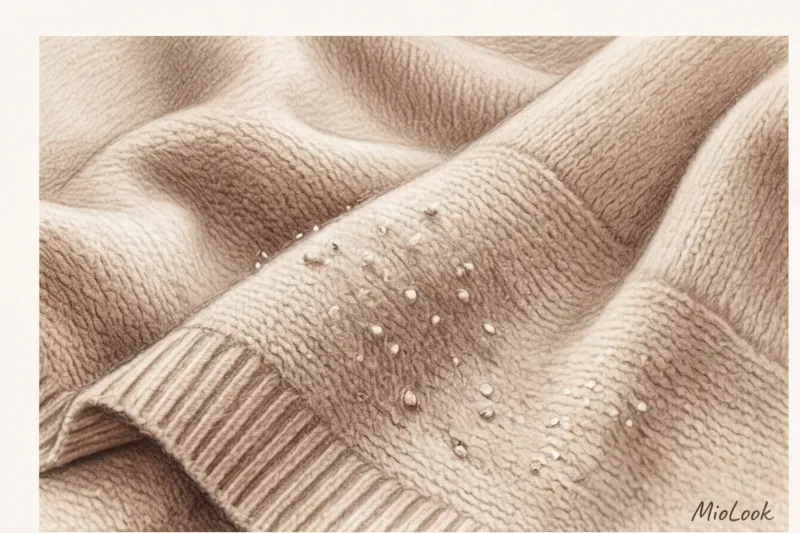
In the fall of 2022, a client of mine brought me an $800 Loro Piana cashmere sweater in a panic. "I've only worn it three times, and it's already covered in pilling! Is it fake?" she demanded, seriously considering throwing it in the trash. It took me fifteen minutes and a proper wooden comb to restore the sweater to its original appearance and explain to her a basic principle of textiles: everything pills. The only difference is how it happens and how you deal with it.
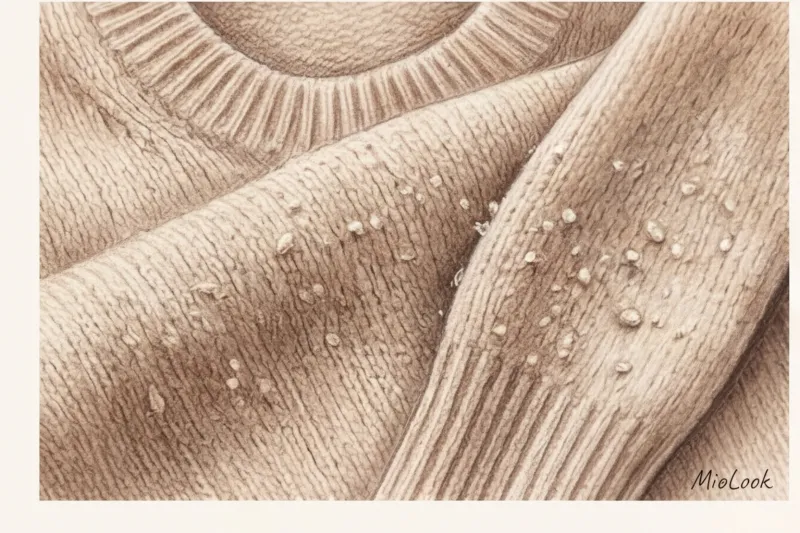
For me, as a stylist, pilling (the scientific name for pellets) isn't just an aesthetic issue. It's a major threat to the status of your look. You can buy a perfectly tailored jacket, but if a microscopic web of fluff forms on the sleeves, the visual value of the item drops to zero. That's why the question of How to remove lint from clothes , is directly related to managing your wardrobe investments. We've already discussed the Cost per Wear formula in more detail in our the complete clothing care guide.
Today, we'll explore the anatomy of fabric, delve into a stylist's bag at Fashion Week, and put those barbaric TikTok "life hacks" that are slowly killing your knitwear to rest once and for all.
Why Fabric Pilling Actually Occurs (and Why Price Doesn't Always Matter)
According to 2023 data from the analytical agency WGSN, approximately 78% of consumers discard sweaters and cardigans within the first year of purchase due to their deterioration. We're used to thinking that pilling is the preserve of cheap, mass-market items. This is a dangerous misconception.
From a textile engineering perspective, pilling is the result of mechanical friction. Fibers are released from the yarn, twisting together on the surface and forming dense knots. And here comes the interesting part: the difference in fiber length (long staple versus short staple).
"Pure, expensive cashmere will pill during the first few weeks of wear—and this is completely normal. In the industry, this is called 'blooming.' Short, loosely attached hairs come to the surface. If you brush them out properly two or three times, the sweater will stop pills for years," state the Woolmark Institute's quality standards.
Fabric Anatomy: How Composition Affects Pilling
Why then does a mass-market sweater become covered in ineradicable, hard balls, while an expensive merino sweater only becomes covered in light fluff?
- Natural mono-compositions (100% wool/cashmere): They form loose, soft pilling. Because the fiber itself is delicate, the knot often falls off on its own during wear or can be easily removed with your fingers.
- The insidious trap of blended fabrics (wool + acrylic/polyester): This is the worst-case scenario. Acrylic is a very strong, indestructible synthetic fiber. Wool is weaker. When rubbed, wool becomes dislodged and tangles, but the strong acrylic holds the knot firmly to the surface of the fabric. Removing it without damaging the fabric is nearly impossible.
Your perfect look starts here
Join thousands of users who look flawless every day with MioLook. Manage your wardrobe smartly.
Start for freeHow to remove pilling from clothes: stylist's tools versus "folk" methods
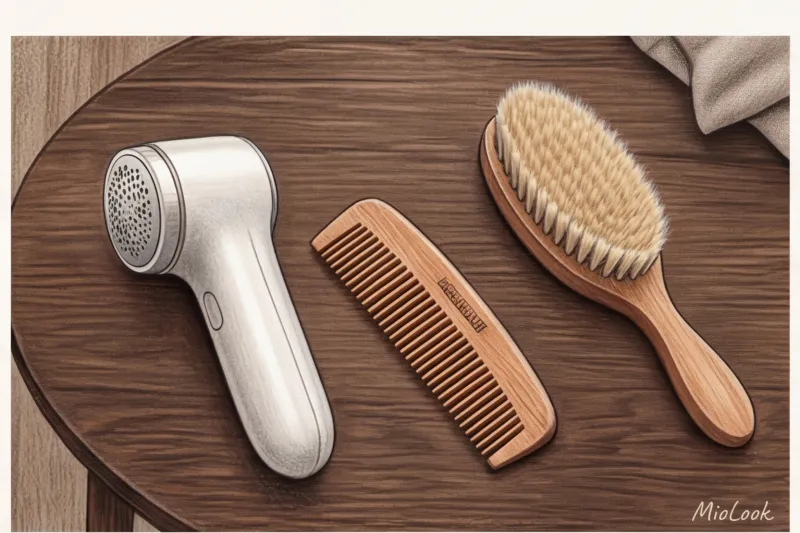
When I'm working backstage at Paris shows, I always have three fabric texture tools in my emergency kit. And believe me, there's no masking tape or disposable razors among them. The choice of tool depends solely on the density and weave of the fabric.
Electric hair clippers (trimmers): how to choose and use them correctly
For thick cotton, smooth merino wool, and blended fabrics, a trimmer is your best friend. But not just any trimmer. Cheap trimmers with dull blades don't cut, but instead chew up the thread.
What to look for when choosing:
- A wide metal mesh (at least 5 cm in diameter) – so that the process doesn’t take half an hour.
- Blade height adjustment (special plastic ring attachment).
- A powerful motor (it’s better to choose models that run on mains power or have a good battery, rather than ones that use two AA batteries).
Safety precautions: Lay the garment out on a firm, completely flat surface. Pull the fabric taut so there are no wrinkles. Work in the direction of the knitting, using gentle circular motions, without pressing the machine into the fabric.
Cashmere combs and pumice stones for delicate fabrics
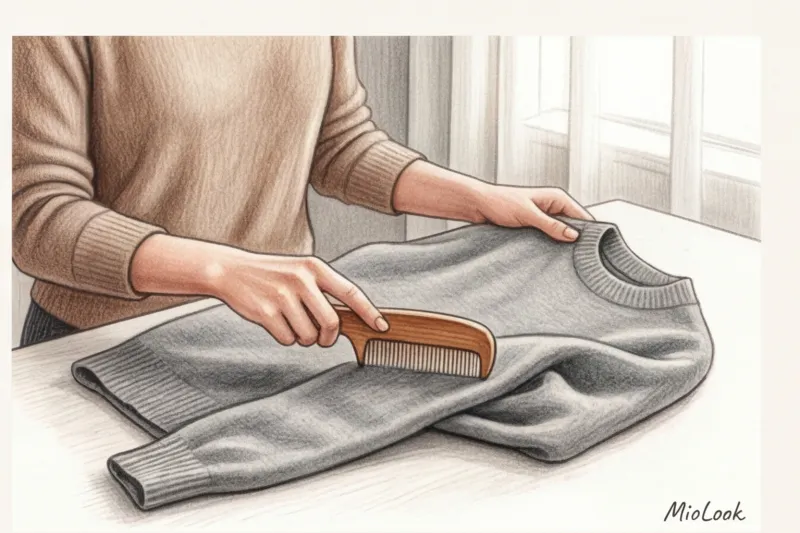
If you touch fluffy mohair or the finest cashmere with a machine, you'll ruin the item. There are special combs for these types of items (cashmere combs). They look like small wooden brushes with a metal mesh instead of bristles.
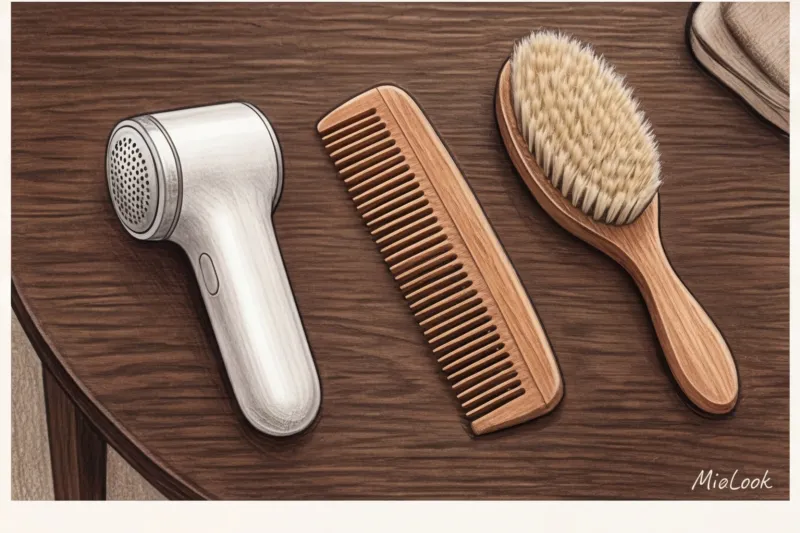
For coarse coat wool or tweed, stylists use a special volcanic pumice stone (fabric stone). It gently removes tough pills without damaging the underlying fabric.
Why your razor is your wardrobe's biggest enemy
Let's put this popular social media life hack to rest once and for all. Shaving sweaters with a regular razor is a surefire way to ruin your clothes.
A razor can't distinguish between a matted strand and a healthy thread. As it passes over the fabric, the blade makes micro-cuts in the intact fibers. This looks fine at first, but after the next wash, these cut threads break, leaving micro-holes that quickly widen. Furthermore, the thinned fabric will begin to pill twice as fast.
The same goes for lint rollers and tape: when you peel the tape away from the fabric, you pull new short fibers to the surface, setting the stage for a new batch of pellets.
Care instructions: how to remove pilling from different types of fabric
Every material has its own durability. I once had to rescue a client's jacket made of delicate suiting wool (super 120s) right before an important business photo shoot. An assistant had tried to brush it with a stiff brush, which had left the fabric covered in a whitish fluff. I had to urgently use a steamer and a velvet pad to smooth out the nap.
Saving Expensive Knitwear: Cashmere, Merino, Alpaca
The rule here is: the fluffier the yarn, the more delicate the care.
- Alpaca and mohair: No blades. Just brushing with a natural boar bristle brush. You simply push the bristles in one direction.
- Merino: It is permissible to use the machine, but strictly at minimum speed and with the limiter attachment attached.
Micro tip: After removing pilling from natural wool, always steam the item from a distance of 2-3 cm. The moisture will cause the threads to swell, and the item will regain its volume and fluffiness.
Try MioLook for free
A smart AI stylist will select the perfect look for you based on your digital wardrobe.
Start for freeSmooth fabrics: coat wool, cotton and suiting fabrics
Pilling on cotton fleece (like your favorite hoodies and sweatshirts) usually occurs on the back or in areas of intense friction. Cotton tolerates trimming well with a trimmer without an attachment.
Wool coats are most often damaged around the collar, underarms, and side (from the bag). Here, the machine may struggle to remove tough pilling. A pumice stone comes to the rescue. Run it strictly in the direction of the nap, using short, firm strokes.

Preventative measures: how to prevent pilling
Peeling is much easier (and cheaper) to prevent than to treat later. Over 10 years of practice, I've developed golden rules of "thrifty use" that really work.
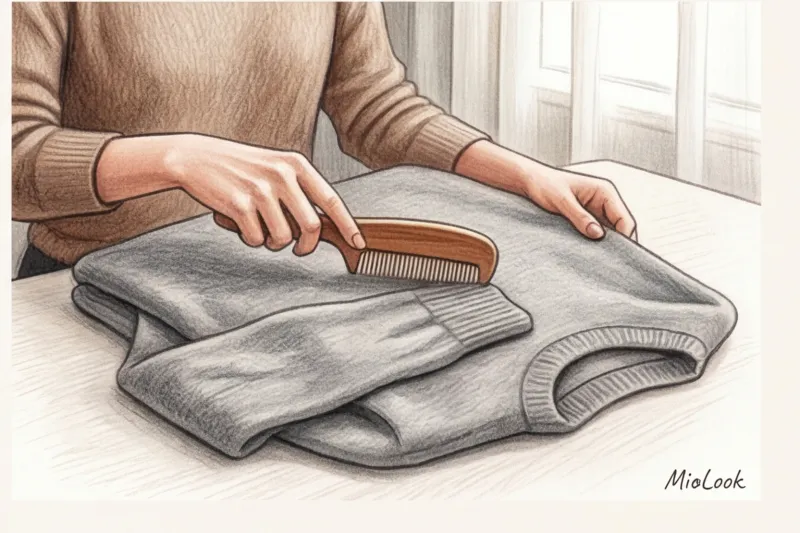
Washing instructions: turning inside out and choosing a detergent
A washing machine drum is a centrifuge where clothes are aggressively rubbed against each other. To protect the outer surface, always turn your clothes inside out.
Use mesh laundry bags for delicate items, but remember: the item should not move freely inside the bag! The bag should fit snugly around the item, otherwise friction inside it will negate all protection.
Critical: Avoid using dry laundry detergents when washing knitwear. Undissolved granules act like an abrasive (like sandpaper). Switch to liquid gels. Also, avoid enzyme-based detergents if you're washing silk or wool—enzymes are designed to break down protein-based stains, and natural wool is a protein. These detergents will literally "eat" your clothes, making the threads brittle.
Wearing Rules: Hidden Enemies of the Perfect Texture
Have you ever noticed that your sweater often pills on only one side? According to statistics, 80% of damage to your favorite knitwear is our own fault:
- Stiff crossbody bag straps (especially chains or slings).
- Rough inner seams or a stiff lining of outerwear (coats or jackets) that rub against a soft sweater.
- Seat belt in the car.

And another secret from the pros: the "rest" rule. Natural wool needs exactly 24 hours of rest after a day of wear. The fibers, having absorbed the body's natural moisture, need to dry and regain their springy structure. If you wear the same cashmere sweater three days in a row, it will immediately pill, as the damp fibers are stretched and vulnerable.
A stylist's shopping guide: how to spot a problem item in the store
When I make capsules for clients and upload them to MioLook I conduct a rigorous selection process right from the purchasing stage. Even the most beautiful design won't save me if the item is covered in pilling within a week.
How to test fabric in the fitting room:
- Composition test: Read the label. Avoid 50/50 ratios (e.g., 50% merino, 50% acrylic). It's better to choose 100% synthetics or 100% wool. The maximum safe synthetics (polyamide, nylon) used to strengthen the yarn should not exceed 20-30%.
- Visual assessment of torsion: Look at the yarn closely. If it looks loose, fluffy, and easily peels under your nail (low-twist yarn), pilling will appear within a day. Invest in a dense knit (high-tension yarn). The fabric should be elastic.
- Manual friction test: Pinch an inconspicuous area of the fabric (such as the inside edge of a hem) between your fingers and rub vigorously for 10-15 seconds. If the fluff immediately clumps, leave the item in the store.
Ready to get started?
Try the MioLook plan for free—no commitments required. Create your smart wardrobe now.
Start for freeSummary: Proper grooming as a tool for personal style management
The absence of pilling is a powerful, unconscious marker of well-groomed clothing. People around you may not be familiar with brands or know the difference between Zara and The Row, but they can instantly recognize the impeccable texture of the fabric. Smooth, dense, and well-cared-for fabric always looks expensive.
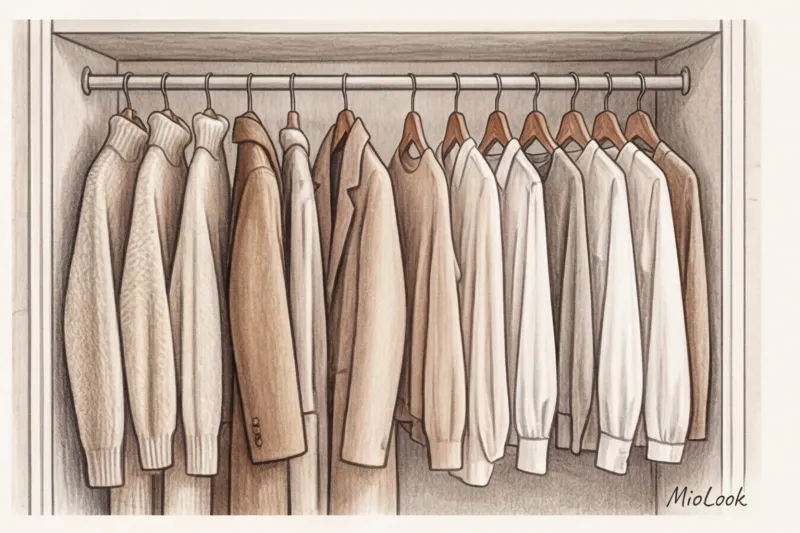
Assemble your basic grooming kit today: a quality trimmer (from $25-$30), a cashmere comb, enzyme-free liquid gel, and mesh laundry bags that fit your clothes.
Taking care of your clothes isn't a boring chore. It's a sign of respect for yourself, your hard-earned money, and your personal style. Your clothes will last for years if you give them fifteen minutes of attention before putting them away.