Did you know that your smartphone camera is likely lying to you about your appearance? According to statistics, about 80% of women misunderstand... How to determine your appearance style type , simply because they try to do so with a mirror selfie. A phone lens with a focal length of less than 50mm optically distorts perspective: it exaggerates facial features, elongates the nose, and visually narrows the shoulders. As a result, a woman with a pronounced body geometry takes an online test and gets the result "Gamine," although in reality she is a classic "Dramatic."
We talked in more detail about the basic architecture of style and why our skeleton dictates the rules of our wardrobe in our a complete guide to style types and archetypes But today I want to talk about practice. As a textile expert and stylist with many years of experience, I assure you: real style work begins not with answering questions online, but with physical contact between fabric and your skeletal structure.
Why online personality tests often lie
One of my clients came to me in utter despair. She was convinced she was a "Romantic" because an online test had predicted that based on her selfies. She'd been buying up ruffles, floral prints, and ruffled blouses, but in the mirror she saw a "heavy woman," even though she wore a size 10. When we met in person, I immediately saw a broad frame, a stately posture, and blunt shoulder angles—a clear "Natural" type.
The main problem with digital typing lies in the confusion between bone structure (framework) and soft tissue distribution (weight). Your style type is the foundation of a house, its load-bearing walls. Weight and measurements are just cosmetic changes. You can gain 10 kilograms, your measurements will change, but the length of your collarbones, the size of your palms, and the shape of your jaw will remain the same.
That's why you won't always be a classic "apple" or "pear" shape (these parameters are unstable), but your style type remains constant throughout your life. According to a WGSN study (2024) on mindful consumption, accurately knowing your frame type reduces the number of spontaneous "clothing mistakes" in your wardrobe by 60%.
The Basics: Bone Structure and Yin-Yang Balance Analysis
To understand how to accurately determine a person's style type, one should turn to David Kibby's original theory, described in his book "Metamorphosis" (1987), and later refinements by Dwyn Larson. The essence of the system is based on the balance of two energies in the body's architecture—Yin and Yang.
Forget the esoteric. In the context of style, this is pure physics and geometry. Yin - it is softness, roundness, short lines, delicacy and arcs. Jan — this is rigidity, sharp angles, elongated lines, stateliness, and broad bones. To read your balance, look at your wrists, ankles, and the size of your hands and feet relative to your height. These are the ones that reveal your true size.
Your perfect look starts here
Join thousands of users who look flawless every day with MioLook. Artificial intelligence will help you adapt trends to your unique personality type.
Start for freeYang Vector: Geometry and Scale
Dominant Yang is manifested by a tall stature (usually over 170 cm), broad shoulders, prominent cheekbones, and straight body lines. Such women feel physically uncomfortable in small chintz prints or thin, flimsy knitwear. Low-resistance textiles (for example, viscose knits with a density below 180 g/m²) look cheap and sloppy on a Yang frame, as if the item has been washed.
Yin Vector: Softness and Roundness
The Yin appearance is characterized by sloping shoulders, a compact height (up to 165 cm), a soft jawline, and an abundance of curves in the silhouette. The main tragedy of modern Yin types lies in current office fashion. When a Romantic woman wears a stiff, double-breasted, "man-made" jacket made of thick wool (say, €250 from an expensive brand), she doesn't look classy. The jacket's geometry clashes with her natural softness, making her appear as if she's wearing her older brother's jacket.
A Practical Guide: How to Determine the Style Type of Your Home's Exterior
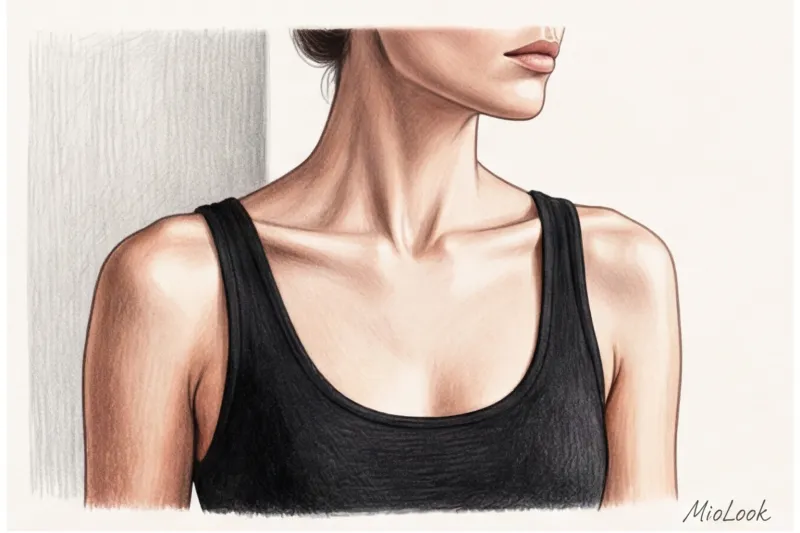
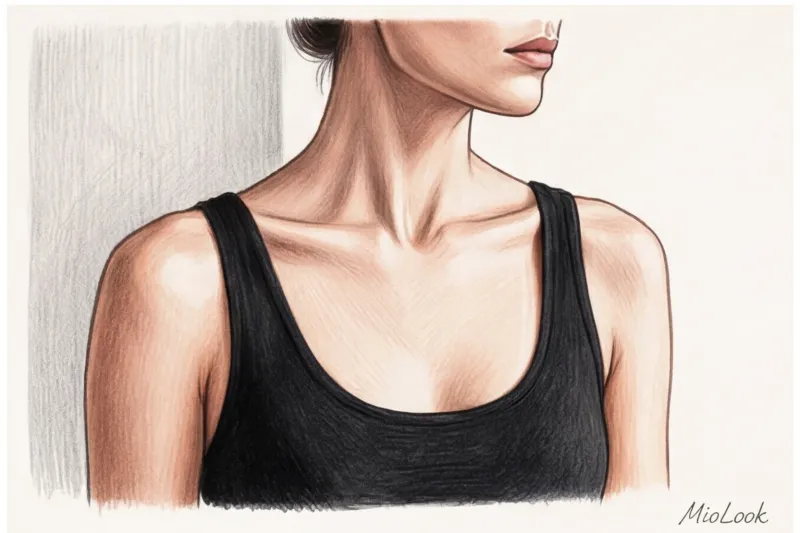
So, we've established that selfies don't work. If you want to do the typing yourself, you'll need proper preparation. Wear form-fitting basic clothing (leggings and a neutral-colored T-shirt), remove makeup, and pull your hair back from your face. The background should be plain, and the lighting should be natural, directly on you.
Step 1: The right photo. Ask someone to take your photo or use a tripod. The camera should be positioned exactly at chest level. Keep the distance between you and the smartphone at least 3 meters. Zoom in (2x or 3x) to simulate the focal length of a 50mm lens. This will ensure your body's proportions are captured without distortion.
Step 2: Analyze facial lines. Print out a black-and-white portrait photo. Take a marker and trace the contours of the face: the hairline, cheekbones, chin, and the shape of the eyes and lips. Do you prefer sharp angles and straight lines (Yang) or circles and ovals (Yin)?
"Fabric never lies. You can fool yourself with makeup or a good photo pose, but the way the material falls across your collarbone will give away your true nature in the first second."
Stylists' Secret Method: The Fabric Drapery Test
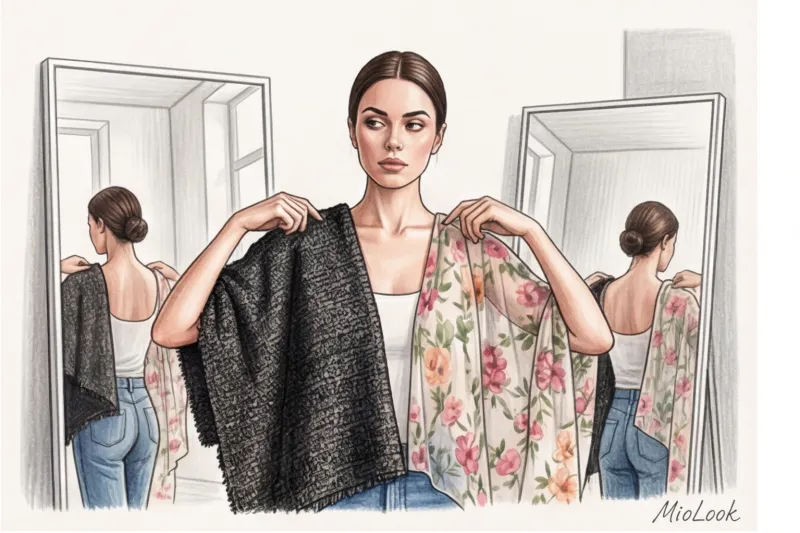
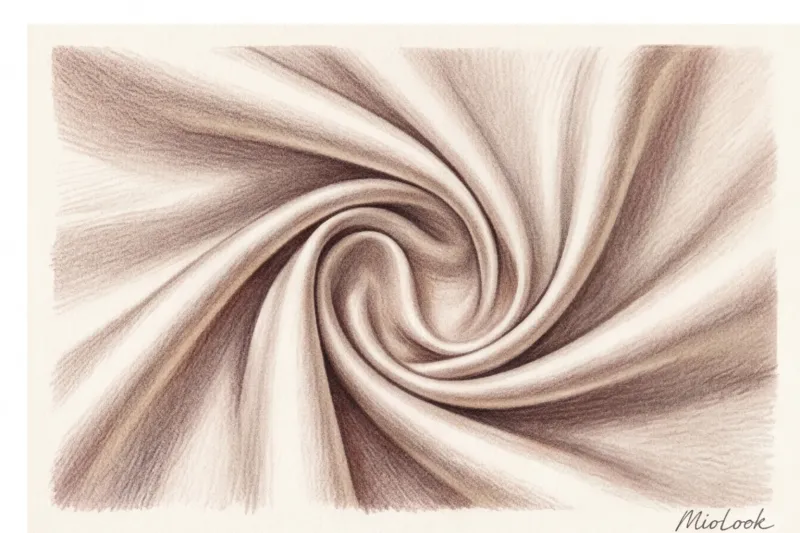
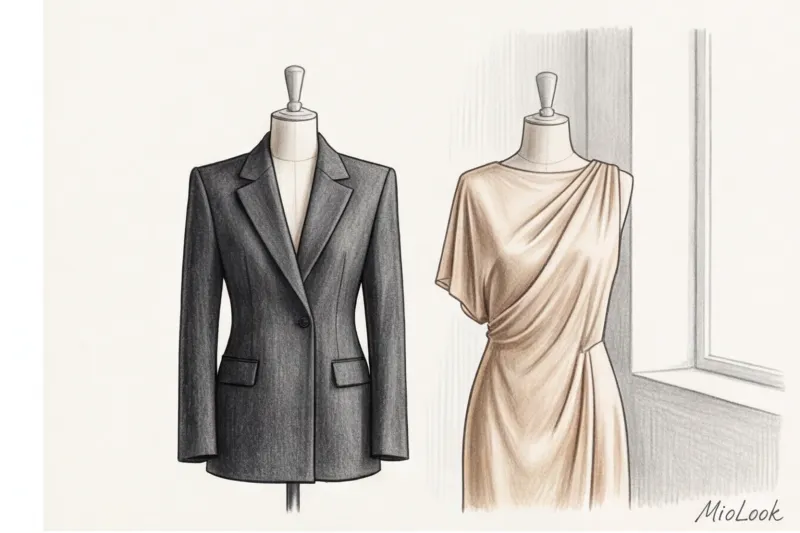
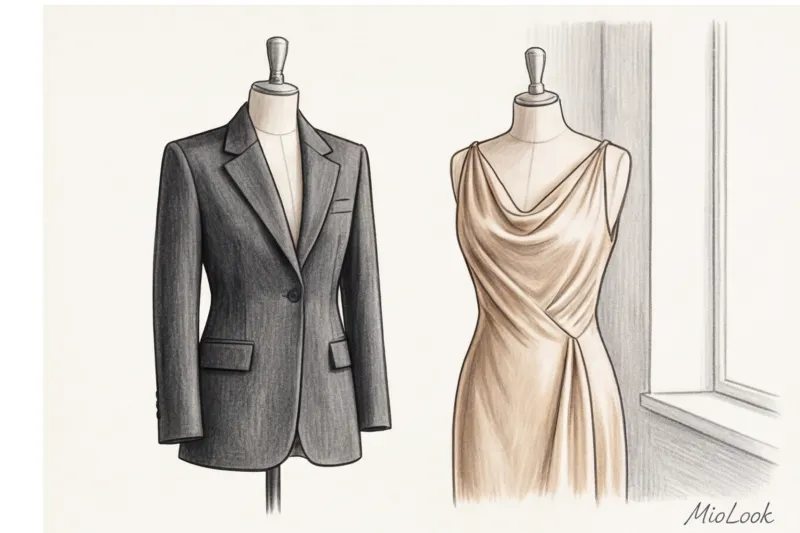
In my practice, I often use the "blind" textile testing method. Stand in front of a large mirror in natural light. Take two fabrics with radically different properties. For example, heavy, stiff gabardine or dense denim and light, flowing chiffon or natural silk.
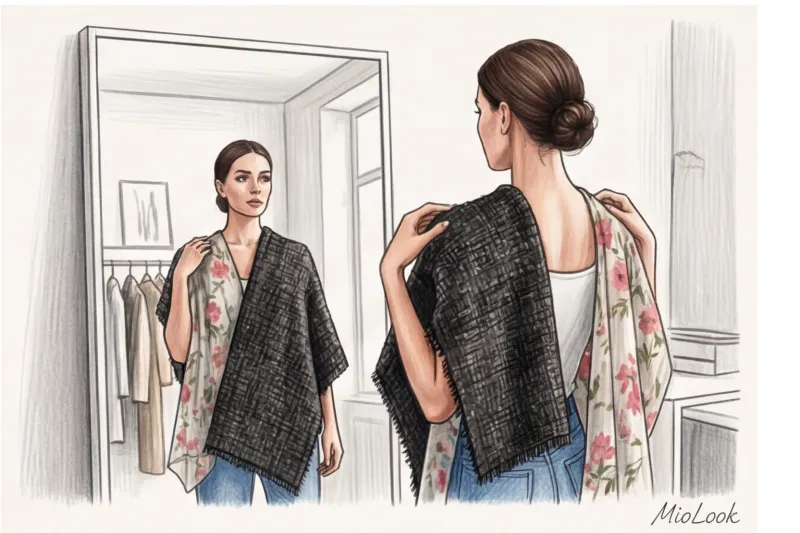
Drape a stiff fabric over one shoulder and a soft one over the other. Look at your face. Which texture makes your features sharper, your eyes brighter, and your face contours firmer? If gabardine makes you look older and rougher, you're more Yin. If chiffon makes you look like cheap rags and your face requires more drama, you're more Yang.
Try a scale test: hold a fabric with a large, contrasting geometric print against your face, then a fabric with a small watercolor pattern. A Yang-type appearance will be overwhelmed by the small print, while a Yin-type appearance will be lost against the large squares.
Kibbe's 5 Basic Body Types: Your Textile Passport
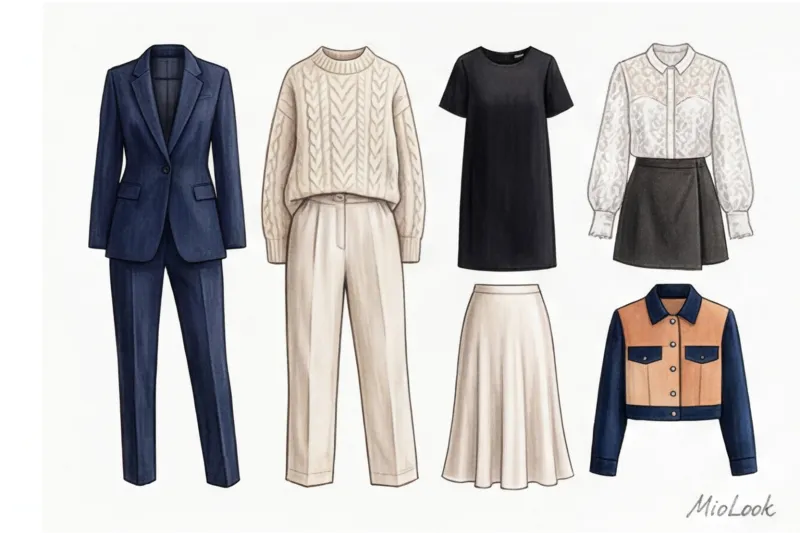
The original system has 13 subtypes, which often confuses beginners. I recommend starting with the five basic families. My expert trick is to tie the type not to abstract styles, but to the specific physical properties of materials. This works flawlessly.
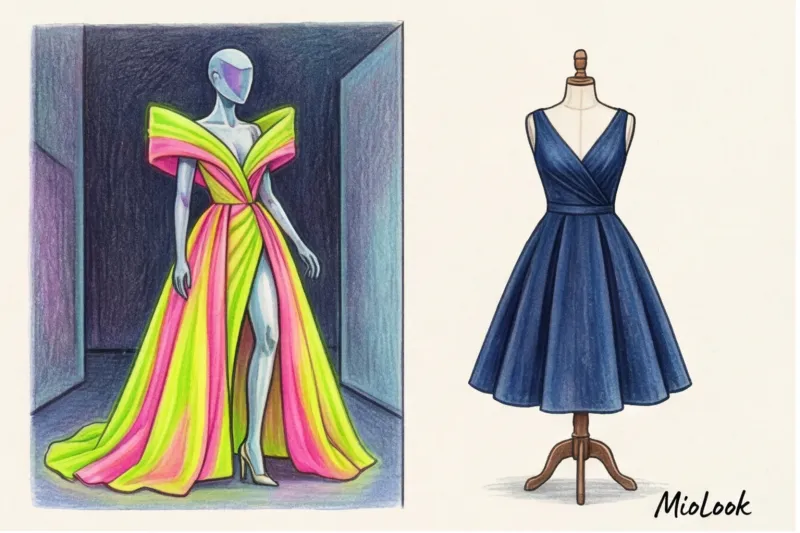
- Dramatic (Extreme Yang): Your appearance demands precision. Look for fabrics that hold their shape independently of your body. High-twist suiting wool, taffeta, heavy cotton, and stiff, smooth leather. Your pricing strategy should be an investment in impeccable tailoring. A well-fitting jacket for €150–€200 will last you for years.
- Natural (Softened Yang): You embody texture and relaxation. Your fabrics should have a rough texture. Linen, chunky knits, suede, matte raw silk, bouclé. Avoid shiny, glossy fabrics—they look out of place on you.
- Classic (Yin and Yang Balance): Symmetry and moderation. Fabrics should be neither too stiff nor too flowy. Ideal choices include silk with a density of 19mm, smooth merino wool, and high-quality cotton with 5% elastane.
- Romantic (Extreme Yin): Your superpower is drape. The fabric should flow, hug your figure, and obey your every movement. Velvet, crepe de chine, fine lace, angora. A rigid cut is contraindicated.
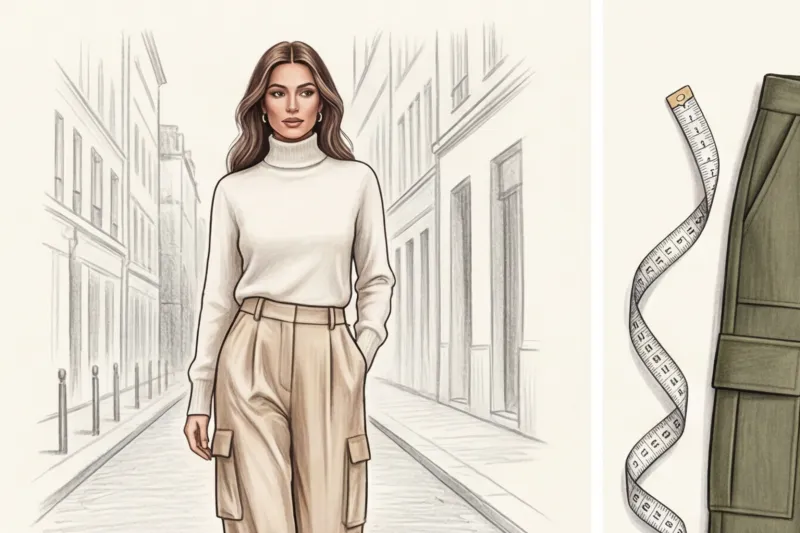
- Gamin (Clash of Yin and Yang): You're made for contrasts. Textures that hold fine detailing well (collars, cuffs, pockets) suit you. Heavy cotton (poplin), micro-corduroy, stiff denim, and ribbed fabrics.
Ready to get started?
Try the free plan—no commitments required. Upload your best pieces to your smart wardrobe and create capsule collections with just one click.
Start for freeThe Main Mistake: Why Your Body Type (Pear/Apple) Doesn't Equal Your Style Type
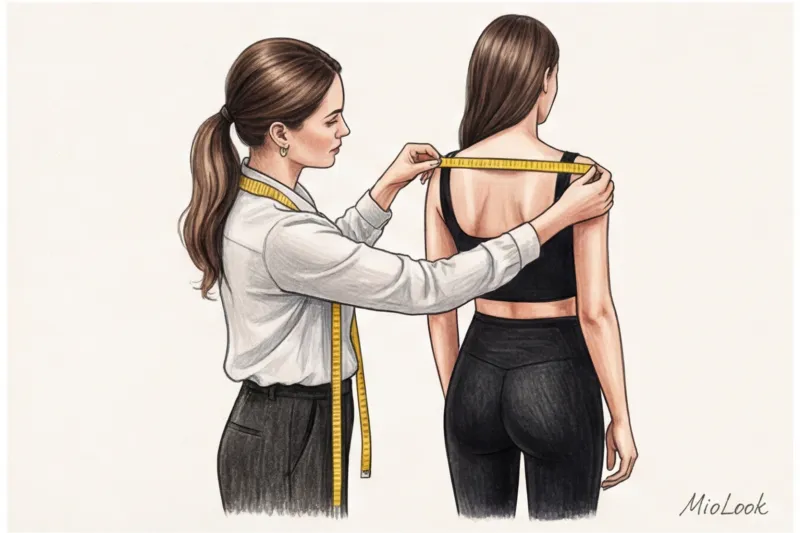
One of the most persistent illusions in the world of style is that clothes should be chosen solely based on body type. This doesn't apply when we're talking about the overall impression.
Body type (Pear, Apple, Hourglass) describes only Horizontal volumes and how your body stores fat. Your style type determines your baselines, bone scale, and, as we've already discussed, your interaction with texture.
Imagine two women with a pear-shaped figure (ample hips, narrow shoulders). One is a Romantic, the other a Natural. If you give them the same advice—"wear an A-line skirt"—you'll be wrong. The Romantic needs a flowing crepe skirt that gently hugs the hips. The Natural needs a thick linen or suede A-line skirt that creates a frame independent of the body. They have the same figure, but their fabric profiles are completely different.
Checklist: What to do once you've discovered your type
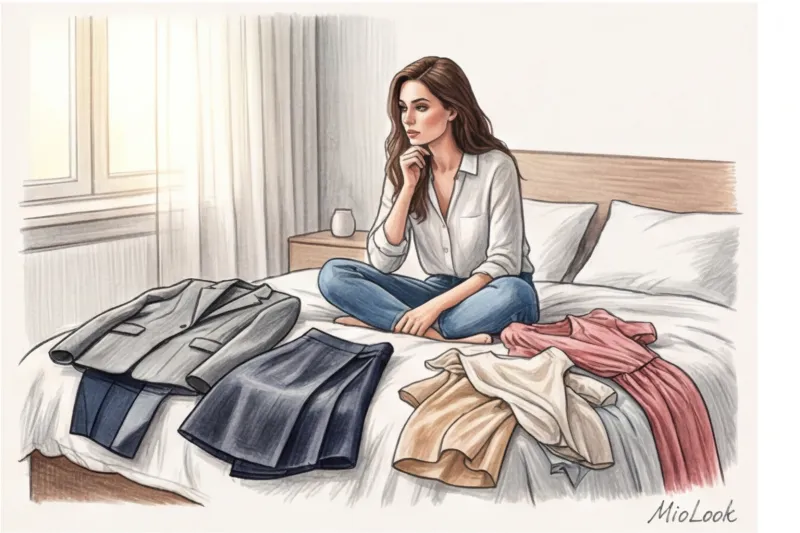
Defining your body type isn't a limitation, but rather a liberation from imposed trends that don't suit you. It's an end to pointless spending on things that just have labels attached.
- Conduct a conscious audit. Open your closet and put aside any items whose texture clearly clashes with your bone structure. If you're a Dramatic, put away those shapeless, flimsy floral cardigans.
- Digitize your wardrobe. Take photos of the remaining successful items in good light. Upload them to MioLook — Our AI assistant will help you assemble new sets from them, taking into account your natural coloring and geometry. This is the perfect way to see what your base is missing.
- Create a shopping list based on textures. Next time you go shopping (whether it's a €30 mass-market item or a €300 premium one), touch the fabric first, and only then look at the color and style. If the fabric isn't your style, feel free to pass it by.
Style isn't about trying to reshape yourself to fit fashion standards. It's about deeply understanding your physical nature. Stop fighting your geometry, and your wardrobe will finally start working for you, not against you.