You open your closet, and a neon top, complex asymmetrical trousers, and a sequined skirt spill out onto you. There are tons of items, all bought in a burst of inspiration after browsing through yet another street style report, but once again, you have nothing to wear on a rainy Tuesday. Sound familiar? Over 10 years of working as a fashion journalist and stylist, I've learned that "closet full" syndrome isn't caused by a lack of taste. It occurs when the mathematics of style are out of whack.
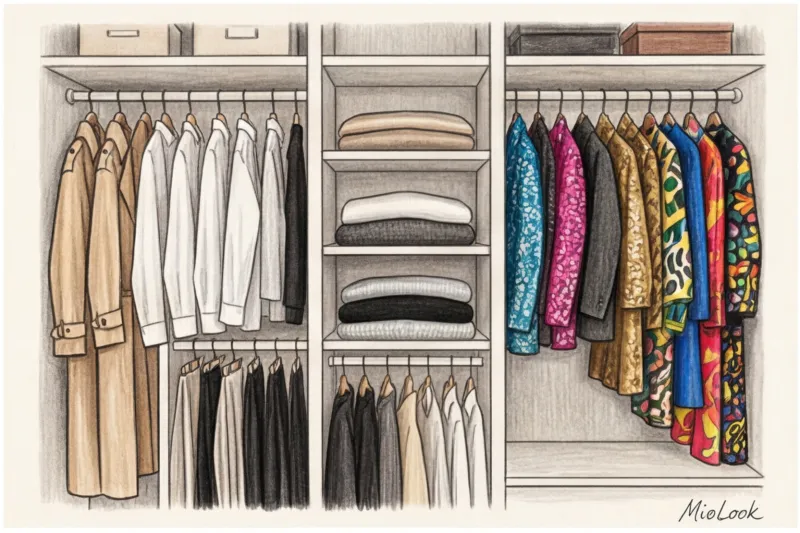
I hear questions about how to combine trends and essentials from every other client. We've already discussed transferring runway ideas into everyday wear in more detail in our a complete guide to style and adapting trends But today I want to explore the balancing act used by industry insiders. Forget the clichéd advice like "wear brights and grays." We'll discuss the 80/20 rule—a framework that will save your nerves and your budget.
Wardrobe Anatomy: What the 80/20 Rule Really Means
Pareto's Law states that 20% of the effort produces 80% of the results. In fashion, this statistic is relentless: 80% of the time, we wear the same 20% of the items in our closet. These are those perfect jeans, our favorite jacket, and the sweater that makes us feel comfortable. So why not use this statistic to your advantage?
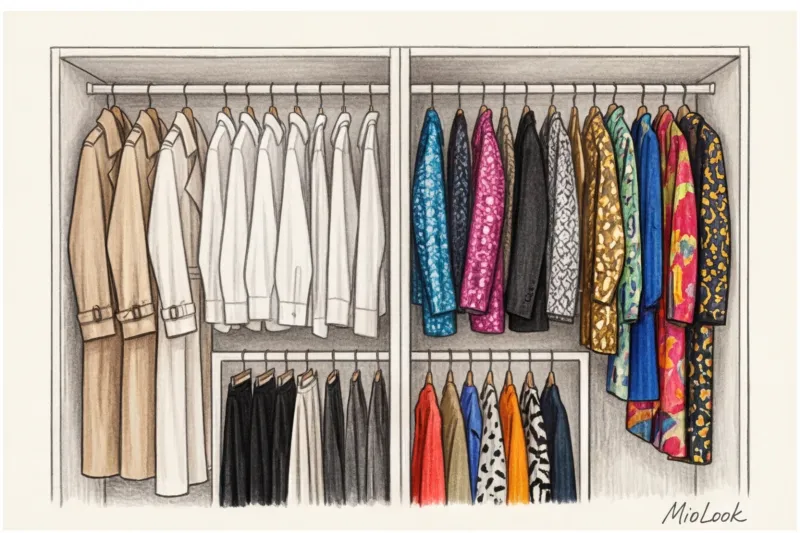
I had a revealing case in my practice. I was auditing Marina's wardrobe, a top manager at an IT company. Her closet consisted of 80% trends (complex prints, feathers, deconstruction) and 20% basics. Every morning turned into a 40-minute stress-filled day: the statement pieces screamed and refused to fit together. Once we flipped the proportions, keeping 80% calm, architectural cuts and 20% statement pieces, getting ready dropped to 10 minutes.
But stylists use 80/20 not only to count hangers in a closet, but also to visual weight in a specific image. The foundation (80%) is the canvas: smooth texture, clear cut, neutral color. The accent (20%) is the spices. They convey the emotion and spirit of the times.
How to Combine Trends and Essentials: The Visual Anchor Method
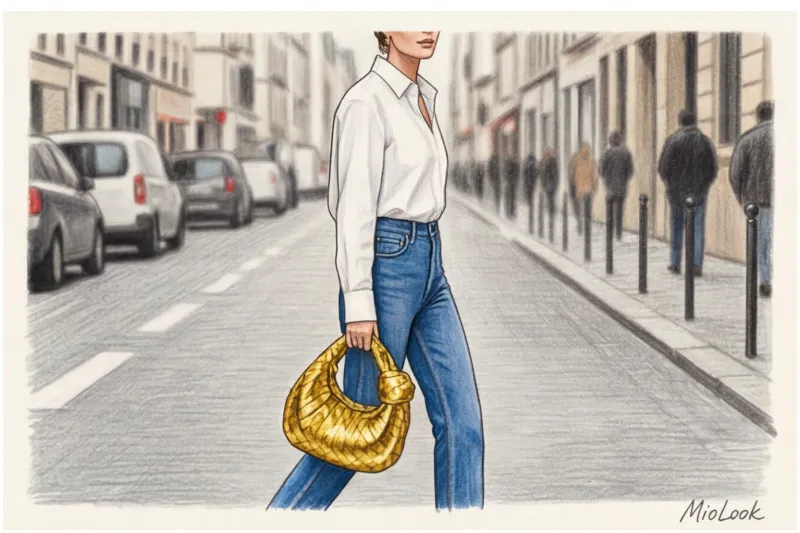
After the Milan Fashion Week shows, I always love watching off-duty models. How do Gigi Hadid and Kaia Gerber wear crazy runway pieces in real life? They use a "visual anchor" technique.
A visual anchor is the simplest, most straightforward piece, which grounds any avant-garde look. A crazy Loewe top with 3D flowers would look out of place with equally complex trousers. But pair it with straight vintage Levi's 501s and white sneakers, and you'll achieve a gallery effect. A trendy piece always looks more expensive against a minimalist backdrop, just as a painting looks better on a white wall than on colorful wallpaper.
Trendy accessories as a safe start
If you're hesitant to embrace runway trends, start with accessories. Shoes, bags, tights, or chunky jewelry are the perfect 20%. Micro-trends, like burgundy patent leather pumps or a bag with a chunky metal trim, instantly elevate your look, even if you're wearing classic pleated trousers and a white shirt.
By the way, to avoid buying unnecessary things, I advise my clients to use the app MioLook You can upload photos of your basic clothes and virtually try on trendy accessories before you spend money on them in the store.
A play of textures: when the base becomes the background
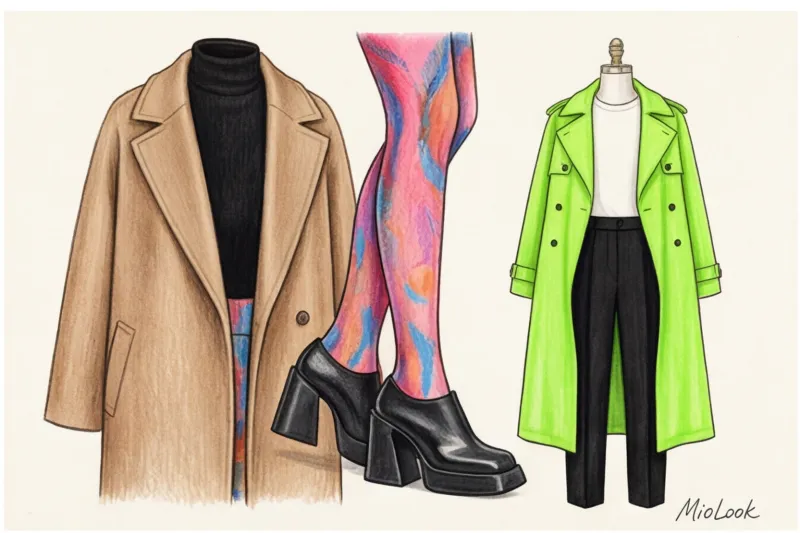
The secret to a luxurious look lies in the contrast of materials. The more complex the texture of a trendy item (sequins, feathers, patent leather, metallic thread), the simpler the base material should be. Pair bold patent leather with thick matte cotton (from 180 g/m²), and sheer lace with smooth suiting wool.
Your perfect look starts here
Join thousands of users who look flawless every day with MioLook. A smart AI stylist will help you create looks from your clothes.
Start for freeThe biggest mistake newbies make: the "trend base" trap
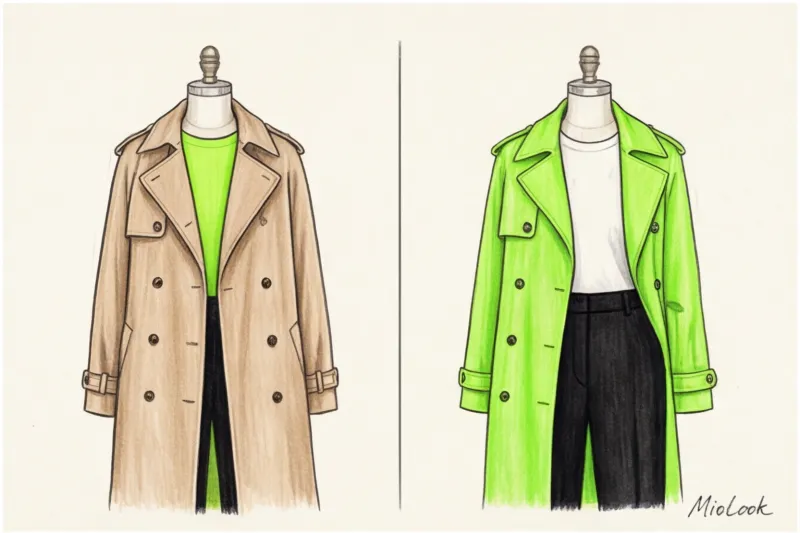
Here I must share a counterintuitive insight that revolutionizes the way you think about shopping. The worst investment is buying "trend basics." What are those? Imagine a classic double-breasted trench coat, but made in fuchsia fabric. Or basic straight-leg trousers, but with an asymmetrical three-button waistband.
The problem with these hybrids is that they're not wild enough to be a full-fledged statement piece, nor are they subdued enough to serve as a backdrop. They'll be outdated after one season, and you won't be able to wear them every day.
"The base should remain impeccably boring, while the trend should be uncompromisingly bright. Pure contrast works better than trying to smooth out the edges."
Historically, Miuccia Prada brilliantly demonstrated this technique in her celebrated 1996 Spring/Summer collection ("Banal Eccentricity"). She coined the term "Ugly Chic," demonstrating that classic, almost "ugly-simple" shapes, combined with a single, bizarre element, create the most powerful stylistic spark.
From the Catwalk to Reality: Deconstructing a Complex Image
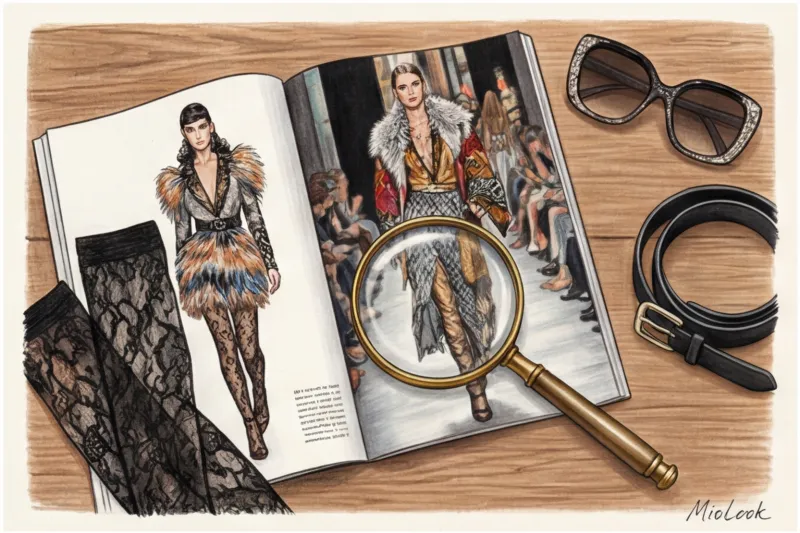
Many people watch Haute Couture shows and wonder, "Where am I supposed to go in this sheer crystal dress?" The mistake is that you shouldn't copy the catwalk verbatim. You should "read" it and dissect it.
Use the extraction method. According to the analytics platform The Lyst Index for 2023–2024, after Miu Miu's triumphant shows, searches soared not for complete runway looks, but for specific details: gray cashmere cardigans worn over bare skin and exposed underwear elastic. Shoppers isolated the styling technique.
Want to embrace the sheer trend? Don't buy a see-through dress. Buy a semi-sheer long-sleeve top and wear it under your most formal, heavy office jacket. Leave only the sleeves and collar visible. This is the 20% of the trend that makes the look sharp yet wearable.
Try MioLook for free
Start creating your perfect looks with artificial intelligence. Upload your wardrobe and get ready-made looks for every day.
Start for freeInvestment and Budget: How Much Does Your Style Cost?
Where should the money be spent? My approach is strict: 80% of the budget should go toward basics, 20% toward mass-market trends. Let's calculate the Cost-per-Wear (CPOW) math.
- Base: A great cashmere sweater for €300. You'll wear it at least 100 times over two seasons. Price per wear: 3 €.
- Trend: A trendy sequin skirt for €120. You'll wear it to a corporate event and a friend's birthday party (twice). Price per outing: 60 €.
It's better to buy the perfect sweater and find a trendy skirt or neon top in the budget segment (for €30-€40). The only exception to this rule is statement bags and shoes. These often become the key investment pieces that elevate even the most basic H&M jeans to a premium look.
Checklist: How to incorporate a fresh trend into your current capsule collection
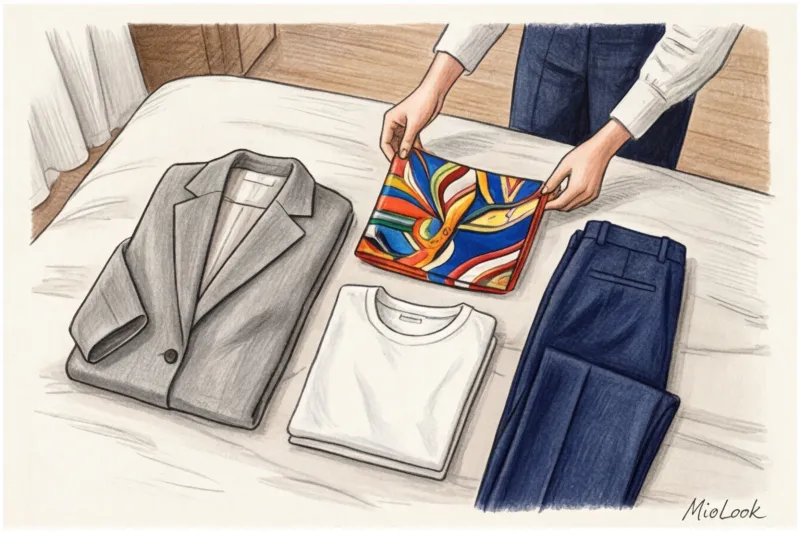
Before you buy the next "hot" new item, run it through this filter I give to clients after a shopping tour:
- Evaluating the DNA of Style. Does the trend align with your life? Fair Limit: This rule doesn't apply if the trend is completely at odds with your comfort level. If you hate heels, the '70s-style platform trend isn't for you, no matter how much Vogue praises it.
- Selecting a "safe zone". If a trend is too bold (like a leopard print all-over look), tuck it down into your shoes or belt. The further away from your face, the safer.
- Three things test. If you're standing in the fitting room with a trendy item, mentally match it with three basic items from your closet. Can't think of any? The item will remain hanging with the tag.
- Balancing volumes. If the trend is hyper-volume (huge jacket shoulders), the base should be tight-fitting (turtleneck and straight jeans).
Bottom Line: Your Personal Fashion Trend Filter
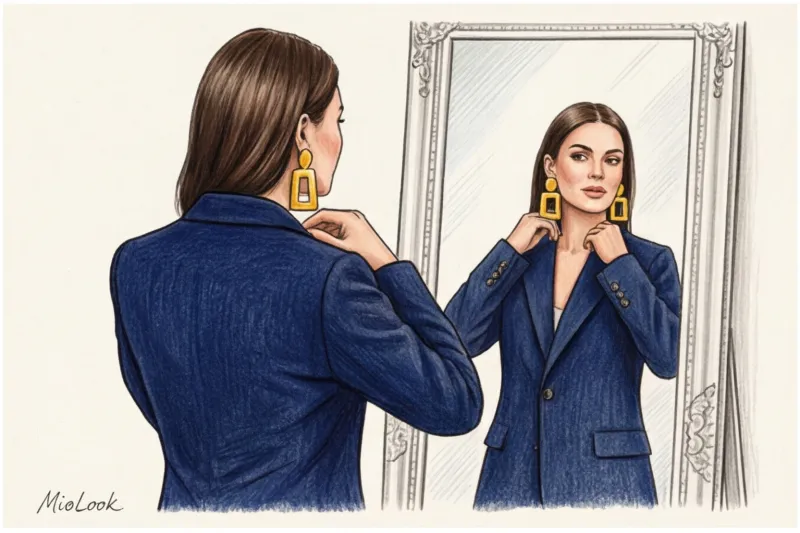
The 80/20 rule isn't a rigid framework that should limit you. On the contrary, it's a framework that offers incredible freedom. When you have a solid, high-quality foundation, you can indulge in any stylistic whimsy with the remaining 20%.
Trends come and go. This season we're wearing burgundy, next season we'll be back to pastels. But learning to integrate these fashion trends into your personal style is a skill that stays with you forever. Tomorrow morning, before you leave the house, look in the mirror and ask yourself one question: "Who is the main character in my look today—the base or the accent?" If the answer is obvious, then you've done it right.