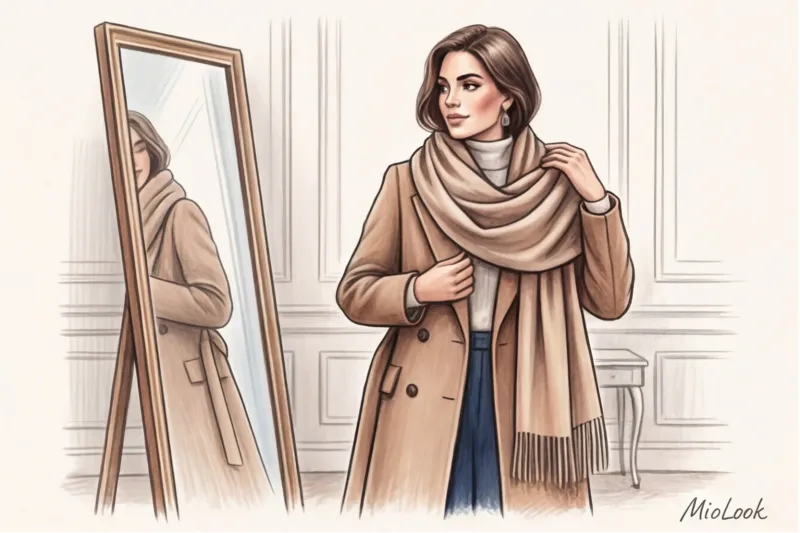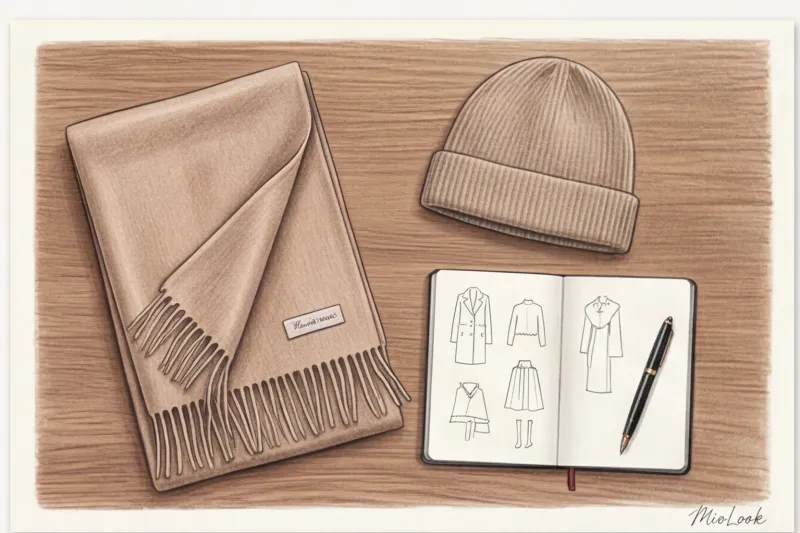
Over 12 years of working as a stylist and digital wardrobe planning enthusiast, I've conducted dozens of personal experiments. Two seasons ago, I decided to test my approach with data: I loaded all my scarves, hats, and gloves into a tracker and began logging every outfit. The data amazed me. It turned out I only actively wear 20% of my winter accessories, while the remaining 80% simply sit on the shelf, creating the illusion of choice.
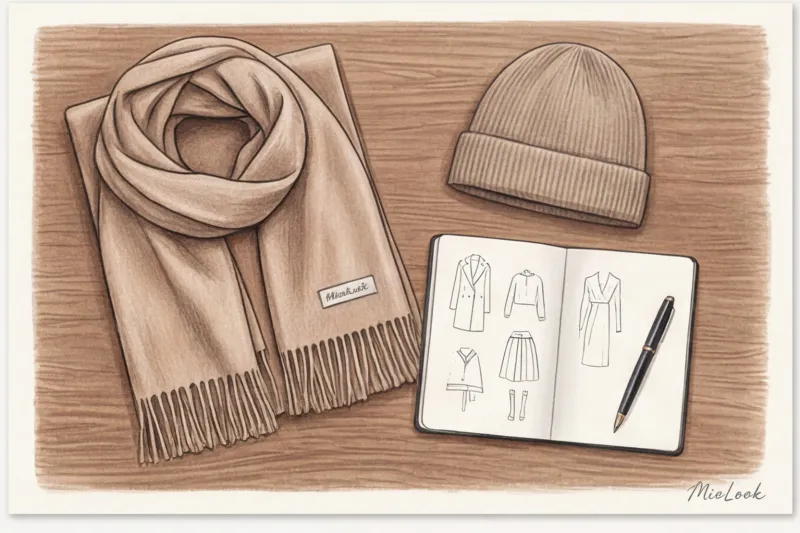
When we're putting together a basic winter wardrobe, accessories are often bought as an afterthought. We're ready to invest €500 in a quality wool coat, but then finish the look with the first acrylic set we find on sale for €20. This is a fatal mistake. When we're out and about, up to 80% of the person you're talking to focuses on the portrait area—the face, neck, and shoulders. We discussed the architecture of such looks in more detail in our A complete guide to creating a stylish capsule collection of basic hats and scarves , but today I want to talk about numbers and textures.
Basic Winter Wardrobe: Accessories and the Ruthless Math of Style
I love the Cost-per-Wear metric. It's the best antidote to impulse buying from mass-market brands. Let's do the math. You buy a synthetic scarf for €20. It statics your hair, doesn't keep you warm in the wind, and is covered in pilling after a month. You wear it 15 times a season and then throw it away. Your Cost-per-Wear is €1.33 per outing.
Now let's take a basic cashmere stole for €250. Yes, the starting price seems steep. But you'll wear it at least 120 days a year for 3-5 years. The cost per stole drops to €0.40. And yet, it enhances your image every day, looks expensive, and truly protects you from the cold.
Investing in accessories close to your face provides the maximum ROI (return on investment) for your style. You can wear the same basic down jacket or simple coat every day, but by switching up your premium hats and scarves, you'll look like you have a huge winter wardrobe.
Your ideal image
Join thousands of users who look flawless every day with MioLook. Digitize your wardrobe and calculate your Cost-per-Wear automatically.
Get access — €0.99 onceHow many hats and scarves do you really need? A stylist's formula
Avoid random, mood-driven purchases. The modern wardrobe is built on algorithms. My golden rule: 1 piece of outerwear = 2 styling scenarios (casual and formal) You don't need a separate hat for each pair of boots.
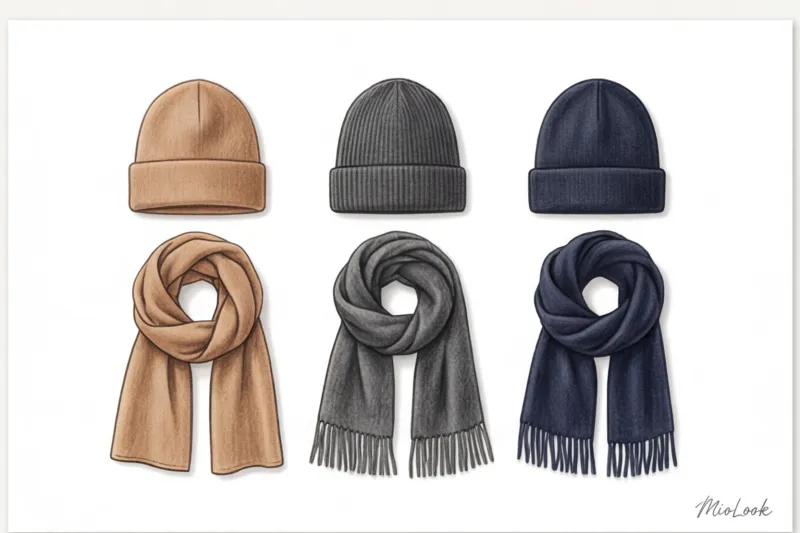
Minimum base (minimum capsule)
If you want to build a strict minimum that will cover 95% of life situations, you will need only three items:
- 1 basic beanie hat in a neutral shade. Thick knit (made from at least 19-micron merino wool), no logos, pom-poms, or rhinestones. Colors: graphite, cool taupe, or classic navy.
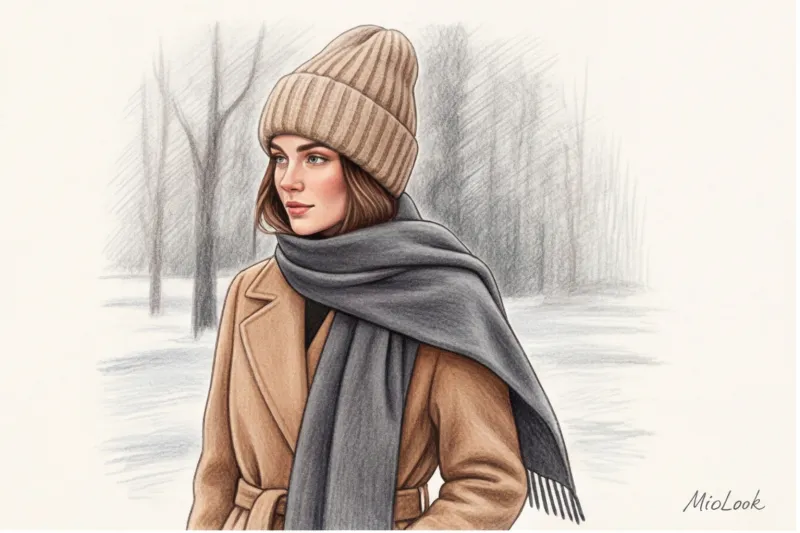
- 1 voluminous smooth scarf or stole. A base shade that matches the color of your eyes or hair.
- 1 accent scarf. It could be tartan, deep burgundy, or emerald. It's perfect for those days when you're all-black and your look lacks movement.
Optimal Base (Advanced Capsule)
For those who live in climates with extreme temperature fluctuations or want more stylistic freedom, the base should be expanded:
- Bonnet or balaclava. A lifesaver for severe frosts (below -15°C) and windy days. They protect the neck without adding bulk and don't tangle hair as much as tight hats.
- Silk square scarf (90x90 cm). An element of "quiet luxury." Wear it at the neck under an unbuttoned wool coat—it's not about warmth, it's about status.
- Scarf-bib. A brilliant invention for formal coats with a V-neck, where a regular scarf would create an unnecessary bulge on the chest.
The biggest mistake: why you shouldn't buy ready-made kits
Perhaps the most counterintuitive advice I give my clients is: Never buy or wear ready-made "hat + scarf + gloves" sets made from the same yarn..
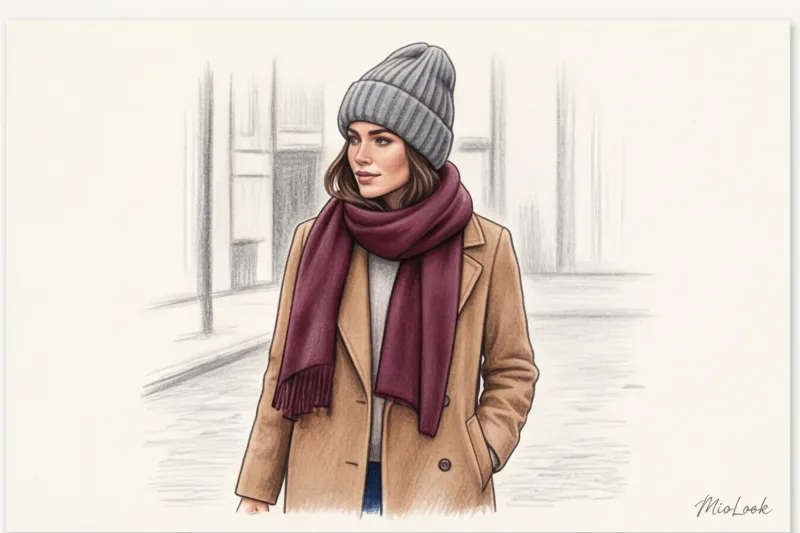
One of my clients, a top manager at an IT company, once showed up for a wardrobe review with a luxurious camel-colored Max Mara coat worth €1,500. But she wore it with a matching fluffy bright red set of hat, scarf, and mittens. The coat instantly "fell cheaper," and her look began to resemble a schoolgirl out for a walk rather than a mature, respectable woman.
"Similar knits and identical accessories strip the look of depth. It looks like you bought the outfit in a subway station and didn't bother styling it. A modern approach requires a complex textured architecture."
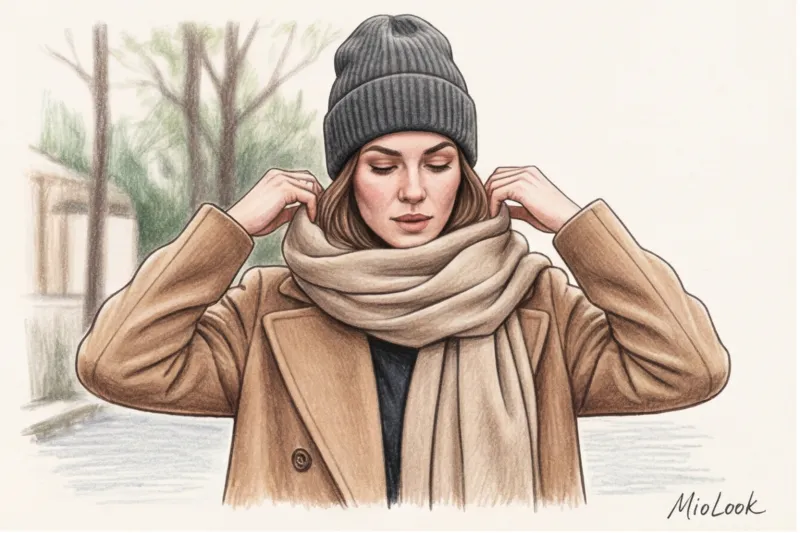
The rule of perfect combination: different textures + related (but not identical!) shades For example, a smooth dark chocolate-colored cashmere hat and a voluminous caramel-colored shaggy alpaca scarf. The contrast in texture creates that richness and complexity that begs to be explored.
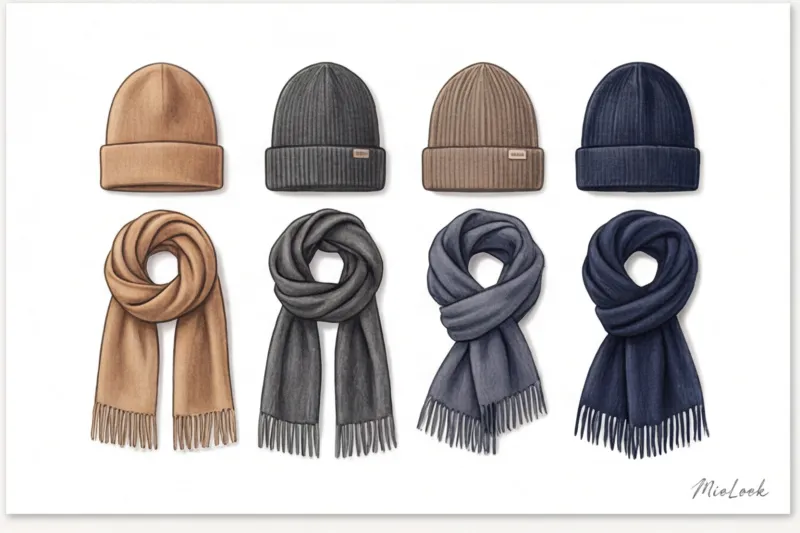
Investing in the Portrait Zone: Choosing the Right Textures
According to the Pantone Color Institute (2024 report), shades and textures within a 30-cm radius of the face have a critical impact on the perception of skin freshness and age. But beyond color, the physics of materials is also important.
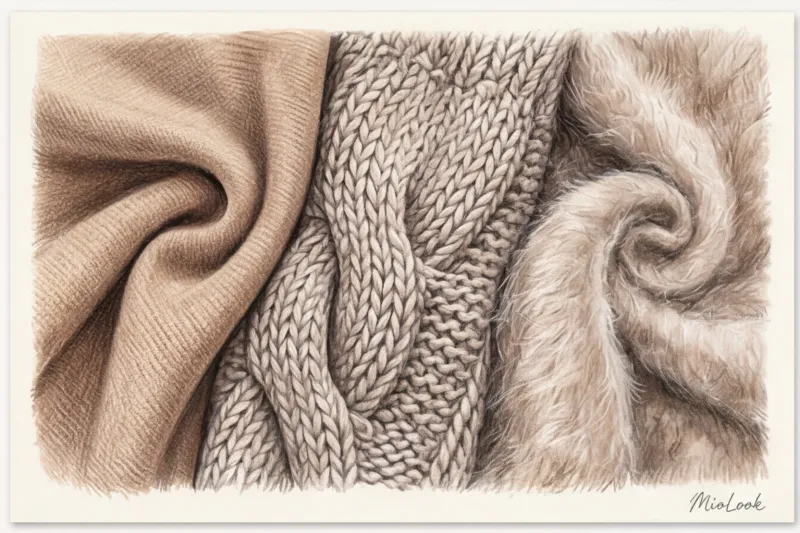
- Merino wool. This is your workhorse. Technological tests show that merino wool can absorb up to 30% of its own weight in moisture while remaining dry to the touch. Perfect for that "from the freezing street to the stuffy subway" scenario. And best of all, it's non-itchy.
- Cashmere. A status investment. It offers maximum warmth with minimal weight. Choose a dense cashmere (2 to 4 thread count, or ply) to ensure the scarf holds its shape.
- Alpaca and mohair. They create trendy, fluffy volume. Ideal for scarves, but use with caution on hats—the long bristles can get in your eyes and ruin your makeup.
What should be absolutely avoided? 100% acrylic near the face. Acrylic is plastic. It has zero breathability. You sweat, the moisture doesn't evaporate, you step out into the wind and instantly catch a cold. Furthermore, acrylic mercilessly statics your hair—no hairstyle can withstand this.
Access to MioLook for €0.99 — one-time payment
A smart AI stylist will select the perfect look based on your color type and texture, so you always look luxurious.
Get access — €0.99 onceIntegration with outerwear: an algorithm for ideal proportions
Accessories don't exist in a vacuum. Their purpose is to balance the silhouette of outerwear. The law of opposites applies here.
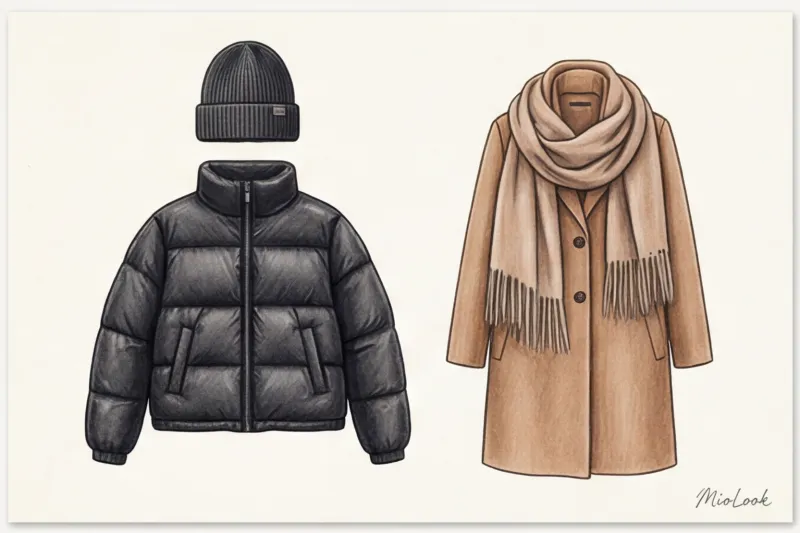
Oversized down jackets. If you're wearing a voluminous marshmallow jacket, a huge snood, and a shaggy hat will transform you into a ball on legs. Balance the volume with sleek, compact beanies worn on your head and medium-weight scarves tucked inside.
Strict coats. A classic double-breasted coat calls for a dynamic look. Here, on the contrary, a hyper-long, wide scarf (at least 40x200 cm) with fringe or an intricate texture is needed. It will offset the overly formal look.
Sheepskin coats and fur coats. The most challenging category. Since the texture of sheepskin or faux fur is very active, accessories should be as "quiet" as possible. Smooth cashmere or fine wool without ribs or patterns are your best choices.
A disclaimer from practice: This proportional rule has one exception. If you're under 160 cm (petite), avoid oversized blanket scarves, even with formal coats. They'll visually "shrunk" your neck and make your silhouette appear shorter. Choose scarves of medium width (around 25–30 cm).
Checklist: Putting together a winter accessories capsule
Don't rush to the store. First, let's get our digital stuff in order. Here's my step-by-step process:
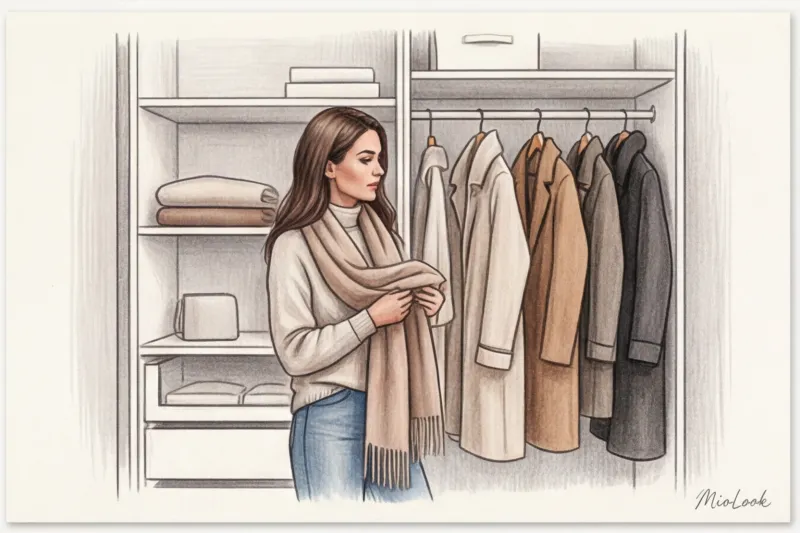
- Outerwear audit. Take out all your winter jackets, down jackets, and coats. Take photos of them. If you use an app MioLook , just open the outerwear section.
- Determination of the dominant temperature. Look at your coats. Do they have more warm tones (camel, chocolate, khaki) or cool tones (graphite, black, cool blue)? This will narrow down your hat search.
- Selection of 2-3 key textures. Plan to buy one smooth item (cashmere) and one textured item (alpaca or chunky knit).
- Digital fitting. Before buying a €200 scarf, add a photo of it to the app and create a collage with your coat. Does it suit you? Buy it. If not, keep looking.
Summary: From Utility to Status Image
Winter accessories have long since ceased to be simply a way to keep your ears from freezing. Today, they're a powerful tool for impression management. They can elevate a budget down jacket to the level of premium casual or ruin the impression of an expensive designer coat.
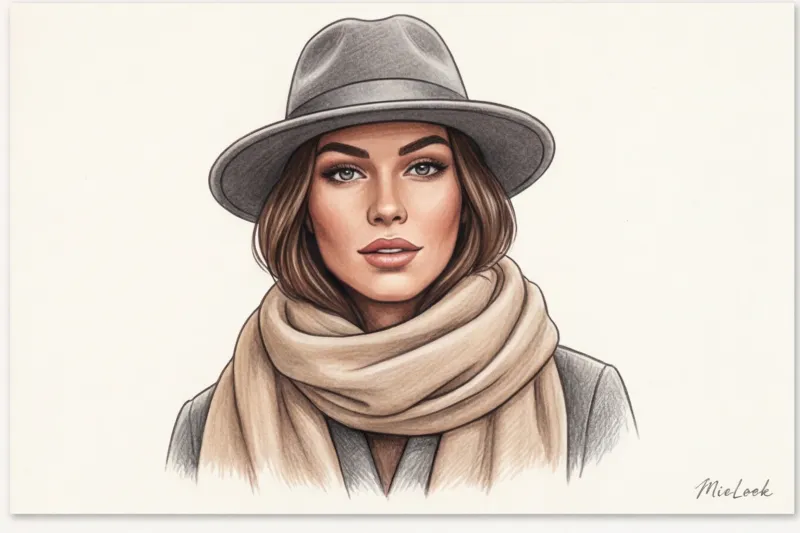
Remember this: it's better to have three flawless pieces of high-quality wool in your wardrobe than a drawer filled with stretched-out polyester in every color of the rainbow. Take stock of your accessories this weekend. Get rid of ready-made sets, recycle squeaky acrylic, and invest in a portrait area. You'll be surprised how much your reflection in the mirror on a frosty morning will change.
Ready to get started?
Try a free plan—no commitments required. Organize your winter accessories with a smart planner.
Get access — €0.99 once