In 2019, one of my clients, the wife of a major investor, was gently but firmly turned away at the entrance to the Vienna Ball. The reason? Her stunning couture dress had an excessively low back. This incident forever cemented one golden rule in my stylist practice: fashion experiments end where protocol begins. We discussed the hierarchy of formats in more detail in our The complete guide to evening dress codes for women , but today we will talk about its absolute peak.
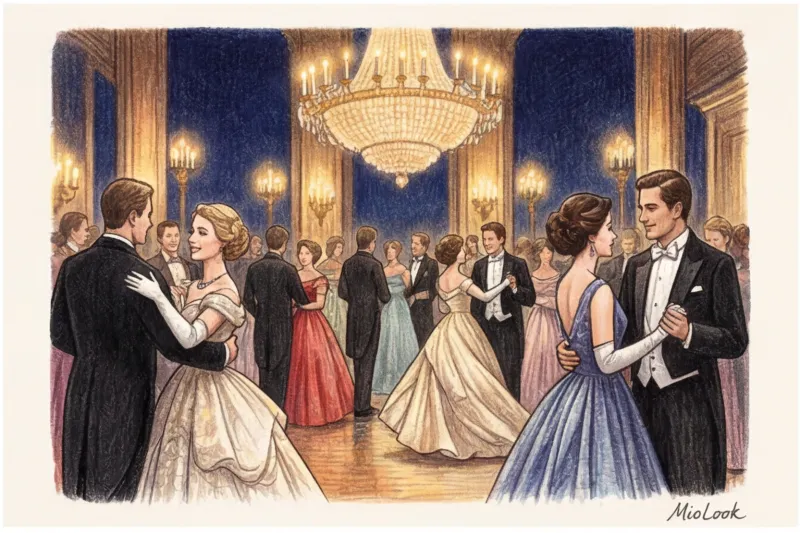
Strict white tie dress code for women — this isn't just an evening gown. It's the uniform of the aristocracy, where a single step out of line means public fashion failure. Think a black dress is a surefire classic, and a touch of Hollywood flair will save any situation? Spoiler alert: at events of this caliber, both of these ideas will prove disastrous. Let's figure out how to decipher the world's most conservative regulations and put together a look without spending an entire wedding budget.
What is the White Tie dress code and why is it unforgiving?
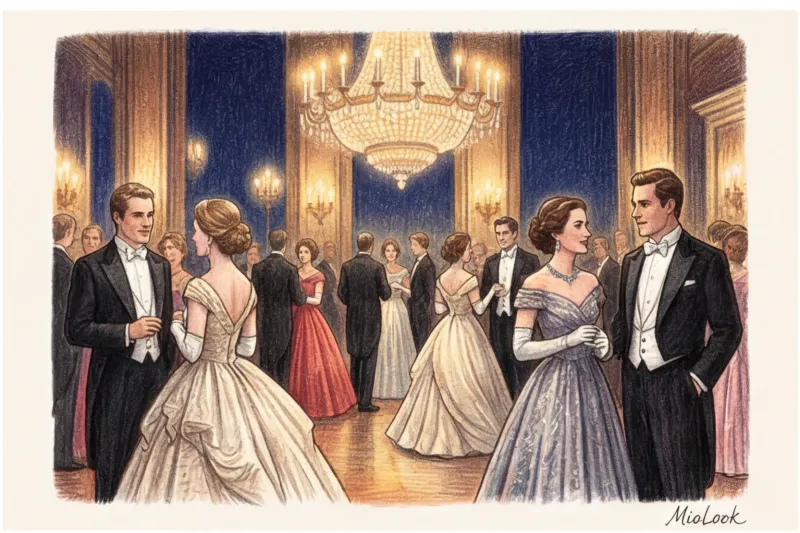
The term "White Tie" signifies the highest level of formality. While the Black Tie dress code allows for design liberties, asymmetry, and bold slits, White Tie is an uncompromising tribute to historical traditions. According to event agency statistics, less than 2% of all social events worldwide today are held in this format. These include royal receptions, the Nobel Prize ceremony, Viennese balls, and exclusive protocol weddings.
According to the authoritative British etiquette guide Debrett's White Tie regulations have remained virtually unchanged since the late 19th century. The main rule I always tell my clients before such events is: it's better to be slightly overdressed than underdressed at White Tie. A lack of formality is seen not as a manifestation of personal style, but as a direct social insult to the organizers.
"White Tie tolerates no compromise. It's the only dress code where your goal isn't to demonstrate your knowledge of the latest trends, but to demonstrate impeccable mastery of classic etiquette."
Access to MioLook for €0.99 — one-time payment
A smart AI stylist will select the perfect look.
Get access — €0.99 onceBasic Rules: White Tie Dress Code for Women in Detail
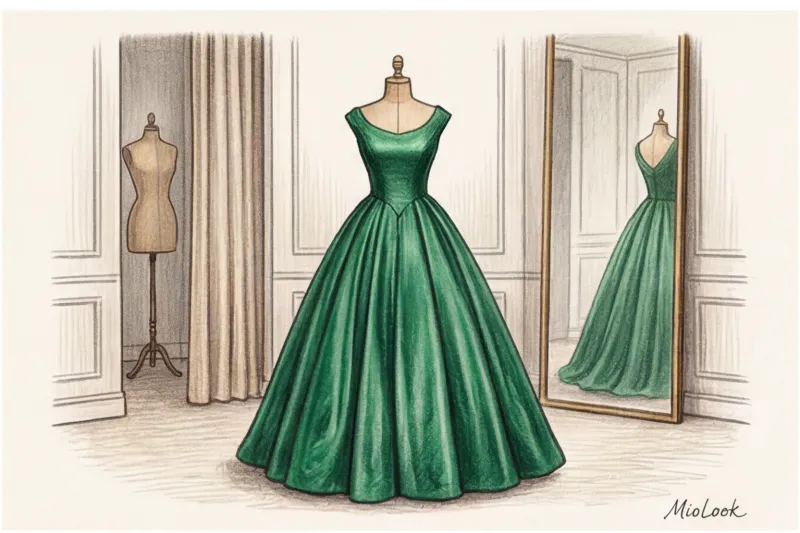
The foundation of your look is exclusively an evening dress. No elegant tuxedos, trendy palazzo pantsuits, or cocktail dresses. Fabric plays a crucial role: choose velvet, heavy silk, taffeta, thick satin, or brocade. Thin linen silk, cheap synthetic sheens, and any knits are strictly prohibited.
An important detail is the covered shoulders rule. If your dress has an open neckline or is sleeveless, your shoulders must be covered with a fur coat, a thick silk stole, or an elegant cape before the active part of the evening (dancing or the serving of the main course at the gala dinner).
Length, silhouette and neckline
The dress length should be strictly floor-length (full-length gown). Your ankles should not be visible under any circumstances, even when standing. Over 12 years of working as a stylist, I've developed an ironclad rule for the ideal length for balls: when wearing your formal shoes, the gap between the hem of your dress and the floor should be exactly 1–1.5 centimeters. This will save you from constantly having to pick up your skirt and risk stepping on it while waltzing.
The preferred silhouette is a ball gown (with a full skirt) or a classic A-line. Formal mermaid dresses are acceptable, but there's a catch: doesn't work At balls. In a tight hem, you physically won't be able to dance, and you'll spend the entire evening mincing along in tiny steps.
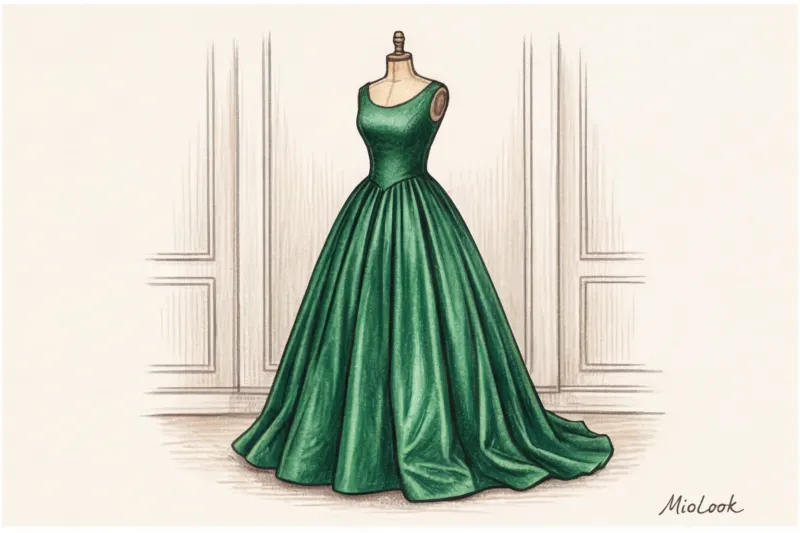
The neckline should be modest. Slits in the skirt (especially mid-thigh slits, a favorite on the red carpet) are strictly prohibited. If you're unsure whether the neckline is too revealing, it certainly is.
Color Selection: A Colorist's View
As a certified colorist, I often encounter a common misconception: "I'll wear floor-length black—it's a surefire classic." In practice, all-black is a tricky choice for White Tie. Most such events take place in historic halls lit by massive chandeliers with a warm light temperature (around 2700–3000 Kelvin). Under such lighting, heavy black silk absorbs the light and often looks flat, like a theater curtain.
Instead of black, I highly recommend deep, jewel-toned shades: emerald, sapphire, ruby, or rich amethyst. They sparkle luxuriously in the evening light and visually triple the value of your look. If you're attending a summer reception or are a debutante at a ball, feel free to choose pastel shades: powder pink, icy blue, or champagne. You can read more about choosing a palette in the article. "12 Color Types of Appearance: A Guide to Choosing a Palette".
Access to MioLook for €0.99 — one-time payment
Start creating perfect images with the help of artificial intelligence
Get access — €0.99 onceEssential accessories: gloves, jewelry and handbags
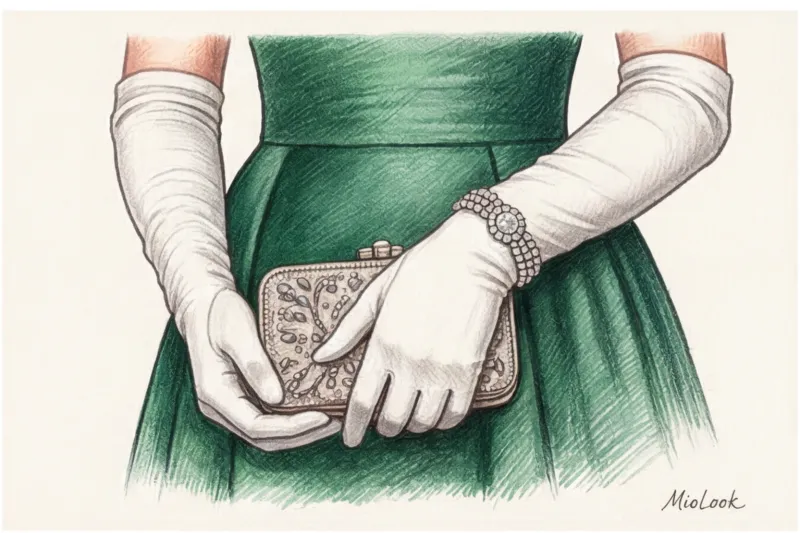
White Tie accessories are strictly regulated. The main hallmark of the format is long white gloves, or gloves that match the dress. The standard is 16-button gloves (opera length, reaching to the elbow). Strict etiquette applies: gloves are always removed at the dinner table (tuck them into your lap under a napkin), but are left on during greeting handshakes and dancing.
Shoes are strictly closed-toe. The ideal choice is pumps with a sturdy heel, covered in silk or satin to match your outfit. No sandals, even the most delicate and crystal-studded ones. Bare toes are an absolute no-no in formal attire.
Instead of a traditional evening bag, only a micro-size bag is allowed: a rigid minaudière or a tiny clutch without long chains. It should only hold lipstick, a mirror, and a handkerchief. Holding a phone at such events is not acceptable.
Pay special attention to the jewelry dress code. White Tie is the only place in modern social life where tiaras are officially appropriate. But be warned: according to protocol, they can be worn by only married women Costume jewelry (even high-quality) is strictly prohibited. Only genuine diamonds, first-class precious stones, or high-quality pearls are allowed. We wrote about the general rules for choosing status accessories in the article "Status Accessories: What Marks a Successful Expert".
Your perfect look starts here
Join thousands of users who look flawless every day with MioLook.
Get access — €0.99 onceWhite Tie Beauty Etiquette: Strict Hair and Makeup Rules
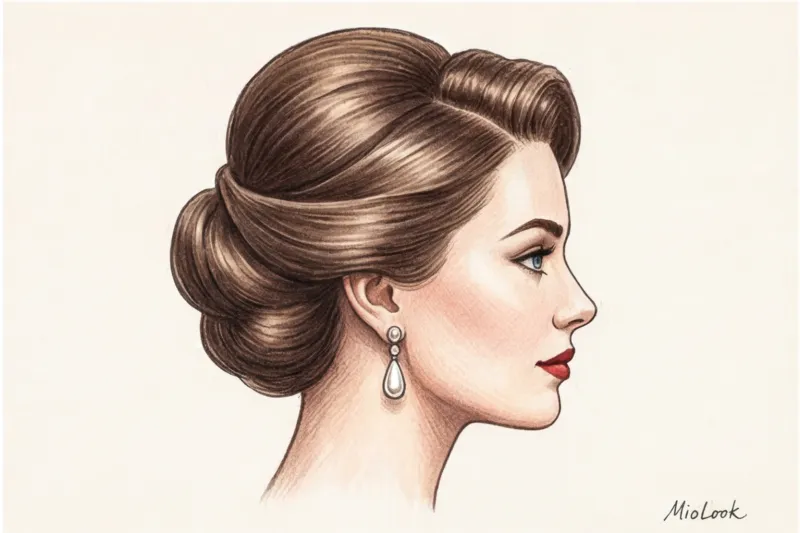
Let's debunk the biggest myth perpetuated by the Oscars red carpet: luxurious, perfectly styled, loose hair is beautiful. Yes, it is beautiful, but for White Tie, it's gross violation of protocol Loose locks of hair are considered even more vulgar here than an ill-fitting dress.
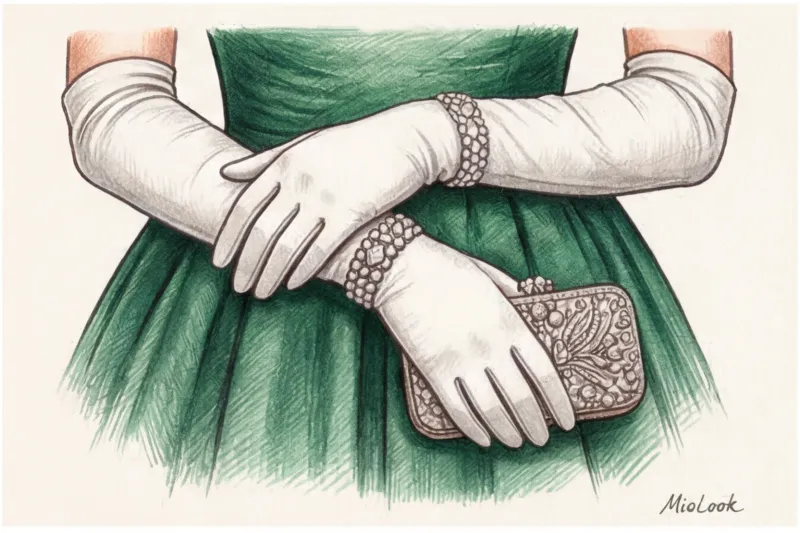
Historically, the exposed neck and collarbone are a canvas for displaying family jewels. Therefore, hair should be pulled back. Elegant buns, classic French buns, and intricate sculptural braids are all acceptable. Keep hair straight: use strong-hold gels and hairsprays to prevent your hairstyle from falling apart after just one waltz.
Makeup should be long-lasting and expressive (evening light reduces up to 30% of brightness), yet classic. Matte red or wine-colored lipstick, neat eyeliner, and a subtle glow. No neon eyeshadow, arty makeup, aggressive contouring, or chunky glitter.
When it comes to perfume, choose scents that sit close to the skin. The rich sillage of heavy niche perfumes is considered bad form, as it will overpower the aroma of exquisite dishes at a gala dinner.
5 Big Mistakes That Give Away a Newbie
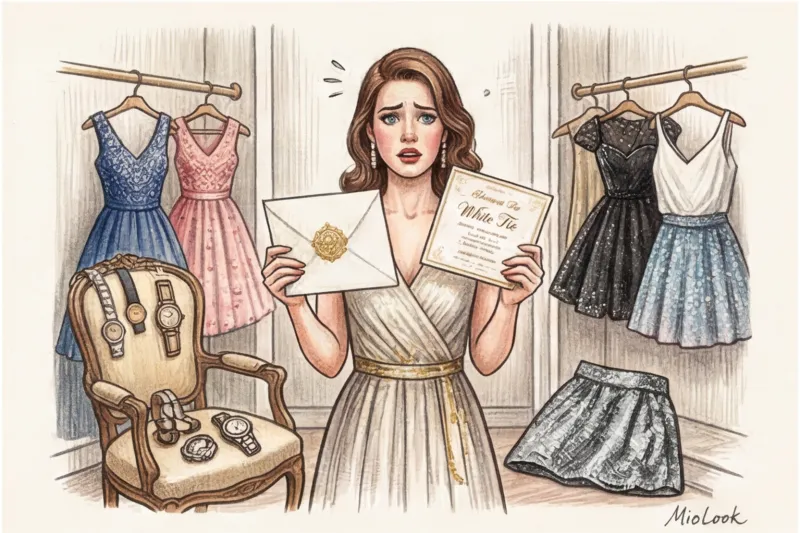
An event director I know told me how, at a reception in London, they had to turn away several guests whose outfits cost tens of thousands of pounds but were ruined by a lack of knowledge of basic rules. Test yourself against this anti-rating:
- Wrist watch. Even if it's a diamond-studded Patek Philippe, the rule is, "No timekeeping on White Tie." It's an evening of pure idleness. The only exception is a secret jewelry watch hidden under the bracelet.
- Bare arms without sleeves. If your dress does not have long sleeves, you must complement it with opera gloves.
- Shoes with an open toe or heel. Save mules, sandals and slingbacks for cocktail parties.
- "Naked" dresses. Semi-sheer fabrics, mesh without a tight cover, and extreme cutouts are unacceptable. Elegance is more important than sexiness here.
- Trousers and overalls. No matter how chic they may look, the regulations dictate that a dress is required. If you're looking for options for less formal events, check out the article. What to Wear to a Corporate Party: Style and Business Etiquette.
Checklist: Putting together a look without panic and unnecessary spending
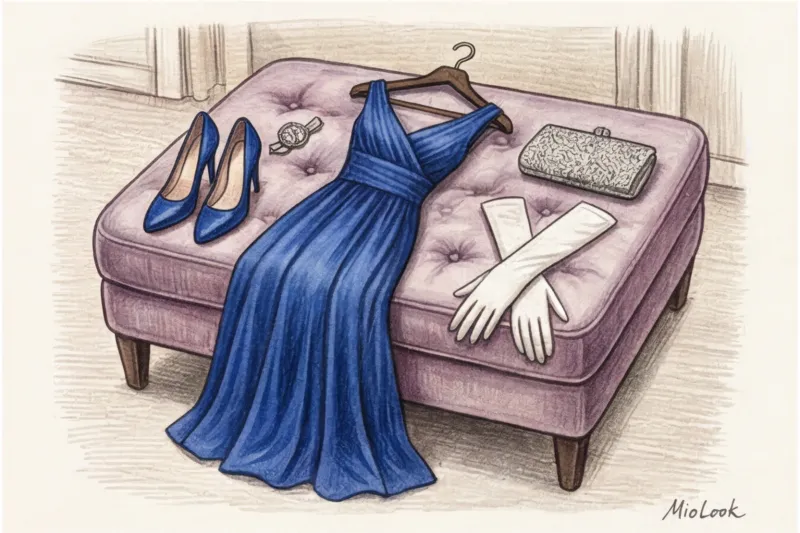
Having received the coveted invitation marked "White Tie," many are stunned, mentally calculating the astronomical sums required to purchase a couture gown. In reality, however, purchasing such a dress is not necessary. Research by the global platform Lyst (2024) shows that demand for renting luxury and vintage evening gowns has grown by 140%. Renting an archival Oscar de la Renta or Dior often looks more authentic and appropriate than a dress from the latest mass-market collection.
To ensure a smooth collection, I recommend the following step-by-step plan to my clients:
- In 4-5 weeks: When choosing a dress, be sure to try it on with the underwear (seamless, shapewear) and heel height you plan to wear.
- In 3 weeks: Book a hairstylist and makeup artist. Make sure they can create long-lasting classic styles, not just beachy waves.
- In 2 weeks: Digitize your look. Use the "smart wardrobe" feature in MioLook To gather all your accessories, gloves, and shoes into a single virtual collage, you can see in advance whether the color of your clutch clashes with the color of your dress.
- In 3 days: "Movement test." Put on the dress, shoes, and corset. Try walking around the room, sitting on a chair, and raising your arms. If anything digs in, slips, or interferes with your breathing, you still have time to take it to a tailor.
The "white butterfly" format isn't a cause for stress, but a rare opportunity in the modern world to touch a fairy tale and feel like the heroine of a historical novel. The main thing to remember is that true elegance lies not in the cost of diamonds, but in impeccable respect for tradition and your confident posture.