Have you ever noticed how dramatically the mood and aesthetics of weddings change when the temperature outside drops below 15°C? Lightheartedness gives way to cinematic drama. But it's precisely at this transitional moment that eight out of ten guests become completely stunned in front of an open closet. We've already covered the basics of wedding etiquette in more detail in our The complete guide: what to wear to a wedding as a guest: ideas and rules Here, as a practicing stylist and colorist, I want to talk about the physics of color on dense fabrics.
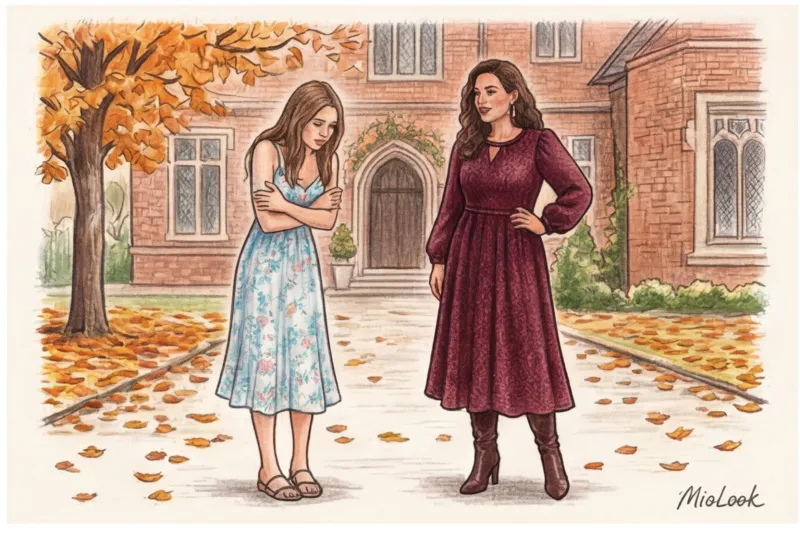
Forget the universal (and terribly lazy) advice to "just wear something warm." Today, we'll explore why your favorite summer shade on fall velvet will turn into a visual disaster, and why a black dress is objectively the worst investment for an October celebration.
What to Wear to a Fall Wedding: A Shift in Style
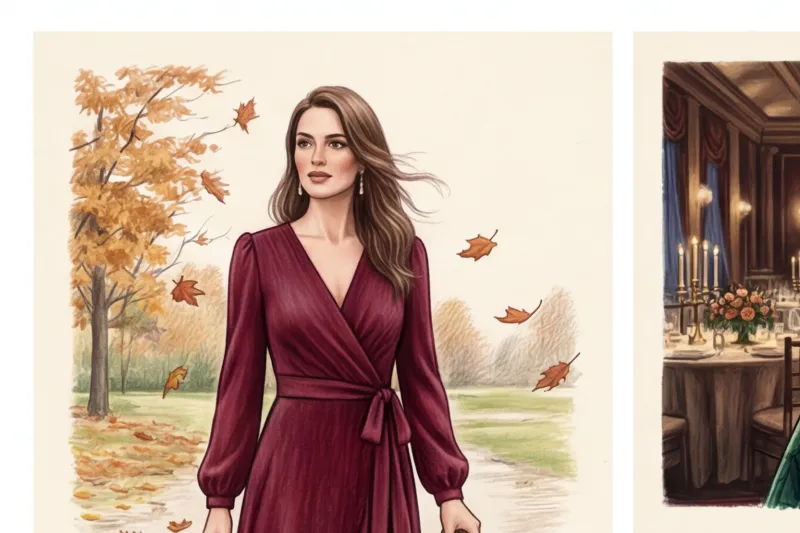
The main difference between the fall and summer dress codes is the shift from flowing, airy silhouettes to crisp, architectural forms. Fall demands visual heft.
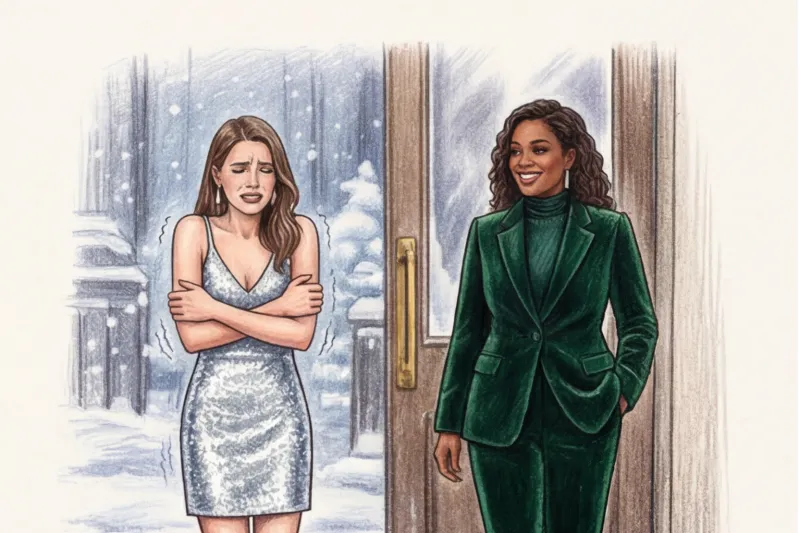
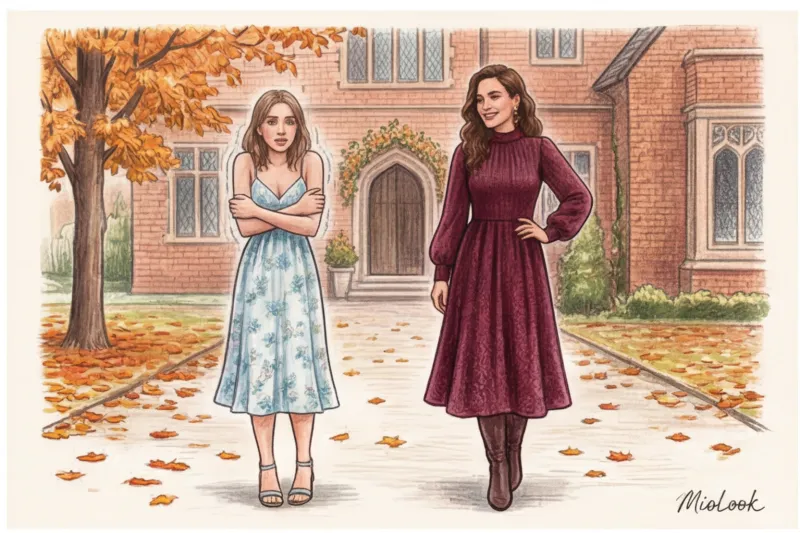
I had a particularly revealing case. One day, a client came to me completely disappointed with her photos from a friend's wedding in late October. She'd tried to repurpose a luxurious summer silk slip dress by simply throwing a voluminous cashmere cardigan over it. The logic was clear: silk is dressy, and a cardigan is warm. But compared to the other guests, who had chosen structured jacquard and thick crepe, she looked like she'd stepped out onto the terrace with a cup of coffee in the morning rather than attending an evening gala. Trying to "warm up" a summer wardrobe with chunky knitwear always ruins the elegance.
The rule of appropriateness applies uncompromisingly here: the location dictates the texture. If the celebration is taking place in a country estate or loft, you need fabrics that hold their shape and protect from drafts, without requiring additional "warming" layers.
Try MioLook
A smart AI stylist will select the perfect look for you, taking into account the season, location, and your preferences.
Get access — €0.99 onceColor Illusion: How Dense Textures Change Shades
Why does the same color appear as two completely different shades on different fabrics? The answer lies in light reflectance. Lightweight summer fabrics (chiffon, organza) allow light to pass through, creating a watercolor-like effect. Autumn fabrics behave differently—they either completely absorb light or actively reflect it, creating deep shadows.
"Color isn't a property of an object, it's a property of the light reflected from it. When choosing fabric for an evening out, you're choosing how the light will portray your face in photographs," says Darina Marchenko.
Velvet, jacquard, and thick silk: an investment in status
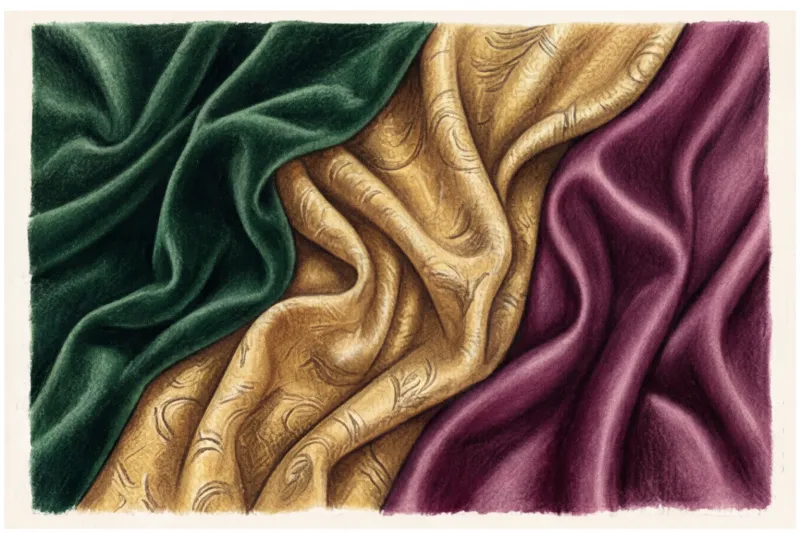
Autumn materials call for deeper, more complex pigments. Let's explore three key textures for the cool season:
- Velvet: The king of autumn weddings. Its pile completely absorbs light, making any color appear two shades darker and ten times more saturated on velvet. To avoid looking dated, choose a modern asymmetrical cut or a midi length without unnecessary embellishment.
- Jacquard: An ideal solution for creating a rigid, luxurious shape. By weaving in threads of varying textures, it becomes a stand-alone piece of jewelry.
- Heavy silk (22 momme density): It gives that same flowing effect, but does not stick to the body and protects against the cold.
A Noble Autumn Palette: Why You Should Ditch the Black
It's time to dispel perhaps the most ingrained myth of evening fashion: "A little black dress always saves." No, not always.
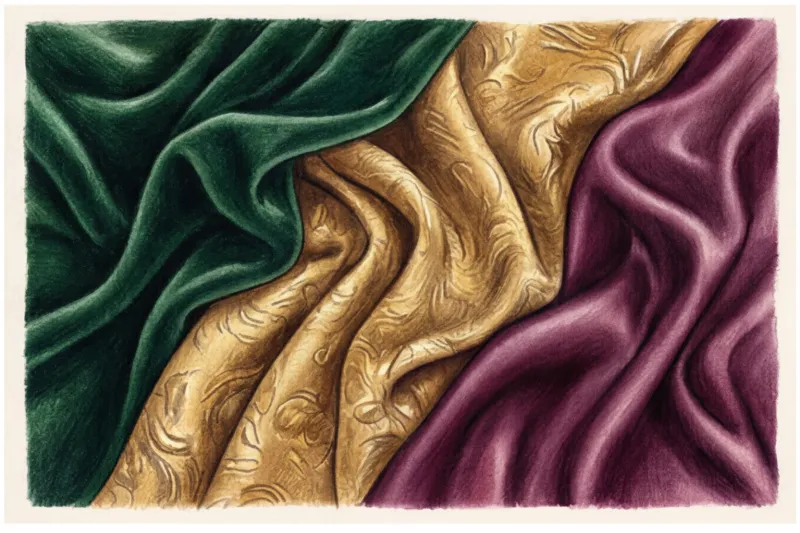
In heavy autumn textures like thick wool, matte crepe, or gabardine, black often looks mournful. It reduces volume, flattens the look, and, worst of all, in the dim autumn light, it adds age to most Slavic skin tones. Instead of looking like an elegant guest, you risk looking like a hostess or an event agency employee.
My words are confirmed by global data. The Pantone Color Institute's 2024/2025 Fashion Color Trend Reports for the fall/winter seasons clearly show that the evening palette is shifting toward complex, rich midtones, reserving pure black for basic, utilitarian wardrobes.
Shades of precious stones
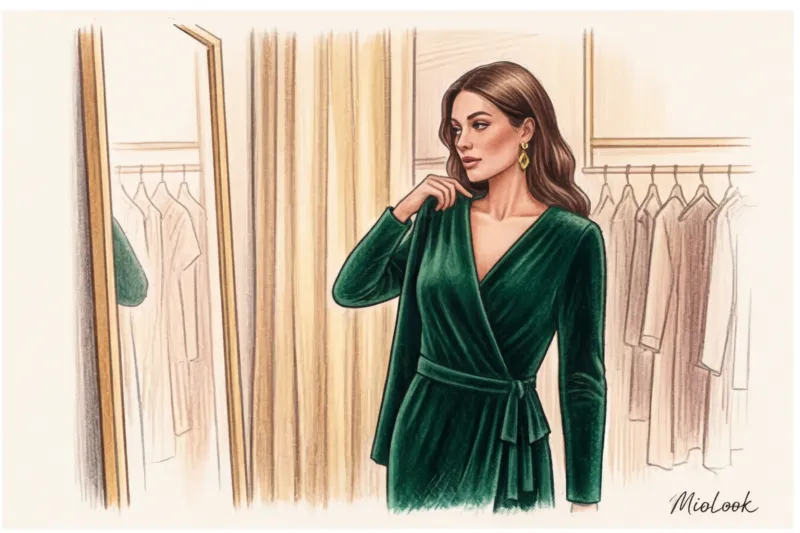
Emerald, sapphire, ruby, and deep amethyst are your ideal and classy alternative to black. They offer the same slimming effect due to their darkness, but look truly festive.
Choose your stone based on your skin tone. For cool-toned skin (summer and winter), sapphire and cool emerald are ideal. Warm-toned skin (spring and fall) should consider ruby and warm shades of jade.
Complex neutrals and wine tones
If bright colors aren't your thing, consider Marsala, aged burgundy, dark chocolate, or deep terracotta. These are colors that naturally convey the idea of "quiet luxury."
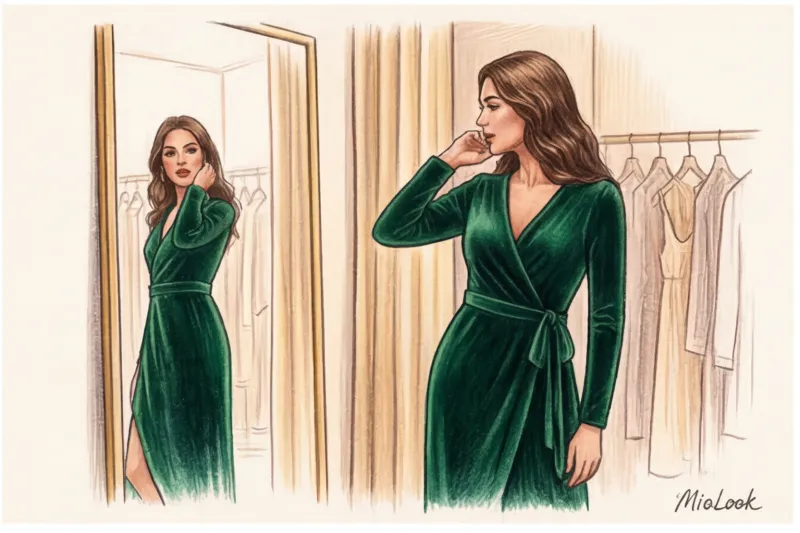
When it does NOT work: I always honestly warn my clients that a deep wine shade (burgundy) can backfire and accentuate redness if the banquet hall has too warm, yellow light, or if you have close-lying blood vessels (rosacea). In this case, it's best to draw the color down—for example, by choosing wine-colored pants and a neutral top.
Alternatives to dresses: pantsuits and jumpsuits
If a dress seems too trivial for you, a three-piece trouser suit is an absolute evening fashion trend that is not losing its position.
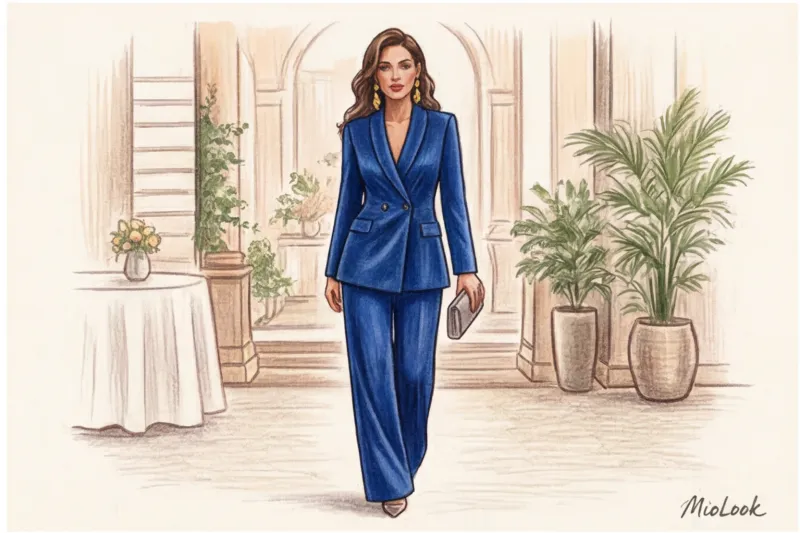
A 2024 study by Lyst found that searches for "women's evening suits" increased by 68% compared to last year. But herein lies the main danger: how to avoid confusion office clothes with vespers?
The difference lies in the cut and fittings. An evening suit is made of high-density viscose, silk, or velvet. It may feature exaggeratedly wide palazzo pants, accent buttons (fabric-covered or metal), and satin lapels. A business suit made of matte gray wool will remain formal, even if you wear statement earrings.
Another brilliant option is long-sleeved evening jumpsuits. They create a continuous vertical line of color that elongates the silhouette, protects the arms from the autumn chill, and looks incredibly elegant.
Ready to get started?
Try the MioLook plan for free—no commitments required. Create your perfect fall outfit for the celebration.
Get access — €0.99 onceOuterwear and footwear: the main problem of autumn guests
This is probably my biggest pet peeve as a stylist. Around 70% of guests irrevocably ruin their stunning evening looks with inappropriate daytime outerwear.
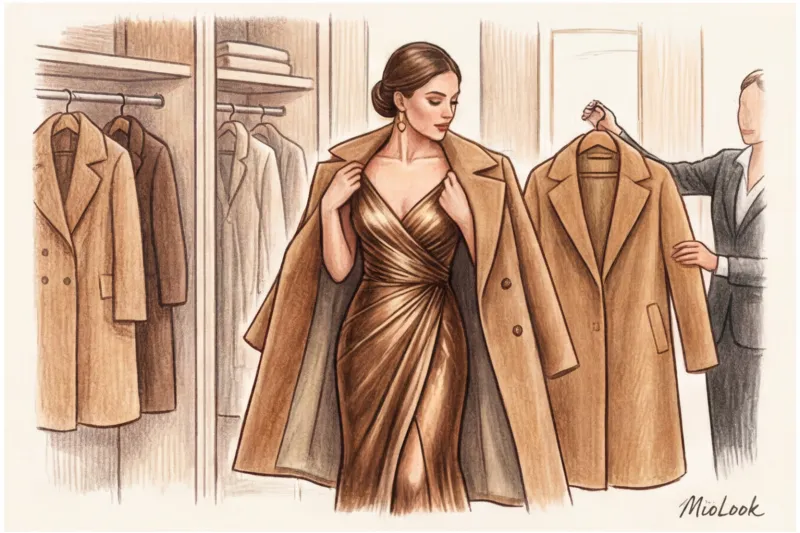
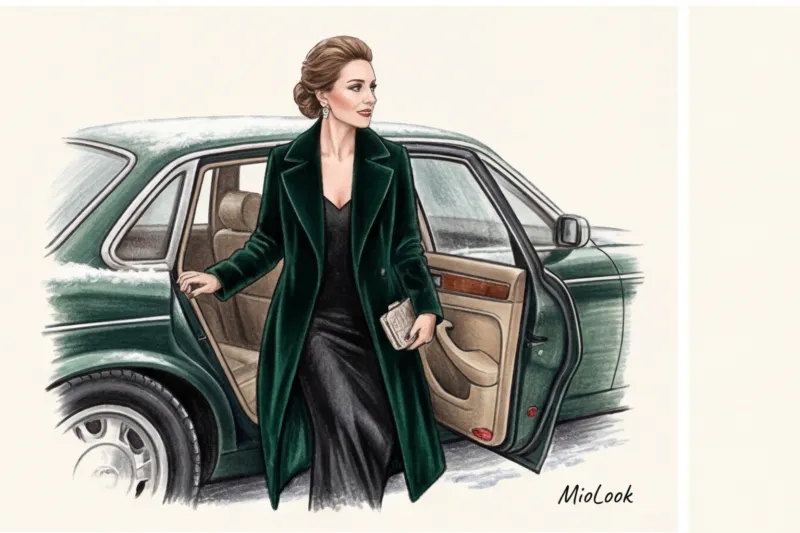
I've seen this scene many times at off-site autumn wedding ceremonies: girls in luxurious silk dresses standing in The North Face down jackets or casual quilted coats. Remember: your outerwear is part of your outfit. Even if you only wear it for 15 minutes during a buffet on the terrace, the photographer will be photographing you for those 15 minutes.
- What to choose: A double-breasted maxi wool coat, a camel cashmere robe coat, or an architectural cape.
- Shoes: A fall wedding is a good time to ditch the open sandals. Suede pumps, ankle boots, or smooth leather shoes in deep shades are much more appropriate. Suede, by the way, pairs beautifully with thick fall fabrics.
- Tights: Strictly no nude sheen (Lycra). Only opaque tights (20-40 denier). If you're wearing a dark outfit, choose black semi-sheer or thick colored ones that match your dress or shoes to avoid distorting the proportions of your legs.
Checklist: putting together an image in the MioLook smart wardrobe
Before rushing out to buy a new dress, let's calculate the cost-per-wear. Buying a $300 dress for just one evening is a financial utopia. It's much smarter to invest in a quality pantsuit, the elements of which (jacket and trousers) you can then wear separately in everyday life.
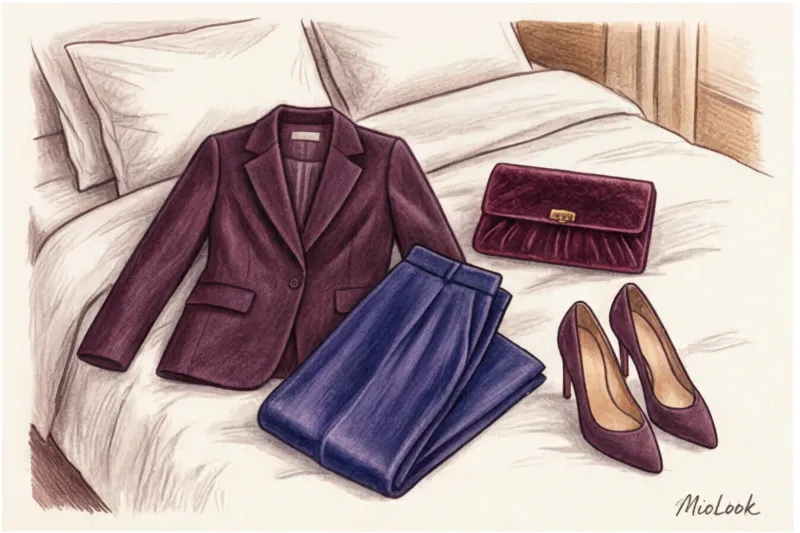
To avoid panic and unnecessary spending, I highly recommend digitizing your evening items with Smart wardrobe features in MioLook How it works in practice:
- You upload all the elegant clothes you already own (skirts, tops, jackets, shoes) into the app.
- An AI stylist analyzes your basics and suggests unexpected combinations you never even considered. For example, pairing your silk midi skirt with a voluminous, thick jacket.
- If something is missing, the app will suggest which specific accent item you should buy (for example, a velvet clutch or large earrings) to complete the look.
A fall wedding isn't a cold ordeal, but a wonderful opportunity to wear complex, textured pieces that would be simply inappropriate in summer. The key to success isn't searching for the "warmest dress," but rather mastering the weight of the fabric and the depth of color. Choose an architectural cut, eschew the usual black in favor of jewel tones, and make sure your coat is worthy of the outfit underneath.