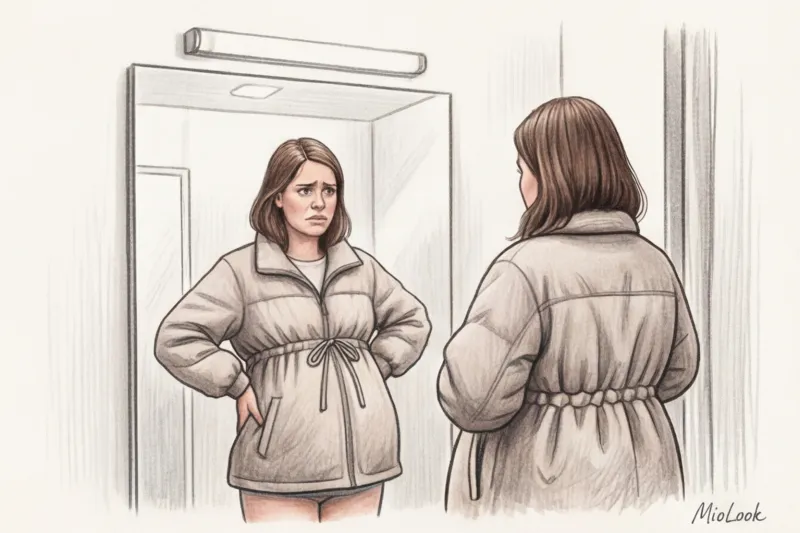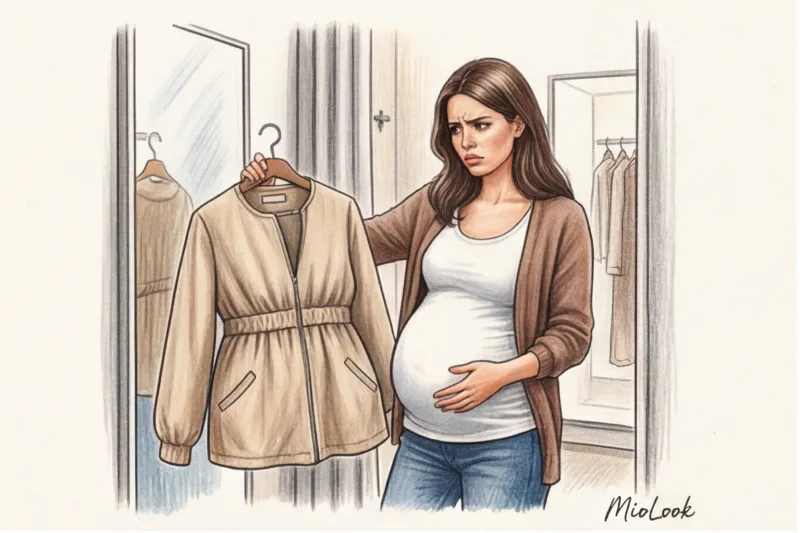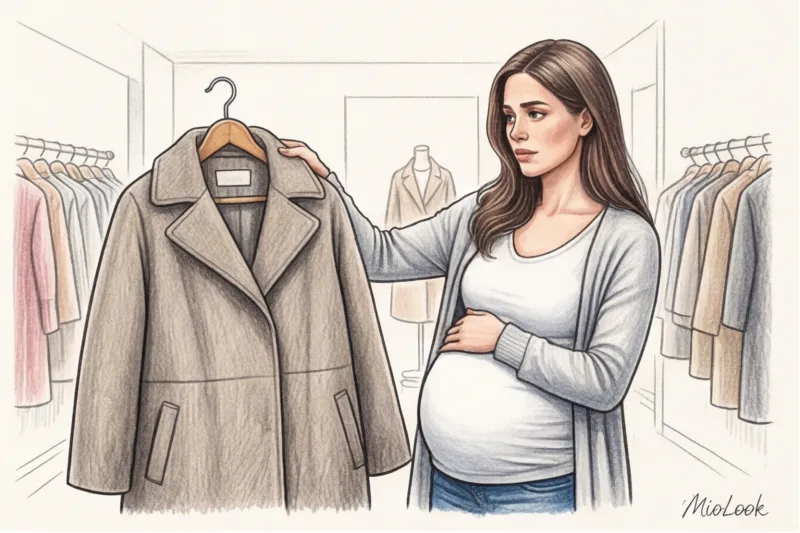
I remember the bewildered look on my client Anna's face in Berlin. It was a cold November, she was seven months pregnant, and we were standing in the middle of the boutique in front of a rack of so-called "maternity coats." Huge, shapeless, with elastic bands under the bust, made of squeaky polyester, they cost from €300. "Sofia," she said, "I feel like I'm in a warm tent in this. Do I really have to say goodbye to my style until spring?"
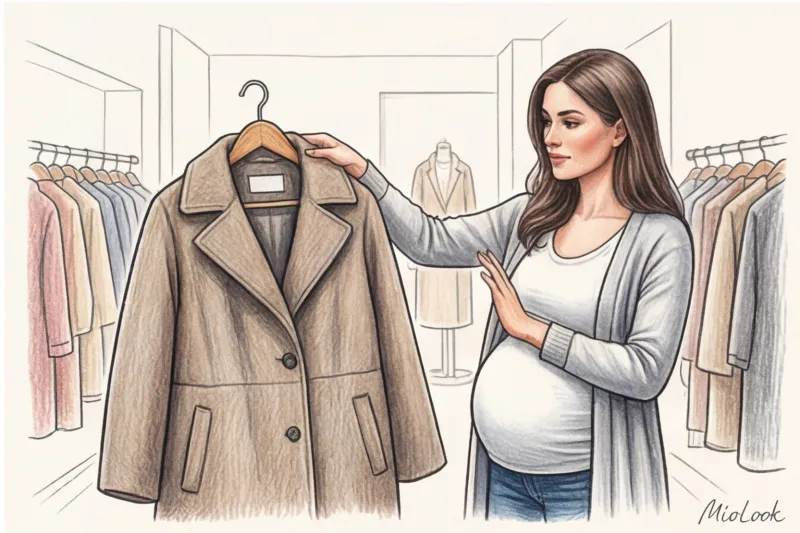
My answer was: absolutely not. Over 12 years of working as a stylist, I've become convinced that 90% of women have the perfect outerwear in their closet for any changes in their figure; they just don't know how to engineer it. The question is, How to wear a regular jacket while pregnant , is solved not by buying things "three sizes too big," but by skillfully working with layers, textures, and proportions. We've covered the basic principles in more detail in our A complete guide to life hacks for your pre-pregnancy wardrobe , and today we will apply the laws of textile physics to outerwear.
The Maternity Marketing Trap: Why You Don't Need a Special Coat
The maternity clothing industry is a colossal machine. According to a 2023 report by Grand View Research, the global maternity clothing market exceeded €24 billion. Brands aggressively sell us the idea that once your belly starts growing, your regular wardrobe is useless. You'll get cold, you'll feel cramped, you'll look ridiculous.
Let's do some cold-blooded math. The average cost of a decent winter jacket for pregnant women is €200–500. Its lifespan is typically 3–4 months. After giving birth, this garment, with its specific cut (flaring from the bust, drawstrings, and pleated side panels), will be permanently stored in the closet because it's stylistically impossible to wear in everyday life.
"As a proponent of sustainable fashion, I consider buying expensive seasonal items for three months an environmental and financial crime. Especially when you already have high-quality wool hanging in your closet, just waiting to be styled properly."
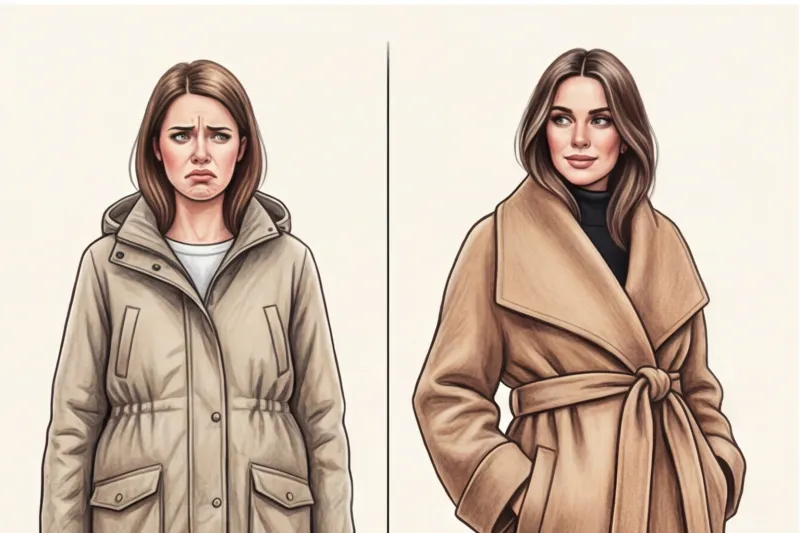
Specialized outerwear often kills personal style. To keep prices within budget (after all, brands know you're only buying for a short time), manufacturers skimp on fabrics. Instead of natural wool, you get acrylic, and instead of thick cotton, you get thin raincoat fabric. As a result, you not only lose your silhouette but also get cold.
How to Wear a Regular Jacket While Pregnant: 4 Stylish Scenarios
To understand how to wear a regular jacket while pregnant, you need to stop viewing a zipper coming apart on your stomach as a disaster. Let's look at architectural and engineering solutions that will keep you warm and maintain a trendy silhouette.
Scenario 1: Unbuttoned Top + Smart Mid Layer
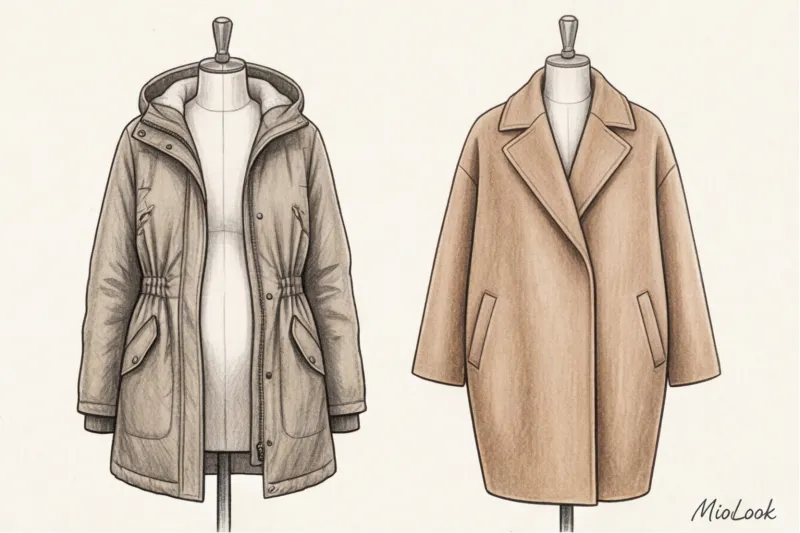
The most paradoxical, yet stylistically precise, technique. In winter, we instinctively button up our clothes. But an unbuttoned structured coat or a thick parka creates two powerful vertical lines. These lines visually elongate the silhouette, bringing the look together and eliminating excess bulk at the sides.
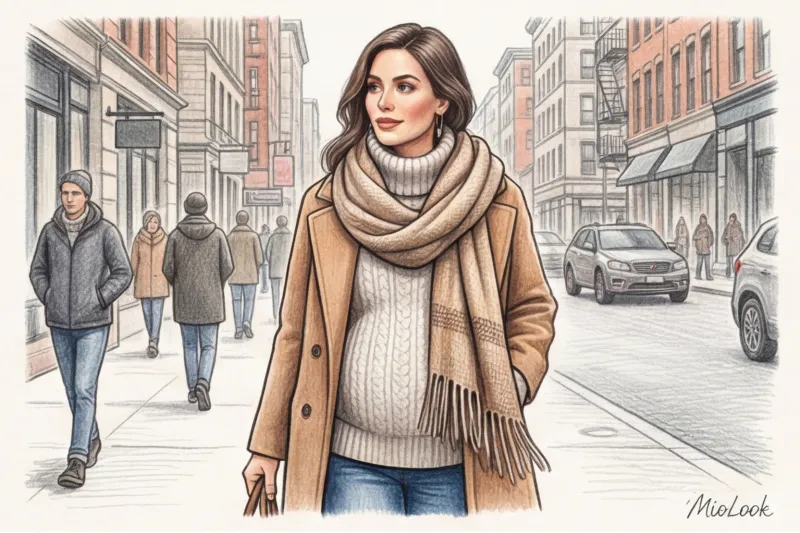
To offset the exposed area, we need a powerful thermal blocker—a midlayer. Swap thin blouses for chunky, textured sweaters, and layer them with merino wool thermals or a cashmere turtleneck. The finishing touch is a long, wide, and thick scarf (stole) draped over your neck to cover the center of your body. You'll get a complex, multifaceted look inspired by Scandinavian street style.
Scenario 2: Zip-in Extenders
If you live in a region prone to piercing winds and going unbuttoned isn't an option, a brilliant invention—a zipper extender—comes into play. It's a fabric insert (often made of softshell or insulated raincoat fabric) that attaches to your jacket's zippers using a system of adapters.
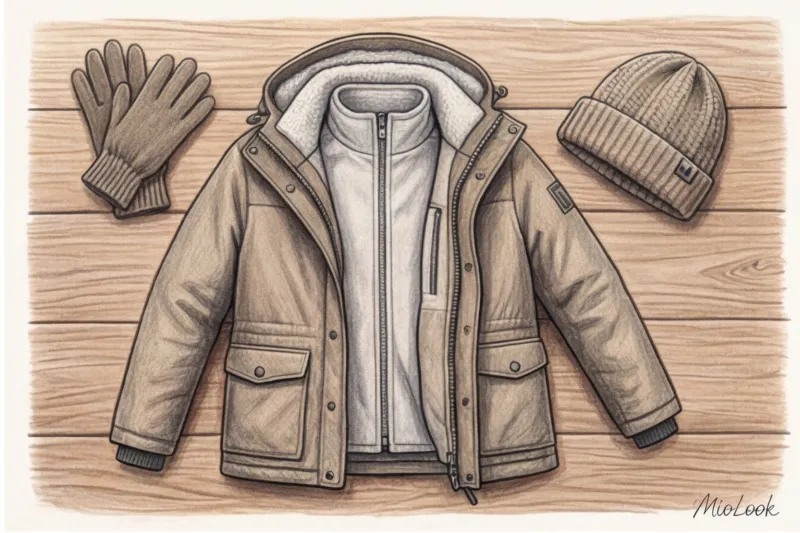
The economics here are crystal clear. A good-quality universal extender costs between €30 and €50. It instantly transforms your favorite The North Face down jacket or parka into maternity wear. Moreover, most of these extenders are designed to be ideal for babywearing after birth—you can zip the jacket right over your baby in a baby carrier. The main rule when buying: make sure the teeth type (YKK, tractor, or spiral) on the adapter matches the zipper on your jacket.
Your perfect look starts here
Take stock of your outerwear with our smart AI stylist. Upload your items, and we'll show you how to style them to suit your new body proportions.
Get access — €0.99 onceScenario 3: Moving the waistline
For those who wear classic trench coats and robe coats, a trick that artificially shifts the waistline (the empire silhouette) works. The original belt is tied not at the waist (where the maximum volume is currently located), but just above the stomach, just under the bust. This emphasizes the narrowest part of your new silhouette.
There's a cheap life hack for double-breasted coats. Take your coat to your nearest tailor and ask them to resew the buttons 3-4 centimeters closer to the hem. This will give you an extra 6-8 centimeters of room around your midsection. The service will cost a maximum of €10-15, and the coat will last until you give birth. Afterward, the buttons are easy to put back in place.
Wardrobe review: which styles are ready for figure changes
Before you start shopping online, take inventory of your current closet. Surprisingly, the most fashionable styles of recent years are ideal for pregnant women.
- Oversized coats and cocoon jackets: The cocoon coat's design (like the iconic Max Mara or COS styles) tapers toward the waist and maximizes volume around the stomach and hips. This garment easily accommodates your belly right up until your eighth month.
- Capes and ponchos: As WGSN analysts (2024) note, capes have once again become a macro trend. They're a lifesaver for pregnant women: they allow complete freedom of movement, aren't rigidly held at the waist, and look incredibly elegant.
- Classic parks: If your parka has an internal drawstring, simply loosen it completely. The loose, straight cut will hide the bulk perfectly.
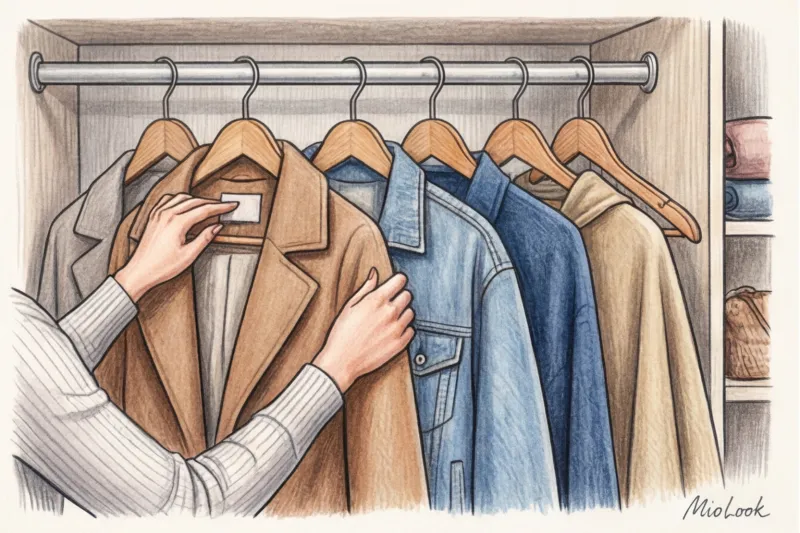
To be honest, there is an important limitation here. This method does NOT work. If your wardrobe is based on fitted, caterpillar-style down jackets from the 2010s, tight-fitting leather jackets, or rigid hourglass coats, you can't save these items by re-buttoning them—they'll just get misshapen.
Men's wardrobe: borrowing outerwear from your partner
My favorite styling trick, adored by my clients, is the masculine trend in women's wardrobes (the boyfriend's coat). Your husband's or partner's outerwear could be the ultimate fashion statement this winter.
One day, a client of mine called me in a panic before an important meeting: the temperature had dropped to -10°C outside, and her coat was already falling apart. I told her to wear her husband's oversized khaki winter parka. The secret to success was the rule balance of volumes.
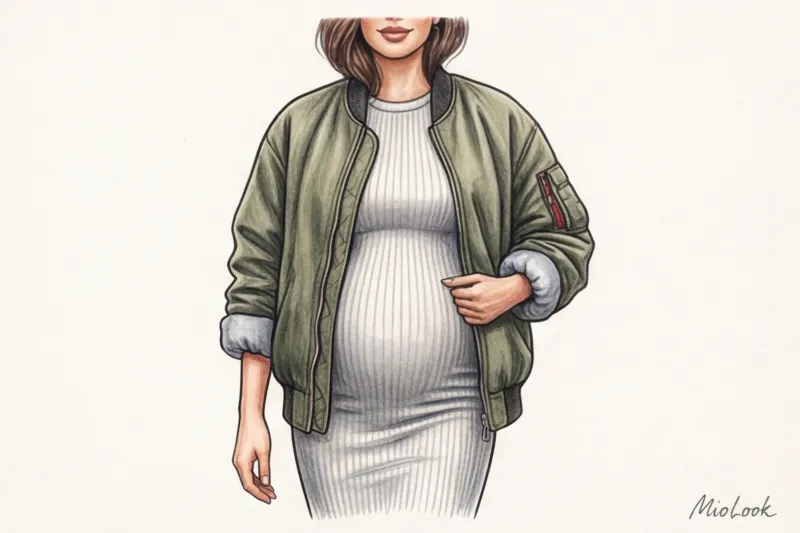
If you're wearing a chunky, oversized men's jacket, your base layer (what you wear underneath) should be as form-fitting and feminine as possible. A knitted noodle dress (which stretches out at the stomach) or thick leggings with a fitted turtleneck are ideal. Be sure to roll up or gather the sleeves of your men's jacket! Showing off slender feminine wrists against the rough men's fabric creates a delicate, touching contrast, showing that the garment is oversized on purpose, not out of desperation.
Textile Science for Moms-to-Be: Staying Warm Without Fastenings
It's time to debunk the biggest industrial myth I mentioned at the beginning. Many people believe that if your jacket is buttoned up, you'll be warm. This is a misconception.
From a textile engineering perspective, it is not the fabric itself that warms us, but air , which this fabric is capable of retaining (the principle of trapping air). 80% of your body's heat retention comes from the middle layer, not the outer shell.
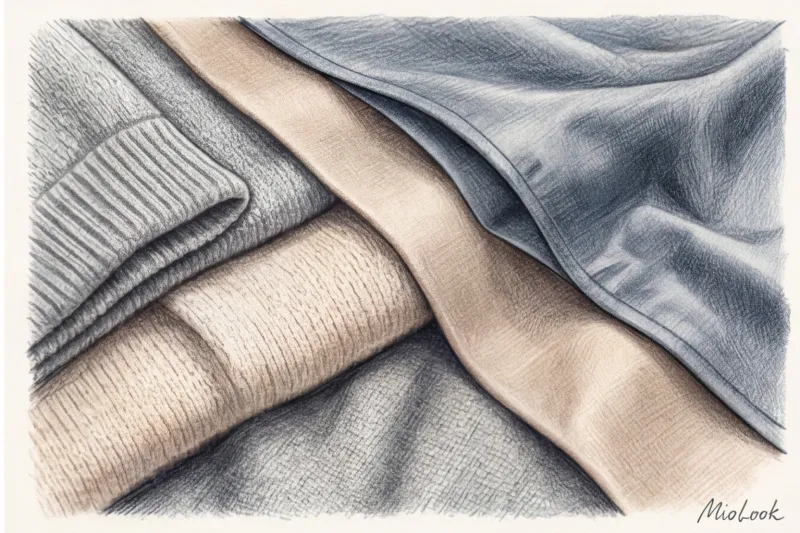
A tightly zipped, inexpensive 100% polyester jacket with a thin synthetic lining will create a greenhouse effect: you'll sweat, but the moisture won't evaporate, and even the slightest breeze will freeze you. Meanwhile, an unzipped wool coat with added nylon (for wind protection) layered with a 100% merino wool sweater (at least 250 g/m²) or cashmere will create the perfect temperature-regulating cocoon. Natural wool fibers have a crimped structure that traps warm air inside.
Look for alpaca, merino, cashmere, or dense brushed cotton (flannel) in your basics. Avoid acrylic—this material imitates wool visually but has zero thermal conductivity.
Access to MioLook for €0.99 — one-time payment
Not sure how to combine textures? Our smart AI stylist will create the perfect look for your clothes, taking into account the temperature.
Get access — €0.99 onceChecklist: Preparing your outerwear for the cold without shopping
Let's translate this theory into a concrete action plan. Do this this weekend to avoid sudden frosts catching you off guard:
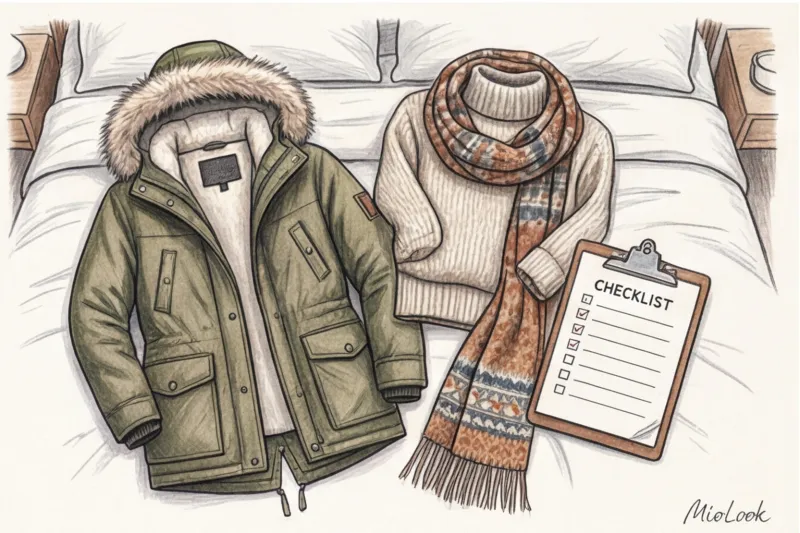
- Check the ingredients: Take out all your winter sweaters and read the tags. Set aside any that are more than 50% acrylic. For your middle layers, keep only wool, viscose blends, and cashmere.
- Invest in accessories: If you plan to wear your coat unbuttoned, buy (or knit) a very long and wide, tightly knit scarf. This will serve as the front flap of your jacket.
- Order the expander: Find a zip-in extender on marketplaces for €30-40. Take a photo of the zipper pull on your favorite jacket so the seller can help you choose the right adapter.
- Rob your partner's closet: Try on his parka, trench coat, or bomber jacket. Create three outfits right away, based on the principle of balance: a men's top + your fitted knit base.
Conclusion: Your style grows with you
Adapting your pre-pregnancy wardrobe isn't a compromise due to poverty. It's a conscious, eco-friendly, and deeply stylistic approach to your look. Pregnancy is a beautiful, yet temporary, time, and it's absolutely no reason to put your personal taste on hold and hide behind shapeless polyester pieces from the maternity aisle.

The key takeaway from this article is that the quality of your layers is far more important than whether your outerwear zips up. Use this period to experiment with layering and masculine volumes.
If you find it difficult to independently assess the potential of your wardrobe, start with a closet audit together with MioLook application Our AI assistant will help you digitize your favorite items and show you how to put them together into trendy, warm, and comfortable outfits for your changing figure. Be stylish and stay warm!