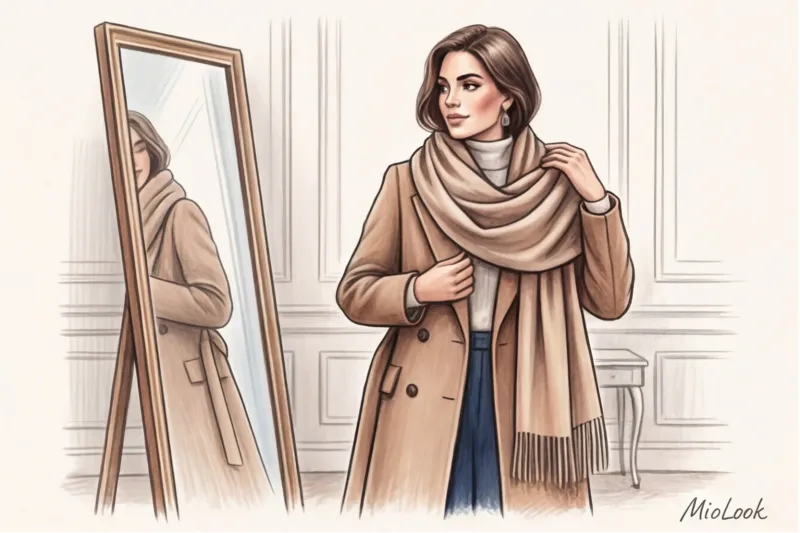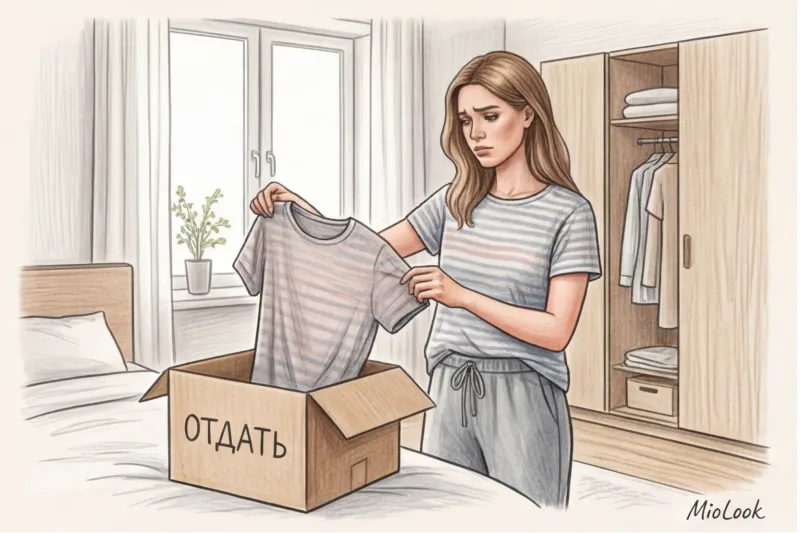
Do you know what surprises me most when I analyze the wardrobes of successful women? The stunning contrast. During the day, my client manages the department, wearing an impeccable €1,500 alpaca coat, and at night, as soon as she closes the door to her apartment, she changes into stretchy polyester Mickey Mouse pajamas. When I ask her why, the answer is always the same: "Well, no one sees me; the main thing is to be warm and cozy."
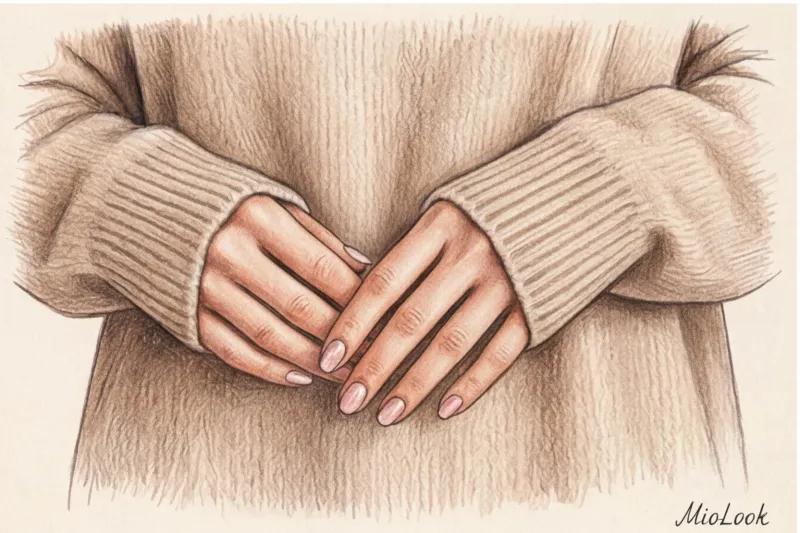
But science categorically disagrees with this. According to a landmark study by Northwestern University (2012) on the phenomenon Enclothed Cognition (knowledge through clothing), what we wear directly programs our psychological state. By choosing shapeless, worn-out clothes, we literally send a signal to our brain: "My time for myself has no value." We discussed this in more detail in our the complete guide to home aesthetics.
Today we will talk about what the correct one should be warm home clothes for women We'll approach this issue not from the perspective of abstract "coziness," but with the cold logic of an investment wardrobe. Let's explore why bulky fleece should be a thing of the past, how to read knitwear labels, and why expensive cashmere for the home is the most cost-effective winter purchase.
The Illusion of Coziness: Why Warm Loungewear for Women Shouldn't Be Made of Fleece
For decades, the mass-market industry has been selling us the myth that there's nothing better in winter than a bulky, sheepskin-like teddy bear suit. It looks cute on a hanger or in an Instagram photo. In reality, it's a textile disaster for your indoor climate.
In my practice, nine out of ten clients complain that in these suits they either feel unbearably hot or suddenly cold. The reason lies in the physics of the fiber. Thick fleece is 100% polyester (plastic). It perfectly blocks air, creating a greenhouse effect. Your skin naturally evaporates moisture, but polyester doesn't absorb or wick it away. You start sweating. As soon as you step from the warm living room into the cool hallway, this moisture cools—and you instantly feel cold.
The rule of a premium wardrobe is: warmth should be achieved through the quality of the fiber, not through its thickness Elegance is incompatible with shapeless volume. You should feel graceful at home, not like a teddy bear struggling to move around the kitchen.
The Anatomy of Perfect Knitwear: What Are State-Own Loungewear Made of?
Buying a lounge suit for €150–200 from a well-known brand isn't a guarantee of quality if the label says "60% acrylic, 40% polyamide." Acrylic is a cheap imitation of wool that will pill after exactly three washes. High-status clothing requires a natural base.
Cashmere: An Uncompromising Investment in Self-Love
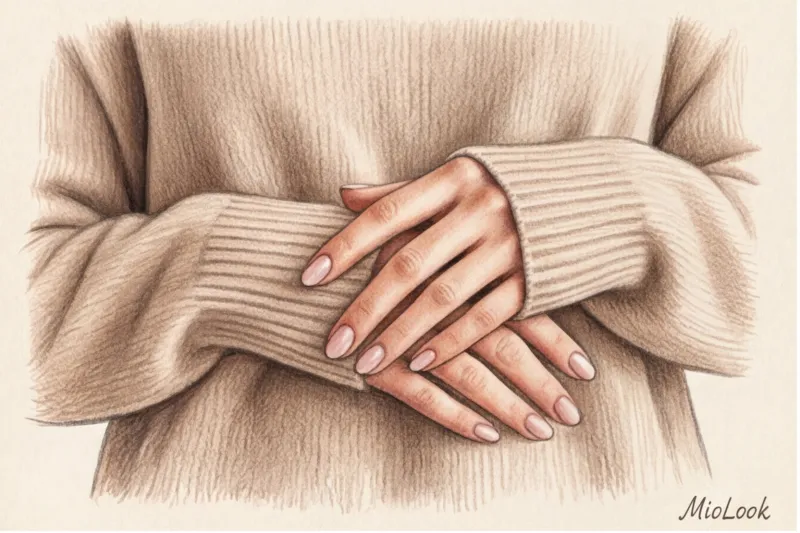
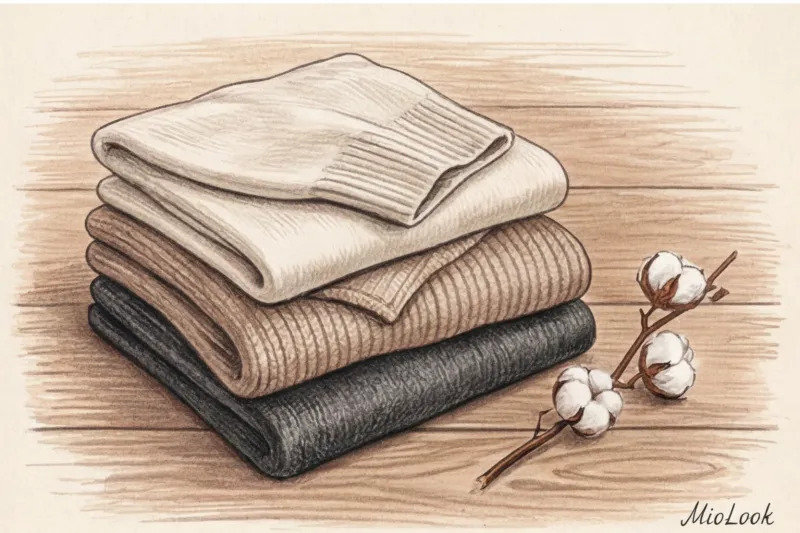
Cashmere is unique in that it's eight times warmer than sheep's wool while being lightweight. When you put on a cashmere suit, you barely feel it on your skin. The tactile softness of this material literally reduces cortisol (the stress hormone) levels after a hard day at work.
When choosing cashmere, look for the indication on the label 2-ply or 4-ply (the number of threads twisted together). Double-thread cashmere is ideal for lounge tops and cardigans; it's durable and less prone to deformation than single-thread.
Merino wool: smart thermoregulation
If pure cashmere seems too delicate, extrafine merino wool is the perfect compromise. Brands like COS or Massimo Dutti offer excellent basic sets for €100–€150 per item.
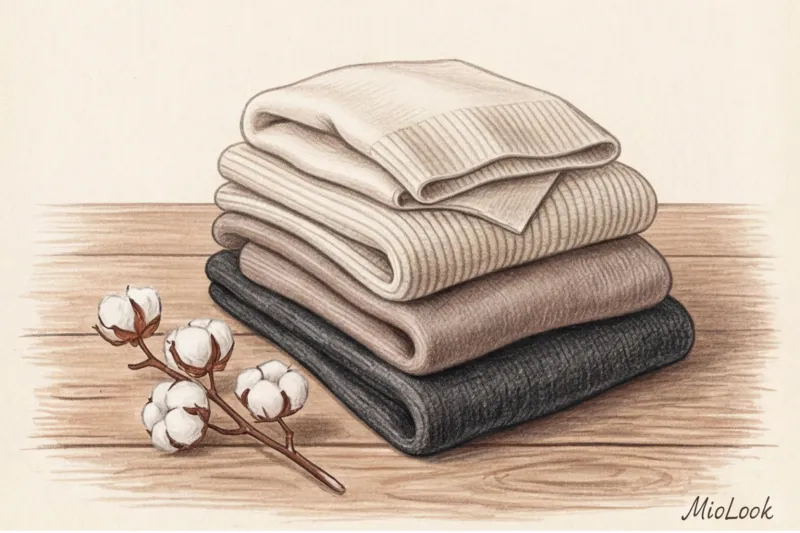
Merino wool wicks away up to 30% of its own weight in moisture, leaving you dry to the touch. It also has a smooth, silky texture that doesn't add bulk to your hips and creates a distinctly luxurious look.
Acceptable compromises: when synthetic ingredients are justified
Now here's a counterintuitive stylist's secret. Many purists insist that you should only look for 100% wool. However, if we're talking about knit pants or joggers, the presence of 10-15% nylon or elastane isn't a cost-cutting measure by the manufacturer, but a technological necessity.
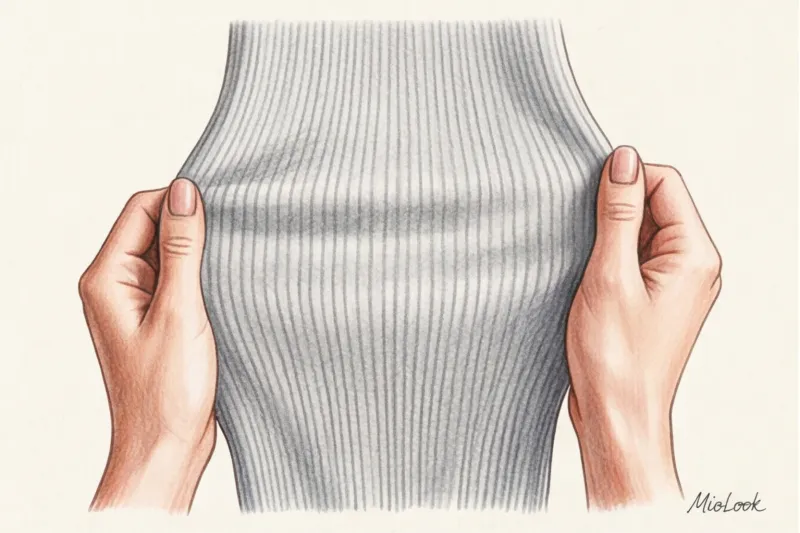
Pure wool on the knees and buttocks will inevitably stretch out after the first evening on the couch. A small percentage of elastane acts as a spring, returning the fabric to its original shape. Avoid acrylic, but embrace technical elastane in trousers.
Access to MioLook for €0.99 — one-time payment
A smart AI stylist will select the perfect look for home and office, taking into account your color type and body shape.
Get access — €0.99 onceElegant styles: knitted suits for winter that you won't be embarrassed to wear to greet guests
One of my clients once confessed: "Julia, last week a courier delivered flowers from my husband. I was wearing such old sweatpants that I literally hid behind the front door, only sticking my hand in to pick up the bouquet. I was embarrassed." Sound familiar? Your home environment should be such that you can open the door to unexpected guests or answer a video call without embarrassment.
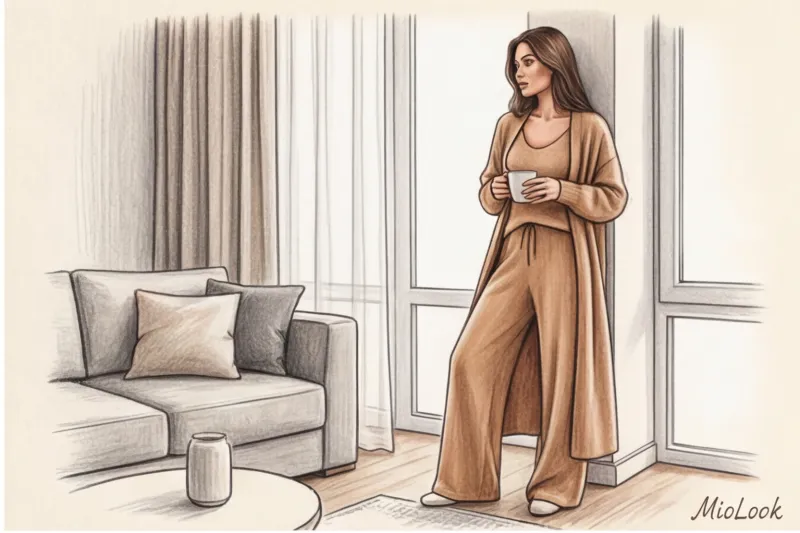
Ditch the childish prints (teddy bears, stars, hearts) in favor of architectural cuts. Here are three formulas that work without fail:
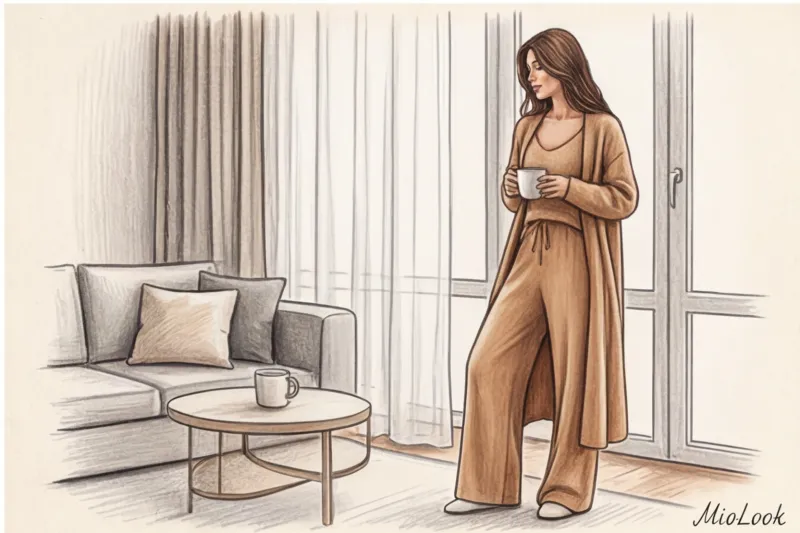
- Palazzo pants + long robe cardigan: Wide, flowing trousers visually elongate the silhouette, concealing figure flaws. Paired with a long cardigan, it looks like an aristocrat's outfit on vacation in a Swiss chalet.
- Smooth joggers + polo neck sweater: Sporty chic that looks put-together. The polo's V-neck elongates the neck, unlike tight hoodies that often visually ruin your posture.
- Total monochrome: A solid-color suit in noble shades (warm camel, graphite, pearl ecru, deep burgundy) automatically increases the cost of the look several times over.
The Mathematics of Luxury: Calculating Cost-Per-Wear
Here we encounter the main paradox of a woman's wardrobe. We easily spend €300 on an evening dress that we'll wear exactly twice (to a corporate event and to a friend's wedding). But spending the same amount on a high-quality cashmere lounge suit seems insane. Let's do some math and do the math. Cost-Per-Wear (cost per wear).
A dress worth €300, worn twice = 150 € per exit.
A premium merino and cashmere lounge set for €300 that you wear 4 evenings a week plus every weekend for 6 months of cold weather (around 150 wears per season) = 2 € per evening.
The conclusion is clear: warm loungewear is the item with the highest return on investment (ROI) in your closet, because you spend up to 40% of your life in it.
Fair Limit: I should point out that this advice doesn't work for everyone. If you have two toddlers who paint and an active Labrador, investing in light-colored 100% cashmere isn't a good idea. In that case, your choice is a heavyweight cotton (French terry) with a weight of at least 300 g/m² or a dark merino blend, which can withstand frequent washings better.
Your perfect wardrobe starts here.
Join thousands of users who look flawless every day with MioLook. Digitize your items and calculate your Cost-Per-Wear automatically.
Get access — €0.99 onceStylist Secrets: How to Care for Premium Knitwear to Make It Last for Years
Buying an expensive item is only half the battle. The other half is proper care. At premium boutiques, clients are always told the "24-hour rule": wool fibers need a rest. Never wear the same knit suit three days in a row. The fibers need time to restore their structure and shape. Alternate at least two sets.
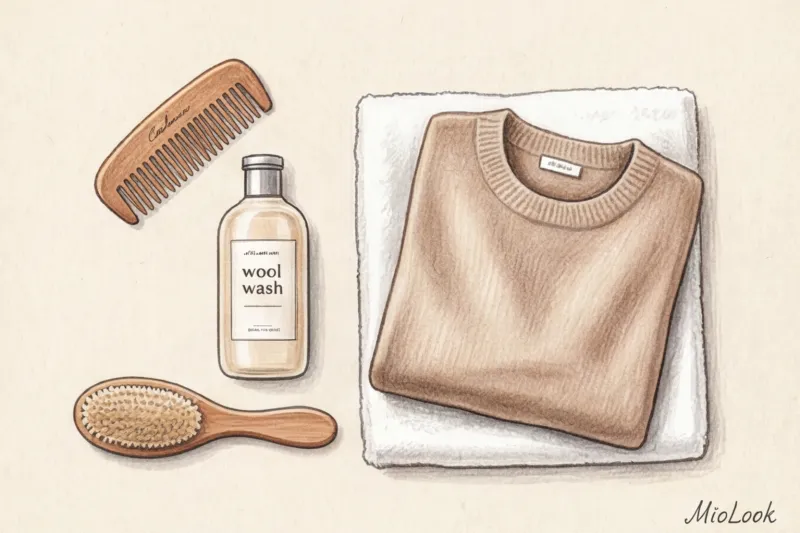
How to care for a home capsule:
- Forget about aggressive powders: Wash cashmere and merino wool only with liquid detergents containing lanolin (a natural animal wax). This will keep the yarn soft and fluffy.
- Machine washing is a no-no for pure cashmere: Hand wash only in cool water (no hotter than 30 degrees Celsius), do not wring. Dry flat on a terry towel.
- Invest in tools: A special wooden comb for cashmere (costs around €15–20) and a lint remover are your best friends. Even expensive cashmere may pill slightly where it rubs—this is normal; just spend two minutes a month on it.
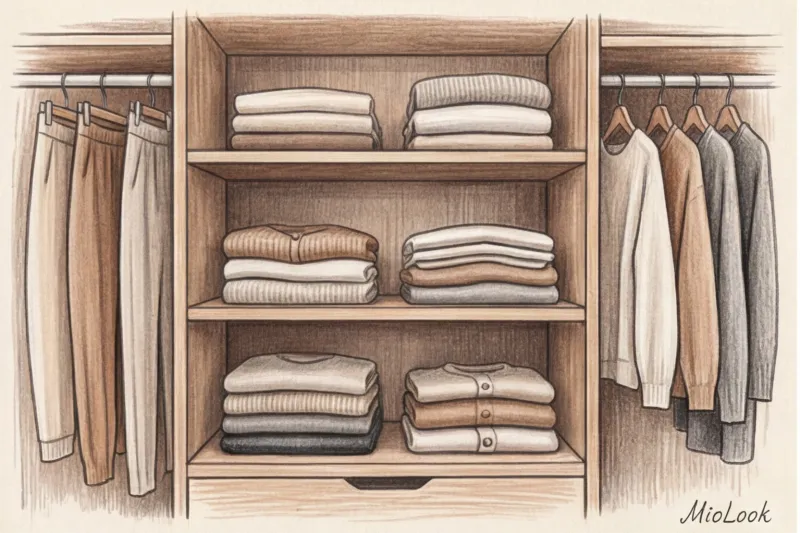
- No hangers: Store knitwear only folded and on shelves. Pants and cardigans will inevitably stretch under their own weight on a hanger.
Checklist: Assembling a Winter Capsule for Your Home
To ensure that you always have something to wear, and at the same time, your clothes have time to “rest”, collect functional capsule , where all the elements are compatible with each other. To avoid racking my brain over combinations, my clients upload their home items to the "smart wardrobe" feature in MioLook - This really helps to visualize the capsule.
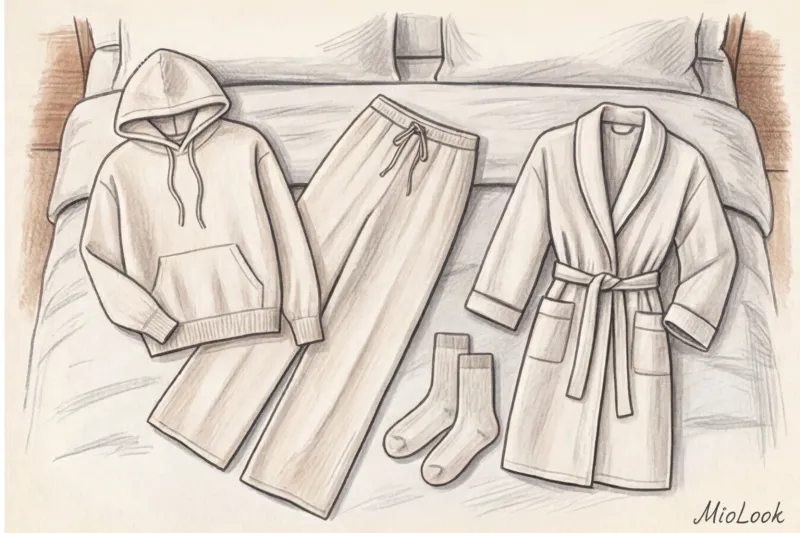
The minimum base for a comfortable winter:
- 2 bottoms: Loose palazzo pants for evenings with a glass of wine and sleek joggers for an active home routine.
- 3 tops: A long cardigan, a hoodie without metal fittings (zippers scratch furniture and feel cold on the skin), and a basic top (made of silk, thin viscose, or thick cotton).
- Correct socks: Throw away those synthetic socks. Buy three pairs of thin cashmere socks. The difference in feel is enormous.
Your capsule's color palette should consist of two to three related shades. For example: milky + caramel + chocolate. Or dusty rose + light gray + graphite. This will allow you to mix highs and lows in any combination.
The next time you return home after a long day, don't be greeted by a stretched-out polyester tank top, but by the enveloping comfort of high-quality merino wool. Invest in your well-being. You deserve to wear your best clothes not only in public, but also when you're alone with the most important person in your life—yourself.