Summer Loungewear: Why Old T-Shirts Are a Bad Thing in the Heat
In my 14 years as a personal stylist, I've heard hundreds of women's confessions, but one recurring theme remains. "Olena, when the delivery guy calls, I first frantically search for something to throw over my old, stretched-out T-shirt, and if I can't find anything, I ask them to leave the bag by the door and hide." Sound familiar?
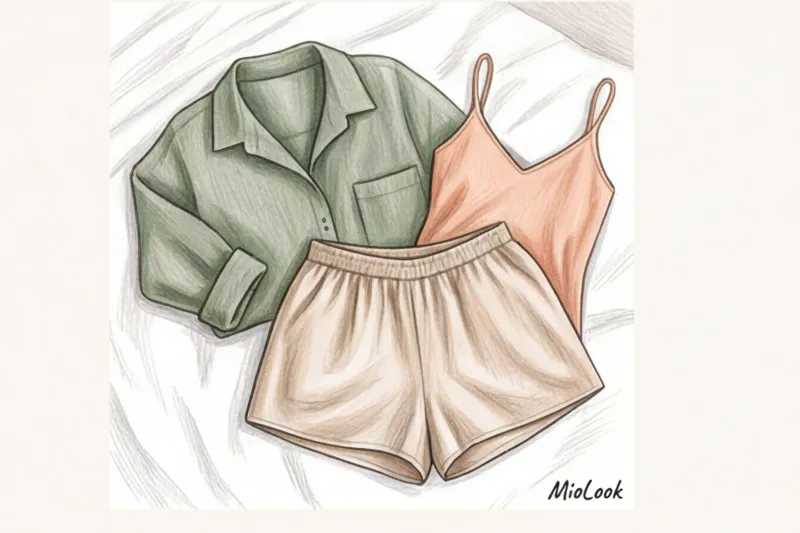
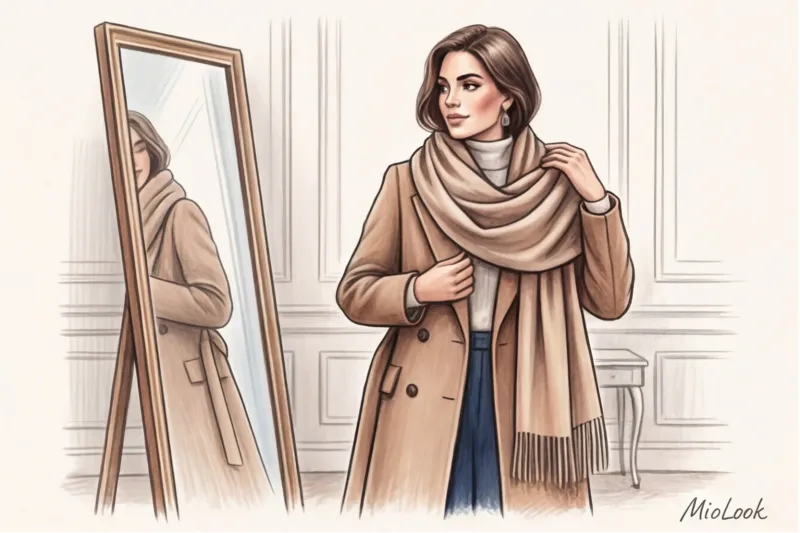
We've become accustomed to wearing clothes at home that we're too embarrassed to wear outside. This is especially true in the summer, when our bodies are melting from the heat and our minds crave maximum relaxation. But herein lies the main paradox: it's precisely during periods of extreme temperatures that our skin most needs high-tech, high-quality materials, and our psyche most needs visual aesthetics. Learn more about this phenomenon. Enclothed Cognition (how clothes directly affect our energy levels and self-esteem) we have already discussed in our the complete guide to stylish loungewear In summer, this law works without fail: stretched-out clothes steal your energy, leaving you feeling exhausted even on a day off.
The secret to the perfect summer loungewear isn't simply throwing on shorter shorts. Targeted summer loungewear is all about choosing the right fabric first, and then choosing the right style.
The 100% Cotton Myth: What's Hiding in Your Favorite Knitwear
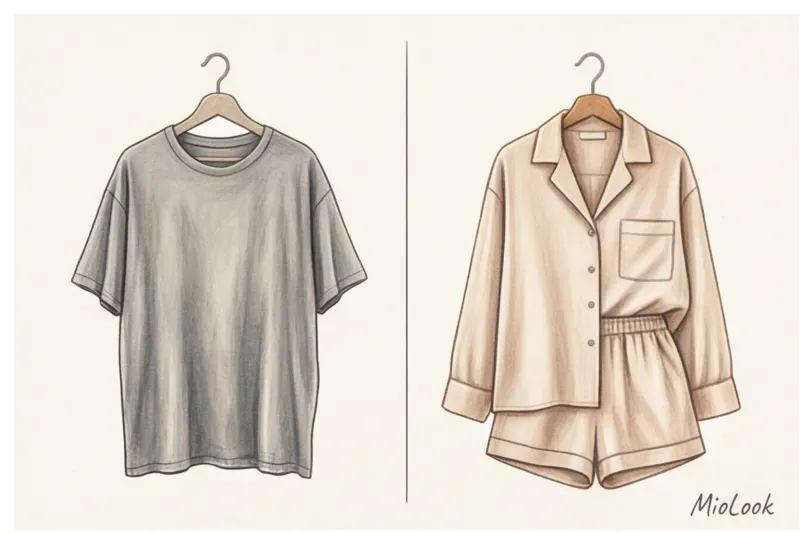
Let's be honest: 100% cotton (especially in the form of old T-shirts with faded prints) is far from the best choice for a hot home. This statement often shocks my clients, but the physics of fabric are unforgiving.
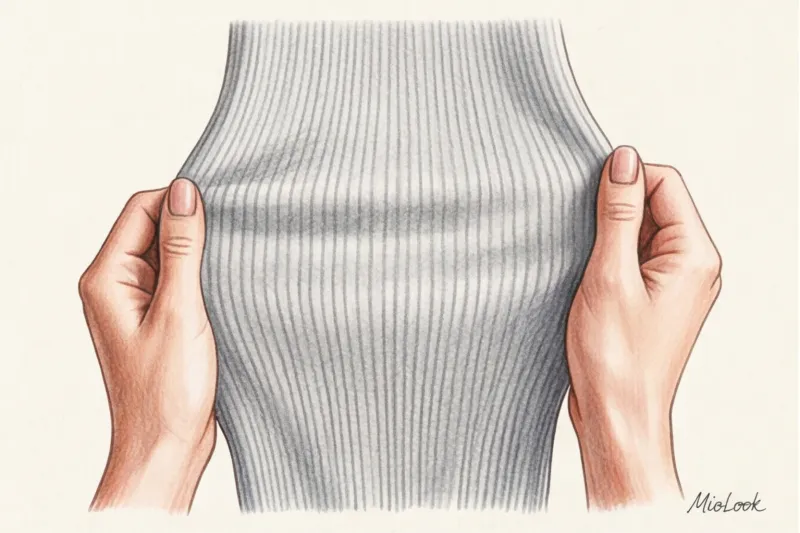
Cotton is truly excellent at absorbing moisture. But it takes a disastrously long time to dry. When the temperature in your apartment rises above 25 degrees Celsius, a damp cotton T-shirt becomes a heavy compress. It clings to your body, disrupts your body's thermoregulation, and creates a greenhouse effect. Furthermore, thin cotton knits (especially budget-friendly ones with a density below 150 g/m²) instantly become deformed from moisture and friction—hence the stretched elbows and knees, and that unkempt, scruffy look.
Tencel, Modal, and Cupro: Silky Relief for Your Skin
Instead of regular cotton, I strongly recommend considering modern artificial fabrics made from natural cellulose. Important: artificial does not mean synthetic! These are fibers obtained from wood through technological processing.
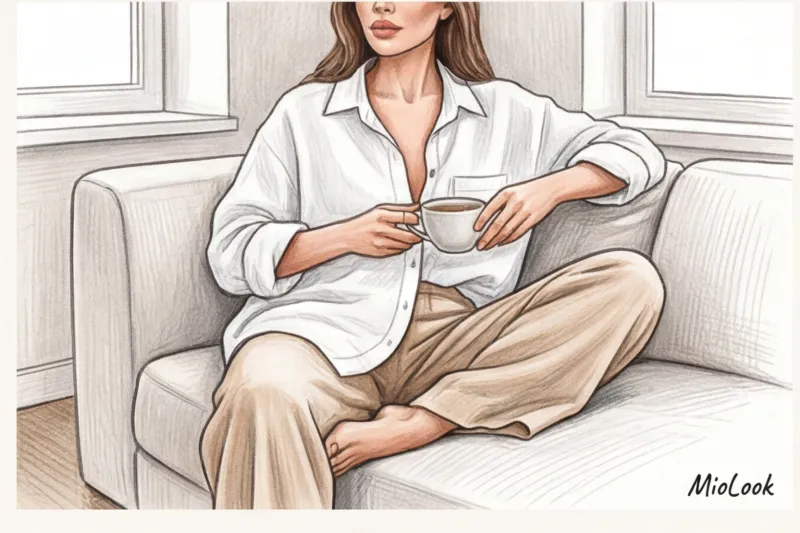
According to textile technologists, lyocell (commercially known as Tencel) absorbs 50% more moisture than cotton and releases it much faster. When I first tested a cupro lounge suit in 35-degree heat during my vacation in Italy, it felt like cool water had been poured onto my skin. Cupro is often called "vegan silk"—it flows beautifully across the body, cools the body, and makes you look like you stepped out of the pages of Vogue. High-quality sets made from these materials in mass-market stores (like COS or Massimo Dutti) can be found for between €50 and €120.
Access to MioLook for €0.99 — one-time payment
A smart AI stylist will select the perfect look for your home and help you digitize your items.
Get access — €0.99 onceLinen and natural silk: an investment in the microclimate
If your budget allows, natural linen and silk are the best investment in summer comfort. Linen has exceptionally high thermal conductivity. This means it literally wicks heat away from your body, reducing the temperature between your skin and the fabric by 3-4 degrees compared to synthetics.
Natural silk with a density of 19–22 momme is the ideal choice for bedtime and leisurely morning rituals with a cup of coffee. However, there's a fair limitation: silk is absolutely not suitable for a busy household routine. If you plan on frying cheesecakes in butter or cleaning, choose linen or Tencel. A single drop of oil on natural silk can ruin a €150 garment forever.
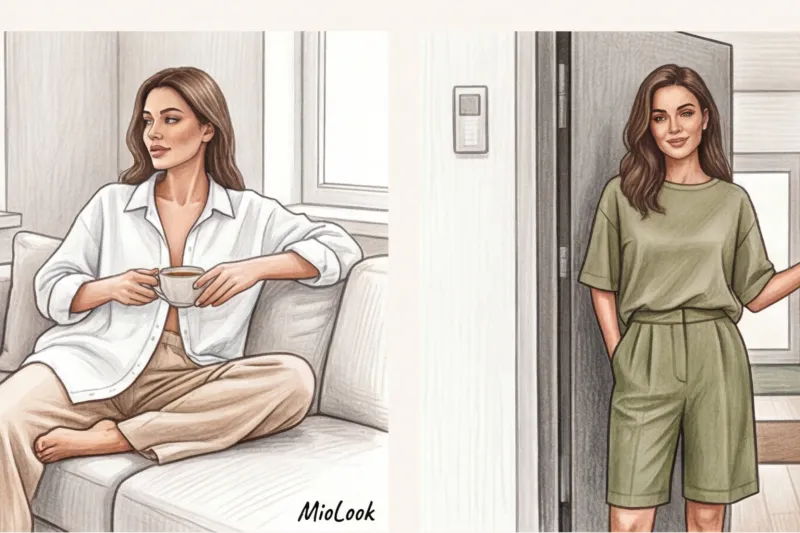
Aesthetic and lightweight styles: what you won't be embarrassed to wear when you open the door to the courier
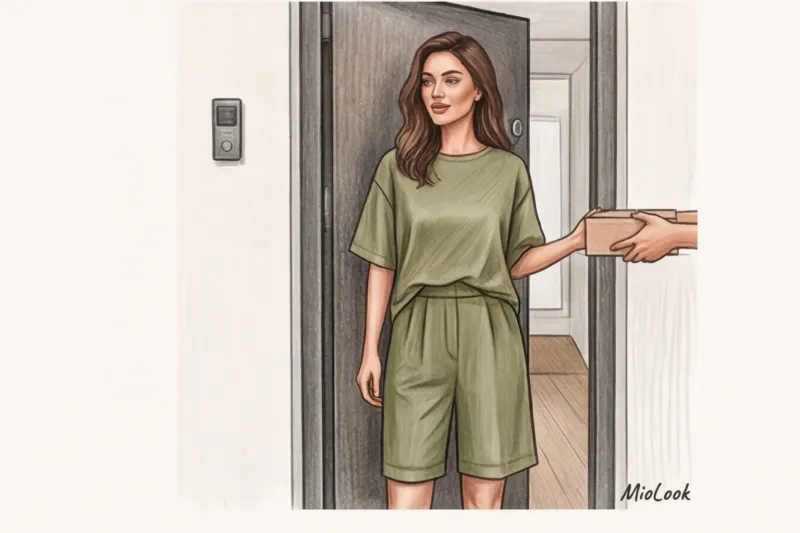
During my consultations, I always introduce the "doorbell rule" to my clients. It goes like this: your home clothes should be such that if your doorbell rings unexpectedly (whether it's a delivery person, a neighbor, or a plumber) or you're on an unscheduled Zoom call, you can open the door or turn on the camera without feeling the slightest bit embarrassed.
To achieve this, it's important to strictly separate sleepwear (pajamas) from loungewear. You can sleep in micro shorts and lace tops, but spending the entire day in them means conveying to yourself and your loved ones the "I just got out of bed and am not ready for anything" vibe. According to a report by the analytical agency WGSN (2024), the trend for elevated loungewear (elevated home wear) is only gaining momentum - the boundaries between relaxed street style and home wear are blurring.
Shirt dresses and modern kimonos
If you work remotely, a shirtdress made of soft linen or heavy viscose is your best basic. It features a collar that instantly gathers the head area for phone calls, but the loose fit ensures perfect ventilation.
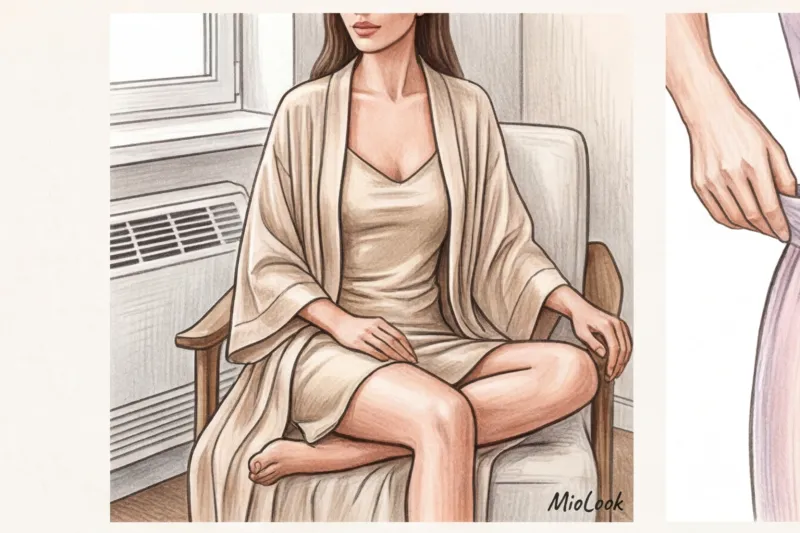
Instead of a heavy terrycloth robe that turns into a portable sauna in the summer, opt for a modern kimono. The wide sleeves allow for unrestricted arm movement, and the wrap-around design allows for a more relaxed fit.

Suits with Bermuda shorts
Micro shorts at home often bring more discomfort than comfort. They dig into your body when sitting cross-legged, causing your skin to stick to a leather sofa or chair. A stylish and much more comfortable alternative is loose-fitting Bermuda shorts that fall just above the knee.
"A monochrome Bermuda shorts and loose short-sleeved shirt combination visually elongates the silhouette and looks like a full-fledged summer outfit, even if you're just walking from the fridge to your desk."
Slip dresses for home
Lounge slip dresses, cut on the bias from dense cupro, modal, or viscose, are an absolute hit. They have no hardware, buttons, or stiff seams. Nothing will press on your stomach after a heavy lunch. At the same time, this dress is extremely versatile: in the morning, it's perfect for breakfast on the balcony, and in the evening, with a touch of perfume and a pretty hair clip, you can have a romantic dinner at home.
Your perfect look starts here
Join thousands of users who look flawless every day with MioLook.
Get access — €0.99 onceHome Layering: How to Adapt to Air Conditioning
Summer in an apartment often means temperature swings. You step out onto the sunny balcony and it's hot (+30°C). You return to the living room under a powerful split-system air conditioner and within 15 minutes you're covered in goosebumps (+22°C).
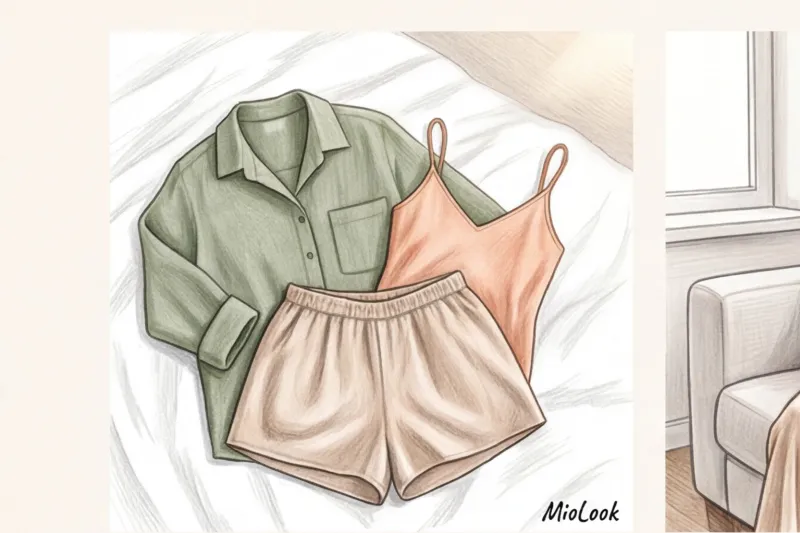
To avoid changing clothes five times a day, use the two-layer rule at home. The base layer should be revealing (a top with thin straps, a slip dress, a lightweight modal tank top). The top layer should be a cover-up that can be easily removed (a kimono, a thin cotton-silk cardigan, or an unbuttoned linen shirt).
To avoid looking like a random collection from your closet, layer items in the same color temperature. For example, a cool olive top would perfectly complement a sage or dusty gray kimono. The contrast in textures (matte linen over the satin sheen of the slip) will add depth and luxury to the look.
The main mistakes when choosing summer clothes for home
Even if you choose the right fabric, poor details can ruin your comfort. Here are the top four mistakes I regularly discuss with my clients:
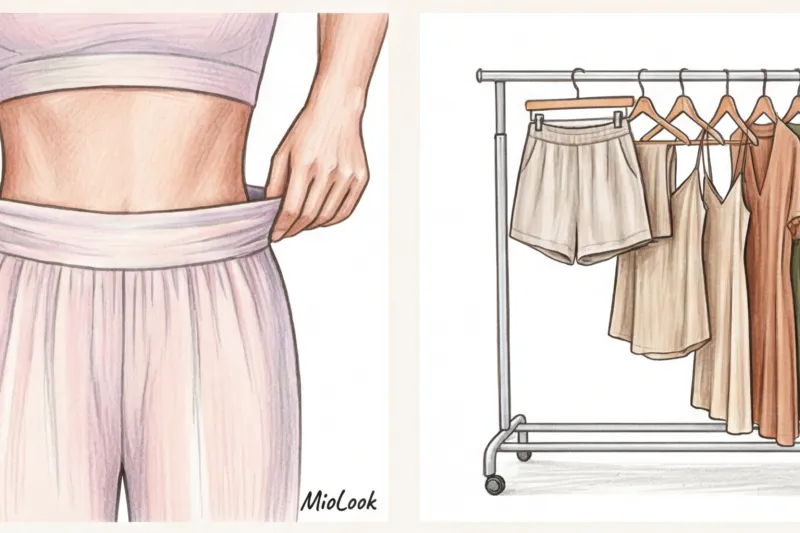
- The elastic bands at the waist are too tight. In summer, we drink more water, and slight swelling in the evening is normal. Tight elastic bands on shorts can impede lymph flow in the pelvic area. One of my clients complained of severe leg swelling in the evenings. It turned out that her "comfortable" lounge shorts with a tight elastic waistband were to blame. We switched to drawstring shorts, and the problem went away.
- Cheap polyester lace. In hot weather, skin is steamed and sensitive. Stiff synthetic lace on the collar or straps will rub and irritate.
- Acidic and screaming colors. Home is a relaxation zone. Neon pink or acid green are tiring for the central nervous system. Choose pastels and natural shades (sand, terracotta, ecru, dusty blue).
- Buying clothes "just in case". Summer loungewear should definitely be a half size or even a size larger than your usual size. There should be a gap of air between the fabric and your body to allow for air convection.
Putting together a summer home capsule: a stylist's checklist
How many items do you really need to cover your summer wardrobe? I recommend following the "1+2" rule for each type of clothing: one item in the wash, two clean ones hanging in rotation. This allows items to "rest" and retain their shape longer.
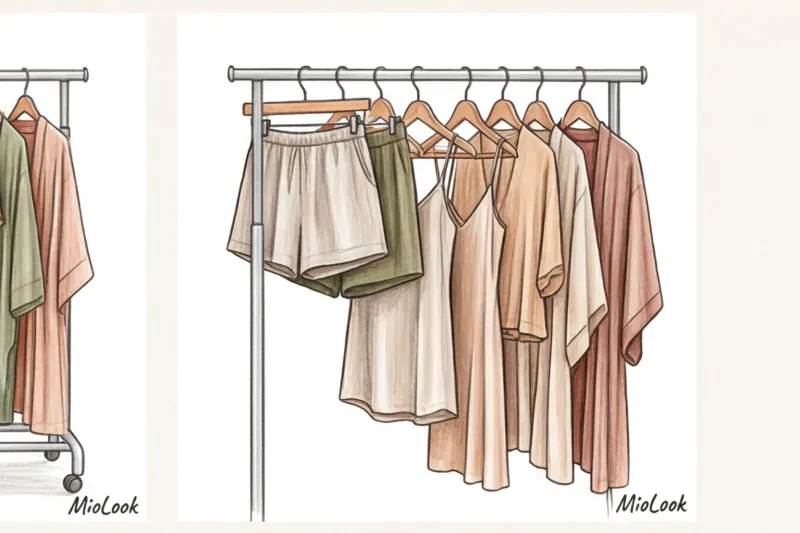
The ideal basic capsule (which can be budgeted at €150–€250) looks like this:
- Suit with Bermuda shorts and a short-sleeved shirt (Tencel or Cupro).
- Loose midi length shirt dress (softened linen).
- Slip dress or silky slip dress (viscose or modal).
- Lightweight kimono or cape (viscose).
- Two high-quality basic top coats to replace.
To avoid getting confused with combinations and buying unnecessary items, I advise my clients to digitize this set. For example, you can add all your home items to the "smart wardrobe" function using MioLook Artificial intelligence will help you create up to 15 different outfits from just 6–7 basic items, taking into account their color and texture.
Ready to get started?
Try a free plan—no commitments required. Upload your wardrobe to MioLook and get ready-made looks.
Get access — €0.99 onceSummary: The comfort you deserve
Your home is your place of power. It's the space where you shed your social masks and recharge. Summer loungewear made from breathable, high-quality materials is your soft, cool armor of recovery. Investing in Tencel, linen, or high-quality viscose pays off every day with that feeling of freshness so hard to find in the July heat.
Do yourself a favor: head to your loungewear shelf today, pull out all those stretched-out cotton t-shirts with faded prints, and recycle them. Stop putting off beauty and comfort until a better time or until you go outside. You deserve to feel like a queen, even when you're just cutting a watermelon in your own kitchen.