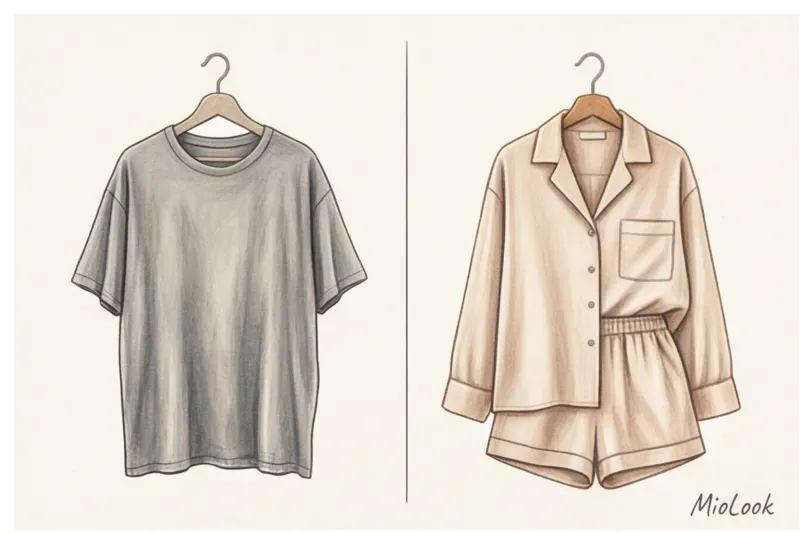
Have you ever noticed the paradox? We can spend hours choosing the perfect linen suit for the office, spend €200 on flawless leather sandals, but when we step into our own apartment in 90-degree heat, we put on... a washed-out promotional T-shirt and shorts with a stretched-out waistband. For some reason, we strive to look our best to the outside world, but in private, we settle for visual "fast food."
I have already talked in more detail about the psychological reasons for this phenomenon in our The Complete Guide: Women's Loungewear: Aesthetics and Self-Love However, in the summer this problem becomes much more acute. Correct summer clothes for home — this is no longer just a question of aesthetics; it is a vital tool for thermoregulation and your physical comfort.
I'm Katarzyna Nowak, and over 12 years of wardrobe analysis, I've seen hundreds of closets filled with "special occasion" items while their owners strolled around the house in stretched-out leggings. Today, we'll settle the question of summer home wardrobes once and for all. No blanket advice—just a rigorous cost-per-outing calculation, an honest breakdown of ingredients (spoiler: you don't need pure linen), and a step-by-step plan for creating the perfect home capsule wardrobe.
The Hidden Price of Comfort: Why an Old T-Shirt Is the Worst Summer Loungewear
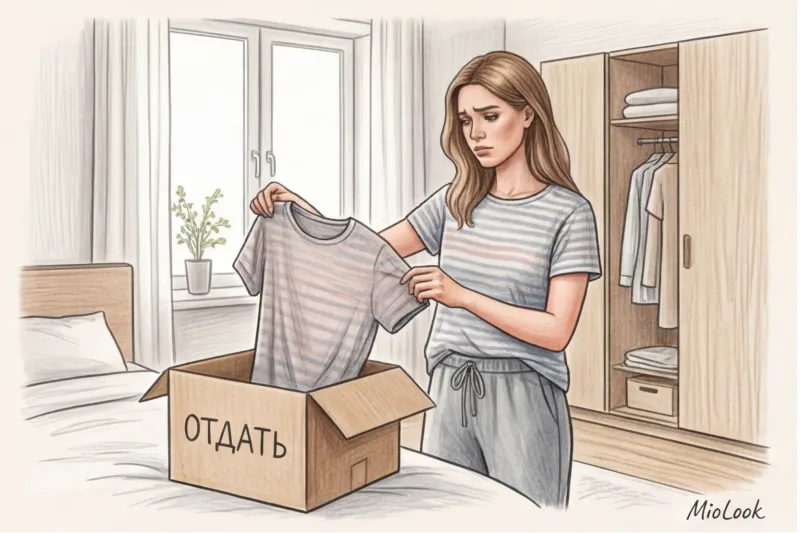
"But I'm so comfortable in it, it's so soft!" I hear this phrase every other time I consult with clients, as I pull out yet another gray, pilled T-shirt from the depths of the closet. But let's face it.
Firstly, old, repeatedly washed cotton loses its porous structure. It becomes dense, clogged, and impermeable. In hot weather, such fabric creates an unpleasant greenhouse effect: it absorbs sweat but doesn't evaporate it, causing clothes to stick unpleasantly to the body.
Secondly, there is a scientifically proven phenomenon that psychologists Hadjo Adam and Adam Galinsky called in their 2012 study Enclothed Cognition (clothed cognition). The gist is simple: the clothes we wear directly impact our cognitive processes, mood, and self-esteem. When you spend your days wearing clothes with a history that you'd be embarrassed to wear even to take out the trash, you're broadcasting to your brain, "I don't deserve better." It sounds harsh, but it's true.
"We easily spend €150 on a dress for a single summer party, but we skimp on €50 for a quality loungewear set, which we spend 60% of our lives in. This is a serious disruption in our self-love system."
Summer loungewear should work for you: keep you cool, allow you to move freely, and look good in the mirror. And to achieve this, you need to learn to read labels.
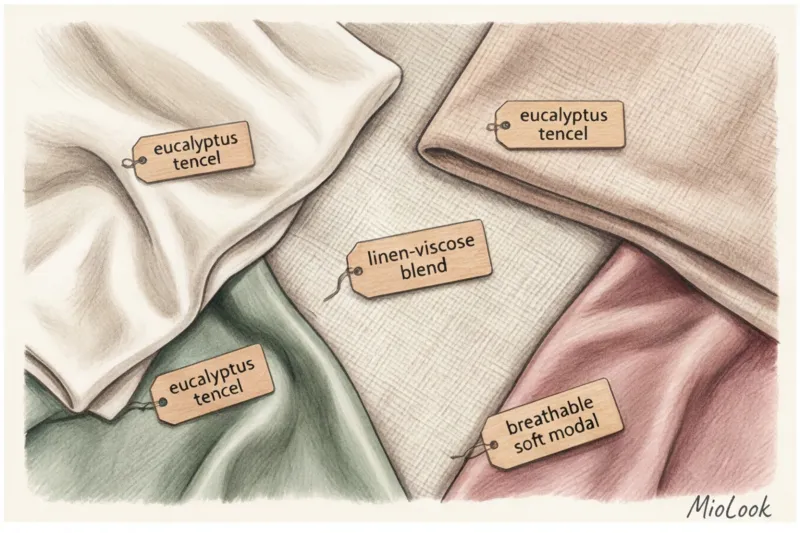
Reading the Labels: The Best and Worst Fabrics for Loungewear in Hot Weather
Here I want to debunk the main fashion myth that glossy magazines broadcast. 100% linen is the worst choice for felting on the couch at home.
Yes, linen is wonderful for strolls along the waterfront or at the office, but at home it will reveal all its shortcomings. It wrinkles instantly, gathering in stiff folds under the knees and across the stomach when you sit. If linen isn't soft enough (and in the under-€100 segment, this is rarely ideal), it will itch and irritate hot skin.
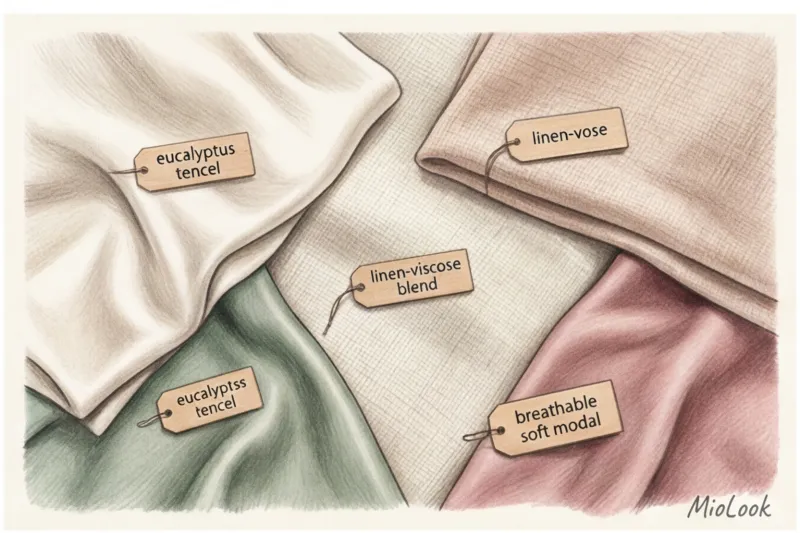
So what should you look for on the shelves of Oysho, Zara Home, or H&M Premium? Your goal is "smart synthetics" and high-quality blends:
- Tencel (lyocell) and cupro: This is my absolute favorite for summer. Man-made fibers made from eucalyptus wood (or cotton, in the case of cupro). They flow like silk, but have a unique cooling effect. According to the textile industry, lyocell fabrics absorb moisture 50% more effectively than regular cotton.
- Blends (linen + viscose): The gold standard of high-quality European mass-market fabric. Viscose counteracts the stiffness of linen, making the fabric supple and flowing beautifully, while linen provides the desired texture. The ideal ratio is 55% linen and 45% viscose.
- Modal: A softer, more durable version of viscose, this fine modal jersey feels like a second skin, perfect for those sultry nights.
A categorical "no" We're talking polyester, acrylic, and heavy cotton fleece. Save them for winter evenings. At 28°C (82°F) in an apartment, even 5% polyester will turn your lounge suit into a portable sauna.
Your perfect look starts here
Join thousands of users who look flawless every day with MioLook. A smart AI stylist will help you sort through your wardrobe.
Get access — €0.99 onceA Capsule Wardrobe for the Home: A Stylist's Summer Formula
Your home wardrobe should be built according to the same capsule wardrobe principles as your everyday wardrobe. This means three or four pieces should be perfectly coordinated, saving you the hassle of choosing in the morning.

Here's the formula for a basic summer capsule home kit that I use with 8 out of 10 of my clients:
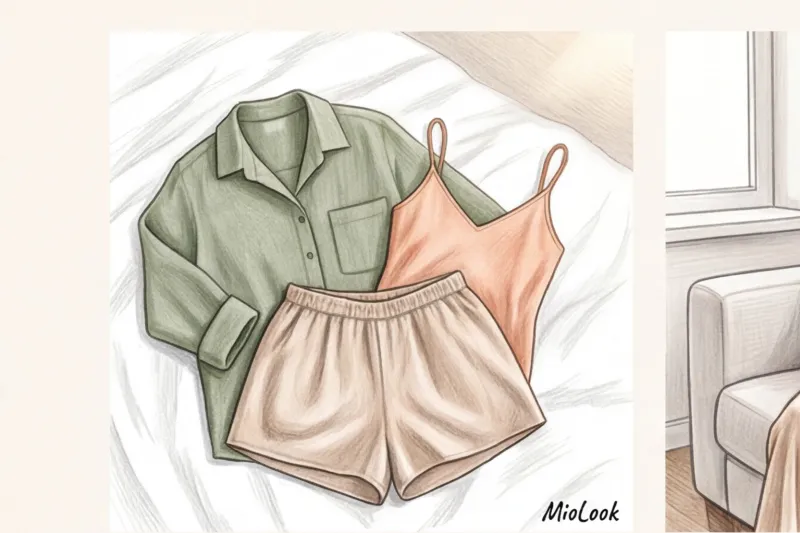
- Pajama set in urban style. A short-sleeved shirt and loose shorts with a soft elastic waistband (no hard drawstrings). Made from Tencel or a linen-viscose blend. Choose elegant, slightly dusty shades: sage, cappuccino, dusty rose, ecru.
- Slip dress. Sewn on the bias, made of viscose or cupro, it's incredibly feminine, and nothing saves you from the heat like flowing fabric that barely touches the body.
- A light kimono or cape. A lifesaver for those with air conditioners blasting at home. Instead of throwing your husband's old sweater over your shoulders, opt for a stylish kimono. It instantly ties your look together and completes it.
The capsule's key feature is that you can wear a shirt from the set over a slip dress, or pair shorts with a simple white ribbed cotton top. Minimal pieces, maximum combinations.

The "Sudden Courier" Test: The Line Between Sleepwear and Lifestyle
A common mistake I see is a complete lack of distinction between sleepwear and loungewear. Spending the entire weekend in the same pajamas you slept in is a surefire path to procrastination and apathy.

We sweat at night, leaving skin particles on fabric. From a hygiene standpoint, sleeping clothes should be washed or aired immediately after waking up. But there's also a psychological aspect: changing clothes signals your brain to start the day.
To check how much your summer loungewear lives up to loungewear status, use my signature Courier test Imagine: the doorbell rings. It's a courier with a package, a neighbor, or a colleague suddenly calling you via video call.
Your reaction? If you instinctively try to cover up, ask someone to wait outside while you frantically pull on your jeans, or hang up on a video call, your loungewear hasn't passed the test. Proper loungewear looks like you wouldn't be embarrassed to go down to the lobby for a coffee or open the door for a delivery.
Ready to get started?
Try a free plan—no commitments. Digitize your home looks and create capsule collections in one click.
Get access — €0.99 onceBudget and Cost Per Wear: How Much is Your Self-Love Worth?
One of the most common arguments against buying quality loungewear is, "Why spend money on something no one will see?" As a financially savvy stylist, I always respond with math—the concept of Cost Per Wear (CPW).
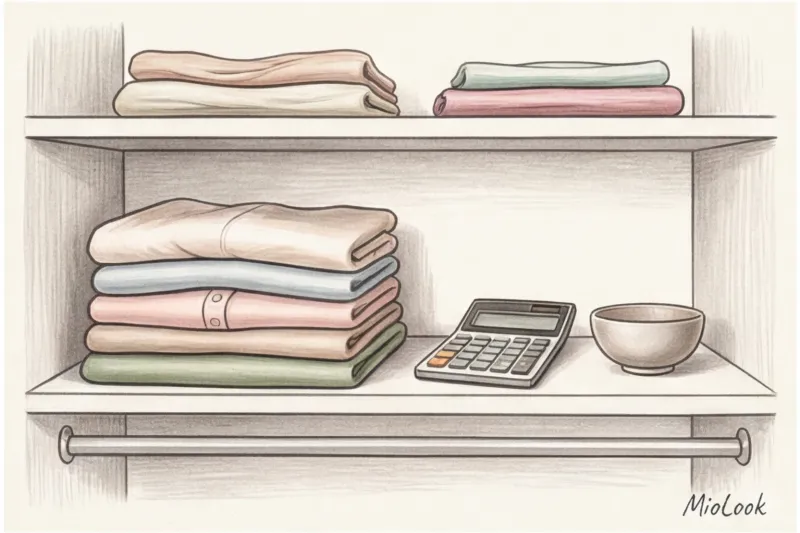
Let's do the math. You buy a stunning summer dress from Massimo Dutti for €150. You wear it to a friend's wedding, a couple of dates, and once on vacation. Total: 4 wears per season. The cost per wear (CPW) is €37.50.
Now let's take a great viscose silk lounge suit for €70. You'll wear it every evening after work and all weekend long. Over the course of three summer months, you'll wear it at least 60 times. The CPW is only €1.16 for an evening of absolute comfort and confidence.
Investing in your home wardrobe is the most profitable investment ever! You don't have to buy premium brands. You can find gorgeous pieces with excellent materials in the €40–€80 range. The key is to make informed choices and avoid buying cheap polyester on sale.
Checklist: A 15-Minute Summer Wardrobe Overhaul
Enough theory, let's get down to practice. I don't like long preparations, so I suggest you do a home wardrobe audit this evening; it won't take more than 15 minutes.
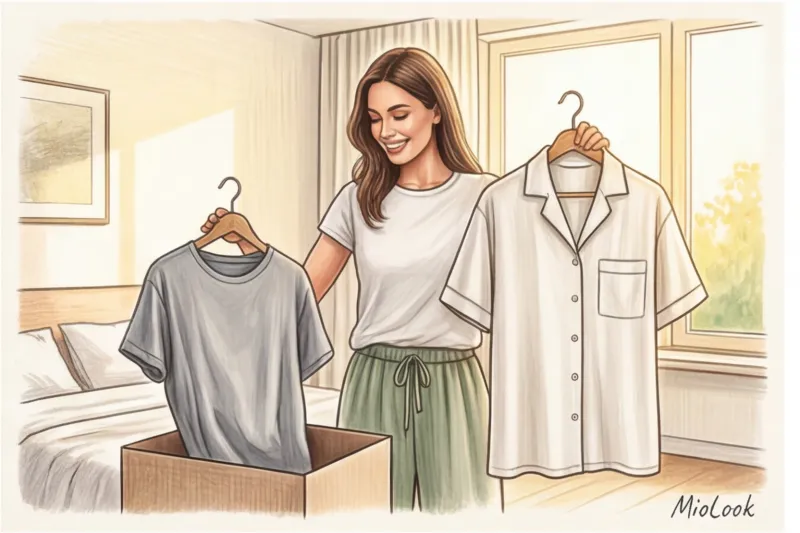
- Step 1: Total cleanup. Ruthlessly throw anything with stubborn stains, holes, stretched knees, or anything covered in hard pilling into the recycling bag (or rags). No "I'll save it for repairs." A single T-shirt, not an entire shelf, is enough for repairs.
- Step 2: Seasonal storage. Right now, vacuum-seal all your winter fleece robes, plush suits, and heavy hoodies. They take up valuable space and visually clutter your wardrobe. Only lightweight fabrics should be in your wardrobe this summer.
- Step 3: Make a shopping list. Look at what's left. What's missing for the capsule? Do you need a top? A light dress? Write down specific items and the fabrics you need.
- Step 4: Digitization. Add the remaining quality items to the app MioLook This will help you visually assess your current base and identify missing items for purchase so that they coordinate color-wise.
Beautiful summer clothes for your home aren't a privilege; they're essential for maintaining your self-esteem. Stop putting life off until later and dressing up only for strangers on the street. You're the most important person in your life, and you deserve to look gorgeous even when you're just sipping your morning coffee in your own kitchen.