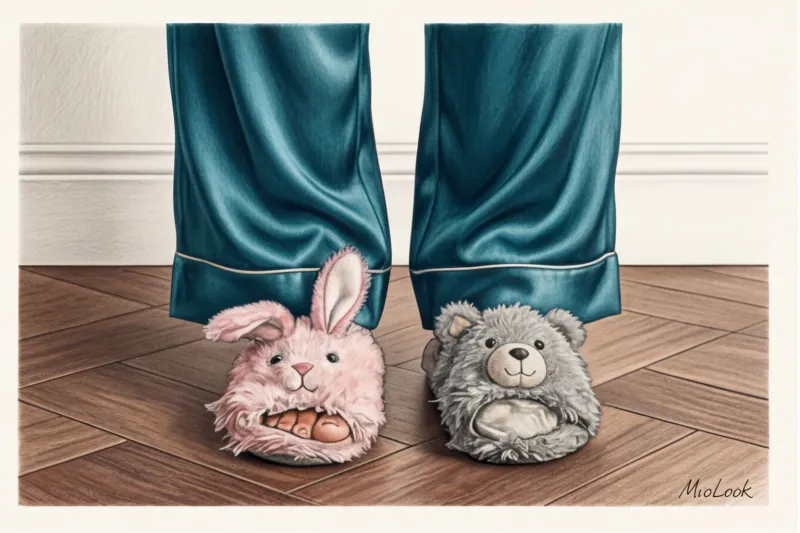
During my last wardrobe review in Munich, I noticed a classic paradox: my client, a top IT executive, had neat rows of Manolo Blahnik pumps and The Row ankle boots in her closet, while worn-out, completely flat polyester plush bunnies, bought for €15, sat sadly by the door. When I asked her why she wore them, she shrugged: "No one sees them at home; your feet need a rest." Unfortunately, this very attitude led to regular lower back pain.
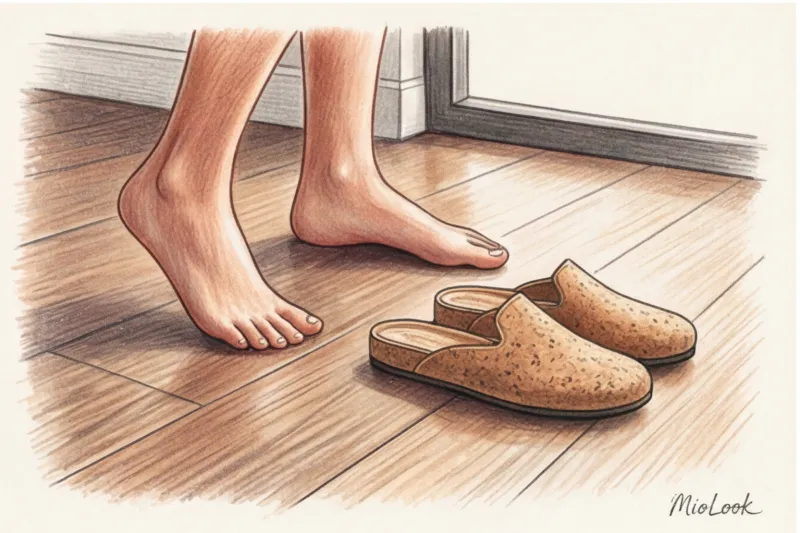
The softest, most flat, and shapeless plush slippers are the worst thing you can offer your feet after a long day. House shoes should be structured. Period. We've covered the paradox of saving money without witnesses in more detail in our complete guide to Homewear for women: aesthetics and self-love.
Instead of a clichéd list of "cute fluffy slippers," let's look at house shoes at the intersection of podiatry, textile materials science, and style psychology. Believe me, what you wear in the kitchen affects your posture just as much as the shoes you wear during presentations.
Why Walking Barefoot on Laminate Flooring Is a Bad Idea: A Stylist and Podiatrist's View
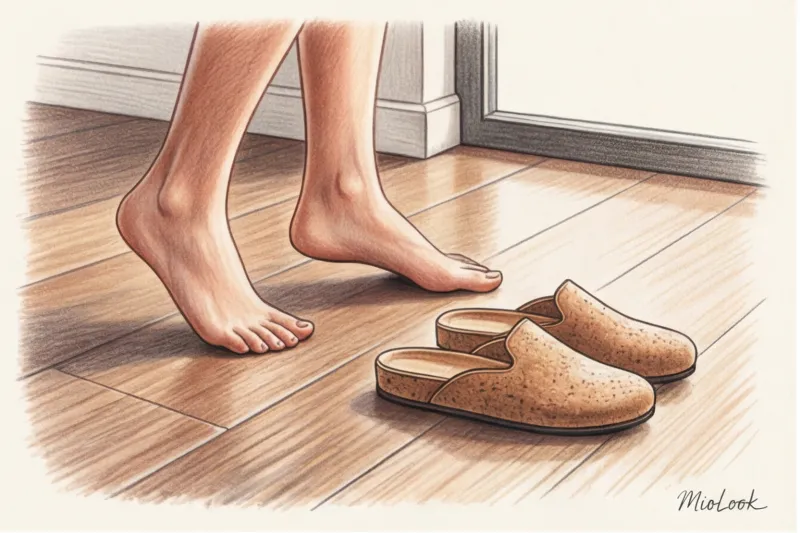
"Feet need to rest barefoot" is a great rule if you're walking on warm sand in Bali or soft grass. This rule doesn't apply in city apartments.
Modern flooring (laminate, porcelain tile, and hardwood) offers absolutely no cushioning. According to the American Podiatric Medical Association (APMA, 2023), walking barefoot on hard, flat surfaces increases heel impact by 30% compared to natural ground. Every step on tile transmits micro-shocks to the knee joint and lower back.
Have you ever noticed how your lower back starts to ache in the evening after a day of cooking or cleaning, even if you haven't lifted anything heavy? The lack of arch support on a hard floor leads to flat feet and microtrauma to the plantar fascia. My client from Munich, whom I mentioned at the beginning, forgot about her back pain just three weeks after we replaced her flat fabric ballet flats with anatomically shaped mules with a slight instep.
And here's an important caveat: this advice for factory-made orthopedic shoes does NOT work if you have been diagnosed with severe hallux valgus or diabetic foot disease—in these cases, you need strictly custom-made insoles made by a doctor, not standardized plugs from the mass market.
Women's house slippers: how to choose the right soles and materials
As a textile expert, I implore you: read the ingredients on your slippers as carefully as you would on your face cream. women's house slippers It doesn't start with a pretty bow, but with the sole and lining.
Cheap rubber and polyurethane soles, combined with synthetic plush inside, are a recipe for a greenhouse effect. Polyester has zero hygroscopicity. It doesn't absorb sweat, but creates a moist environment ideal for bacteria growth. This is why synthetic slippers start to smell unpleasant after just a month.
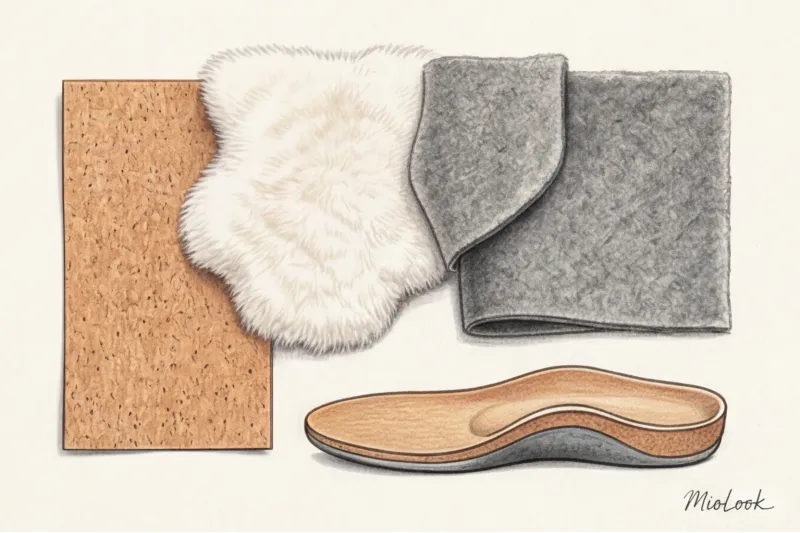
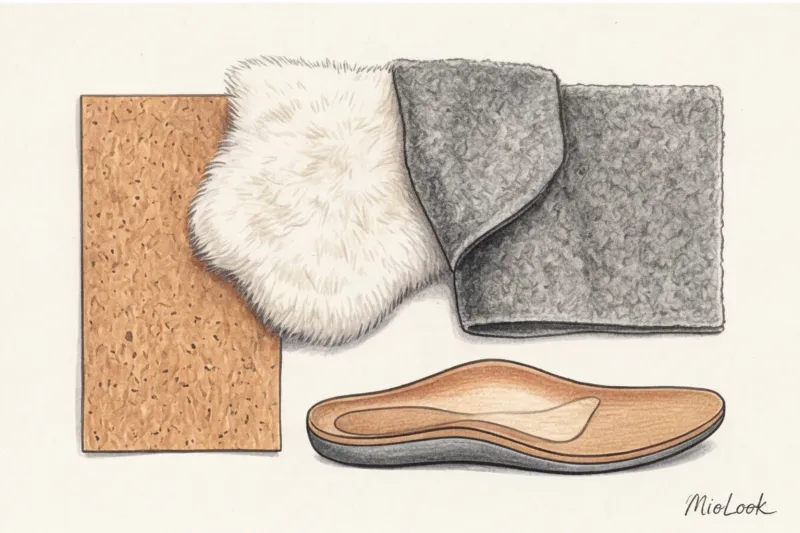
Eco-friendly and safe alternatives:
- Sole: Natural cork, recycled rubber, or high-density EVA foam. Ideally, the sole should be slightly raised at the heel (1.5-2 cm drop). This relieves tension on the Achilles tendon.
- Insole and lining: Sheep wool (absorbs up to 30% moisture, remaining dry to the touch), natural felt, cotton or leather.
"Mass-market stores often use 'sherpa' fabric—a synthetic sheepskin substitute. To spot a fake, spread the pile with your fingers: with genuine sheepskin, you'll see a leathery grain, while with synthetics, you'll see a woven mesh base. Polyester also squeaks slightly when rubbed."
Anatomy of a proper insole: arch support and heel cup
Pay attention to the design. High-quality shoes have a heel cup—a recess in the back of the insole that gathers the fat pad of the heel, improving natural cushioning.
Another counterintuitive fact: the popular synthetic memory foam (memory effect) loses out to natural cork in the long term. Foam wears down under body weight within 3-4 months, locking the foot in a crooked position. Cork, on the other hand, molds to your foot over years (lasting 3-5 years) and supports the arch.
Your perfect look starts here
Join thousands of users who look flawless every day with MioLook. Our smart AI stylist will even help you choose the perfect hairstyle for your home.
Get access — €0.99 onceTypes of stylish house shoes: from comfort to elegance
A casual wardrobe has long since ceased to be synonymous with sloppiness. Modern brands (from COS to Massimo Dutti and specialty Birkenstocks) offer silhouettes that won't embarrass you to open the door to a delivery person or greet unexpected guests.
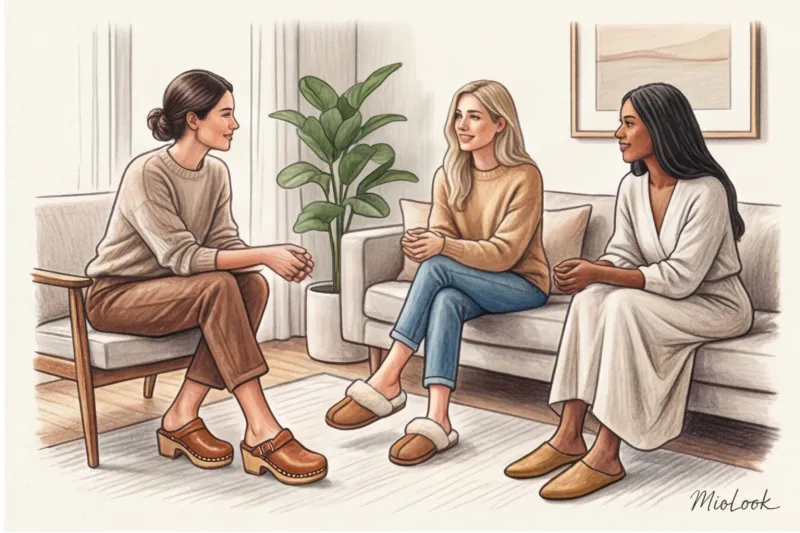
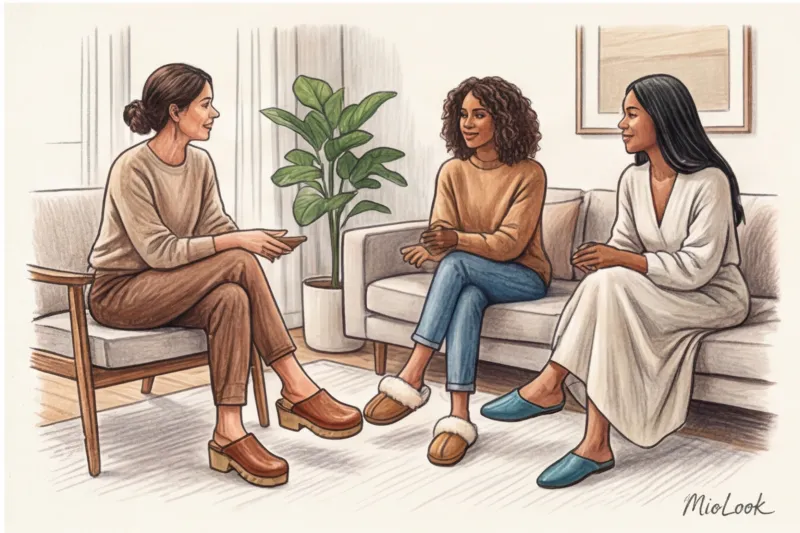
Depending on your lifestyle, I recommend three ideal formats:
- Orthopedic clogs (like Birkenstock Boston).
For whom: For those who cook a lot, engage in hobbies while standing, or work at a standing desk. Price range: €70–€130.
How to style: With voluminous ribbed knit suits, thick cotton joggers and cashmere socks. - Fur mules with a rigid sole.
For whom: A balance between luxury and wellness. Ideal for cold apartments and those who appreciate tactile comfort.
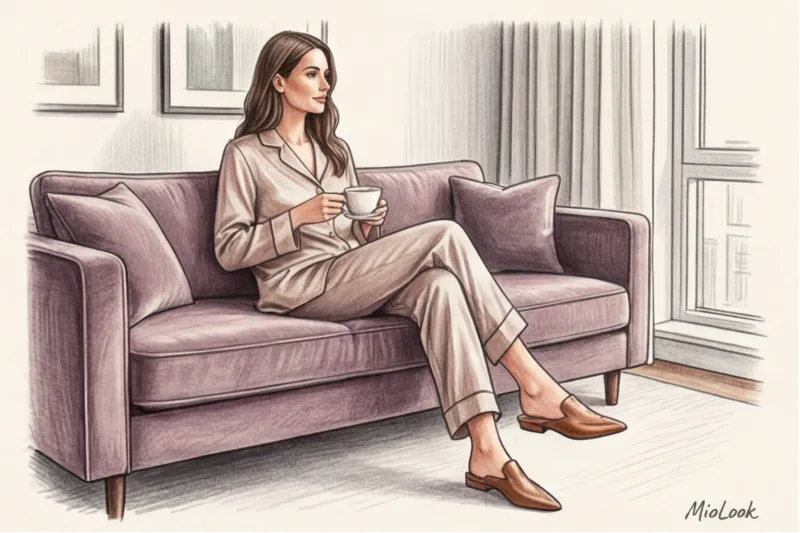
How to style: With silk pajamas or long linen kimonos. The contrast of smooth silk and fluffy sheepskin looks very classy. - Textile or leather babouches and loafers.
For whom: For those who frequently entertain or for the home office, these shoes feature a soft yet durable leather sole, are quiet, and look like elegant street shoes.
How to style: With palazzo pants and chunky knit cardigans.
How stylish house shoes change the way we perceive ourselves
There is a term in psychology Enclothed Cognition (clothed cognition), proven by a 2012 study in the Journal of Experimental Social Psychology, what we wear directly influences our cognitive processes. This is absolutely applicable to our wardrobe.
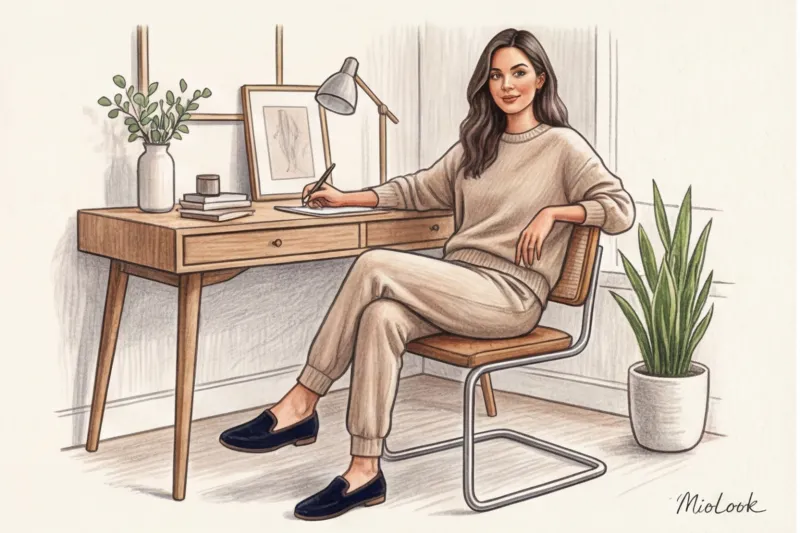
If you work remotely, the ritual of changing from bed socks to structured leather clogs sends a clear signal to your brain: "We're focused, we're working." And in the evening, swapping clogs for soft fur mules acts as an emotional buffer, switching your psyche into rest mode.
We often skimp on home items because "no one sees" them. But you do. Your body feels them. If you invest in shoes to impress your colleagues at the office, why not invest in shoes to show respect for yourself?
Access to MioLook for €0.99 — one-time payment
Start creating your perfect looks with artificial intelligence. Digitize your wardrobe and discover new combinations in seconds.
Get access — €0.99 onceChecklist: 5 Signs of Quality House Shoes Before You Buy
Before you spend €50-€100 on a new pair, do a quick check. Over 12 years as a stylist, I've developed this checklist to ensure clients don't waste their money:
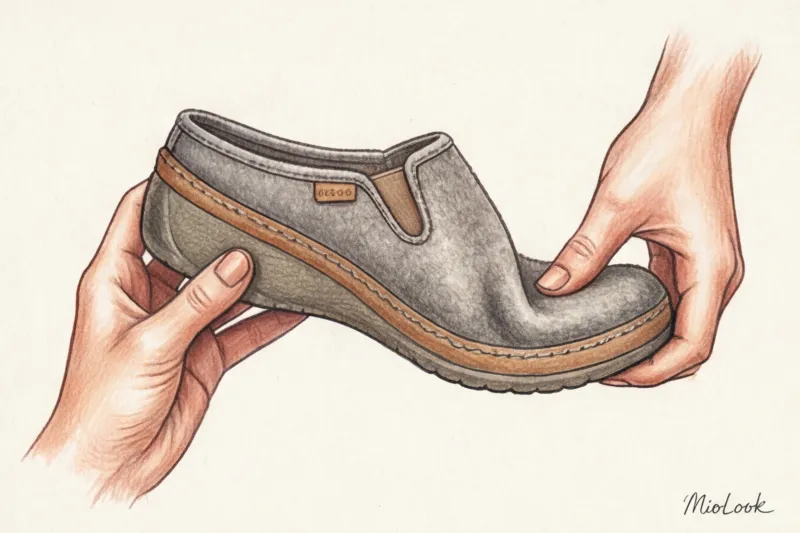
- Twist test. Take the slipper with both hands and try to bend it. The right shoe should bend easily. only In the first third (where the toes are). If the sole bends exactly in half at the arch, it doesn't provide any support.
- Checking the seams. Look for hidden stitching. If the sole is simply glued to the upper, it will fall off within a couple of months (the glue in house shoes quickly breaks down due to the constant heat of feet and lack of ventilation).
- Toe width. Your toes should be free to move around at home. If your house slippers taper toward the toe like street pumps, leave them at the store.
- Breathability. Check the label. The inner layer should be natural. Only the outer decorative layer of the upper can be synthetic.
- Acoustic comfort. Tap the sole of your shoe on the floor in the store. If it makes a loud, plastic sound, you'll drive your neighbors and family crazy at night. Look for rubberized soles.
Eco-friendly care: how to extend the life of your favorite mules and clogs
High-quality shoes aren't cheap, but proper care can extend the lifespan of premium items from 1 year to 4-5 years, reducing your environmental footprint. The main rule: never Don't machine wash high-quality slippers, even on a delicate cycle at 30 degrees Celsius. The glue will dry out, the cork will crumble, and the sheepskin will become stiff and felted.
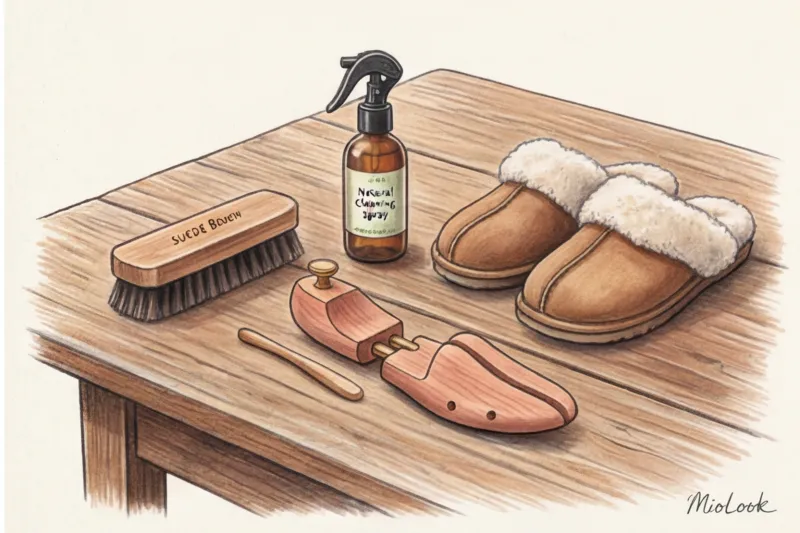
How to care properly:
- For sheepskin and felt: Buy a wooden suede brush. Brush the fur once a week to prevent matting. Remove stains with a special foaming agent for genuine leather.
- For cork soles: Every six months, seal the exposed edges of the cork with a special cork sealer (€10). This will prevent the cork from drying out and cracking at the edges.
- Microflora: If your feet are sweaty, don't immediately put your slippers away in a dark closet. Leave them outdoors overnight. For deodorization, I recommend using natural, unstained cedar inserts—they draw out moisture and kill bacteria better than any chemical spray.
Your choice of slippers is a reflection of your commitment to comfort. Stop wearing things you hate to throw away and swap out shapeless polyester for anatomically supportive ones. Your back, your feet, and your sense of beauty will thank you tomorrow.