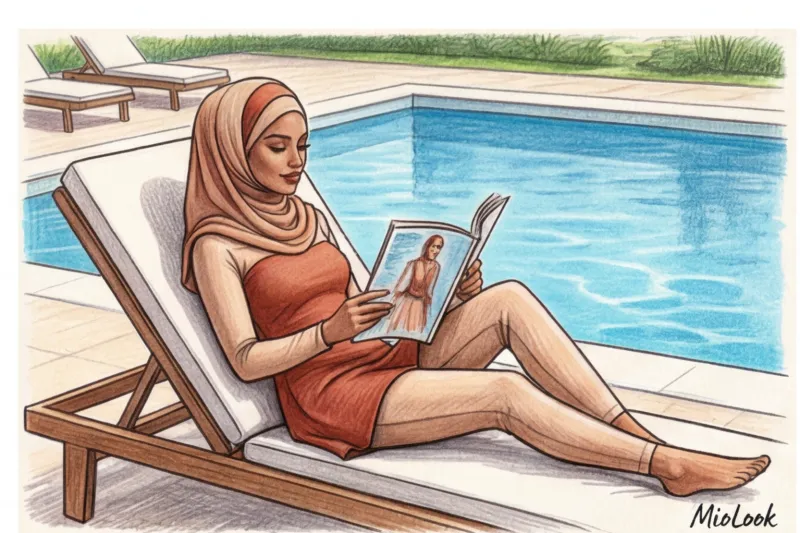
Have you ever noticed how one poorly chosen headwear can transform a luxurious beach look into a casual swimmer's gear before a race? For many years, covered-up beachwear was associated solely with a compromise between beliefs and aesthetics. But today, the rules of the game have changed dramatically. A well-chosen swim hijab is no longer just a functional piece of fabric – it has become a standalone architectural accessory, capable of elongating the face, emphasizing one's status, and protecting hair from harsh UV rays.
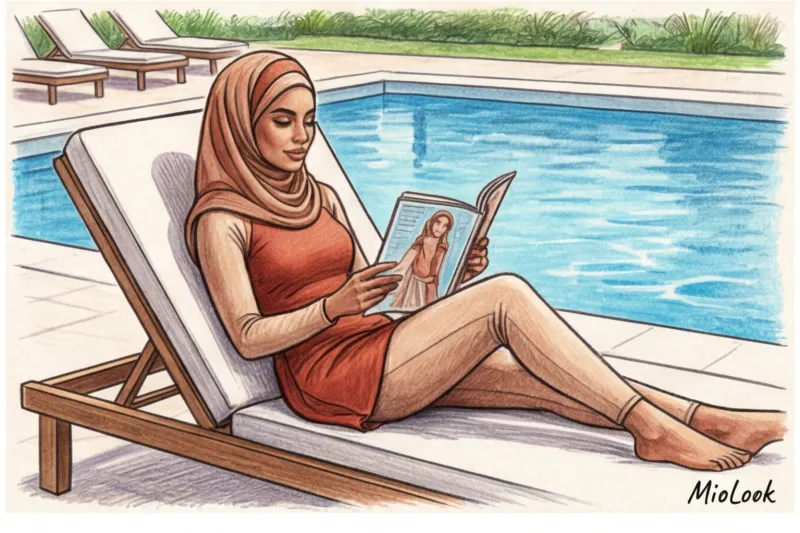
As an image consultant and colorist, I often see women making the same mistakes when choosing full-coverage beachwear. We buy the first cheap black polyester cap we see, and then wonder why our faces look tired and aged in vacation photos. We've covered the evolution of modest beachwear in more detail in our The complete guide to burkinis , and today I suggest you look at beach hats through the eyes of a stylist-architect.
Bathing hijabs and beach caps: from forced functionality to high fashion
The modest fashion market is experiencing a colossal boom. According to the State of the Global Islamic Economy report by DinarStandard (2023), this segment is valued at hundreds of billions of dollars and continues to grow. But the most interesting thing isn't the numbers, but rather the fact that Who today is shaping this demand.
Over the past two seasons, I've noticed a clear trend: every third of my non-Muslim clients asks for a full-coverage beachwear item to complement their secular wardrobe. The reasons are purely pragmatic: protection from photoaging, the desire to protect expensive salon coloring from fading in the sun, and a desire for aristocratic elegance in an "old money" style.
Luxury and niche brands (such as Lyra Swimwear and Lanuuk) were the first to embrace this demand. They reimagined cuts, abandoning sporty wetsuits in favor of elegant cruise collections with a perfect fit, intricate draping, and refined textures.
Facial Architecture: How to Choose the Perfect Swimwear Hijab
A hat can correct facial geometry more effectively than even the most sophisticated makeup contouring. As soon as we put on a bathing cap, the hairline disappears, and the proportions of the jaw, cheekbones, and nose come to the fore.
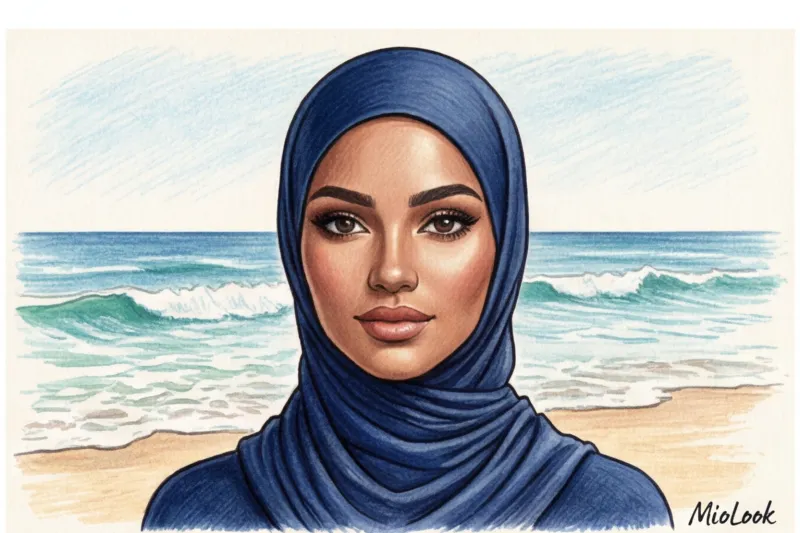
- For a round face: Absolutely avoid tight, smooth hats that visually turn your head into a ball. Styles with light draping on the crown, crisscross details above the forehead, or asymmetrical cuts are your best bet. Volume on top visually elongates the oval shape.
- For an elongated face: Avoid tall designs. You want to transfer volume to the sides. Wide headbands worn over the main hat or voluminous turbans with horizontal folds work perfectly.
- For an angular face (square, rectangle): The goal is to soften the harsh lines of the jaw. Choose styles made of soft, flowing fabrics with draping at the neck (loose snoods) and smooth lines around the face.
Turbans, hoods, and one-piece structures: a debriefing
To avoid disappointment on the beach, it's important to understand the functional purpose of each style. There's no one-size-fits-all solution.
- Hood or balaclava: A one-piece design that covers your head and neck. It offers maximum protection and ideal hydrodynamics while swimming. The fabric won't slip, even if you dive off the side.
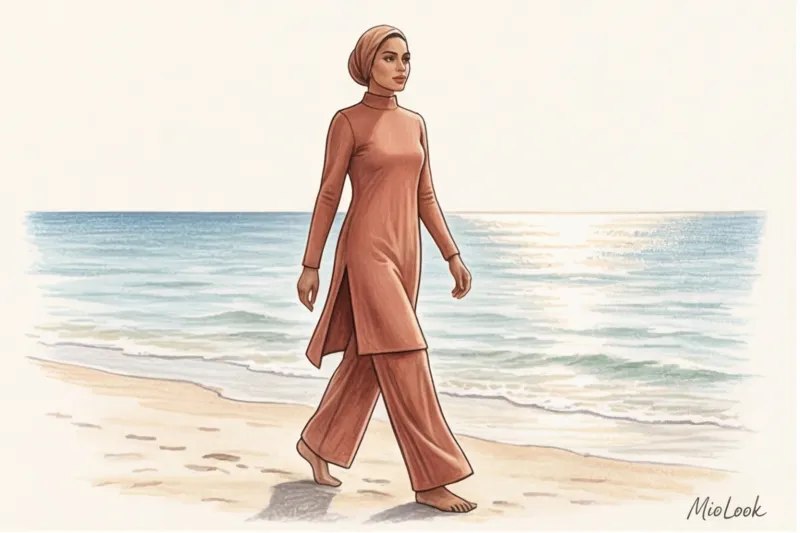
- Turban: The epitome of high-status aesthetics for lounging on a lounge chair with a cocktail. It looks luxurious, but there's a key detail (often overlooked by retailers): turbans. are completely unsuitable For active swimming. When submerged in water, the complex folds absorb air, deforming the structure and easily falling off.
- Hat with a separate snood: The most flexible styling option. You can combine the colors of the top and bottom, and the bottom can be easily removed if you're in a private feminine area.
Your perfect look starts here
Join thousands of users who look flawless every day with MioLook. Artificial intelligence will help you create the perfect vacation capsule.
Get access — €0.99 onceColorism on the Beach: Why is a Black Hijab a Stylistic Mistake?
It's time to debunk one of the most pernicious fashion myths. It's commonly believed that black is a versatile, practical, and slimming staple. While that may be true for a winter business wardrobe, it's not ideal for wearing under the scorching sun on the beach!
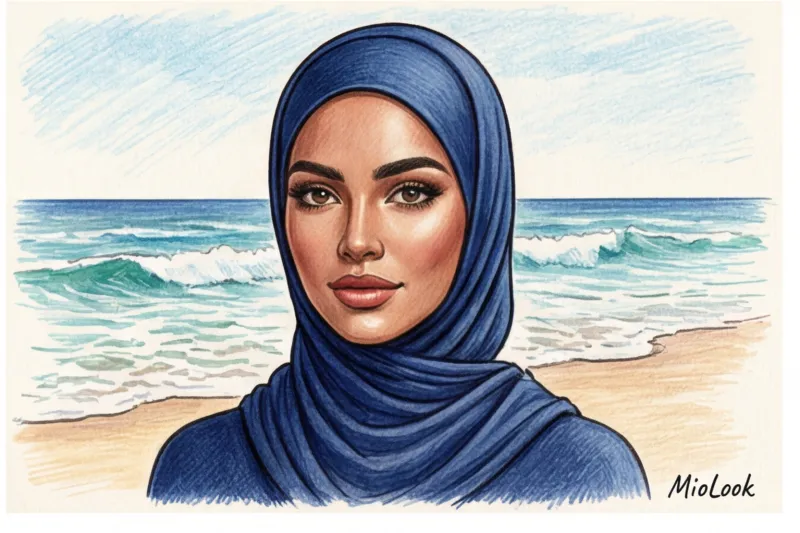
Let's look at the physics of light. When the sun is at its zenith, its direct rays fall vertically. Black fabric, tightly framing the face, absorbs the light and casts harsh, contrasting shadows on the skin. The result? Your nasolabial folds become visually deepened, under-eye circles become more pronounced, and your skin takes on a sallow or grayish tint. Without a thick layer of foundation (which is inappropriate at the beach), black against the face mercilessly highlights any fatigue.
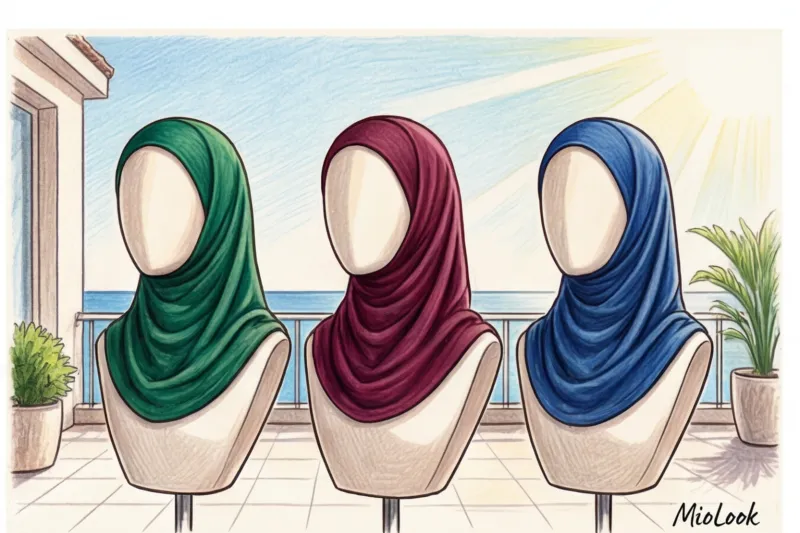
"Black against the face in bright sunlight acts like a merciless spotlight, highlighting even the slightest imperfections. Replace it with complex, deep shades, and you'll be amazed at how your face transforms."
I had a striking example in my practice. A 38-year-old client, Amina, came to me complaining that she looked "old-fashioned" in a one-piece swimsuit. We simply replaced her solid black hood with a teal shade that complemented her warm skin tone. The result was phenomenal: her complexion instantly brightened, her eyes appeared brighter, and she looked five years younger. Read more about how natural shades work in this article. How does fabric color affect self-esteem and perception of appearance?.
What can I replace black with? Use your palette as a guide, but opt for "jewel tones": deep emerald, navy, aged wine, or dark chocolate. They offer the same level of contrast and slenderness, but look much more refined and won't overpower your complexion.
Fabric Technologies: An Investment in Hair Comfort and Health
Regular elastane or cheap polyester are the worst choices for a swim hijab. Wearing such fabric turns your head into a greenhouse: your body's temperature is disrupted, your hair gets sweaty, and your scalp starts producing excess sebum.
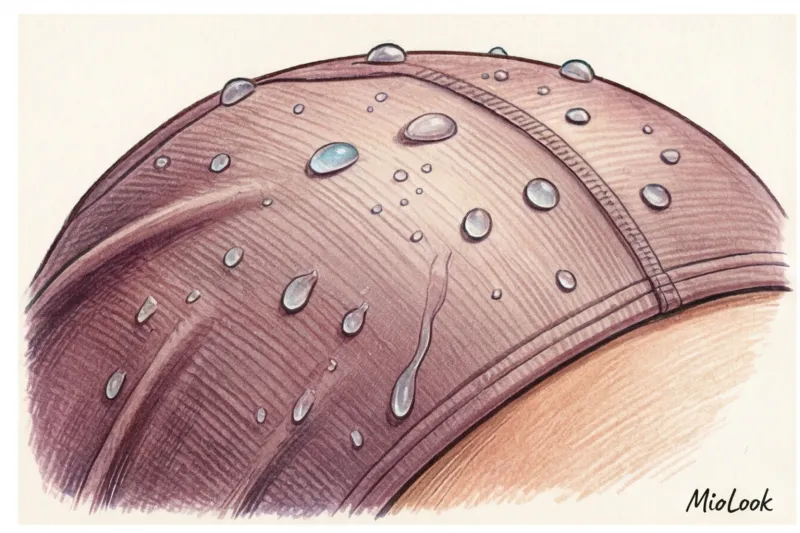
I recommend my clients pay attention to two critical parameters:
- UPF 50+ protection: This is the gold standard. This fabric blocks 98% of harmful UVA and UVB rays. This isn't just marketing hype—the dense weave of the threads physically blocks radiation, protecting the hair shaft from drying out and damaging keratin.
- Regenerated fibers: Look for premium Italian biflex or innovative material in the composition ECONYL® (recycled nylon). They offer superior resistance to pool chlorine and sea salt, resist fading in the sun, and dry twice as fast as cheaper synthetics.
The cost comparison here is quite clear: budget mass-market models will fade and stretch after 5-7 washes, while a high-quality set of modest beachwear (swimsuit and hat) currently ranges from €100 to €350. This is an investment in a piece that will last you 3-4 seasons without losing its shape.
Smart styling: adding a swim hijab to your cruise wardrobe
The main problem with one-piece swimsuits is the "I just got out of the pool" effect, which makes it awkward to go out to lunch at a beach restaurant. The secret to elegance lies in clever layering.
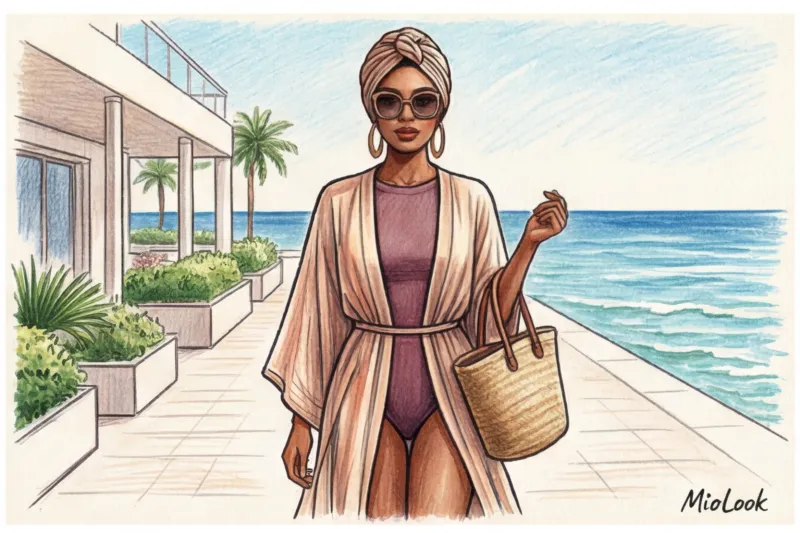
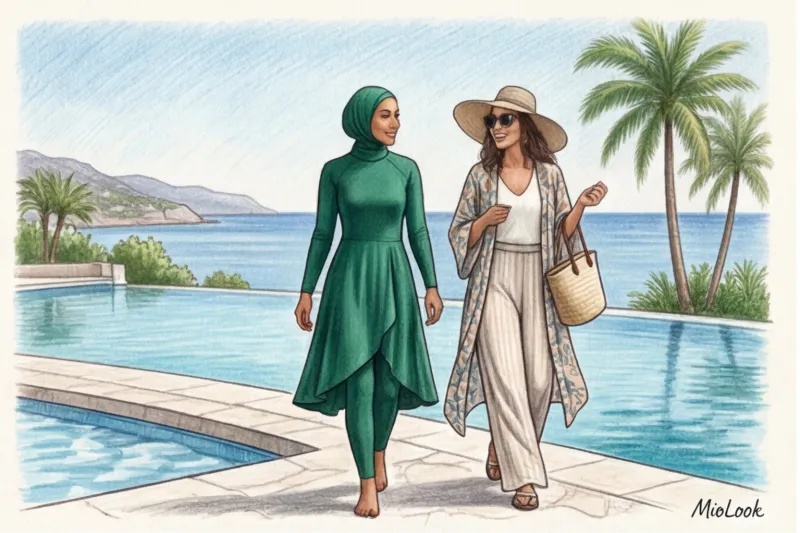
When my clients and I put together a vacation capsule in the app MioLook I always incorporate closed beach caps into everyday casual looks. For example, a snug-fitting bonnet makes a great base for an unbuttoned oversized linen shirt or a silk pareo tied like a kimono.
Don't forget about statement accessories. Sunglasses should complement the volume of your headdress. If you've chosen a voluminous turban with lots of folds, thin metal frames will be lost against it—feel free to wear chunky glasses made of thick acetate. However, a simple, smooth bonnet will suit more delicate frames (we wrote about this in detail in the guide). How to choose glasses according to your face shape ).
Ready to get started?
Try the MioLook free plan—no commitments required. Artificial intelligence will analyze your items and create stylish looks in seconds.
Get access — €0.99 onceStylist Checklist: 5 Rules for Trying on Clothes Before You Buy
Buying a beach hat online often ends in disaster. Be sure to test the item as soon as the courier delivers your order. Here's my personal 5-step checklist, based on real-life shopping mistakes with clients:
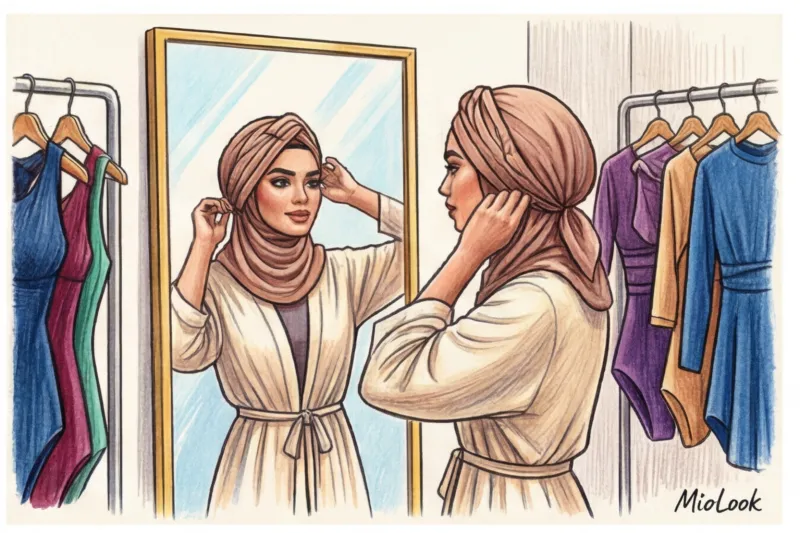
- Neck freedom test: Put on the hijab and turn your head sharply to the right and left a few times. The fabric around your neck shouldn't feel tight or press on your Adam's apple. If you feel even the slightest suffocation, it's the wrong size.
- Glasses test: Be sure to try the hat on with your favorite sunglasses. The temples should fit comfortably under the fabric at your temples without distorting the fit or making your ears stick out.
- Checking hidden seams: Turn the garment inside out. Seams must be flatlock. Regular raised seams will immediately chafe wet skin in salt water, causing painful redness.
- Wet test (taking into account tension): Remember that any swimsuit fabric stretches by approximately 5-10% when wet. If your swim cap is a little loose in the fitting room, it's guaranteed to fall off in the water. The fit should be moderately snug when dry.
- Balance of volumes: Follow the rule of contrast. If your swimsuit is very loose (for example, an oversized tunic), the cap should be simple and fitted. If your swimsuit is tailored to your figure, you can safely wear a voluminous turban with flowing ribbons.
Summary: A new level of beach elegance
Covered beach fashion has long ceased to be a story of restrictions. Today, it's a story of choice, aesthetics, and self-care. By choosing a quality swimwear hijab, you're not just following tradition or protecting yourself from the sun—you're cultivating an aura of status and self-aware femininity.
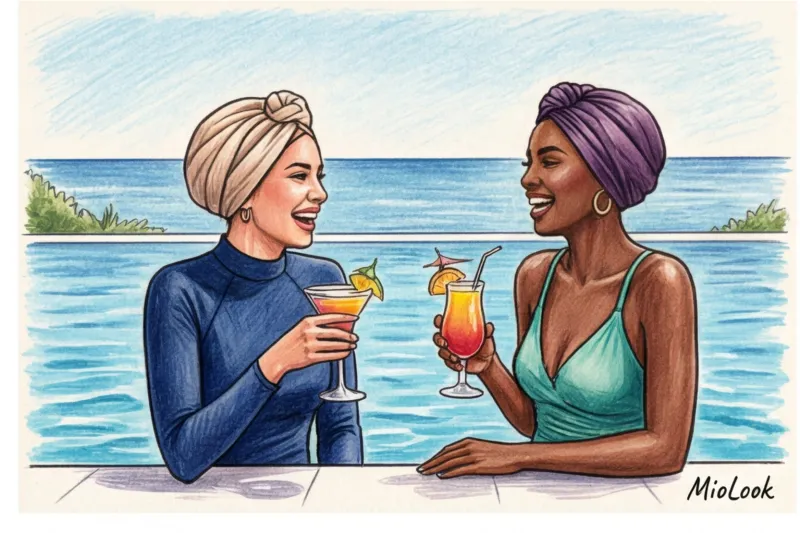
Stop hiding behind bland black synthetic balaclavas. Embrace deep, refined colors, high-tech Italian fabrics, and architectural shapes that highlight your unique beauty. Experiment with volumes, layer textures, and remember: you have every right to look as flawless on the beach as you do on the red carpet.