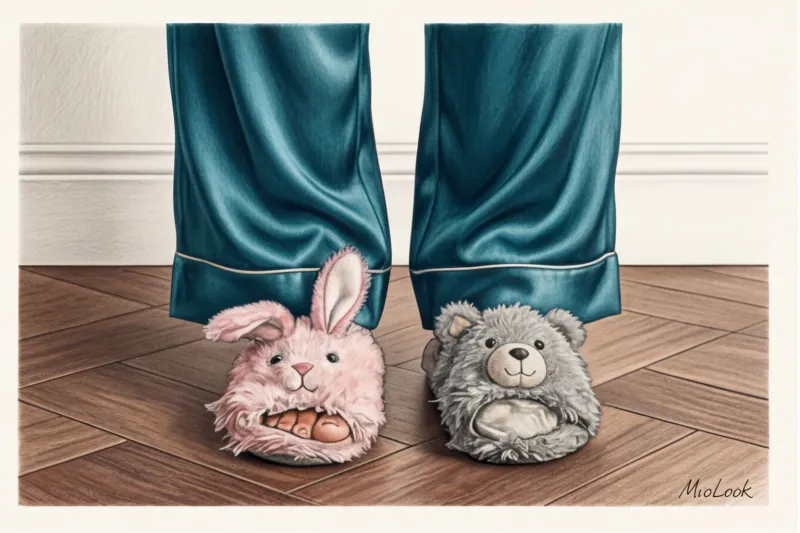
You open the front door, kick off your street shoes, and... what do you change into? Over 14 years as a personal stylist, I've reviewed hundreds of wardrobes. And you know what I almost always see? Stunning office capsule wardrobes, thoughtful date looks, and a complete surrender to aesthetics when it comes to house shoes. We buy stylish house slippers as an afterthought, considering them simply "something soft for warmth."
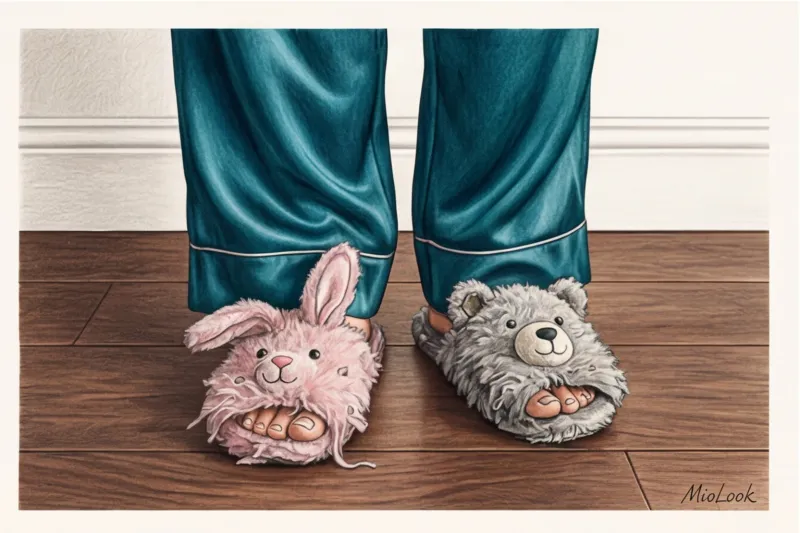
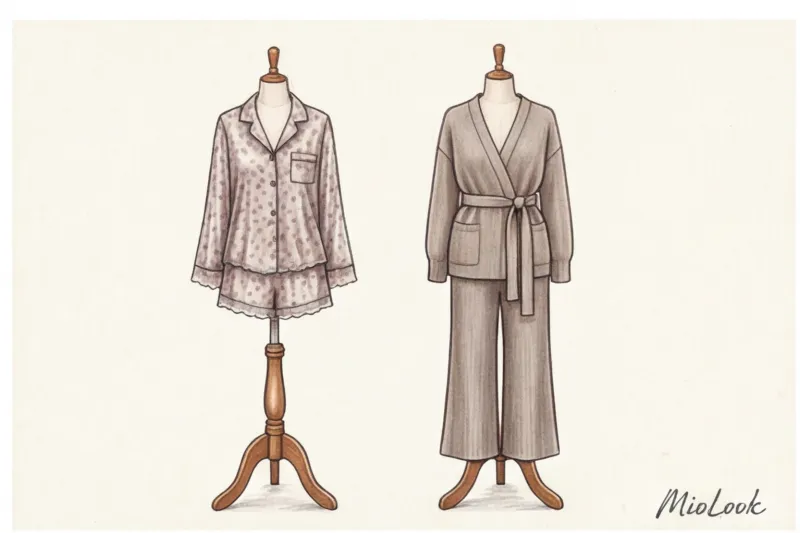
But the truth is, house shoes are a complete foundation for your posture and an anchor for your productivity. As we've already discussed in detail in our The complete guide to stylish loungewear: comfort and aesthetics at home It's impossible to feel like a queen in luxurious pajamas if you're wearing worn-out plush bunnies. Today, we'll explore house slippers from the perspective of podiatry, psychology, and impeccable style.
The "Trampled Slippers" Syndrome: Why We Skimp on House Shoes
Let's be honest: how much do the shoes you wear twice a year, to a corporate event and a friend's wedding, cost? Probably somewhere between €150 and €300. But how much do the slippers you spend 5-8 hours in every single day cost? More often than not, they're a random buy at the supermarket for €5-10.
One of my clients, a top manager at an IT company, complained that she felt "scattered" at home and couldn't focus enough to work remotely. We started sorting through her wardrobe. She'd bought a stunning silk suit for €250, but she continued to wear flat, shapeless fabric slippers from a mass-market store with it. They were changing her gait—she'd literally shuffle around the apartment. Her entire status image was instantly shattered.
This is where a scientifically proven phenomenon comes into play. Enclothed Cognition (clothed cognition). In 2012, researchers at Northwestern University (USA) proved that what we wear directly influences our psychological processes. Shapeless, worn-out shoes send the brain signals: "we're sick," "we're deeply apathetic," or "we're too lazy to watch our backs." By replacing the client's slippers with structured leather mules, we not only salvaged the aesthetics of her look but also restored her work energy without having to go to the office.
Your perfect look starts here
Join thousands of users who look flawless every day with MioLook. A smart AI stylist will help you create a capsule wardrobe, including a home wardrobe.
Get access — €0.99 onceStylish Slippers vs. Foot Health: The Hidden Danger of Flat Soles
There's a dangerous myth that feet need a "rest" from shoes at home, so it's best to walk barefoot or in completely flat, soft socks like slippers. If you live on a beach with soft sand, yes. But in modern apartments, we walk on hard laminate, porcelain stoneware, or parquet floors.
The American Podiatric Medical Association (APMA) explicitly states in its 2023 guidelines that prolonged walking barefoot or in shoes without cushioning on hard artificial surfaces leads to microtrauma to the fascia. According to statistics, up to 70% of women experience aching and heaviness in their legs by evening due to a lack of proper foot support at home.
"Absolutely flat, fluffy slippers are the worst thing you can offer your feet. Not only do they trigger plantar fasciitis, but they also cause you to instinctively curl your toes to keep the shoe on, which leads to calf strain," orthopedists warn.
The right stylish house slippers should have a minimal drop (a wedge or heel of 1.5–2 cm) and a shape-resistant insole. And no, this doesn't mean you have to wear unsightly "granny orthotics." The modern market offers magnificent hybrids of comfort and style that will fit perfectly into even the most demanding environments. a well-thought-out capsule wardrobe.
Top 4 Shoe Styles for a Classy Home Wardrobe
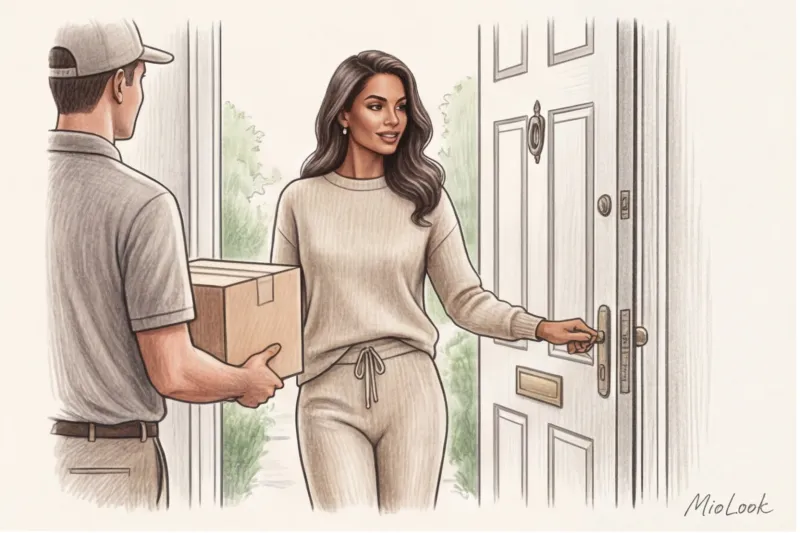
As a stylist, I absolutely forbid buying toy slippers (like animal paws, smiley faces, or giant sneakers) if you're over 14. Below, I've compiled a selection of four styles that look expensive, are healthy, and aren't embarrassing to open the door to a delivery person or unexpected guests.
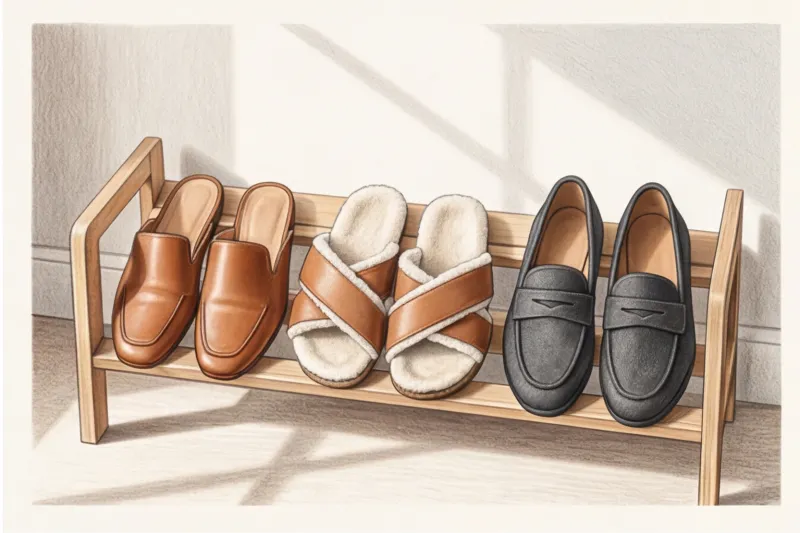
1. Leather and suede mules (Old Money aesthetic)
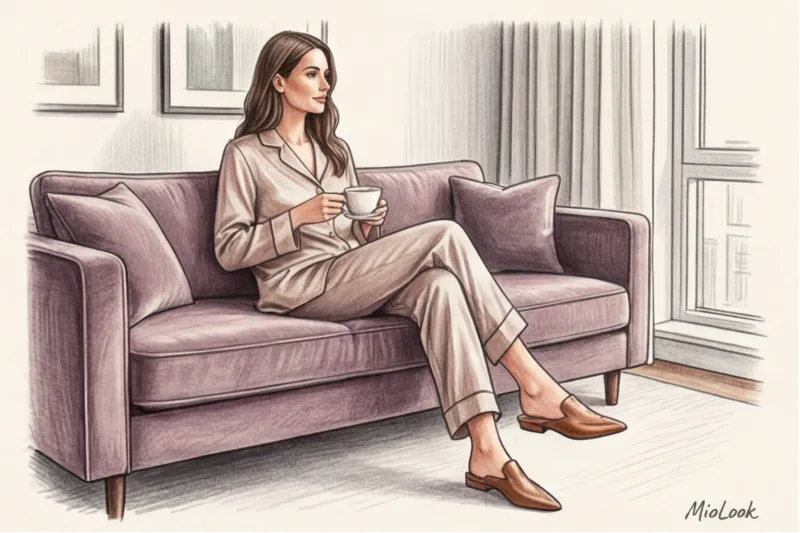
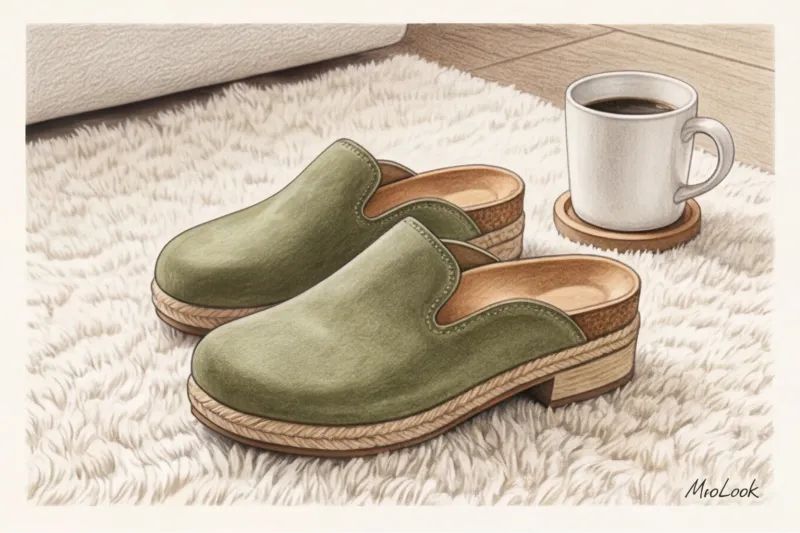
If you want to project an aesthetic of quiet luxury even when you're alone, mules are the way to go. Unlike fabric, high-quality genuine leather adapts to the contours of your foot over time, creating a personalized fit. Prices for good models start from €60–€80 at brands like Massimo Dutti or Zara Home, and reach up to €200 in the premium segment.
- What to wear with: Flowing silk pajamas, wide linen trousers, cashmere suits.
- Peculiarity: Leather requires care. Wipe them with special shoe lotions once a month, and they will last for years.
2. Anatomical clogs and Birkenstocks
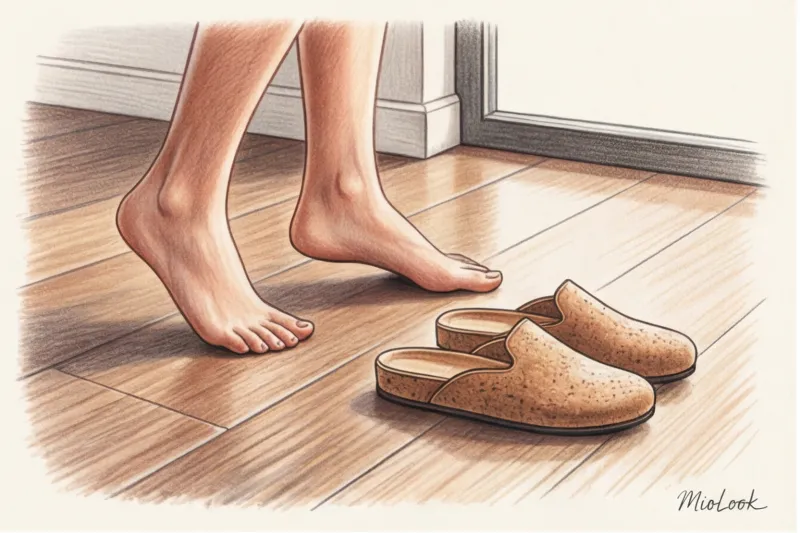
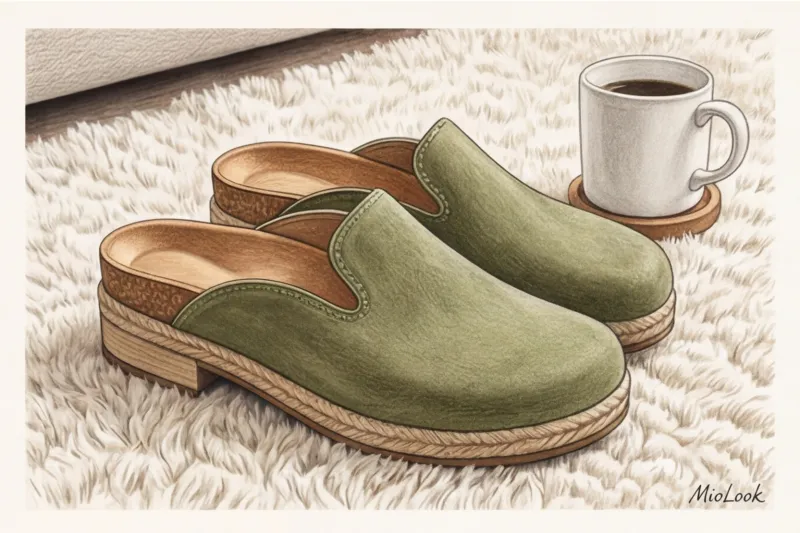
My personal favorite. During quarantine, when I started spending 10 hours at home, my feet literally screamed from flat slippers. Switching to orthopedic clogs with a cork insole (in the style of the classic Birkenstock Boston) was a revelation: the evening foot pain disappeared within three days.
Cork acts as the perfect arch support, cushioning every step. They're an absolute must-have if you cook standing up a lot or work at a stand-up desk. At home, they create a relaxed yet trendy normcore look, especially when paired with thick ribbed cotton socks.
3. Textile loafers and slip-ons
For those with perpetually cold feet but who aren't willing to sacrifice elegance, the key here is the choice of material. Look for models made of felted wool, heavy cotton (from 180 g/m²), or cashmere.
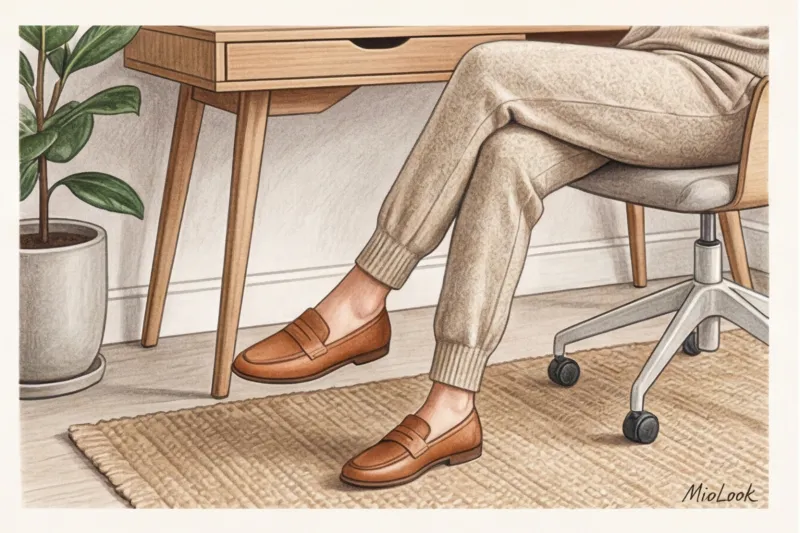
Avoid 100% polyester—it creates a greenhouse effect: your feet sweat, then instantly cool down, leaving you cold again. A huge advantage of loafers is the heel counter. It secures the heel, preventing the foot from "walking," making your gait more confident and safer on slippery floors.
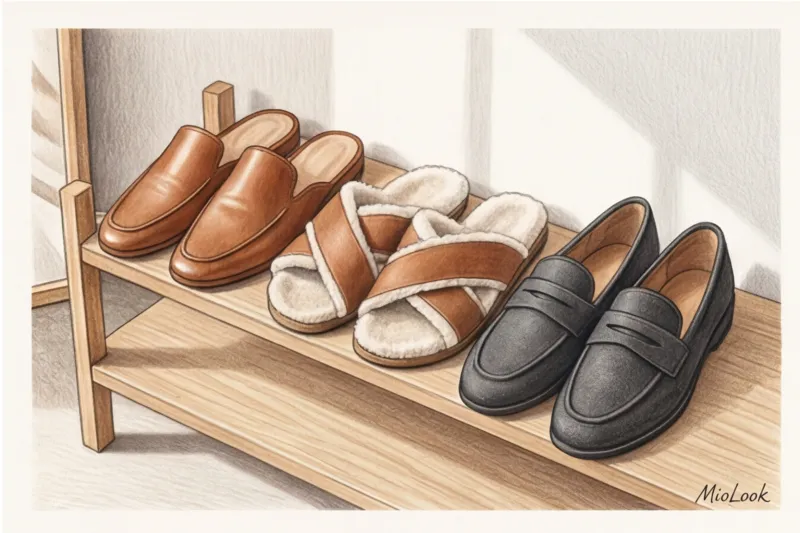
4. Shearling Slides
Wide fur straps with a rigid sole (similar to classic UGGs) are the quintessence of comfort. But there's a strict rule: the fur must be genuine (sheepskin). Cheap synthetic down will clump into dirty mats within two weeks. Genuine sheepskin has unique thermoregulation properties—these stylish house slippers are cool in the cool summer and very warm in the winter.
Access to MioLook for €0.99 — one-time payment
A smart AI stylist will select the perfect look for your home or office based on your preferences and color type.
Get access — €0.99 onceHome Life Scenarios: How to Choose Your Perfect Match
It's a mistake to think that one pair is enough for all occasions. Your choice should be dictated by what What exactly you do at home.
- Remote work (Home Office): If you need to switch your brain to work mode, put on smart leather mules or loafers. This signals to your psyche: "I'm focused, I'm working."
- Active Mom / Cleaning: If you're running around the apartment picking up toys or mopping floors, you need clogs with a washable sole (such as EVA) and a heel strap. Fur slides are a no-no here—you'll just trip.
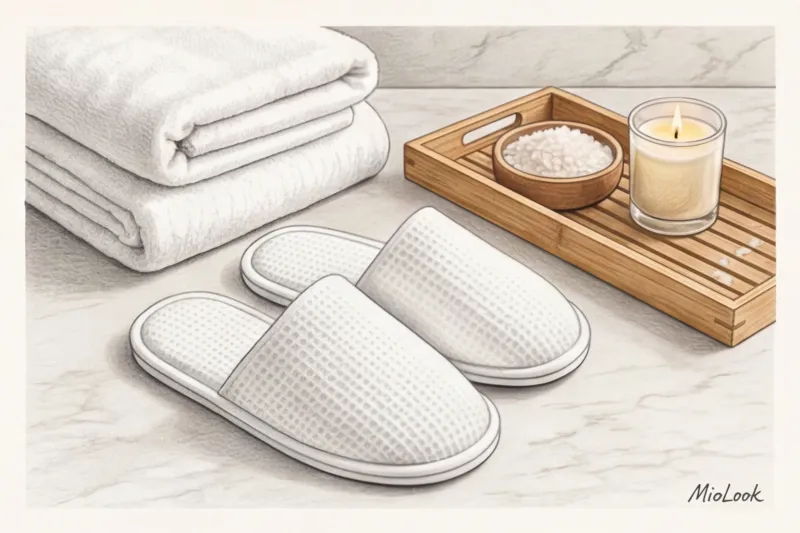
- Relax and SPA evening: This is where soft fur slides come in. You step out of the bath, apply your lotion, and slip your feet effortlessly into a fluffy cloud. Incidentally, I always recommend removing fur shoes while cooking—one drop of hot oil on sheepskin and a €150 pair is hopelessly ruined (this is the very limitation that is often forgotten).
Expiration Date: When It's Time to Say Goodbye to Your Favorite Slippers
Let's be honest: many people wear house slippers for years until they wear out completely. This is a disastrous mistake from both a style and hygiene standpoint.
Standard mass-market textile or plush slippers last only 3-4 months before their orthopedic and hygienic properties are lost. Higher-quality felt or structured slippers last 6-8 months. The only exception is high-quality leather clogs with replaceable insoles. If you want to take a more conscious approach to your wardrobe, read our article on How to calculate the cost per wear of an item - you will see that a pair for €80 per year is more profitable than four pairs at €15.
The main signs that it’s time to throw away your shoes:
- Worn-out heel. If the sole is beveled inward or outward, you are artificially distorting your ankle and knee joints every day.
- Unpleasant smell. If washing does not help, it means that bacteria have penetrated deep into the porous structure of the sole.
- Loss of shape. If your leg is hanging inward, you risk dislocation.
Stylist's advice: You should always have separate guest shoes (washable, minimalist EVA slides are best) and your own personal pair. Offering your worn-out slippers to guests is considered bad manners.
Pre-purchase checklist: 4 signs of the right house shoes
Next time you go to the store or place an order online, use this simple filter. If a shoe doesn't meet even one of these criteria, put it aside.
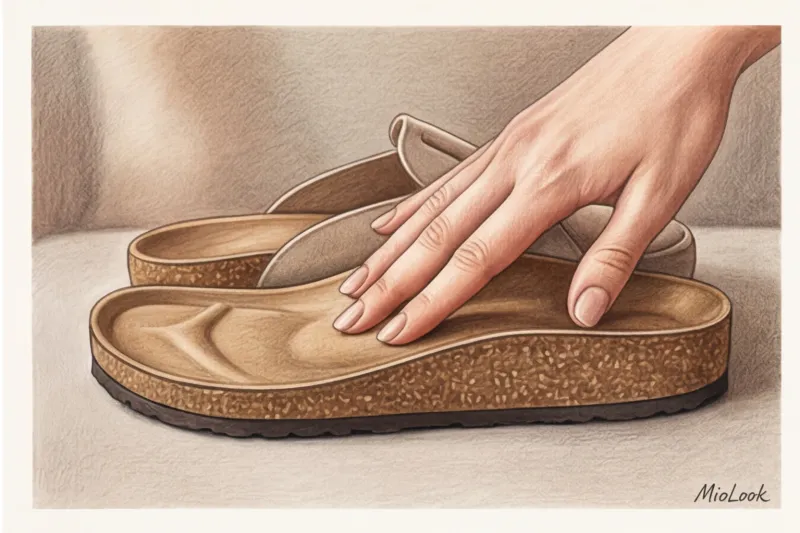
- Twist test. Grasp the slipper by the toe and heel and try to roll it into a tube (like wringing out a towel). If it bends easily, the sole is too soft and won't provide support. The sole should be firm and firm.
- Presence of a difference in height. Make sure your heel is raised 1.5–2 cm above your toe. This is the normal amount of pressure on your Achilles tendon.
- Breathable lining. Check the label. The inner part that touches your foot should be made of leather, cotton, natural wool, or cork. No acrylic or microfiber inside.
- Aesthetic compatibility. Try this pair on in your mind against three of your home outfits. If they only work with one old robe, look for a more versatile option.
Slippers aren't something you hide in from the outside world. They're the foundation of how you feel about yourself when no one's looking. By choosing stylish, structured, and anatomically correct styles, you're investing in your comfort, the health of your feet, and that priceless feeling of inner composure.