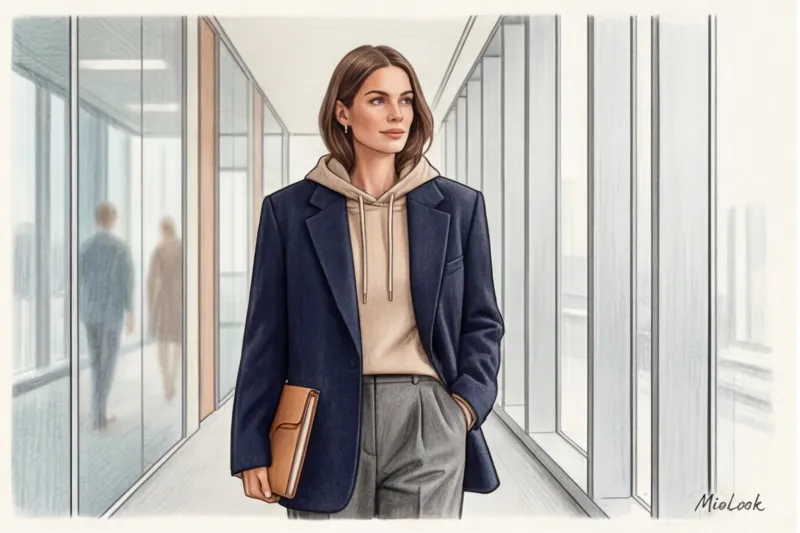
Last Tuesday, my client, a senior executive at a major fintech company, called me furiously. The HR director had gently but firmly asked her to go home and change. She was wearing what she thought was a flawless outfit: an oversized camel hoodie, ribbed leggings, a tailored blazer over it, and chunky sneakers. "Camilla, but we allow athleisure!" she fumed into the phone. And it was at that moment that I realized it was time to set the record straight.
The problem is that we confuse street style with business attire. According to the McKinsey State of Fashion (2024) report, 65% of corporations have permanently relaxed their dress codes following the pandemic. But "relaxed" doesn't mean "canceled." We covered this in more detail in our The complete guide to women's sporty-casual office wear Today we will analyze the fundamental difference between smart casual and sport casual so that you never again doubt yourself when you stand in front of the mirror at 8 am.
Smart casual vs. sport casual: the anatomy of the two styles
To understand the difference, let's look at how designers work. When I sat at the Miuccia Prada show at Milan Fashion Week, I witnessed a perfect illustration of what in styling is called "architectural tension." The line between classic tailoring and outdoor wear was completely blurred.
Historically, both styles grew out of a rebellion against rigid corsets and heavy wool. In 1916, Coco Chanel revolutionized the fashion world by creating casual dresses from jersey—a fabric previously used exclusively for men's sportswear and underwear. Modern athleisure does the same, but with high-tech nylon, neoprene, and spandex.
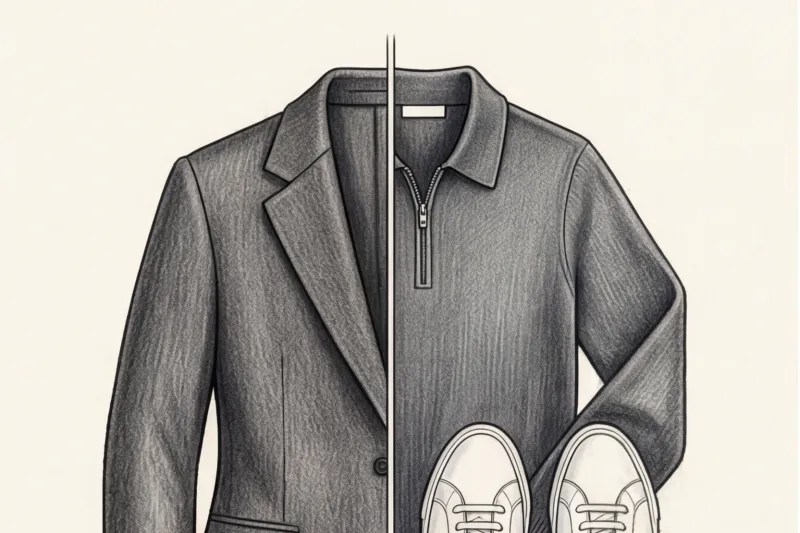
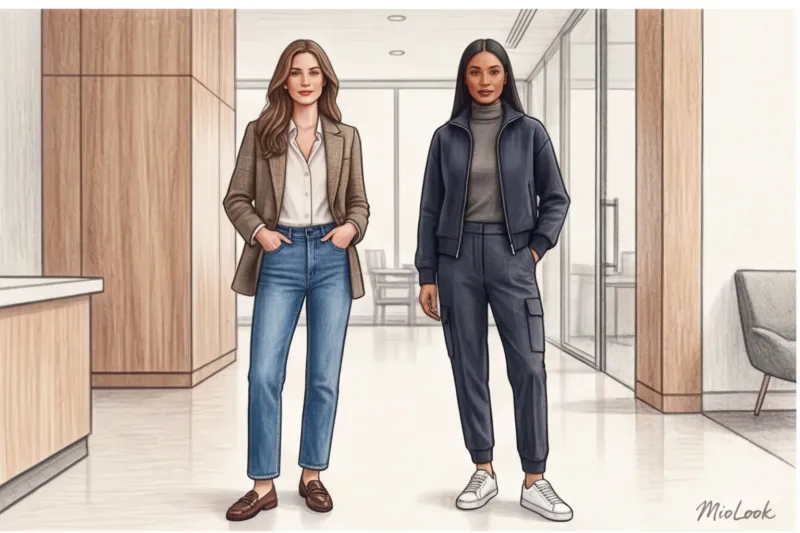
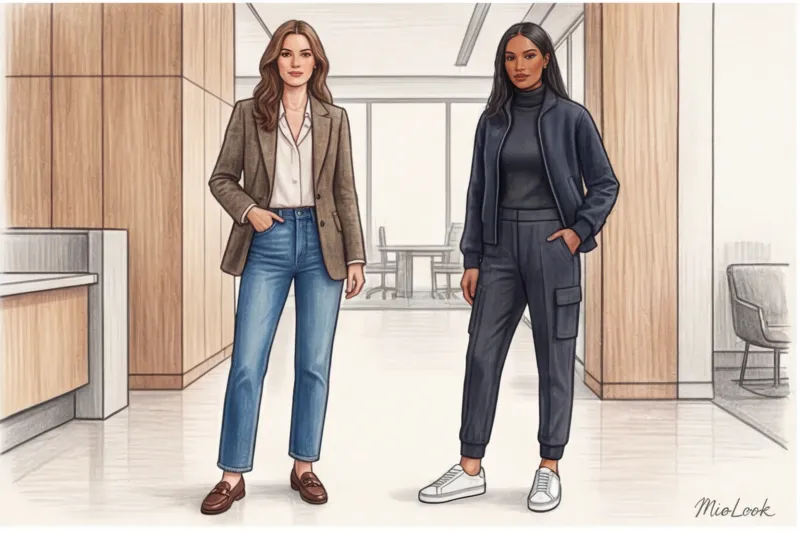
The main difference between smart casual and sport casual lies in the approach to form and material. Smart casual tone down formality through texture: we take a classic jacket silhouette, but instead of smooth suit wool, we make it from loose tweed, linen, or pair it with clean denim. Sport casual does the exact opposite: it maintains the strict, composed architecture of the look, but uses high-tech materials and utilitarian details (zippers, drawstrings, cuffs).
Smart Casual: Relaxed Elegance with a Story
This is the safest choice for conservative fields like law, banking, and consulting. If your office is traditional but allows "casual Fridays," this is the way to go. Basic style markers: soft-cut jackets without stiff shoulder pads, straight-leg jeans without any fading (clean denim), silk blouses, loafers, and oxfords.
Smart casual makes you look like you just walked out of the boardroom and took off your tie (metaphorically, of course). status dress code , which whispers, rather than shouts, about your professionalism.
Sports-casual: utility and dynamism
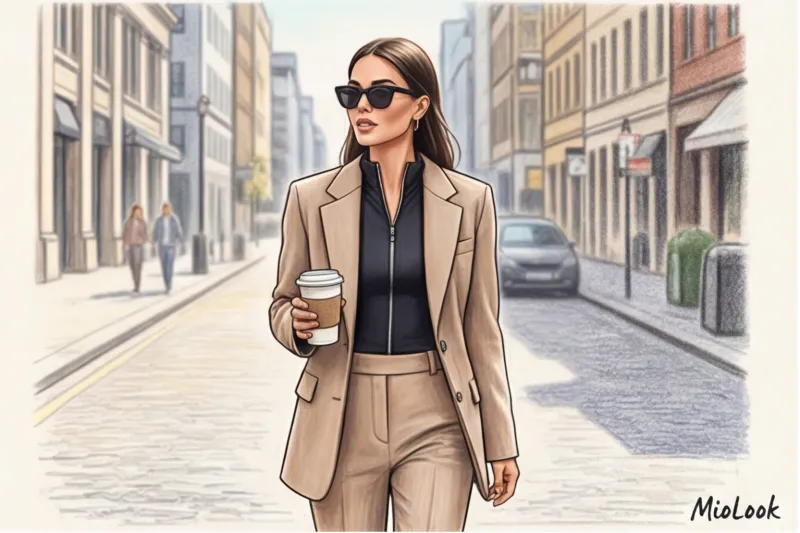
This style is ideal for the IT sector, digital agencies, and creative industries. It conveys energy, agility, and a willingness to make quick decisions. Basic markers: bomber jackets in smooth matte fabric (instead of blazers), trousers with drawstrings or elastic waistbands, tops with zip-up collars, and technical, heavyweight knits.
Access to MioLook for €0.99 — one-time payment
A smart AI stylist will select the perfect office look from your items.
Get access — €0.99 onceThe Biggest Misconception: Why Sneakers Don't Make Your Look Sporty
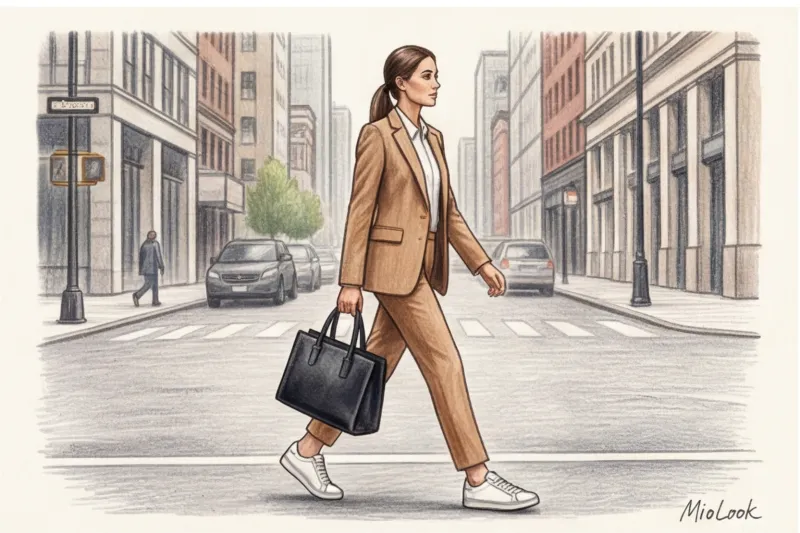
In my 12 years as a personal stylist, I've heard this phrase hundreds of times: "I'm wearing a classic suit with white sneakers, so I'm sporty casual today." Spoiler alert: it's not.
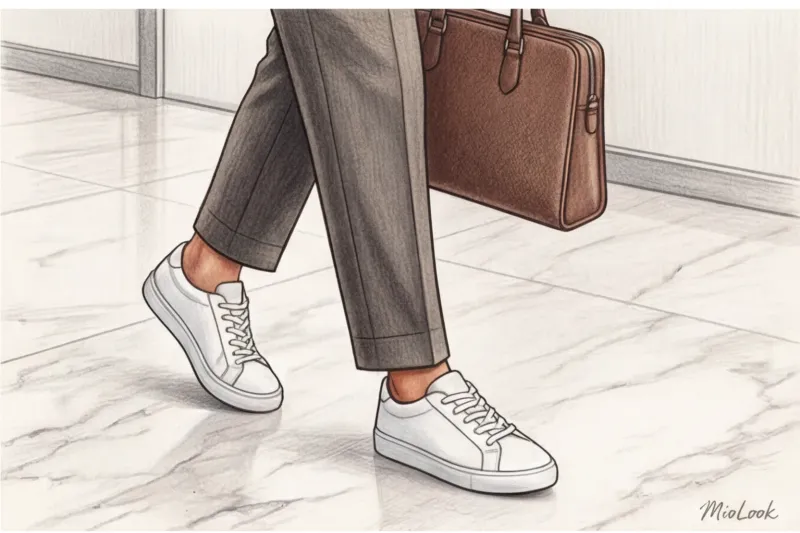
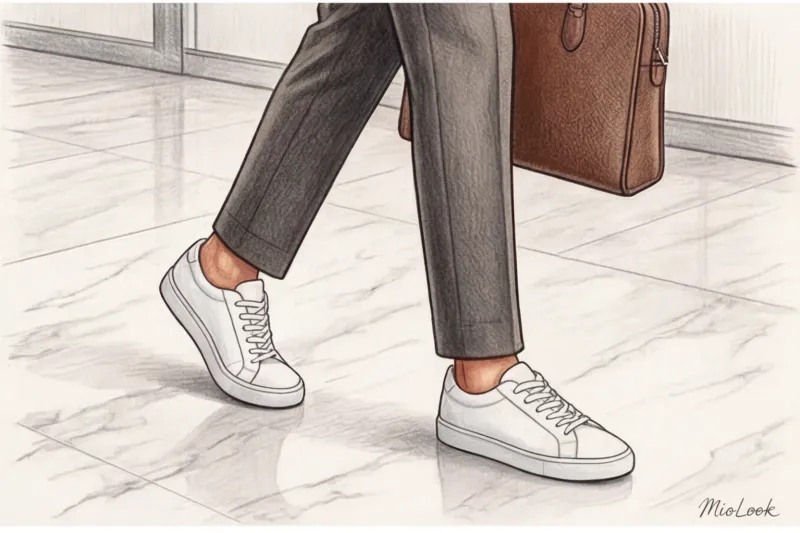
A classic pantsuit with minimalist white sneakers is a relaxed look. smart casual True sports casual is when your jacket is cut from neoprene and you wear a technical turtleneck with a zip underneath. The difference is enormous.
Moreover, it's important to differentiate between shoes. Running shoes with massive cushioning, mesh inserts, and neon logos are designed for the treadmill. At the office, they look like you forgot to change your shoes after the gym. Urban athletic shoes are minimalist leather or suede sneakers in basic colors, with a flat sole and no flashy branding.
The Appropriateness Matrix: What's Acceptable in a Modern Office
A recent Business of Fashion (BoF) report coined a great term: Elevated Utility (elevated utilitarianism). Analysts note a global fatigue with classic athleisure (sportswear for everyday use) and a shift toward items that combine the comfort of sweatpants with the elegance of pleated trousers.
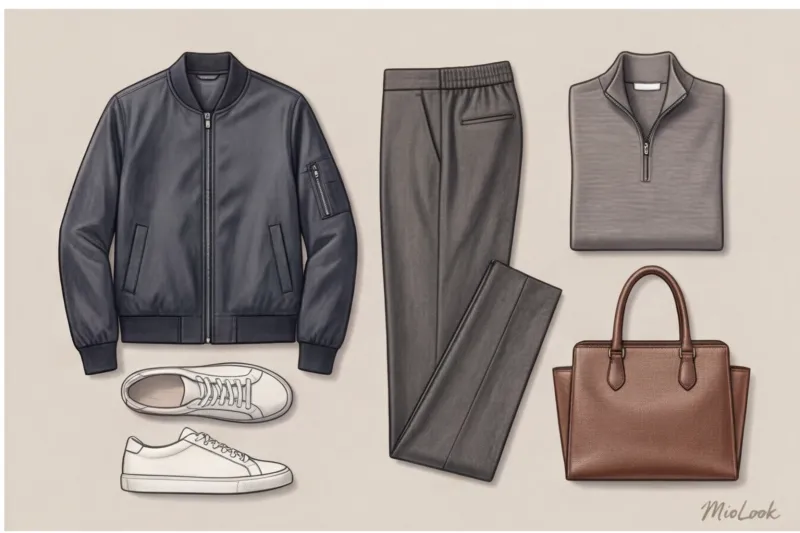
How do you interpret your company's unspoken dress code? I always recommend the "one-sporty-item rule" to my clients. If you're unsure whether an outfit is appropriate, choose exactly one sporty item and keep the rest more classic. For example: classic trousers + loafers + formal bag + bomber jacket. Or: pencil skirt + jacket + zippered top + pumps.
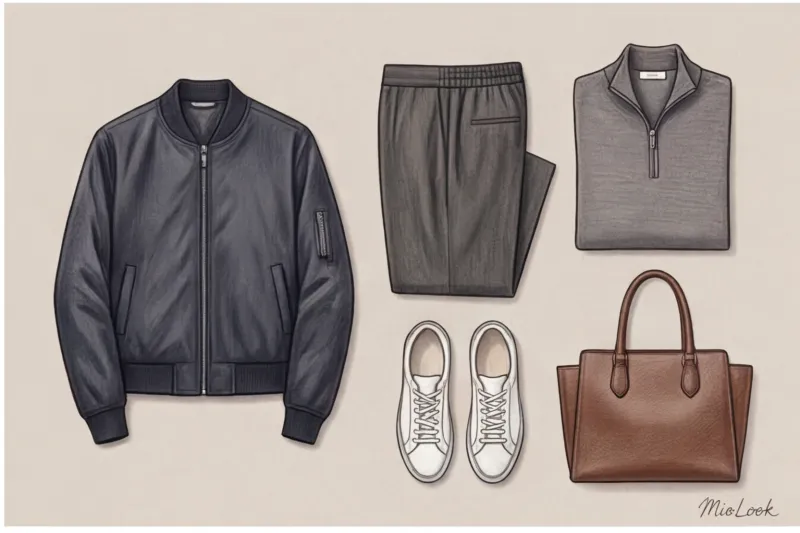
Green Zone: Safe Sport-Casual Elements for Business
- Turtlenecks and jumpers made of fine merino wool with a zip-neck are an ideal alternative to a shirt.
- Jogger trousers made of thick suit wool with creases (the elastic at the bottom should be delicate and not constrict the ankle like a parachute).
- Minimalist leather backpacks with a rigid shape that maintain their geometric shape even when empty.
Red Zone: Taboos That Will Ruin Your Business Image
- Leggings, cycling shorts, and anything that clings to your anatomy. The office is an asexual environment.
- Hoodies with large logos, prints and voluminous hoods, worn under a formal jacket (save this technique for street style and weekends).
- Sports bras and crop tops that reveal a strip of midriff.
Your perfect look starts here
Join thousands of users who look flawless every day with MioLook.
Get access — €0.99 onceFabrics and Textures: The Secret Language of the Business Wardrobe
The true difference between styles, as discerned by a professional stylist, lies in the weight, drape, and reflectivity of the fabric. Fabric instantly changes the status of a garment. Compare a cotton sweatshirt (it looks homely, wrinkles, and loses its shape) with a sweatshirt made of thick cashmere or viscose blend (it holds its shape, has a refined matte sheen, and looks expensive).
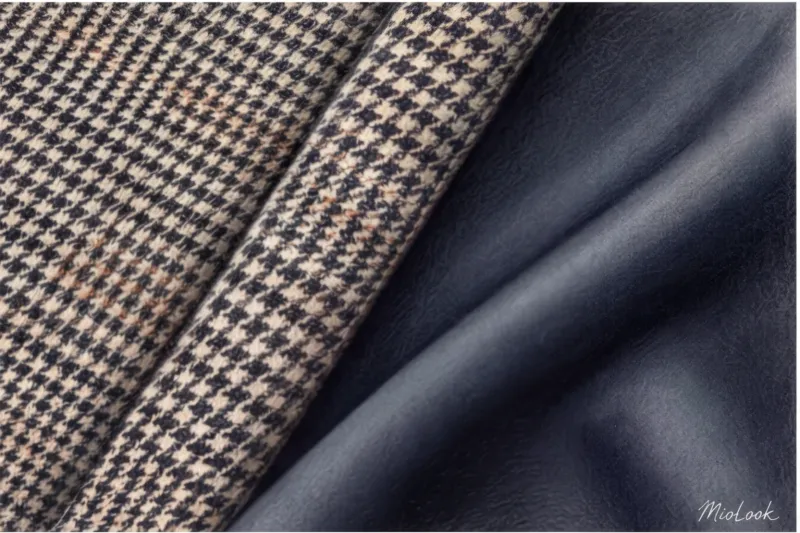
Today, traditional wool in sports-casual wear is often replaced by neoprene, scuba, and high-tech, heavy-duty nylon. According to statistics from major European retailers, demand for "hybrid" office wear has grown by 40% over the past two years. A top seller in the segment, from Massimo Dutti to COS, are classic straight-leg trousers with a strict waistband and fastening at the front and a hidden elastic waistband at the back.
But there is an important limitation here: This rule doesn't apply if your company has a strict Business Traditional policy (for example, in court or at formal government meetings). There, any nylon will be perceived as disrespectful.
The Perfect Balance Formula: How to Incorporate Sporty Chic Without Losing Your Style
To avoid looking like you've mistaken your office for a gym, use the mathematically proven 70/30 formula. Your look should be 70% strict, structured and only 30% athletic and dynamic.
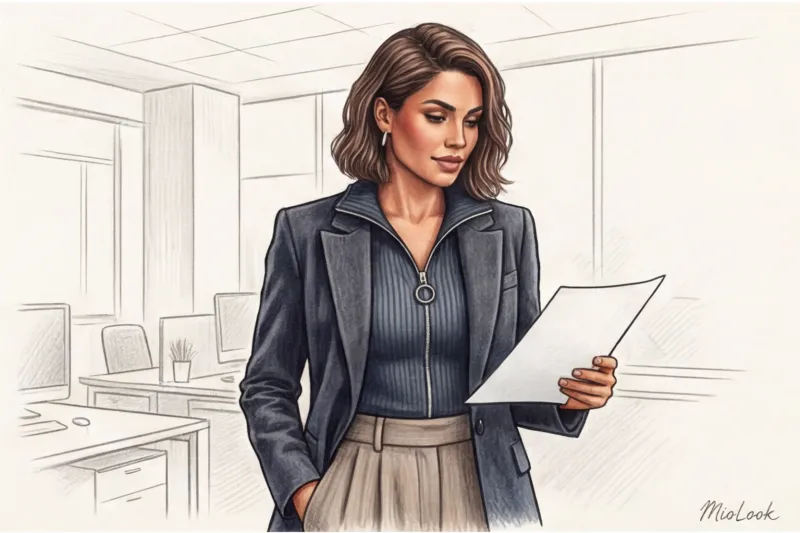
If you find it difficult to determine these proportions by eye, upload photos of your items to MioLook — The smart wardrobe feature will help you balance your looks and show you whether you've gone too casual.
Color palette plays a huge role. Athletic casual at the office calls for monochrome or deep, elegant shades: navy, graphite, chocolate, burgundy, emerald. Bright neon accents or color blocking tone down the look and evoke athletic gear.
Pay attention to the hardware. Proper sports-casual footwear doesn't have cheap plastic parts. Look for matte metal, concealed zippers that match the fabric, and high-quality rubberized elements.
Checklist: Auditing Your Hybrid Look Before Leaving the House
Before you walk out the door, do a quick self-check. These four questions will save you from awkward conversations with HR:
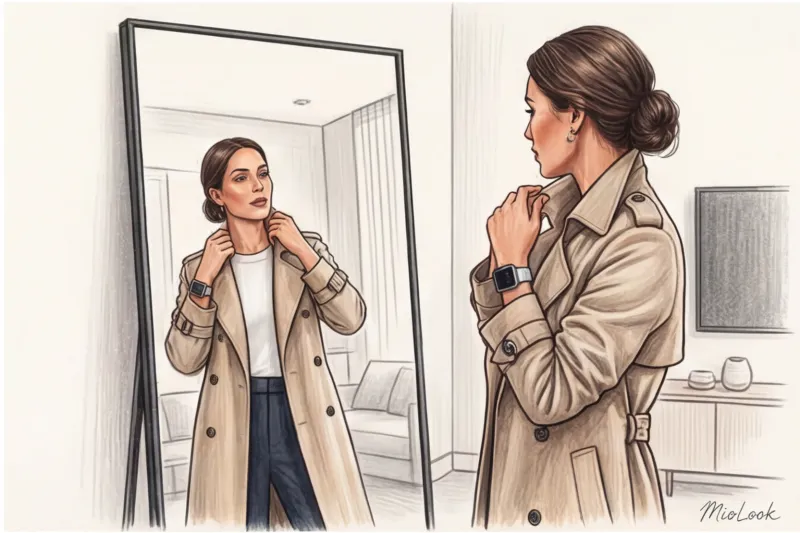
- Is the shoulder line preserved? A shapeless, sloping silhouette kills a business-like vibe. Even if you're wearing knitwear, it should hold its shape.
- Are the shoes clean and what kind of soles do they have? If your sneakers have mesh inserts for ventilation while running, change your shoes.
- Has the "customer test" been passed? Would you wear this outfit to a surprise meeting with a key company partner? If you feel like throwing a jacket over it to cover up, the look isn't quite right.
- Is anatomy hidden? There should be air between your body and the fabric.
Sporty casual is about the comfort of a professional who needs to get to three meetings across the city, not about laziness and the desire to show up to work in pajamas. Your clothing conveys respect for yourself, your colleagues, and the tasks you accomplish. Choose comfort that works in your favor, not against it.