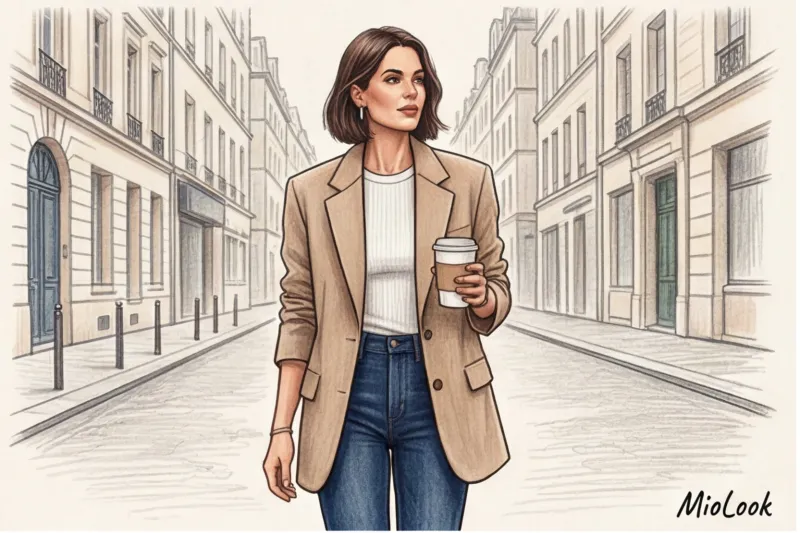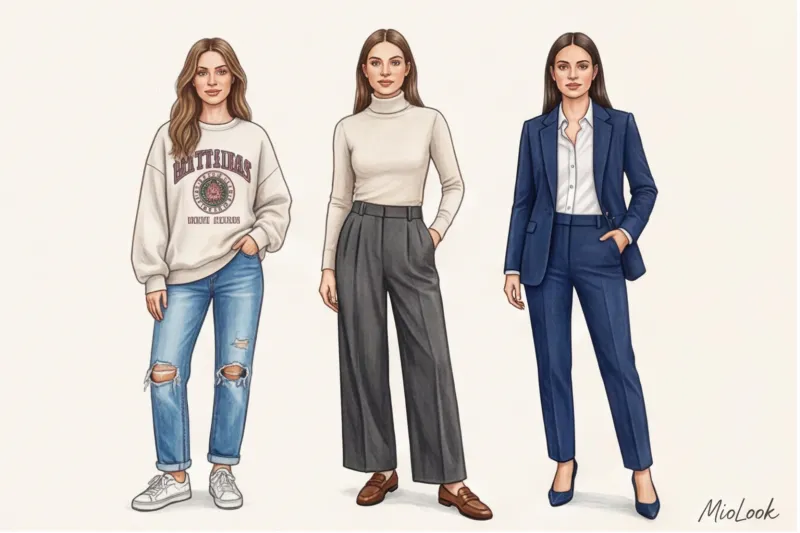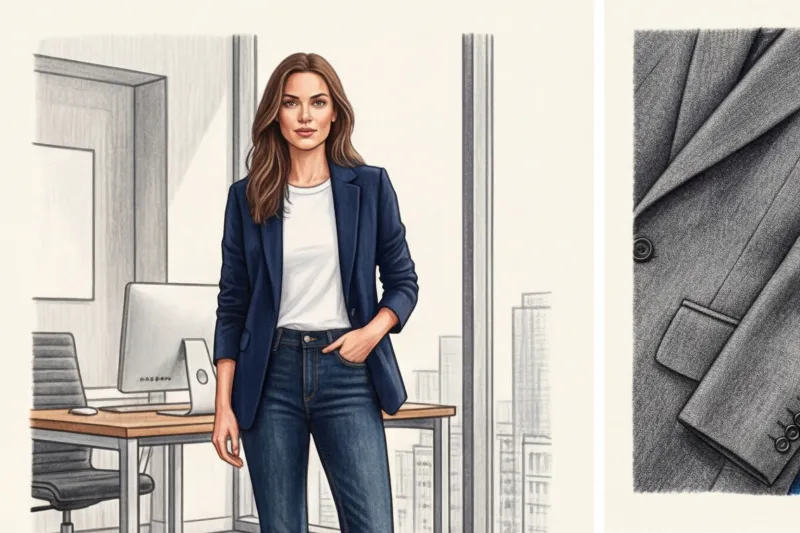
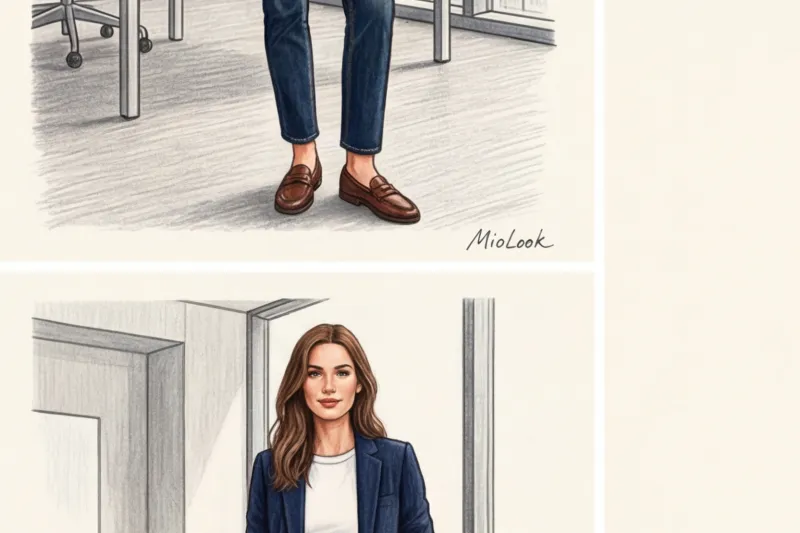
One of my clients, a top manager at an IT company, once complained, "I feel like the Terminator in a formal suit, but on Fridays I put on jeans and a blazer—and I look like I forgot to change after a trip to the dacha." We went through her clothes and quickly found the culprit. She was trying to pair a suit jacket made of the finest summer wool with heavy, textured winter denim. The thin fabric simply didn't have enough visual weight to compete with the rough denim. The look instantly fell apart.
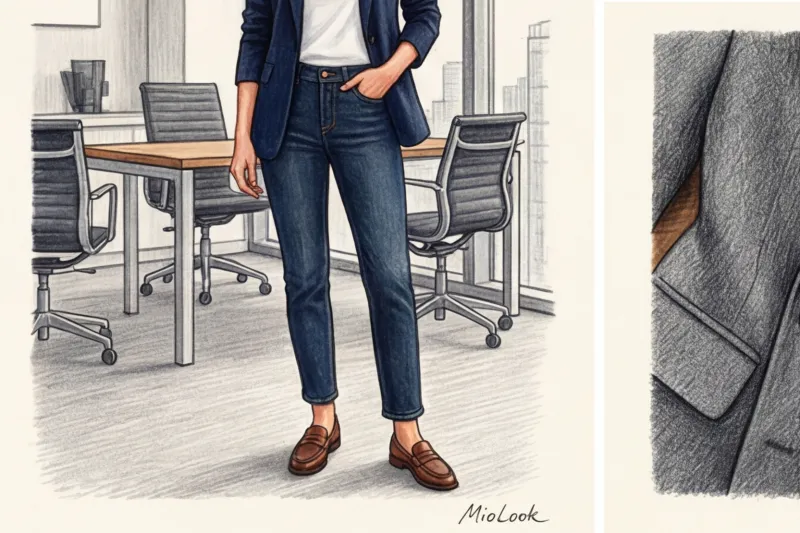
That's why it's literate smart casual capsule wardrobe — it's not just a chaotic list of basic items. It's a mathematically precise balance of textures, density, and cut. I discussed in more detail why our physical closets are often full of disparate items that don't create outfits in our The complete guide to the MioLook AI-powered capsule wardrobe app Today we'll dig deeper and look at style creation through the lens of textile engineering.
Anatomy of Style: What Is a Smart Casual Capsule Wardrobe, Really?
It's time to debunk the biggest style myth: smart casual isn't a relaxed Friday dress code. It's a distinct, rigid wardrobe architecture built on the 60/40 rule. The ideal capsule wardrobe should consist of 60% structured pieces (that hold their shape well) and 40% relaxed pieces. Why this particular ratio?
Human psychology works flawlessly. Our brain reads the professionalism and status of others through clear lines and the density of fabric. You might show up to an important meeting in a simple white T-shirt, but if you layer it with the right blazer with a prominent shoulder, you'll be taken seriously.
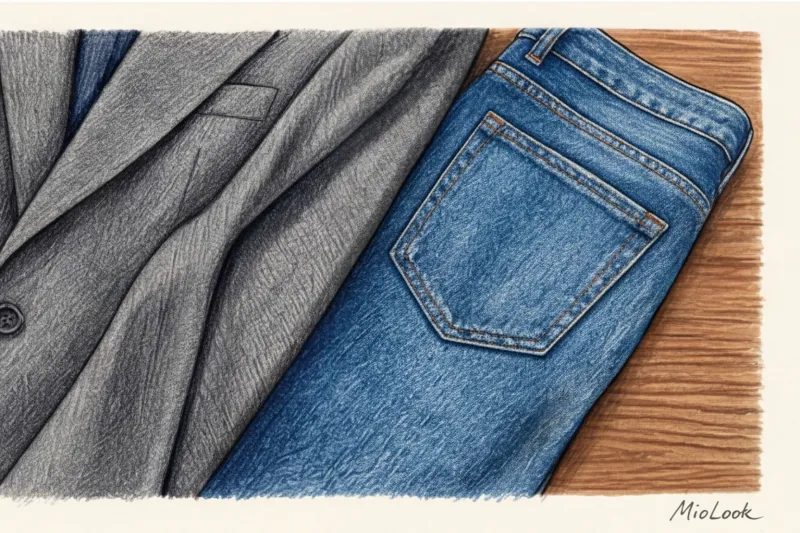
According to the British sustainable fashion study WRAP (2023), it's the in-between styles that most often become "dead weight" on closet shelves. They're much harder to visually categorize than overtly sporty or evening wear. As a result, cognitive overload sets in in the morning: you stand in front of the shelves, your brain refusing to process 50 different fabric densities in two minutes, and you slip back into your familiar, yet boring, black sweater.
The "tissue balance" rule: the secret the glossy magazines keep quiet about
In the professional textile community there is a concept visual weight — the visual weight of a fabric. This is a characteristic of how heavy, dense, and textured a material appears visually, regardless of its actual weight in grams.
The fundamental rule is this: you can't juxtapose materials with radically different visual weights in the same look without using a unifying element. Fine, flowing silk (responsible for drape) paired directly with rough, rustic denim (responsible for structure) looks like you got dressed in the dark. But add a medium-stiff leather belt between them or drape a chunky knit cardigan over the top, and the balance is instantly restored.
Access to MioLook for €0.99 — one-time payment
A smart AI stylist will select the perfect look based on the texture and color of your clothes.
Get access — €0.99 onceThe biggest mistake beginners make: why the beloved "jeans and jacket" formula often looks cheap
The "just wear a jacket with jeans and basic sneakers" formula is one of the most harmful pieces of advice you'll find online. Have you noticed that 80% of the time this combination looks sloppy on the street? The reason lies in a misconception. Women are abandoning the formal business suit jacket, often made of flimsy polyviscose, and pairing it with casual skinny jeans.
A suit jacket is designed to work exclusively with its "native" trousers. For a smart-casual style, you need blazer A blazer or sport coat is a standalone wardrobe item. It features a more textured fabric, relaxed patch pockets, and, crucially, contrasting hardware.
"Hardware reveals a garment's true value and appropriateness faster than the label on the inside. Glossy plastic buttons scream mass-market, while matte horn or metal buttons whisper status."
I had a particularly revealing case. A woman brought in a basic blazer from a mass-market store, bought for €60, for inspection. It fit her perfectly, but looked downright cheap due to the shiny plastic buttons. We went to the nearest haberdashery, bought a set of genuine horn buttons for €15, and had them altered at a tailor's. The next day, colleagues in the office were asking if her jacket was from the new Massimo Dutti premium collection.
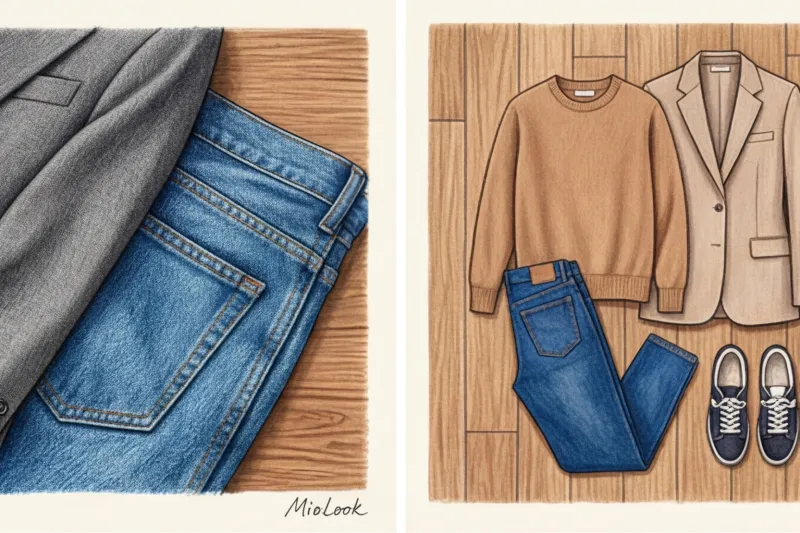
Basic Construction Kit: 12 Investment Pieces for the Perfect Capsule
To avoid buying endless "clones" (like having five nearly identical black turtlenecks hanging in your closet), each item you buy should fulfill a specific stylistic need. Here's a rigid framework that allows for maximum versatility without visual noise:
Tops:- A structured blazer in heavy wool (or shape-stabilizing cotton for summer).
- A thick cotton shirt with a straight men's cut.
- A silk or quality viscose blouse for added textured softness.
- Basic plain knitwear (ideally a blend of merino and silk).
- Straight-leg dark blue jeans with no fraying, embellishments or torn edges.
- Chinos made of thick matte cotton.
- A-line midi skirt (made of eco-leather or thick suiting fabric).
- Leather loafers with a moderately stiff sole.
- Minimalist white sneakers (strictly smooth leather, not fabric!).
- A structured tote bag that holds its shape even when empty.
Let's do the calculations visually Cost Per Wear (cost per wear) using footwear as an example. Basic premium leather sneakers for €150 will easily last three active seasons (approximately 300 days of wear). Their CPW is €0.50. Fabric sneakers for €40 will lose their presentable appearance after the first wash and 20 wears (CPW = €2.00). Within the framework casual style for women Investments in high-quality, dense leather pay off immediately.
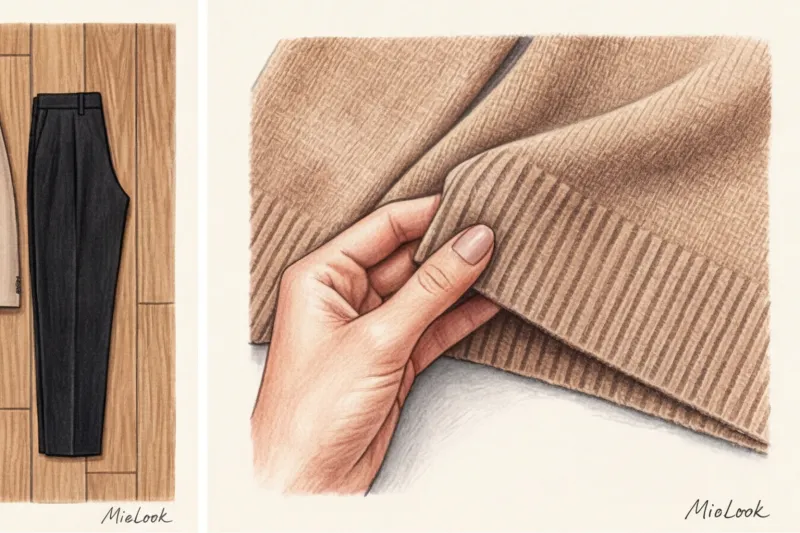
Textile Expertise: How to Choose Fabrics That Don't Lose Their Luster
As a fabric expert, I strongly advise you to stop buying clothes without checking the ingredients on the inside label. The main problem with modern fast fashion is the colossal excess of elastane (spandex). If your smart-casual pants or jeans contain more than 2% of it, they will inevitably stretch out at the knees and buttocks within a couple of months. Elastane fibers quickly degrade from body heat and friction.
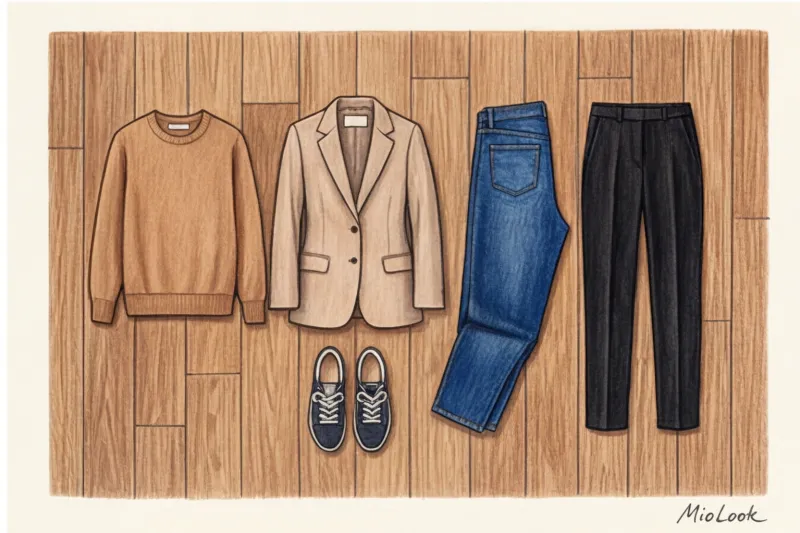
When buying blazers, look for markings on the labels High-Twist wool (highly twisted wool). The threads in this fabric are tightly twisted, like micro-springs. This fabric breathes much better than popular linen and is completely wrinkle-free—the perfect choice for active days, when you move from the car to the office desk and head out to dinner in the evening.
When buying basic sweaters, I always perform a "recovery test" right in the store. Gently stretch the sleeve edge of the knitwear with your fingers and release it quickly. If the edge starts to curl unattractively and doesn't return to its original, tight shape within a second, return the garment to the hanger. As a comprehensive report by Textile Exchange (2024) confirms, garments made from low-quality blended fibers (for example, 70% acrylic and 30% wool) have a lifespan four times shorter than pure merino wool.
Important limitation: These strict mathematical rules for fabric density and structure may not apply if you work in an ultra-creative environment (contemporary art galleries, avant-garde fashion editorials), where deconstruction and intentional visual casualness are highly valued. But for 90% of traditional offices and urban spaces, this is an immutable law.
Your ideal image begins Here
Join thousands of users who look flawless every day with MioLook.
Get access — €0.99 onceAI Integration: How MioLook Solves the "Nothing to Wear" Problem in the Morning
Let's return to the problem of overload: the human brain can confidently hold no more than 30-40 items of clothing in active memory at any one time. Everything else inevitably becomes a "blind spot." You remember your favorite straight-leg jeans perfectly, but you completely forget that they go perfectly with that same chunky knit cardigan that's been sitting on the far top shelf.
This is where digitalization technology comes in. When you upload a database to MioLook , the algorithms don't just sort clothes by color. The artificial intelligence is trained in advanced styling rules, including the very same fabric balance we discussed above.
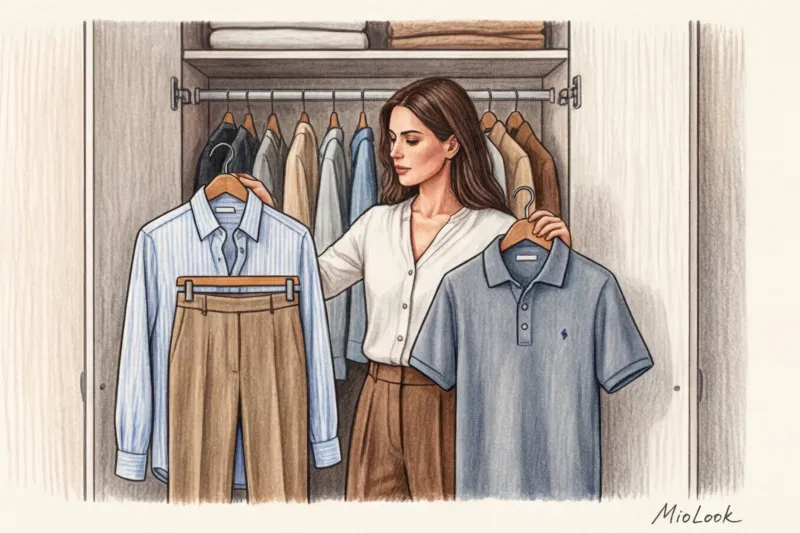
The app automatically takes into account seasonality and the visual density of materials. If you've chosen heavy wool trousers today, the smart stylist will never suggest pairing them with a thin, translucent summer T-shirt. It will find a smooth cashmere jumper or a thick cotton shirt in your virtual capsule, creating a flawless smart-casual look in a split second.
Checklist: Putting together your first smart-casual capsule for the season
Now let's move from theory to practice. Here's your step-by-step plan for the coming weekend, which won't take more than a couple of hours but will save you tens of hours of morning preparation.
- Audit and cleanup: Ruthlessly remove all "visual noise" from sight. Tuck away those formal three-piece business suits in the back of the closet. Toss those stretched-out cardigans into the recycling bin. Only smart-casual items should remain visible.
- Formation of the core: Select three of your favorite structured pieces (a blazer, tailored trousers, a shirt) and three relaxed ones (a quality basic tee, classic jeans, a smooth knit). This is the foundation of the capsule.
- Assembling the image matrix: Lay your items out on your bed. Check carefully: does each chosen bottom pair with at least three tops? If not, the item goes into quarantine; it's not worthy of a place in your capsule wardrobe just yet.
- Total digitalization: Take photos of all successful combinations or individual items and upload them to your mobile app for quick morning access.
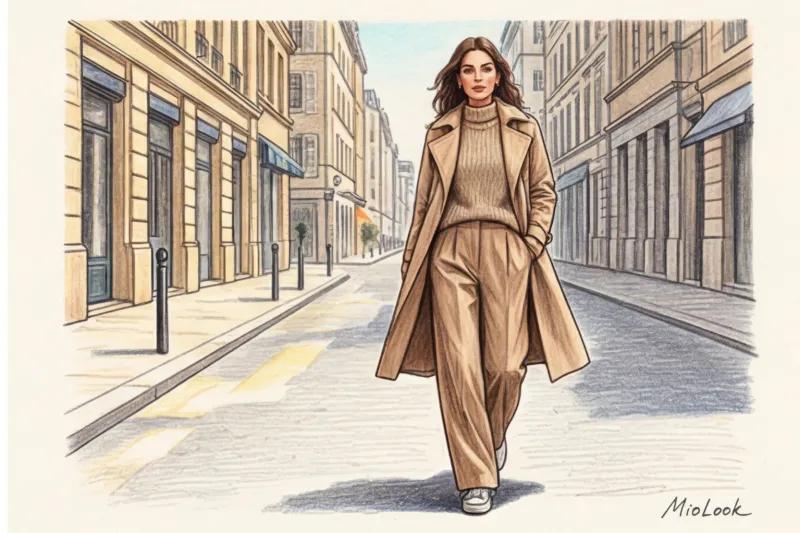
Smart casual isn't a dull compromise between style and home comfort; it's the pinnacle of their technological synchronicity. The secret to a perfectly functional wardrobe isn't astronomical sums of money or logos on bags. It lies in a physical understanding of how different fabrics interact with each other. Start paying attention to the density of the weave, the quality of the hardware, and the visual weight of the items with every purchase—and your closet will start working for you, not against you.