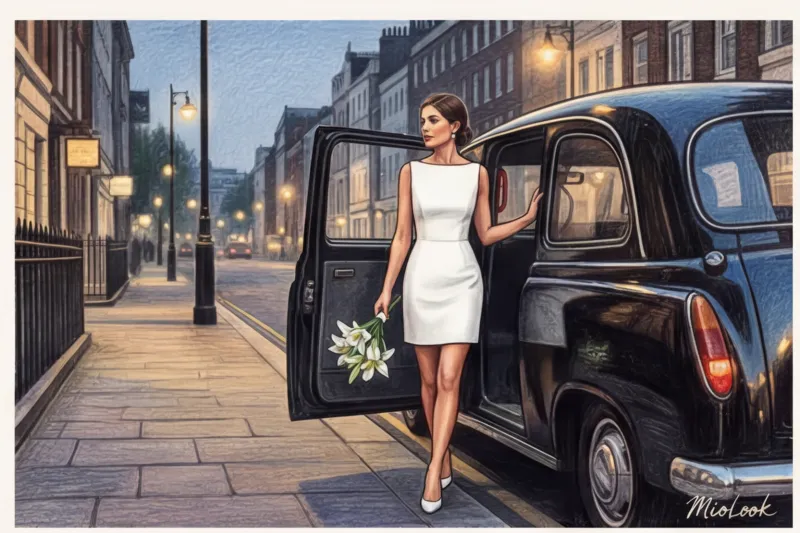
When a bride tells me, "I want to save money and buy a simple, short wedding dress for my wedding," I mentally prepare myself for a long lecture. In 12 years of working as a stylist, I've learned one ironclad rule: hiding a bad cut in thirty meters of tulle is as easy as pie. But getting a flawless mini dress to fit perfectly is a masterstroke. We discussed the architecture of wedding dresses in more detail in our a complete guide to choosing a wedding dress , but today I want to bust the main myth about above-the-knee length.
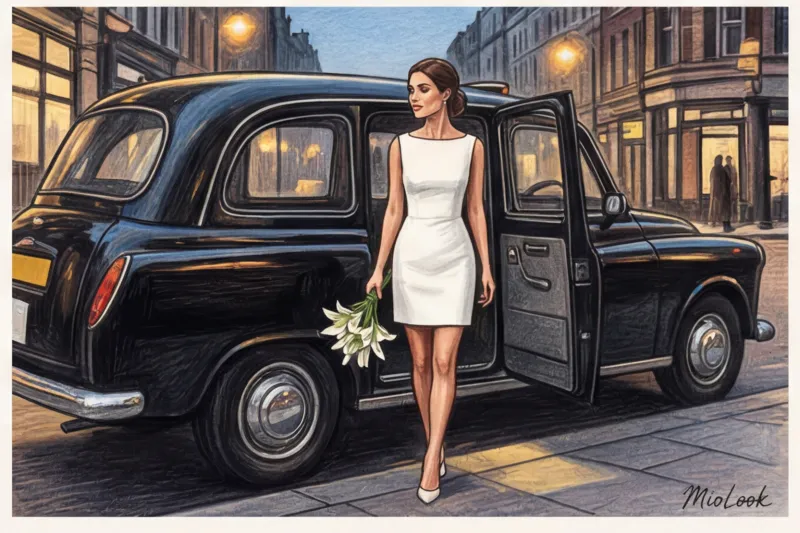
It's commonly believed that shortened styles are a compromise—a backup option for a party or a modest outfit for the registry office. In reality, a short wedding dress requires much more expensive fabric, a delicate fit, and statement shoes. It's impossible to disguise figure flaws with excess volume in the skirt. All the seams, darts, and texture are right at eye level.
Why a short wedding dress is the new couture (and not just a registry office option)
At the last Bridal Fashion Week in New York, I sat front row at the Oscar de la Renta and Vivienne Westwood shows and caught myself thinking: classic trains are rapidly giving way to bare legs. A-list designers are no longer making mini dresses as an afterthought. They're now the headliners of their collections.
The numbers confirm the runway trends. According to the 2024 report by analytics platform Lyst Index, searches for "bridal mini" increased by 42% in just one season. But let's be honest—this trend didn't just pop up out of nowhere.
Historically, the miniskirt has always been a symbol of freedom. In the 1960s, Mary Quant legitimized this length, and style icons made it a wedding classic. Think of Audrey Hepburn in a simple pink miniskirt by Givenchy (1969) or Mia Farrow in her strict short-skirted suit. They weren't trying to save money. They were declaring their independence from opulent traditions.
The paradigm shift is clear: a short dress is no longer a "backup" outfit for dancing. It's an independent, status-defying choice for a confident woman.
The Main Trap: Why a Short Dress Doesn't Forgive Cheap Fabrics
I call it "Pinterest syndrome." A bride sees a flowy, structured dress in a photo, orders something similar from a high-street store, and calls me in tears. Expectation: Parisian chic. Reality: stiff, stiff polyester that looks like a high school prom dress.
One of my clients, Anna, absolutely didn't want to spend her budget on a "one-day dress." She bought a short dress made of cheap guipure. The problem was that the thin, unlined fabric didn't hold its shape, and the cheap lace visually cheapened the look to the level of an everyday sundress. We quickly replaced it with a simple dress made of heavy mikado silk. The difference was dramatic, although the style remained almost the same.
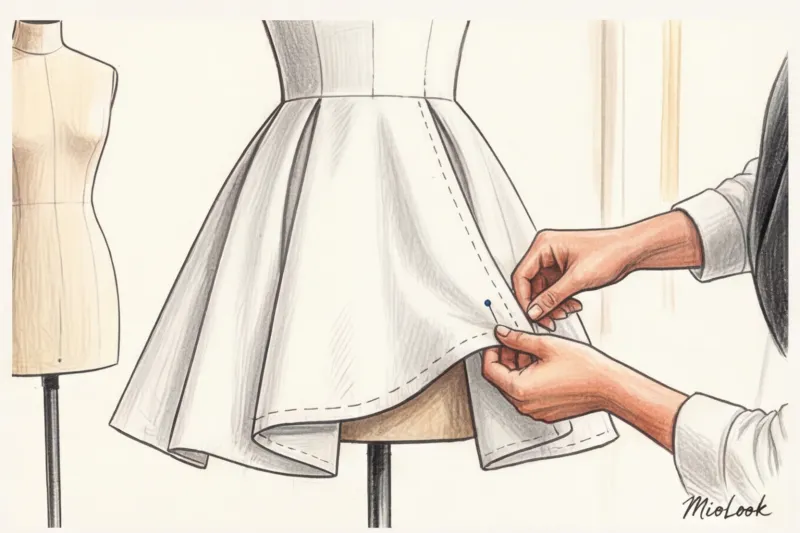
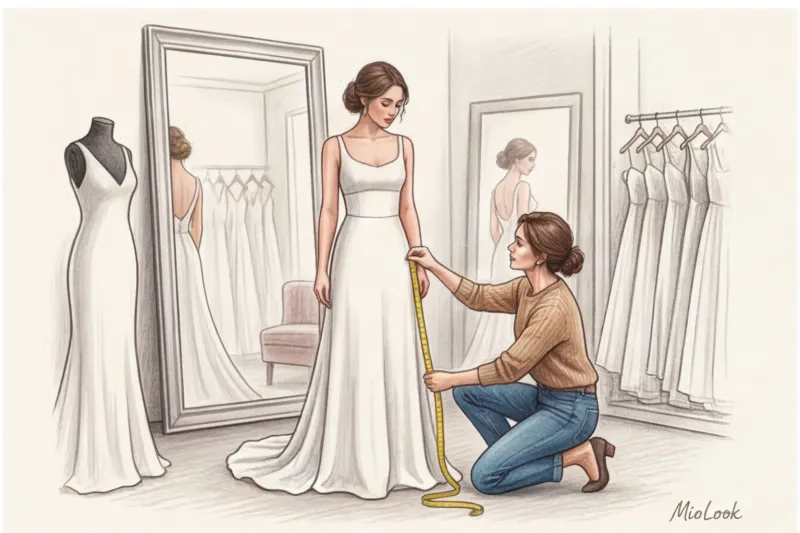
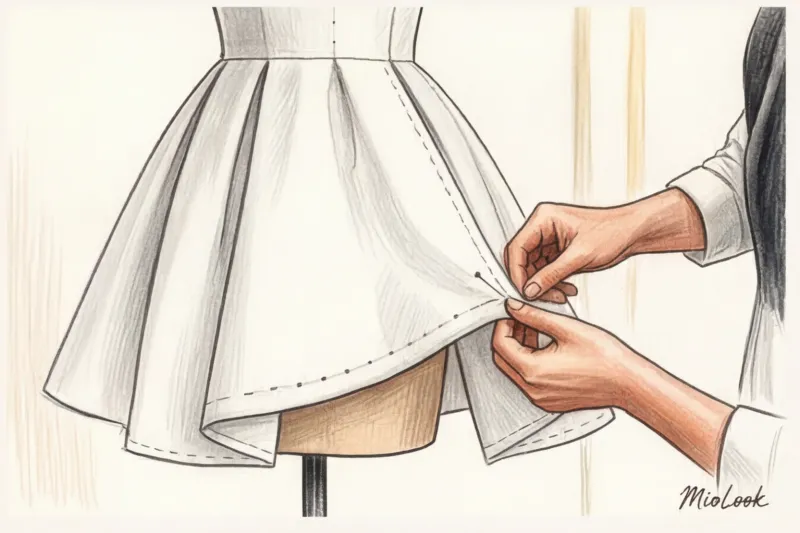
The design of a short dress is merciless. In a long gown, flaws in the cut are hidden by layers of tulle and crinoline. In a short gown, every seam is on full display. That's why the perfect mini requires:
- Dense fabrics: Mikado silk (at least 22 momme), heavy crepe (at least 250 g/m²), or taffeta. They create a frame and prevent wrinkling when you get in the car.
- Flawless darts: A dress should flatter your figure, not hang like a sack.
- Expensive fittings: silk-covered buttons or hidden zippers instead of cheap plastic.
That's why a perfect mini made of good silk often costs the same as a long polyester dress. You're paying for the engineering behind the cut, not the length of the fabric.
Your perfect look starts here
Join thousands of users who look flawless every day with MioLook. Upload your photos and let AI find the perfect proportions.
Get access — €0.99 onceWho really suits short styles: debunking figure myths
The most common fear I hear is: "I don't have model legs, so I can't wear shorts." This is a complete myth. You don't have to be 6'1" to look stunning in a mini. The secret lies in the mathematics of proportions, which we discussed in detail in the article. How to choose clothes for your body type without stereotypes.
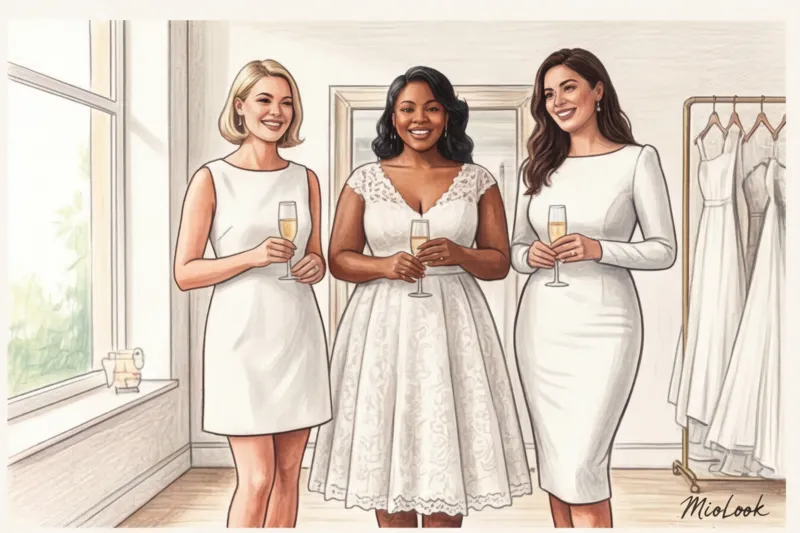
Let's break down the two main categories of crop dresses and understand how they work with different body types.
A daring mini (above the knee): who to wear it for and how to wear it
Ultra-short dresses (a hand's breadth above the knee or shorter) are the secret weapon of petite brides. If you're shorter than 160 cm (5'4"), a long, full dress can visually "swallow" you, turning you into a figurine on a cake. A mini, on the other hand, creates a continuous vertical line and visually elongates your legs.
But there's a strict balance rule here: if we're going for extreme reveal, the top should be couture-style understated. Choose styles with long sleeves, a stand-up collar, or a closed boat neckline. A plunging neckline paired with a mini instantly blurs the line between elegance and vulgarity.
Elegant Midi and Tea-Length
This length evokes the famous New Look silhouette created by Christian Dior in 1947. The tea-length ends between the knee and ankle. It's a versatile solution that brilliantly flatters pear-shaped figures (hiding the hips) and accentuates an hourglass waist.
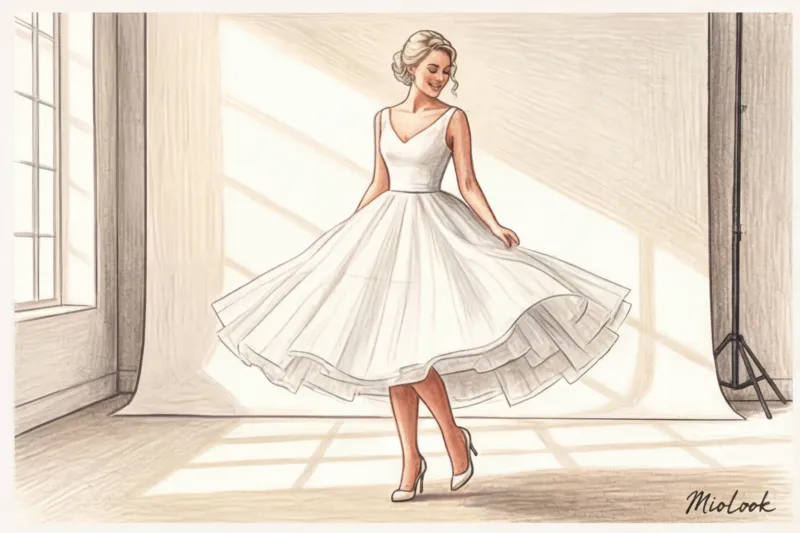
Caution, limitation: This is one case where this advice doesn't work for everyone. If the dress hem ends right at the widest part of your calf, your legs will appear shorter and fuller. The hem should end where the leg begins to taper (just below the knee or closer to the ankle).
Shoes are 50% of your look: styling rules
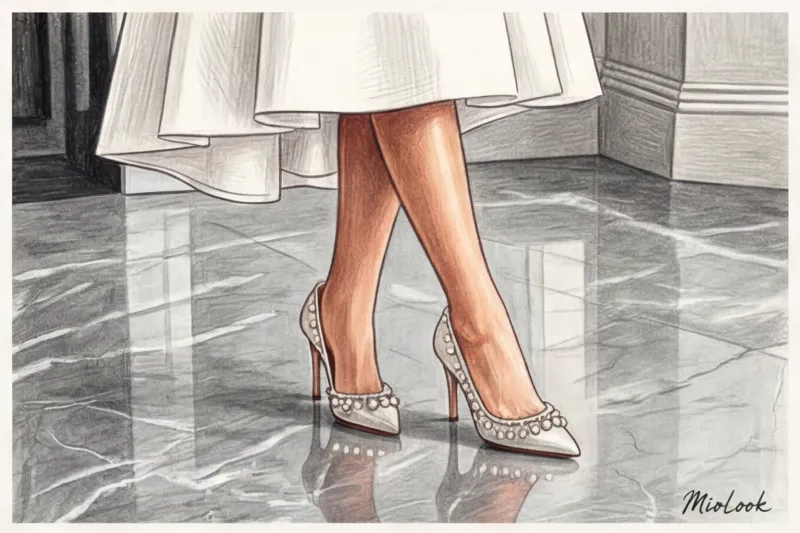
In a traditional wedding dress, a bride's shoes are a sweet secret, visible only when she lifts her skirt on the stairs. In a short wedding dress, shoes are a full-fledged, statement piece, accounting for up to 50% of the overall look's visual impact.
This is exactly the moment when it's worth investing in shoes. A pair from Manolo Blahnik, Jimmy Choo, or Amina Muaddi will elevate the entire look, even if the dress itself is minimalist.
What works best:
- Classic pumps: lengthen the leg, making the instep graceful.
- Accent color: The "Something Blue" tradition is perfectly realized through soft blue mules or shoes.
- Metallic and rhinestones: Silver sandals add just the right amount of festive flair to a minimalist sheath dress.
What should you absolutely avoid? Ankle straps (if they're a contrasting color to your skin)—they cut horizontally across your leg, visually shortening it. I also recommend avoiding chunky platforms at the toe (like stripes), which hopelessly weigh down the bottom and detract from the aristocratic look.
Access to MioLook for €0.99 — one-time payment
A smart AI stylist will select the perfect look based on your figure and preferences.
Get access — €0.99 onceAccessories: How to Avoid Looking Like "Just a Dressed-Up Guest"
My brides' main fear when choosing a short dress is: "What if I get lost among the guests? What if no one realizes I'm a bride?" There is a real risk if you limit yourself to just a dress. Bridehood is established through the markers we mentioned in the article about status accessories , adapted to wedding fashion.
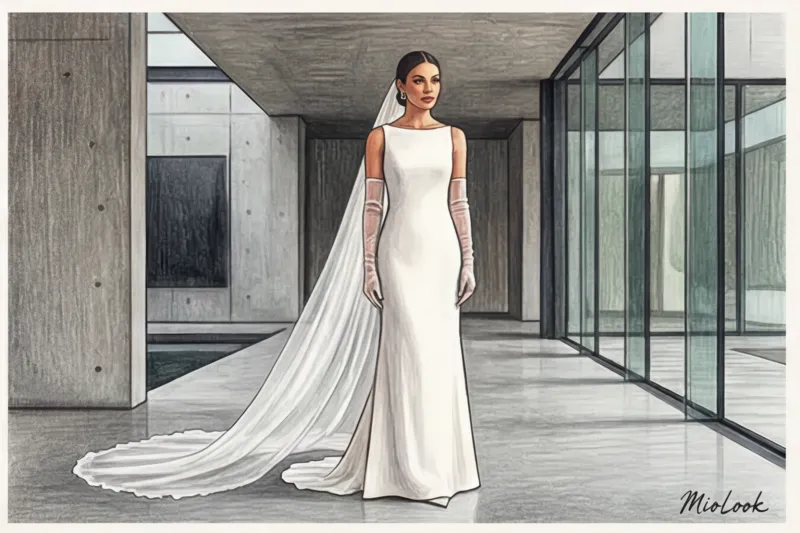
My favorite styling trick is playing with radical contrasts. Try pairing an ultra-mini with an incredibly long cathedral veil (floor-length or with a train). This contrast in lengths looks both trendy and incredibly photogenic. If a long veil isn't your thing, consider a retro aesthetic: a large mesh birdcage will add a cinematic touch.
Don't forget about your hands. Sheer, above-the-elbow opera gloves made of tulle or silk instantly elevate a short dress from "party" to "haute couture." Large, textured bows in your hair or at the back of your dress also work as a great marker of formality.
Stylist Checklist: 5 Steps to Buying a Short Outfit
In the salon's fitting room, standing on a perfect podium in front of a mirror with the right lighting, any dress seems beautiful. But a wedding is dynamic. Here's my signature checklist, which I run through with every client before making a purchase:
- Sit and Stand Test: Sit down in a chair in the salon. How high is your dress? Is the fabric cutting into your hips? You'll be sitting at the reception for at least 3-4 hours, so you should be comfortable.
- Wind test: If you've chosen a flowy chiffon or lightweight silk mini, think Marilyn Monroe. Outdoors, the slightest gust of wind can turn your photo shoot into a struggle with the hem. In such cases, I always sew tiny weights into the hem.
- Linen base: For a sleek miniskirt, wear seamless, laser-cut underwear in a skin tone (not white!). If the wedding is in the cooler season, consider choosing tights in advance—opaque, 8-15 denier, without a lycra sheen.
- Bottom view: Ask a friend to take a photo of you from the bottom up (a common angle for reportage photographers at banquets). Make sure the length remains within acceptable limits.
- Checking for creases: Squeeze the fabric in your fist for 10 seconds. If it's too wrinkled, your dress will be ruined by the middle of the evening.
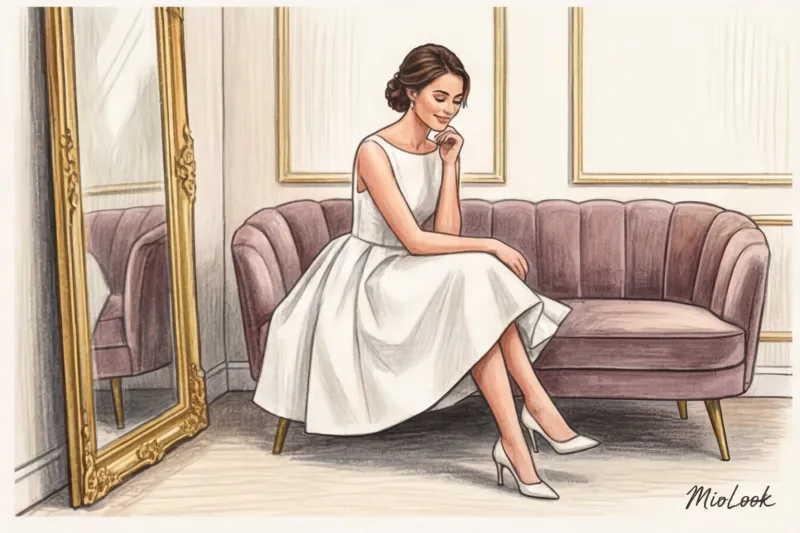
Summary: A short dress is the choice of confident women.
A short wedding dress isn't a way to save money or make things easier. It's a bold statement that requires perfect posture, impeccable tailoring, luxurious fabrics, and statement accessories. It doesn't hide you behind layers of tulle, but rather brings your individuality to the forefront.
If you're unsure which length (mini, midi, or tea-length) will flatter your proportions, you don't have to spend days trying on dresses in stores. Use the app's virtual fitting room and proportion analysis feature. MioLook Upload your photo, and a smart algorithm will help you visualize different styles before you buy. Choose wisely, wear with pride, and remember: the key to any wedding look is your confidence.