
Have you ever bought shoes two sizes too big just to make them fit? As a result, your heel constantly slips, your long toe catches on the steps, and your gait becomes heavy and unsteady. Sounds familiar.
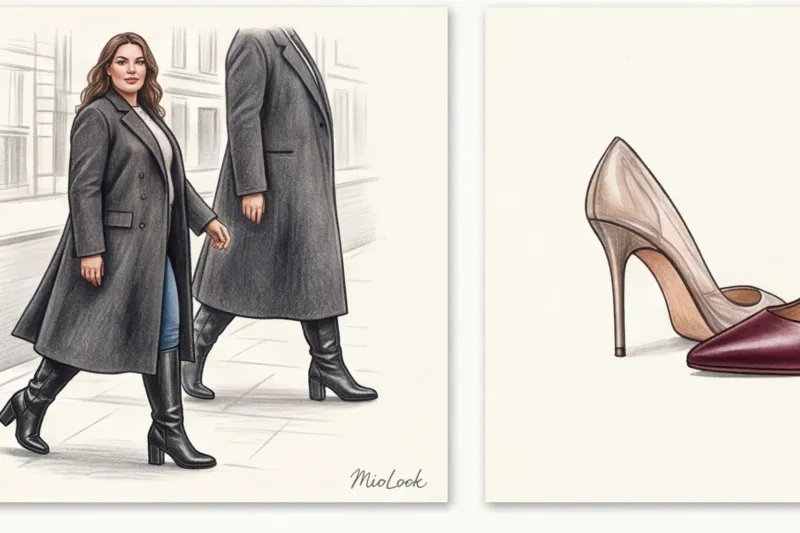
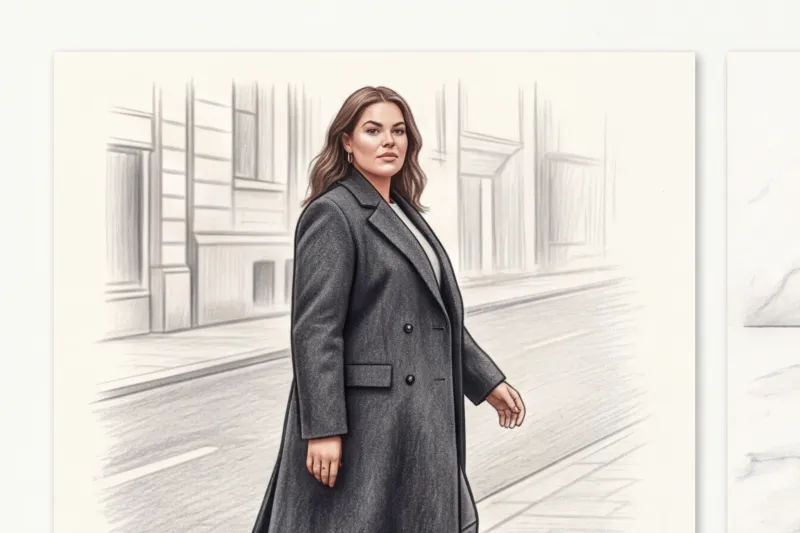
For years, the mass-market industry has convinced us that the right way shoes for wide feet for women — these are exceptionally shapeless orthopedic moccasins, reminiscent of grandma's slippers. But as a certified colorist and image consultant, I categorically disagree. We discussed the silhouette's architecture in more detail in our The complete guide: how to dress for plus-size girls The same principle applies to footwear: we shouldn't hide volumes in soft fabrics, but rather structure them with clear lines.
In this article, we'll break free from traditional compromises. You'll learn how to use last geometry, width groups (D, E, EE), and the law of visual contrast to find that perfect pair.
Silhouette Architecture: Why the Right Wide-Foot Shoes for Women Change Everything
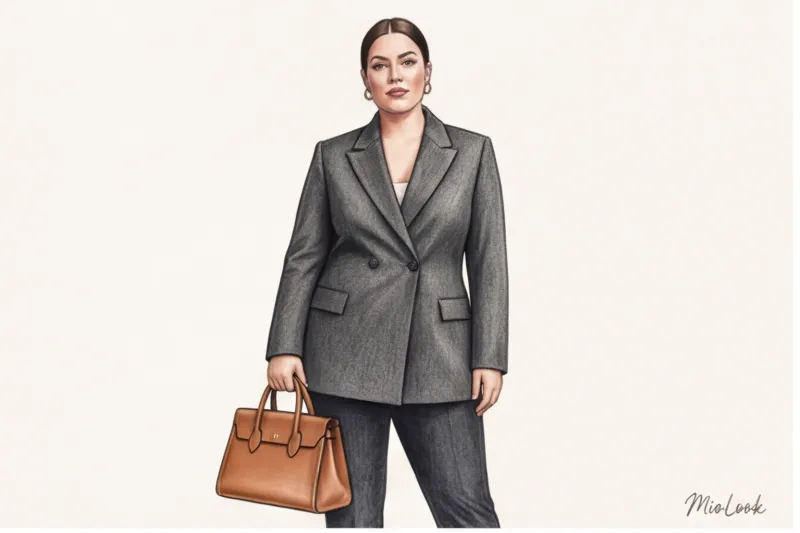
Shoes are the foundation of your entire look. Imagine a luxurious, perfectly tailored building standing on a crumbling sand foundation. That's exactly what an expensive plus-size suit looks like paired with worn-out, shapeless ballet flats. If the shoe material is too soft and doesn't support the shape of your foot, the entire silhouette becomes visually heavy.
Let's turn to physiology. According to a study by the American Orthopaedic Foot and Ankle Society (AOFAS, 2023), with a body mass index above average, weight distribution changes: peak pressure shifts to the arch and forefoot. Therefore, a properly designed, rigid shoe last with good arch support doesn't just provide comfort—it also corrects your posture. And your posture directly affects how your clothes fit.
"The biggest mistake is buying standard shoes that are too big. You don't have a long foot, you have a wide foot. You need a different width in the last, not extra inches at the toe."
The international shoe width system is your best friend. While standard shoes at Zara or H&M are B or C width, specialized women's shoes for wide feet are labeled D, E, EE, or W (Wide). The difference in insole width can be as much as 5–15 millimeters with the same length!
Busting the Myths: 3 Fatal Mistakes When Choosing Plus-Size Shoes
Over 12 years of practice, I've noticed a paradoxical thing: nine out of ten of my plus-size clients come to their first consultation wearing shoes with completely flat, thin soles, or flimsy stiletto heels. They're driven by the fear of looking "bulky" in bulky shoes. But the laws of optics work just the opposite.
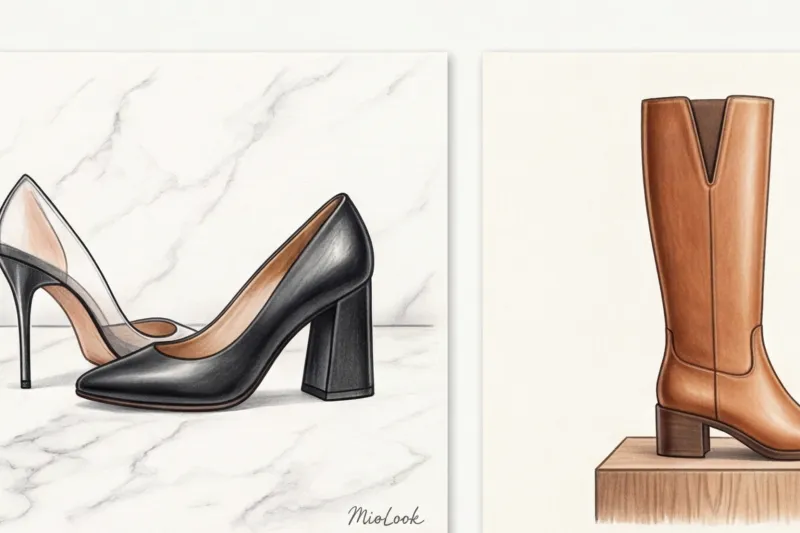
Myth 1: A thin stiletto heel makes your feet look more graceful.
In the psychology of perception, there's the Ebbinghaus illusion (Titchener circles): the same circle appears enormous when surrounded by small objects, but tiny when surrounded by large ones. It works the same way in styling. If you have a large calf and a microscopic, thin stiletto heel underneath, it creates an "ice cream cone" effect. It feels like the heel is about to break under the weight, making your foot appear larger than it actually is.
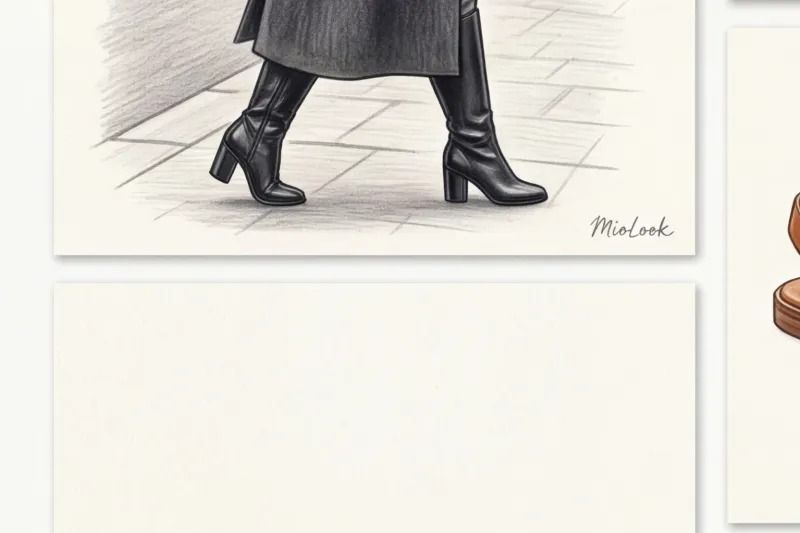
Solution: Replace your stiletto with a stable block heel or a stacked heel 3-4 cm wide. This will balance out your proportions.
Myth 2: Stocking boots and stretch fabric are the answer to wide calves
Many brands offer stretchy fabrics, promising a perfect fit. In reality, tight stretch actually works against you. It digs into your skin, creates unsightly rolls under the knee, and impairs circulation. Worse, stretch completely deprives the leg of any shape, turning it into a straight column with no ankle definition.
Access to MioLook for €0.99 — one-time payment
A smart AI stylist will select the perfect look for every day, taking into account your body shape and wardrobe.
Get access — €0.99 onceWide-Calf Boots: A Guide to Finding the Perfect Pair
If stretch is off-limits, what should you wear? The answer: rigid tube boots. The "tube" rule states that the shaft should be straight, maintain its shape, and leave a little air between the material and your foot. It's this architectural rigidity that makes your leg look slimmer.
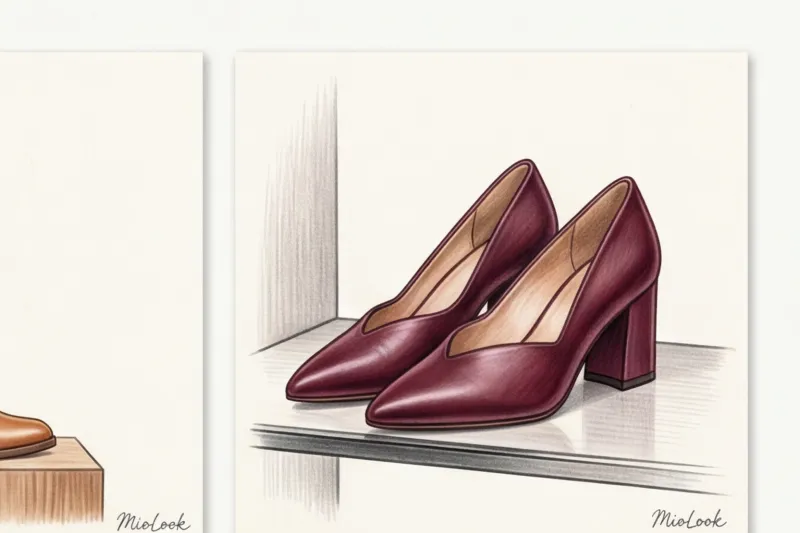
A little math: the standard calf circumference in mass-market boots is 35-38 cm. If your calf circumference is 42, 45, or 50 cm, trying to zip up a standard boot will only result in broken zippers and tears in the fitting room. Look for brands with Wide Calf lines.
Three secrets of perfect boots:
- Asymmetrical edge: The shaft, which is slightly higher in the front (covering the knee) and has a cutout at the back for bending, incredibly lengthens the leg.
- Hidden V-shaped inserts: Elastic bands should be located at the back along the seam or on the inside, gently widening at the top, but not constricting the calf itself.
- Matte texture: Avoid glossy leather and patent leather boots - the glare visually adds volume.
I'll be honest: there is one limitation. If you're shorter than 158 cm (5'5") and have very large calves, tall, stiff, tube-style boots can visually "cut off" your leg below the knee. In this case, it's best to choose elegant ankle boots that expose the narrowest part of your ankle and wear them with trousers or tights in a matching color.
Comfortable and elegant shoes: last width, cutout and toe shape
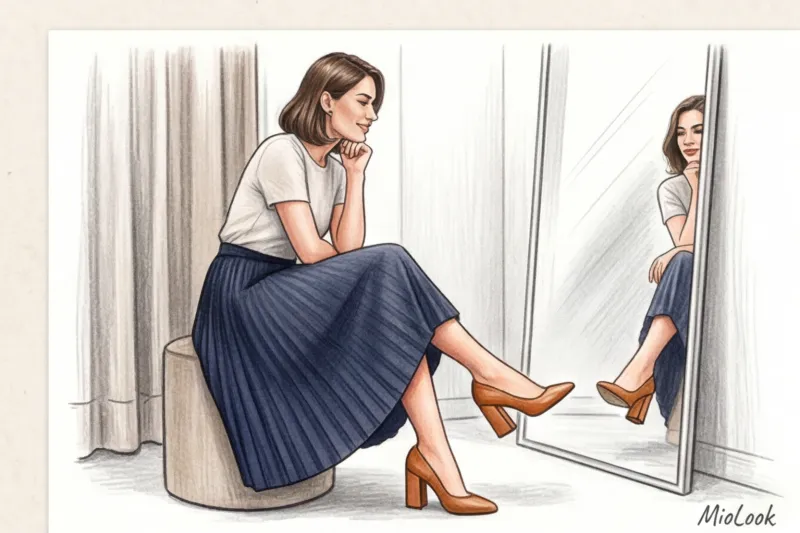
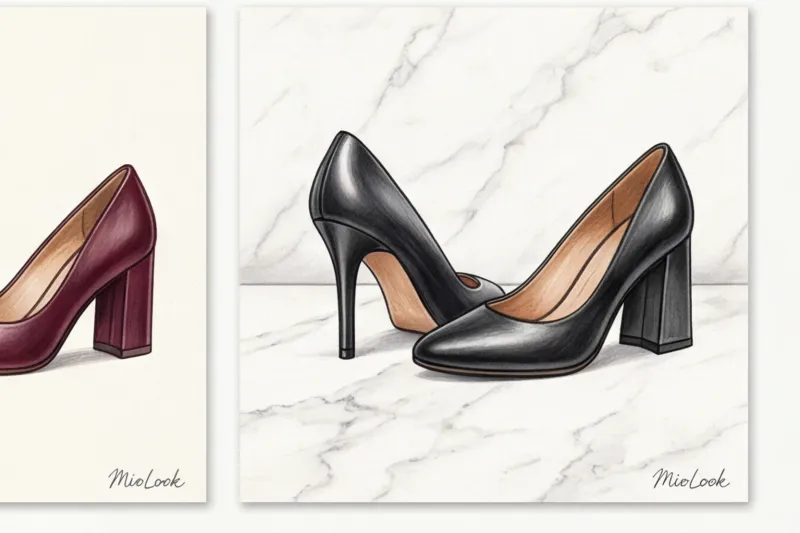
Finding elegant pumps for the office or an evening out is a challenging task, but it's entirely doable. As I mentioned, look for widths of D, E, or EE. But beyond the insole width, the vamp design plays a crucial role.
Compare two pairs of ballet flats. The first has a round, blunt toe and a straight neckline. The second has an elongated almond toe and a deep V-neckline. The straight horizontal line "chops" the foot, turning it into a square. The V-neckline creates a perfect diagonal.
During a recent shopping session, a client and I swapped her favorite round pumps for E-cut pumps with a V-neck and a small block heel. The effect was stunning: her legs looked more slender, and her entire silhouette seemed to have lost 2-3 kilograms simply due to the perfect lines.
What to avoid: A Mary Jane-style shoe with a contrasting ankle strap. If you don't have a defined, narrow ankle, this strap will create a bold horizontal line right across the widest part of your ankle.
Summer Shoes and Sandals: How to Avoid the "Overstretched Sausage" Effect
Summer is the most treacherous season. Physiology is merciless: in the heat, feet expand by 5-8% by evening. Thin leather straps that fit perfectly in the morning become torture devices by 5:00 PM, digging into swollen skin.
According to a report from the analytical agency WGSN (2024), demand for aesthetically pleasing summer shoes in the Wide Fit category with anatomical support has grown by 34%. Brands have finally realized that beauty doesn't have to require such sacrifices.
How to choose sandals for wide feet:
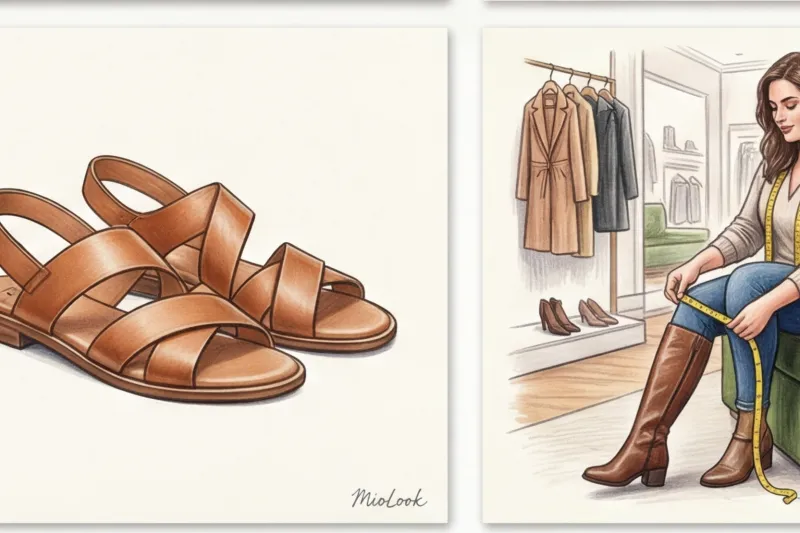
- Avoid multiple thin cross straps. Instead, opt for one or two wide diagonal straps. A diagonal strap is always slimming and doesn't create a "tightened sausage" effect.
- Pay attention to the platform in the toe area. A hidden platform of 1-1.5 cm compensates for the heel height and reduces stress on the toes.
- Choose the right materials. Soft, natural suede or nappa leather will conform to the shape of your foot, while hard patent leather or synthetics will rub at the slightest swelling.
Your perfect look starts here
Join thousands of users who look flawless every day with MioLook. Upload your items and get ready-made combinations.
Get access — €0.99 onceA stylist's checklist: how to try on plus-size shoes
Buying shoes isn't just a try-on; it's a real test drive. Save this checklist for your next shopping trip:
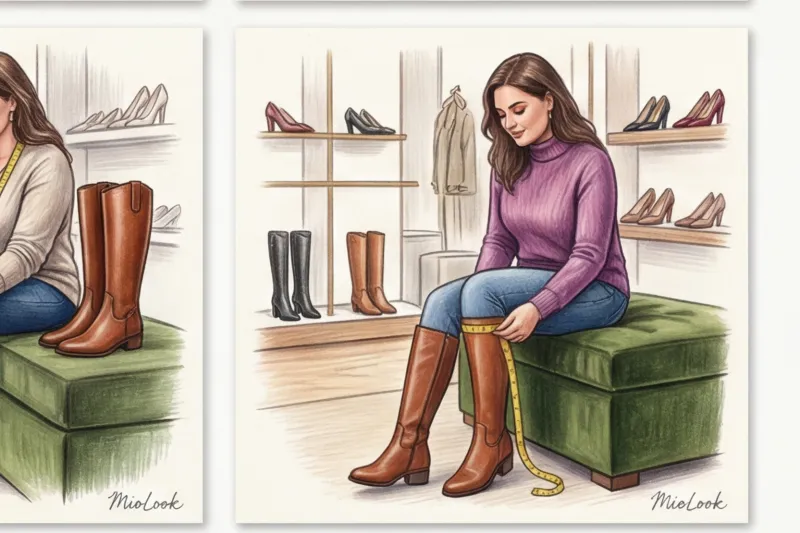
- Fitting time: Never buy shoes in the morning. Go shopping after 4:00 PM, when feet reach their natural maximum size.
- Twist test: Grab the shoe by the toe and heel and try to twist it like a towel. If the sole bends in half and twists easily, put it back on the shelf. If you weigh 80+ kg, such a shoe won't provide the necessary cushioning.
- Finger rule: The distance from your longest toe to the edge of the shoe should be exactly the width of your thumb. No more, no less.
- Examination from behind: Put on both shoes, stand up straight, and ask a friend (or a consultant) to take a photo of your feet from the back. If the heel "sinks" inward or outward under your body weight, the last can't support the load, and you won't be able to find your balance.
An investment in comfort: a basic capsule shoe for full feet
You don't need dozens of pairs of shoes to look stylish every day. A smart wardrobe is built on the principles of minimalism and maximum compatibility. To cover 90% of your needs, simply assemble a micro-capsule of three perfectly fitting pairs.
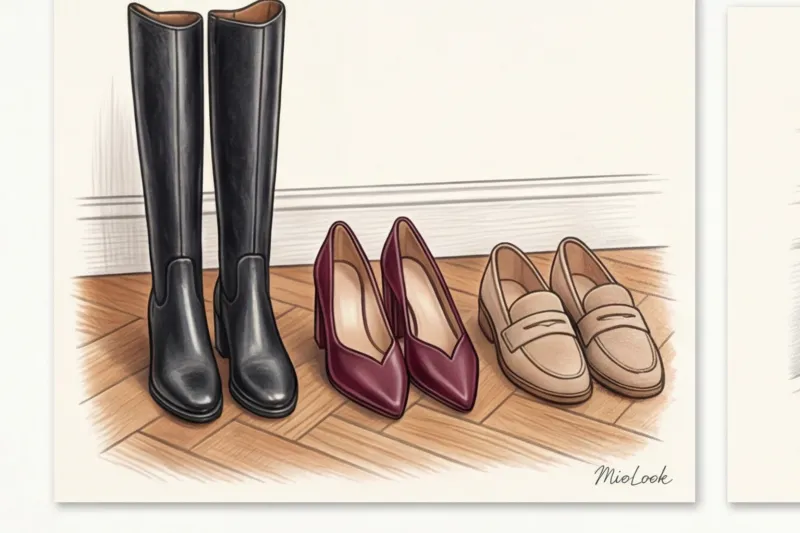
The base of your capsule:
- Tall structured tube boots Block heel shoes. Perfect for midi dresses and skirts, they create a seamless vertical line.
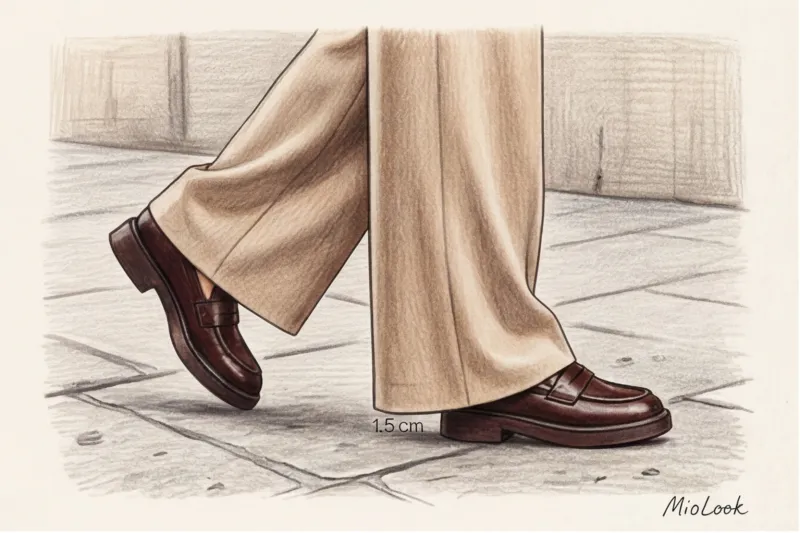
- Soft suede loafers , but with a rigid, structured sole. Your workhorse for everyday running in jeans or trousers.
- E-length pumps with a V-neck. The perfect pair for the office, business meetings, and evening outings, it makes your feet look graceful without putting stress on your joints.
Don't try to squeeze yourself into standards that don't suit you. Look for brands with specialized lines, demand the right width, and remember: if your shoes are too tight, the problem isn't your feet, but a bad last. If you want to easily integrate new shoes into your looks and see how they pair with your clothes, try an app. MioLook — your personal AI stylist.
Invest in the right architecture, take care of your feet, and you'll see how not only your silhouette will change, but also the confidence in every step!