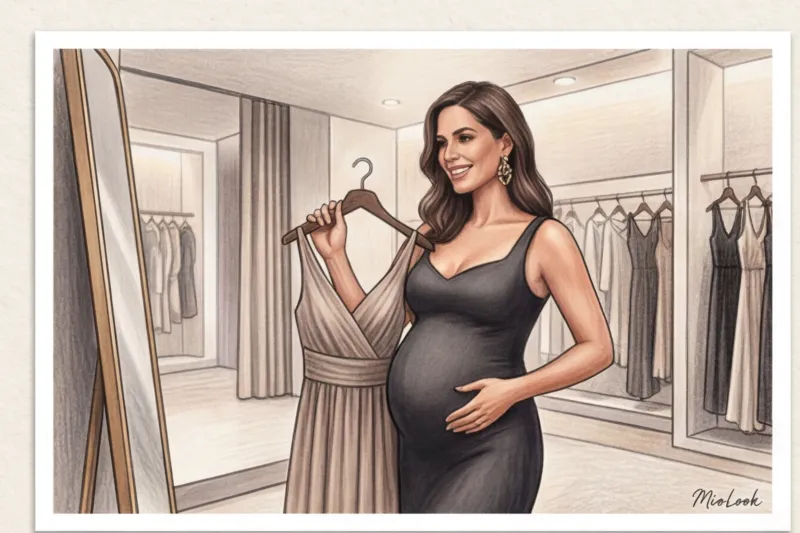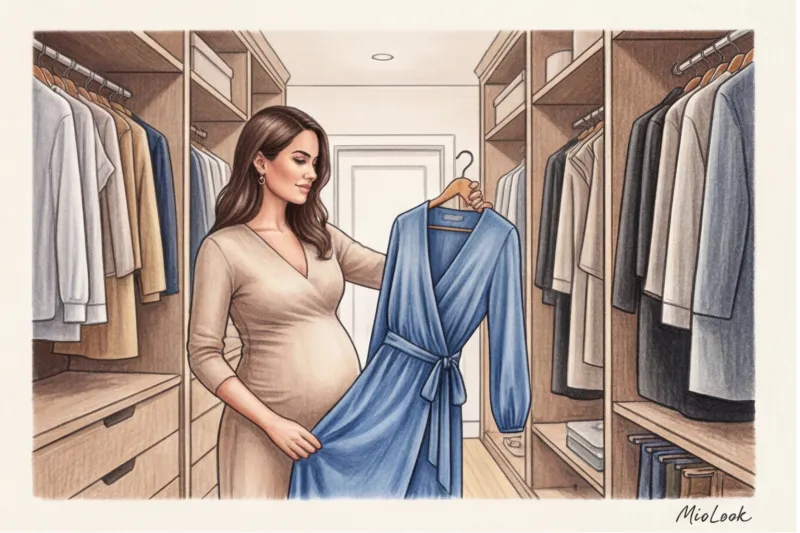
Have you ever wondered why the maternity clothing industry is so persistent in offering us shapeless clothes made of squeaky synthetic materials?
As soon as the test shows two lines, marketers start convincing us: your old style is over, it's time to buy a special wardrobe. But as a stylist and wardrobe investment consultant, I categorically disagree. In my experience, 80% of the ideal items for this period are already hanging in your closet. You just need to choose them wisely.
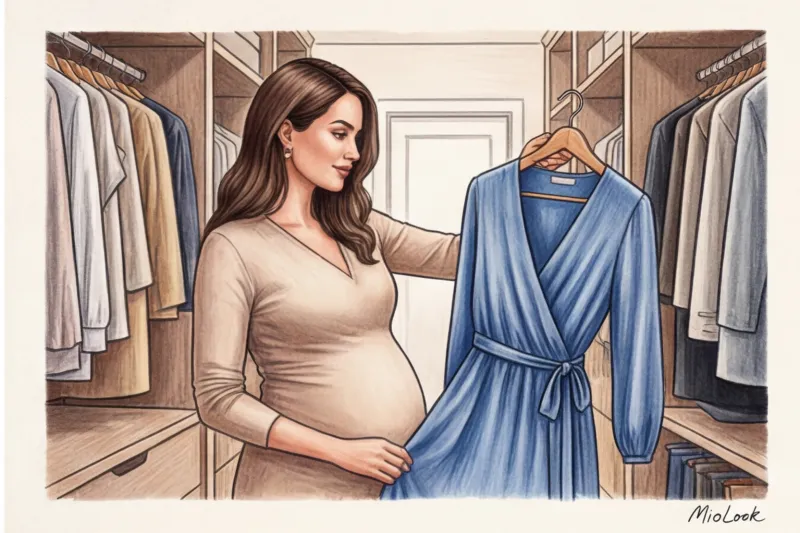
Girls often ask me in a panic, What regular dresses can pregnant women wear? to maintain elegance and status without turning into a "teddy bear." The secret lies not in the size, but in the architecture of the cut and the flexibility of the fabric. We discussed this in more detail in our A complete guide to life hacks: how to wear regular clothes while pregnant.
Hidden wardrobe reserves: why investment dresses work better than their maternity counterparts
The concept of maternity fashion often forces us to buy disposable, low-quality items. The industry understands that you only need clothes for a few months, so it skimps on patterns and fabrics. Have you noticed how quickly these items become pilled and lose their shape?
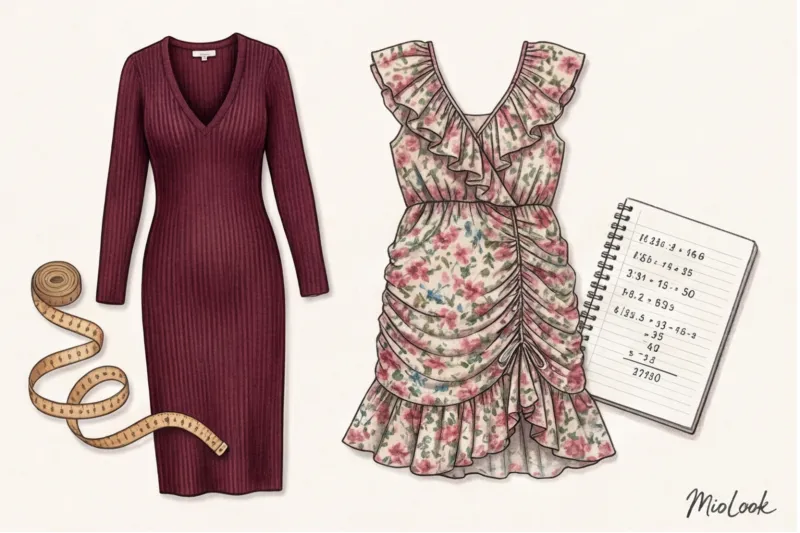
This is where the Cost-per-Wear principle comes in handy. Let's do the math: an elegant, viscose wrap dress from a reputable brand, priced at €300 and worn for five years (including pregnancy), costs less than €1 per wear. A cheap €80 maternity drawstring dress, worn 15 times during your third trimester, will cost you more than €5 per wear. Investing in quality always pays off.
The main rule of luxury styling that I always repeat is: clothes should fit or drape, not hide. Choose styles that accentuate your body's curves, not blur them.
Your perfect look starts here
Join thousands of users who look flawless every day with MioLook. Artificial intelligence will help you create looks from your clothes.
Get access — €0.99 onceWhat Regular Dresses Can Pregnant Women Wear: 5 Ideal Styles
Not every pre-pregnancy dress will accommodate your new proportions. Those formal sheaths made of wool suits will have to be put aside. But there are silhouettes that are technically designed to accommodate your new proportions.
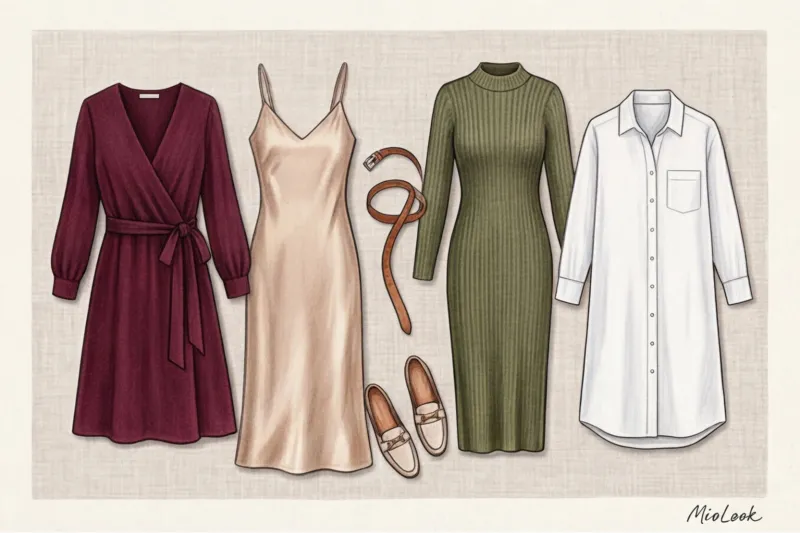
Wrap Dress: A Timeless Classic
Diane von Fürstenberg's invention in the 1970s is a brilliant adaptation tool. The wrap-around design allows for millimeter-by-millimeter adjustments to the underbust and waist.
A huge plus: the deep V-neckline elongates the silhouette vertically. This visually compensates for the fullness of the belly and preserves the gracefulness of the neck and collarbones.
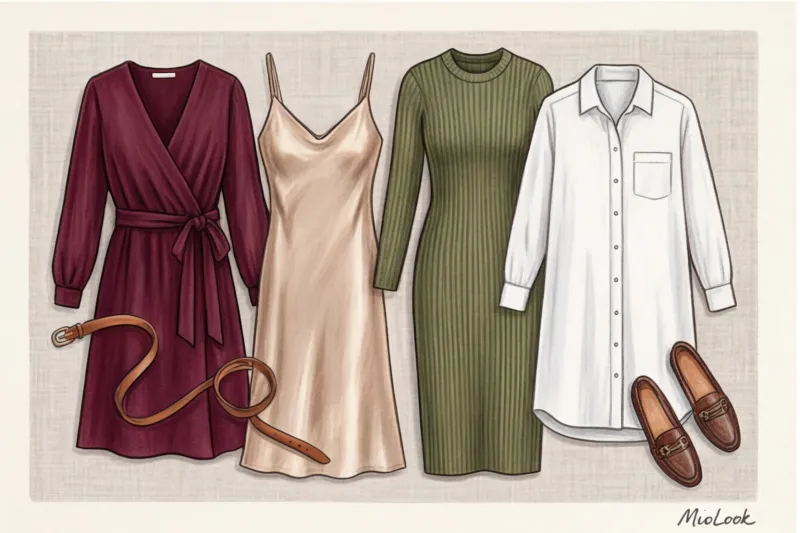
Bias Cut Slip Dress
Recently, a client of mine, a finance director, conducted a challenging negotiation at eight months pregnant in her favorite silk slip dress, layered with a structured jacket. She looked impeccably expensive.
Why does it work? The bias-cutting technique (cut at a 45-degree angle to the grain), popularized by Madeleine Vionnet in the 1920s, works wonders. Silk cut this way acquires the properties of a spring—it stretches across the stomach without losing its shape and doesn't constrict the body at all.
A-line or straight shirt dress
A classic shirt dress made of thick cotton can be worn two ways. Up until the fifth or sixth month, simply move the belt to a position just under the bust (empire style). In later stages, wear it completely unbuttoned, like a duster or a light coat, over a fitted knit dress. If you're unsure how to combine textures, the "smart wardrobe" feature in MioLook will help you create such multi-layered sets perfectly.
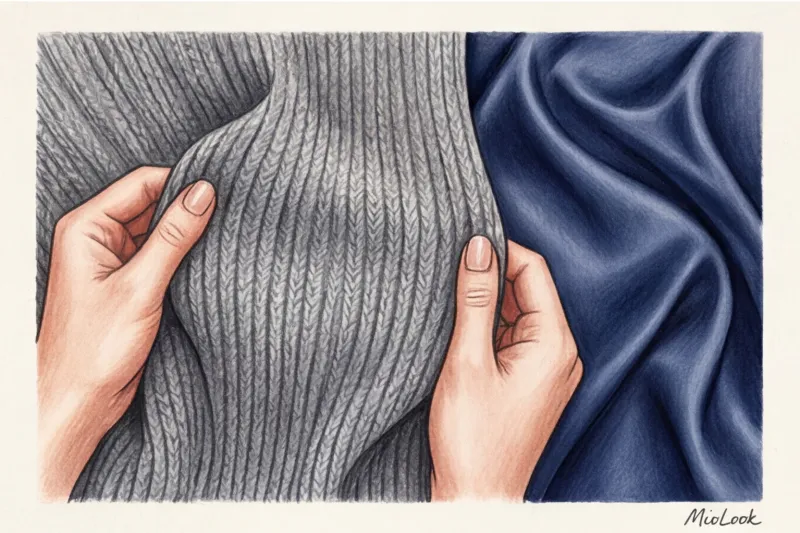
Premium Ribbed Knit Dress
There's a huge difference between thin, cheap stretch fabric and dense ribbed knitwear (for example, merino wool with a weight of 200 g/m² or more). Cheap stretch fabric will show every crease in your underwear and will stretch out at the knees. A dense ribbed knit works like a delicate bandage: it gathers your figure, beautifully contours your curves, and returns to its original shape after washing.
Empire Waist and Tiered Dresses
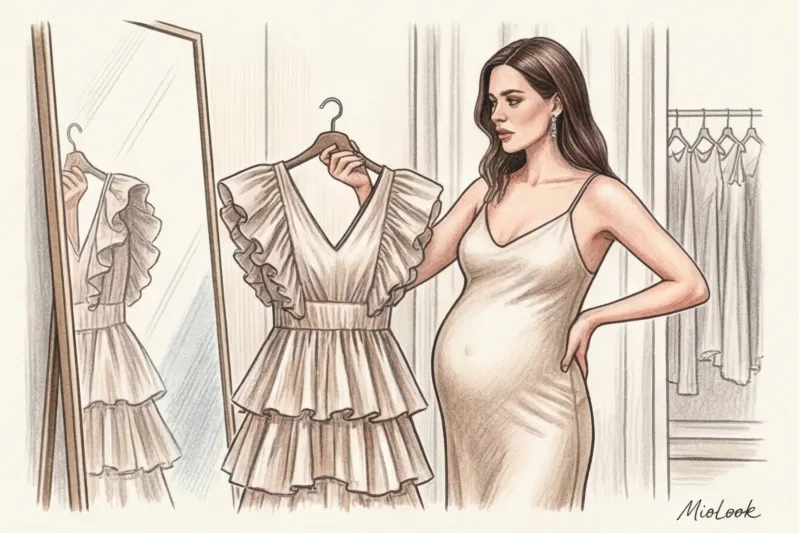
Historically, the empire waist was created specifically to accommodate the waist. But therein lies the important limitation (When this tip doesn't work): Avoid stiff fabrics like crisp poplin or organza. A tiered dress made of stiff cotton can create a "teapot" look. Choose only heavy, flowing materials like cupra, tencel, or silk.
Tissue Anatomy: What Can Withstand Stretching Without Deforming
A study by the analytical agency WGSN (2024) revealed alarming statistics: approximately 70% of specialized maternity clothing on the mass market is made of polyester and acrylic. For a body whose temperature is already elevated due to hormonal changes, synthetics become torture.
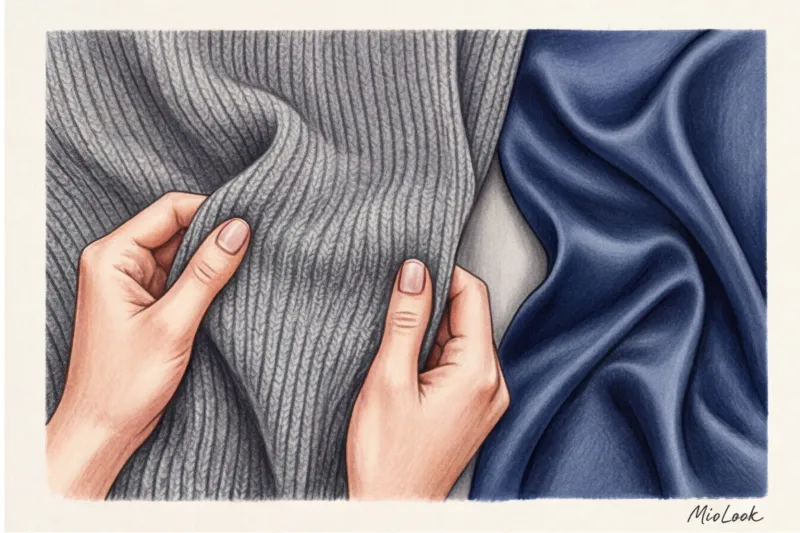
Natural, breathable fabrics are a matter not only of status but also of your physical comfort. What should you look for on the tags of pre-maternity dresses?
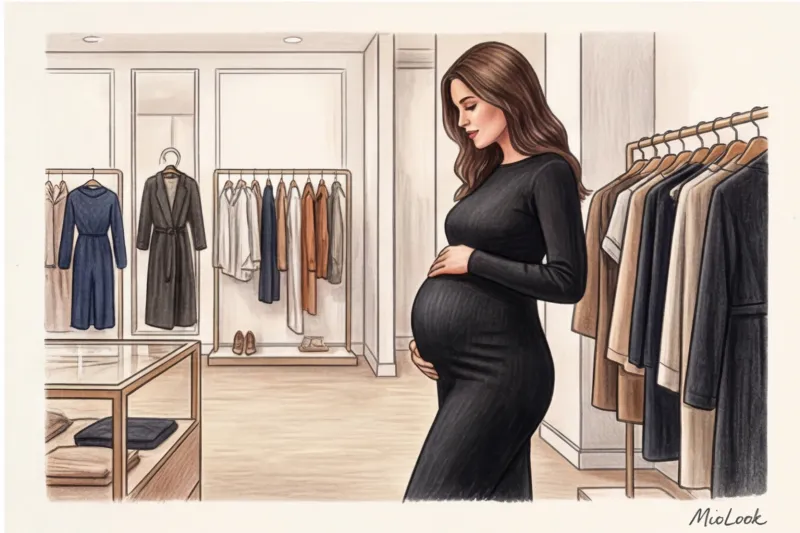
- For knitwear: Merino wool, cashmere or thick cotton with the addition of 5-7% elastane for recovery.
- For light dresses: 100% silk, Ecovero viscose, and modal. They possess natural elasticity without a single gram of synthetic fibers.
Stylist's Return Test: Gently stretch the hem of the dress with both hands and release. If the fabric immediately returns to its original shape, the dress will survive your pregnancy. If a "wavy" shape remains, the dress will have to be thrown out after the birth.
Ready to start your wardrobe audit?
Try MioLook's free plan—upload your favorite dresses, and AI will suggest fresh styling ideas, no strings attached.
Get access — €0.99 onceThe Oversize Trap: Why Buying Regular Clothes 3 Sizes Too Big Is a Bad Idea
The biggest myth I bust at every other consultation is: "I'll just buy my favorite Zara dress in an XL instead of a medium." This is a huge mistake that ruins your proportions.
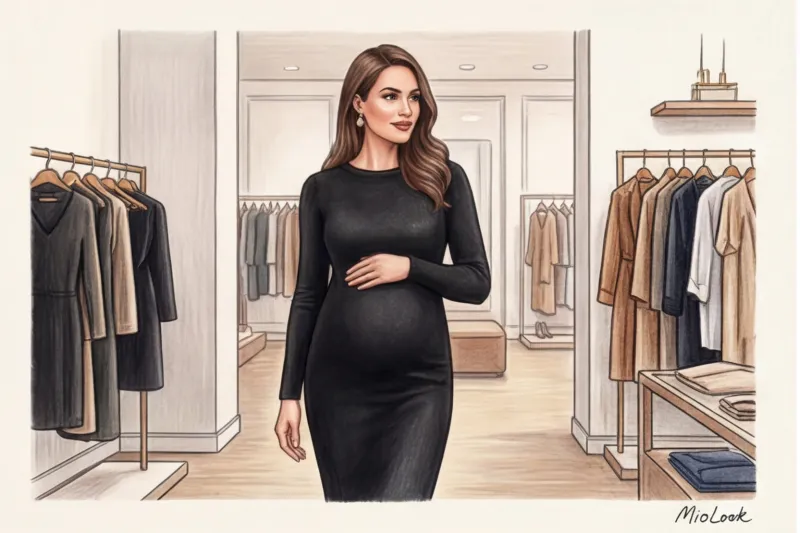
When you go three sizes up, it's not just your belly that gets bigger. Your shoulders also get wider, the armholes drop to your waist, and the neckline becomes disproportionately wide. The result is a sloppy, baggy silhouette.
The golden rule of status: the item should fit strictly on your shoulders Even if the hemline features voluminous draping of 100 cm in circumference, the shoulder seam must lie flush with the knuckle. This is why your pre-pregnancy dresses, if cut correctly, will always look more expensive and polished than the bland, hyper-oversized ones you buy at the store.
A stylist's checklist: auditing pre-pregnancy dresses
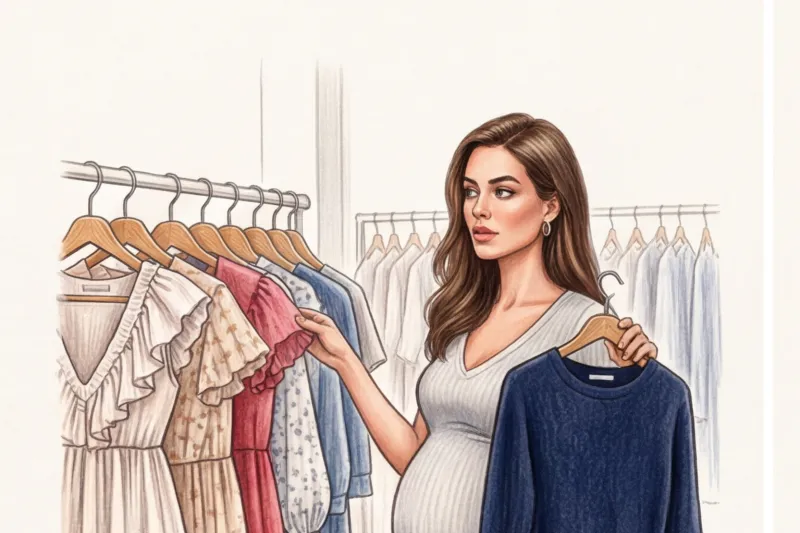
Before you go shopping, go through your closet and do an inventory using my signature algorithm. It'll only take 15 minutes, but it'll save you hundreds of euros.
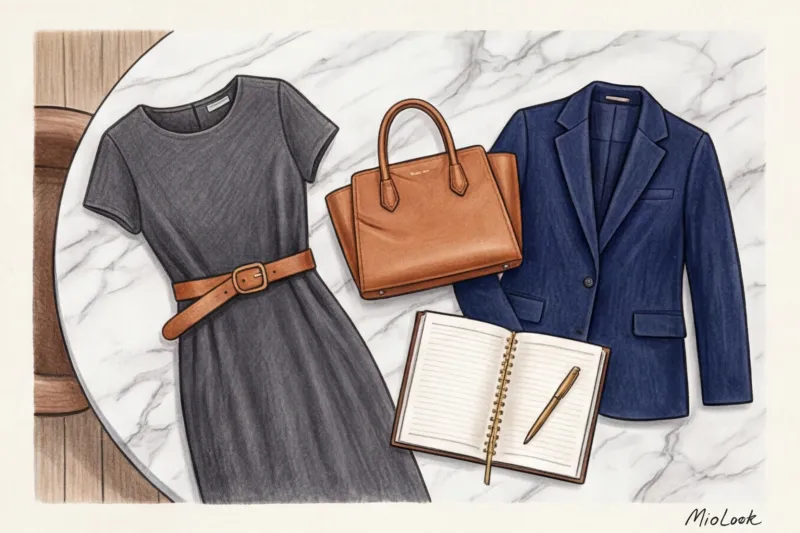
- Step 1: Checking the shoulder line. We put on the dress. Is the shoulder seam in place? Is the armhole not cutting in? We'll keep it.
- Step 2: Print tension test. If the fabric has a geometric or floral pattern, look at it in the belly area. Is the print significantly distorted or stretched to reveal white threads in the seams? Put the dress on the back shelf—it'll get ruined.
- Step 3: Assess the hem. Consider the geometry: a growing belly will "take away" about 5-10 cm of length from the front. If it's a daring mini, it may become extremely short in the front. The ideal length for such experiments is midi (below the knee).
- Step 4: The Potential of Layering. Consider wearing a voluminous men's jacket over this dress to add structure to the silhouette. If so, it's a 10 out of 10.
Invest in yourself, not in the industry
Expecting a baby isn't a reason to put your personal style on hold and settle for something drab and shapeless. Your favorite, high-quality pieces are ready to take you through this journey with you, as long as they're thoughtfully crafted.
Invest in premium fabrics, architectural cuts (wrap, bias-stitch), and clever layering. The right dresses will delight you years after giving birth, fully justifying every penny invested and confirming your impeccable taste.
Review your wardrobe today, and turn to modern technology for outfit inspiration. Smart solutions are always at your fingertips.