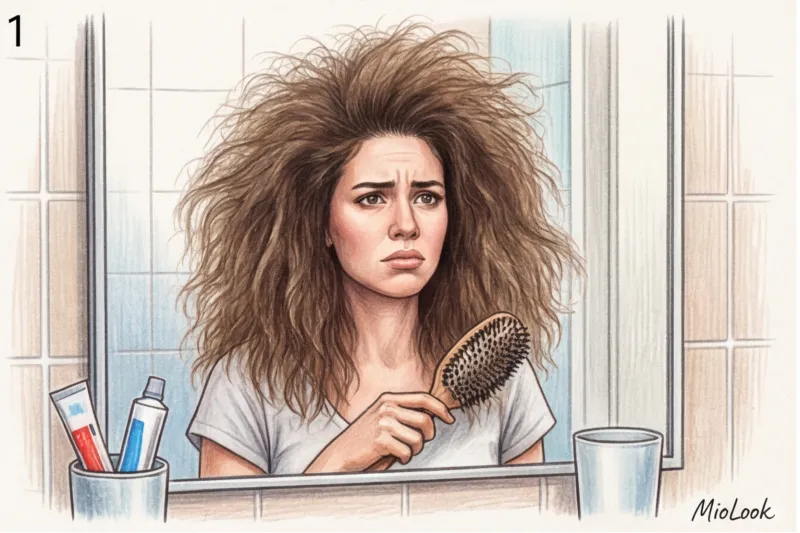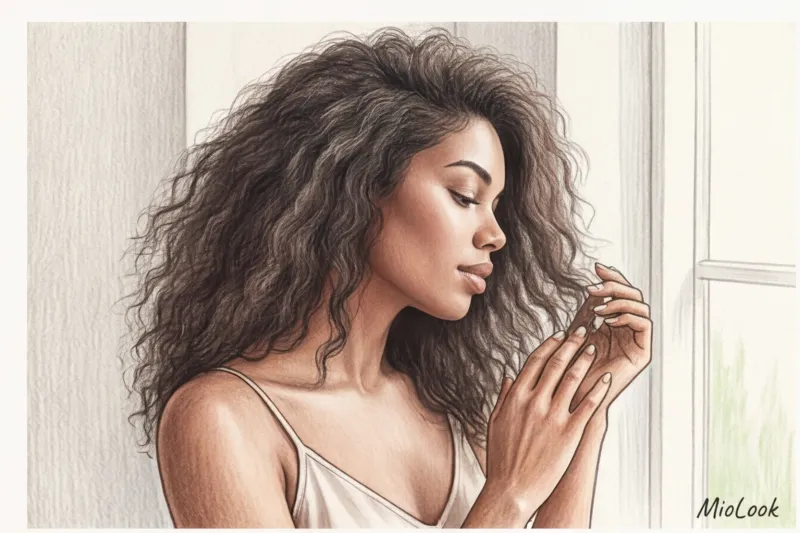
Clients often come to me with the same complaint: "My hair is terrible and damaged. It frizzes at the slightest humidity and sticks up in all directions." And every time, I begin my consultation by changing their vocabulary. Porous hair isn't "damaged" hair. It's a completely unique texture that requires its own instructions.
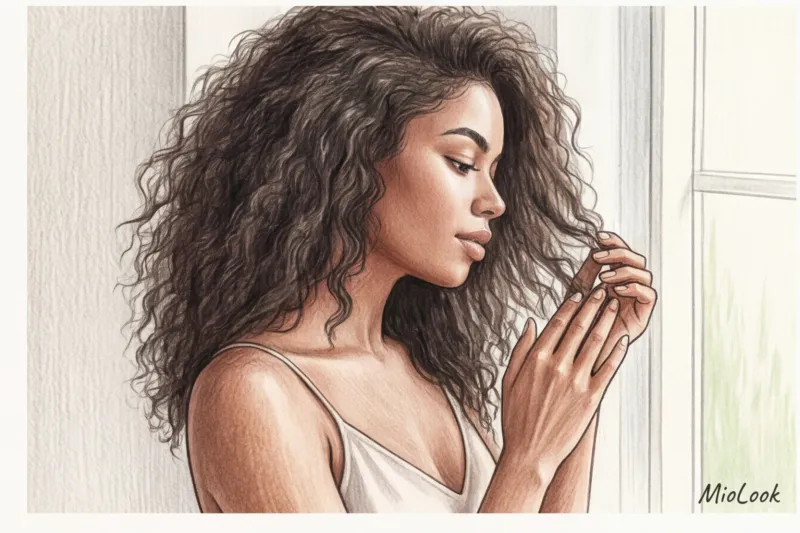
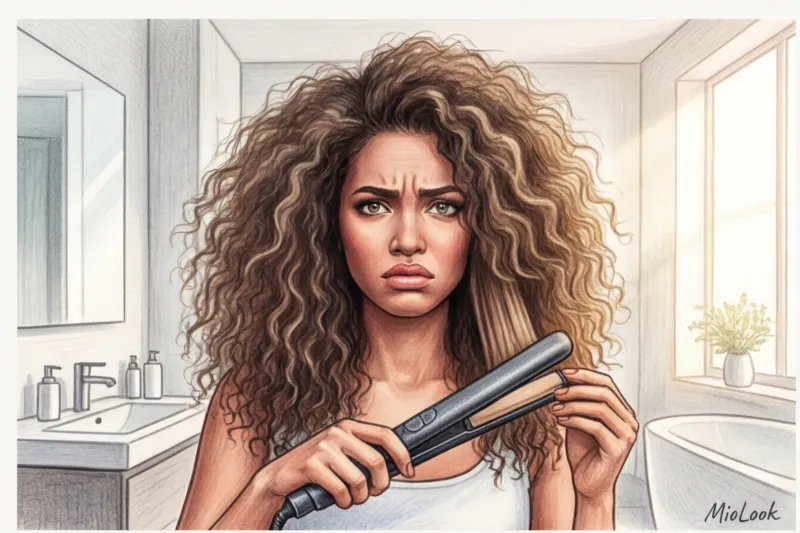
I had a client, Anna, who straightened her fluffy locks every morning with a flat iron at 210°C, trying to achieve perfect smoothness. She was convinced she was taming her unruly mane. The result was brittle, thinning locks that no extra-strong hold hairspray could hold. The problem wasn't her genetics, but the fact that she was trying to treat her flax as if it were smooth silk.
Literate care for porous hair It starts with understanding their physics. We covered this in more detail in our a complete guide to proper hair care for perfect styling , but today I want to analyze the problem of fluffiness and porosity down to the smallest detail.
What is hair porosity: a diagnosis or a natural feature?
To understand your hair, imagine a pine cone. The outer layer of the hair (the cuticle) is made up of microscopic scales. In low-porosity hair, these scales are tightly pressed together—like a fresh, unopened pine cone or tightly packed roof tiles. They reflect light perfectly, making such hair appear incredibly shiny.
Porous hair has hair scales that are slightly or strongly open. This can be a congenital trait—almost all wavy and curly hair is naturally porous. But porosity can also be acquired: the result of aggressive bleaching, daily heat styling, or perming. In both cases, we're dealing with an "open bump."
According to research published in the Journal of Cosmetic Science (2022), highly porous hair can absorb up to 50% more moisture from the environment than smooth hair. This is why you instantly turn into a dandelion in humid weather—your hair greedily sucks water from the air.
Coming from a background in design and styling, I always compare hair to fabrics. You wouldn't wash loose, breathable linen in hot water with harsh detergent or iron it without steam, would you? Linen requires delicacy. Porous hair is your natural flax.
Home Test: How to Determine Porosity in 1 Minute
If you're unsure about your hair type, try a simple test with a glass of water. Take a single clean hair (preferably the one left on your comb after washing) and place it in a glass of room-temperature water.
- Low porosity: The hair will remain floating on the surface even after 5-10 minutes. It repels water.
- Average porosity: the hair will slowly sink and hang somewhere in the middle of the glass.
- High porosity: The hair will immediately sink to the bottom. The slightly open scales instantly fill with water.
Fair Limit: This test only works on completely clean hair. If silicones from leave-in creams or styling products remain on the strand, they will act as a life preserver, and even super-porous hair will stay afloat. For greater accuracy, observe your hair in the shower: highly porous hair gets wet in seconds and takes hours to dry, as water penetrates deep into the cortex.
Access to MioLook for €0.99 — one-time payment
A smart AI stylist will find the perfect look for your appearance type and hair texture in just a few seconds.
Get access — €0.99 onceThe Biggest Myth: Why Oils and Keratin Don't Save Frizzy Hair
The most common mistake I see new clients make is trying to smooth out dry frizz with pure cosmetic oil. Coconut, argan, olive—it doesn't matter. The logic seems sound: the oil is heavy and should smooth out unruly strands. In reality, it results in disaster.
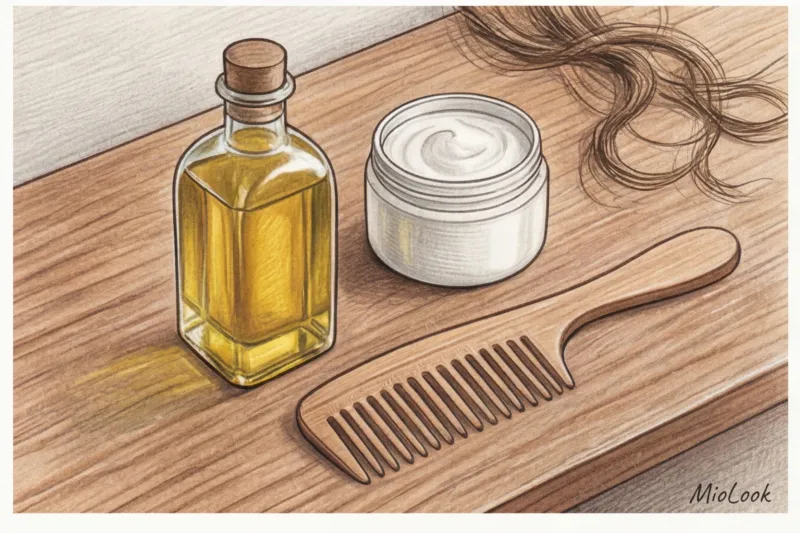
Oil itself contains no water and is incapable of moisturizing. By applying a thick oil to dry, porous hair, you create a waterproof film. This creates a reverse greenhouse effect: you trap the dryness inside the hair and block any moisture from entering. After a month of this "care," the ends begin to break off at an alarming rate.
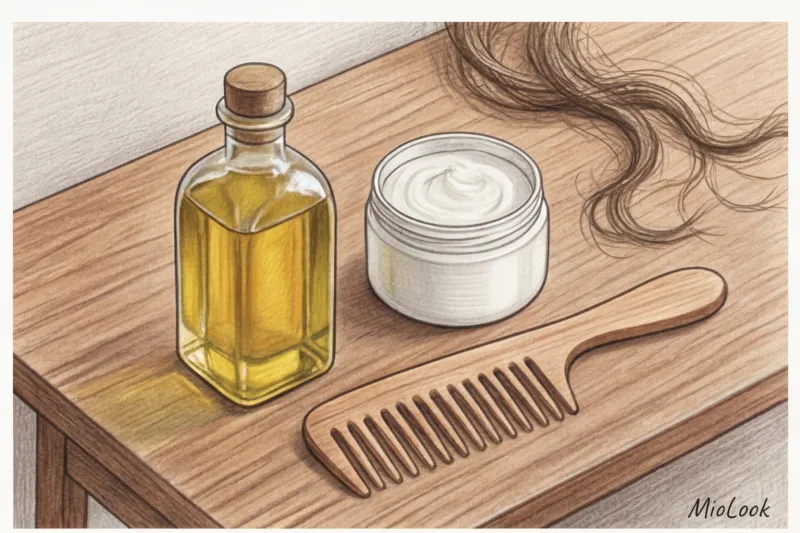
The second popular, yet dangerous, option is keratin straightening. Yes, you'll get a mirror-like finish. But at what cost? The procedure severely disrupts the hair's natural disulfide bonds under the influence of high temperatures (usually around 230°C) and formaldehyde derivatives. Once the treatment begins to wash out (after 3-4 months), porosity won't just return—it will increase exponentially, as the hair structure will be irreversibly damaged.
Proper care for porous hair: the layered moisturizing method
The secret to perfect, heavy, and shiny locks lies in the "layer cake" concept. Your hair care routine should consist of three essential steps: water (deep hydration) + lipids (nourishing and filling voids) + film-forming agents (protection from evaporation).
It all starts with proper cleansing. A healthy pH balance of the scalp and hair is between 4.5 and 5.5. Most mass-market shampoos under €10 are harshly alkaline (pH 7-8). Alkaline aggressively opens the already open cuticle of porous hair.
Choose sulfate-free or mild sulfate shampoos with an acidic pH (4.5–5.0). They physically help the cuticles close during the washing process. And the most important rule: never rub the lengths of your hair! Apply lather only to the roots, and the lengths will be fine with the soapy water that runs down them when you rinse.
Masks and conditioners: building a lipid barrier
For porous hair, it's not enough to simply apply conditioner and rinse it out. I always teach my clients the "squeezing" technique (called squish to condish ).
- Apply a generous amount of conditioner to thoroughly wet hair. It should feel like slippery seaweed.
- Add a little water to your palms and begin squeezing the strands from the bottom up (from the ends to the roots), pushing water and lipids under the cuticle.
- You should hear a characteristic squelching sound. Do this for 2-3 minutes.
What to look for in ingredients? Porous hair needs fatty alcohols (for example, Cetearyl alcohol — not to be confused with drying ethanol!), ceramides, which act as cement between the scales, and hydrolyzed proteins (wheat, silk, keratin) to fill the voids.
Your perfect look starts here
Join thousands of users who look flawless every day with the MioLook AI stylist.
Get access — €0.99 onceLeave-in Treatment: How to Lock in Moisture Without the "Icicle" Effect
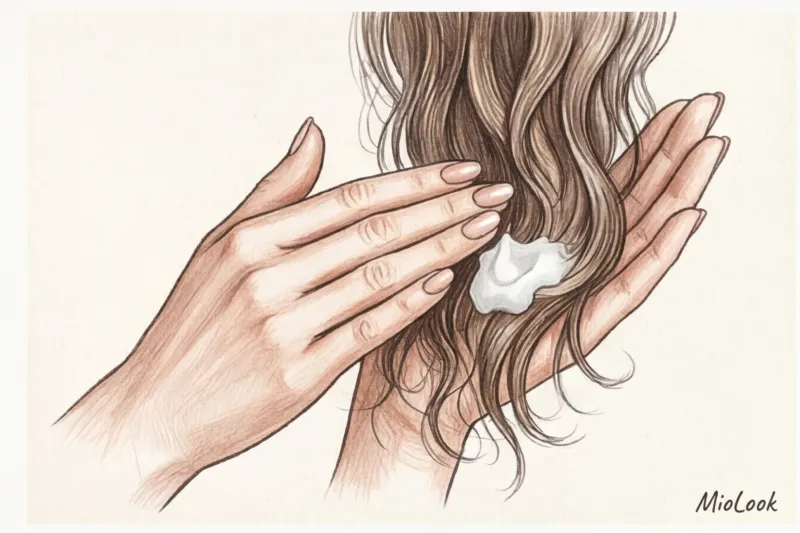
Leaving porous hair "bare" after washing is a crime against smoothness. The moisture will evaporate within half an hour, leaving you with frizz again. This is where leave-in treatments come to the rescue.
For fine, porous hair, a light, creamy texture works best. For coarse, thick hair, use the LOC or LCO method. This acronym stands for Liquid (liquid/spray), Oil (oil), and Cream (cream). The application sequence depends on the degree of porosity.
- LCO Method (Liquid → Cream → Oil): Ideal for medium-porosity hair, the cream moisturizes, and a few drops of lightweight silicone oil on the ends seals in the results.
- LOC Method (Liquid → Oil → Cream): Heavy artillery for very thick, African-American, or extremely damaged hair. The oil penetrates the hair shaft, while the dense cream creates a protective barrier on the outside.
The right leave-in treatment is a primer. We wrote more about how care affects the longevity of hairstyles in this article. Old Mane Styling: How to Create the Effect of "Expensive" Hair Styling simply won't hold on dry, dehydrated hair.
Drying and styling: how to achieve smoothness without burning the length
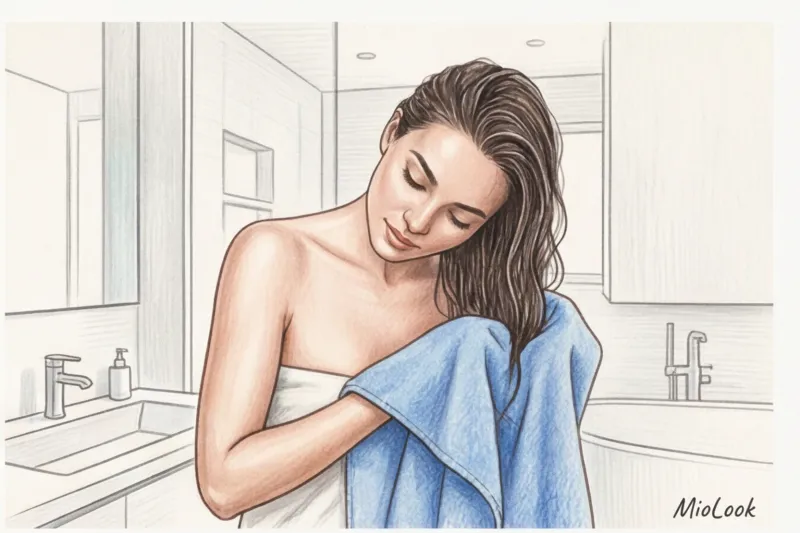
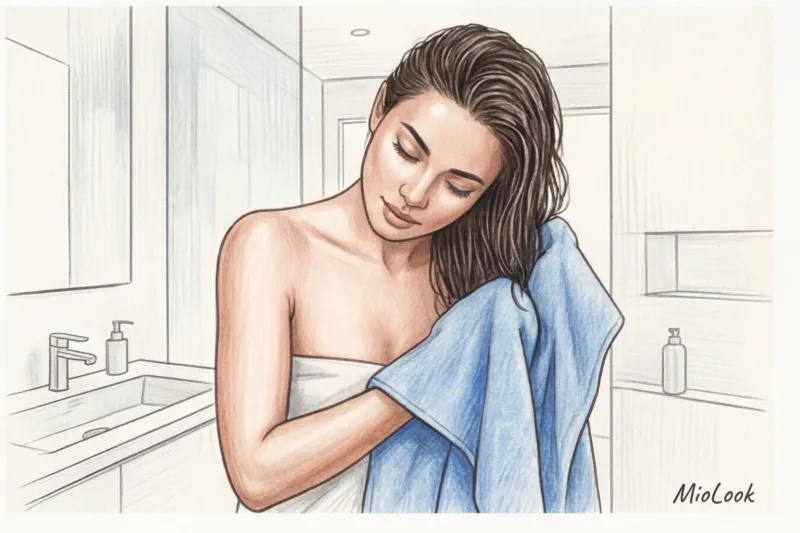
You know what ruins all your efforts in the bathroom? A regular terry towel. Its stiff loops catch on the slightly open cuticle, causing micro-damage and mechanical friction. Replace it with a smooth microfiber turban or, even better, an old soft cotton T-shirt. Gently pat your hair dry without wringing it.
When blow-drying, be sure to use a heat protectant. For porous hair, I always recommend cream-based formulas (these typically cost around €20–€45 in professional hair care products). Avoid alcohol-based heat protectant sprays (Alcohol Denat is listed first on the ingredients list)—they evaporate moisture when heated, drying out your strands.
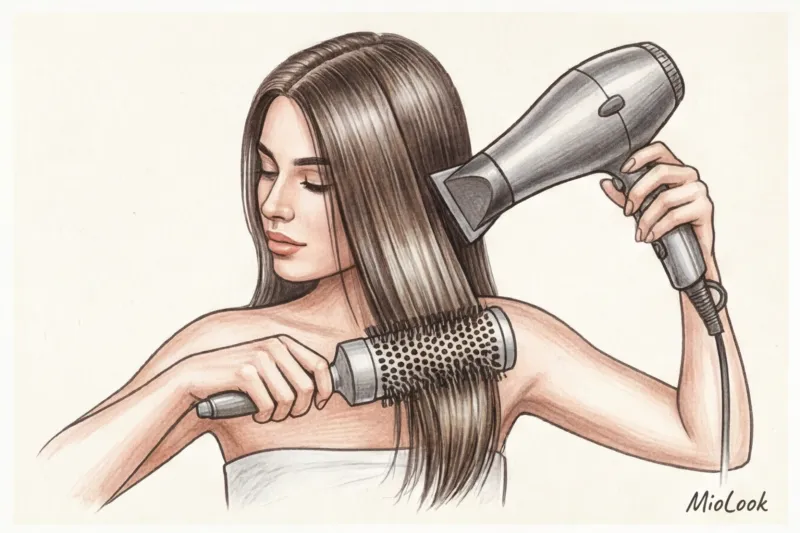
The main rule of using a hair dryer is to blow the air strictly in the direction of hair growth (from roots to ends). If you blow your hair randomly in different directions, you mechanically lift the cuticle scales. Finally, be sure to run a cold shot through your hair. The rapid cooling fixes hydrogen bonds and "closes" the cuticle, adding that glassy shine.
Checklist: A Daily Routine for Taming Frizz
Building a smart routine doesn't have to take hours. Here's a clear daily action plan I give my clients:
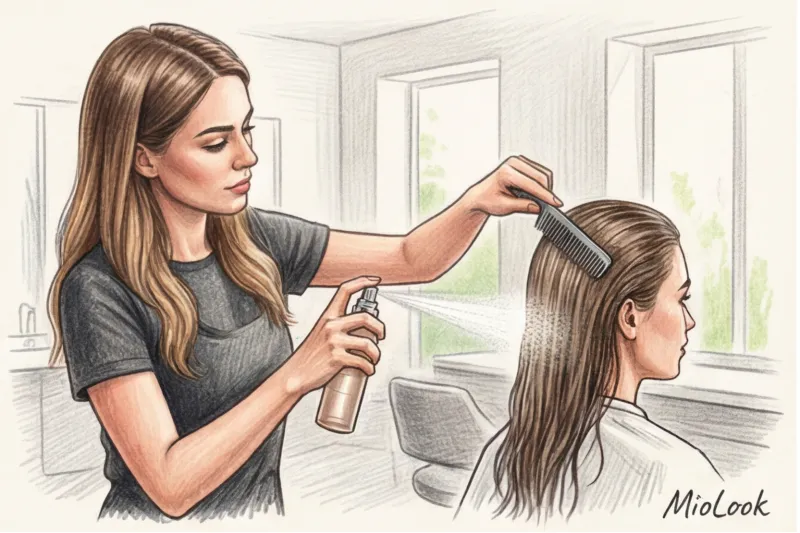
- Morning (Refresh): If your hair is mussed after sleeping, don't re-wash it. Spray your hair lightly with water and apply a drop of a lightweight, silicone-free hydrating spray to reset your style. This is a great base if you plan to wear your hair up. hairstyles for the office.
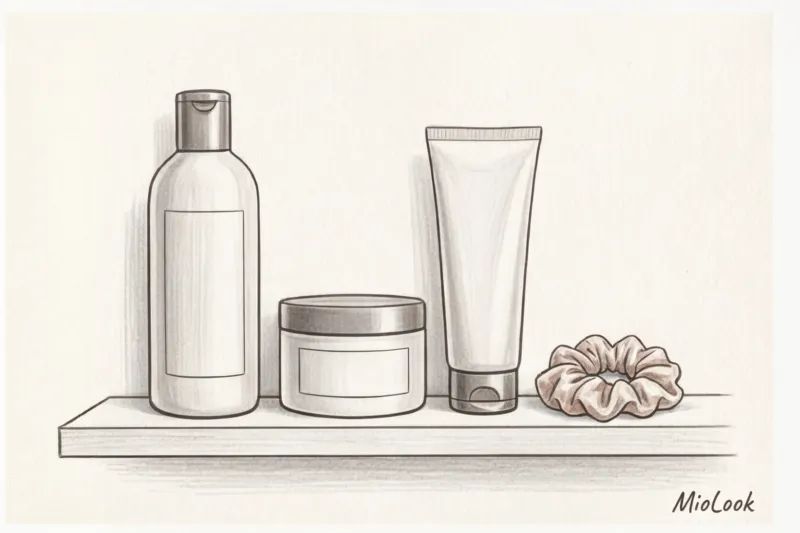
- Day (Protection): If it's humid outside, use a drop of anti-frizz serum. Avoid tight elastic bands, which can break porous hair. Use only smooth, silky scrunchies.
- Evening (Getting ready for bed): Sleeping on a cotton pillowcase robs your hair of moisture. Switch to natural silk. Before bed, braid your hair loosely or put it in a high, relaxed bun (a "pineapple") to minimize friction against the pillow.
Ready to get started?
Try the MioLook free plan—no commitments required. Find the perfect haircut for your hair with AI.
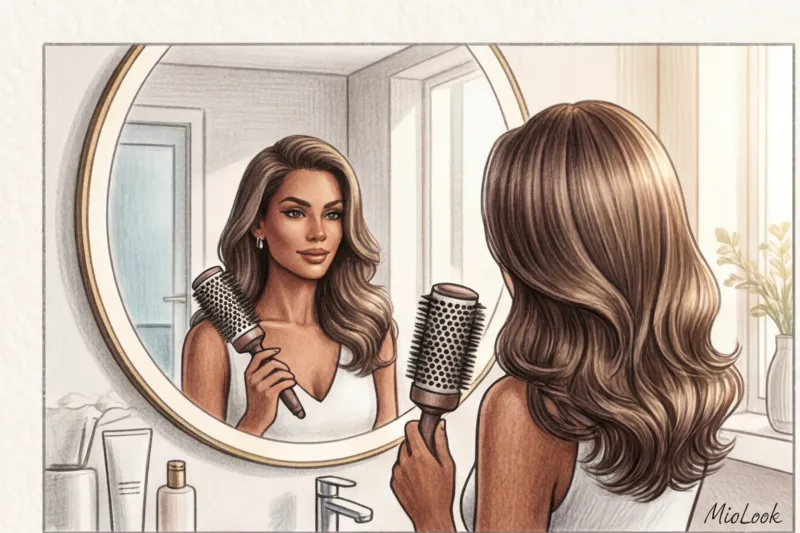
Get access — €0.99 oncePorous hair doesn't require strict discipline with a straightening iron, but rather an understanding of its structure. Stop fighting your natural texture with harsh chemicals. Once you start treating your hair like a delicate fabric that requires multi-layered hydration and protection, that unruly frizz will transform into voluminous, textured, and healthy locks.