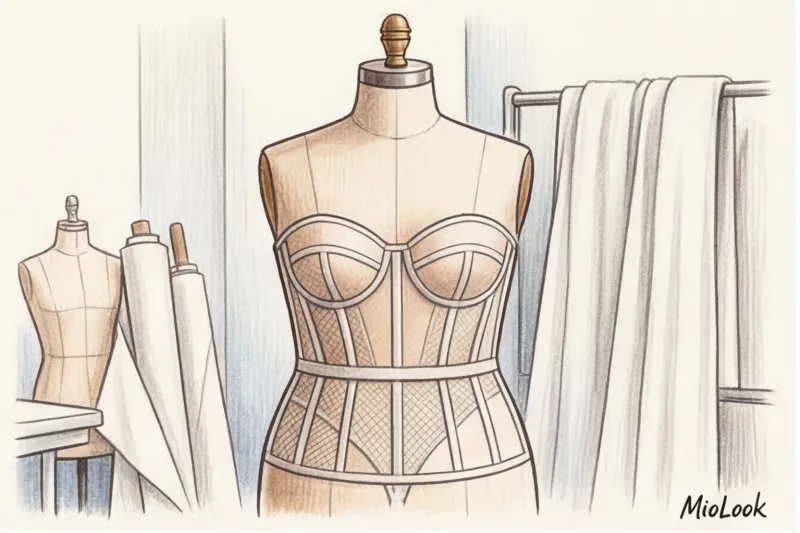
One day, a size 54 client came to my studio. She was crying in despair: behind her were five salons and dozens of pointless fittings, where consultants stubbornly tried to encase her in multilayered clouds of cheap tulle. "I look like a marshmallow on a teapot," she said. A week later, she stood in front of the mirror in a simple dress made of heavy mikado silk, looking absolutely regal. The difference wasn't in her figure, but in the laws of physics.
Choosing wedding dress for plus size women Most brides focus on how to "hide their arms" or "conceal their stomach." This is fundamentally the wrong approach. A perfect fit for a plus-size figure is a matter of proper textile strength, not the magic of shapewear. We discussed the concept of a design-led wardrobe in more detail in our The Complete Guide to Choosing a Wedding Dress: Stylist Tips.
Today, I want to speak with you from a practical perspective. Forget the glossy advice about what you can and can't wear. We'll explore the architecture of dresses, the properties of fabrics, and the engineering of corsets so you can understand how to make a dress work for you.
Pinterest's biggest illusion: why plus-size wedding dresses are architectural
Social media sells us images, ignoring gravity. When you see a plus-size model in a flowing, sheer dress on Pinterest, remember: it's a studio shoot. The lighting is perfectly set, the fans are running, and the fabric is pinned at the back. In real life, when you move, the thin, unframed fabric will instantly gather into folds, highlighting every anatomical feature you might want to keep private.
According to the WGSN Bridal analytical report (2024), the focus in wedding fashion has finally shifted from excessive embellishment to structural minimalism. And for fuller figures, this is the best news in a decade. A dress should be supportive. What does that mean? It should support you, not you supporting it.
In my experience, a high-quality plus-size wedding dress with the right inner corset can weigh between 5 and 7 kilograms. This is a sign of the highest quality, not a flaw. The paradox is that you won't feel the weight. A properly designed corset transfers the load from the shoulders and neck to the waist and pelvic bones. Wearing such a dress automatically straightens your back, changes your gait, and gives you a more defined silhouette.
Your perfect look starts here
Join thousands of users who look flawless every day with MioLook. A smart AI stylist will analyze your body shape and find the perfect style.
Get access — €0.99 onceTextile Strength of Materials: Which Fabrics Work for You?
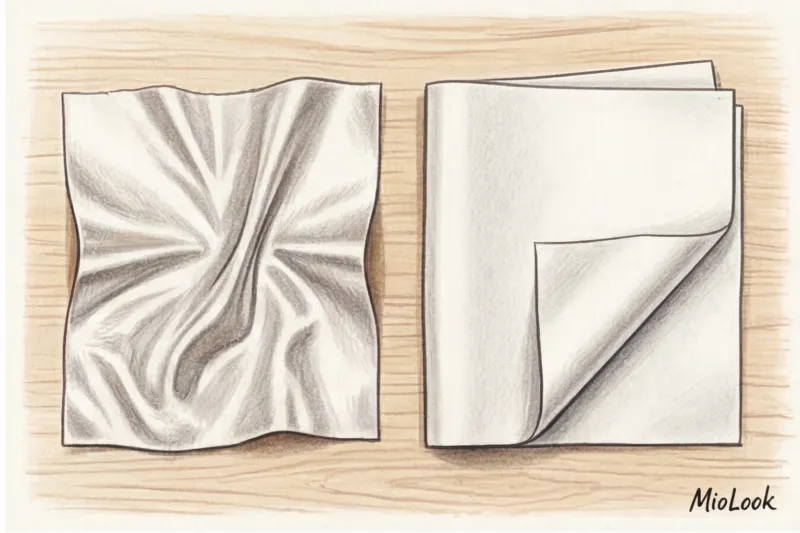
As a stylist and fabric expert, I always begin fittings with my eyes closed—I touch the fabric. The density of the material (measured in grams per square meter) is critical for the visual perception of volume. If the fabric has a density below 180 g/m², it won't be able to shape the silhouette; it will only cling to what's already there.
Moreover, an eco-friendly and physiological approach is important here. Natural or high-quality blended, dense fabrics always outperform cheap, multi-layered synthetics. In a dress made of 10 layers of stiff polyester tulle, your body will create a greenhouse effect within an hour of the ceremony.
Structural materials: mikado, dense crepe and taffeta
Your best allies are fabrics that can hold a sculptural shape.
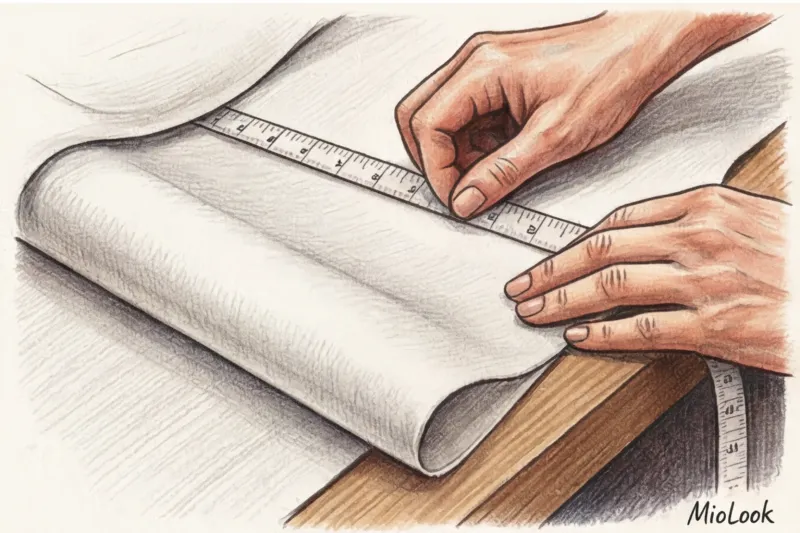
- Mikado silk: This is a heavy, dense fabric with a refined matte sheen. It doesn't crease into tiny folds, but rather falls in large, architectural folds. Mikado creates a luxurious frame.
- Dense crepe: The perfect matte finish. Crepe has a stunning ability to blur uneven skin texture, creating a smooth, flowing, yet weightless line.
- Taffeta: It perfectly maintains volume where it is structurally intended, without falling off or sticking to your feet when walking.
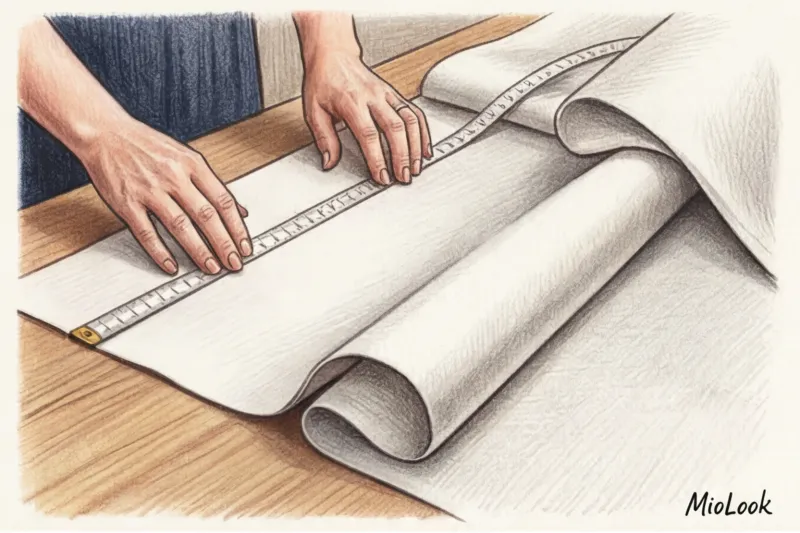
These fabrics look expensive on their own. They don't need a scattering of cheap rhinestones or miles of lace to make an impression. The emphasis is on clean lines.
Dangerous textures: thin satin and cheap guipure
Now, let's talk about what to avoid if your goal is a stately and collected silhouette.
- Fine shiny satin: It works like a magnifying glass. The reflection of light on the convex surface visually adds volume. If you have even the slightest definition on your hips or stomach, the thin satin will highlight it like a neon sign.
- Hard cheap guipure: It disrupts natural proportions and creates an "armored" effect. Large, contrasting floral patterns often look harsh on fuller-figured women.
- Thin tulle in several layers: Adds extra visual volume, erasing the waistline and turning the figure into a shapeless cloud.
Access to MioLook for €0.99 — one-time payment
A smart AI stylist will find the perfect look for you. Upload your photos and discover which textures and shades suit your appearance.
Get access — €0.99 onceDebunking Myths About Styles: Why the A-Line Silhouette Doesn't Suit Everyone
The most damaging stereotype in the wedding industry is: "Only A-line and empire line dresses suit plus-size women." This is a myth that needs to be debunked. Often, the excess fabric in a full A-line skirt makes the figure appear monumental, heavy, and squat, especially if you're short.
I'd like to share a controversial insight: a properly constructed mermaid or trumpet silhouette in a dense fabric flatters plus-size proportions. One of my clients, a luxurious size 52 with defined hips, categorically refused to try on fitted dresses. When I finally persuaded her to try a mermaid dress in thick crepe that flared from mid-thigh (not knee!), she couldn't believe her eyes. The dress created the perfect hourglass proportions, highlighting the beautiful curve of her hips and narrowing her waist.
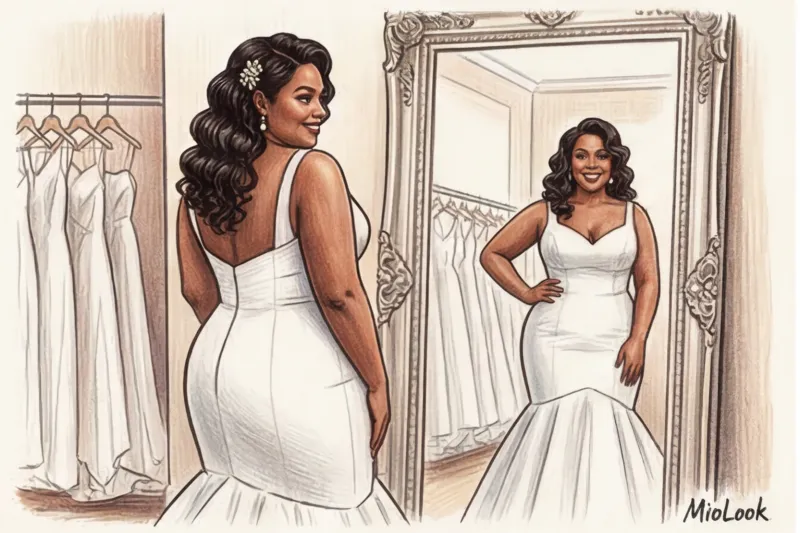
Another myth is that arms must be covered. Women often request dresses with tight, lace sleeves to conceal the fullness of their forearms. In reality, tight lace draws maximum attention to the arms, creating a fishnet-like effect. Much more elegant options include off-the-shoulder (portrait neckline), dropped straps that softly drape the upper arm, or loose bishop sleeves made of translucent chiffon.
Fair Limit: Of course, a mermaid silhouette made of thick fabric won't work if you're having a beach wedding in 35°C. In extreme heat, you'll have to find a compromise between shape and temperature regulation by choosing straight-cut dresses made of natural silk.
Fit Engineering: How the Right Corset Changes Everything
As fashion historian Valerie Steele notes, a corset is not an instrument of torture, but a complex engineering structure for supporting the body. The difference between regular shapewear and the built-in corset of a wedding dress is colossal.
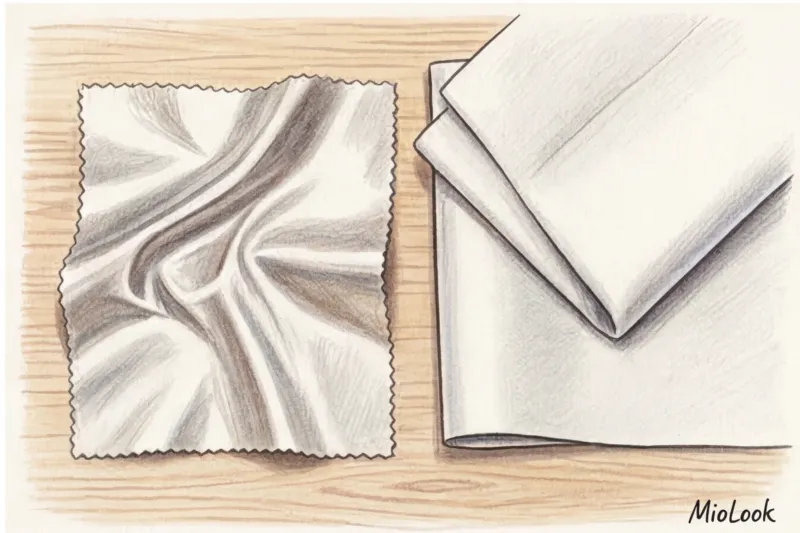
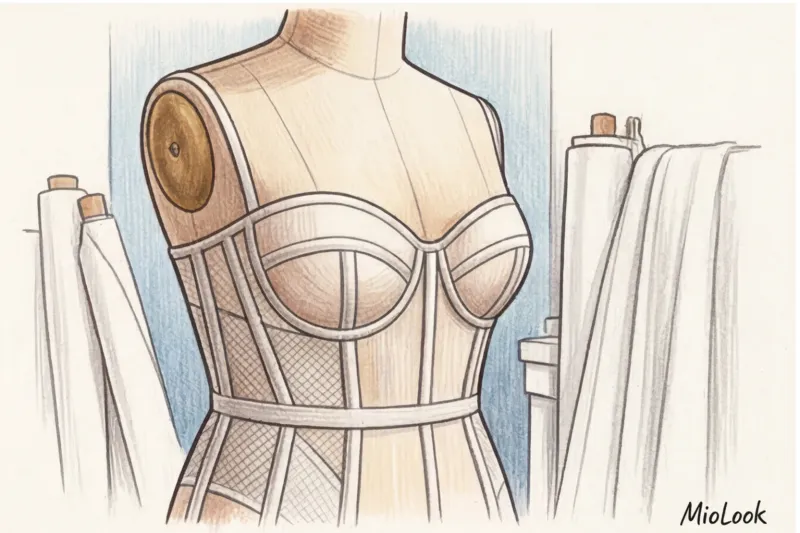
Modern mass-market brands often cut corners by inserting cheap plastic underwire (Regilin) into bras. The plastic deforms from your body heat within an hour: it arches over your stomach and digs into your ribs. A high-quality dress for a fuller figure should have spiral metal underwire. It's flexible, conforming to the body's anatomy as you move, but won't break or bend in half.
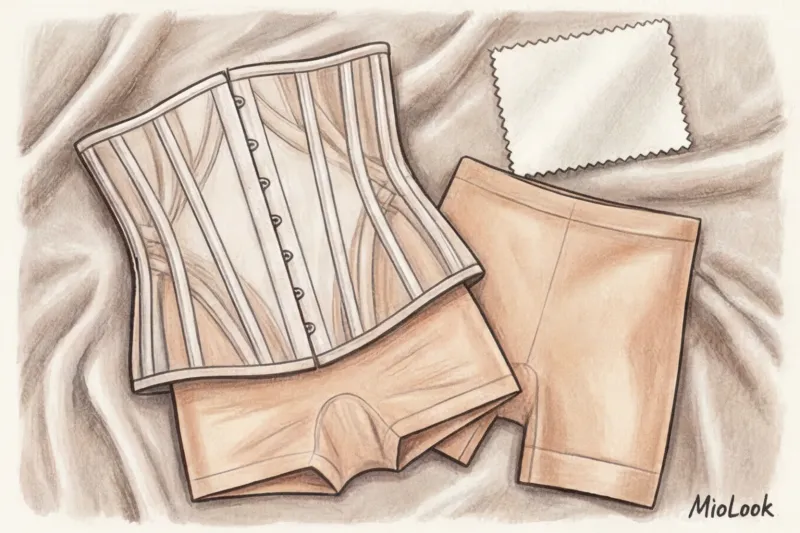
The gold standard of premium fit that I always seek for my clients is internal lacing on a thick corset tape, hidden under an external zipper or row of buttons. The lacing takes care of all the work of tightening and securing the waist, while the external zipper ensures a smooth, seamless back. Premium tailors hate altering thin satin to fuller figures precisely because without this internal support, the fabric will inevitably wrinkle at the seams.
Pre-Fitting Checklist: Practical Steps
To find that perfect dress, you need to prepare for the fitting both technically and psychologically.
- The right underwear: Never wear lace lingerie to a fitting. Wear smooth, seamless, nude-colored briefs (they'll prevent chafing on your inner thighs) and your best, tried-and-true bra with smooth cups if you're planning a dress without a built-in corset.
- Personal boundaries: Immediately reject consultants' statements like "black is slimming" or "this style will hide your curves." You're not here to hide, but to shine. Ask for dresses that accentuate your figure and proportions.
- Test drive: In the fitting room, simply standing in front of the mirror isn't enough. Be sure to sit on a chair (the corset shouldn't restrict your breathing), raise your arms as if embracing a distinguished guest, and do a few dance steps. The dress should flow with your body.
Budget and sustainability: Invest in a tailor, not decor
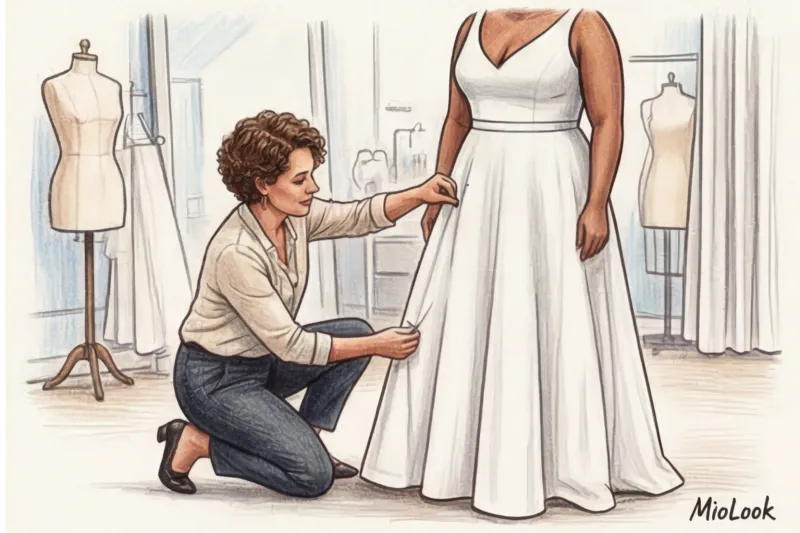
Over 12 years of working as a stylist, I've come up with a golden rule for wedding budgeting: buying a simple, mid-range dress (say, $500-$800) and spending another 30-40% of its cost on a perfect fit from a professional tailor is a hundred times better than buying a $2,000 dress that "well, almost fits."
A tailor's fit isn't just shortening the hem. It's adjusting the darts to your bust height, adjusting the armholes so they don't dig into your armpits, and balancing the skirt. It's the tailor who transforms a simple dress into... yours dress.
Moreover, structured, minimalist dresses made from dense fabrics are much more environmentally friendly. After the wedding, such a dress can be shortened to midi length, dyed deep wine or emerald, and worn as an evening gown. A dress with an abundance of rhinestones and cheap lace is doomed to remain in the closet forever.
Remember the most important thing: there are no wrong figures, only dresses with poor material strength. Choose dense fabrics, trust the right corsets, and remember that a dress should serve you, highlighting your beauty, not make you lose weight, suck in your stomach, or hide.