Do you know what true luxury smells like? It's not the popular Baccarat Rouge perfume or the plastic of a new car interior. It smells of oak bark tannins, beeswax, and cedar wood. When we talk about old-fashioned shoes, we're talking about more than just visual aesthetics, but a fundamentally different approach to consumption. It's a rejection of disposable trends in favor of things that only get better with time.
We've already covered this philosophy in more detail in our complete guide: How to Create an Old Mane Style: Secrets of Quiet Luxury But it's shoes that convey status faster than the cut of a suit or the logo on a bag. Among aristocrats and heirs to the throne, there's an unspoken rule: you can skimp on a white T-shirt, but your shoes must be impeccable.
The Anatomy of Quiet Luxury: How Old Money Shoes Differ from Mass-Market Shoes
The biggest deception in the modern footwear industry lies in the "Genuine Leather" label. Most buyers consider this a sign of quality. In reality, it's a lower-grade raw material—split leather (the loose bottom layer of the hide), generously coated with polyurethane and pressed into an artificial texture. Such a pair will stop "breathing" on the very first day and will develop ugly cracks within a season.
High-end shoes are made exclusively from full-grain leather. During my visit to family-owned factories in Italy's Marche region in 2022, the craftsmen demonstrated the difference: full-grain leather preserves the natural pore pattern, is supple, and absorbs skin care products. According to the Leather Working Group (LWG) 2024 standards, eco-friendly tanning of this type of leather takes three times longer but increases the product's lifespan to 15–20 years.
Construction Method: Why Goodyear Welt and Blake Stitch Are Worth the Money
Turn your mass-market shoes over. The soles are likely simply glued on. Once the glue dries from moisture or chemicals, the shoes will go in the trash. Aesthetics quiet luxury This is unacceptable.
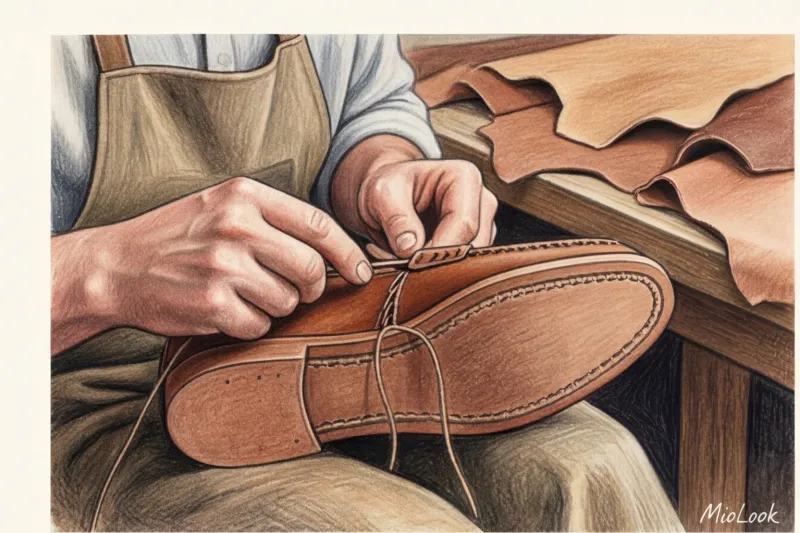
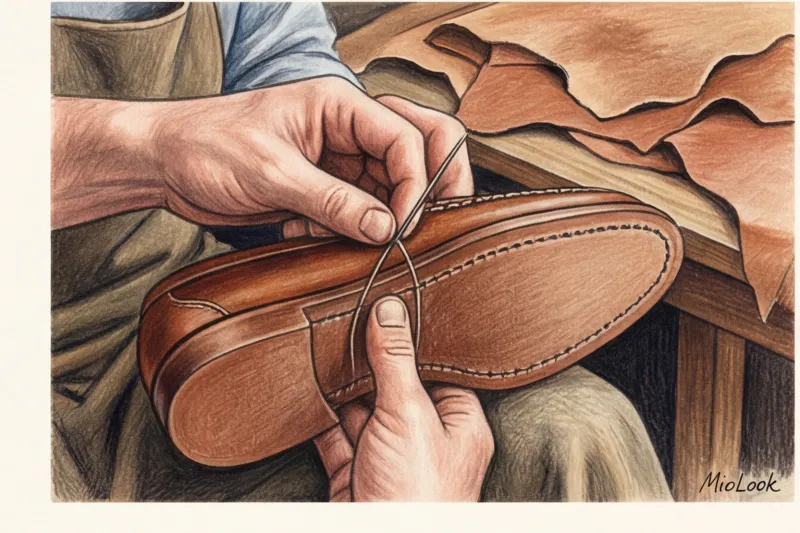
Premium brands use stitching methods. Blake Stitch — when the upper, insole, and sole are stitched together in a single seam. This gives loafers incredible flexibility. Goodyear Welt (welted method) is a more complex technique where the upper is sewn to a leather strip (welt), and the sole is then attached to it. The space between the two is filled with cork chips, which, after a couple of weeks of wear, molds to the anatomical shape of your foot. The main advantage? You can replace worn soles an infinite number of times without damaging the upper.
Access to MioLook for €0.99 — one-time payment
A smart AI stylist will select the perfect look and help you integrate prestigious shoes into your everyday wardrobe.
Get access — €0.99 onceA Basic Shoe Wardrobe with an Old Money Aesthetic
One of my clients, a top manager at an IT company, complained that she was spending huge amounts of money on shoes but had "nothing to wear." We calculated that over three years, she bought eight pairs of trendy mass-market loafers (around €60 each). The total cost was €480, all of which lost their shape, developed blisters, and were thrown away.
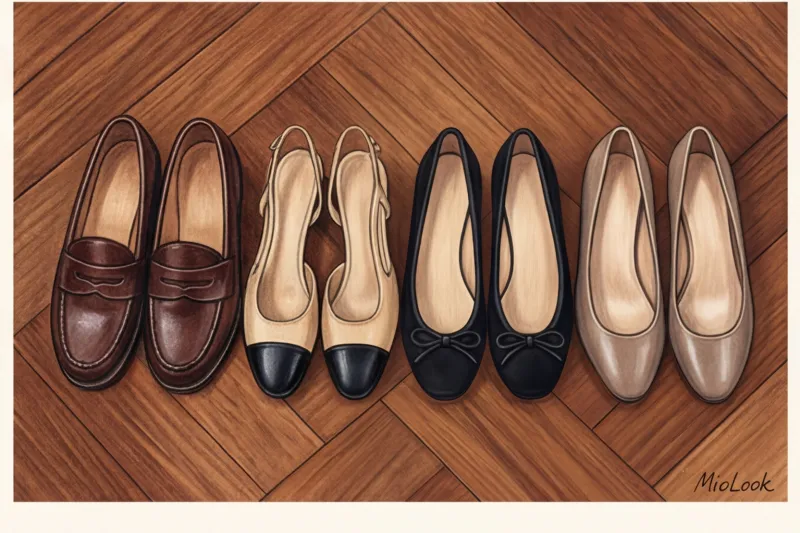
We replaced them with a pair of classic, handcrafted penny loafers for €350. Five years later, she still wears them, having spent only €20 on sole maintenance. That's a good cost-per-wear calculation. Capsule wardrobe Doesn't tolerate random things. You don't need 20 pairs of shoes. Four perfect ones are enough.
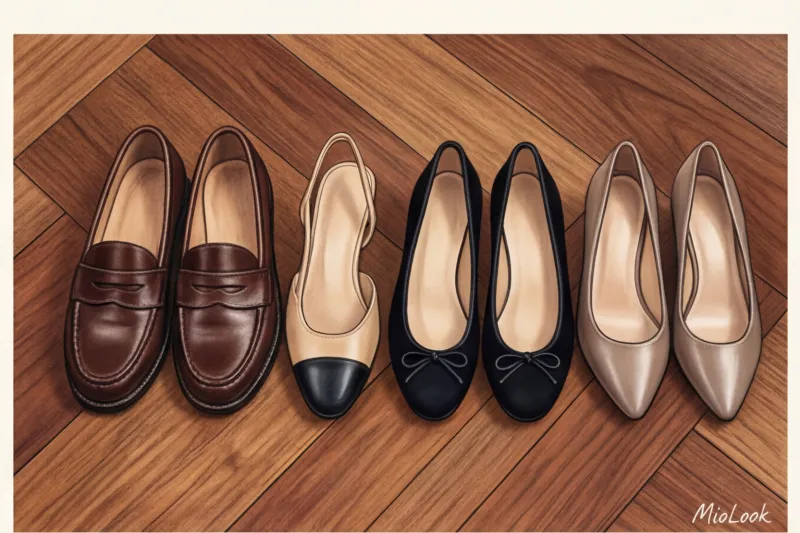
Loafers (Penny and Tassel): A Versatile Essential
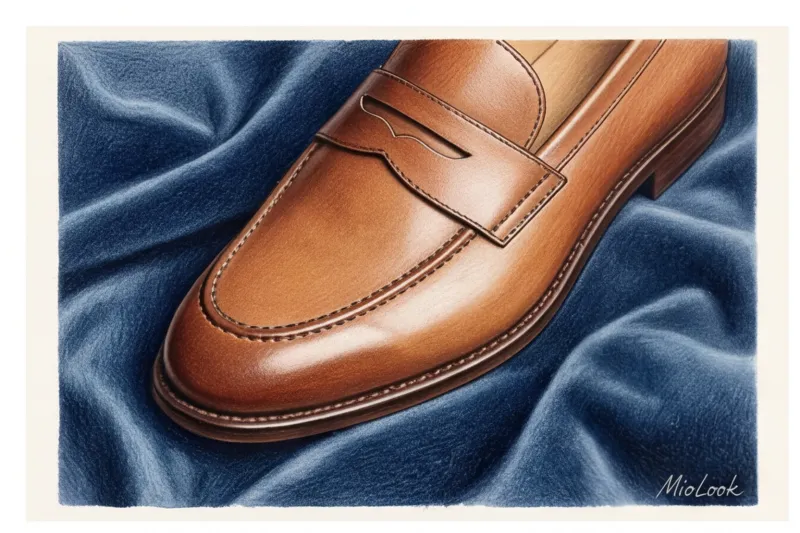
Penny loafers originated on Ivy League campuses in the 1930s. Students would insert a penny into the vamp (hence the name) in case of an emergency phone call. Today, they're an absolute staple of style.
- What to wear with: from relaxed linen trousers to formal cashmere dresses.
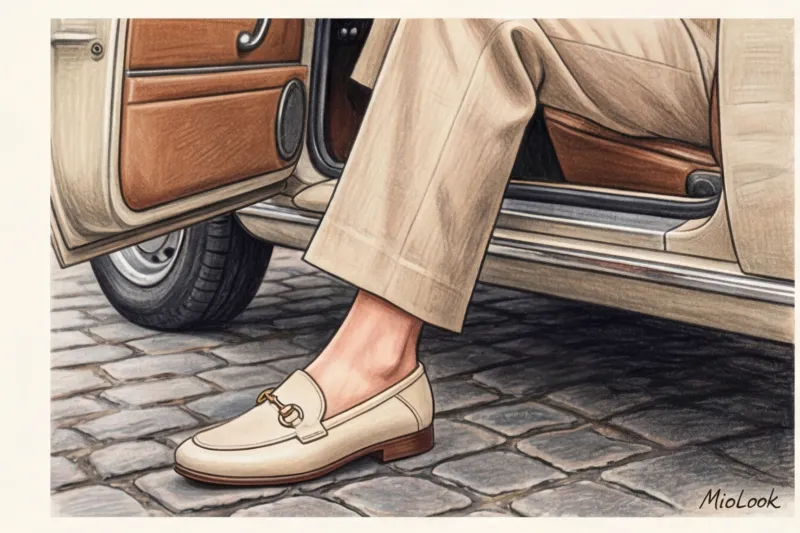
- The main rule: Open ankle. Loafers require air between the hem of the trousers and the shoe.
"Please note: the bare ankle rule does NOT apply in harsh winter conditions. Don't try wearing loafers barefoot in sub-zero temperatures—it looks ridiculous and betrays a lack of taste. For cold weather, there are elegant Chelsea boots."
Ballet flats and slingbacks: grace without heels
A completely flat sole is the enemy of orthotics. Proper ballet flats always have a micro-heel (1–1.5 cm) and a rigid, molded back that secures the heel. If the flats can be rolled into a tube, they are ballet flats, not street shoes.
Slingbacks (open-toe shoes with a strap) are an ideal alternative for the warmer season. Choose two-tone styles, such as beige with a black toe. This visual trick, popularized by Coco Chanel, visually shortens the foot and makes the leg look more graceful.
Classic Pumps: Height and Shape Matter
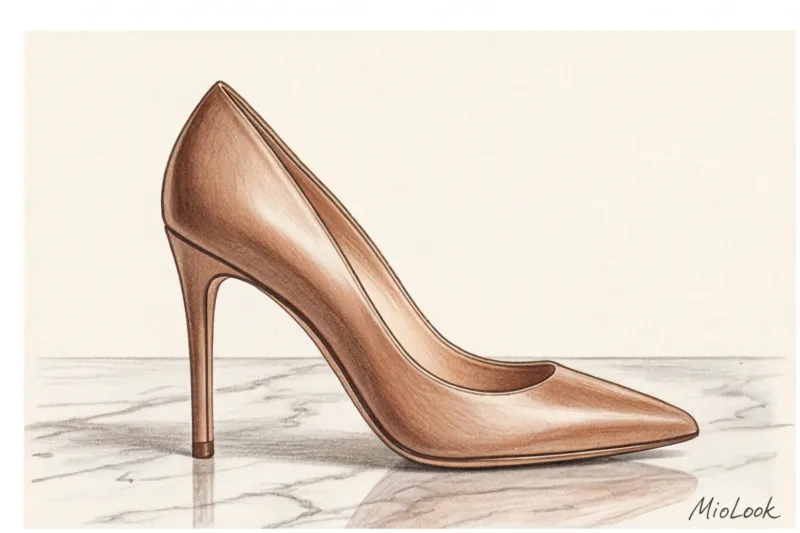
Extreme 12cm stilettos and hidden platforms scream, "I'm trying really hard to look sexy." Old money doesn't try. They value comfort and a touch of casualness. The perfect shoes for an elegant age and a status wardrobe - these are pumps with a “Kitten heel” (3-5 cm) or a classic midi up to 7 cm.
The toe shape should be natural: a soft square or almond-shaped. An aggressive, elongated point quickly becomes flat and looks untidy.
Your perfect look starts here
Join thousands of users who look flawless every day with MioLook. Create your capsule in one click.
Get access — €0.99 onceThe Myth of Novelty: Why Noble Wear Is a Sign of Status
Herein lies the most counterintuitive insight, one that surprises many. Perfectly new, crisp, wrinkle-free shoes are considered a sign of the nouveau riche or mass-market in high society. True luxury is patina.
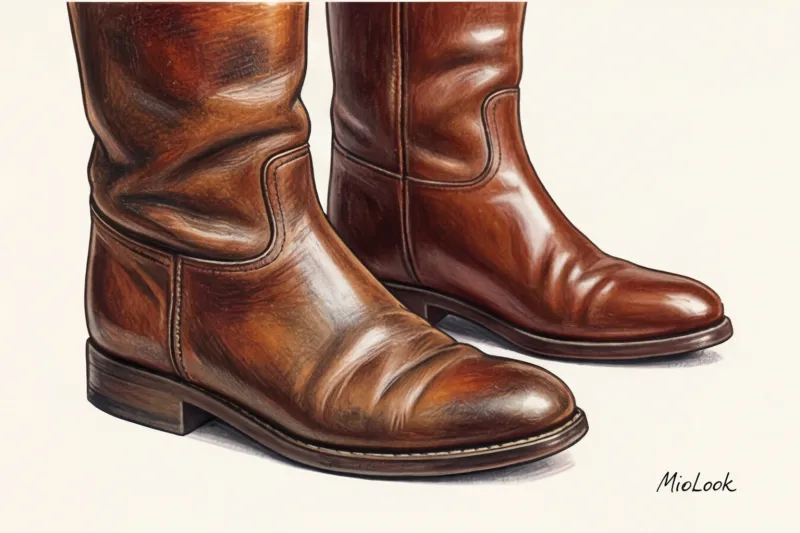
Patina is a natural color change in full-grain leather, creating deep, rich gradations of color on the toes and heels. Think of King Charles III, who wore the same pair of John Lobb Oxfords for decades, covered in a mesh of elegant creases. It conveys a sense of confidence: "My clothes last for years; I don't need to rush to the store for the latest trends."
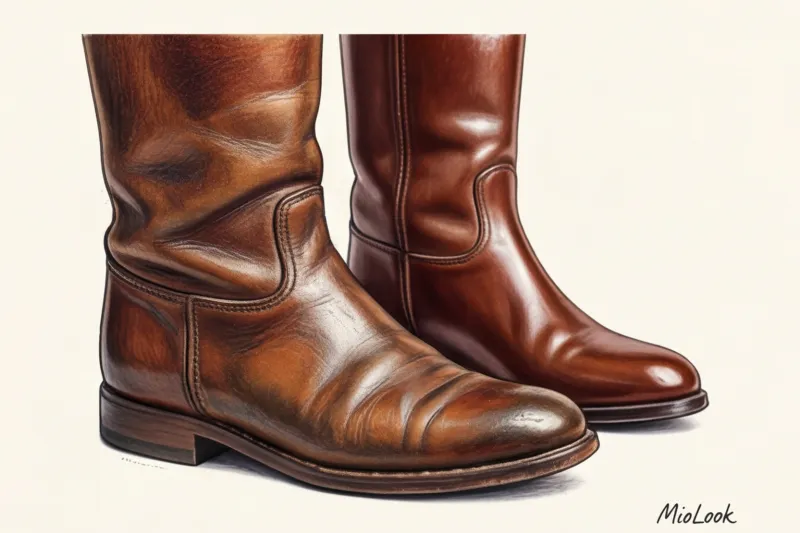
But don't confuse patina with untidiness! Heels worn sideways, toes scuffed, and ingrained dirt are simply sloppiness. Graceful aging requires perfect care, timely replacement of heels, and regular moisturizing.
Color Palette and Hardware: How to Avoid Cheap Glitter
The Old Money color scheme avoids neon flashes and pure, crisp white (it's too contrasting). Invest in deep, complex shades:
- Burgundy (the color of ripe cherries) is an ideal alternative to boring black.
- Dark chocolate and taupe.
- Ecru (unpolished wool color) instead of pure white.
- Deep emerald for suede shoes.
Over 12 years of working as a stylist, I've come up with an ironclad rule: nothing cheapens an image like shiny chrome fittings. Status accessories Shoe details (loafer buckles, chains) should be made of matte brass, antique gold, or imitation tortoiseshell. And, of course, there should be a complete absence of recognizable monograms and logos.
A stylist's checklist: how to choose old-fashioned shoes without overpaying for the brand
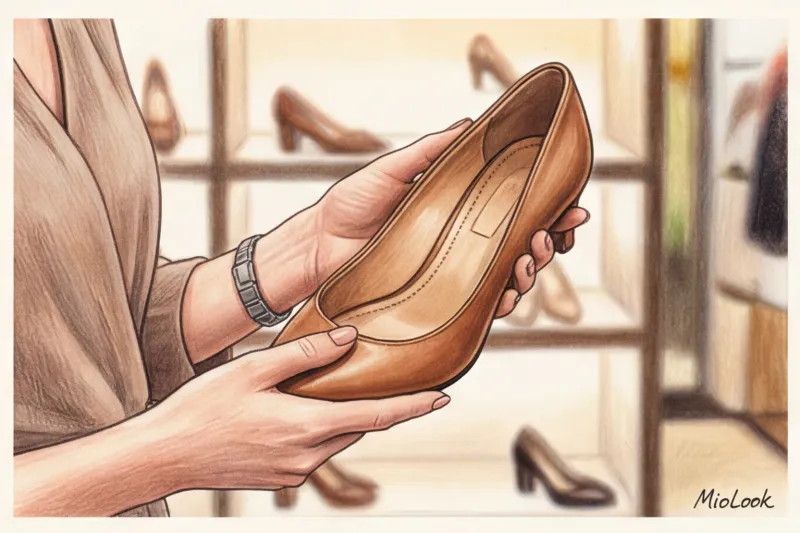
The markup for a big name in a boutique can be up to 300%. To pay for quality, not marketing, use my professional checklist right in the store:
- Smell test. Hold the shoe up to your nose. You should smell the subtle, expensive scent of leather and wax. If you're overwhelmed by the harsh chemical smell of glue, put the pair back on the shelf.
- Inspection of the lining. The lining of expensive shoes is ALWAYS made of light-colored, undyed calfskin (crust). If the lining is black or colored, the manufacturer is disguising the cheap material, and your light-colored socks will be hopelessly ruined.
- Back test. Press your thumb into the heel of the shoe. It should be hard, like wood, and not give in. A soft heel will cause the shoe to quickly wear out and lose its shape.
- Edge dressing. Look at the edge of the leather sole. On premium shoes, it's perfectly polished, painted, and waxed. On cheap shoes, the edge is rough and dull.
Investing in Durability: Care Rituals for Statement Shoes
Buying expensive shoes is only half the battle. A WGSN study found that proper care extends the life of leather goods by 70%. And the key lies not in expensive shoe polish, but in shoe trees.
As soon as you take off your shoes, insert unvarnished cedar shoe trees. Your feet release up to 20 ml of moisture per day. Cedar works like a sponge: it draws sweat out of the lining, deodorizes it, and smooths out creases in the vamp while the leather is still warm.
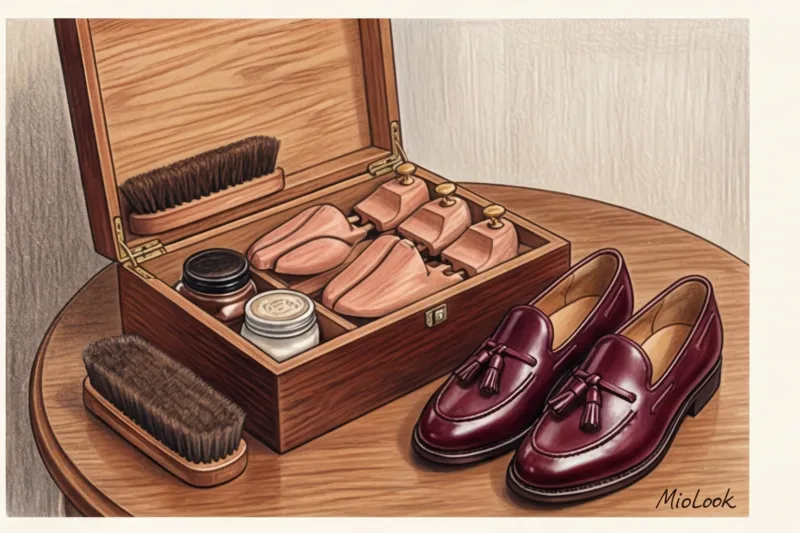
24-hour rule: Leather shoes need to rest. Never wear the same pair two days in a row. Leather fibers require exactly 24 hours to dry completely and regain their elasticity. If you wear shoes every day without a break, they will become misshapen within a couple of months, no matter how expensive the purchase.
Ready to get started?
Try the MioLook free plan—no commitments required. Digitize your shoe collection and receive daily outfit recommendations.
Get access — €0.99 onceUltimately, choosing Old Money shoes is a sign of respect for yourself, the work of artisans, and the environment. Abandon the illusion that ten pairs of cheap shoes will enrich your wardrobe. Invest in quality, care for your pieces with love, and your shoes will speak volumes about your impeccable taste long before you utter a single word.