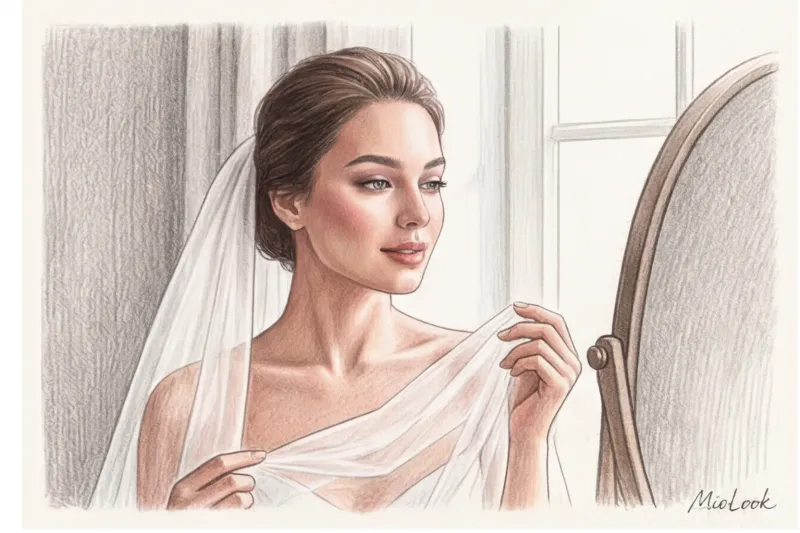
Do you know what the biggest optical illusion of the modern beauty industry is? A makeup look that looks like you just washed your face with cool water and applied a drop of moisturizer takes longer and more effort to achieve than a bold, graphic smoky eye. According to The Knot and Pinterest's 2024 Wedding Trends report, demand for a natural wedding look has increased by 70%. Brides no longer want to look like airbrushed dolls—they want to be themselves, just a little fresher.
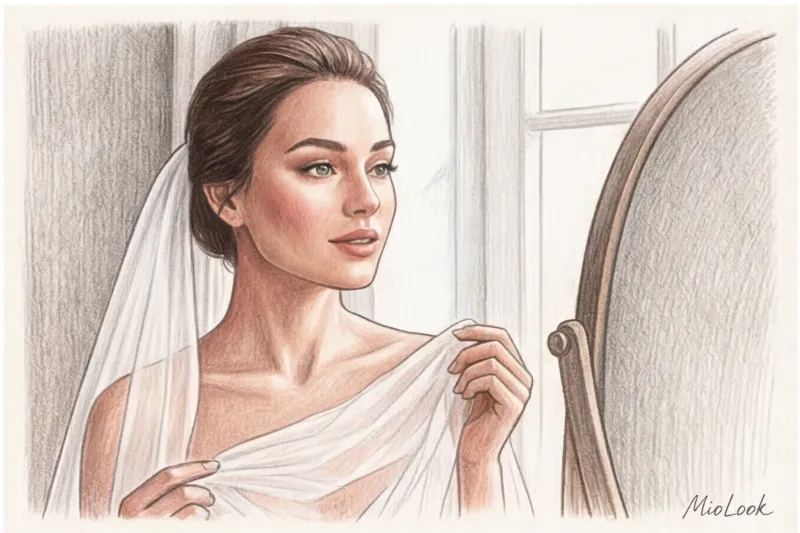
But there's a catch. Delicate wedding makeup isn't just a few strokes of a fluffy brush. It's a complex, invisible architecture that must withstand tears of joy, passionate embraces, dancing until you drop, and the relentless flashes of professional cameras. We've covered the basic principles of skin preparation and choosing makeup in more detail in our comprehensive guide: Wedding Makeup: Rules for a Long-Lasting Festive Look In this article, we'll go further and examine nude from the perspective of cosmetic chemistry and the texture of your dress—an approach used only by premium stylists.
The Anatomy of "No-Makeup Makeup": Why Subtle Wedding Makeup Is Complex Engineering
The biggest myth I regularly debunk during consultations is: "To achieve a natural look, you just need to wear less makeup." This is a disastrous misconception. If you apply only a light foundation and a touch of blush, your makeup will disappear in exactly three hours. The average lifespan of wedding makeup is 12-16 hours, while a typical evening look is designed for a maximum of 4-5 hours.
To create the illusion of bare, yet absolutely flawless skin, the makeup artist applies 5 to 8 ultra-thin layers of various products. The secret lies in the right chemistry. We use high-tech water-silicone emulsions instead of purely water-based bases. Why? Water evaporates, and the sebum (oil) your face inevitably secretes when you're nervous dissolves conventional makeup. New-generation silicone polymers create a breathable micro-mesh on the skin: it locks in pigment, doesn't sink into pores, and remains flexible when you smile.
"Naturalism in wedding makeup is not the absence of cosmetics, but the masterful control of light and shadow using microscopic doses of pigment."
Unlike everyday makeup, which you can touch up in the elevator, wedding nude works like a professional canvas primer. We layer primer, foundation, and setting spray so they polymerize and don't peel off when they touch your skin at the tenth hour of your wedding.
Texture Harmony: How to Match Your Makeup to the Fabric of Your Wedding Dress
As a fabric specialist and stylist, I always ask brides to bring a scrap of fabric from their dress or at least a detailed photo in natural light to their makeup rehearsal. Makeup should complement your outfit, adhering to the rule of contrasting textures. If you ignore the reflective properties of the fabric, the look will fall apart.
Imagine your dress is made of shimmering silk satin. The fabric actively reflects light, creating highlights. If a makeup artist gives you a shimmering, dewy look (glass skin) and adds a strong highlighter, you'll look like a disco ball in photos. In this case, your skin should be velvety matte (but not dry!) to allow the silk's luxurious shine to really shine.
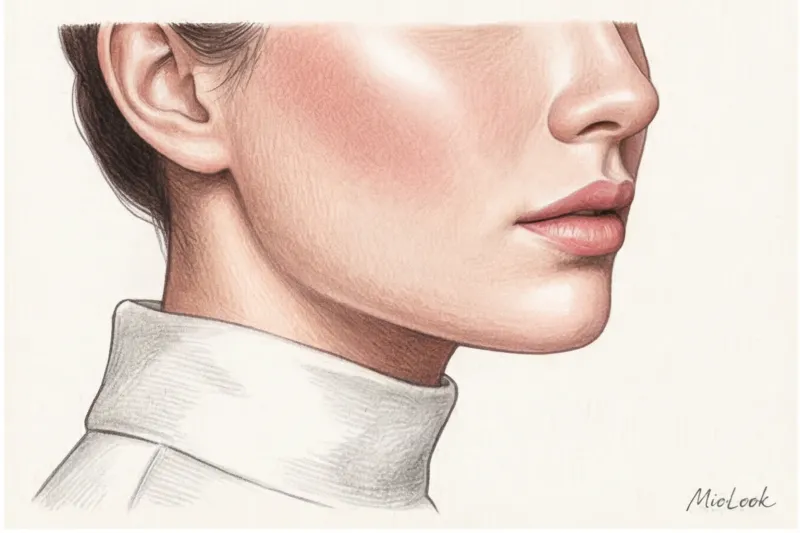
Conversely, if you've chosen a dress made of matte crepe, architectural mikado, or a multi-layered tulle cloud, matte leather will make your look flat and dusty. Here, it's vital to add a delicate, dewy glow to the cheekbones, bridge of the nose, and the lip line to enliven the face against the light-absorbing fabric.
Your perfect look starts here
Join thousands of users who look flawless every day with a smart AI stylist.
Get access — €0.99 onceSkin preparation as a foundation for durability
Any foundation, even the most expensive, will show up in patches on dehydrated, flaky skin. Active skincare (light acid peels, biorevitalization) should be stopped at least three weeks before the big day. No experimenting the day before!
On the morning of the wedding, I categorically forbid brides from using thick, nourishing creams with ceramides—they act like oil, causing foundation to simply "flow." Our morning ritual: hydrogel patches from the refrigerator, a 5-minute lymphatic drainage massage with a roller to reduce morning puffiness, and a light, water-based hydrating serum.
The perfect nude tone: glow without the greasy shine
One of my clients insisted during a rehearsal, "Let's just apply my favorite BB cream; I hate thick textures." I agreed, we applied her lightweight cream, and then took a test shot with flash. In the photo, her face looked red and flat, with obvious dark circles under her eyes, contrasting sharply with her crisp white dress. This is a classic mistake.
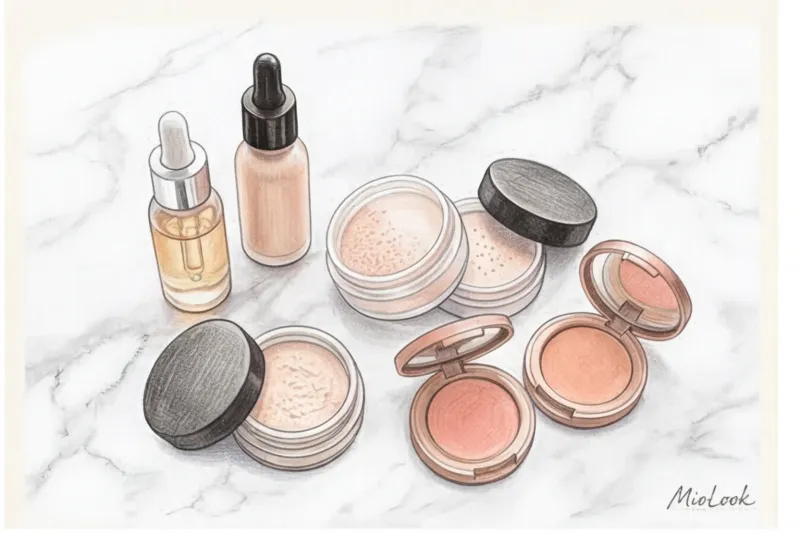
For delicate wedding makeup, we forgo the mask effect, but not at the expense of reduced pigmentation. We use professional fluids: they have a watery consistency but offer up to 70% coverage. The secret to natural coverage is the "micro-concealing" technique. Instead of smearing a heavy foundation all over the face, we even out the overall color with a lightweight tint, and then precisely (with a microbrush) conceal each pimple or capillary with a long-lasting concealer.
To create a flawless gradient, I often use a damp sponge or an airbrush. An airbrush atomizes the makeup in microscopic droplets, creating a pixelated mesh that blends perfectly with the skin and is resistant to tears and sweat.
As for correction, forget the dry, gray contouring products of 2015. Creamy blushes in peachy or soft pink shades, blended directly into foundation, mimic a real flush of color in the cheeks. Dry textures sit on top of the skin, while creamy ones blend seamlessly into it.
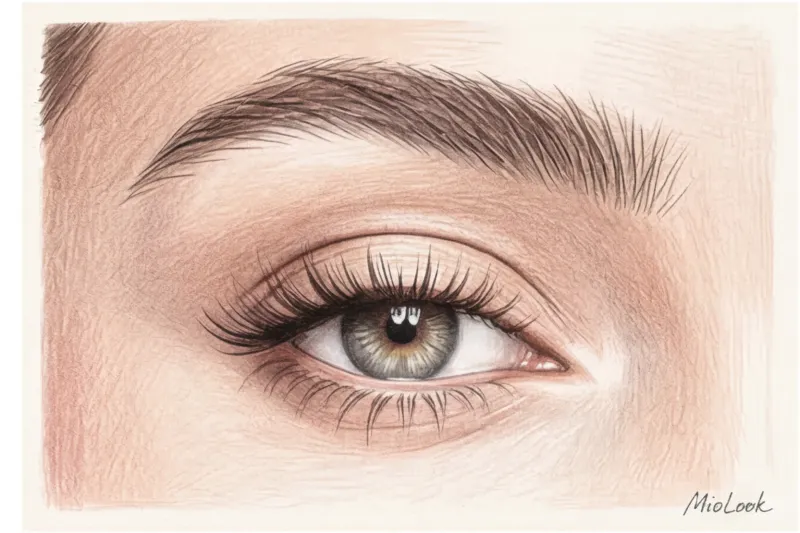
Try MioLook
A smart AI stylist will select the perfect makeup and look for you.
Get access — €0.99 onceEyes and eyebrows: expressiveness that doesn't weigh down the look
Delicate eye makeup is built on halftones. Classic charcoal-black graphic eyeliner instantly adds weight and austerity to the look (we'll leave them for later). business makeup for managers ). Our alternative is a soft, shaded liner using a gel pencil in a deep chocolate, bronze, or taupe shade.
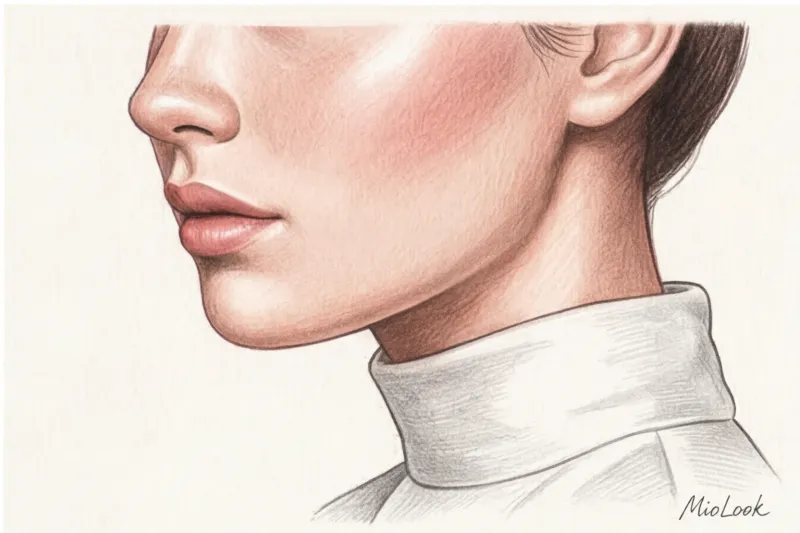
The main rule for natural lashes: never use full-length extensions. They create a doll-like effect and often peel off at the inner corners of the eyes due to tears. Use only individual silk strands of varying lengths. We glue them between your natural lashes, focusing on the outer corners to create an almond shape.
Practical advice: How can you avoid the "panda effect" if you're planning to cry? Regular waterproof mascara can flake from rubbing or dissolve in the oils on your eyelids. Your savior is tubing mascara. It coats each lash with a polymer "tube" that's impervious to tears and sebum, and can be washed off with plenty of warm water (above 38°C).
Lips: From the First Kiss to the Wedding Cake
There's one big problem with nude lips: classic creamy beige lipsticks wear off within the first hour. And long-lasting matte lipsticks are incredibly drying and form an unsightly line at the lip junction.
My formula for perfect soft lips is the “kissed lips” technique using multiple layers:
- First, we apply a water-based pigment tint (stain), which is firmly embedded into the top layer of the skin.
- Blend the outline - no hard pencil lines, just a soft haze.
- Apply a moisturizing tint balm or a drop of transparent gloss (not sticky!) over the tint.
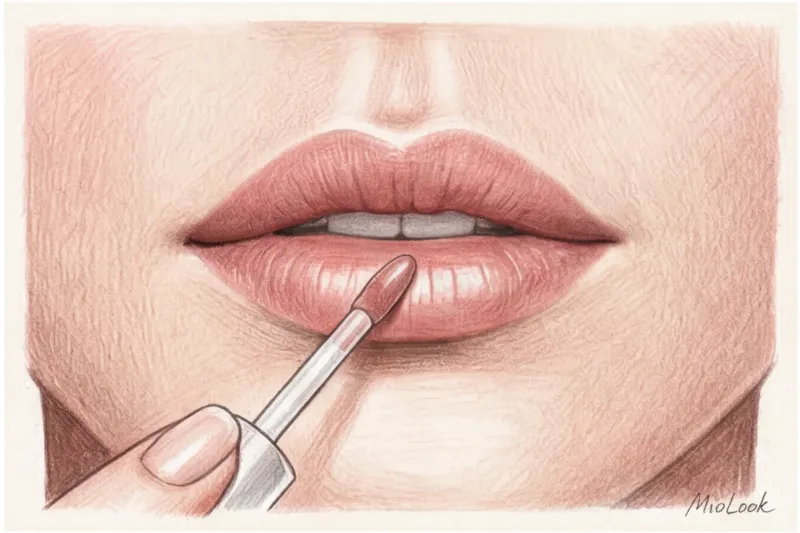
How to find your perfect nude? Forget beige "putty." The ideal shade is the color of your mucous membrane (the inside of your lower lip), only half a shade brighter. And a little secret from my practice: I always give the bride a miniature of used gloss or balm. The tint will last until the evening, but the gloss will need to be reapplied after the reception.
Checklist: How to Conduct a Wedding Makeup Rehearsal
A makeup rehearsal is your crash test. If you do it in a vacuum (simply showing up to the makeup artist's studio in jeans), you might be disappointed with the results on your wedding day. Here's how the pros do it:
- Combine fittings: Schedule a makeup and hair trial for the same day as your final dress fitting. Only after seeing the entire look will you know if the right level of brightness has been chosen.
- Create a visual mood board: The words "subtle" and "natural" mean different things to different people. For one makeup artist, it's a sheer gloss; for another, it's a beige smoky eye. Download the app MioLook , analyze your color type using AI and create a reference board that will show the master exactly your nude.
- Test drive with light: Ask the photographer to take a photo of you by the window (daylight), in the back of the room (the dim light of the restaurant) and be sure to use a flash (as a photographer will do at a banquet).
Ready to get started?
Try the MioLook plan for free—no commitment required. Find references for the perfect wedding makeup look.
Get access — €0.99 onceBridal Mistakes: What to Avoid in Pursuit of Naturalness
Glossy magazines often offer advice that works brilliantly for a 15-minute photo shoot but ruins the real wedding look. Let's look at the main pitfalls.
Mistake 1: Skipping powder completely (“I want glowing skin”).
This doesn't work for events lasting longer than three hours. A glow that isn't set with ultra-fine translucent powder in the T-zone will turn into a sweaty face after two hours. We mattify the center of the forehead, sides of the nose, and chin, leaving a dewy highlight only on the cheekbones.
Mistake 2: Using a day cream with a high SPF.
Many brides, with good intentions, apply sunscreen. If it contains physical filters (titanium dioxide or zinc oxide), your face will look like a white ghost mask in flash-lit photos later in the evening (the flashback effect). Sun protection should be provided by the foundation itself, which contains chemical filters that don't reflect camera light.
Error 3: "Corpse" beige.
When choosing lipstick and blush for a nude look, avoid cool, pale beige shades. Against a voluminous white or off-white dress, these colors will drain all the color from your face, making you look unhealthy. Warm peach, dusty rose, or delicate coral are your best bets.
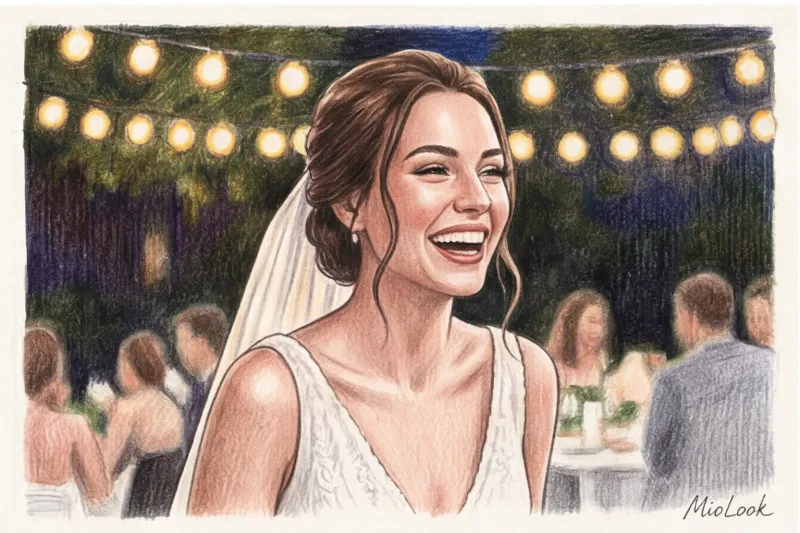
Creating delicate wedding makeup is akin to the work of a jeweler—every stroke of the brush must be precise, measured, and technologically advanced. Don't be afraid to use too many products; avoid heavy textures and outdated formulas. Remember the most important thing: on your wedding day, makeup shouldn't steal the show. It should simply create the perfect frame for your happy eyes.